MYOCARDITIS
Nursing Instructor
Safoora Qureshi
CON, PIMS
Myocardium
• Middle, thickest layer
• Have involuntary control
• Composed of specialized
• Cardiac muscles
• Responsible for heart pumping
• Characteristics
• Automaticity
• Contractility
• Rhythmicity
Myocarditis
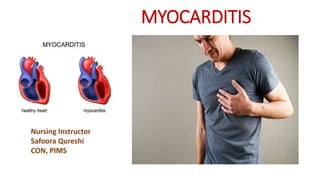
• Myocarditis is a focal and defuse inflammation of myocardium.
• Myocarditis can cause
• Chest pain,
• Shortness of breath
• Arrhythmias).
• Myocarditis is an inflammatory disease of the myocardium caused
by different infectious and noninfectious triggers
• The inflammation can reduce the heart's ability to pump blood
• Clots can form in the heart, leading to a stroke or heart attack.
Myocarditis
Pathophysiology
When myocardium become infected;
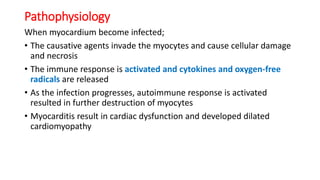
• The causative agents invade the myocytes and cause cellular damage
and necrosis
• The immune response is activated and cytokines and oxygen-free
radicals are released
• As the infection progresses, autoimmune response is activated
resulted in further destruction of myocytes
• Myocarditis result in cardiac dysfunction and developed dilated
cardiomyopathy
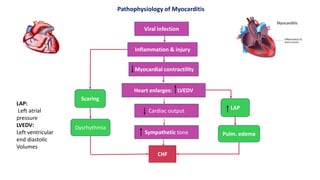
Viral infection
Inflammation & injury
Myocardial contractility
CHF
Sympathetic tone
Cardiac output
Heart enlarges: LVEDV
LAP
Pulm. edema
Scaring
Dysrhythmia
LAP:
Left atrial
pressure
LVEDV:
Left ventricular
end diastolic
Volumes
Pathophysiology of Myocarditis
Causes
• Viruses
• Coxsackie virus ,
• Influenza virus,
• Covid-19
• Bacteria,
• Fungi,
• parasite,
• Radiation,
• Pharmacologic / chemical factors
• Autoimmune diseases such as
• Lupus, Polymyositis, sarcoidosis
• May associated with
• acute pericarditis
Clinical manifestation
Early Systemic Manifestation of Viral illness:
• Fever, fatigue, malaise, myalgia, Pharyngitis, dyspnea, lymphadenopathy, nausea and vomiting
Early Cardiac Manifestation; appears after 7 to 10 days of viral illness
• Chest pain with pericardial friction rub and effusion
• Shortness of breath at rest or during activity.
Late cardiac Sign:
• Sign of heart failure/ CHF
• Arrythmias/ rapid or irregular heartbeat
• S3 heart sound
• Crackers
• Syncope/light-headed ness
• Peripheral edema
• Angina
• Juglar vein distension
Types
Acute myocarditis
• Relatively recent fast onset of myocarditis
• Usually caused by a viral infection.
• Develop suddenly, and symptoms may resolve rapidly as well.
Chronic myocarditis
• Chronic myocarditis is
• when it takes longer than usual to treat the disease or
• when symptoms reappear after experiencing the condition
• If acute myocarditis does not disappear quickly or
• If myocarditis symptoms reappear later an episode of acute
myocarditis
Lymphocytic myocarditis
• Lymphocytic myocarditis is a rare form of myocarditis that can
result in hospitalization for acute care
• It occurs when white blood cells (lymphocytes) enter and cause
inflammation of the heart muscle.
• This condition can occur after a viral infection.
Diagnosis
• ECG:
• Show non-specific changes, may associated with acute pericarditis,
dysrhythmias and conduction disturbance
• Lab:
• ESR, CRP level raised
• Lymphocytosis, mild to moderate level
• Myocardial Markers, troponin level increase
• Viral titers level elevated ( 8 to 10 days of illness)
EMB (endomyocardial Biopsy); confirm myocarditis in early 6 wks
MRI: evaluate cardiac function
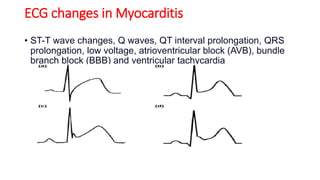
ECG changes in Myocarditis
• ST-T wave changes, Q waves, QT interval prolongation, QRS
prolongation, low voltage, atrioventricular block (AVB), bundle
branch block (BBB) and ventricular tachycardia
Collaborative Care
 Specific treatment
for myocarditis to manage cardiac decompensation
• Digoxin:
• to treat ventricular failure, by improving contractility and reducing ventricular
rate
• Diuretics:
• to reduce fluid volume and decrees Preload
• Nitroprusside, Primacore;
• to reduce afterload and improve CO by decreasing SVR
• Anti-coagulant Therapy:
• indicated in patients with low ejection friction, at risk for thrombus formation
from blood stasis in chambers
Immunosuppressive therapy:
• Prednisolone:
• To reduce myocardial inflammation
• To prevent irreversible myocardial damage
• Intravenous Immunoglobulin (IVIG):
• To treat myocarditis, use on experimental basis
• To proved left ventricular function
• To improve survival
• Anti-viral Agents:
• To treat acute myocarditis
Supportive Therapy:
• Oxygen therapy
• Bed rest
• Restricted activities
• Intra-aortic Balloon Pump Therapy;
• a form of mechanical therapeutic device
• Use in case of severe HF
Nursing management
• Assess the patient for sign and symptoms of HF such as;
• SOB, palpitation, tachycardia, confusion, fainting etc
• Systemic organ assessment
• Take measures to decrease cardiac work load
• Semi-Fowler’s position
• Spacing of activity and rest period
• Provision of calm and quiet environment
• Administration of prescribe medication that increase heart contractility
• Strict monitoring of cardiac function
• Keep the patient and family well informed about therapeutic measures
• Immunocompromise patient should be
• Monitor for complications
• Provision of safe clean environment
• Take infection control measures

Myocarditis.pptx

  • 1.
  • 2.
    Myocardium • Middle, thickestlayer • Have involuntary control • Composed of specialized • Cardiac muscles • Responsible for heart pumping • Characteristics • Automaticity • Contractility • Rhythmicity
  • 3.
    Myocarditis • Myocarditis isa focal and defuse inflammation of myocardium. • Myocarditis can cause • Chest pain, • Shortness of breath • Arrhythmias). • Myocarditis is an inflammatory disease of the myocardium caused by different infectious and noninfectious triggers • The inflammation can reduce the heart's ability to pump blood • Clots can form in the heart, leading to a stroke or heart attack.
  • 4.
  • 5.
    Pathophysiology When myocardium becomeinfected; • The causative agents invade the myocytes and cause cellular damage and necrosis • The immune response is activated and cytokines and oxygen-free radicals are released • As the infection progresses, autoimmune response is activated resulted in further destruction of myocytes • Myocarditis result in cardiac dysfunction and developed dilated cardiomyopathy
  • 6.
    Viral infection Inflammation &injury Myocardial contractility CHF Sympathetic tone Cardiac output Heart enlarges: LVEDV LAP Pulm. edema Scaring Dysrhythmia LAP: Left atrial pressure LVEDV: Left ventricular end diastolic Volumes Pathophysiology of Myocarditis
  • 7.
    Causes • Viruses • Coxsackievirus , • Influenza virus, • Covid-19 • Bacteria, • Fungi, • parasite, • Radiation, • Pharmacologic / chemical factors • Autoimmune diseases such as • Lupus, Polymyositis, sarcoidosis • May associated with • acute pericarditis
  • 8.
    Clinical manifestation Early SystemicManifestation of Viral illness: • Fever, fatigue, malaise, myalgia, Pharyngitis, dyspnea, lymphadenopathy, nausea and vomiting Early Cardiac Manifestation; appears after 7 to 10 days of viral illness • Chest pain with pericardial friction rub and effusion • Shortness of breath at rest or during activity. Late cardiac Sign: • Sign of heart failure/ CHF • Arrythmias/ rapid or irregular heartbeat • S3 heart sound • Crackers • Syncope/light-headed ness • Peripheral edema • Angina • Juglar vein distension
  • 9.
    Types Acute myocarditis • Relativelyrecent fast onset of myocarditis • Usually caused by a viral infection. • Develop suddenly, and symptoms may resolve rapidly as well. Chronic myocarditis • Chronic myocarditis is • when it takes longer than usual to treat the disease or • when symptoms reappear after experiencing the condition • If acute myocarditis does not disappear quickly or • If myocarditis symptoms reappear later an episode of acute myocarditis
  • 10.
    Lymphocytic myocarditis • Lymphocyticmyocarditis is a rare form of myocarditis that can result in hospitalization for acute care • It occurs when white blood cells (lymphocytes) enter and cause inflammation of the heart muscle. • This condition can occur after a viral infection.
  • 11.
    Diagnosis • ECG: • Shownon-specific changes, may associated with acute pericarditis, dysrhythmias and conduction disturbance • Lab: • ESR, CRP level raised • Lymphocytosis, mild to moderate level • Myocardial Markers, troponin level increase • Viral titers level elevated ( 8 to 10 days of illness) EMB (endomyocardial Biopsy); confirm myocarditis in early 6 wks MRI: evaluate cardiac function
  • 12.
    ECG changes inMyocarditis • ST-T wave changes, Q waves, QT interval prolongation, QRS prolongation, low voltage, atrioventricular block (AVB), bundle branch block (BBB) and ventricular tachycardia
  • 13.
    Collaborative Care  Specifictreatment for myocarditis to manage cardiac decompensation • Digoxin: • to treat ventricular failure, by improving contractility and reducing ventricular rate • Diuretics: • to reduce fluid volume and decrees Preload • Nitroprusside, Primacore; • to reduce afterload and improve CO by decreasing SVR • Anti-coagulant Therapy: • indicated in patients with low ejection friction, at risk for thrombus formation from blood stasis in chambers
  • 14.
    Immunosuppressive therapy: • Prednisolone: •To reduce myocardial inflammation • To prevent irreversible myocardial damage • Intravenous Immunoglobulin (IVIG): • To treat myocarditis, use on experimental basis • To proved left ventricular function • To improve survival • Anti-viral Agents: • To treat acute myocarditis Supportive Therapy: • Oxygen therapy • Bed rest • Restricted activities • Intra-aortic Balloon Pump Therapy; • a form of mechanical therapeutic device • Use in case of severe HF
  • 16.
    Nursing management • Assessthe patient for sign and symptoms of HF such as; • SOB, palpitation, tachycardia, confusion, fainting etc • Systemic organ assessment • Take measures to decrease cardiac work load • Semi-Fowler’s position • Spacing of activity and rest period • Provision of calm and quiet environment • Administration of prescribe medication that increase heart contractility • Strict monitoring of cardiac function • Keep the patient and family well informed about therapeutic measures • Immunocompromise patient should be • Monitor for complications • Provision of safe clean environment • Take infection control measures