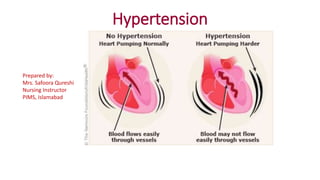
Hypertension
Prepared by:
Mrs. Safoora Qureshi
Nursing Instructor
PIMS, Islamabad
Blood pressure BP
Blood pressure (BP) is the measurement of the pressure
or force of blood pushing against blood vessel walls.
• The Normal BP is < 120/ 80 mmHg
Hypertension/ HTN
• Hypertension is defined as a systolic blood pressure >140
mmHg and a diastolic pressure of > 90 mmHg
• High blood pressure, also called hypertension, is blood
pressure that is higher than normal
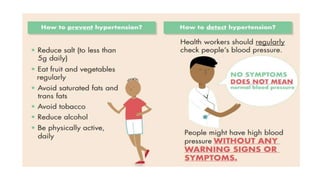
• High blood pressure is often called the “silent killer” most
often it is asymptomatic
Factors Affecting Blood Flow
The variables affecting blood flow and blood pressure in the
systemic circulation are :
• Cardiac output,
• Compliance,
• Blood volume
• Blood viscosity
• Length of blood vessels
• Diameter of the blood vessels
• Gravity,
• Activity
Regulation of BP
Involves following process
1. Sympathetic nervous system
• Baroreceptors ( α adrenergic and β adrenergic receptors in carotid artery
2. Cardio-vascular system
• CO/Cardiac out put
• Vascular Endothelium have vasoactive substance and growth factors cause
vasoconstriction & vasodilation
3. Renal system
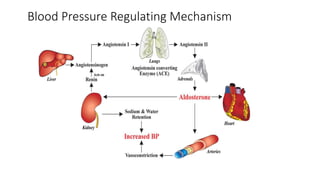
• RAAS (Renin-angiotensin-aldosterone system) BP by retaining sodium and water
• ACE (angiotensin I converting Enzyme)
• ANP (atrial natriuretic peptide
• BNP (b-type natriuretic peptide)
4. Endocrine system
• Renal cortex (aldosterone and ADH)
• Renal medulla (epinephrine and nor epinephrine)
Blood Pressure Regulating Mechanism
Types Of Hypertension
Primary or Essential
Hypertension:
• Primary hypertension is
elevated BP without
identified causes
• Accounts for 90% to 95% of
all cases of hypertension
 Causes: Exact cause is
unknown,
 Contributing factors include:
• Increase SNS activity,
Hyperaldosteronism
• Vasoconstrictor,
• obesity,
• diabetes mellites,
• lack of exercise,
• Smoking, alcohol
consumption
• aging,
• unhealthy eating habits
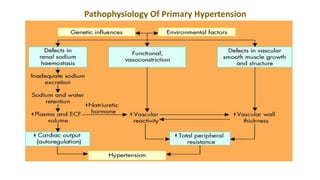
Pathophysiology Of Primary Hypertension
Secondary Hypertension :
• High blood pressure, with a specific cause that can be
and
corrected. Contributed 5% to 10% of all cases
 Causes:
• CHD; Coarctation of aorta or narrowing of aorta
• Renal disease; renal artery stenosis and parenchymal disease
• Endocrine disorders; hyperaldosteronism
• Neurological disorders; brain tumors, head injuries
• Sleep apnea
• Medication; contraceptive pills, NSAID, recreational drugs – such
as
cocaine and amphetamines,
• Antidepressant (SSNRI) selective serotonin-noradrenaline reuptake
inhibitor
• Pregnancy
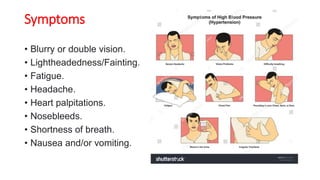
Symptoms
• Blurry or double vision.
• Lightheadedness/Fainting.
• Fatigue.
• Headache.
• Heart palpitations.
• Nosebleeds.
• Shortness of breath.
• Nausea and/or vomiting.
Complications Diagnosis
• Coronary heart disease (CAD)
• Left ventricular hypertrophy
• Heart failure
• CVA
• Peripheral vascular disease
• Nephrosclerosis
• Retinal damage
• History
• Physical Examination
• Serum sodium, potassium,
chloride, calcium, glucose,
BUN, & creatinine
• Lipid profile
• ECG
Optional:
• LFTs
• RFT
• TSH
Collaborative Therapy
1. Monitoring BP
2. Lifestyle modification
3. Drug therapy
4. Teaching
Periodic monitoring of BP
• To determine effectiveness of
antihypertensive drugs
• To detect any change in BP
• Home BP monitoring
• Ambulatory, if needed
• Every 3—6 months by a health care
provider once BP is stabilized
Lifestyle modification
• DASH eating plan
• Plenty of fluids, fruits & vegetables
• Increasing fibers
• Several serving of fish each week
• Restrict
• Sodium
• Cholesterol & saturated fat
• Maintain adequate intake of
• calcium, potassium & magnesium
• Reduce weight
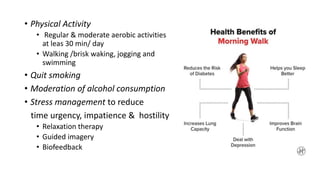
• Physical Activity
• Regular & moderate aerobic activities
at leas 30 min/ day
• Walking /brisk waking, jogging and
swimming
• Quit smoking
• Moderation of alcohol consumption
• Stress management to reduce
time urgency, impatience & hostility
• Relaxation therapy
• Guided imagery
• Biofeedback
Drug Therapy
• Calcium Channel blockers (CCB)
• Angiotensin receptor blockers (ACE inhibitors)
• such as captopril
• Angiotensin II receptor blockers (ARBs)
• metoprolol (Lopressor: Toprol® XL), valsartan (Diovan)
• Diuretics, including,
• thiazides, chlorthalidone, & indapamide
• Vasodilators.
• Beta blockers and alpha blockers
Propranolol, Atenolol / Carvedilol
• Central agonists/ central alpha antagonist (brain stem)
• Clonidine, methyldopa
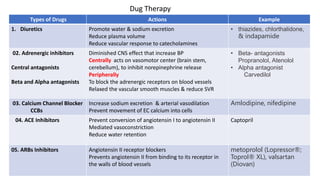
Types of Drugs Actions Example
1. Diuretics Promote water & sodium excretion
Reduce plasma volume
Reduce vascular response to catecholamines
• thiazides, chlorthalidone,
& indapamide
02. Adrenergic inhibitors
Central antagonists
Beta and Alpha antagonists
Diminished CNS effect that increase BP
Centrally acts on vasomotor center (brain stem,
cerebellum), to inhibit norepinephrine release
Peripherally
To block the adrenergic receptors on blood vessels
Relaxed the vascular smooth muscles & reduce SVR
• Beta- antagonists
Propranolol, Atenolol
• Alpha antagonist
Carvedilol
03. Calcium Channel Blocker
CCBs
Increase sodium excretion & arterial vasodilation
Prevent movement of EC calcium into cells
Amlodipine, nifedipine
04. ACE Inhibitors Prevent conversion of angiotensin I to angiotensin II
Mediated vasoconstriction
Reduce water retention
Captopril
05. ARBs Inhibitors Angiotensin II receptor blockers
Prevents angiotensin II from binding to its receptor in
the walls of blood vessels
metoprolol (Lopressor®;
Toprol® XL), valsartan
(Diovan)
Dug Therapy
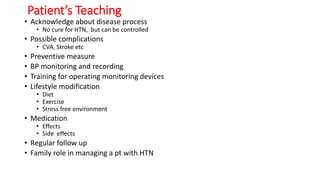
Patient’s Teaching
• Acknowledge about disease process
• No cure for HTN, but can be controlled
• Possible complications
• CVA, Stroke etc
• Preventive measure
• BP monitoring and recording
• Training for operating monitoring devices
• Lifestyle modification
• Diet
• Exercise
• Stress free environment
• Medication
• Effects
• Side effects
• Regular follow up
• Family role in managing a pt with HTN
Hypertension.pptx

Hypertension.pptx

  • 1.
    Hypertension Prepared by: Mrs. SafooraQureshi Nursing Instructor PIMS, Islamabad
  • 2.
    Blood pressure BP Bloodpressure (BP) is the measurement of the pressure or force of blood pushing against blood vessel walls. • The Normal BP is < 120/ 80 mmHg Hypertension/ HTN • Hypertension is defined as a systolic blood pressure >140 mmHg and a diastolic pressure of > 90 mmHg • High blood pressure, also called hypertension, is blood pressure that is higher than normal • High blood pressure is often called the “silent killer” most often it is asymptomatic
  • 3.
    Factors Affecting BloodFlow The variables affecting blood flow and blood pressure in the systemic circulation are : • Cardiac output, • Compliance, • Blood volume • Blood viscosity • Length of blood vessels • Diameter of the blood vessels • Gravity, • Activity
  • 4.
    Regulation of BP Involvesfollowing process 1. Sympathetic nervous system • Baroreceptors ( α adrenergic and β adrenergic receptors in carotid artery 2. Cardio-vascular system • CO/Cardiac out put • Vascular Endothelium have vasoactive substance and growth factors cause vasoconstriction & vasodilation 3. Renal system • RAAS (Renin-angiotensin-aldosterone system) BP by retaining sodium and water • ACE (angiotensin I converting Enzyme) • ANP (atrial natriuretic peptide • BNP (b-type natriuretic peptide) 4. Endocrine system • Renal cortex (aldosterone and ADH) • Renal medulla (epinephrine and nor epinephrine)
  • 5.
  • 7.
    Types Of Hypertension Primaryor Essential Hypertension: • Primary hypertension is elevated BP without identified causes • Accounts for 90% to 95% of all cases of hypertension  Causes: Exact cause is unknown,  Contributing factors include: • Increase SNS activity, Hyperaldosteronism • Vasoconstrictor, • obesity, • diabetes mellites, • lack of exercise, • Smoking, alcohol consumption • aging, • unhealthy eating habits
  • 8.
  • 9.
    Secondary Hypertension : •High blood pressure, with a specific cause that can be and corrected. Contributed 5% to 10% of all cases  Causes: • CHD; Coarctation of aorta or narrowing of aorta • Renal disease; renal artery stenosis and parenchymal disease • Endocrine disorders; hyperaldosteronism • Neurological disorders; brain tumors, head injuries • Sleep apnea • Medication; contraceptive pills, NSAID, recreational drugs – such as cocaine and amphetamines, • Antidepressant (SSNRI) selective serotonin-noradrenaline reuptake inhibitor • Pregnancy
  • 10.
    Symptoms • Blurry ordouble vision. • Lightheadedness/Fainting. • Fatigue. • Headache. • Heart palpitations. • Nosebleeds. • Shortness of breath. • Nausea and/or vomiting.
  • 11.
    Complications Diagnosis • Coronaryheart disease (CAD) • Left ventricular hypertrophy • Heart failure • CVA • Peripheral vascular disease • Nephrosclerosis • Retinal damage • History • Physical Examination • Serum sodium, potassium, chloride, calcium, glucose, BUN, & creatinine • Lipid profile • ECG Optional: • LFTs • RFT • TSH
  • 12.
    Collaborative Therapy 1. MonitoringBP 2. Lifestyle modification 3. Drug therapy 4. Teaching Periodic monitoring of BP • To determine effectiveness of antihypertensive drugs • To detect any change in BP • Home BP monitoring • Ambulatory, if needed • Every 3—6 months by a health care provider once BP is stabilized Lifestyle modification • DASH eating plan • Plenty of fluids, fruits & vegetables • Increasing fibers • Several serving of fish each week • Restrict • Sodium • Cholesterol & saturated fat • Maintain adequate intake of • calcium, potassium & magnesium • Reduce weight
  • 13.
    • Physical Activity •Regular & moderate aerobic activities at leas 30 min/ day • Walking /brisk waking, jogging and swimming • Quit smoking • Moderation of alcohol consumption • Stress management to reduce time urgency, impatience & hostility • Relaxation therapy • Guided imagery • Biofeedback
  • 14.
    Drug Therapy • CalciumChannel blockers (CCB) • Angiotensin receptor blockers (ACE inhibitors) • such as captopril • Angiotensin II receptor blockers (ARBs) • metoprolol (Lopressor: Toprol® XL), valsartan (Diovan) • Diuretics, including, • thiazides, chlorthalidone, & indapamide • Vasodilators. • Beta blockers and alpha blockers Propranolol, Atenolol / Carvedilol • Central agonists/ central alpha antagonist (brain stem) • Clonidine, methyldopa
  • 15.
    Types of DrugsActions Example 1. Diuretics Promote water & sodium excretion Reduce plasma volume Reduce vascular response to catecholamines • thiazides, chlorthalidone, & indapamide 02. Adrenergic inhibitors Central antagonists Beta and Alpha antagonists Diminished CNS effect that increase BP Centrally acts on vasomotor center (brain stem, cerebellum), to inhibit norepinephrine release Peripherally To block the adrenergic receptors on blood vessels Relaxed the vascular smooth muscles & reduce SVR • Beta- antagonists Propranolol, Atenolol • Alpha antagonist Carvedilol 03. Calcium Channel Blocker CCBs Increase sodium excretion & arterial vasodilation Prevent movement of EC calcium into cells Amlodipine, nifedipine 04. ACE Inhibitors Prevent conversion of angiotensin I to angiotensin II Mediated vasoconstriction Reduce water retention Captopril 05. ARBs Inhibitors Angiotensin II receptor blockers Prevents angiotensin II from binding to its receptor in the walls of blood vessels metoprolol (Lopressor®; Toprol® XL), valsartan (Diovan) Dug Therapy
  • 16.
    Patient’s Teaching • Acknowledgeabout disease process • No cure for HTN, but can be controlled • Possible complications • CVA, Stroke etc • Preventive measure • BP monitoring and recording • Training for operating monitoring devices • Lifestyle modification • Diet • Exercise • Stress free environment • Medication • Effects • Side effects • Regular follow up • Family role in managing a pt with HTN