MYCOPLASMA
PNEUMONIA
Introduction
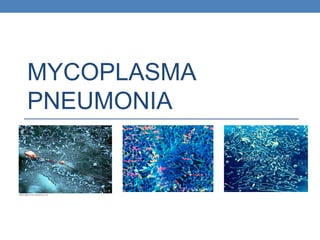
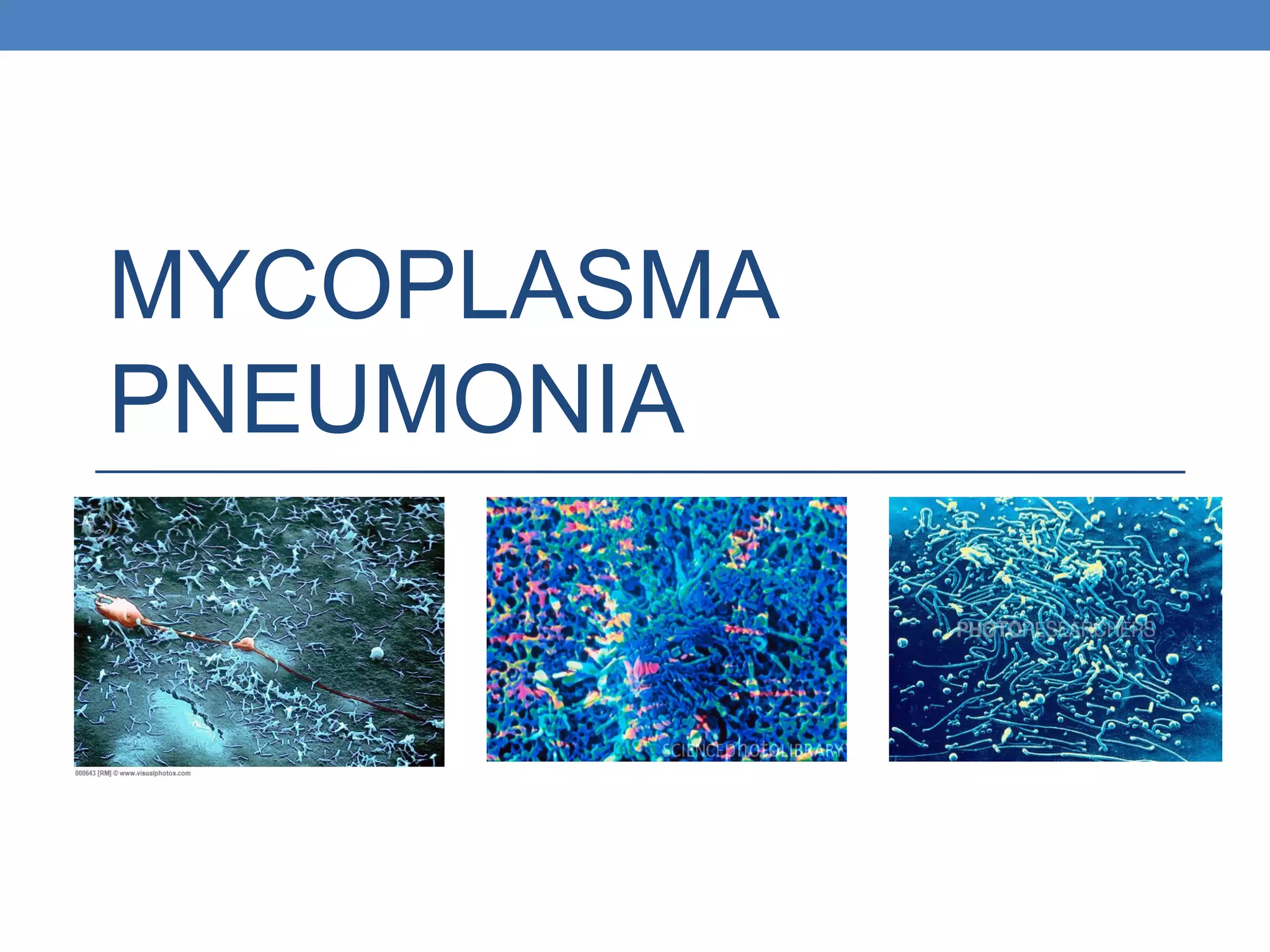
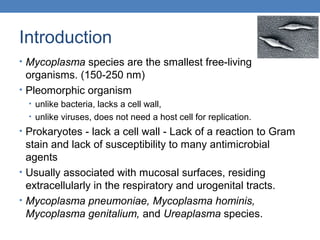
• Mycoplasma species are the smallest free-living

organisms. (150-250 nm)
• Pleomorphic organism
• unlike bacteria, lacks a cell wall,
• unlike viruses, does not need a host cell for replication.

• Prokaryotes - lack a cell wall - Lack of a reaction to Gram

stain and lack of susceptibility to many antimicrobial
agents
• Usually associated with mucosal surfaces, residing
extracellularly in the respiratory and urogenital tracts.
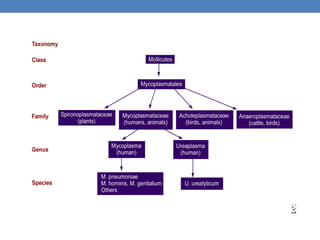
• Mycoplasma pneumoniae, Mycoplasma hominis,
Mycoplasma genitalium, and Ureaplasma species.
Pathophysiology
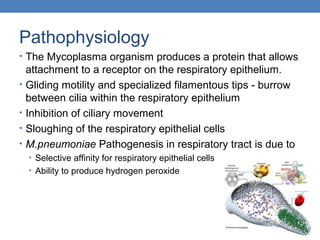
• The Mycoplasma organism produces a protein that allows
•
•
•
•

attachment to a receptor on the respiratory epithelium.
Gliding motility and specialized filamentous tips - burrow
between cilia within the respiratory epithelium
Inhibition of ciliary movement
Sloughing of the respiratory epithelial cells
M.pneumoniae Pathogenesis in respiratory tract is due to
• Selective affinity for respiratory epithelial cells
• Ability to produce hydrogen peroxide
Epidemiology
• One of the common causes of acquired pneumonias in
•
•
•
•
•

healthy patients. < 40 years.
Common in all age groups
Rare in <5 yeas old children
Highest rates are seen in 5-20 year age group.
The incubation period is 1-3 weeks.
They are spread by large particles by aerosol to close
contacts.
Presentation
• Disease of gradual and insidious onset of several days to
•
•
•
•
•
•
•

weeks.
Fever
Malaise
Persistent, slowly worsening dry cough
Headache
Chills, not rigors
Scratchy sore throat
Sore chest and tracheal tenderness (result of the
protracted cough)
Presentation
• Less common symptoms include:
• Ear pain
• Muscle aches
• Pleuritic chest pain (rare)
• Extrapulmonary symptoms are thought to be autoimmune

induced
• rashes
• Stevens Johnson Syndrome
• meningoencephalitis
• arthritis, gastrointestinal symptoms
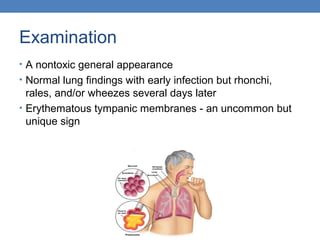
Examination
• A nontoxic general appearance
• Normal lung findings with early infection but rhonchi,

rales, and/or wheezes several days later
• Erythematous tympanic membranes - an uncommon but
unique sign
Investigations
• Laboratory tests are generally of limited benefit
• Elevated ESR
• Normal or elevated WBC
• Sputum Gram stains and cultures not helpful
• M pneumoniae lacks a cell wall and cannot be stained
• difficult to culture and requires 7-21 days to grow
• Polymerase chain reaction (PCR) - accurately diagnose

atypical pneumonia
• used for epidemiologic studies
• not used in clinical practice
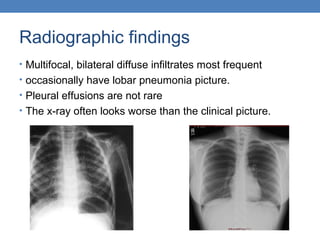
Radiographic findings
• Multifocal, bilateral diffuse infiltrates most frequent
• occasionally have lobar pneumonia picture.
• Pleural effusions are not rare
• The x-ray often looks worse than the clinical picture.
Treatment
• Suggested to teat for 7-10 days.
• Empiric antimicrobial therapy must be comprehensive and

should cover all likely pathogens in the context of the clinical
setting.
• Antimicrobials against M pneumoniae are bacteriostatic-not
bactericidal
• Erythromycin - Will also be effective against other community

acquired infections such as pneumococcal pneumonia.
• Clarithromycin and Azithromycin
• Tetracylcines in patients > 10 years old (Doxycycline)
• Levofloxacin
THANK YOU

Mycoplasma Pneumonia

  • 1.
  • 2.
    Introduction • Mycoplasma speciesare the smallest free-living organisms. (150-250 nm) • Pleomorphic organism • unlike bacteria, lacks a cell wall, • unlike viruses, does not need a host cell for replication. • Prokaryotes - lack a cell wall - Lack of a reaction to Gram stain and lack of susceptibility to many antimicrobial agents • Usually associated with mucosal surfaces, residing extracellularly in the respiratory and urogenital tracts. • Mycoplasma pneumoniae, Mycoplasma hominis, Mycoplasma genitalium, and Ureaplasma species.
  • 4.
    Pathophysiology • The Mycoplasmaorganism produces a protein that allows • • • • attachment to a receptor on the respiratory epithelium. Gliding motility and specialized filamentous tips - burrow between cilia within the respiratory epithelium Inhibition of ciliary movement Sloughing of the respiratory epithelial cells M.pneumoniae Pathogenesis in respiratory tract is due to • Selective affinity for respiratory epithelial cells • Ability to produce hydrogen peroxide
  • 5.
    Epidemiology • One ofthe common causes of acquired pneumonias in • • • • • healthy patients. < 40 years. Common in all age groups Rare in <5 yeas old children Highest rates are seen in 5-20 year age group. The incubation period is 1-3 weeks. They are spread by large particles by aerosol to close contacts.
  • 6.
    Presentation • Disease ofgradual and insidious onset of several days to • • • • • • • weeks. Fever Malaise Persistent, slowly worsening dry cough Headache Chills, not rigors Scratchy sore throat Sore chest and tracheal tenderness (result of the protracted cough)
  • 7.
    Presentation • Less commonsymptoms include: • Ear pain • Muscle aches • Pleuritic chest pain (rare) • Extrapulmonary symptoms are thought to be autoimmune induced • rashes • Stevens Johnson Syndrome • meningoencephalitis • arthritis, gastrointestinal symptoms
  • 8.
    Examination • A nontoxicgeneral appearance • Normal lung findings with early infection but rhonchi, rales, and/or wheezes several days later • Erythematous tympanic membranes - an uncommon but unique sign
  • 9.
    Investigations • Laboratory testsare generally of limited benefit • Elevated ESR • Normal or elevated WBC • Sputum Gram stains and cultures not helpful • M pneumoniae lacks a cell wall and cannot be stained • difficult to culture and requires 7-21 days to grow • Polymerase chain reaction (PCR) - accurately diagnose atypical pneumonia • used for epidemiologic studies • not used in clinical practice
  • 10.
    Radiographic findings • Multifocal,bilateral diffuse infiltrates most frequent • occasionally have lobar pneumonia picture. • Pleural effusions are not rare • The x-ray often looks worse than the clinical picture.
  • 11.
    Treatment • Suggested toteat for 7-10 days. • Empiric antimicrobial therapy must be comprehensive and should cover all likely pathogens in the context of the clinical setting. • Antimicrobials against M pneumoniae are bacteriostatic-not bactericidal • Erythromycin - Will also be effective against other community acquired infections such as pneumococcal pneumonia. • Clarithromycin and Azithromycin • Tetracylcines in patients > 10 years old (Doxycycline) • Levofloxacin
  • 12.