By Thomas Griner
Dynamic Chiropractic – March 20, 2000,
Vol. 18, Issue 07
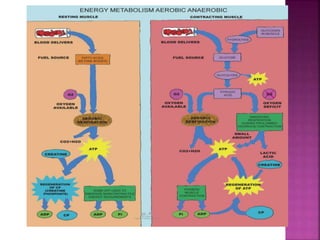
 In this study, four different muscle fibers will
be discussed here. However, only the aerobic
slow-twitch fiber and the anaerobic fast-
twitch fiber are found in human skeletal
muscle. For the purpose of gaining additional
insight provided by comparative study, the
cardiac muscle fiber and aerobic fast- twitch
fiber will also be discussed.
 Three of the four fibers are aerobic, with the
mitochondria in each being different from
the other two. The aerobic fast-twitch fiber
is really no longer a muscle, but a bag full of
mitochondria with a few contractile fibers
remaining.
 These smaller mitochondria can only oxidize
the components of glucose, not fatty acids or
ketones as the larger mitochondria can.
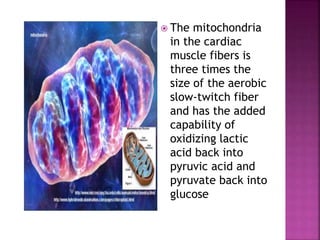
 The mitochondria
in the cardiac
muscle fibers is
three times the
size of the aerobic
slow-twitch fiber
and has the added
capability of
oxidizing lactic
acid back into
pyruvic acid and
pyruvate back into
glucose
 Comparison of aerobic and anaerobic
fibers might lead to calling the aerobic
ectomorphic and the anaerobic
endomorphic. This is because
everything other than muscle fibers is
concentrated along the periphery of the
aerobic fiber, but spread in the interior
of the anaerobic fiber.

Muscle metabolism

  • 1.
    By Thomas Griner DynamicChiropractic – March 20, 2000, Vol. 18, Issue 07
  • 2.
     In thisstudy, four different muscle fibers will be discussed here. However, only the aerobic slow-twitch fiber and the anaerobic fast- twitch fiber are found in human skeletal muscle. For the purpose of gaining additional insight provided by comparative study, the cardiac muscle fiber and aerobic fast- twitch fiber will also be discussed.
  • 3.
     Three ofthe four fibers are aerobic, with the mitochondria in each being different from the other two. The aerobic fast-twitch fiber is really no longer a muscle, but a bag full of mitochondria with a few contractile fibers remaining.  These smaller mitochondria can only oxidize the components of glucose, not fatty acids or ketones as the larger mitochondria can.
  • 4.
     The mitochondria inthe cardiac muscle fibers is three times the size of the aerobic slow-twitch fiber and has the added capability of oxidizing lactic acid back into pyruvic acid and pyruvate back into glucose
  • 6.
     Comparison ofaerobic and anaerobic fibers might lead to calling the aerobic ectomorphic and the anaerobic endomorphic. This is because everything other than muscle fibers is concentrated along the periphery of the aerobic fiber, but spread in the interior of the anaerobic fiber.