

PRESENTED BY:
Dilip Kumar Mishra
Student
IME Sahibabad
Ms. Sangeeta Sahni
Assistant Professor
IME Sahibabad
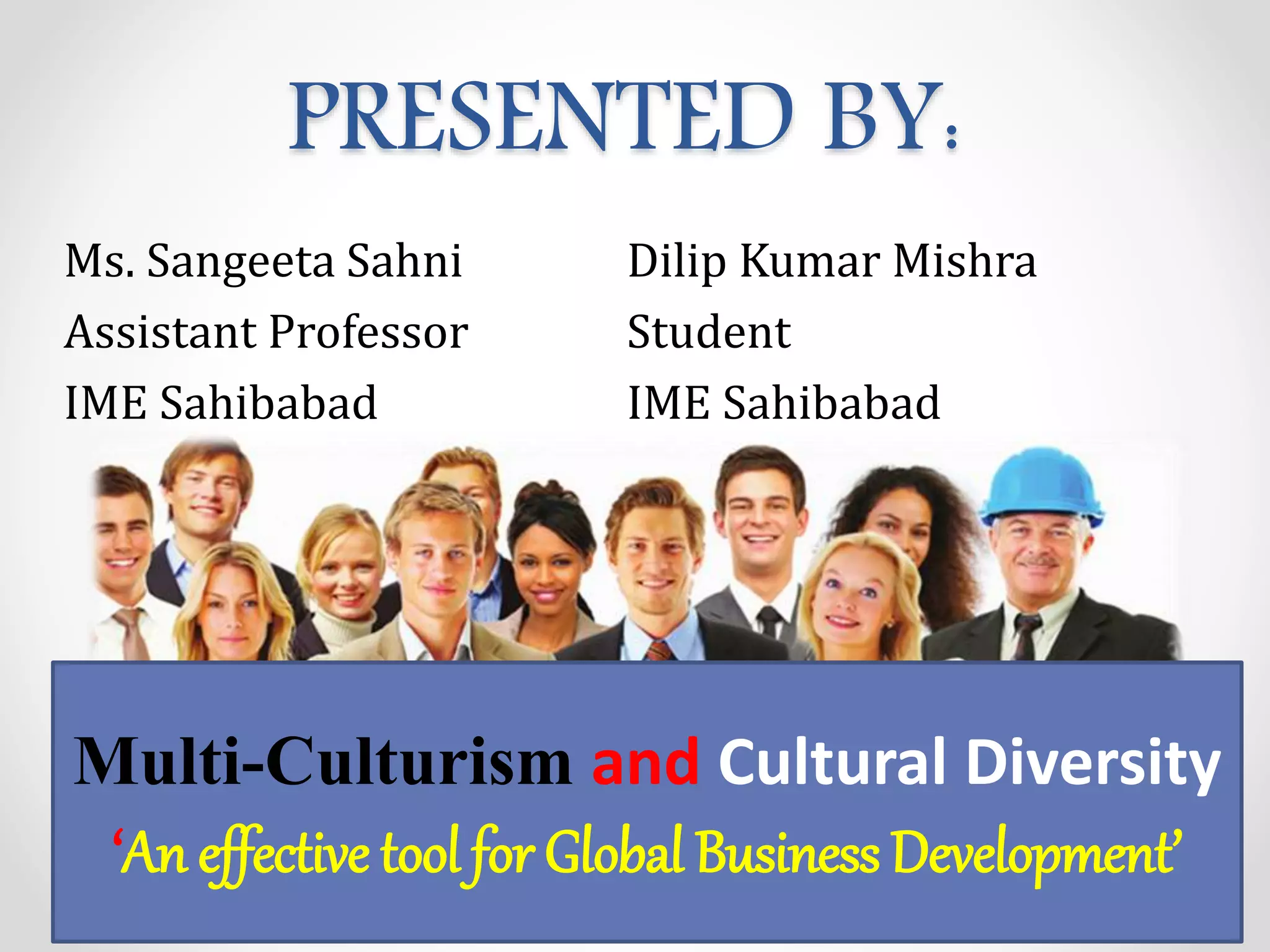
Multi-Culturism and Cultural Diversity
‘An effective tool for Global Business Development’
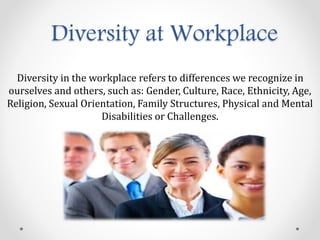
Diversity at Workplace
Diversity in the workplace refers to differences we recognize in
ourselves and others, such as: Gender, Culture, Race, Ethnicity, Age,
Religion, Sexual Orientation, Family Structures, Physical and Mental
Disabilities or Challenges.
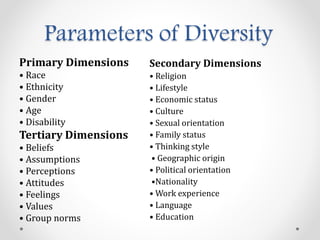
Parameters of Diversity
Primary Dimensions
• Race
• Ethnicity
• Gender
• Age
• Disability
Tertiary Dimensions
• Beliefs
• Assumptions
• Perceptions
• Attitudes
• Feelings
• Values
• Group norms
Secondary Dimensions
• Religion
• Lifestyle
• Economic status
• Culture
• Sexual orientation
• Family status
• Thinking style
• Geographic origin
• Political orientation
•Nationality
• Work experience
• Language
• Education
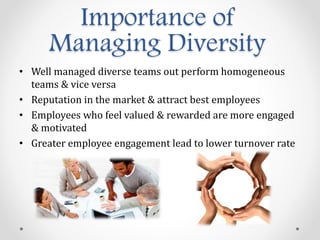
Importance of
Managing Diversity
• Well managed diverse teams out perform homogeneous
teams & vice versa
• Reputation in the market & attract best employees
• Employees who feel valued & rewarded are more engaged
& motivated
• Greater employee engagement lead to lower turnover rate
Challenges of
Managing Diversity
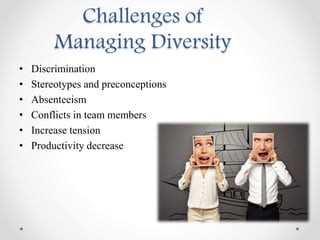
• Discrimination
• Stereotypes and preconceptions
• Absenteeism
• Conflicts in team members
• Increase tension
• Productivity decrease
Strategies for
Managing Diversity
1. Management commitment
2. Reinforce employee competencies
3. Actively facilitate inclusiveness
4. Communicate effectively
5. Evaluate effectiveness
Management Commitment
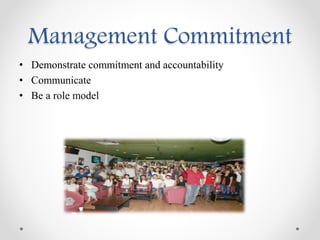
• Demonstrate commitment and accountability
• Communicate
• Be a role model
Reinforce Employee
Competencies
• Recruitment
1. Identify diversity management values
2. Build effective recruitment process
3. Train your interviewers
• Learning and Development
1. Introducing new employees
2. Orientating foreign employees
3. Training for employees & managers
“I feel a great sense of satisfaction when the workers were able to
demonstrate the ability to speak functional English at the end of
the Programme.”
Supervisor
HSL Constructor Pte Ltd (“HSL”)
• Performance management
Reinforce Employee
Competencies
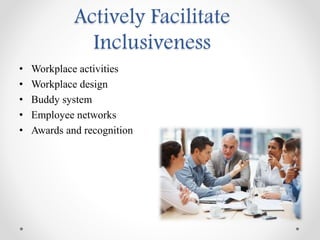
Actively Facilitate
Inclusiveness
• Workplace activities
• Workplace design
• Buddy system
• Employee networks
• Awards and recognition
Communicate Effectively
• Telling the importance of inclusive environment
• Tips to enhance relationships with employees
• Benefits of inclusive environment
Evaluate Effectiveness
• Recruitment
• Employee engagement
• Promotion rate
• Retention rate
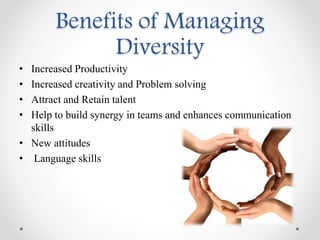
Benefits of Managing
Diversity
• Increased Productivity
• Increased creativity and Problem solving
• Attract and Retain talent
• Help to build synergy in teams and enhances communication
skills
• New attitudes
• Language skills
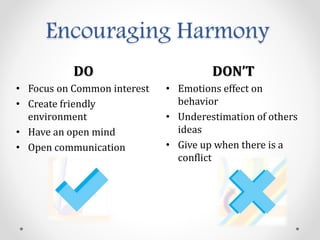
Encouraging Harmony
DON’T
• Emotions effect on
behavior
• Underestimation of others
ideas
• Give up when there is a
conflict
DO
• Focus on Common interest
• Create friendly
environment
• Have an open mind
• Open communication
THANK YOU

multiculturism

  • 1.
    PRESENTED BY: Dilip KumarMishra Student IME Sahibabad Ms. Sangeeta Sahni Assistant Professor IME Sahibabad Multi-Culturism and Cultural Diversity ‘An effective tool for Global Business Development’
  • 2.
    Diversity at Workplace Diversityin the workplace refers to differences we recognize in ourselves and others, such as: Gender, Culture, Race, Ethnicity, Age, Religion, Sexual Orientation, Family Structures, Physical and Mental Disabilities or Challenges.
  • 3.
    Parameters of Diversity PrimaryDimensions • Race • Ethnicity • Gender • Age • Disability Tertiary Dimensions • Beliefs • Assumptions • Perceptions • Attitudes • Feelings • Values • Group norms Secondary Dimensions • Religion • Lifestyle • Economic status • Culture • Sexual orientation • Family status • Thinking style • Geographic origin • Political orientation •Nationality • Work experience • Language • Education
  • 4.
    Importance of Managing Diversity •Well managed diverse teams out perform homogeneous teams & vice versa • Reputation in the market & attract best employees • Employees who feel valued & rewarded are more engaged & motivated • Greater employee engagement lead to lower turnover rate
  • 5.
    Challenges of Managing Diversity •Discrimination • Stereotypes and preconceptions • Absenteeism • Conflicts in team members • Increase tension • Productivity decrease
  • 6.
    Strategies for Managing Diversity 1.Management commitment 2. Reinforce employee competencies 3. Actively facilitate inclusiveness 4. Communicate effectively 5. Evaluate effectiveness
  • 7.
    Management Commitment • Demonstratecommitment and accountability • Communicate • Be a role model
  • 8.
    Reinforce Employee Competencies • Recruitment 1.Identify diversity management values 2. Build effective recruitment process 3. Train your interviewers
  • 9.
    • Learning andDevelopment 1. Introducing new employees 2. Orientating foreign employees 3. Training for employees & managers “I feel a great sense of satisfaction when the workers were able to demonstrate the ability to speak functional English at the end of the Programme.” Supervisor HSL Constructor Pte Ltd (“HSL”) • Performance management Reinforce Employee Competencies
  • 10.
    Actively Facilitate Inclusiveness • Workplaceactivities • Workplace design • Buddy system • Employee networks • Awards and recognition
  • 11.
    Communicate Effectively • Tellingthe importance of inclusive environment • Tips to enhance relationships with employees • Benefits of inclusive environment
  • 12.
    Evaluate Effectiveness • Recruitment •Employee engagement • Promotion rate • Retention rate
  • 13.
    Benefits of Managing Diversity •Increased Productivity • Increased creativity and Problem solving • Attract and Retain talent • Help to build synergy in teams and enhances communication skills • New attitudes • Language skills
  • 14.
    Encouraging Harmony DON’T • Emotionseffect on behavior • Underestimation of others ideas • Give up when there is a conflict DO • Focus on Common interest • Create friendly environment • Have an open mind • Open communication
  • 15.