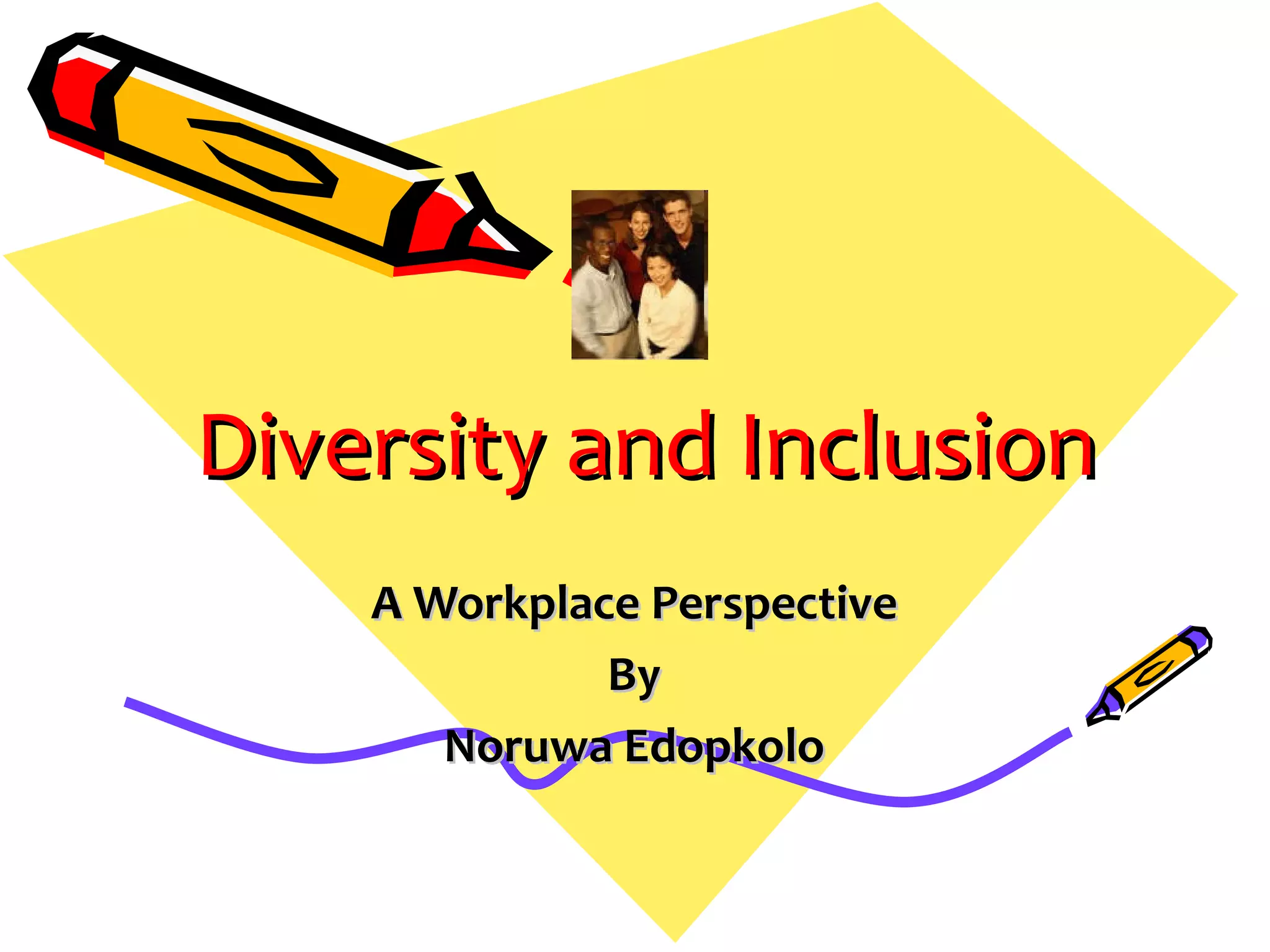
Diversity and Inclusion
    A Workplace Perspective
              By
       Noruwa Edopkolo
Program Objectives
• Emphasize the value of diversity.
• Eliminate misconceptions of diversity and its
  effects.
• Improve the management of diversity.
• Develop greater workplace productivity.
• Enhance human relations.
Focus Areas

• What is diversity?
• Why is it important to understand diversity?
• What are the consequences of not managing
  diversity
• How to manage diversity?
Definition of terms
What is diversity?
• The fact or quality of being diverse; difference.
• A point or respect in which things differ.
• The ways we are different; the condition of having unique
  characteristics. The condition of being diverse : Variety ;
  especially : the inclusion of diverse people (as people of
  different races or cultures) in a group or organization.


What is Inclusion?
• The act of including or the state of being included.
• Something included.
Aspects of diversity
•   Age ( generational differences)
•   Race
•   Gender Ethnicity
•   Sexual orientation
•   Religion.
•   Physical attributes etc.
•   Education
•   Job Title ,function ,skills.
•   Disability
•   Height/Weight
•   Marital status.
•   Language/Accent.
Why is it important to understand
                 diversity?
Diversity is more than just tolerating
differences. It is:

• respecting, appreciating, and understanding
  the varying characteristics of individuals.
• Everyone is unique and no single person is a
  representative of a certain group. Stereotypes
  and other racial biases/prejudices are
  damaging to a business.
Cont..
         What about “ generation?”

Definition: A body of individuals born in approximately the same time
    period who generally share similar behaviors and attitudes.

Understand that there are now four (4) generations in the workplace
with different:

•   expectations,
•   motivations,
•   attitudes, and
•   behaviors.

An understanding of these generational differences can equip one to
handle workplace situations with increased insight.
The Four (4) Generations


• Traditionalists/Veterans (Born 1922-1945)

• Baby Boomers (Born 1946-1964)

• Generation X (Born 1965-1982)

• Millennia's/Generation Y (Born 1983-1997)
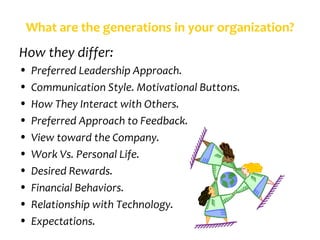
What are the generations in your organization?
How they differ:
•   Preferred Leadership Approach.
•   Communication Style. Motivational Buttons.
•   How They Interact with Others.
•   Preferred Approach to Feedback.
•   View toward the Company.
•   Work Vs. Personal Life.
•   Desired Rewards.
•   Financial Behaviors.
•   Relationship with Technology.
•   Expectations.
Benefits of Understanding Generational
differences:

• More effective communication
• less misunderstandings.
• Increased recruitment and employee
  retention.
• More effective motivational methods.
• Better-formed expectations.
• Increased productivity and teamwork.
Consequences of not managing diversity.
• Discrimination
• breeds narrow-mindedness,
• impairs employee morale,
• strains employee relationships,
• and thus, damages productivity. Not to
  mention, it is illegal and costly in terms
  of litigation!
Group discussion
What words describe the attitude to
diversity in your organization?

Time : 10mins.
managing diversity
– The organization is diverse by default, and now it must
  deal with it.
– Effectively managing diversity can improve
  organizational effectiveness
– When managers commit to diversity , it legitimizes
  diversity effort of others.
– Promoting a nondiscriminatory workplace environment
– Research suggests slight differences in treatment can
  cumulate and result in major disparities over time
Top-management commitment and rewards for the support
Of diversity are critical ingredients for the success of diversity
management initiatives.

Managing Diversity Effectively Makes Good
Business Sense
What a Diversity of Employees Provides
    – A variety of points of view and approaches to problems and
      opportunities can improve managerial decision making.
    – Diverse employees can provide a wider range of creative ideas.
    – Diverse employees are more attuned to the needs of diverse
      customers.
    – Diversity can increase the retention of valued organizational
      members.
    – Diversity is expected/required by other firms
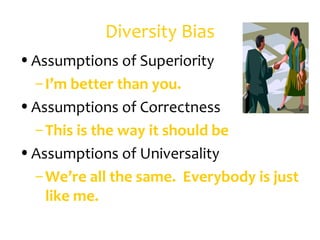
Diversity Bias
• Assumptions of Superiority
  – I’m better than you.
• Assumptions of Correctness
  – This is the way it should be
• Assumptions of Universality
  – We’re all the same. Everybody is just
    like me.
The Challenge of Workplace Diversity?
• The challenge lies in the continuous improvement
  of the integration and social acceptance of people
  from different backgrounds.

• Our differing human characteristics influence the
  way we think, act, interact, and make choices.

• Often, these differences interfere with our ability
  to support, trust, and respect each other, and thus
  to effectively function together.
Avoiding bias
• Similar-to-me effect – perceive others who are similar to
  ourselves more positively than we perceive people who are
  different

• Social status effect – perceive individuals with high social
  status more positively than those with low social status.

• Salience effect – focus attention on individuals who are
  conspicuously different.

• Knowingly and willingly denying divers individuals access to
  opportunities and outcomes in an organization
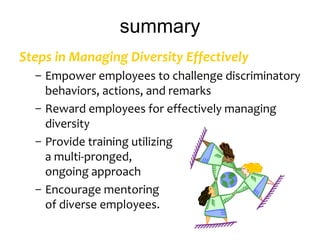
summary
Steps in Managing Diversity Effectively
  – Empower employees to challenge discriminatory
    behaviors, actions, and remarks
  – Reward employees for effectively managing
    diversity
  – Provide training utilizing
    a multi-pronged,
    ongoing approach
  – Encourage mentoring
    of diverse employees.
Action Goals
• List 5 personal commitment action goal
  for dealing with discriminatory behavior
  at work?

• Determine your generational
  differences with your colleagues, have
  you been sensitive to the diversity
  difference.
Diversity And Inclusion

Diversity And Inclusion

  • 1.
    Diversity and Inclusion A Workplace Perspective By Noruwa Edopkolo
  • 2.
    Program Objectives • Emphasizethe value of diversity. • Eliminate misconceptions of diversity and its effects. • Improve the management of diversity. • Develop greater workplace productivity. • Enhance human relations.
  • 3.
    Focus Areas • Whatis diversity? • Why is it important to understand diversity? • What are the consequences of not managing diversity • How to manage diversity?
  • 4.
    Definition of terms Whatis diversity? • The fact or quality of being diverse; difference. • A point or respect in which things differ. • The ways we are different; the condition of having unique characteristics. The condition of being diverse : Variety ; especially : the inclusion of diverse people (as people of different races or cultures) in a group or organization. What is Inclusion? • The act of including or the state of being included. • Something included.
  • 5.
    Aspects of diversity • Age ( generational differences) • Race • Gender Ethnicity • Sexual orientation • Religion. • Physical attributes etc. • Education • Job Title ,function ,skills. • Disability • Height/Weight • Marital status. • Language/Accent.
  • 6.
    Why is itimportant to understand diversity? Diversity is more than just tolerating differences. It is: • respecting, appreciating, and understanding the varying characteristics of individuals. • Everyone is unique and no single person is a representative of a certain group. Stereotypes and other racial biases/prejudices are damaging to a business.
  • 7.
    Cont.. What about “ generation?” Definition: A body of individuals born in approximately the same time period who generally share similar behaviors and attitudes. Understand that there are now four (4) generations in the workplace with different: • expectations, • motivations, • attitudes, and • behaviors. An understanding of these generational differences can equip one to handle workplace situations with increased insight.
  • 8.
    The Four (4)Generations • Traditionalists/Veterans (Born 1922-1945) • Baby Boomers (Born 1946-1964) • Generation X (Born 1965-1982) • Millennia's/Generation Y (Born 1983-1997)
  • 9.
    What are thegenerations in your organization? How they differ: • Preferred Leadership Approach. • Communication Style. Motivational Buttons. • How They Interact with Others. • Preferred Approach to Feedback. • View toward the Company. • Work Vs. Personal Life. • Desired Rewards. • Financial Behaviors. • Relationship with Technology. • Expectations.
  • 10.
    Benefits of UnderstandingGenerational differences: • More effective communication • less misunderstandings. • Increased recruitment and employee retention. • More effective motivational methods. • Better-formed expectations. • Increased productivity and teamwork.
  • 11.
    Consequences of notmanaging diversity. • Discrimination • breeds narrow-mindedness, • impairs employee morale, • strains employee relationships, • and thus, damages productivity. Not to mention, it is illegal and costly in terms of litigation!
  • 12.
    Group discussion What wordsdescribe the attitude to diversity in your organization? Time : 10mins.
  • 13.
    managing diversity – Theorganization is diverse by default, and now it must deal with it. – Effectively managing diversity can improve organizational effectiveness – When managers commit to diversity , it legitimizes diversity effort of others. – Promoting a nondiscriminatory workplace environment – Research suggests slight differences in treatment can cumulate and result in major disparities over time
  • 14.
    Top-management commitment andrewards for the support Of diversity are critical ingredients for the success of diversity management initiatives. Managing Diversity Effectively Makes Good Business Sense What a Diversity of Employees Provides – A variety of points of view and approaches to problems and opportunities can improve managerial decision making. – Diverse employees can provide a wider range of creative ideas. – Diverse employees are more attuned to the needs of diverse customers. – Diversity can increase the retention of valued organizational members. – Diversity is expected/required by other firms
  • 15.
    Diversity Bias • Assumptionsof Superiority – I’m better than you. • Assumptions of Correctness – This is the way it should be • Assumptions of Universality – We’re all the same. Everybody is just like me.
  • 16.
    The Challenge ofWorkplace Diversity? • The challenge lies in the continuous improvement of the integration and social acceptance of people from different backgrounds. • Our differing human characteristics influence the way we think, act, interact, and make choices. • Often, these differences interfere with our ability to support, trust, and respect each other, and thus to effectively function together.
  • 17.
    Avoiding bias • Similar-to-meeffect – perceive others who are similar to ourselves more positively than we perceive people who are different • Social status effect – perceive individuals with high social status more positively than those with low social status. • Salience effect – focus attention on individuals who are conspicuously different. • Knowingly and willingly denying divers individuals access to opportunities and outcomes in an organization
  • 18.
    summary Steps in ManagingDiversity Effectively – Empower employees to challenge discriminatory behaviors, actions, and remarks – Reward employees for effectively managing diversity – Provide training utilizing a multi-pronged, ongoing approach – Encourage mentoring of diverse employees.
  • 19.
    Action Goals • List5 personal commitment action goal for dealing with discriminatory behavior at work? • Determine your generational differences with your colleagues, have you been sensitive to the diversity difference.