1) Introduction
2) Mulching
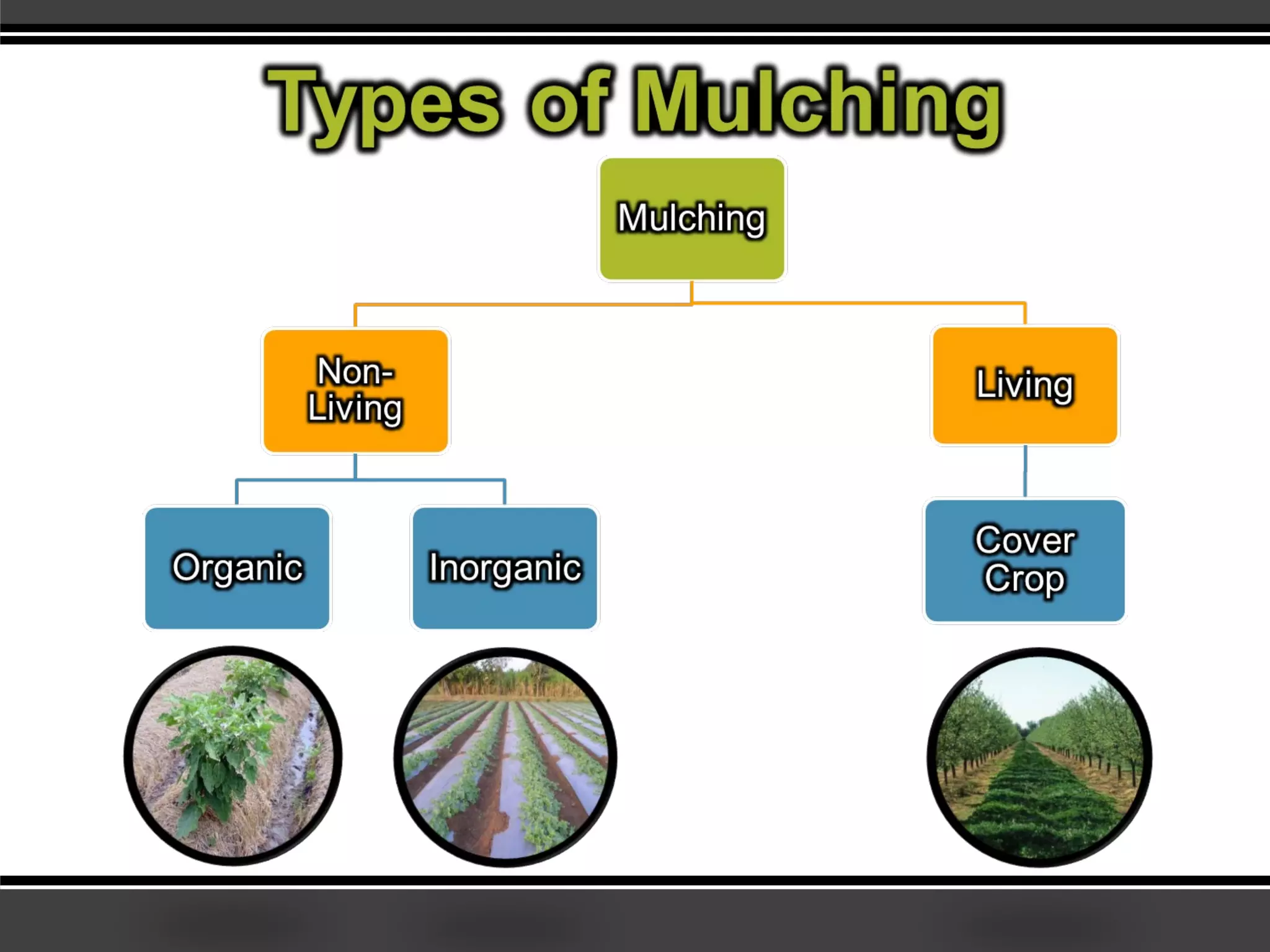
3) Types of Mulching
4) Working of Mulch
5) Advantages of Mulching
6) Water & Soil Conservation by Mulching
7) Conclusion
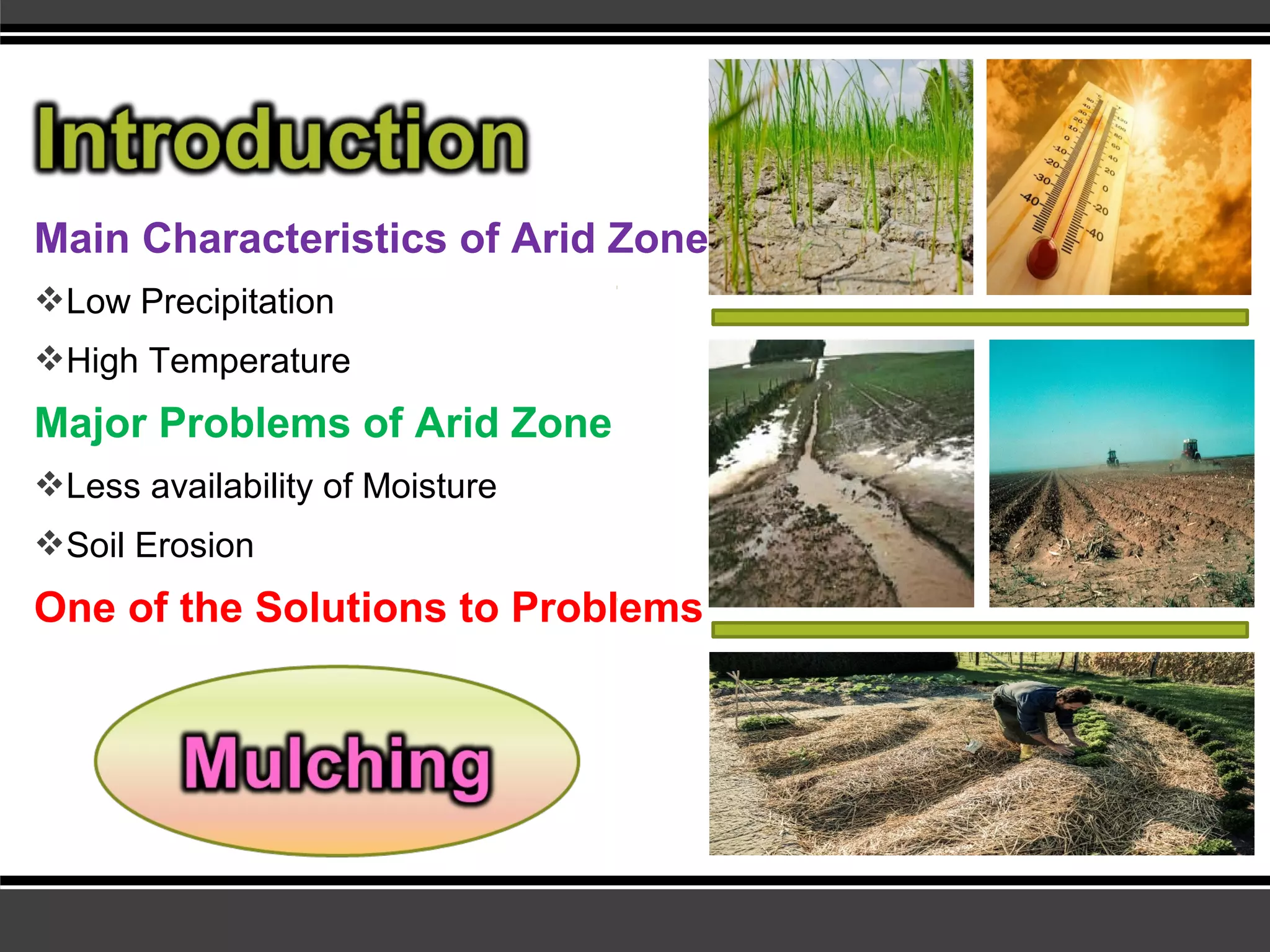
Main Characteristics of Arid Zone
Low Precipitation
High Temperature
Major Problems of Arid Zone
Less availability of Moisture
Soil Erosion
One of the Solutions to Problems
A mulch is  a  layer  of 
material  applied  to  the 
surface of an area of soil.
Mulches are  materials 
placed over the soil surface 
to  maintain  moisture  and 
improve soil conditions.
“It  is  the  type  of  mulching  in 
which  the  mulching material is
always organic.”
Organic residues, grass 
clippings, leaves, hay, straw, 
shredded bark,  whole  bark, 
animal manure, etc.
Organic mulches are temporary 
decay over time.
They add Organic matter in Soil
Increase water retention Capacity
Provide Nutrients
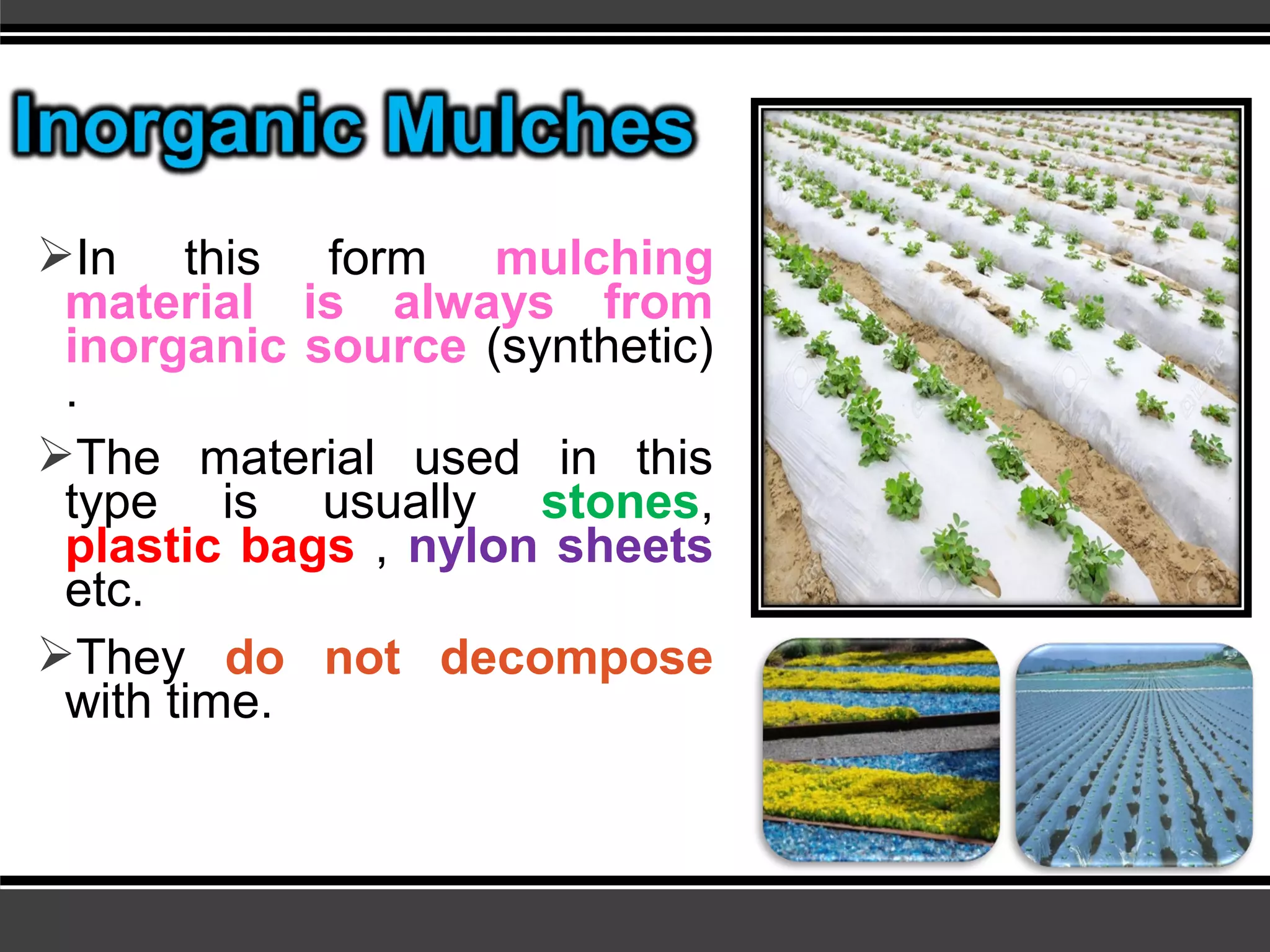
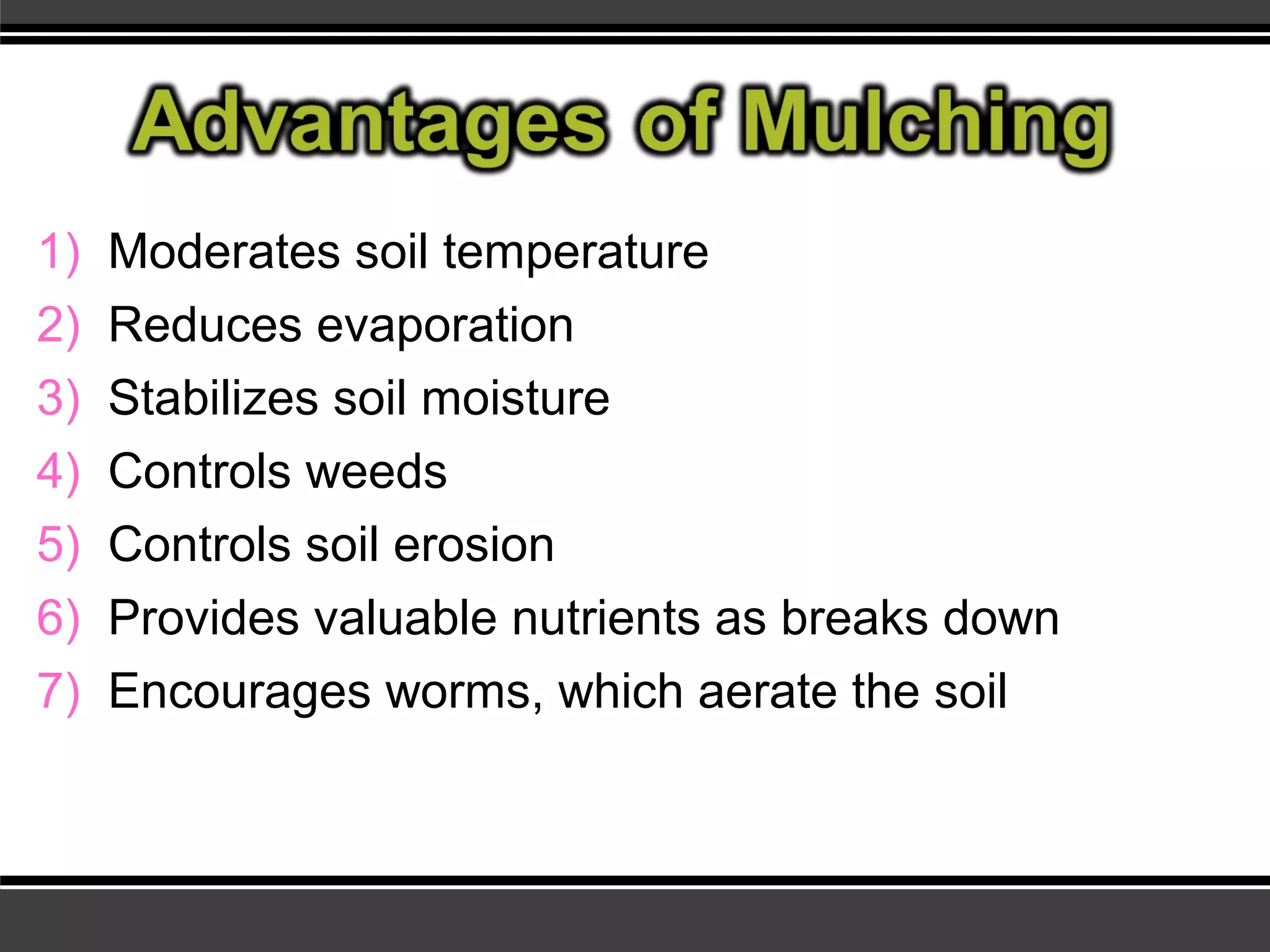
In  this  form  mulching
material is always from
inorganic source (synthetic) 
.
The  material  used  in  this 
type  is  usually  stones, 
plastic bags , nylon sheets
etc.
They  do not decompose 
with time.
1) Moderates soil temperature
2) Reduces evaporation
3) Stabilizes soil moisture
4) Controls weeds
5) Controls soil erosion
6) Provides valuable nutrients as breaks down
7) Encourages worms, which aerate the soil
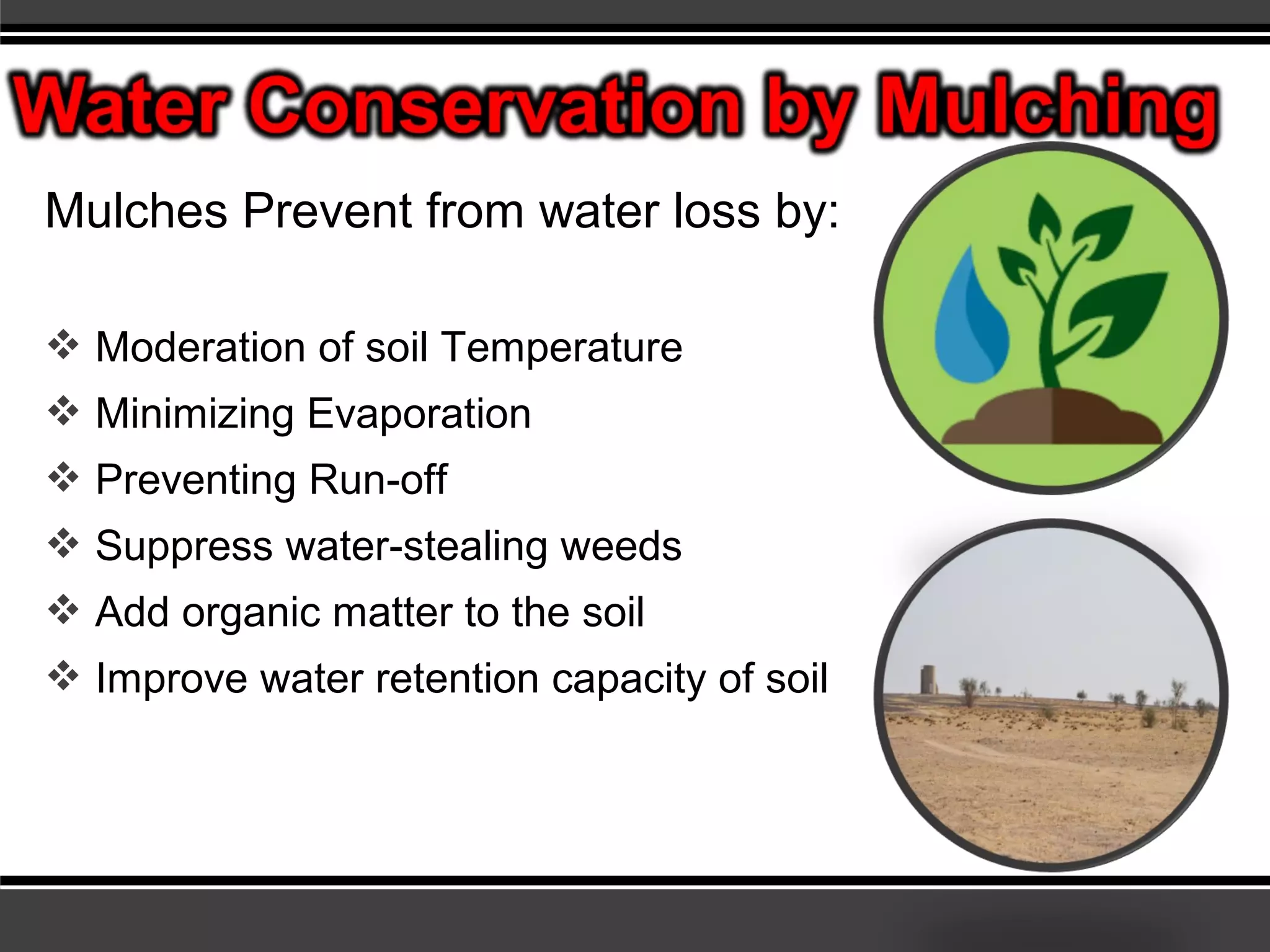
Mulches Prevent from water loss by:
 Moderation of soil Temperature
 Minimizing Evaporation
 Preventing Run-off
 Suppress water-stealing weeds
 Add organic matter to the soil
 Improve water retention capacity of soil
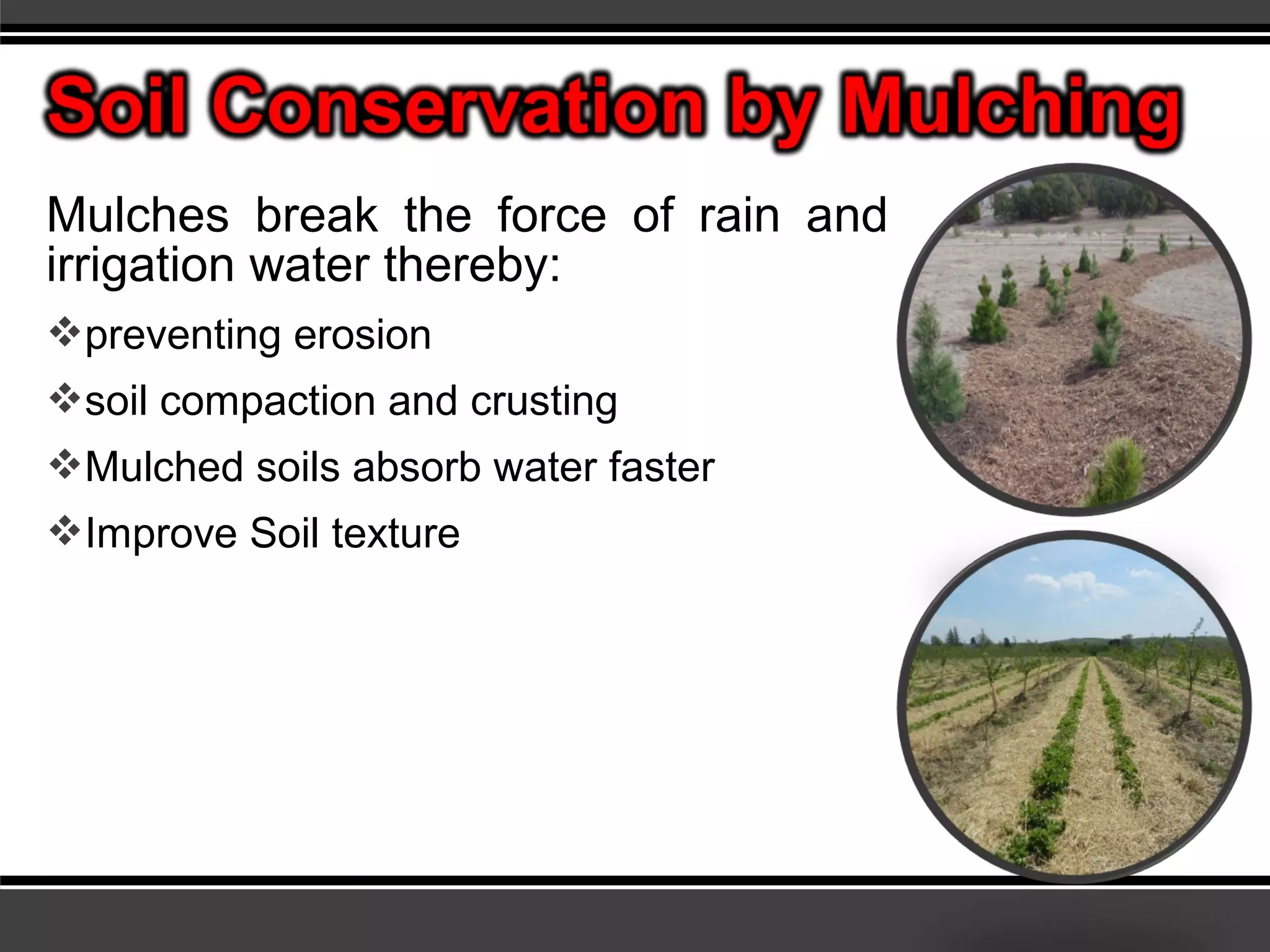
Mulches break the force of rain and
irrigation water thereby:
preventing erosion
soil compaction and crusting
Mulched soils absorb water faster
Improve Soil texture
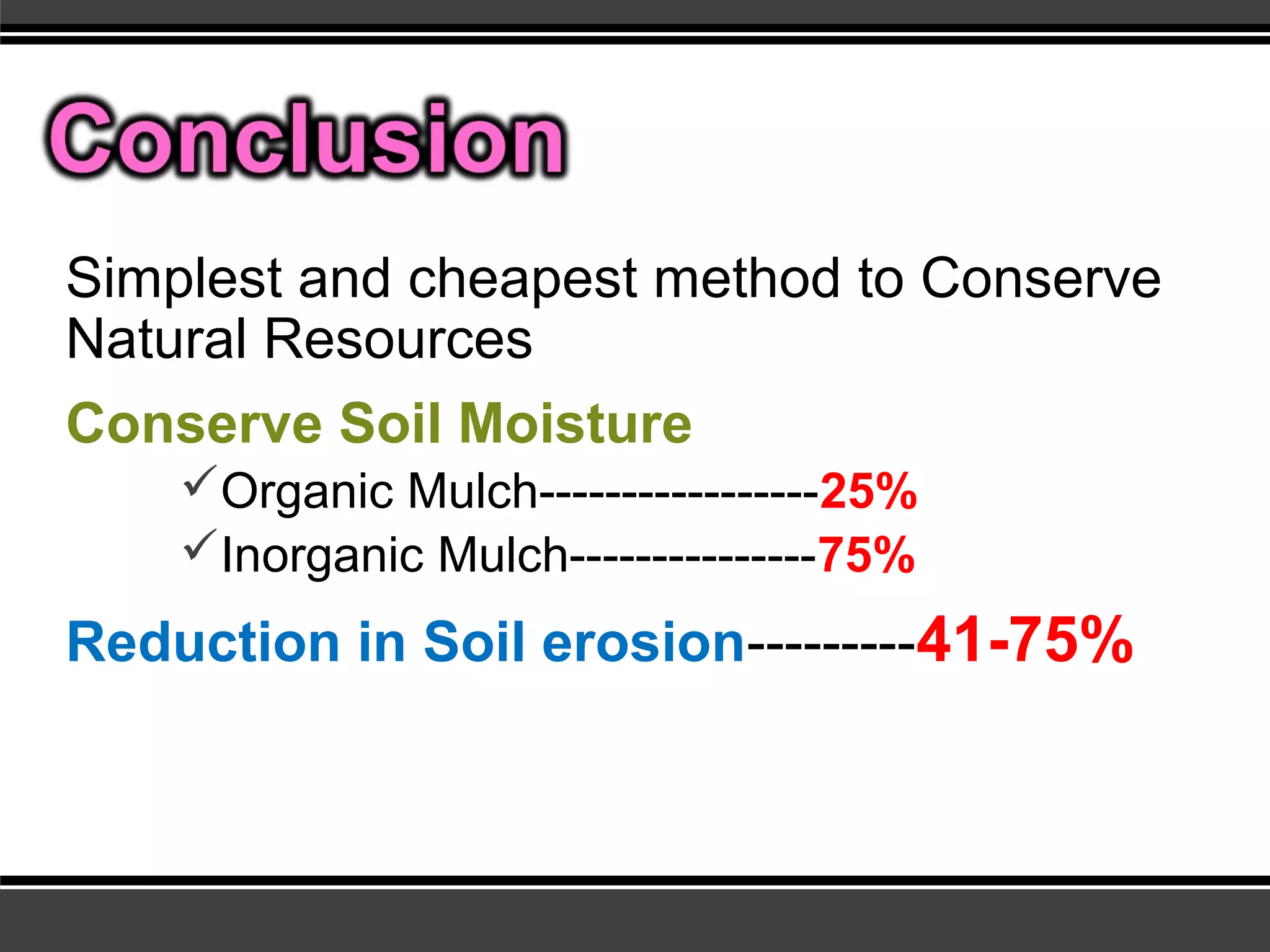
Simplest and cheapest method to Conserve
Natural Resources
Conserve Soil Moisture
Organic Mulch-----------------25%
Inorganic Mulch---------------75%
Reduction in Soil erosion---------41-75%
Mulching for soil and Water Conservation

Mulching for soil and Water Conservation

  • 3.
    1) Introduction 2) Mulching 3)Types of Mulching 4) Working of Mulch 5) Advantages of Mulching 6) Water & Soil Conservation by Mulching 7) Conclusion
  • 4.
    Main Characteristics ofArid Zone Low Precipitation High Temperature Major Problems of Arid Zone Less availability of Moisture Soil Erosion One of the Solutions to Problems
  • 5.
    A mulch is  a  layer of  material  applied  to  the  surface of an area of soil. Mulches are  materials  placed over the soil surface  to  maintain  moisture  and  improve soil conditions.
  • 7.
    “It  is  the type  of  mulching  in  which  the  mulching material is always organic.” Organic residues, grass  clippings, leaves, hay, straw,  shredded bark,  whole  bark,  animal manure, etc. Organic mulches are temporary  decay over time. They add Organic matter in Soil Increase water retention Capacity Provide Nutrients
  • 8.
    In  this  form mulching material is always from inorganic source (synthetic)  . The  material  used  in  this  type  is  usually  stones,  plastic bags , nylon sheets etc. They  do not decompose  with time.
  • 10.
    1) Moderates soiltemperature 2) Reduces evaporation 3) Stabilizes soil moisture 4) Controls weeds 5) Controls soil erosion 6) Provides valuable nutrients as breaks down 7) Encourages worms, which aerate the soil
  • 11.
    Mulches Prevent fromwater loss by:  Moderation of soil Temperature  Minimizing Evaporation  Preventing Run-off  Suppress water-stealing weeds  Add organic matter to the soil  Improve water retention capacity of soil
  • 12.
    Mulches break theforce of rain and irrigation water thereby: preventing erosion soil compaction and crusting Mulched soils absorb water faster Improve Soil texture
  • 13.
    Simplest and cheapestmethod to Conserve Natural Resources Conserve Soil Moisture Organic Mulch-----------------25% Inorganic Mulch---------------75% Reduction in Soil erosion---------41-75%