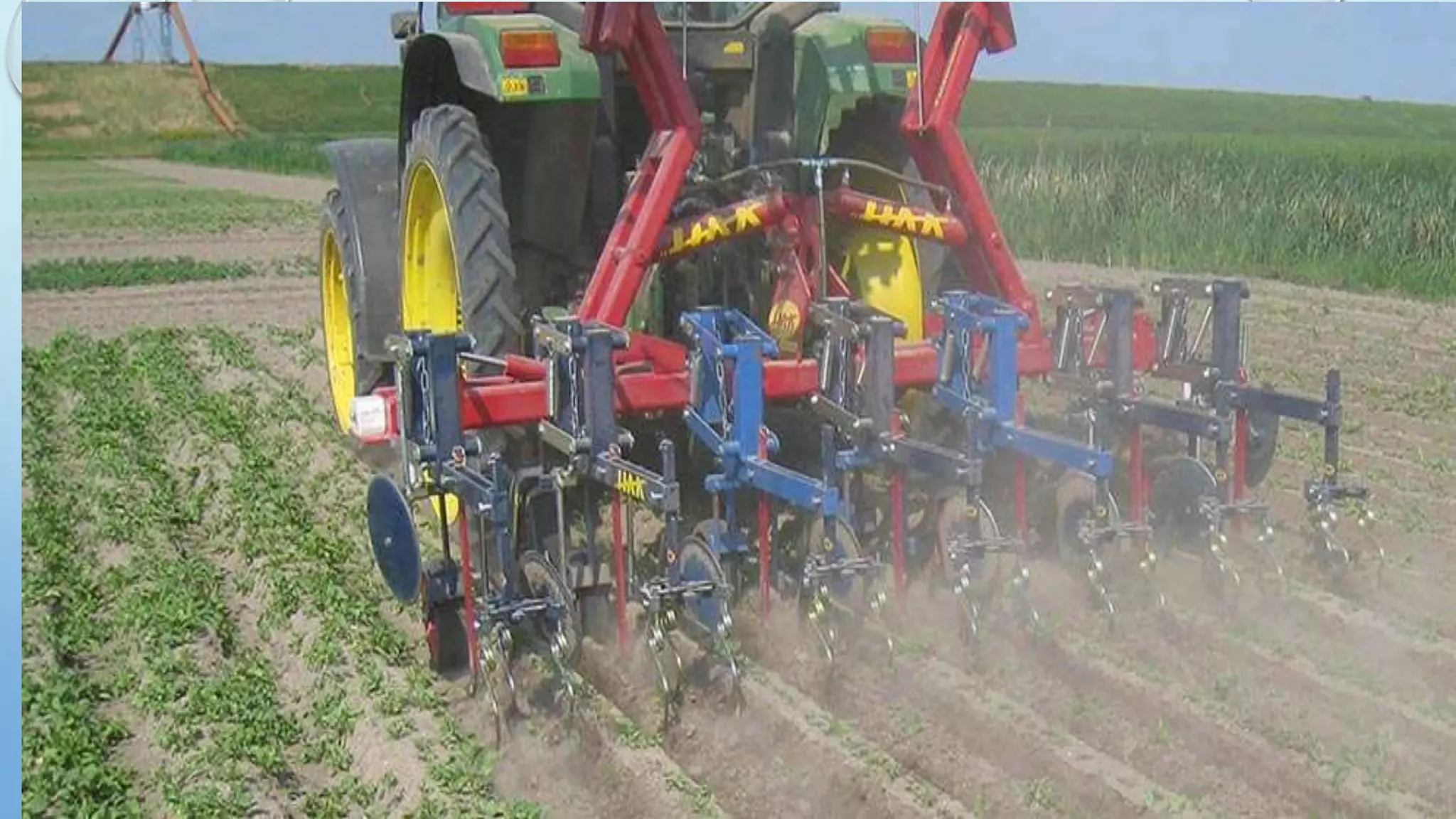
TILLAGE IMPLEMENTS FOR
WEED CONTROL
DEPARTMENT OF AGRONOMY BZU MULTAN
TILLAGE
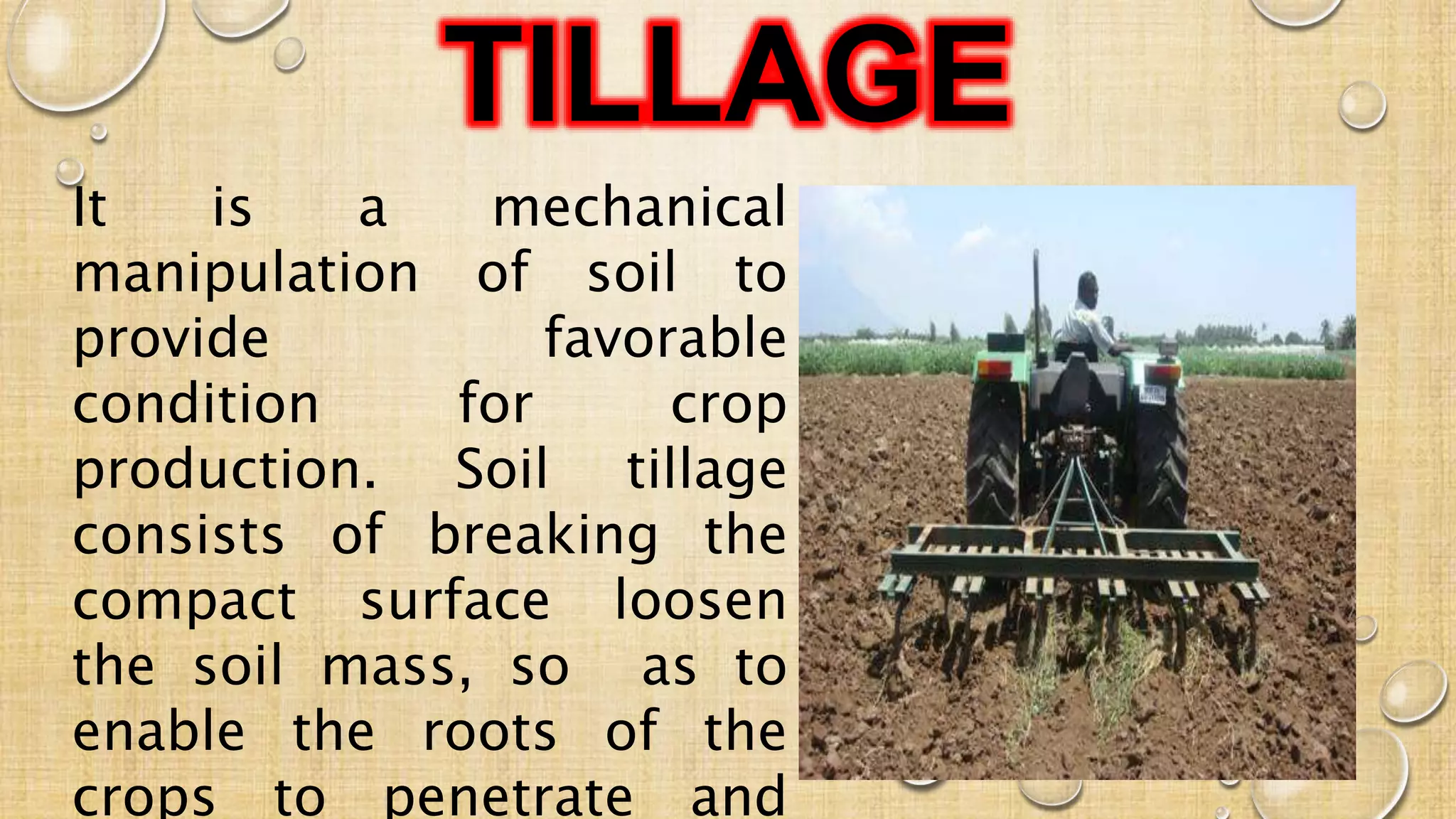
It is a mechanical
manipulation of soil to
provide favorable
condition for crop
production. Soil tillage
consists of breaking the
compact surface loosen
the soil mass, so as to
enable the roots of the
crops to penetrate and
Objectives of Tillage
To destroy and prevent weeds.
 To obtain deep seed bed, suitable for different type of crops.
 To add more humus and fertility to soil by covering the
vegetation.
 To aerate the soil for proper growth of crops.
 To increase water-absorbing capacity of the soil.
 To destroy the insects, pests and their breeding places and
 To reduce the soil erosion.
TILLAGE IMPLEMENTS
• IMPLEMENTS USED FOR OPENING AND
LOOSENING OF THE SOIL ARE KNOWN AS
PLOUGHS.
• PLOUGHS ARE USED FOR PRIMARY TILLAGE.
• PLOUGHS ARE OF THREE TYPES: WOODEN
PLOUGHS, IRON OR INVERSION PLOUGHS AND
SPECIAL PURPOSE PLOUGHS.
WEED
• A WEED IS A PLANT CONSIDERED UNDESIRABLE IN A PARTICULAR SITUATION, "A PLANT IN
THE WRONG PLACE.’’
OR
• WEED: "A HERBACEOUS PLANT NOT VALUED FOR USE OR BEAUTY, GROWING WILD AND
RANK, AND REGARDED AS CUMBERING THE GROUND OR HINDERING THE GROWTH OF
SUPERIOR VEGETATION... APPLIED TO A SHRUB OR TREE, ESPECIALLY TO A LARGE TREE, ON
ACCOUNT OF ITS ABUNDANCE IN A DISTRICT... AN UNPROFITABLE, TROUBLESOME, OR
NOXIOUS GROWTH."
Why Weeding Is Necessary?
Weeds result in a loss of yield and quality. Weed
impacts in the following ways:
Compete with major crop plants for sunlight, moisture and soil nutrients
Act as alternate hosts for insects and disease pests of major crop.
Reduce fertilizer use efficiency and reduce grain yield
Reduce efficiency of irrigation system
Reduce quality and quantity of harvest.
Laser Land Leveller
Leveled fields have more uniform soil moisture, resulting in more
uniform germination and improved crop yield.
Laser leveling improves irrigation efficiency and conserves water.
Land leveling reduces weed,
pest, and disease problems.
Laser Land Leveller
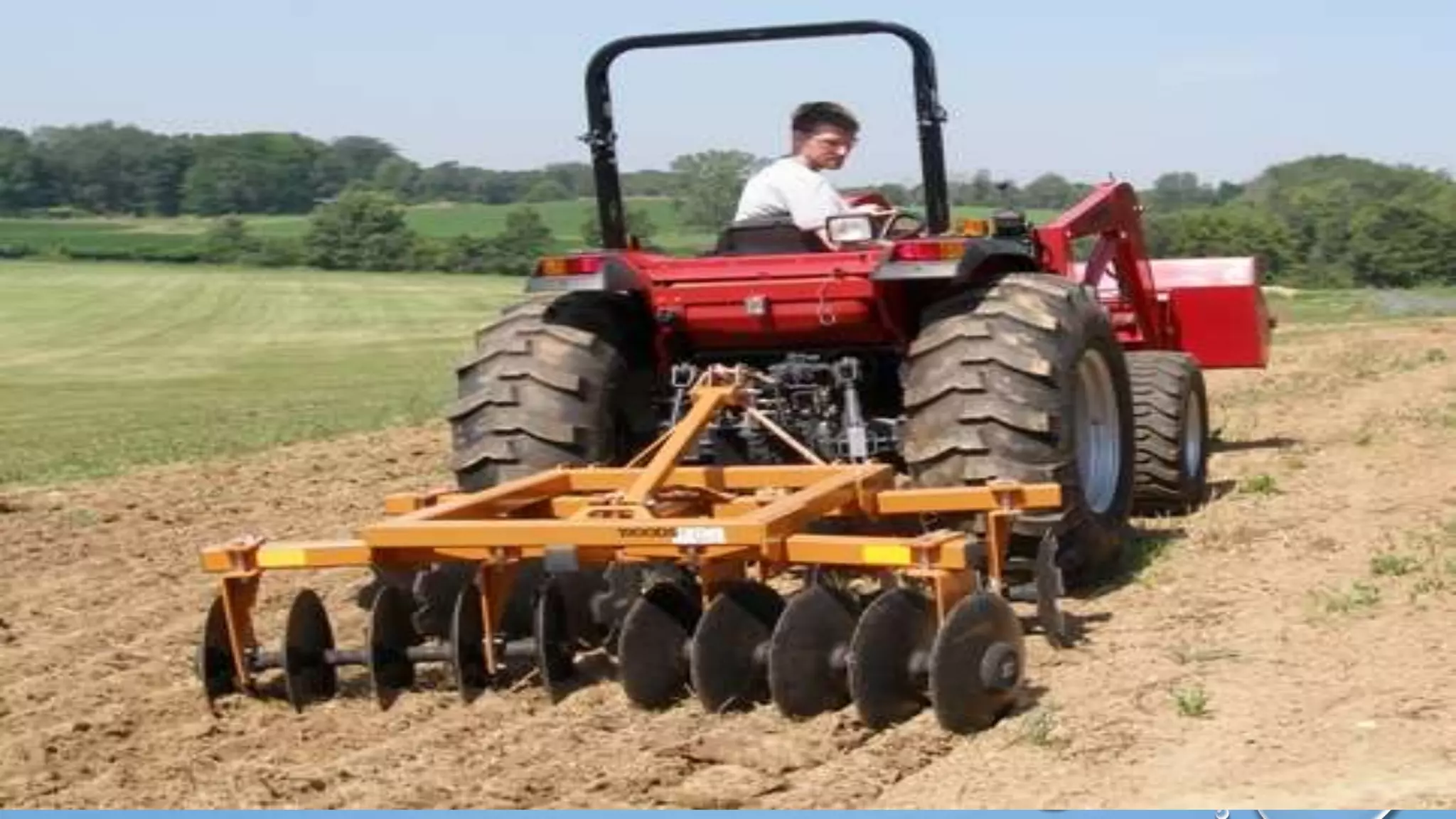
DISC HARROW
It is used for cutting and burying crop residues.
 Notched discs are very effective against weeds because of the pulling
and cutting action of the discs rather than the pushing
Designed for heavy crop residue,
Tough soils and stubble,
Pasture renovation
And any deep tillaging requirements.
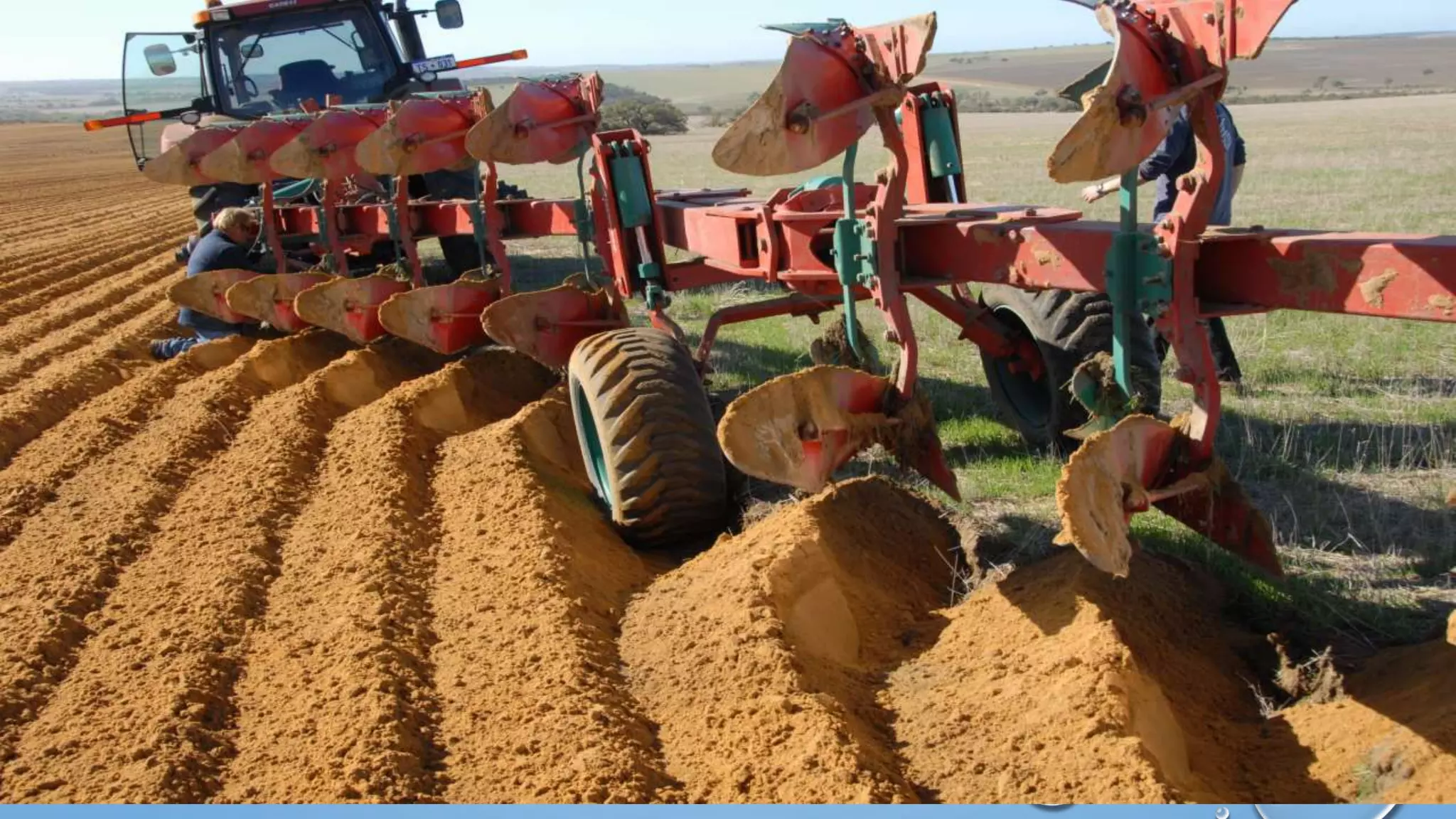
Mould board plough
It is the most Important plough for primary tillage in canal
irrigated or heavy rain areas where too much weeds grow
Moldboard ploughing of sandplain soils inverts the soil, buries the
water repellent topsoil and brings a layer of subsoil to the surface. This
provides an opportunity to bury weed seeds and non wetting topsoil; as
well as incorporate nutrients, lime, organic matter or other soil
amendments to depth
DISC PLOUGH
• It is especially useful in hard and dry, trashy, stony or stumpy land
conditions and in soil where scouring is a major problem.
• It is more suitable for land in which there is much fibrous growth of weeds
as the disc cuts and incorporates the weeds.
• Mix remains of crops and weeds throughout the depth of ploughing.
• Cut the weeds into small pieces and mix with soil.
.
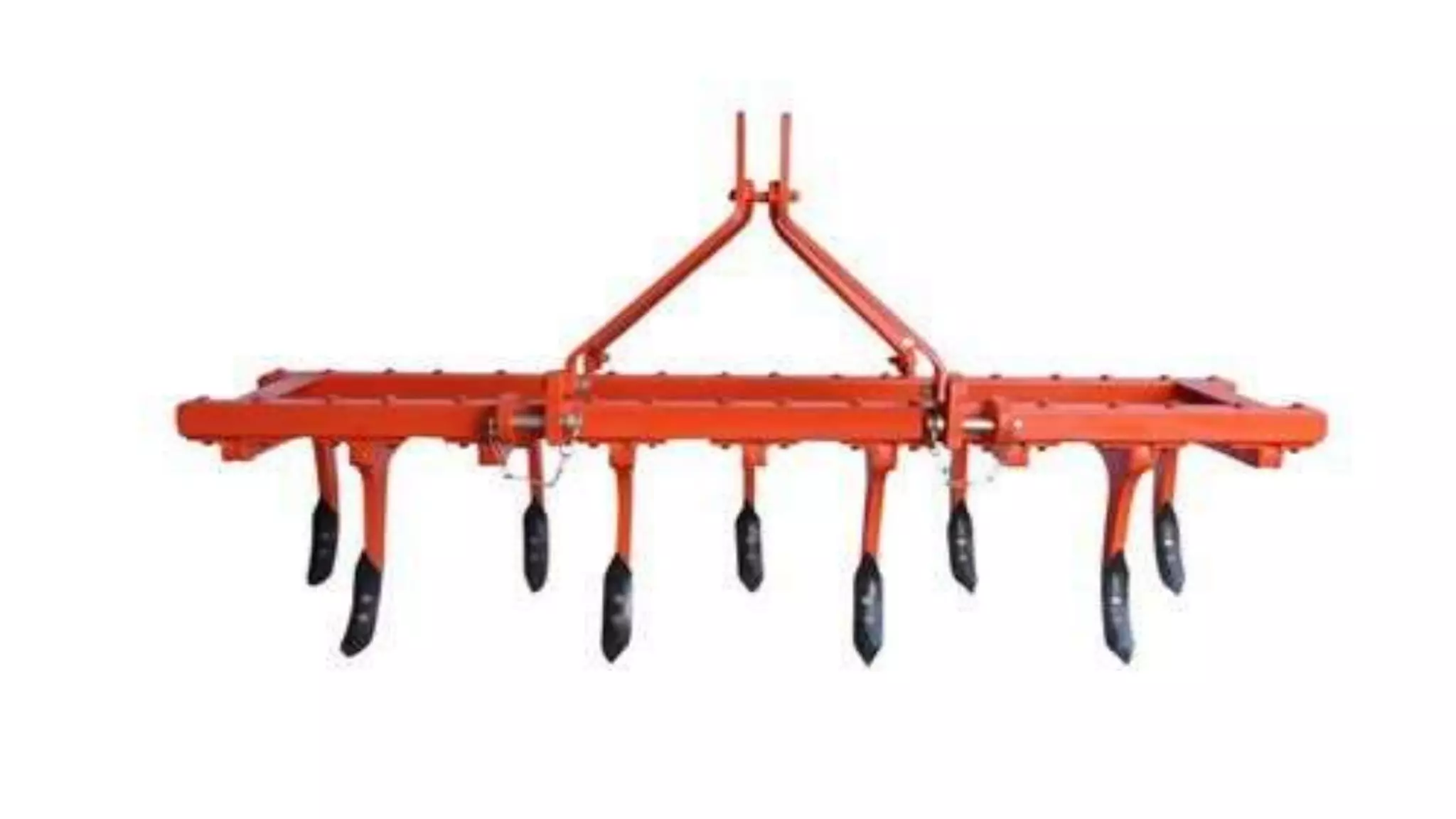
CULTIVATOR
• It is used for seedbed preparation both in dry and wet soils.
Also used for puddling purposes.
• It is used for stirring and pulverizing the soil, either before
planting or to remove weeds and to aerate and loosen the soil
after the crop has begun to grow.
• Ploughing uproots weeds, causing them to die.
• Available in 4 widths: 9,11,13,15 tines.
ROTAVATOR
• It is suitable for preparing seedbed in a single pass both in dry
and wetland conditions.
• It is also suitable for incorporating straw and green manure in
the field.
• It is also used for weed controlling cut the weeds into small
pieces with their blades and mix in the soils.
• Also damage or effects the weed seeds.
Rotary Hoe
• Used for shallow cultivation
• Uprooting of small weeds
• Used in corn, cotton, soybeans and small grains
• Best performance Is obtain at ground speed of 5
to 6 mph
ROD WEEDER
• CONSIST OF GROUND DRIVEN ROTATING, ROUND OR SQUARE ROD ABOUT 1 TO
2 INCH BELOW THE SOIL SURFACE
• ROTATING ACTION OF THE ROD LIFTS OR SEVERS THE PLANT ROOTS AND
LEAVES THEM ON OR NEAR THE SOIL SURFACE
• USUALLY 10 TO 12 FEET WIDE, WITH 4 TO 5 STANDARD SUPPORTING THE ROD
• PRIMARILY CONTROL WEEDS IN WHEATLAND DURING FALLOW PERIODS AFTER
PLOUGHINGS
FLEX-TINE HARROWS
• FLEX-TINE HARROWS ARE USED BROADCAST, BOTH OVER
AND BETWEEN THE CROP ROWS.
• THEY ARE MOST EFFICIENT WHEN WEEDS ARE IN THE
WHITE-THREAD OR COTYLEDON.
• IN DIRECT-SEEDED CROPS, SUCH AS SNAP BEANS OR
SWEET CORN, FLEX-TINE IMPLEMENTS ARE USED
PREEMERGENCE. TINES PASS ABOVE THE PLANTED SEED.
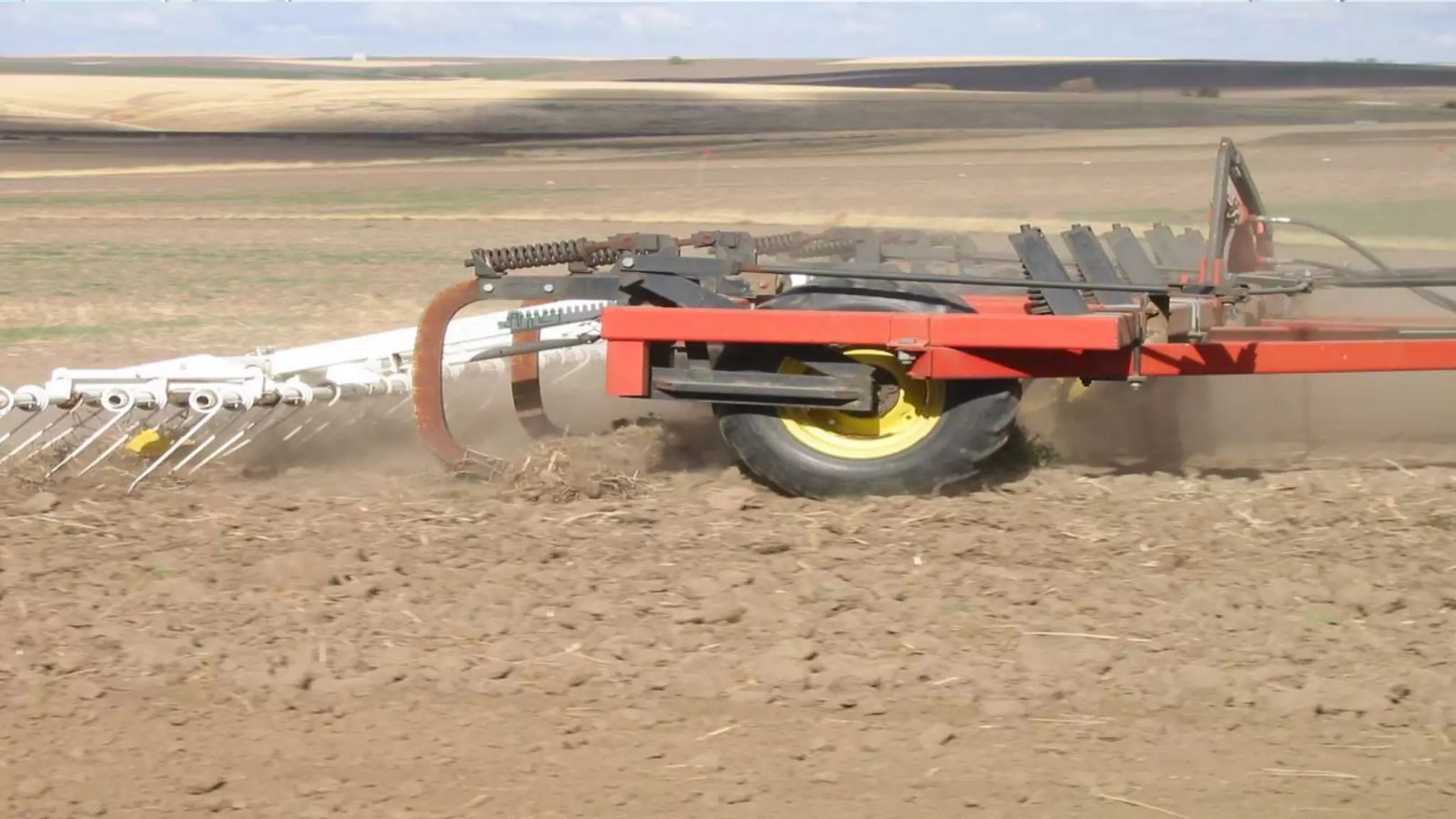
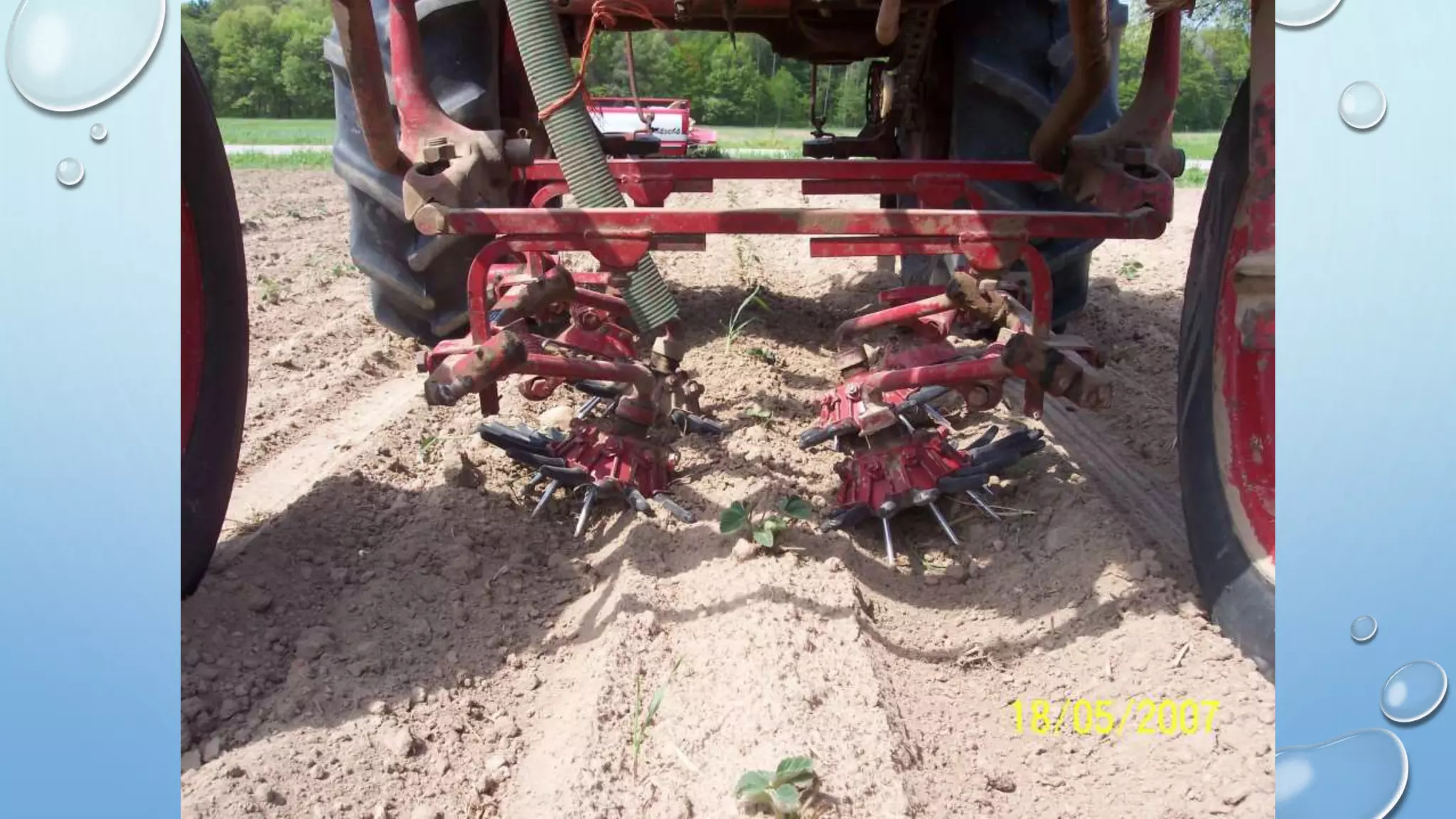
THE BRUSH HOE
• THE BRUSH HOE HAS PTO-DRIVEN PLASTIC
BRISTLES THAT ROTATE ON A HORIZONTAL
PLANE, AGGRESSIVELY RIPPING WEEDS FROM THE
SOIL.
• SHIELDS, HUNG ABOVE THE SOIL SURFACE,
PROTECT THE CROP FROM THE ROTATING
BRUSHES BUT ALLOW SOIL TO MOVE INTO THE
CROP ROW.
THE FINGER WEEDER
• THE FINGER WEEDER IS DESIGNED SPECIFICALLY FOR IN ROW
WEED CONTROL.
• THE TOOL HAS THREE PAIRS OF GROUND-DRIVEN ROTATING
FINGERS: TWO PAIRS IN THE FRONT PUSH SOIL AND
UPROOTED WEEDS AWAY FROM THE CROP ROW; WHILE THE
THIRD PAIR PUSHES SOIL BACK INTO THE ROW, COVERING
WEEDS THAT WERE MISSED BY THE OTHER FINGERS.
TORSION WEEDER
• THE TORSION WEEDER IS MOUNTED ON AN EXISTING
INTER-ROW CULTIVATOR FOR IMPROVED IN-ROW
WEED CONTROL.
• THIS SIMPLE TOOL HAS SPRING-LOADED STEEL RODS
ON EACH SIDE OF THE CROP ROW THAT UNDERCUT
SMALL WEEDS.
• THE WIDTH OF THE UNCULTIVATED STRIP IS EASILY
ADJUSTED FOR EACH CROP AND DEVELOPMENT
Any

Tillage implements for weed control

  • 1.
    TILLAGE IMPLEMENTS FOR WEEDCONTROL DEPARTMENT OF AGRONOMY BZU MULTAN
  • 2.
    TILLAGE It is amechanical manipulation of soil to provide favorable condition for crop production. Soil tillage consists of breaking the compact surface loosen the soil mass, so as to enable the roots of the crops to penetrate and
  • 3.
    Objectives of Tillage Todestroy and prevent weeds.  To obtain deep seed bed, suitable for different type of crops.  To add more humus and fertility to soil by covering the vegetation.  To aerate the soil for proper growth of crops.  To increase water-absorbing capacity of the soil.  To destroy the insects, pests and their breeding places and  To reduce the soil erosion.
  • 4.
    TILLAGE IMPLEMENTS • IMPLEMENTSUSED FOR OPENING AND LOOSENING OF THE SOIL ARE KNOWN AS PLOUGHS. • PLOUGHS ARE USED FOR PRIMARY TILLAGE. • PLOUGHS ARE OF THREE TYPES: WOODEN PLOUGHS, IRON OR INVERSION PLOUGHS AND SPECIAL PURPOSE PLOUGHS.
  • 5.
    WEED • A WEEDIS A PLANT CONSIDERED UNDESIRABLE IN A PARTICULAR SITUATION, "A PLANT IN THE WRONG PLACE.’’ OR • WEED: "A HERBACEOUS PLANT NOT VALUED FOR USE OR BEAUTY, GROWING WILD AND RANK, AND REGARDED AS CUMBERING THE GROUND OR HINDERING THE GROWTH OF SUPERIOR VEGETATION... APPLIED TO A SHRUB OR TREE, ESPECIALLY TO A LARGE TREE, ON ACCOUNT OF ITS ABUNDANCE IN A DISTRICT... AN UNPROFITABLE, TROUBLESOME, OR NOXIOUS GROWTH."
  • 6.
    Why Weeding IsNecessary? Weeds result in a loss of yield and quality. Weed impacts in the following ways: Compete with major crop plants for sunlight, moisture and soil nutrients Act as alternate hosts for insects and disease pests of major crop. Reduce fertilizer use efficiency and reduce grain yield Reduce efficiency of irrigation system Reduce quality and quantity of harvest.
  • 7.
    Laser Land Leveller Leveledfields have more uniform soil moisture, resulting in more uniform germination and improved crop yield. Laser leveling improves irrigation efficiency and conserves water. Land leveling reduces weed, pest, and disease problems.
  • 8.
  • 9.
    DISC HARROW It isused for cutting and burying crop residues.  Notched discs are very effective against weeds because of the pulling and cutting action of the discs rather than the pushing Designed for heavy crop residue, Tough soils and stubble, Pasture renovation And any deep tillaging requirements.
  • 11.
    Mould board plough Itis the most Important plough for primary tillage in canal irrigated or heavy rain areas where too much weeds grow Moldboard ploughing of sandplain soils inverts the soil, buries the water repellent topsoil and brings a layer of subsoil to the surface. This provides an opportunity to bury weed seeds and non wetting topsoil; as well as incorporate nutrients, lime, organic matter or other soil amendments to depth
  • 13.
    DISC PLOUGH • Itis especially useful in hard and dry, trashy, stony or stumpy land conditions and in soil where scouring is a major problem. • It is more suitable for land in which there is much fibrous growth of weeds as the disc cuts and incorporates the weeds. • Mix remains of crops and weeds throughout the depth of ploughing. • Cut the weeds into small pieces and mix with soil.
  • 14.
  • 15.
    CULTIVATOR • It isused for seedbed preparation both in dry and wet soils. Also used for puddling purposes. • It is used for stirring and pulverizing the soil, either before planting or to remove weeds and to aerate and loosen the soil after the crop has begun to grow. • Ploughing uproots weeds, causing them to die. • Available in 4 widths: 9,11,13,15 tines.
  • 17.
    ROTAVATOR • It issuitable for preparing seedbed in a single pass both in dry and wetland conditions. • It is also suitable for incorporating straw and green manure in the field. • It is also used for weed controlling cut the weeds into small pieces with their blades and mix in the soils. • Also damage or effects the weed seeds.
  • 19.
    Rotary Hoe • Usedfor shallow cultivation • Uprooting of small weeds • Used in corn, cotton, soybeans and small grains • Best performance Is obtain at ground speed of 5 to 6 mph
  • 21.
    ROD WEEDER • CONSISTOF GROUND DRIVEN ROTATING, ROUND OR SQUARE ROD ABOUT 1 TO 2 INCH BELOW THE SOIL SURFACE • ROTATING ACTION OF THE ROD LIFTS OR SEVERS THE PLANT ROOTS AND LEAVES THEM ON OR NEAR THE SOIL SURFACE • USUALLY 10 TO 12 FEET WIDE, WITH 4 TO 5 STANDARD SUPPORTING THE ROD • PRIMARILY CONTROL WEEDS IN WHEATLAND DURING FALLOW PERIODS AFTER PLOUGHINGS
  • 23.
    FLEX-TINE HARROWS • FLEX-TINEHARROWS ARE USED BROADCAST, BOTH OVER AND BETWEEN THE CROP ROWS. • THEY ARE MOST EFFICIENT WHEN WEEDS ARE IN THE WHITE-THREAD OR COTYLEDON. • IN DIRECT-SEEDED CROPS, SUCH AS SNAP BEANS OR SWEET CORN, FLEX-TINE IMPLEMENTS ARE USED PREEMERGENCE. TINES PASS ABOVE THE PLANTED SEED.
  • 25.
    THE BRUSH HOE •THE BRUSH HOE HAS PTO-DRIVEN PLASTIC BRISTLES THAT ROTATE ON A HORIZONTAL PLANE, AGGRESSIVELY RIPPING WEEDS FROM THE SOIL. • SHIELDS, HUNG ABOVE THE SOIL SURFACE, PROTECT THE CROP FROM THE ROTATING BRUSHES BUT ALLOW SOIL TO MOVE INTO THE CROP ROW.
  • 27.
    THE FINGER WEEDER •THE FINGER WEEDER IS DESIGNED SPECIFICALLY FOR IN ROW WEED CONTROL. • THE TOOL HAS THREE PAIRS OF GROUND-DRIVEN ROTATING FINGERS: TWO PAIRS IN THE FRONT PUSH SOIL AND UPROOTED WEEDS AWAY FROM THE CROP ROW; WHILE THE THIRD PAIR PUSHES SOIL BACK INTO THE ROW, COVERING WEEDS THAT WERE MISSED BY THE OTHER FINGERS.
  • 29.
    TORSION WEEDER • THETORSION WEEDER IS MOUNTED ON AN EXISTING INTER-ROW CULTIVATOR FOR IMPROVED IN-ROW WEED CONTROL. • THIS SIMPLE TOOL HAS SPRING-LOADED STEEL RODS ON EACH SIDE OF THE CROP ROW THAT UNDERCUT SMALL WEEDS. • THE WIDTH OF THE UNCULTIVATED STRIP IS EASILY ADJUSTED FOR EACH CROP AND DEVELOPMENT
  • 31.