ALLELOPATHY
Department of Agronomy BZU Multan
Presented By:
Malik Ghulam Asghar
Outline
1) Background
2) Allelopathy
3) Allelopathic interactions
4) Allelopathic Chemicals
5) Mode of Action of Allelochemicals
6) Effects of Allelochemicals
7) Types of Allelopathy
8) Ways of releasing Allelochemicals
9) Factors affecting the Allelopathy
10) Allelopathy and Competition
11) Allelopathy and weeds management
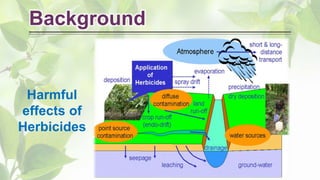
Background
Harmful
effects of
Herbicides
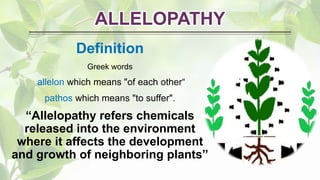
ALLELOPATHY
Definition
Greek words
allelon which means "of each other“
pathos which means "to suffer".
“Allelopathy refers chemicals
released into the environment
where it affects the development
and growth of neighboring plants”
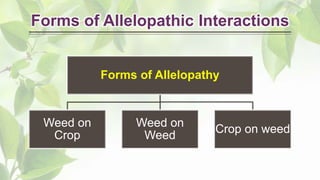
Forms of Allelopathic Interactions
Forms of Allelopathy
Weed on
Crop
Weed on
Weed
Crop on weed
Allelopathic Interaction
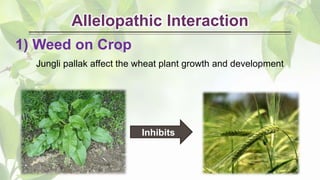
1) Weed on Crop
Jungli pallak affect the wheat plant growth and development
Inhibits
Allelopathic Interaction
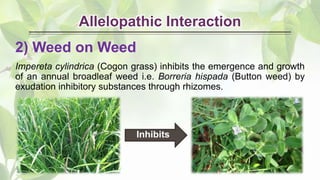
2) Weed on Weed
Impereta cylindrica (Cogon grass) inhibits the emergence and growth
of an annual broadleaf weed i.e. Borreria hispada (Button weed) by
exudation inhibitory substances through rhizomes.
Inhibits
Allelopathic Interaction
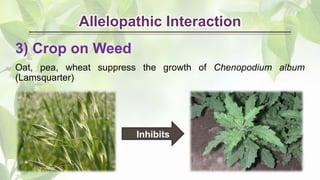
3) Crop on Weed
Oat, pea, wheat suppress the growth of Chenopodium album
(Lamsquarter)
Inhibits
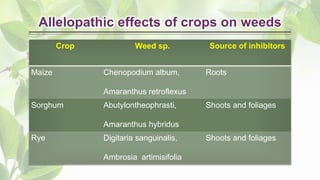
Allelopathic effects of crops on weeds
Crop Weed sp. Source of inhibitors
Maize Chenopodium album,
Amaranthus retroflexus
Roots
Sorghum Abutylontheophrasti,
Amaranthus hybridus
Shoots and foliages
Rye Digitaria sanguinalis,
Ambrosia artimisifolia
Shoots and foliages
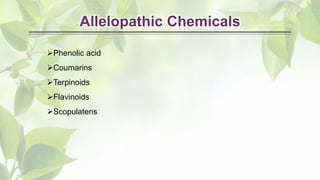
Allelopathic Chemicals
Phenolic acid
Coumarins
Terpinoids
Flavinoids
Scopulatens
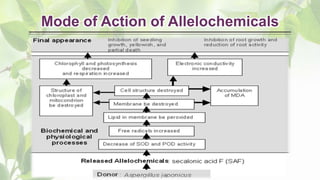
Mode of Action of Allelochemicals
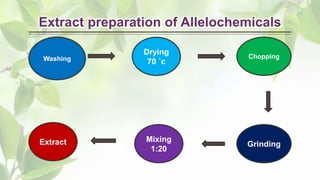
Extract preparation of Allelochemicals
Washing
Drying
70 ˚c
Chopping
Grinding
Mixing
1:20
Extract
Types of allelopathy
1. True Allelopathy
The true allelopathy is the release of substances that are toxic in the form
in which they are produced in the plant.
2. Functional Allelopathy
Functional allelopathy is the release of substances that are toxic or a
result of transformation by micro-organism .
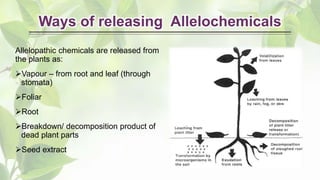
Ways of releasing Allelochemicals
Allelopathic chemicals are released from
the plants as:
Vapour – from root and leaf (through
stomata)
Foliar
Root
Breakdown/ decomposition product of
dead plant parts
Seed extract
Factors affecting Allelopathic effect
Allelopathic effects might also depend on a number of other factors that might be
important in any given situation:
Varieties
Specificity
Auto-toxicity
Crop on crop effects
Environmental factors
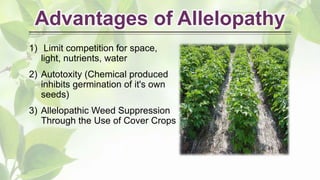
Advantages of Allelopathy
1) Limit competition for space,
light, nutrients, water
2) Autotoxity (Chemical produced
inhibits germination of it's own
seeds)
3) Allelopathic Weed Suppression
Through the Use of Cover Crops
Allelopathy and Weed Management
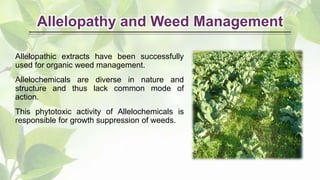
Allelopathic extracts have been successfully
used for organic weed management.
Allelochemicals are diverse in nature and
structure and thus lack common mode of
action.
This phytotoxic activity of Allelochemicals is
responsible for growth suppression of weeds.
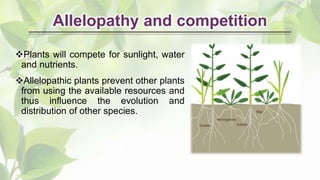
Allelopathy and competition
Plants will compete for sunlight, water
and nutrients.
Allelopathic plants prevent other plants
from using the available resources and
thus influence the evolution and
distribution of other species.
Management of Plant Allelopathy
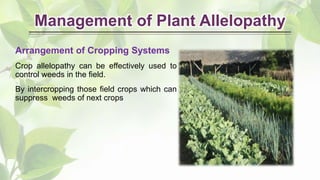
Arrangement of Cropping Systems
Crop allelopathy can be effectively used to
control weeds in the field.
By intercropping those field crops which can
suppress weeds of next crops
Management of Plant Allelopathy
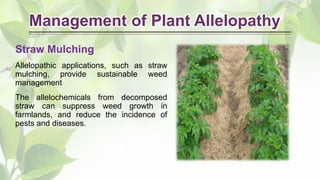
Straw Mulching
Allelopathic applications, such as straw
mulching, provide sustainable weed
management
The allelochemicals from decomposed
straw can suppress weed growth in
farmlands, and reduce the incidence of
pests and diseases.
Thank you !

Allelopathy

  • 1.
    ALLELOPATHY Department of AgronomyBZU Multan Presented By: Malik Ghulam Asghar
  • 2.
    Outline 1) Background 2) Allelopathy 3)Allelopathic interactions 4) Allelopathic Chemicals 5) Mode of Action of Allelochemicals 6) Effects of Allelochemicals 7) Types of Allelopathy 8) Ways of releasing Allelochemicals 9) Factors affecting the Allelopathy 10) Allelopathy and Competition 11) Allelopathy and weeds management
  • 3.
  • 4.
    ALLELOPATHY Definition Greek words allelon whichmeans "of each other“ pathos which means "to suffer". “Allelopathy refers chemicals released into the environment where it affects the development and growth of neighboring plants”
  • 5.
    Forms of AllelopathicInteractions Forms of Allelopathy Weed on Crop Weed on Weed Crop on weed
  • 6.
    Allelopathic Interaction 1) Weedon Crop Jungli pallak affect the wheat plant growth and development Inhibits
  • 7.
    Allelopathic Interaction 2) Weedon Weed Impereta cylindrica (Cogon grass) inhibits the emergence and growth of an annual broadleaf weed i.e. Borreria hispada (Button weed) by exudation inhibitory substances through rhizomes. Inhibits
  • 8.
    Allelopathic Interaction 3) Cropon Weed Oat, pea, wheat suppress the growth of Chenopodium album (Lamsquarter) Inhibits
  • 9.
    Allelopathic effects ofcrops on weeds Crop Weed sp. Source of inhibitors Maize Chenopodium album, Amaranthus retroflexus Roots Sorghum Abutylontheophrasti, Amaranthus hybridus Shoots and foliages Rye Digitaria sanguinalis, Ambrosia artimisifolia Shoots and foliages
  • 10.
  • 11.
    Mode of Actionof Allelochemicals
  • 12.
    Extract preparation ofAllelochemicals Washing Drying 70 ˚c Chopping Grinding Mixing 1:20 Extract
  • 13.
    Types of allelopathy 1.True Allelopathy The true allelopathy is the release of substances that are toxic in the form in which they are produced in the plant. 2. Functional Allelopathy Functional allelopathy is the release of substances that are toxic or a result of transformation by micro-organism .
  • 14.
    Ways of releasingAllelochemicals Allelopathic chemicals are released from the plants as: Vapour – from root and leaf (through stomata) Foliar Root Breakdown/ decomposition product of dead plant parts Seed extract
  • 15.
    Factors affecting Allelopathiceffect Allelopathic effects might also depend on a number of other factors that might be important in any given situation: Varieties Specificity Auto-toxicity Crop on crop effects Environmental factors
  • 16.
    Advantages of Allelopathy 1)Limit competition for space, light, nutrients, water 2) Autotoxity (Chemical produced inhibits germination of it's own seeds) 3) Allelopathic Weed Suppression Through the Use of Cover Crops
  • 17.
    Allelopathy and WeedManagement Allelopathic extracts have been successfully used for organic weed management. Allelochemicals are diverse in nature and structure and thus lack common mode of action. This phytotoxic activity of Allelochemicals is responsible for growth suppression of weeds.
  • 18.
    Allelopathy and competition Plantswill compete for sunlight, water and nutrients. Allelopathic plants prevent other plants from using the available resources and thus influence the evolution and distribution of other species.
  • 19.
    Management of PlantAllelopathy Arrangement of Cropping Systems Crop allelopathy can be effectively used to control weeds in the field. By intercropping those field crops which can suppress weeds of next crops
  • 20.
    Management of PlantAllelopathy Straw Mulching Allelopathic applications, such as straw mulching, provide sustainable weed management The allelochemicals from decomposed straw can suppress weed growth in farmlands, and reduce the incidence of pests and diseases.
  • 21.