Crop production and management
IRRIGATION
Application of water to soil
for the purpose of supplying
the moisture essential for
normal plant growth and
development
• To Supply Water
• To Provide Crop Insurance
• To Cool Soil And Micro Atmosphere
• To Leach Out Salts
• To Soften Tillage Pans
• For Food And Fibre Production
• To Protect Crop From Frost
METHODS OF IRRIGATION
•Surface
•Sub Surface
•Sprinkler
•Drip
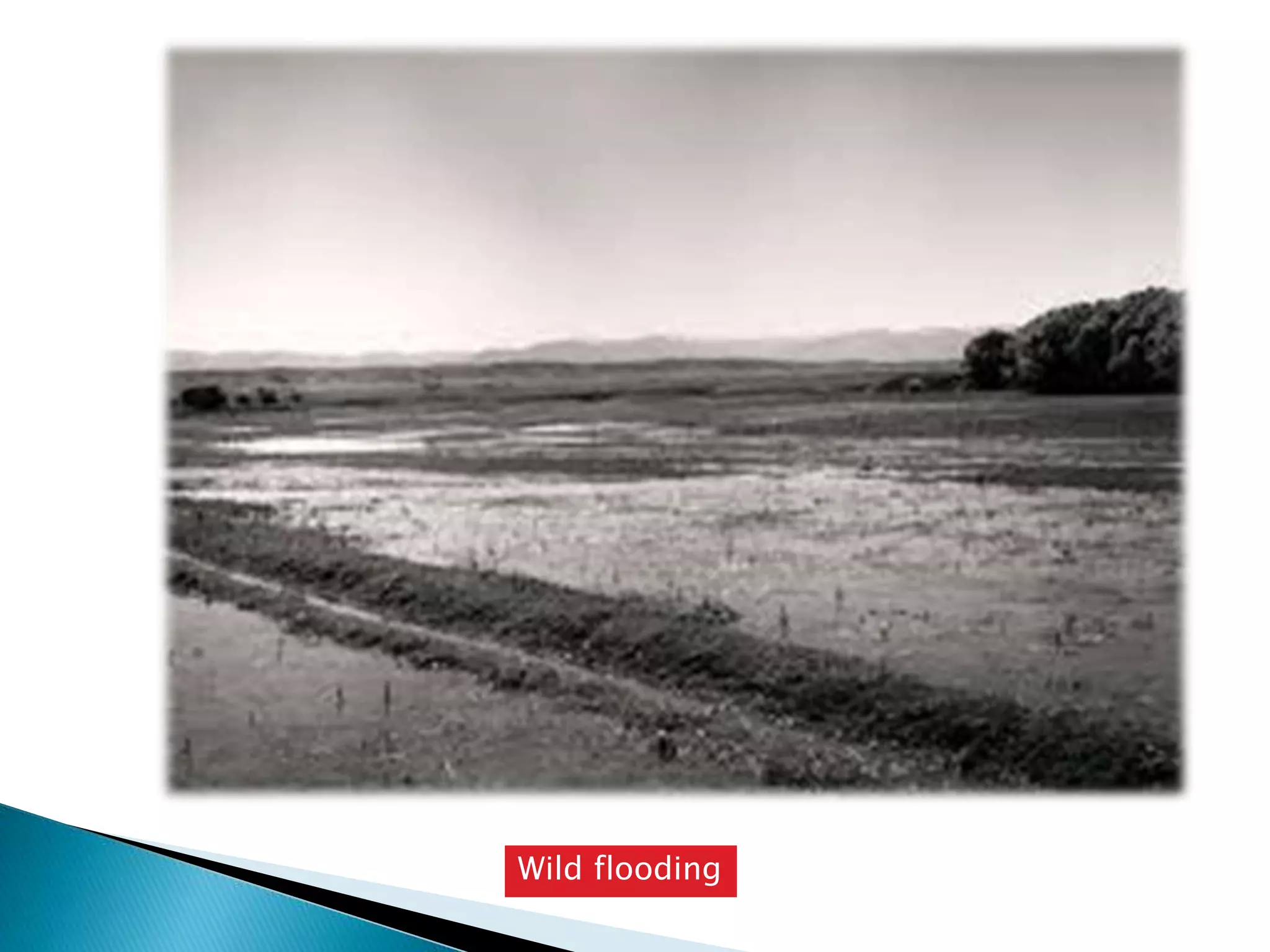
A) Uncontrolled/ Wild flooding
B) Controlled flooding
1) Basin
A) Check B) Ring
2) Border Strip
3) Furrow Irrigation
I) Deep Furrow
II) Corrugations
Applying water to the field without any
bunds to guide the flow irrigation water
wetting the soil surface
 Used in millets lawns
 Used in land preparations
 Loss due to percolation and surface runoff
Wild flooding
The field is metre square) surrounded by small bunds
In this method of irrigation the field is usually divided
into square plots ( 4 m sq to 4000 m sq) surrounded by
small bunds of dykes or lever
Used in groundnut, sorghum , vegetables etc
Leaches out salts below the crop root zone depth
Circular bund is constructed
around each plant/tree to create
a basin for irrigation
The cultivated field to be irrigated is divided
into a number of long parallel strips, generally
5 to 15 m in width and 75 to 300m in length,
separated by border ridges or low dykes of
about 15 cm high, laid in the direction of the
slope.
Used In Bajra Wheat Barley Groundnut
Border strip
In furrow method of irrigation the flat bed surface is
converted into a slope.
The spacing of the furrow is ordinarily determined by the
spacing of the row crop.
Most efficient use of water is possible
Corrugations or rills are shallow furrows running down the slope
from ditches or laterals, which are sometimes very close to each
other
Useful in closer growing crops
Applying the water beneath the soil surface close
to the plant roots so that either water seeps from
the slides of the channels towards the plant roots
or through capillary movement upward.
30- 75 below the ground depending on texture
and rooting of crop
Soil with high salt content cannot be used
High investment is required
Not adopted widely in India
Water is conveyed in pipe lines under
desired pressure (0.7 to 10kg/cm sq)
developed by the pump and is sprayed
through nozzles perforation over the land
or crop surface in an uniform pattern at a
rate (0.06 to 50 l/hr) less than infiltrability
of the soil, somewhat resembling the
rainfall.
Typical sprinkler system consists of
Pumping unit
Main line
Laterals
Risers
Sprinkler heads
Soil and water management

Soil and water management

  • 1.
  • 2.
  • 3.
    Application of waterto soil for the purpose of supplying the moisture essential for normal plant growth and development
  • 4.
    • To SupplyWater • To Provide Crop Insurance • To Cool Soil And Micro Atmosphere • To Leach Out Salts • To Soften Tillage Pans • For Food And Fibre Production • To Protect Crop From Frost
  • 5.
    METHODS OF IRRIGATION •Surface •SubSurface •Sprinkler •Drip
  • 6.
    A) Uncontrolled/ Wildflooding B) Controlled flooding 1) Basin A) Check B) Ring 2) Border Strip 3) Furrow Irrigation I) Deep Furrow II) Corrugations
  • 7.
    Applying water tothe field without any bunds to guide the flow irrigation water wetting the soil surface  Used in millets lawns  Used in land preparations  Loss due to percolation and surface runoff
  • 8.
  • 10.
    The field ismetre square) surrounded by small bunds In this method of irrigation the field is usually divided into square plots ( 4 m sq to 4000 m sq) surrounded by small bunds of dykes or lever Used in groundnut, sorghum , vegetables etc Leaches out salts below the crop root zone depth
  • 14.
    Circular bund isconstructed around each plant/tree to create a basin for irrigation
  • 17.
    The cultivated fieldto be irrigated is divided into a number of long parallel strips, generally 5 to 15 m in width and 75 to 300m in length, separated by border ridges or low dykes of about 15 cm high, laid in the direction of the slope. Used In Bajra Wheat Barley Groundnut
  • 18.
  • 20.
    In furrow methodof irrigation the flat bed surface is converted into a slope. The spacing of the furrow is ordinarily determined by the spacing of the row crop. Most efficient use of water is possible
  • 23.
    Corrugations or rillsare shallow furrows running down the slope from ditches or laterals, which are sometimes very close to each other Useful in closer growing crops
  • 25.
    Applying the waterbeneath the soil surface close to the plant roots so that either water seeps from the slides of the channels towards the plant roots or through capillary movement upward. 30- 75 below the ground depending on texture and rooting of crop Soil with high salt content cannot be used High investment is required Not adopted widely in India
  • 27.
    Water is conveyedin pipe lines under desired pressure (0.7 to 10kg/cm sq) developed by the pump and is sprayed through nozzles perforation over the land or crop surface in an uniform pattern at a rate (0.06 to 50 l/hr) less than infiltrability of the soil, somewhat resembling the rainfall.
  • 28.
    Typical sprinkler systemconsists of Pumping unit Main line Laterals Risers Sprinkler heads