MOTIVATION
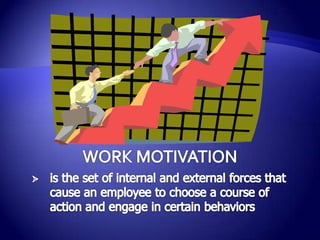
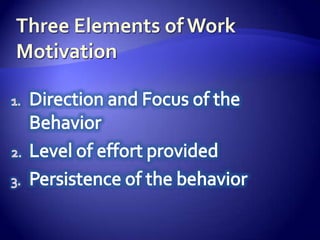
WORK MOTIVATIONis the set of internal and external forces that cause an employee to choose a course of action and engage in certain behaviorsThree Elements of Work MotivationDirection and Focus of the BehaviorLevel of effort providedPersistence of the behavior
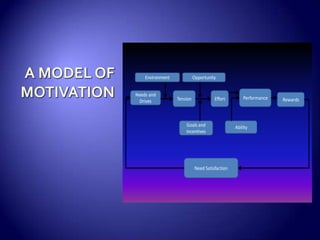
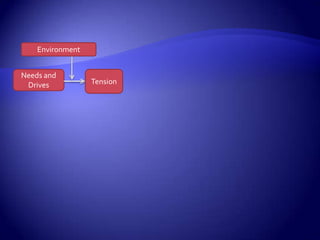
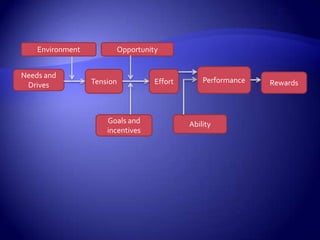
A MODEL OF MOTIVATION
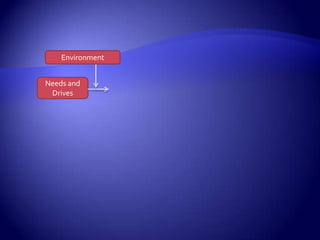
EnvironmentNeeds and Drives
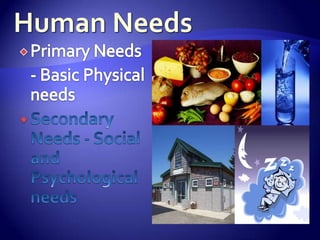
Human NeedsPrimary Needs 	- Basic Physical needsSecondary Needs - Social and Psychological needs
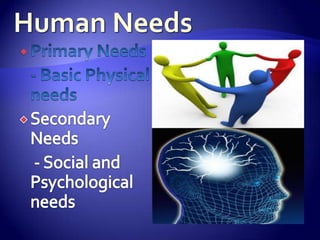
Human NeedsPrimary Needs 	- Basic Physical needsSecondary Needs	 - Social and Psychological needs
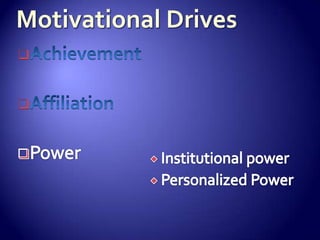
Motivational DrivesAchievement
Affiliation
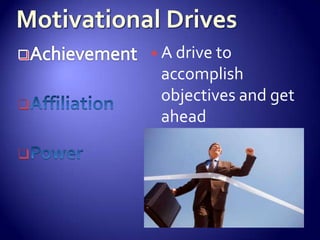
PowerMotivational DrivesA drive to accomplish objectives and get aheadAchievement
Affiliation
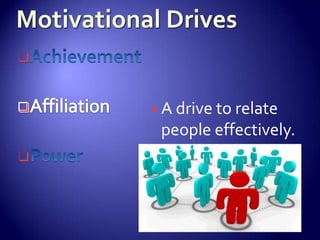
PowerMotivational DrivesA drive to relate people effectively.Achievement
Affiliation
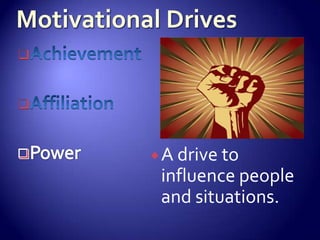
PowerMotivational DrivesA drive to influence people and situations.Achievement
Affiliation
PowerMotivational DrivesInstitutional powerPersonalized PowerAchievement
Affiliation
PowerEnvironmentNeeds and DrivesTension
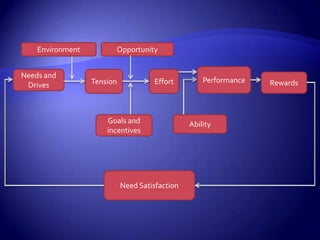
OpportunityEnvironmentPerformanceNeeds and DrivesTensionEffortRewardsAbilityGoals and incentives
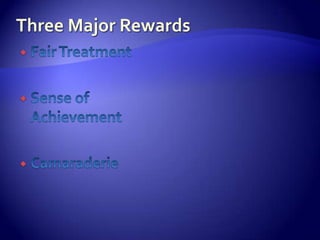
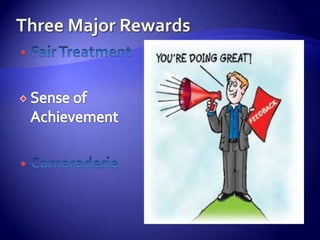
Three Major RewardsFair TreatmentSense of AchievementCamaraderie
OpportunityEnvironmentPerformanceNeeds and DrivesTensionEffortRewardsAbilityGoals and incentivesNeed Satisfaction
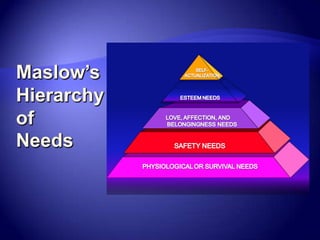
Maslow’sHierarchyofNeeds
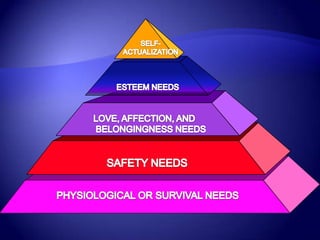
SELF-ACTUALIZATIONESTEEM NEEDSLOVE, AFFECTION, AND BELONGINGNESS NEEDSSAFETY NEEDSPHYSIOLOGICAL OR SURVIVAL NEEDS
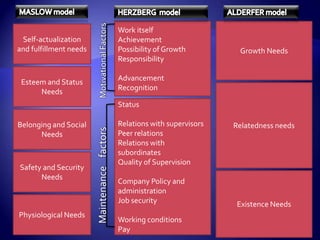
MASLOW modelHERZBERG  modelALDERFER modelWork itselfAchievementPossibility of GrowthResponsibilityAdvancementRecognitionGrowth NeedsSelf-actualization and fulfillment needsMotivational FactorsEsteem and Status NeedsRelatedness needsStatusRelations with supervisorsPeer relationsRelations with subordinatesQuality of SupervisionCompany Policy and administrationJob securityWorking conditionsPayBelonging and Social NeedsSafety and Security NeedsMaintenance    factorsExistence NeedsPhysiological Needs
BEHAVIOR MODIFICATION by: Jacel
Organizational Behavior Modification or OB Mod-> Is the application in organizations of the principles of behavior modification.
Law of Effect-> state that a person tends to repeat behavior that is accompanied by favorable consequences (reinforcement) and tends not to repeat behavior that is accompanied by unfavorable consequences.
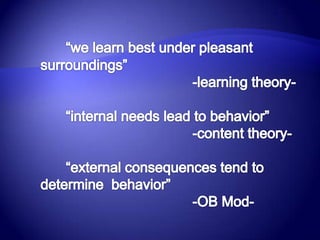
“we learn best under pleasant surroundings”						-learning theory-	“internal needs lead to behavior”						-content theory-	“external consequences tend to determine  behavior”						-OB Mod-
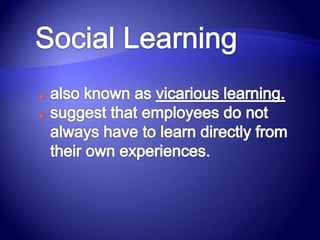
Social Learningalso known as vicarious learning.suggest that employees do not always have to learn directly from their own experiences.
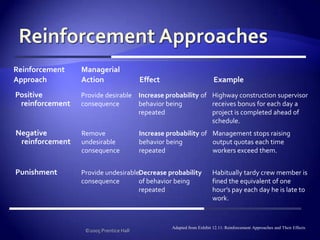
©2005 Prentice HallReinforcement ApproachesReinforcement	Managerial Approach 	Action 	Effect 	ExamplePositive reinforcementProvide desirable consequenceIncrease probability of behavior being repeatedHighway construction supervisor receives bonus for each day a project is completed ahead of schedule.Negative reinforcementRemove undesirable consequenceIncrease probability of behavior being repeatedManagement stops raising output quotas each time workers exceed them.PunishmentProvide undesirable consequenceDecrease probability of behavior being repeatedHabitually tardy crew member is fined the equivalent of one hour’s pay each day he is late to work.Adapted from Exhibit 12.11: Reinforcement Approaches and Their Effects
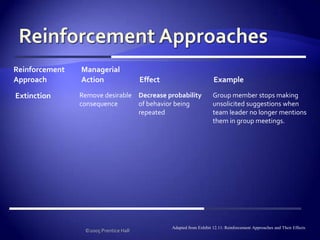
©2005 Prentice HallReinforcement ApproachesReinforcement	Managerial Approach 	Action 	Effect 	ExampleExtinctionRemove desirable consequenceDecrease probability of behavior being repeatedGroup member stops making unsolicited suggestions when team leader no longer mentions them in group meetings.Adapted from Exhibit 12.11: Reinforcement Approaches and Their Effects
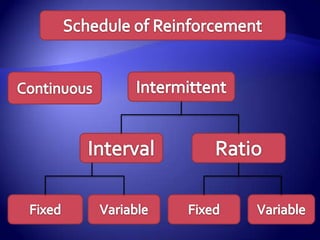
Schedule of ReinforcementIntermittentContinuousRatioIntervalVariableFixedVariableFixed
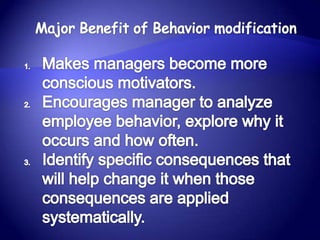
Major Benefit of Behavior modificationMakes managers become more conscious motivators.Encourages manager to analyze employee behavior, explore why it occurs and how often.Identify specific consequences that will help change it when those consequences are applied systematically.
THE EQUITY MODEL by: julyanne
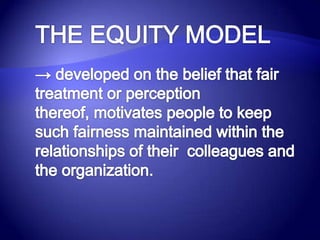
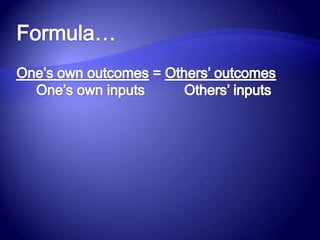
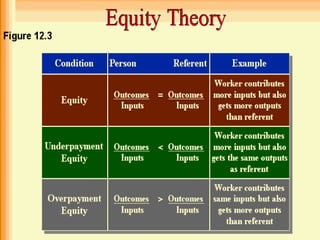
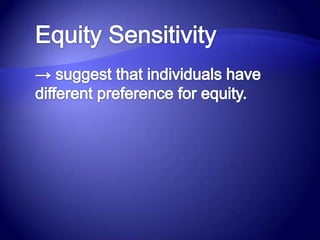
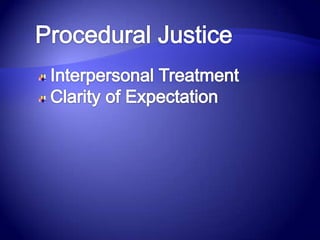
THE EQUITY MODEL -> developed on the belief that fair treatment or perception thereof, motivates people to keep such fairness maintained within the relationships of their  colleagues and the organization.
Formula…One’s own outcomes = Others’ outcomes     One’s own inputs	    Others’ inputs

Motivation.an