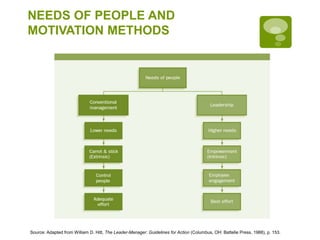
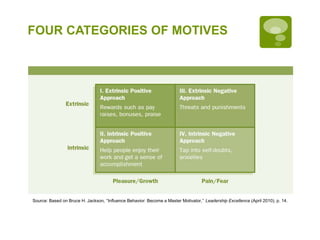
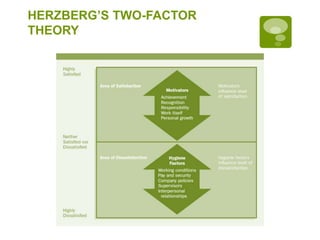
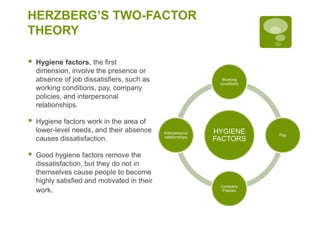
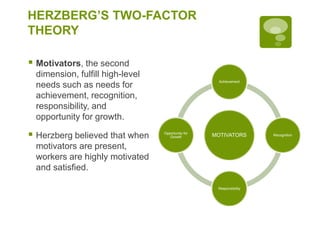
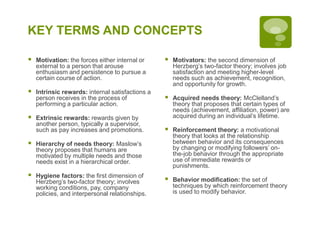
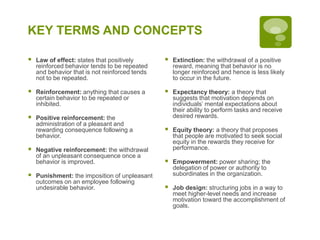
This example illustrates Herzberg's two-factor theory. Specifically, it relates to the hygiene factors dimension. Patient satisfaction survey scores measure things like working conditions, company policies, and interpersonal relationships - which Herzberg classified as hygiene factors. When hygiene factors are poor, work is dissatisfying. In this case, if patient satisfaction scores are low, it could indicate dissatisfying working conditions, policies, or relationships for patients. The government is using patient satisfaction scores/hygiene factors to determine Medicare reimbursement rates as a way to reduce dissatisfaction among patients and healthcare providers. However, according to Herzberg's theory, while addressing hygiene factors can reduce dissatisfaction, it does not necessarily improve satisfaction or motivation on its own