Group G
BBA-I
April 21st, 2017
The Prime mover of all movers.
Motivation
 Psychologists define Motivation as the needs and desires that
direct behavior.
 The word ‘Motivation’ is derived from a Latin word i.e. ‘Movere’
which means to move.
 Motives might be a need, push, pull, urge or a drive.
Motivation is what gets you started. Habit is what keeps
you going.
Jim Ryun
What is Motivation.
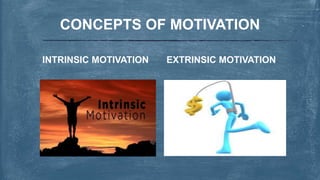
EXTRINSIC MOTIVATIONINTRINSIC MOTIVATION
CONCEPTS OF MOTIVATION
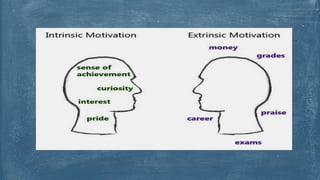
 It’s a NATURAL MOTIVATIONAL TENDENCY.
It’s a SELF DESIRE to seek out new things and challenges.
It is driven by one’s INTEREST or ENJOYMENT in the task.
 In these studies , it was EVIDENT that organism engage in
PLAYFUL and CURIOSITY DRIVEN BEHAVIOUR even in the
absence of reward.
Employee becomes an IT PROFESSIONAL since he wants to
learn how computer user interact with computer network. Its his
internal URGE.
INTRINSIC MOTIVATION
 It refers to the performance of an activity in order to attain a
DESIRED OUTCOME and it is opposite of INTRINSIC
MOTIVATION.
It comes from influences OUTSIDE of the individual.
 The motivating factors are EXTERNAL, OR OUTSIDE ,
REWARDS such as MONEY and GRADES. These
rewards provide SATISFACTION and PLEASURE.
COMPETITION is an extrinsic motivation.
EXTRINSIC MOTIVATION
 Different theories identify the sources of motivation. They
explain whether it is intrinsic or extrinsic.
These theories are:
 Drive theory and tension reduction.
 Instinctual behavior and learning.
 Expectation and cognitive approaches to motivation.
Sources of Motivation
Drive theory grows out of the concept that people have certain
biological drives, such as hunger and thirst. As time passes the
strength of the drive increases if it is not satisfied. This theory says
that motives are biological energy released from an organism’s
store to fuel for actions made for goal-directed activities. Clark
Hull presented this theory. He said; Primary drives are biological
and aroused when an organism is deprived of needs. Tension
reduction reinforces learning for adaptation.
Drive theory and tension reduction:
 This theory asks questions about what factors cause, prevent,
or withhold various behaviors. Organisms have inborn
tendencies necessary for survival for example: the fixed action
pattern.
 William James said, ‘Human beings elicit more instinctual
behavior than animals and have social Instincts too, like
sympathy, modesty, sociability etc.’ Sigmund Freud said, ‘Drives
arise from two instincts: life and death instincts that direct
psychic energy to satisfy bodily needs. Tension results when
this energy cannot be released; this tension drives people to
activities that will reduce the tension.
Instinctual behavior and learnings:
 Cognitions motivate not through objective reality but from
subjective interpretation of reality. The reinforcing effect of a
reward is lost if you do not know why you got it. William Rotter
stressed the importance of expectations in motivation. We act
as we expect a result.
 Fritz Heider. Expectations relate to internal and external
motivation. He postulated that behavior is the result of either
dispositional forces (lack of effort or ability) or situational forces
(external stimuli).
Expectations and Cognitive Approaches to
Motivation:
These concepts of motivation can be used to account for different
human behaviors.
The basic five purposes they are used for are:
 To relate biology to behavior.
 To account for behavioral variability.
 To infer private states from public acts.
 To assign responsibility for actions.
 To explain perseverance despite adversity.
Functions of Motivational Concepts.
We have complex internal mechanism that regulate our bodily
functions and help us survive. Internal states of deprivation trigger
bodily responses that motivate us to take actions to restore our
body’s balance.
To Relate Biology to Behavior:
Motivation explains when the variations in peoples’ performance
in a constant situation cannot be traced to differences in ability,
skill, practice, or chance. For example, when one student gets up
early in the morning to study for exams and the other does not, we
can describe the two as in different motivational states.
To Account for Behavioral Variability:
We observe some behavior and infer some internal cause for it.
People are continuously interpreting behavior in terms of likely
reasons for why it occurred as it did.
To Infer Private States from Public Acts:
 The concept of personal responsibility is basic in law, religion,
and ethics. Personal responsibility presupposes inner motivation
and the ability to control our actions. People are held less
responsible for their actions when:
 They did not intend negative consequences.
 External forces were powerful enough to provoke the behavior.
 Drugs, alcohol or intense emotions influenced the actions.
To Assign Responsibility for Actions:
Motivation explains why organisms perform behaviors when it
might be easier not to perform them. Motivation helps you persist
in playing the game to the best of your ability even when you are
losing and realize that you cannot possibly win.
To Explain Perseverance Despite Adversity:
As for conclusion, Motivation is the drive, push, pull or desire behind the
psychic energy that directs behavior and behaviors govern how we live.
Therefore, Motivation is one big aspect of over psychological life. It is
the fuel or one can say the force behind what we do and, what we opt
not to do. It can be internal or external, and this is where theories of
motivation help us. They tell us where motivations originates from, what
type of motivation it is and what certain function it can account for.
“If you plan on being anything less than you’re capable of being,
you’ll probably be unhappy all the days of your life.”
Abraham Maslow
Conclusion.

Motivation Presentation

  • 1.
    Group G BBA-I April 21st,2017 The Prime mover of all movers. Motivation
  • 2.
     Psychologists defineMotivation as the needs and desires that direct behavior.  The word ‘Motivation’ is derived from a Latin word i.e. ‘Movere’ which means to move.  Motives might be a need, push, pull, urge or a drive. Motivation is what gets you started. Habit is what keeps you going. Jim Ryun What is Motivation.
  • 3.
  • 4.
     It’s aNATURAL MOTIVATIONAL TENDENCY. It’s a SELF DESIRE to seek out new things and challenges. It is driven by one’s INTEREST or ENJOYMENT in the task.  In these studies , it was EVIDENT that organism engage in PLAYFUL and CURIOSITY DRIVEN BEHAVIOUR even in the absence of reward. Employee becomes an IT PROFESSIONAL since he wants to learn how computer user interact with computer network. Its his internal URGE. INTRINSIC MOTIVATION
  • 5.
     It refersto the performance of an activity in order to attain a DESIRED OUTCOME and it is opposite of INTRINSIC MOTIVATION. It comes from influences OUTSIDE of the individual.  The motivating factors are EXTERNAL, OR OUTSIDE , REWARDS such as MONEY and GRADES. These rewards provide SATISFACTION and PLEASURE. COMPETITION is an extrinsic motivation. EXTRINSIC MOTIVATION
  • 7.
     Different theoriesidentify the sources of motivation. They explain whether it is intrinsic or extrinsic. These theories are:  Drive theory and tension reduction.  Instinctual behavior and learning.  Expectation and cognitive approaches to motivation. Sources of Motivation
  • 8.
    Drive theory growsout of the concept that people have certain biological drives, such as hunger and thirst. As time passes the strength of the drive increases if it is not satisfied. This theory says that motives are biological energy released from an organism’s store to fuel for actions made for goal-directed activities. Clark Hull presented this theory. He said; Primary drives are biological and aroused when an organism is deprived of needs. Tension reduction reinforces learning for adaptation. Drive theory and tension reduction:
  • 9.
     This theoryasks questions about what factors cause, prevent, or withhold various behaviors. Organisms have inborn tendencies necessary for survival for example: the fixed action pattern.  William James said, ‘Human beings elicit more instinctual behavior than animals and have social Instincts too, like sympathy, modesty, sociability etc.’ Sigmund Freud said, ‘Drives arise from two instincts: life and death instincts that direct psychic energy to satisfy bodily needs. Tension results when this energy cannot be released; this tension drives people to activities that will reduce the tension. Instinctual behavior and learnings:
  • 10.
     Cognitions motivatenot through objective reality but from subjective interpretation of reality. The reinforcing effect of a reward is lost if you do not know why you got it. William Rotter stressed the importance of expectations in motivation. We act as we expect a result.  Fritz Heider. Expectations relate to internal and external motivation. He postulated that behavior is the result of either dispositional forces (lack of effort or ability) or situational forces (external stimuli). Expectations and Cognitive Approaches to Motivation:
  • 11.
    These concepts ofmotivation can be used to account for different human behaviors. The basic five purposes they are used for are:  To relate biology to behavior.  To account for behavioral variability.  To infer private states from public acts.  To assign responsibility for actions.  To explain perseverance despite adversity. Functions of Motivational Concepts.
  • 12.
    We have complexinternal mechanism that regulate our bodily functions and help us survive. Internal states of deprivation trigger bodily responses that motivate us to take actions to restore our body’s balance. To Relate Biology to Behavior:
  • 13.
    Motivation explains whenthe variations in peoples’ performance in a constant situation cannot be traced to differences in ability, skill, practice, or chance. For example, when one student gets up early in the morning to study for exams and the other does not, we can describe the two as in different motivational states. To Account for Behavioral Variability:
  • 14.
    We observe somebehavior and infer some internal cause for it. People are continuously interpreting behavior in terms of likely reasons for why it occurred as it did. To Infer Private States from Public Acts:
  • 15.
     The conceptof personal responsibility is basic in law, religion, and ethics. Personal responsibility presupposes inner motivation and the ability to control our actions. People are held less responsible for their actions when:  They did not intend negative consequences.  External forces were powerful enough to provoke the behavior.  Drugs, alcohol or intense emotions influenced the actions. To Assign Responsibility for Actions:
  • 16.
    Motivation explains whyorganisms perform behaviors when it might be easier not to perform them. Motivation helps you persist in playing the game to the best of your ability even when you are losing and realize that you cannot possibly win. To Explain Perseverance Despite Adversity:
  • 17.
    As for conclusion,Motivation is the drive, push, pull or desire behind the psychic energy that directs behavior and behaviors govern how we live. Therefore, Motivation is one big aspect of over psychological life. It is the fuel or one can say the force behind what we do and, what we opt not to do. It can be internal or external, and this is where theories of motivation help us. They tell us where motivations originates from, what type of motivation it is and what certain function it can account for. “If you plan on being anything less than you’re capable of being, you’ll probably be unhappy all the days of your life.” Abraham Maslow Conclusion.