Downloaded 31 times





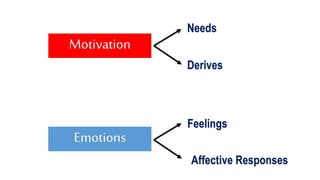
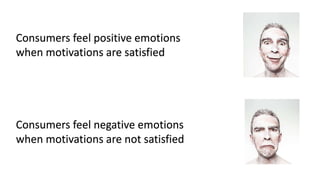
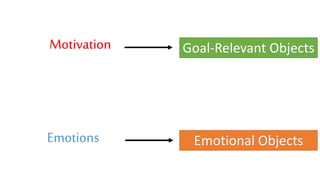

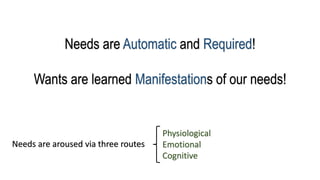
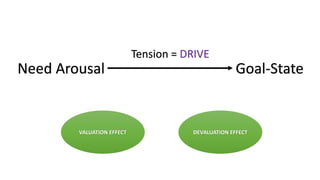
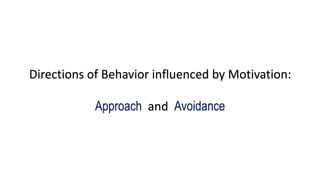
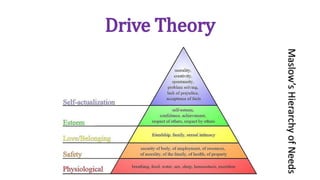
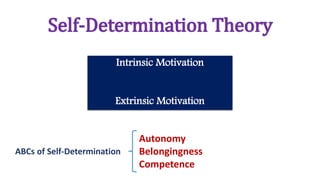
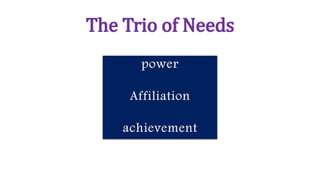
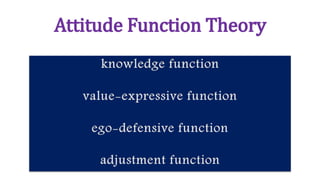
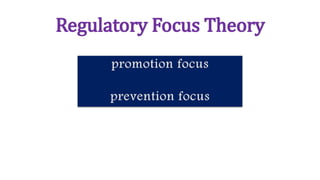
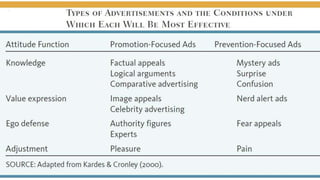
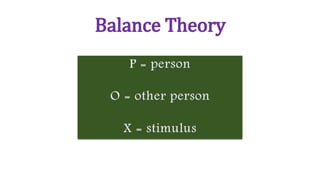
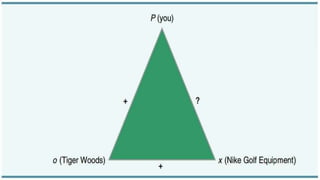
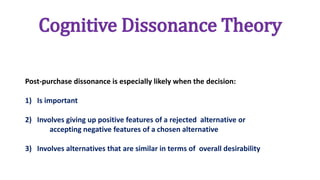

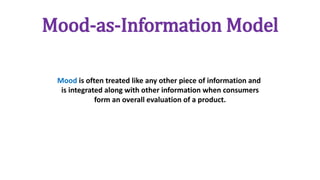
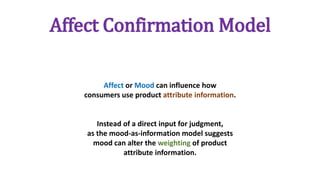
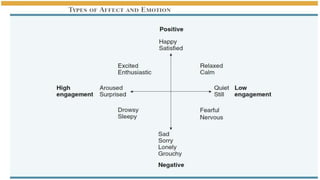


Consumer behavior is driven by motivations and emotions. Consumers feel positive emotions when motivations are satisfied and negative emotions when motivations are not satisfied. Motivations arise from needs, which can be physiological, emotional, or cognitive. When needs are aroused but not satisfied, tension and drive occur directing behavior towards either approach or avoidance. Several theories seek to explain consumer motivation and emotion, including Maslow's hierarchy of needs, self-determination theory, attitude function theory, regulatory focus theory, balance theory, and cognitive dissonance theory. Mood also influences consumer evaluations and judgments in complex ways according to models like the mood-as-information model and affect confirmation model.


