Module 2: Monitoring
Learner Progress
SESSION 2
Settling task
Recap session 1 learning objectives, what have we learnt so far?
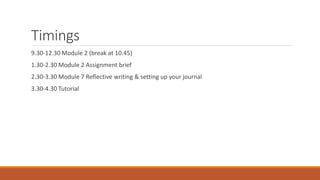
Timings
9.30-12.30 Module 2 (break at 10.45)
1.30-2.30 Module 2 Assignment brief
2.30-3.30 Module 7 Reflective writing & setting up your journal
3.30-4.30 Tutorial
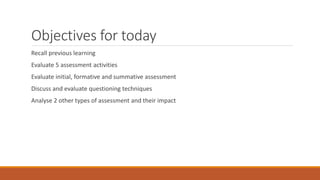
Objectives for today
Recall previous learning
Evaluate 5 assessment activities
Evaluate initial, formative and summative assessment
Discuss and evaluate questioning techniques
Analyse 2 other types of assessment and their impact
Evaluating assessment methods
Using your post it notes from last session evaluate 4 different assessment methods
Vocabulary
Professional Knowledge & Terminology
Use the resource to record key terminology for reference in assignmnets
Initial, Formative and Summative
Sort the cards to identify these three types of assessment
Extension questions:
Can you give examples you have experienced of each type?
Discuss whether you mix them up eg. Could an Exam be used as initial assessment?
How important are each in their own right?
Objectives for today
Recall previous learning
Evaluate 5 assessment activities
Evaluate initial, formative and summative assessment
Discuss and evaluate questioning techniques
Analyse 2 other types of assessment and their impact
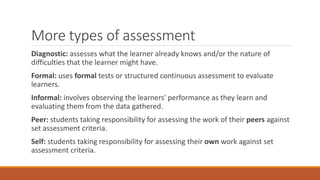
More types of assessment
Diagnostic: assesses what the learner already knows and/or the nature of
difficulties that the learner might have.
Formal: uses formal tests or structured continuous assessment to evaluate
learners.
Informal: involves observing the learners' performance as they learn and
evaluating them from the data gathered.
Peer: students taking responsibility for assessing the work of their peers against
set assessment criteria.
Self: students taking responsibility for assessing their own work against set
assessment criteria.
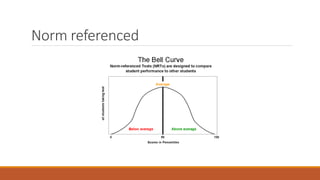
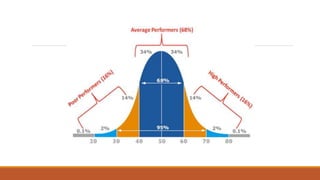
Norm referenced
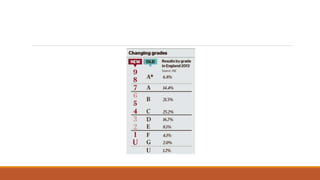
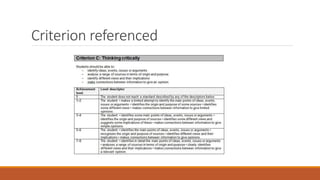
Criterion referenced
Analyse the pros and cons of Norm and
criterion referenced assessment
Ipsative assessment is an assessment based on a learner’s previous work rather than based on
performance against external criteria and standards. Learners work towards a personal best
rather than always competing against other students. When threshold standards must be met
for an award, ipsative feedback could be combined with traditional grades.
What is Ipsative Assessment?
Questioning techniques
Use the sheet to evaluate different questioning techniques
Video clip 1
What assessment methods are used during the session?
How do these methods benefit the learners?
Objectives for today
Recall previous learning
Evaluate 5 assessment activities
Evaluate initial, formative and summative assessment
Discuss and evaluate questioning techniques
Analyse 2 other types of assessment and their impact

Monitoring progress 2

  • 1.
    Module 2: Monitoring LearnerProgress SESSION 2
  • 2.
    Settling task Recap session1 learning objectives, what have we learnt so far?
  • 3.
    Timings 9.30-12.30 Module 2(break at 10.45) 1.30-2.30 Module 2 Assignment brief 2.30-3.30 Module 7 Reflective writing & setting up your journal 3.30-4.30 Tutorial
  • 4.
    Objectives for today Recallprevious learning Evaluate 5 assessment activities Evaluate initial, formative and summative assessment Discuss and evaluate questioning techniques Analyse 2 other types of assessment and their impact
  • 5.
    Evaluating assessment methods Usingyour post it notes from last session evaluate 4 different assessment methods
  • 6.
    Vocabulary Professional Knowledge &Terminology Use the resource to record key terminology for reference in assignmnets
  • 7.
    Initial, Formative andSummative Sort the cards to identify these three types of assessment Extension questions: Can you give examples you have experienced of each type? Discuss whether you mix them up eg. Could an Exam be used as initial assessment? How important are each in their own right?
  • 8.
    Objectives for today Recallprevious learning Evaluate 5 assessment activities Evaluate initial, formative and summative assessment Discuss and evaluate questioning techniques Analyse 2 other types of assessment and their impact
  • 9.
    More types ofassessment Diagnostic: assesses what the learner already knows and/or the nature of difficulties that the learner might have. Formal: uses formal tests or structured continuous assessment to evaluate learners. Informal: involves observing the learners' performance as they learn and evaluating them from the data gathered. Peer: students taking responsibility for assessing the work of their peers against set assessment criteria. Self: students taking responsibility for assessing their own work against set assessment criteria.
  • 10.
  • 13.
  • 14.
    Analyse the prosand cons of Norm and criterion referenced assessment
  • 15.
    Ipsative assessment isan assessment based on a learner’s previous work rather than based on performance against external criteria and standards. Learners work towards a personal best rather than always competing against other students. When threshold standards must be met for an award, ipsative feedback could be combined with traditional grades. What is Ipsative Assessment?
  • 16.
    Questioning techniques Use thesheet to evaluate different questioning techniques
  • 17.
    Video clip 1 Whatassessment methods are used during the session? How do these methods benefit the learners?
  • 18.
    Objectives for today Recallprevious learning Evaluate 5 assessment activities Evaluate initial, formative and summative assessment Discuss and evaluate questioning techniques Analyse 2 other types of assessment and their impact