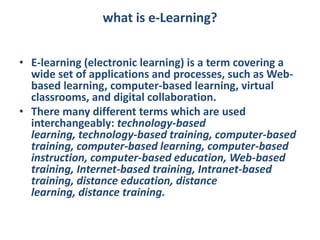
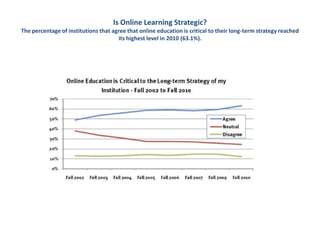
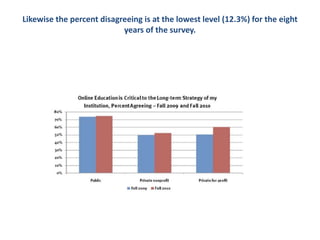
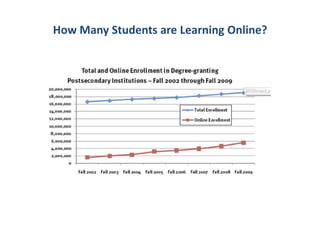
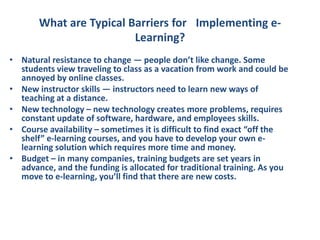
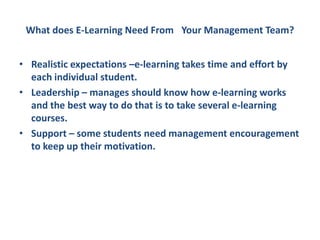
E-learning refers to technology-based learning including web-based learning, computer-based learning, and virtual classrooms. It allows for distance education through various online models. Most institutions now see online education as critical to their long-term strategy as the number of students learning online increases each year. However, implementing e-learning faces barriers such as natural resistance to change, requiring new instructor skills and technology, and budget constraints. For e-learning to succeed, management needs realistic expectations and should lead by example through their own participation while supporting students. The basic styles of e-learning include synchronous, self-directed, and asynchronous learning.


![Distance Learning Ict1[1]](https://cdn.slidesharecdn.com/ss_thumbnails/distancelearningict11-090726042008-phpapp02-thumbnail.jpg?width=640&height=640&fit=bounds)


