The State of E-Learning in Higher Ed
Jacqueline Bichsel, ECAR
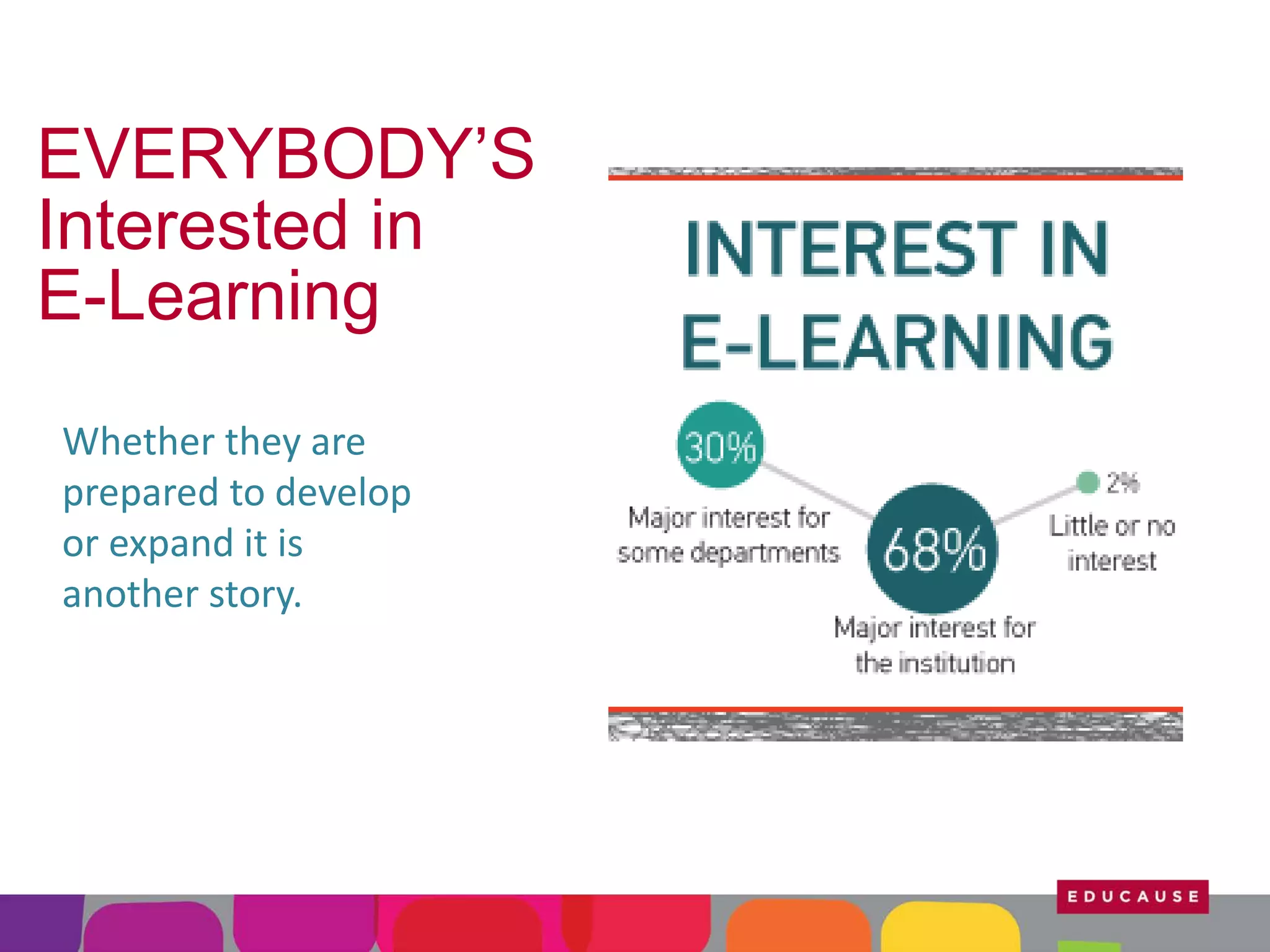
EVERYBODY’S
Interested in
E-Learning
Whether they are
prepared to develop
or expand it is
another story.
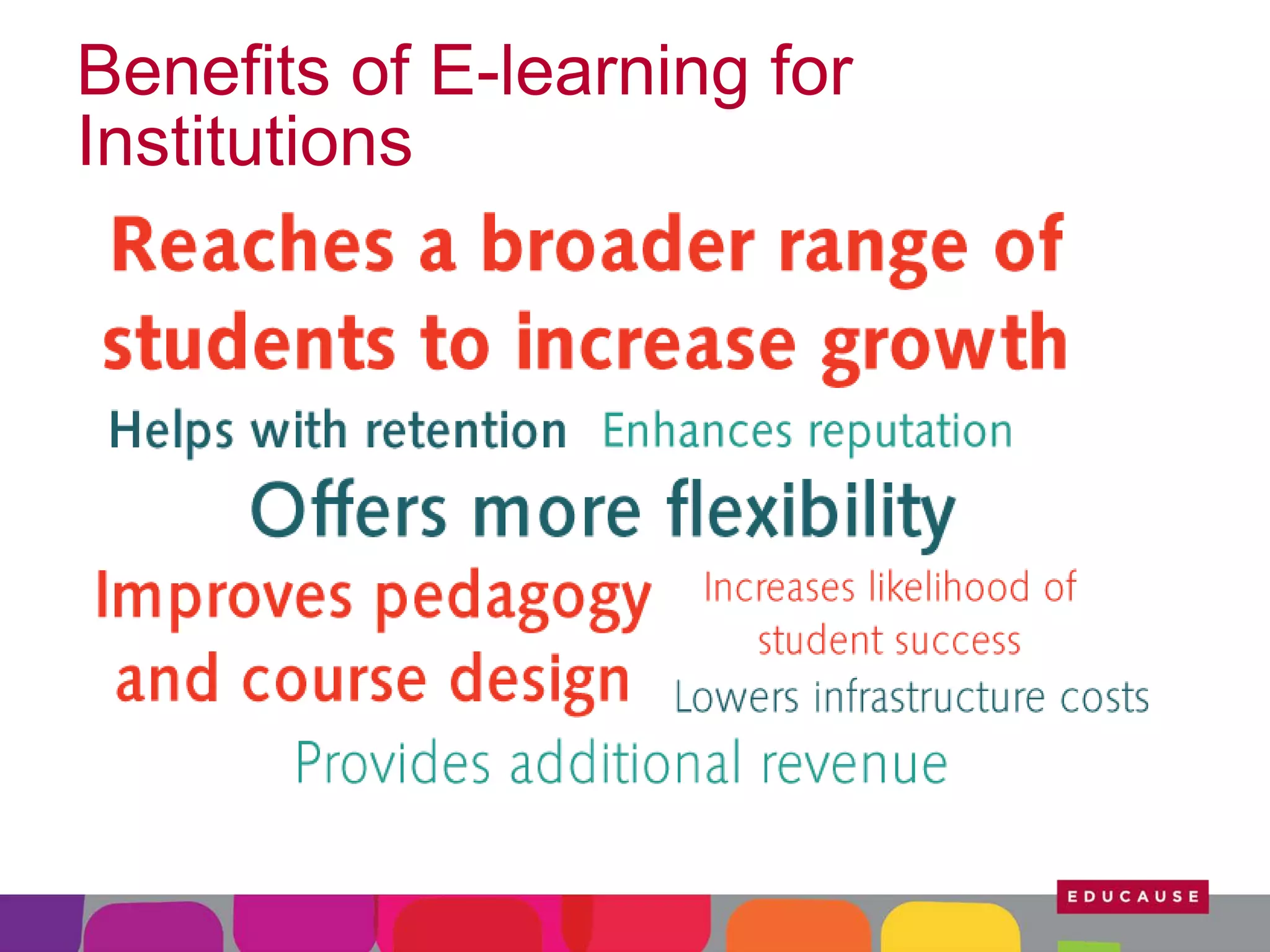
Benefits of E-learning for
Institutions
Benefits for Faculty & Students
 Flexibility
 Improved & revitalized
teaching
 Enhanced learning
experience
 Improved time to degree
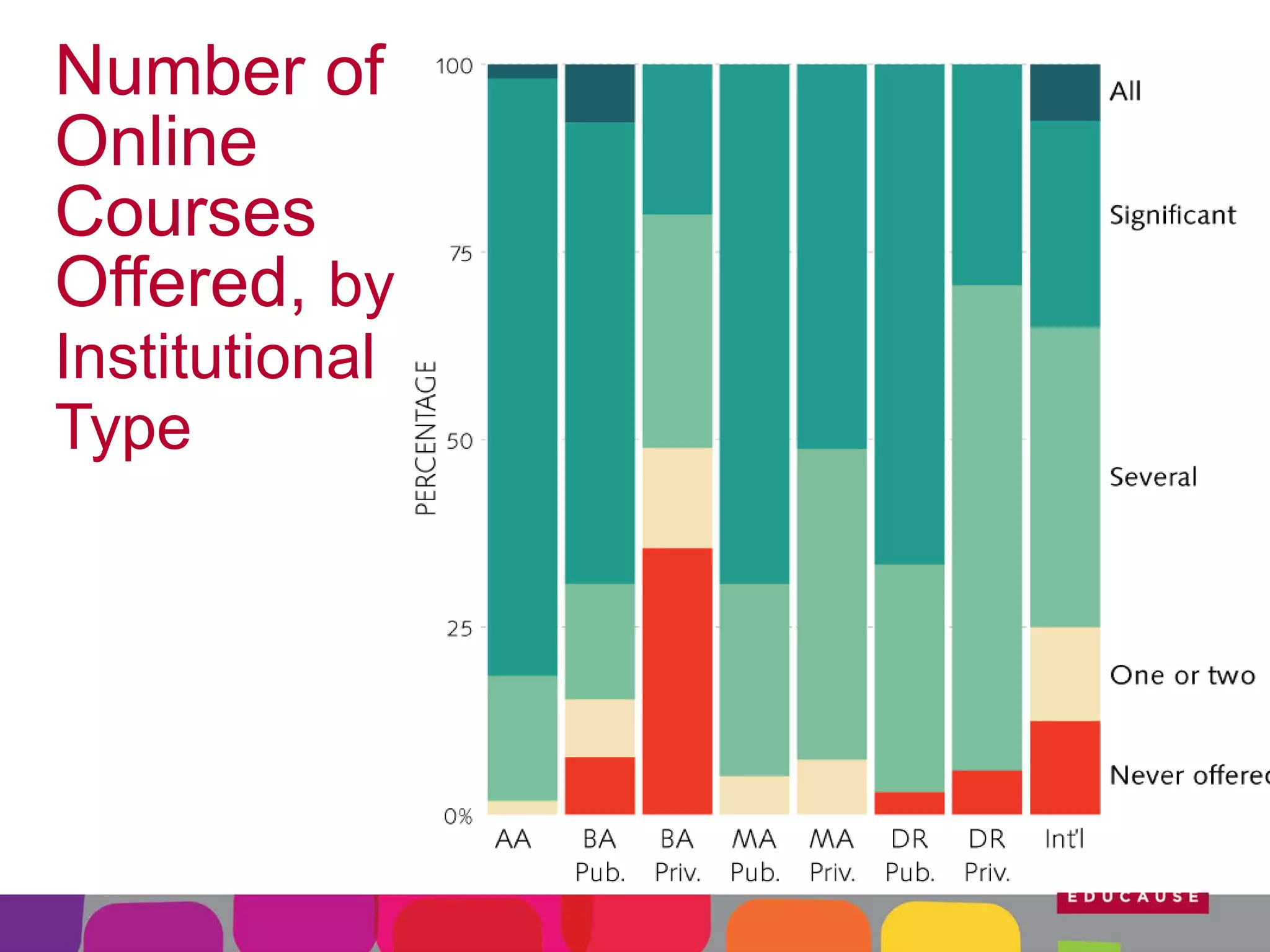
Number of
Online
Courses
Offered, by
Institutional
Type
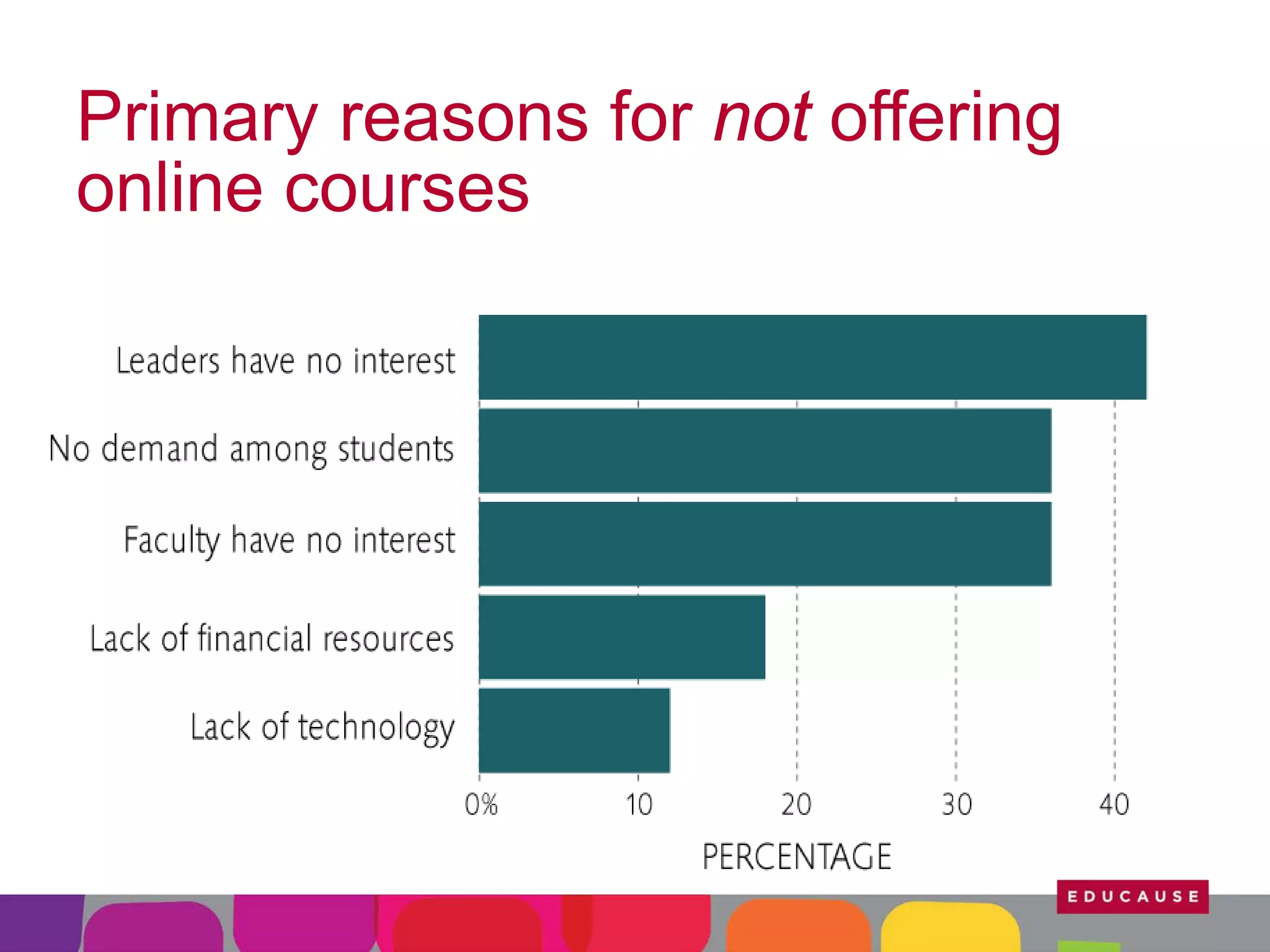
Primary reasons for not offering
online courses
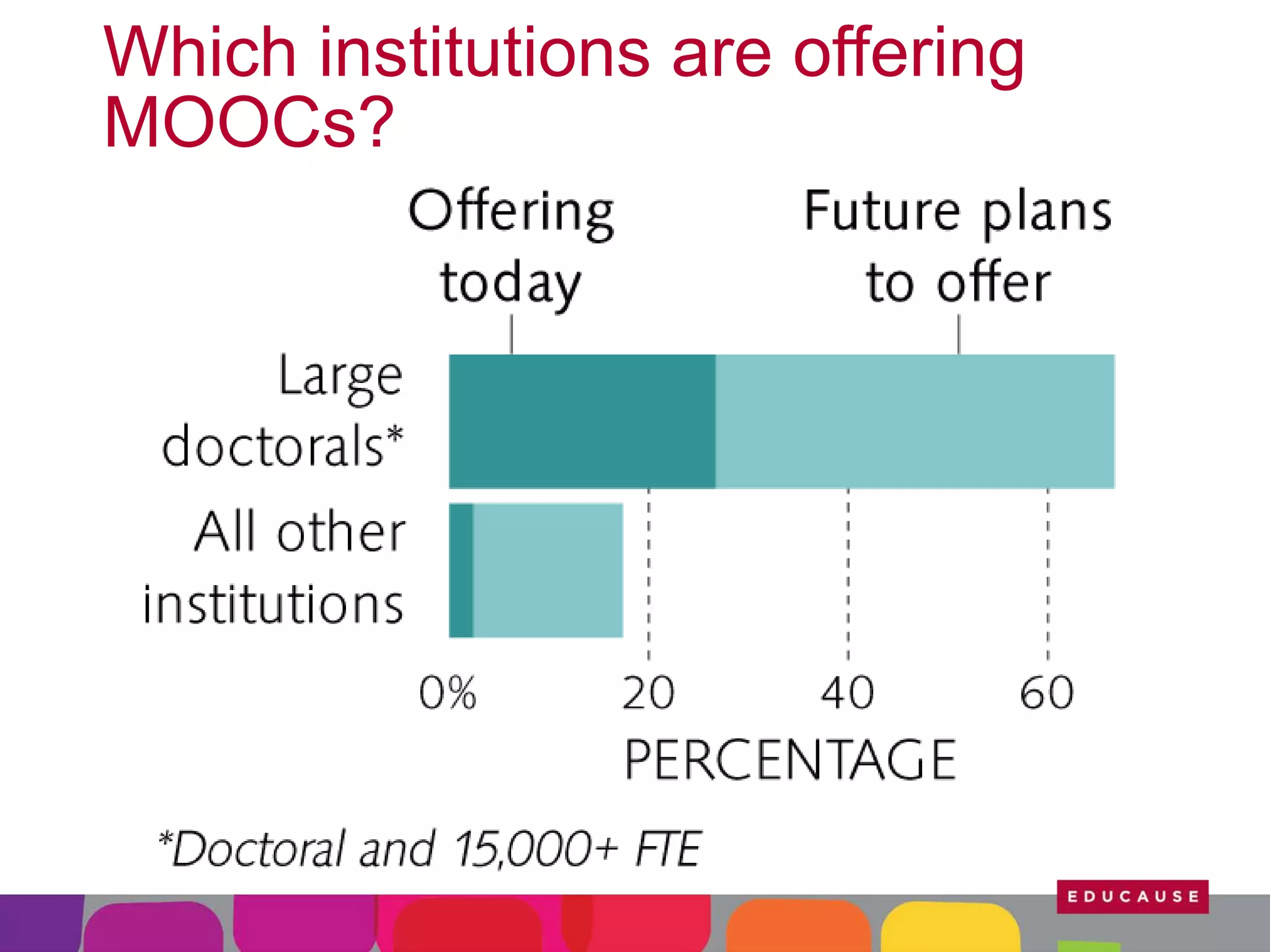
Which institutions are offering
MOOCs?
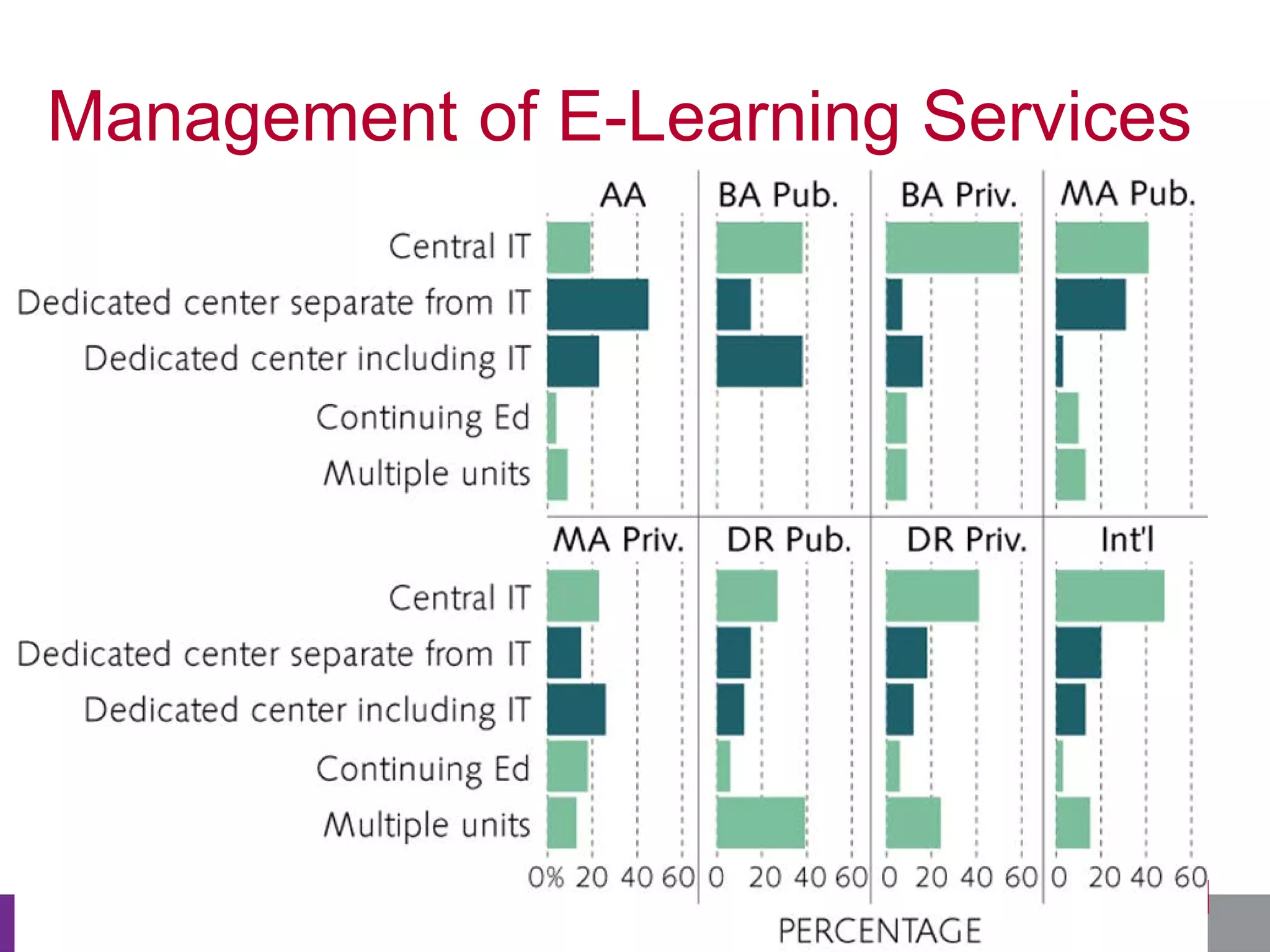
Management of E-Learning Services
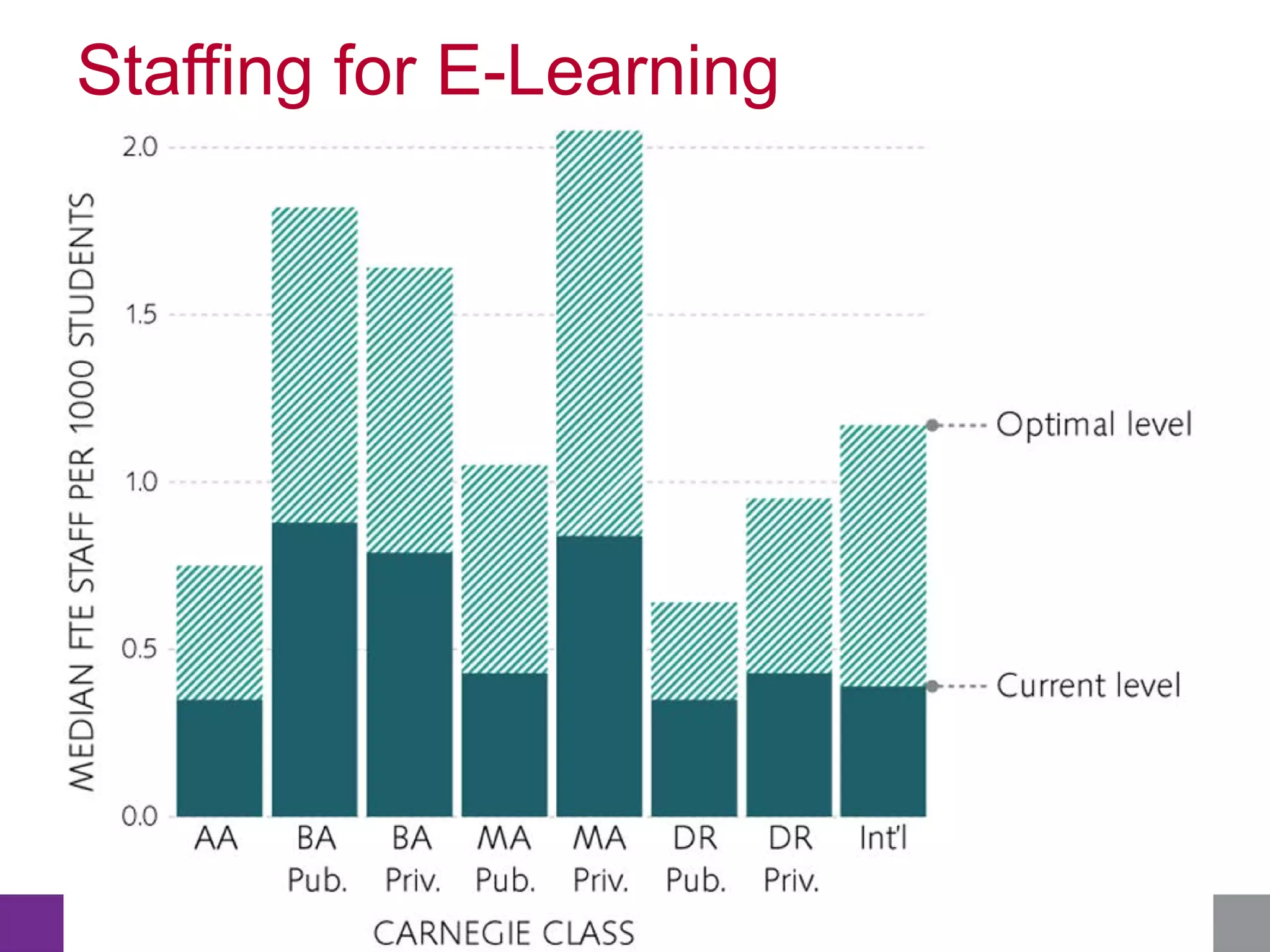
Staffing for E-Learning
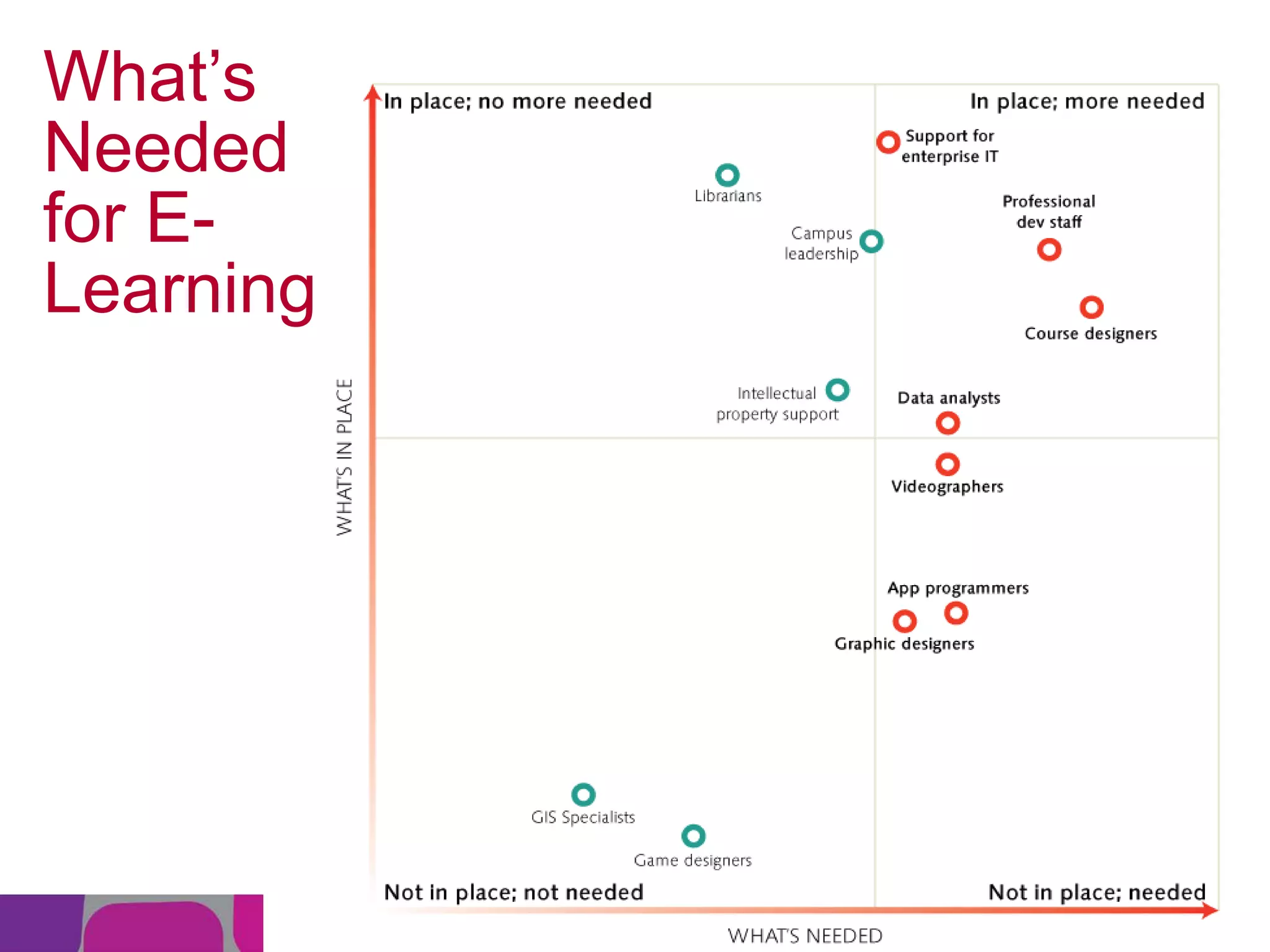
What’s
Needed
for ELearning
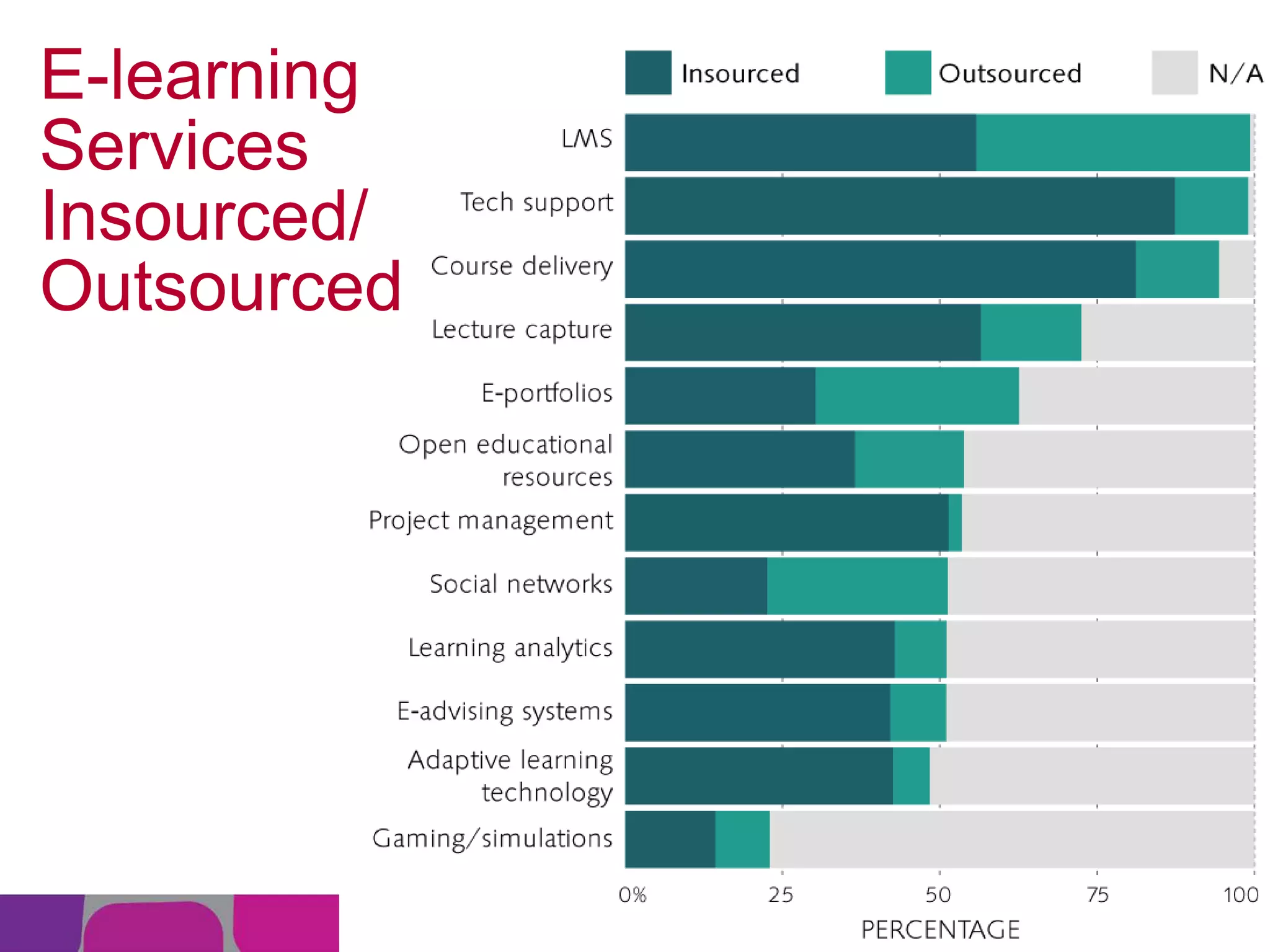
E-learning
Services
Insourced/
Outsourced
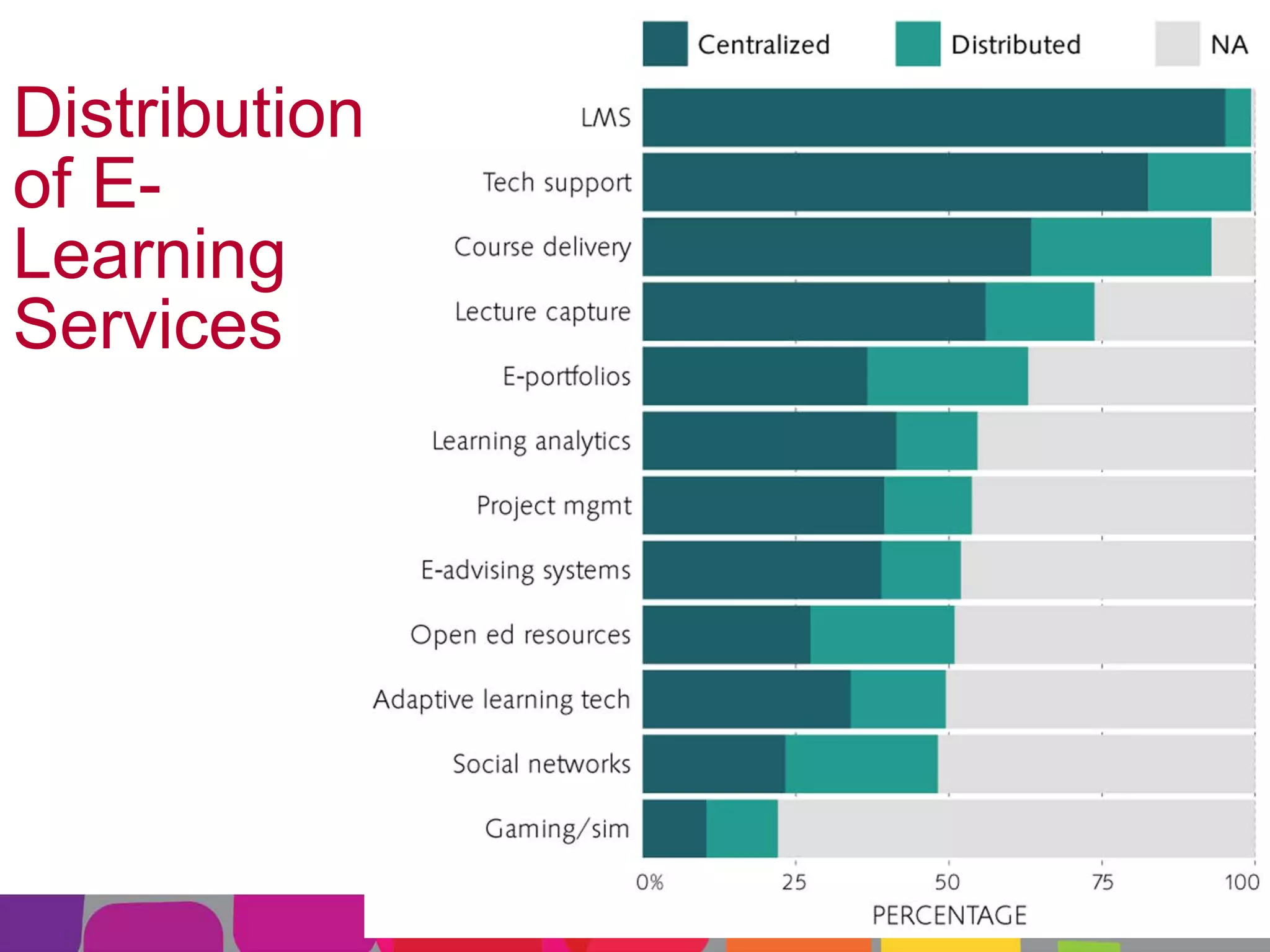
Distribution
of ELearning
Services
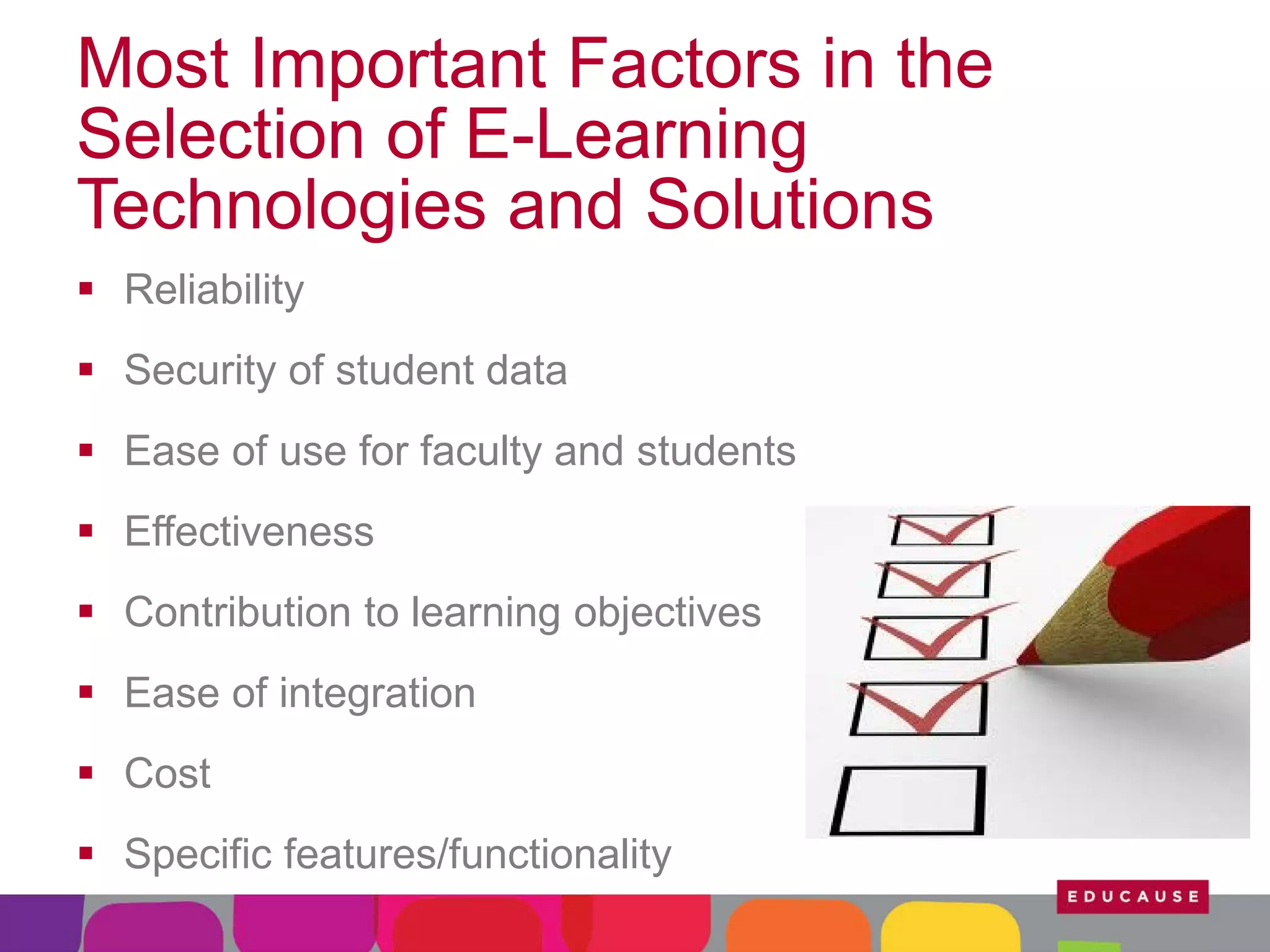
Most Important Factors in the
Selection of E-Learning
Technologies and Solutions
 Reliability
 Security of student data
 Ease of use for faculty and students
 Effectiveness
 Contribution to learning objectives
 Ease of integration
 Cost
 Specific features/functionality
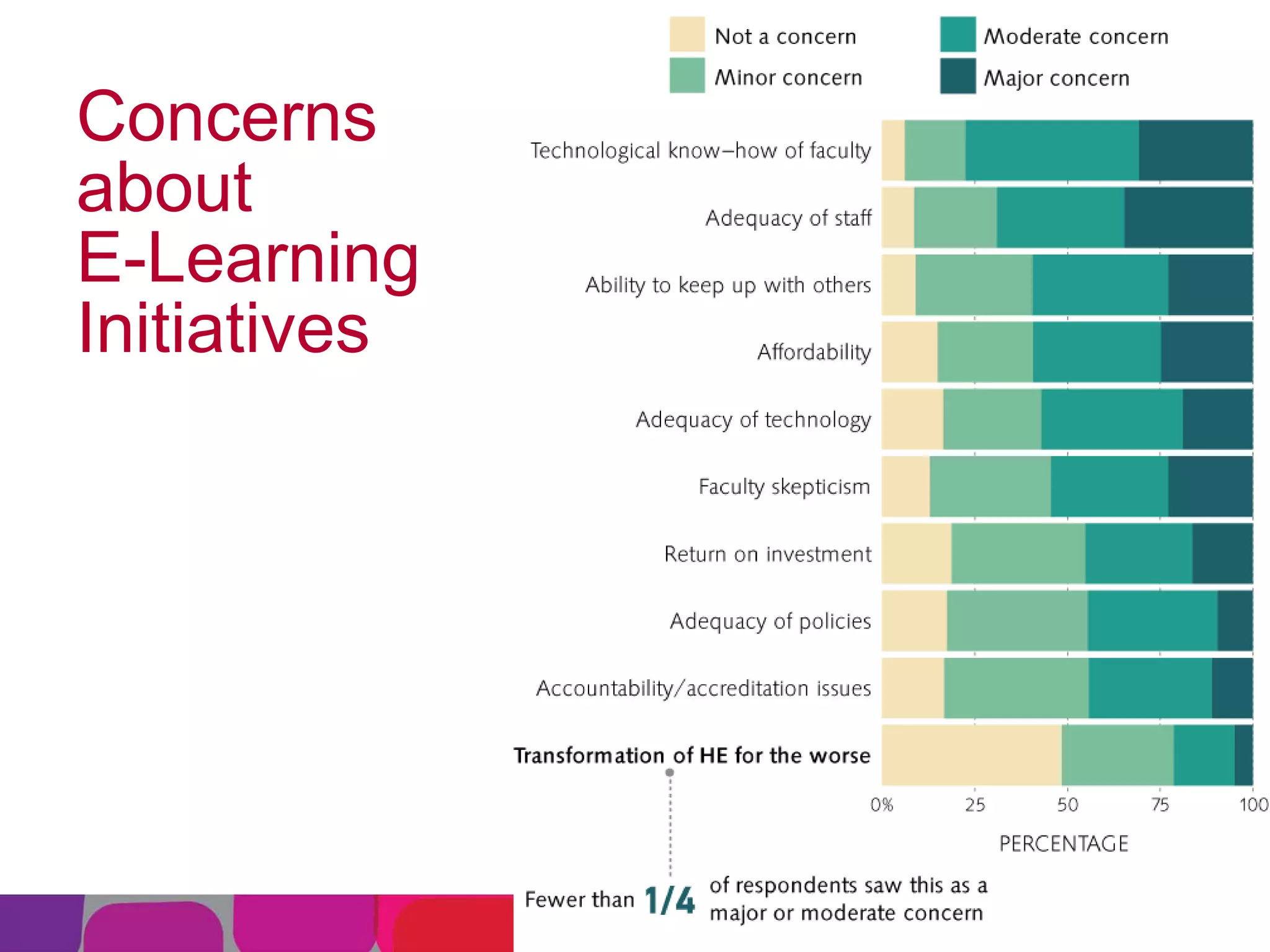
Concerns
about
E-Learning
Initiatives
Many View E-Learning as Disruptive
 May be what is needed to
overturn former business
models and serve posttraditional learners
 In higher ed fashion, this
will likely be a gradual
disruption
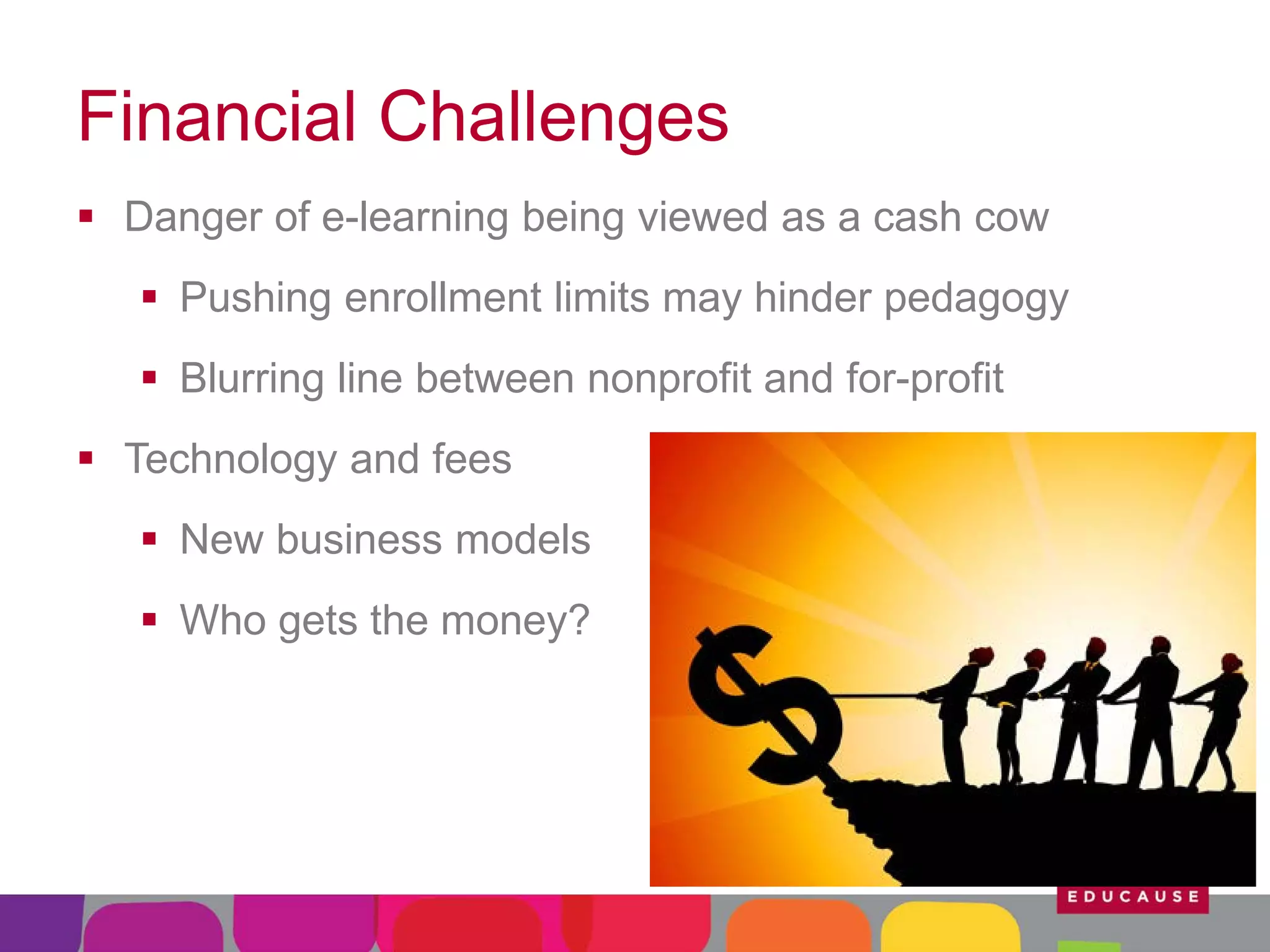
Financial Challenges
 Danger of e-learning being viewed as a cash cow
 Pushing enrollment limits may hinder pedagogy
 Blurring line between nonprofit and for-profit
 Technology and fees
 New business models
 Who gets the money?
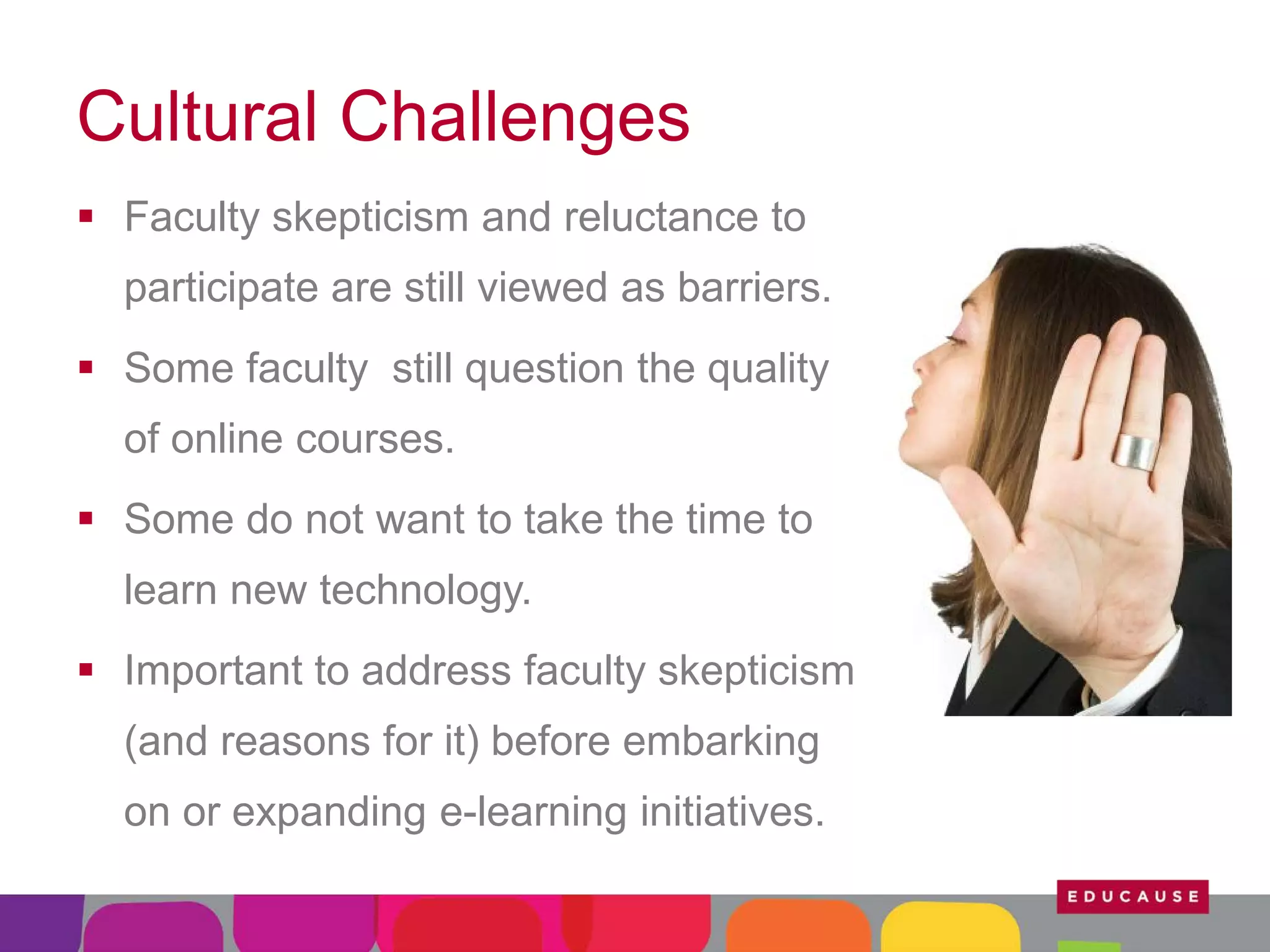
Cultural Challenges
 Faculty skepticism and reluctance to
participate are still viewed as barriers.
 Some faculty still question the quality
of online courses.
 Some do not want to take the time to
learn new technology.
 Important to address faculty skepticism
(and reasons for it) before embarking
on or expanding e-learning initiatives.
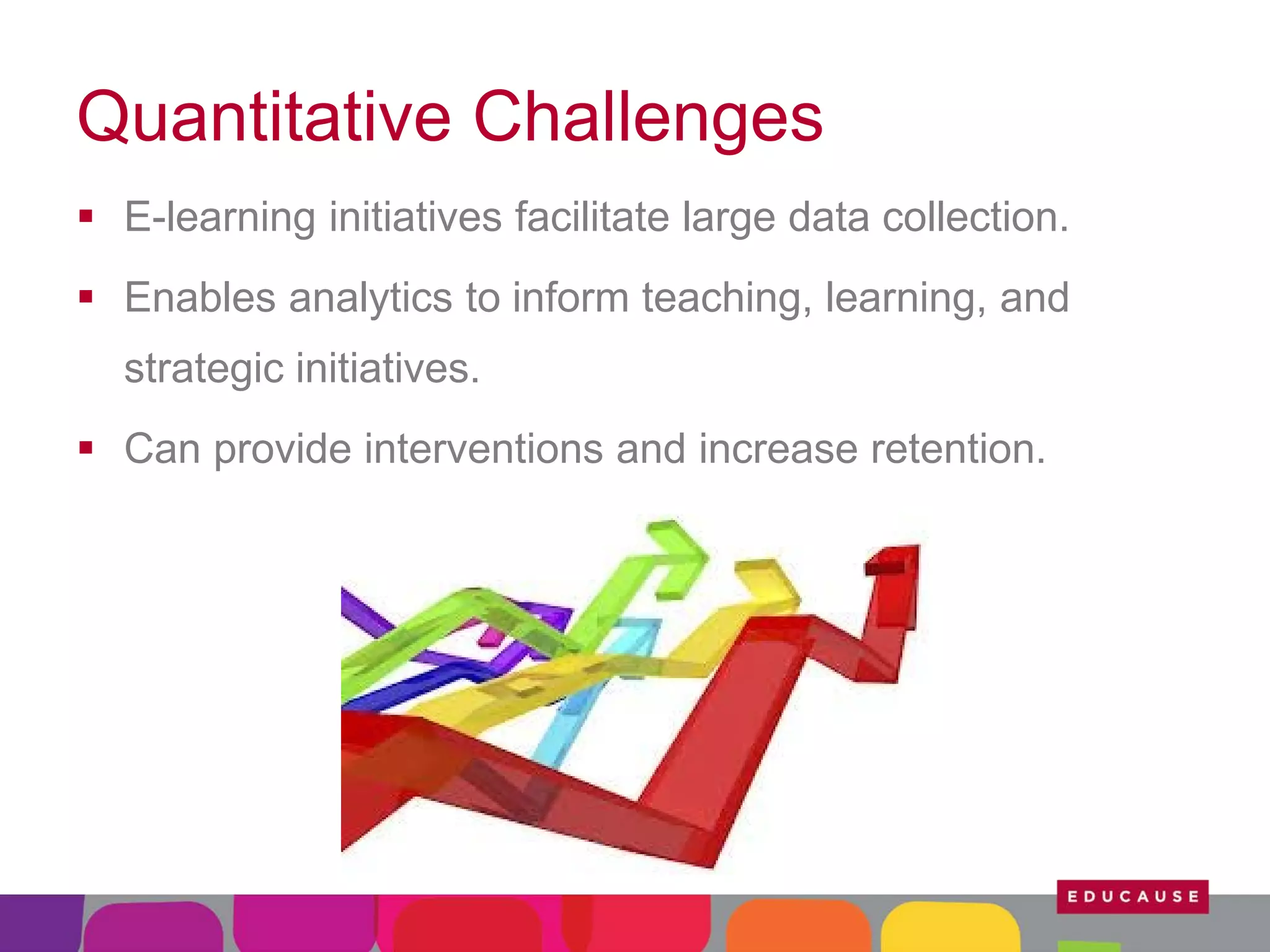
Quantitative Challenges
 E-learning initiatives facilitate large data collection.
 Enables analytics to inform teaching, learning, and
strategic initiatives.
 Can provide interventions and increase retention.
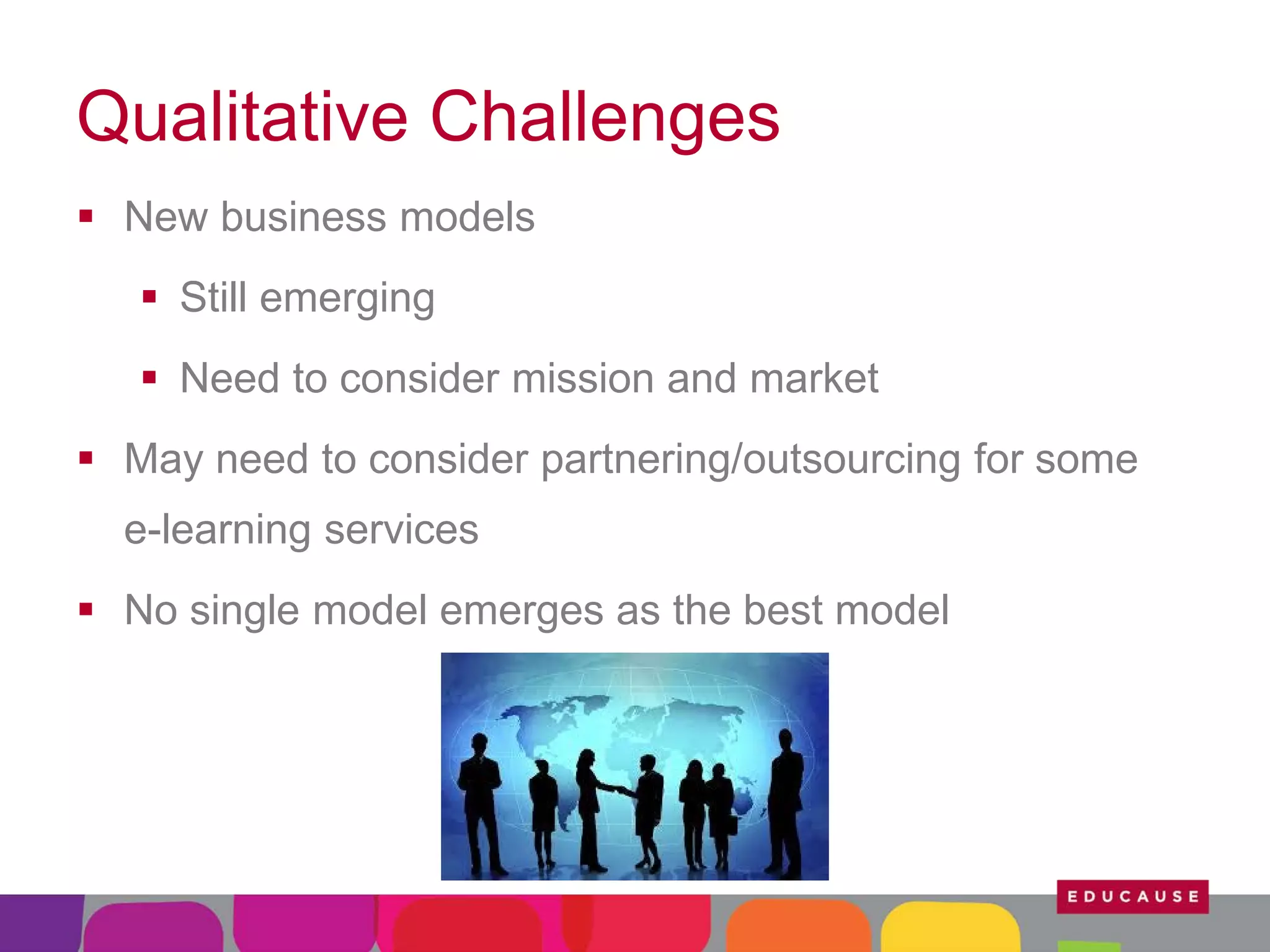
Qualitative Challenges
 New business models
 Still emerging
 Need to consider mission and market
 May need to consider partnering/outsourcing for some
e-learning services
 No single model emerges as the best model
Accreditation Concerns
 Standards for quality and learning
outcomes do not vary with delivery
method.
 Accreditors do not scrutinize online
courses with a different lens.
 Onus is on the institution to provide
evidence that these courses meet
the same standards as F2F.
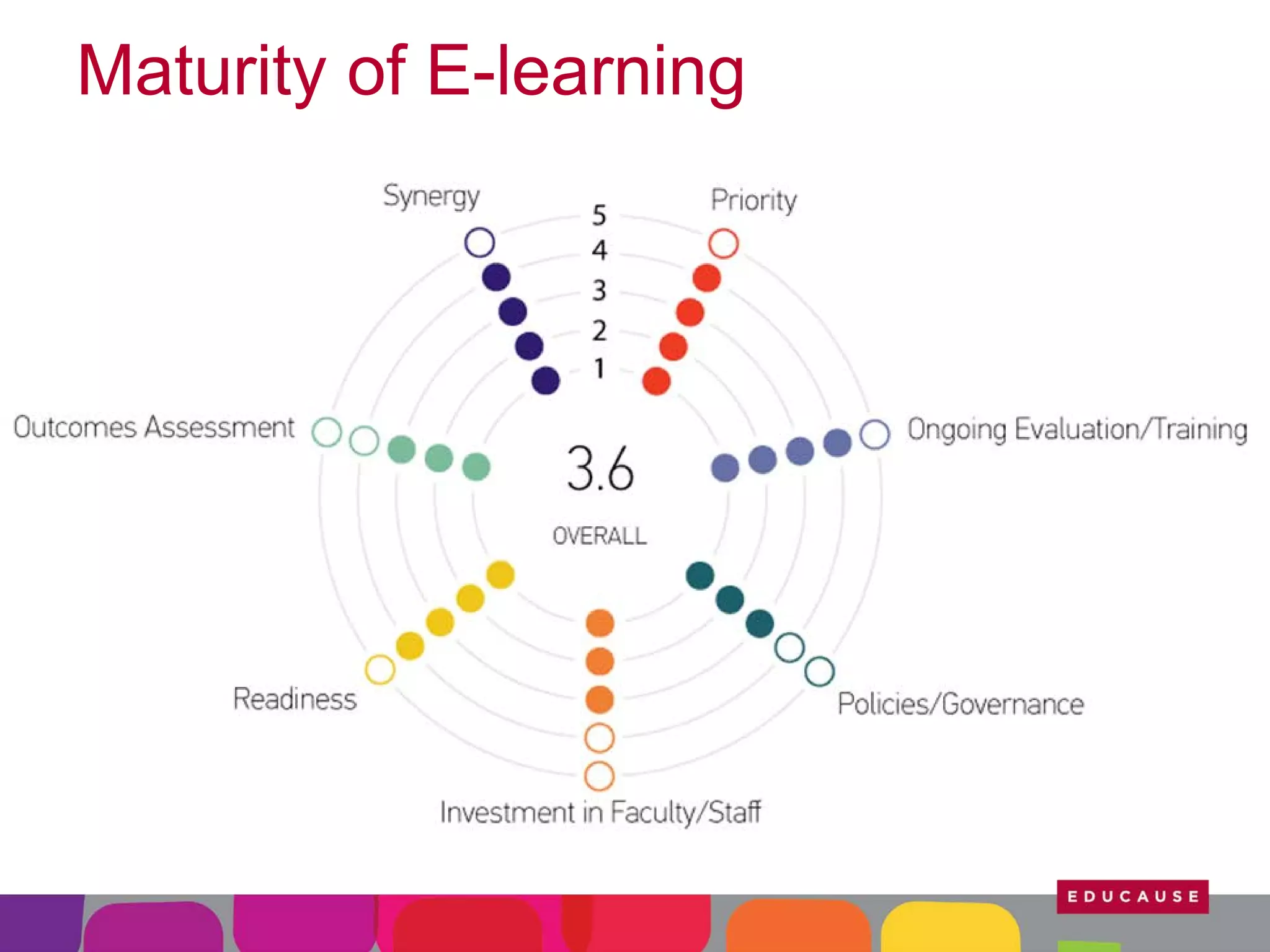
Maturity of E-learning
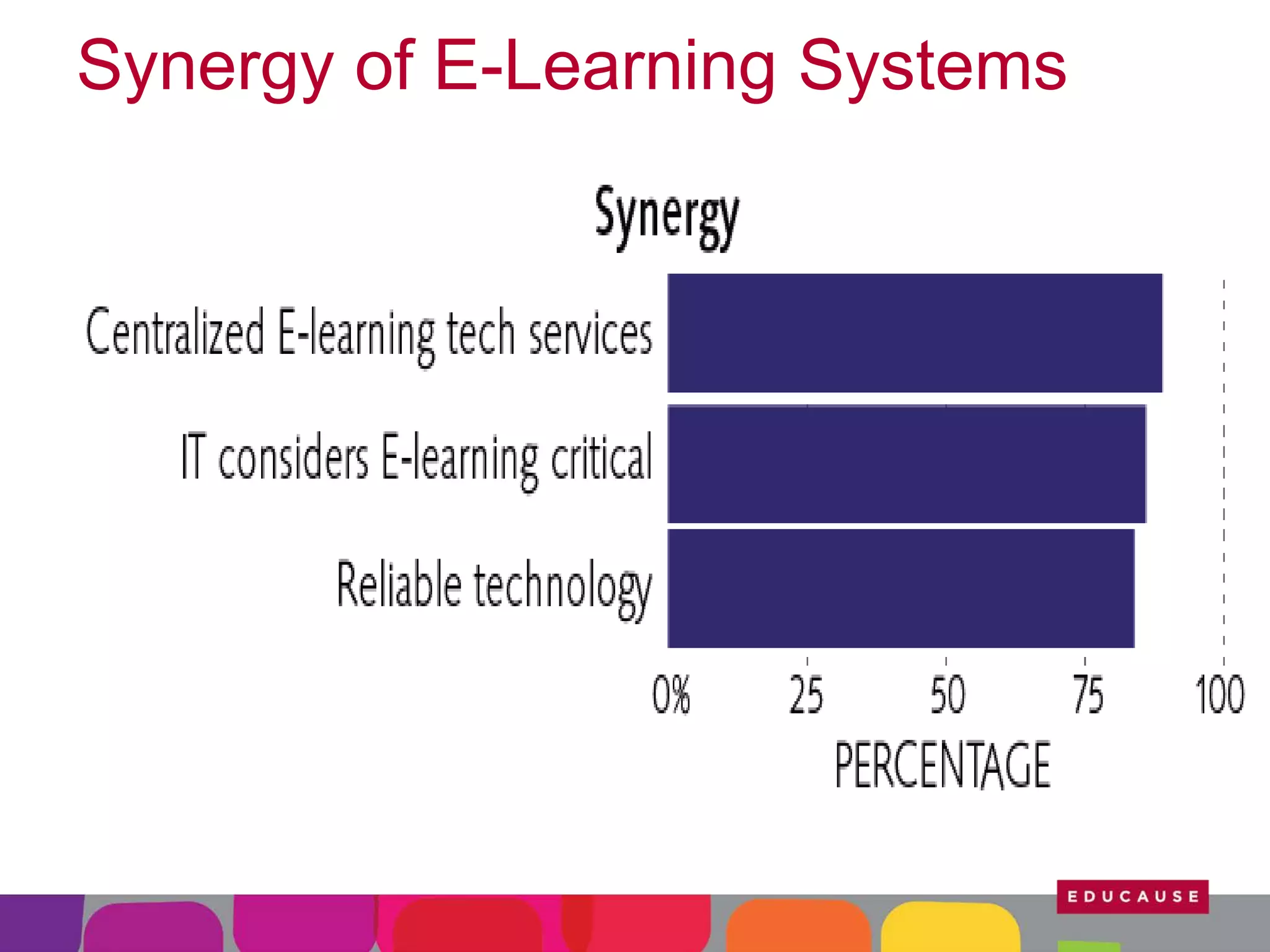
Synergy of E-Learning Systems
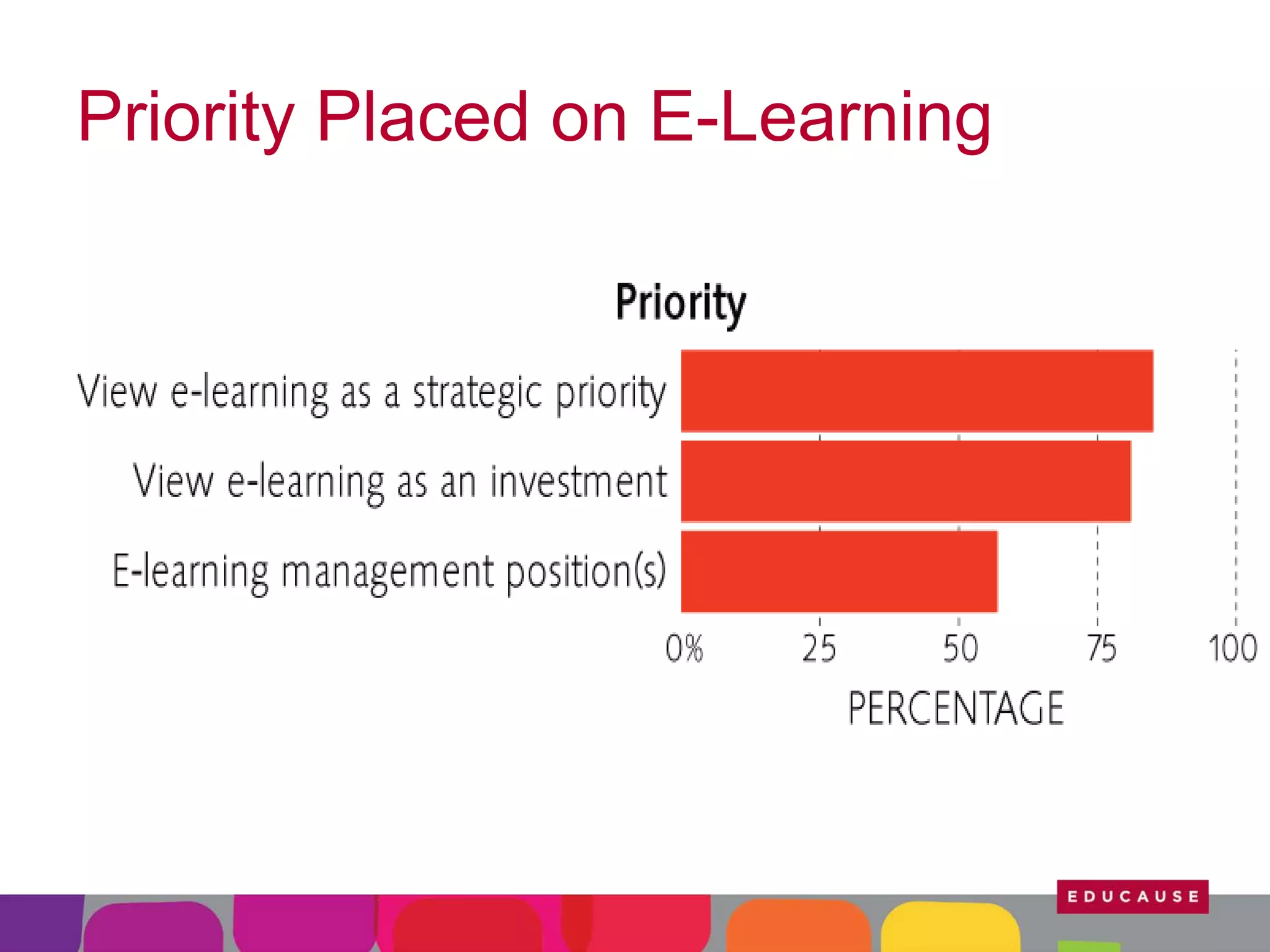
Priority Placed on E-Learning
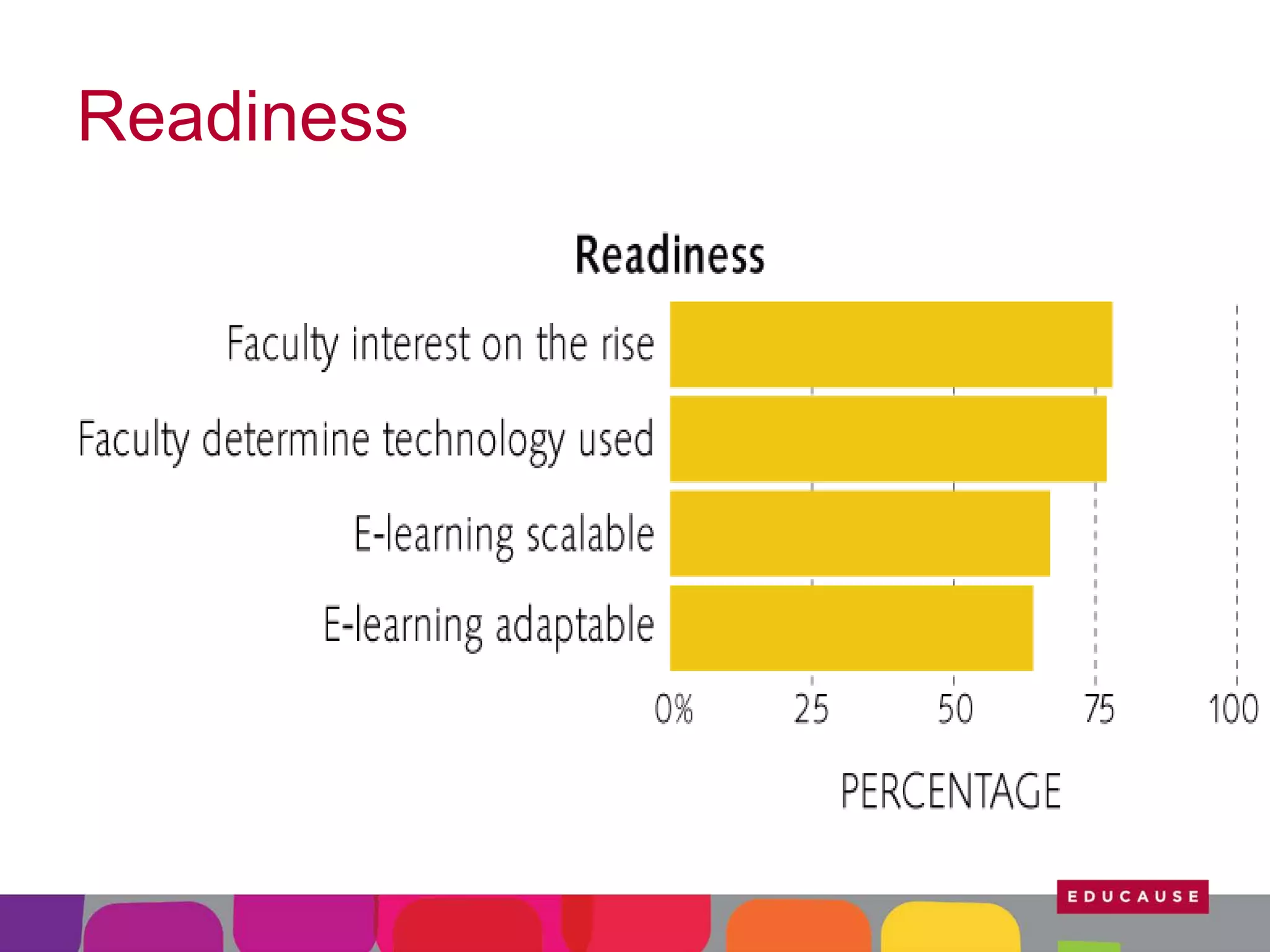
Readiness
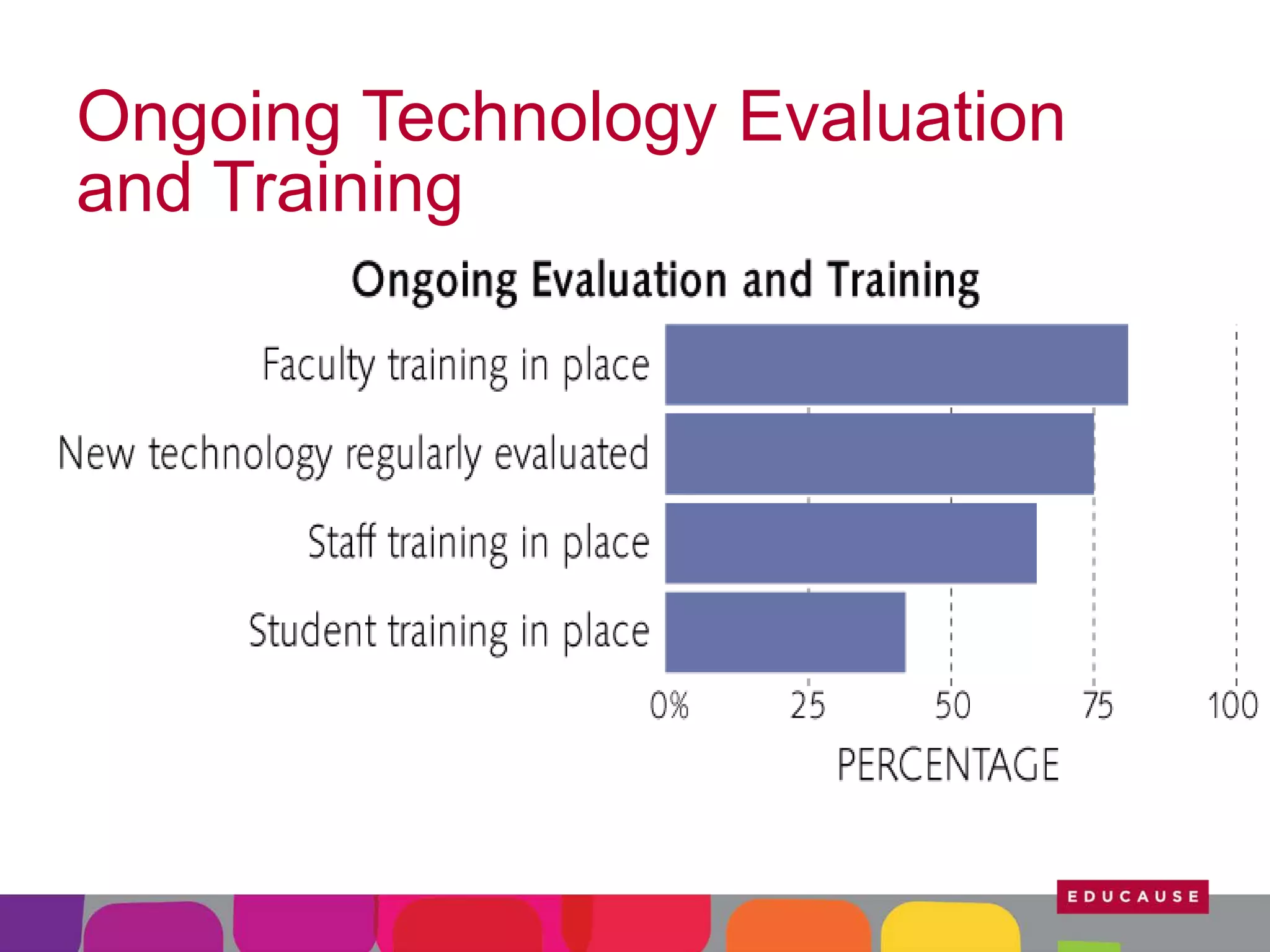
Ongoing Technology Evaluation
and Training
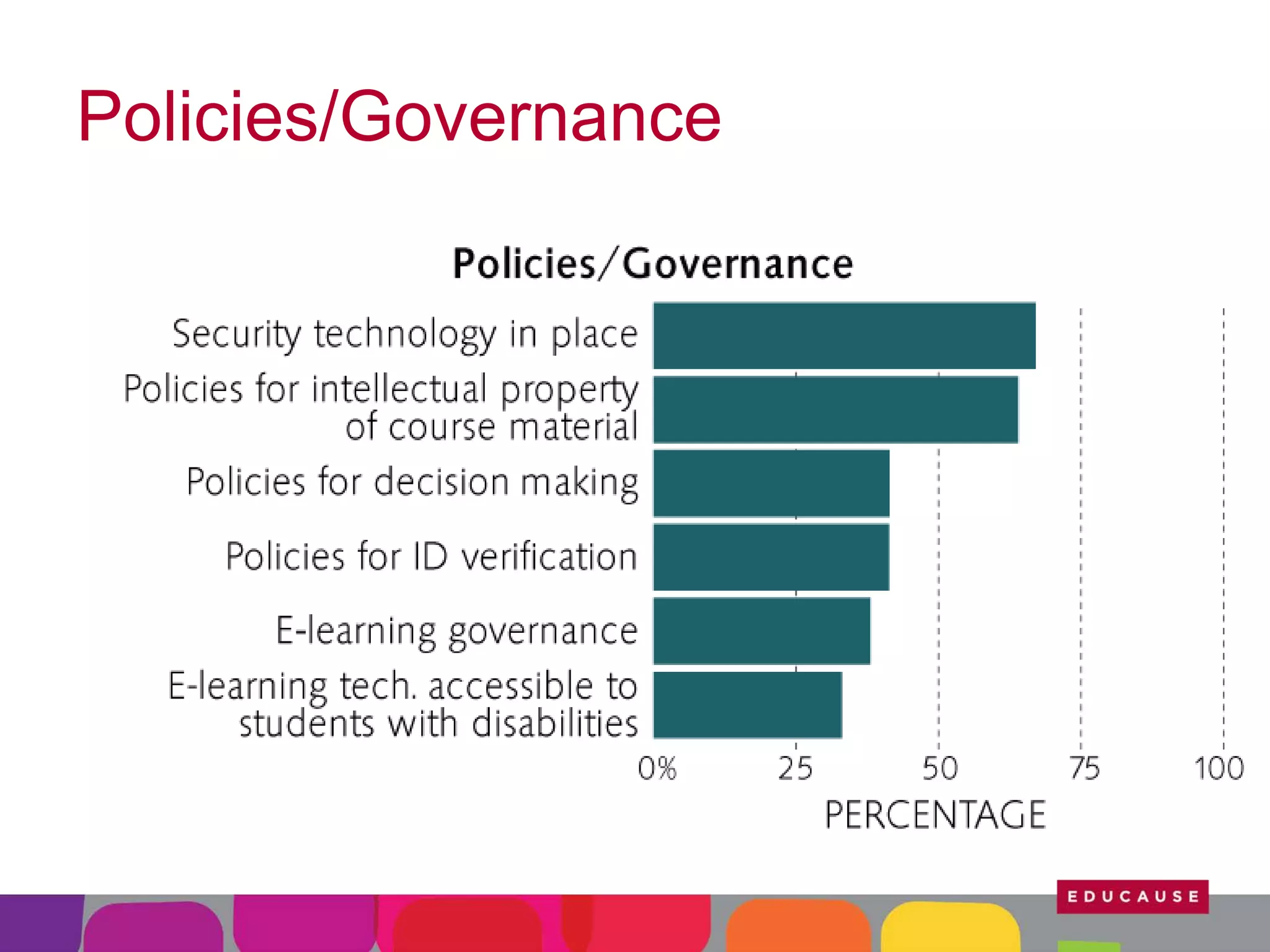
Policies/Governance
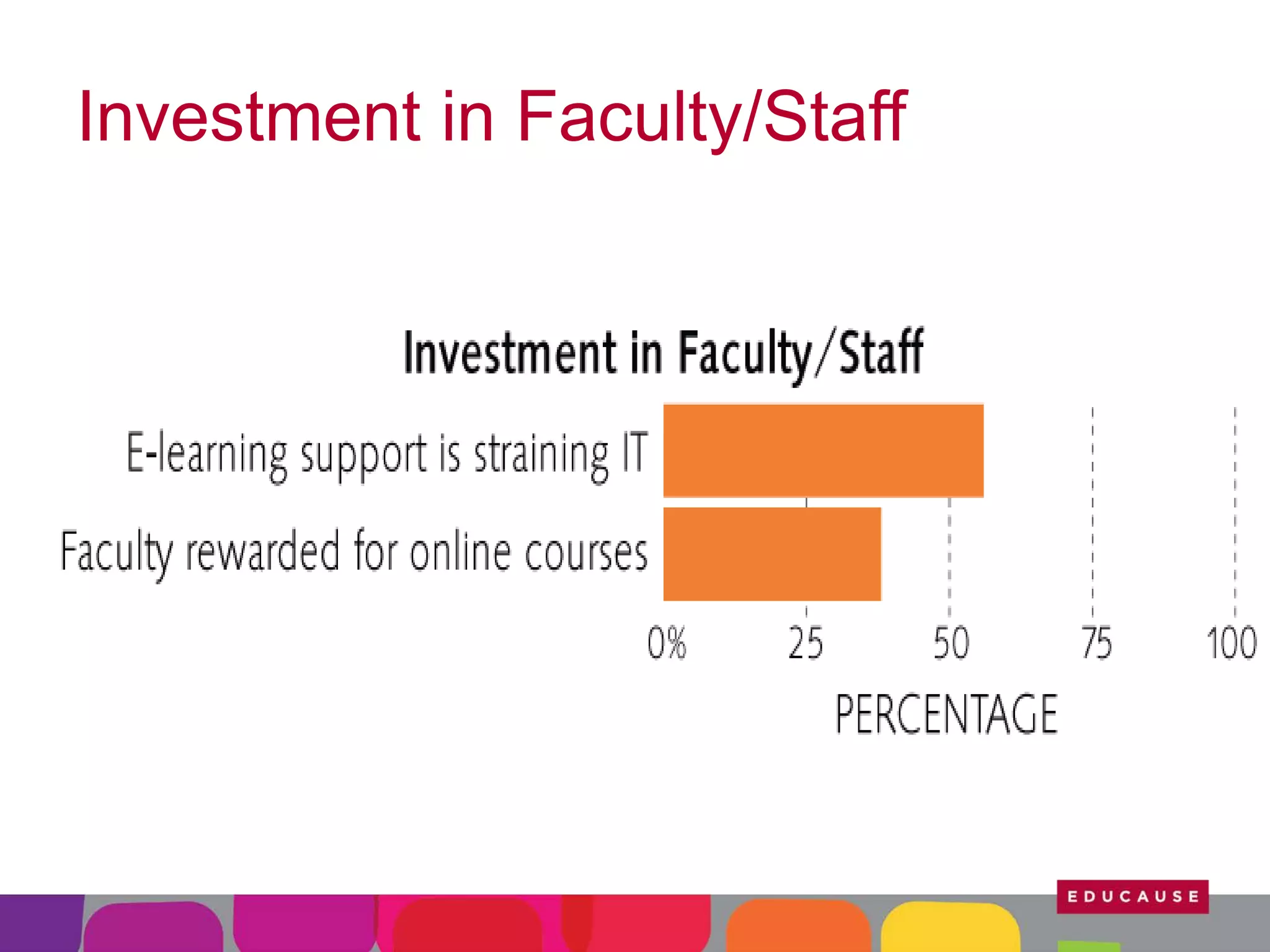
Investment in Faculty/Staff
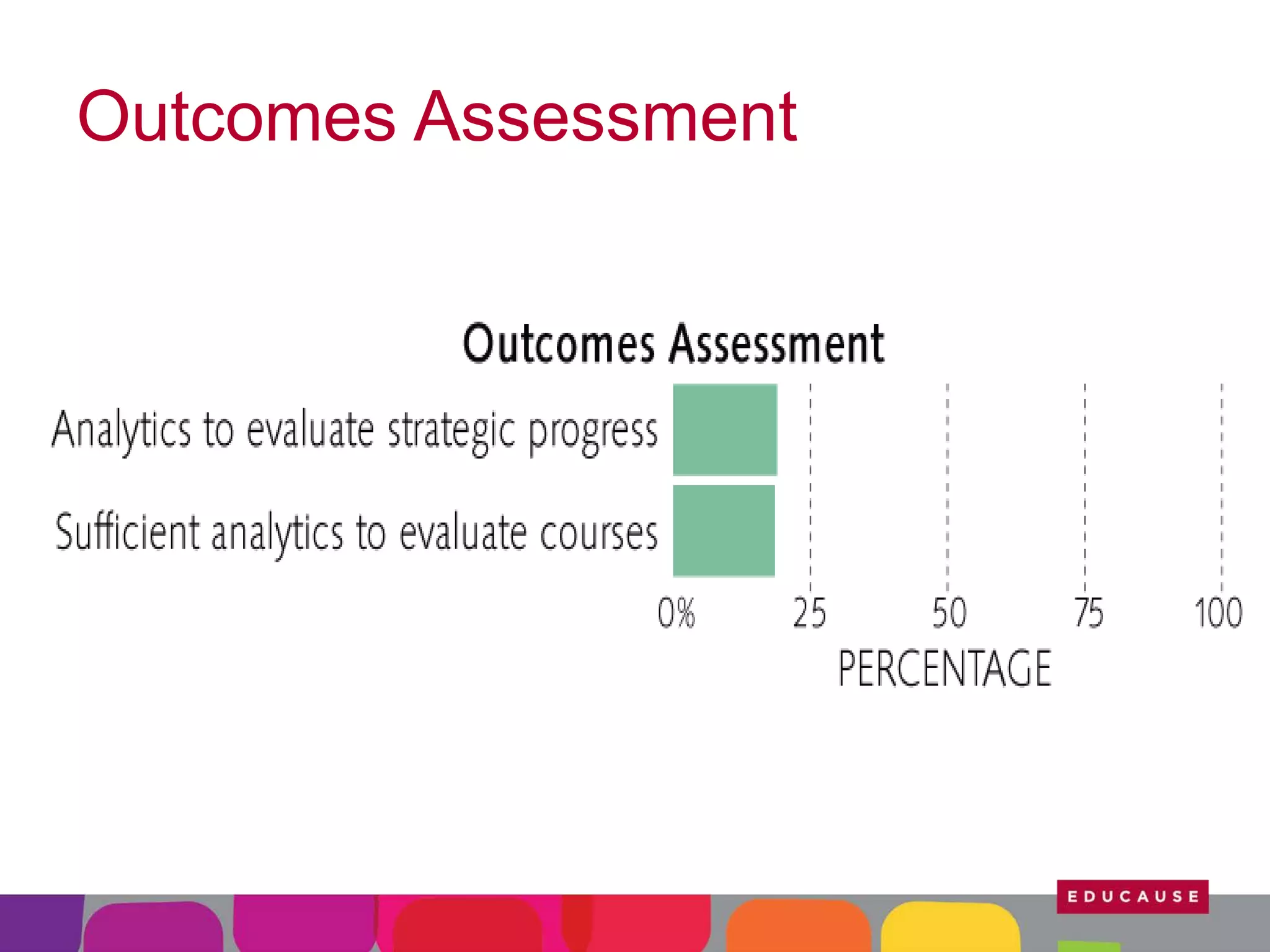
Outcomes Assessment
Links
 ECAR E-Learning Report, Maturity Index, Case Study,
Campus Profiles:
http://www.educause.edu/library/resources/state-elearning-higher-education-eye-toward-growth-andincreased-access
 Analytics Report, Maturity Index, Videos:
http://www.educause.edu/library/resources/2012-ecarstudy-analytics-higher-education
The State of E learning in HE 2013 from Educause

The State of E learning in HE 2013 from Educause