The Coaching Model
Program Roadmap
Step 1
Situation
I. The Impact of Coaching
Step 2
Options
S
Step 3
Action Plan
Step 4
Reinforcement
O
A
R
Communication
Listening
Body Language
Questioning
Phone Coaching
Ride Along Coaching
III. Coaching Model
IV. Coaching Skills
The Value of Coaching
Motivation & Performance
II. Coaching Dimensions
Creating a Coaching
Environment
Types of Coaching
Coaching Considerations
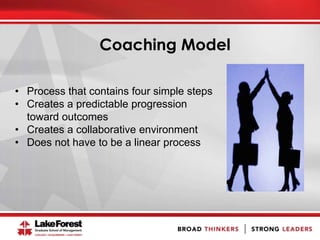
Coaching Model
• Process that contains four simple steps
• Creates a predictable progression
toward outcomes
• Creates a collaborative environment
• Does not have to be a linear process
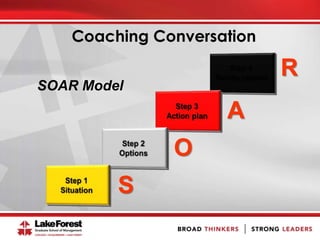
Coaching Conversation
S
O
A
R
SOAR Model
Directive
• Establish the focus for the
coaching discussion.
• Give the employee feedback
about his performance.
• Tell the employee why you
think he needs to change.
• Tell the employee what you
think his underlying need is
and why.
Non-Directive
• Ask the employee to establish the
focus for the coaching discussion.
• Ask the employee to evaluate their
performance.
• What specific outcomes do you
want to accomplish by the end of
our coaching?
• What is the problem you are trying
to solve?
• How will you know you’ve been
successful?
S Situation
• Ask the employee to establish the focus
for the coaching discussion.
• Ask the employee to evaluate their
performance.
• What specific outcomes do you want to
accomplish by the end of our coaching?
• What is the problem you are trying to
solve?
• How will you know you’ve been
successful?
Non-Directive
Tips
• Listen more than talk
• Don’t get hooked on the story
• Use silence
S Situation
O Discover Options
• Tell the employee what you
think his goals should be.
• Ask his opinion. Are there other
options that you and he can
explore.
• If you have observed him in
action, identify the barriers you
see and give good, specific
feedback.
• Gain commitment on his course
of action .
Directive Non-Directive
• What needs to happen?
• What have you tried (thought of)
already?
• What have you seen work for
others?
• How does this option relate to
reaching your goal?
• What would be the outcome of that
approach?
• What are both the positives and
negatives.
O Discover Options
Tips
• Remain neutral
• Push for multiple options
Non-Directive
• What needs to happen?
• What have you tried (thought of) already?
• What have you seen work for others?
• How does this option relate to reaching
your goal?
• What would be the outcome of that
approach?
• What are both the positives and negatives.
Discover Options
Possible Solutions
1 2 3 4 5
Will that solve your problem?
What are the consequences of that solution?
employee
ManagerWhat have you
tried so far?
Coaching Conversation
S
O
A
R
SOAR Model
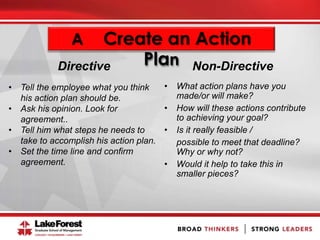
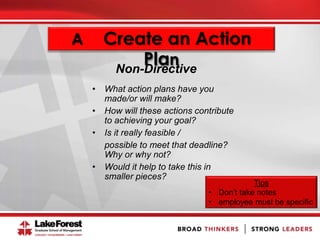
A Create an Action
Plan
• What action plans have you
made/or will make?
• How will these actions contribute
to achieving your goal?
• Is it really feasible /
possible to meet that deadline?
Why or why not?
• Would it help to take this in
smaller pieces?
Directive Non-Directive
• Tell the employee what you think
his action plan should be.
• Ask his opinion. Look for
agreement..
• Tell him what steps he needs to
take to accomplish his action plan.
• Set the time line and confirm
agreement.
A Create an Action
Plan
• What action plans have you
made/or will make?
• How will these actions contribute
to achieving your goal?
• Is it really feasible /
possible to meet that deadline?
Why or why not?
• Would it help to take this in
smaller pieces?
Tips
• Don’t take notes
• employee must be specific
Non-Directive
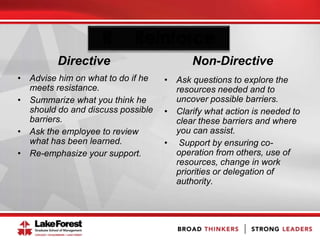
R Reinforce
• Advise him on what to do if he
meets resistance.
• Summarize what you think he
should do and discuss possible
barriers.
• Ask the employee to review
what has been learned.
• Re-emphasize your support.
• Ask questions to explore the
resources needed and to
uncover possible barriers.
• Clarify what action is needed to
clear these barriers and where
you can assist.
• Support by ensuring co-
operation from others, use of
resources, change in work
priorities or delegation of
authority.
Directive Non-Directive
R Reinforce
• Ask questions to explore the
resources needed and to
uncover possible barriers.
• Clarify what action is needed to
clear these barriers and where
you can assist.
• Support by ensuring co-
operation from others, use of
resources, change in work
priorities or delegation of
authority.
Tips
• Help employee be realistic
• Assure accountability
Non-Directive
Coaching Tips
• Make sure the employee knows you are
coaching him
• Choose the right environment
• Create a focus for the session
• Don’t get hooked on the story
• Don’t assume you have the “right” solution
• Listen more than talk
• If you’re thinking about the next question to
ask, you're not listening
• Suspend judgment
• Maintain confidentiality
Coaching Conversation
S
O
A
R
SOAR Model
Coaching Check List
Step 1. Communication style
Step 2. Create the right coaching environment
Step 3. Level of motivation and key motivators
Step 4. Generational/Cultural consideration
Step 5. Focus for the coaching session
Step 6. Type of coaching - Directive or Nondirective

Mod 5 coaching model nt_lb_6_20_14

  • 1.
  • 2.
    Program Roadmap Step 1 Situation I.The Impact of Coaching Step 2 Options S Step 3 Action Plan Step 4 Reinforcement O A R Communication Listening Body Language Questioning Phone Coaching Ride Along Coaching III. Coaching Model IV. Coaching Skills The Value of Coaching Motivation & Performance II. Coaching Dimensions Creating a Coaching Environment Types of Coaching Coaching Considerations
  • 3.
    Coaching Model • Processthat contains four simple steps • Creates a predictable progression toward outcomes • Creates a collaborative environment • Does not have to be a linear process
  • 4.
  • 5.
    Directive • Establish thefocus for the coaching discussion. • Give the employee feedback about his performance. • Tell the employee why you think he needs to change. • Tell the employee what you think his underlying need is and why. Non-Directive • Ask the employee to establish the focus for the coaching discussion. • Ask the employee to evaluate their performance. • What specific outcomes do you want to accomplish by the end of our coaching? • What is the problem you are trying to solve? • How will you know you’ve been successful? S Situation
  • 6.
    • Ask theemployee to establish the focus for the coaching discussion. • Ask the employee to evaluate their performance. • What specific outcomes do you want to accomplish by the end of our coaching? • What is the problem you are trying to solve? • How will you know you’ve been successful? Non-Directive Tips • Listen more than talk • Don’t get hooked on the story • Use silence S Situation
  • 7.
    O Discover Options •Tell the employee what you think his goals should be. • Ask his opinion. Are there other options that you and he can explore. • If you have observed him in action, identify the barriers you see and give good, specific feedback. • Gain commitment on his course of action . Directive Non-Directive • What needs to happen? • What have you tried (thought of) already? • What have you seen work for others? • How does this option relate to reaching your goal? • What would be the outcome of that approach? • What are both the positives and negatives.
  • 8.
    O Discover Options Tips •Remain neutral • Push for multiple options Non-Directive • What needs to happen? • What have you tried (thought of) already? • What have you seen work for others? • How does this option relate to reaching your goal? • What would be the outcome of that approach? • What are both the positives and negatives.
  • 9.
    Discover Options Possible Solutions 12 3 4 5 Will that solve your problem? What are the consequences of that solution? employee ManagerWhat have you tried so far?
  • 10.
  • 11.
    A Create anAction Plan • What action plans have you made/or will make? • How will these actions contribute to achieving your goal? • Is it really feasible / possible to meet that deadline? Why or why not? • Would it help to take this in smaller pieces? Directive Non-Directive • Tell the employee what you think his action plan should be. • Ask his opinion. Look for agreement.. • Tell him what steps he needs to take to accomplish his action plan. • Set the time line and confirm agreement.
  • 12.
    A Create anAction Plan • What action plans have you made/or will make? • How will these actions contribute to achieving your goal? • Is it really feasible / possible to meet that deadline? Why or why not? • Would it help to take this in smaller pieces? Tips • Don’t take notes • employee must be specific Non-Directive
  • 13.
    R Reinforce • Advisehim on what to do if he meets resistance. • Summarize what you think he should do and discuss possible barriers. • Ask the employee to review what has been learned. • Re-emphasize your support. • Ask questions to explore the resources needed and to uncover possible barriers. • Clarify what action is needed to clear these barriers and where you can assist. • Support by ensuring co- operation from others, use of resources, change in work priorities or delegation of authority. Directive Non-Directive
  • 14.
    R Reinforce • Askquestions to explore the resources needed and to uncover possible barriers. • Clarify what action is needed to clear these barriers and where you can assist. • Support by ensuring co- operation from others, use of resources, change in work priorities or delegation of authority. Tips • Help employee be realistic • Assure accountability Non-Directive
  • 15.
    Coaching Tips • Makesure the employee knows you are coaching him • Choose the right environment • Create a focus for the session • Don’t get hooked on the story • Don’t assume you have the “right” solution • Listen more than talk • If you’re thinking about the next question to ask, you're not listening • Suspend judgment • Maintain confidentiality
  • 16.
  • 17.
    Coaching Check List Step1. Communication style Step 2. Create the right coaching environment Step 3. Level of motivation and key motivators Step 4. Generational/Cultural consideration Step 5. Focus for the coaching session Step 6. Type of coaching - Directive or Nondirective