

















C E N T R A L P E N N S Y LVA N I A
C H A P T E R
WHAT IS YOUR
BIGGEST TRAINING
CHALLENGE?
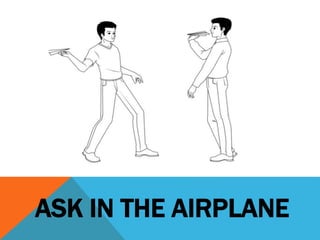
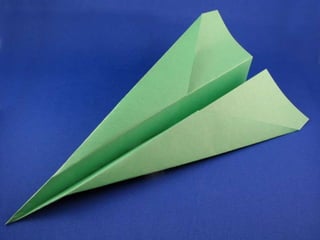
ASK IN THE AIRPLANE
What do you think is
the #1 challenge of
safety trainers?
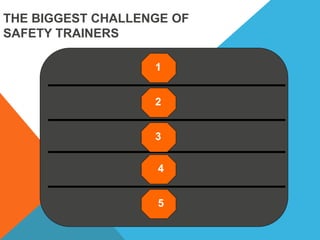
THE BIGGEST CHALLENGE OF
SAFETY TRAINERS
1
2
3
4
5
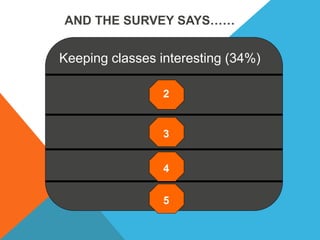
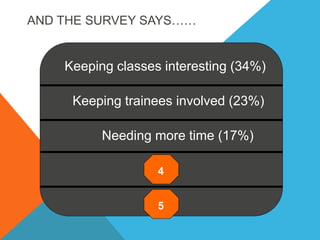
AND THE SURVEY SAYS……
2
3
4
5
Keeping classes interesting (34%)
3
4
5
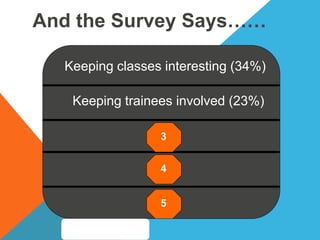
Keeping trainees involved (23%)
Keeping classes interesting (34%)
And the Survey Says……
4
5
Keeping trainees involved (23%)
Keeping classes interesting (34%)
Needing more time (17%)
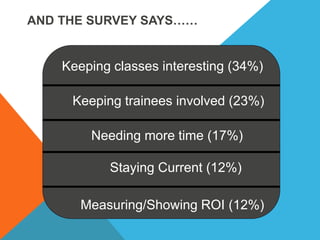
AND THE SURVEY SAYS……
Keeping trainees involved (23%)
Keeping classes interesting (34%)
Needing more time (17%)
Staying Current (12%)
Measuring/Showing ROI (12%)
AND THE SURVEY SAYS……
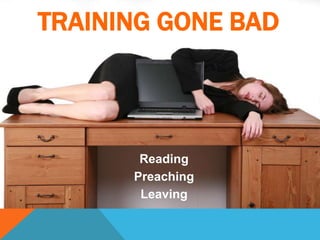
TRAINING GONE BAD
Reading
Preaching
Leaving
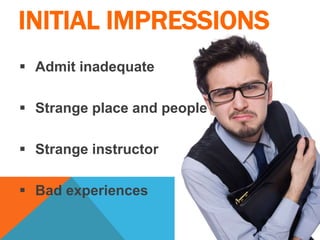
INITIAL IMPRESSIONS
 Admit inadequate
 Strange place and people
 Strange instructor
 Bad experiences
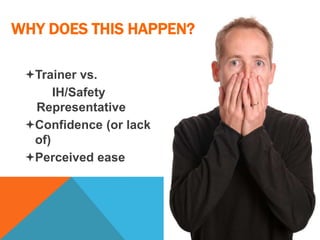
Trainer vs.
IH/Safety
Representative
Confidence (or lack
of)
Perceived ease
WHY DOES THIS HAPPEN?
GET OFF ON
THE RIGHT FOOT
INQUIRING MINDS WANT TO KNOW
 Stimulate curiosity by involving them from the
beginning
 Ask an intriguing question that which you expect
few people will know the answer
 Encourage speculation and wild guessing
 Accept all guesses – build curiosity
 Use Question as a lead in to the presentation
(provide the answer in your presentation)
WHAT’S IN THE BOX?
Props
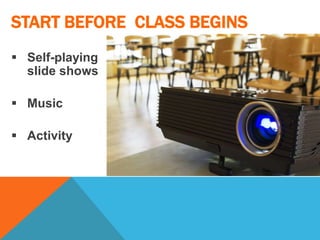
START BEFORE CLASS BEGINS
 Self-playing
slide shows
 Music
 Activity
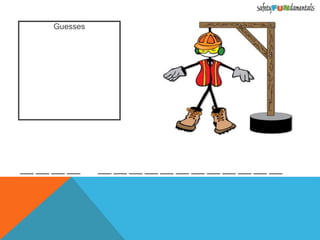
Guesses
___ ___ ___ ___ ___ ___ ___ ___ ___ ___ ___ ___ ___ ___ ___ ___
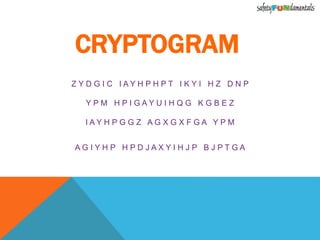
CRYPTOGRAM
Z Y D G I C I A Y H P H P T I K Y I H Z D N P
Y P M H P I G A Y U I H Q G K G B E Z
I A Y H P G G Z A G X G X F G A Y P M
A G I Y H P H P D J A X Y I H J P B J P T G A
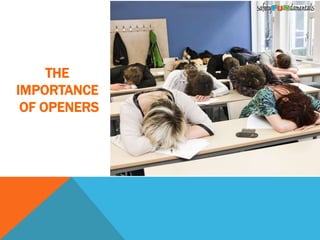
THE
IMPORTANCE
OF OPENERS
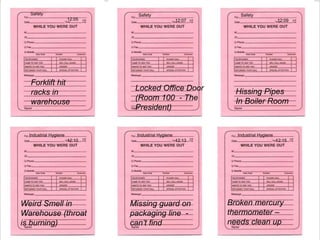
WHILE
YOU WERE
OUT
Forklift hit
racks in
warehouse
Missing guard on
packaging line -
can’t find
Hissing Pipes
In Boiler Room
Weird Smell in
Warehouse (throat
is burning)
Locked Office Door
(Room 100 - The
President)
Broken mercury
thermometer –
needs clean up
Safety
12:05
Safety
12:07
Safety
12:09
Industrial Hygiene
12:10
Industrial Hygiene
12:13
Industrial Hygiene
12:15
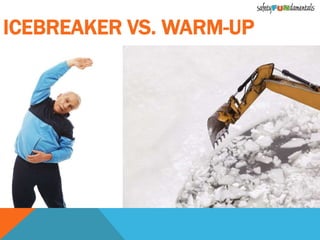
ICEBREAKER VS. WARM-UP
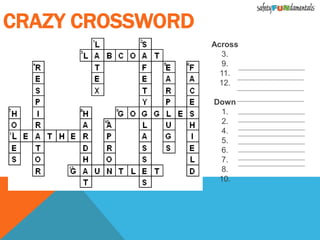
Across
3.
9.
11.
12.
Down
1.
2.
4.
5.
6.
7.
8.
10.
CRAZY CROSSWORD
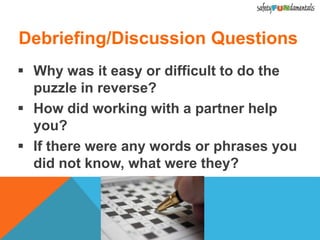
Debriefing/Discussion Questions
 Why was it easy or difficult to do the
puzzle in reverse?
 How did working with a partner help
you?
 If there were any words or phrases you
did not know, what were they?
Safety Training that is
fun and interactive helps
trainees remember and
retain information longer
Applied to Safety
and Health
Training
 Not Just a Bunch of Fluff
 Not funny or cute for the sake of being
funny or cute
Everything in an accelerated learning
class is focused on the results and not
the materials or activities themselves.
WHAT IT’S NOT
Accelerated = faster
Learning = Change in behavior from
new skills, knowledge or attitude
That is…
Changing behaviors
with increasing speed
ACCELERATED LEARNING
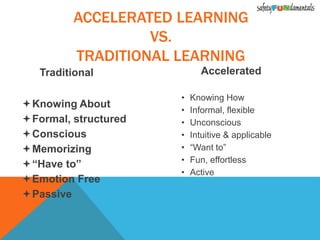
Traditional Accelerated
ACCELERATED LEARNING
VS.
TRADITIONAL LEARNING
Traditional
Knowing About
Formal, structured
Conscious
Memorizing
“Have to”
Emotion Free
Passive
Accelerated
• Knowing How
• Informal, flexible
• Unconscious
• Intuitive & applicable
• “Want to”
• Fun, effortless
• Active
ACCELERATED LEARNING
VS.
TRADITIONAL LEARNING
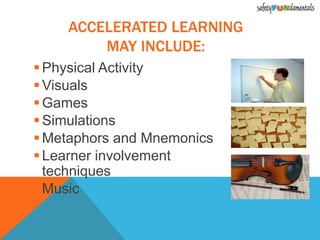
Physical Activity
Visuals
Games
Simulations
Metaphors and Mnemonics
Learner involvement
techniques
Music
ACCELERATED LEARNING
MAY INCLUDE:
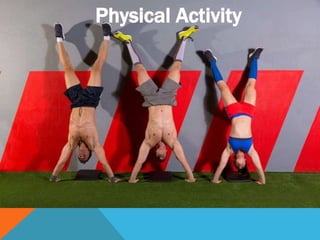
Physical Activity
Koosh® Communication
What is the
greatest
hazard in
your
workplace?
(one word)
Debriefing/Discussion Questions
What did you like most or least about this
activity?
How did you decide who to pass the
Koosh to?
What would you have done differently
this morning if you knew you would be
put on the spot like this?
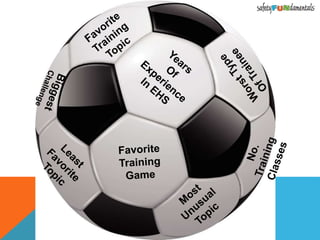
When bodies move, learning improves;
where listening grows, collaborations flow;
when creativity is ignited,
participants get excited;
communication is enhanced,
social skills advance;
it's a Thumball celebration...
come join the conversation
From
Thumball.com
TEAM THUMB BALL
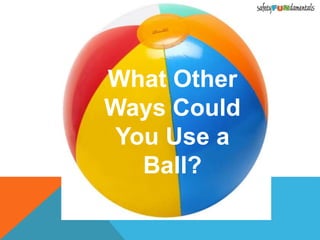
What Other
Ways Could
You Use a
Ball?
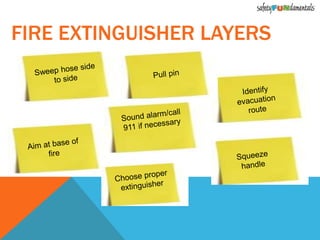
FIRE EXTINGUISHER LAYERS
FILL IN THE CORRECT
ANSWERS
CREATE YOUR OWN LAYERS
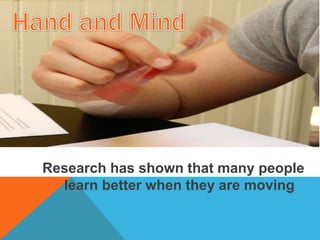
Research has shown that many people
learn better when they are moving
Visuals
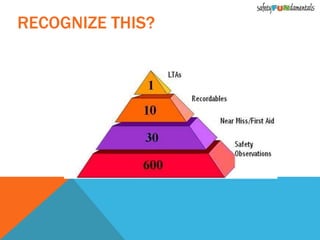
RECOGNIZE THIS?
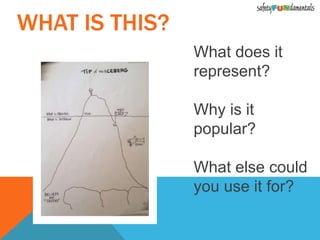
What does it
represent?
Why is it
popular?
What else could
you use it for?
WHAT IS THIS?
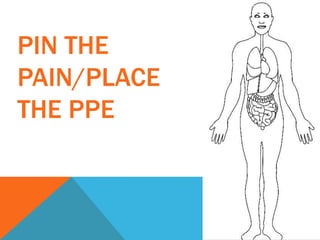
PIN THE
PAIN/PLACE
THE PPE
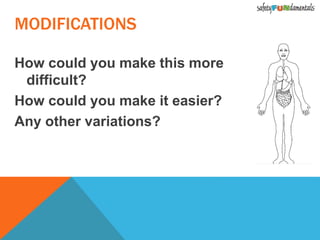
How could you make this more
difficult?
How could you make it easier?
Any other variations?
MODIFICATIONS
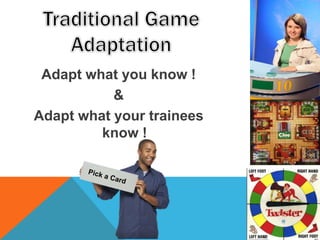
How would you define
“Game”?
“ A game is a system in which
players engage in an artificial
conflict, defined by rules, that
results in a quantifiable
outcome.”
From Rules of Play: Game Design Fundamentals by Salen and Zimmerman
WITH RESPECT TO
TRAINING…
Adapt what you know !
&
Adapt what your trainees
know !
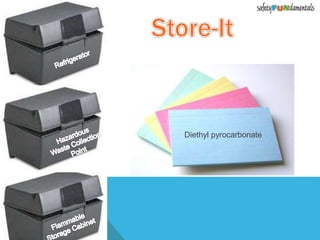
Diethyl pyrocarbonate
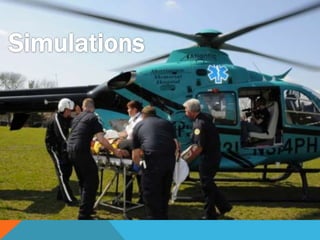
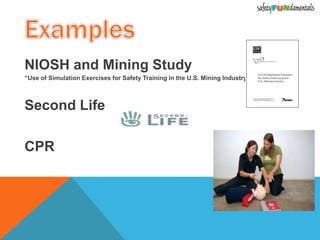
NIOSH and Mining Study
“Use of Simulation Exercises for Safety Training in the U.S. Mining Industry”
Second Life
CPR
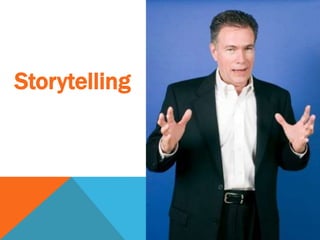
Storytelling
“Stories are the most powerful delivery
tool for information, more powerful and
enduring than any other art form.” –
Nancy Duarte
(author of Resonate and Slide:ology)
Total Learner Involvement Enhances Learning
Learning should involve the whole mind and body.
Learning does not just take place in the head but
involves the whole body with all its senses, emotions
and receptors.
Where Have We had
“Total Learner Involvement?”
• Learning is not the passive storage of
information but the active creation of
knowledge
• Training needs to be created by the
trainee and not necessarily given to
them.
• When learners learn, they are creating
new meanings, associations and
neural networks within their existing
self.
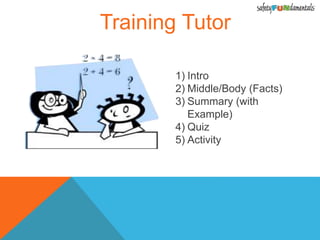
Training Tutor
1) Intro
2) Middle/Body (Facts)
3) Summary (with
Example)
4) Quiz
5) Activity
Debriefing/Discussion Questions
What techniques did you use to find
information for your section?
What else would have helped you?
Was it easier or harder to think about one
section of the training and why?
Develop hand-out with _____ ______ only
Leave portions ______
Activity – centered learning events are
often superior to presentation-centered
ones.
Activity, or doing the work itself,
enhances learning.
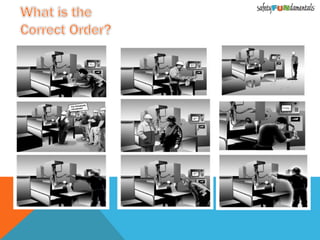
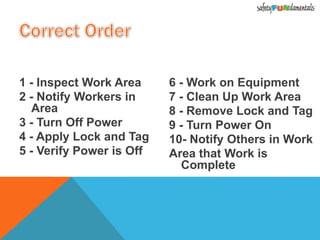
1 - Inspect Work Area
2 - Notify Workers in
Area
3 - Turn Off Power
4 - Apply Lock and Tag
5 - Verify Power is Off
6 - Work on Equipment
7 - Clean Up Work Area
8 - Remove Lock and Tag
9 - Turn Power On
10- Notify Others in Work
Area that Work is
Complete
How Would You Spend it if it was in
your Training Budget? How would
you use it to make your place safer?
Debriefing/Discussion Questions
• How did the fact that you have
unlimited funds change your
thinking?
• How can you make some of these
ideas come true?
• Which ideas surprised you as being
more or less expensive than you
expected?
Every 8 Minutes Your Class
Needs a Wake-Up Call
Open Discussion
Response Cards
Polling
Subgroup
discussions
Learning
partners
Games
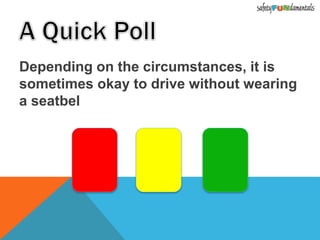
Depending on the circumstances, it is
sometimes okay to drive without wearing
a seatbel
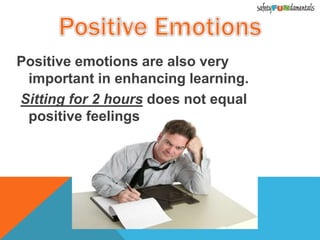
Positive emotions are also very
important in enhancing learning.
Sitting for 2 hours does not equal
positive feelings
Greater Attention
More Enjoyable
Relaxation
Memory Aid/Link
Relationship Builder
Humor is good for you!
• Laughter relieves tension
• Laughter transcends negative
emotions
• Laughter Aids Memorization
• Laughter builds rapport
• Trainees respond
________________________________________
________________________________________
________________________________________
________________________________________
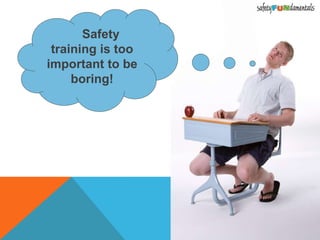
Safety
training is too
important to be
boring!
Course #605
82
83
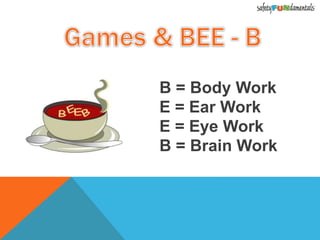
B = Body Work
E = Ear Work
E = Eye Work
B = Brain Work
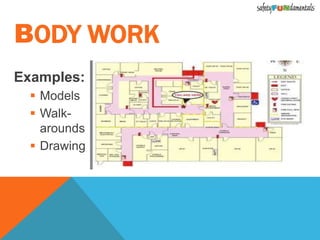
BODY WORK
Examples:
 Models
 Walk-
arounds
 Drawing
BODY WORK
Body work includes
what we can touch
and feel such as
hands-on learning
activities
This is not how most
of us were taught!
• Asking them to act out how something
works
• Asking them to simulate how a structure or
function in the human body works
• Having them act out a communication
process
• Create large pictograms
• Complete a project that requires physical activity
• Do an active learning exercise such as a learning
game
• Take a field trip out into the plant and then when you
come back, have attendees write, draw or talk about
what they learned
• Interview people outside the class
EAR WORK
• Reading Out Loud
• Listening & Taking
Notes
• Music
Why is it better?
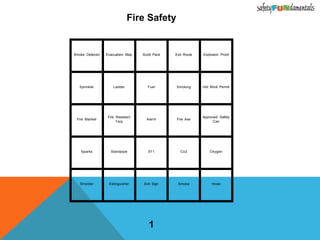
Fire Safety
Smoke Detector Evacuation Map Scott Pack Exit Route Explosion Proof
Sprinkler Ladder Fuel Smoking Hot Work Permit
Fire Blanket
Fire Resistant
Tarp
Alarm Fire Axe
Approved Safety
Can
Sparks Standpipe 911 Co2 Oxygen
Smolder Extinguisher Exit Sign Smoke Hose
1
Debriefing/Discussion Questions
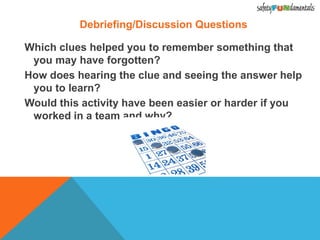
Which clues helped you to remember something that
you may have forgotten?
How does hearing the clue and seeing the answer help
you to learn?
Would this activity have been easier or harder if you
worked in a team and why?
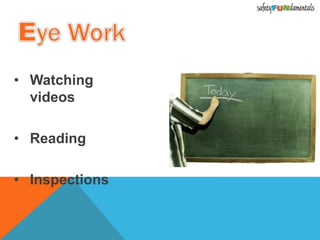
• Watching
videos
• Reading
• Inspections
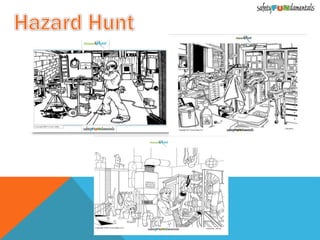
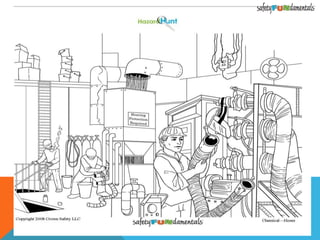
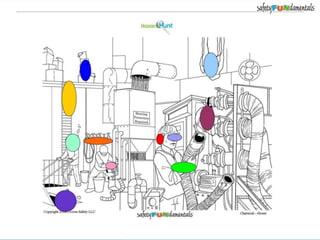
How did it feel to have a limited amount of time to make
your observations?
What was your first reaction? Why?
How did working with a team affect your ability to
identify things?
Which of the hazards you found would be a top priority
to fix?
DEBRIEFING/DISCUSSION
QUESTIONS
Tying it all
together!
Debriefing/Discussion
Questions
Why do you think teams had different items in
different piles?
What could happen if different departments or
divisions also categorized hazards
differently?
What can you use from this exercise back in
the workplace?
Lone Ranger
Safety, Maintenance or Purchasing
Low, Medium or High
List ten common areas or conditions that need attention in
your workplace
1.
2.
3.
4.
5.
6.
7.
8.
9.
10.
Pick Your
Variation
• Problem solving exercises
• Ask the class to analyze experiences
• Ask the class to plan an activity
• Ask the class to distill information
 Write ten questions with your team
 You may or may not get your own quiz back
Debriefing/Discussion Questions
Was it easy or difficult to make up your
own quiz questions and why?
Did you write your questions
differently knowing that you may
have to answer them yourself?
What was the most difficult question
and why?
__________ and ________
You can have too much of a good thing
Flexible, Understandable, Fun and
Adaptable
Chance and Skill
You can have too much of a good thing
Flexible, Understandable, Fun and
Adaptable
• Explain Objective
• See Benefits
• Demonstrate if
necessary
• Divide before moving
on
• Be a Timekeeper
• Keep it moving
• Challenge them
• Debrief
Debriefing/Discussion Questions
Why did you find this activity easy or hard?
Was it more difficult to work under pressure?
Why?
What makes a quality answer or solution?
Is it easier to solve someone else's problem or
you own?
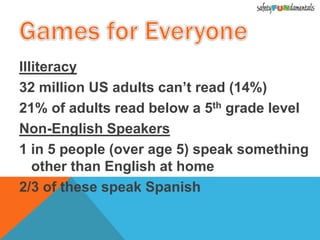
Illiteracy
32 million US adults can’t read (14%)
21% of adults read below a 5th grade level
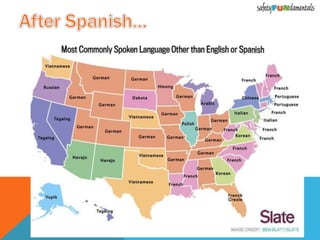
Non-English Speakers
1 in 5 people (over age 5) speak something
other than English at home
2/3 of these speak Spanish
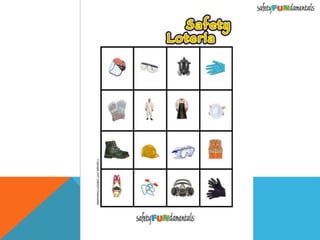
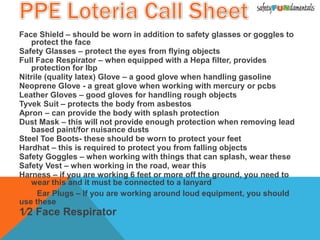
Face Shield – should be worn in addition to safety glasses or goggles to
protect the face
Safety Glasses – protect the eyes from flying objects
Full Face Respirator – when equipped with a Hepa filter, provides
protection for lbp
Nitrile (quality latex) Glove – a good glove when handling gasoline
Neoprene Glove - a great glove when working with mercury or pcbs
Leather Gloves – good gloves for handling rough objects
Tyvek Suit – protects the body from asbestos
Apron – can provide the body with splash protection
Dust Mask – this will not provide enough protection when removing lead
based paint/for nuisance dusts
Steel Toe Boots- these should be worn to protect your feet
Hardhat – this is required to protect you from falling objects
Safety Goggles – when working with things that can splash, wear these
Safety Vest – when working in the road, wear this
Harness – if you are working 6 feet or more off the ground, you need to
wear this and it must be connected to a lanyard
Ear Plugs – If you are working around loud equipment, you should
use these
1⁄2 Face Respirator
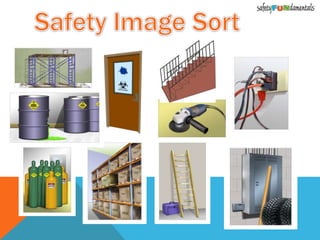
Was it easier or harder to sort pictures
than words?
Was there a different kind of discussion
about the hazards? How?
Simplify
Adapt
Shorten
Lengthen
Remember Chance and Skill
Translate
FUFA
You may not be able to eliminate the
PowerPoint format entirely but the
written materials will not be the focal
point and the most important part of
your training.
The slides can help to initiate, guide
and support the experiences that are
used in the class
• Adding visuals increases retention
from 14% to 38%
• Time required to present a concept
is reduced by 40% when visuals are
used in a verbal presentation
But… you need more than hearing and
seeing to really get it!
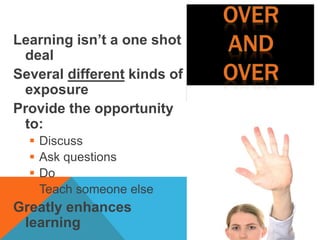
Learning isn’t a one shot
deal
Several different kinds of
exposure
Provide the opportunity
to:
 Discuss
 Ask questions
 Do
 Teach someone else
Greatly enhances
learning
Debriefing/Discussion
Questions
How did this exercise help you to remember
information in the class that you may have
forgotten?
How did working in a group help you to finish
faster?
What is one of the most important things you
remembered as a result of this exercise?
Promise to try at least 3 new activities in the
next 30 days
Write it Down!
 Fill out a postcard/envelope
Need help? Don’t hesitate to email me at:
 Linda@SafetyFUNdamentals.com
WANTMORE?
Facebook Page
(free games, activities, contests)
Facebook.com/SafetyFUNdament
als
Twitter @SafetyFUN
Newsletter
(sign up at GamesforSafety.com)
Linda@SafetyFUNdamentals.com

Central PA ASSE Professional Development Conference

  • 1.
    C E NT R A L P E N N S Y LVA N I A C H A P T E R
  • 3.
    WHAT IS YOUR BIGGESTTRAINING CHALLENGE?
  • 4.
    ASK IN THEAIRPLANE
  • 5.
    What do youthink is the #1 challenge of safety trainers?
  • 6.
    THE BIGGEST CHALLENGEOF SAFETY TRAINERS 1 2 3 4 5
  • 7.
    AND THE SURVEYSAYS…… 2 3 4 5 Keeping classes interesting (34%)
  • 8.
    3 4 5 Keeping trainees involved(23%) Keeping classes interesting (34%) And the Survey Says……
  • 9.
    4 5 Keeping trainees involved(23%) Keeping classes interesting (34%) Needing more time (17%) AND THE SURVEY SAYS……
  • 10.
    Keeping trainees involved(23%) Keeping classes interesting (34%) Needing more time (17%) Staying Current (12%) Measuring/Showing ROI (12%) AND THE SURVEY SAYS……
  • 11.
  • 12.
    INITIAL IMPRESSIONS  Admitinadequate  Strange place and people  Strange instructor  Bad experiences
  • 14.
    Trainer vs. IH/Safety Representative Confidence (orlack of) Perceived ease WHY DOES THIS HAPPEN?
  • 15.
    GET OFF ON THERIGHT FOOT
  • 16.
    INQUIRING MINDS WANTTO KNOW  Stimulate curiosity by involving them from the beginning  Ask an intriguing question that which you expect few people will know the answer  Encourage speculation and wild guessing  Accept all guesses – build curiosity  Use Question as a lead in to the presentation (provide the answer in your presentation)
  • 17.
    WHAT’S IN THEBOX? Props
  • 18.
    START BEFORE CLASSBEGINS  Self-playing slide shows  Music  Activity
  • 19.
    Guesses ___ ___ ______ ___ ___ ___ ___ ___ ___ ___ ___ ___ ___ ___ ___
  • 20.
    CRYPTOGRAM Z Y DG I C I A Y H P H P T I K Y I H Z D N P Y P M H P I G A Y U I H Q G K G B E Z I A Y H P G G Z A G X G X F G A Y P M A G I Y H P H P D J A X Y I H J P B J P T G A
  • 21.
  • 23.
  • 24.
    Forklift hit racks in warehouse Missingguard on packaging line - can’t find Hissing Pipes In Boiler Room Weird Smell in Warehouse (throat is burning) Locked Office Door (Room 100 - The President) Broken mercury thermometer – needs clean up Safety 12:05 Safety 12:07 Safety 12:09 Industrial Hygiene 12:10 Industrial Hygiene 12:13 Industrial Hygiene 12:15
  • 25.
  • 26.
  • 27.
    Debriefing/Discussion Questions  Whywas it easy or difficult to do the puzzle in reverse?  How did working with a partner help you?  If there were any words or phrases you did not know, what were they?
  • 28.
    Safety Training thatis fun and interactive helps trainees remember and retain information longer
  • 29.
    Applied to Safety andHealth Training
  • 31.
     Not Justa Bunch of Fluff  Not funny or cute for the sake of being funny or cute Everything in an accelerated learning class is focused on the results and not the materials or activities themselves. WHAT IT’S NOT
  • 32.
    Accelerated = faster Learning= Change in behavior from new skills, knowledge or attitude That is… Changing behaviors with increasing speed ACCELERATED LEARNING
  • 33.
  • 34.
    Traditional Knowing About Formal, structured Conscious Memorizing “Haveto” Emotion Free Passive Accelerated • Knowing How • Informal, flexible • Unconscious • Intuitive & applicable • “Want to” • Fun, effortless • Active ACCELERATED LEARNING VS. TRADITIONAL LEARNING
  • 35.
    Physical Activity Visuals Games Simulations Metaphors andMnemonics Learner involvement techniques Music ACCELERATED LEARNING MAY INCLUDE:
  • 36.
  • 37.
    Koosh® Communication What isthe greatest hazard in your workplace? (one word)
  • 38.
    Debriefing/Discussion Questions What didyou like most or least about this activity? How did you decide who to pass the Koosh to? What would you have done differently this morning if you knew you would be put on the spot like this?
  • 39.
    When bodies move,learning improves; where listening grows, collaborations flow; when creativity is ignited, participants get excited; communication is enhanced, social skills advance; it's a Thumball celebration... come join the conversation From Thumball.com TEAM THUMB BALL
  • 41.
  • 42.
  • 43.
    FILL IN THECORRECT ANSWERS
  • 44.
  • 45.
    Research has shownthat many people learn better when they are moving
  • 46.
  • 47.
  • 48.
    What does it represent? Whyis it popular? What else could you use it for? WHAT IS THIS?
  • 49.
  • 50.
    How could youmake this more difficult? How could you make it easier? Any other variations? MODIFICATIONS
  • 51.
    How would youdefine “Game”?
  • 52.
    “ A gameis a system in which players engage in an artificial conflict, defined by rules, that results in a quantifiable outcome.” From Rules of Play: Game Design Fundamentals by Salen and Zimmerman WITH RESPECT TO TRAINING…
  • 53.
    Adapt what youknow ! & Adapt what your trainees know !
  • 55.
  • 57.
    NIOSH and MiningStudy “Use of Simulation Exercises for Safety Training in the U.S. Mining Industry” Second Life CPR
  • 58.
  • 59.
    “Stories are themost powerful delivery tool for information, more powerful and enduring than any other art form.” – Nancy Duarte (author of Resonate and Slide:ology)
  • 60.
    Total Learner InvolvementEnhances Learning Learning should involve the whole mind and body. Learning does not just take place in the head but involves the whole body with all its senses, emotions and receptors. Where Have We had “Total Learner Involvement?”
  • 61.
    • Learning isnot the passive storage of information but the active creation of knowledge • Training needs to be created by the trainee and not necessarily given to them. • When learners learn, they are creating new meanings, associations and neural networks within their existing self.
  • 62.
    Training Tutor 1) Intro 2)Middle/Body (Facts) 3) Summary (with Example) 4) Quiz 5) Activity
  • 63.
    Debriefing/Discussion Questions What techniquesdid you use to find information for your section? What else would have helped you? Was it easier or harder to think about one section of the training and why?
  • 64.
    Develop hand-out with_____ ______ only Leave portions ______
  • 66.
    Activity – centeredlearning events are often superior to presentation-centered ones. Activity, or doing the work itself, enhances learning.
  • 69.
    1 - InspectWork Area 2 - Notify Workers in Area 3 - Turn Off Power 4 - Apply Lock and Tag 5 - Verify Power is Off 6 - Work on Equipment 7 - Clean Up Work Area 8 - Remove Lock and Tag 9 - Turn Power On 10- Notify Others in Work Area that Work is Complete
  • 71.
    How Would YouSpend it if it was in your Training Budget? How would you use it to make your place safer?
  • 72.
    Debriefing/Discussion Questions • Howdid the fact that you have unlimited funds change your thinking? • How can you make some of these ideas come true? • Which ideas surprised you as being more or less expensive than you expected?
  • 73.
    Every 8 MinutesYour Class Needs a Wake-Up Call
  • 74.
  • 75.
    Depending on thecircumstances, it is sometimes okay to drive without wearing a seatbel
  • 77.
    Positive emotions arealso very important in enhancing learning. Sitting for 2 hours does not equal positive feelings
  • 78.
    Greater Attention More Enjoyable Relaxation MemoryAid/Link Relationship Builder Humor is good for you!
  • 79.
    • Laughter relievestension • Laughter transcends negative emotions • Laughter Aids Memorization • Laughter builds rapport • Trainees respond
  • 80.
  • 81.
  • 82.
  • 83.
  • 85.
    B = BodyWork E = Ear Work E = Eye Work B = Brain Work
  • 86.
    BODY WORK Examples:  Models Walk- arounds  Drawing
  • 87.
    BODY WORK Body workincludes what we can touch and feel such as hands-on learning activities This is not how most of us were taught!
  • 88.
    • Asking themto act out how something works • Asking them to simulate how a structure or function in the human body works • Having them act out a communication process • Create large pictograms
  • 89.
    • Complete aproject that requires physical activity • Do an active learning exercise such as a learning game • Take a field trip out into the plant and then when you come back, have attendees write, draw or talk about what they learned • Interview people outside the class
  • 91.
    EAR WORK • ReadingOut Loud • Listening & Taking Notes • Music
  • 92.
    Why is itbetter?
  • 93.
    Fire Safety Smoke DetectorEvacuation Map Scott Pack Exit Route Explosion Proof Sprinkler Ladder Fuel Smoking Hot Work Permit Fire Blanket Fire Resistant Tarp Alarm Fire Axe Approved Safety Can Sparks Standpipe 911 Co2 Oxygen Smolder Extinguisher Exit Sign Smoke Hose 1
  • 94.
    Debriefing/Discussion Questions Which clueshelped you to remember something that you may have forgotten? How does hearing the clue and seeing the answer help you to learn? Would this activity have been easier or harder if you worked in a team and why?
  • 95.
  • 99.
    How did itfeel to have a limited amount of time to make your observations? What was your first reaction? Why? How did working with a team affect your ability to identify things? Which of the hazards you found would be a top priority to fix? DEBRIEFING/DISCUSSION QUESTIONS
  • 100.
  • 102.
    Debriefing/Discussion Questions Why do youthink teams had different items in different piles? What could happen if different departments or divisions also categorized hazards differently? What can you use from this exercise back in the workplace?
  • 103.
    Lone Ranger Safety, Maintenanceor Purchasing Low, Medium or High
  • 104.
    List ten commonareas or conditions that need attention in your workplace 1. 2. 3. 4. 5. 6. 7. 8. 9. 10. Pick Your Variation
  • 105.
    • Problem solvingexercises • Ask the class to analyze experiences • Ask the class to plan an activity • Ask the class to distill information
  • 106.
     Write tenquestions with your team  You may or may not get your own quiz back
  • 107.
    Debriefing/Discussion Questions Was iteasy or difficult to make up your own quiz questions and why? Did you write your questions differently knowing that you may have to answer them yourself? What was the most difficult question and why?
  • 108.
    __________ and ________ Youcan have too much of a good thing Flexible, Understandable, Fun and Adaptable
  • 109.
    Chance and Skill Youcan have too much of a good thing Flexible, Understandable, Fun and Adaptable
  • 110.
    • Explain Objective •See Benefits • Demonstrate if necessary • Divide before moving on • Be a Timekeeper • Keep it moving • Challenge them • Debrief
  • 113.
    Debriefing/Discussion Questions Why didyou find this activity easy or hard? Was it more difficult to work under pressure? Why? What makes a quality answer or solution? Is it easier to solve someone else's problem or you own?
  • 117.
    Illiteracy 32 million USadults can’t read (14%) 21% of adults read below a 5th grade level Non-English Speakers 1 in 5 people (over age 5) speak something other than English at home 2/3 of these speak Spanish
  • 120.
    Face Shield –should be worn in addition to safety glasses or goggles to protect the face Safety Glasses – protect the eyes from flying objects Full Face Respirator – when equipped with a Hepa filter, provides protection for lbp Nitrile (quality latex) Glove – a good glove when handling gasoline Neoprene Glove - a great glove when working with mercury or pcbs Leather Gloves – good gloves for handling rough objects Tyvek Suit – protects the body from asbestos Apron – can provide the body with splash protection Dust Mask – this will not provide enough protection when removing lead based paint/for nuisance dusts Steel Toe Boots- these should be worn to protect your feet Hardhat – this is required to protect you from falling objects Safety Goggles – when working with things that can splash, wear these Safety Vest – when working in the road, wear this Harness – if you are working 6 feet or more off the ground, you need to wear this and it must be connected to a lanyard Ear Plugs – If you are working around loud equipment, you should use these 1⁄2 Face Respirator
  • 123.
    Was it easieror harder to sort pictures than words? Was there a different kind of discussion about the hazards? How?
  • 124.
  • 127.
    You may notbe able to eliminate the PowerPoint format entirely but the written materials will not be the focal point and the most important part of your training. The slides can help to initiate, guide and support the experiences that are used in the class
  • 129.
    • Adding visualsincreases retention from 14% to 38% • Time required to present a concept is reduced by 40% when visuals are used in a verbal presentation But… you need more than hearing and seeing to really get it!
  • 130.
    Learning isn’t aone shot deal Several different kinds of exposure Provide the opportunity to:  Discuss  Ask questions  Do  Teach someone else Greatly enhances learning
  • 133.
    Debriefing/Discussion Questions How did thisexercise help you to remember information in the class that you may have forgotten? How did working in a group help you to finish faster? What is one of the most important things you remembered as a result of this exercise?
  • 134.
    Promise to tryat least 3 new activities in the next 30 days Write it Down!  Fill out a postcard/envelope Need help? Don’t hesitate to email me at:  Linda@SafetyFUNdamentals.com
  • 135.
    WANTMORE? Facebook Page (free games,activities, contests) Facebook.com/SafetyFUNdament als Twitter @SafetyFUN Newsletter (sign up at GamesforSafety.com) Linda@SafetyFUNdamentals.com