The document discusses the evolution and future of behavior-based safety (BBS), detailing its historical development from the 1960s to present, characterized by a focus on creating a safety partnership between management and employees. It emphasizes the importance of targeting specific behaviors for change, employing systematic procedures for monitoring and feedback, and highlights the need for data integration and benchmarking in future BBS practices. The document concludes by proposing an extension of BBS processes to cover the entire accident causation chain and advocating for its integration into mainstream safety management systems.
Behavior-Based Safety:PAST, PRESENT & FUTURE B-Safe Management Solutions, Inc 6648 East State Road 44 Franklin, IN ,46131 +1 (317) 736 8980 www.behavioral-safety.com [email_address] Dr Dominic Cooper C.Psychol CFIOSH Keynote Speech BehavioralSafetyNow 09 Conference Jacksonville, Florida, Oct.
2.
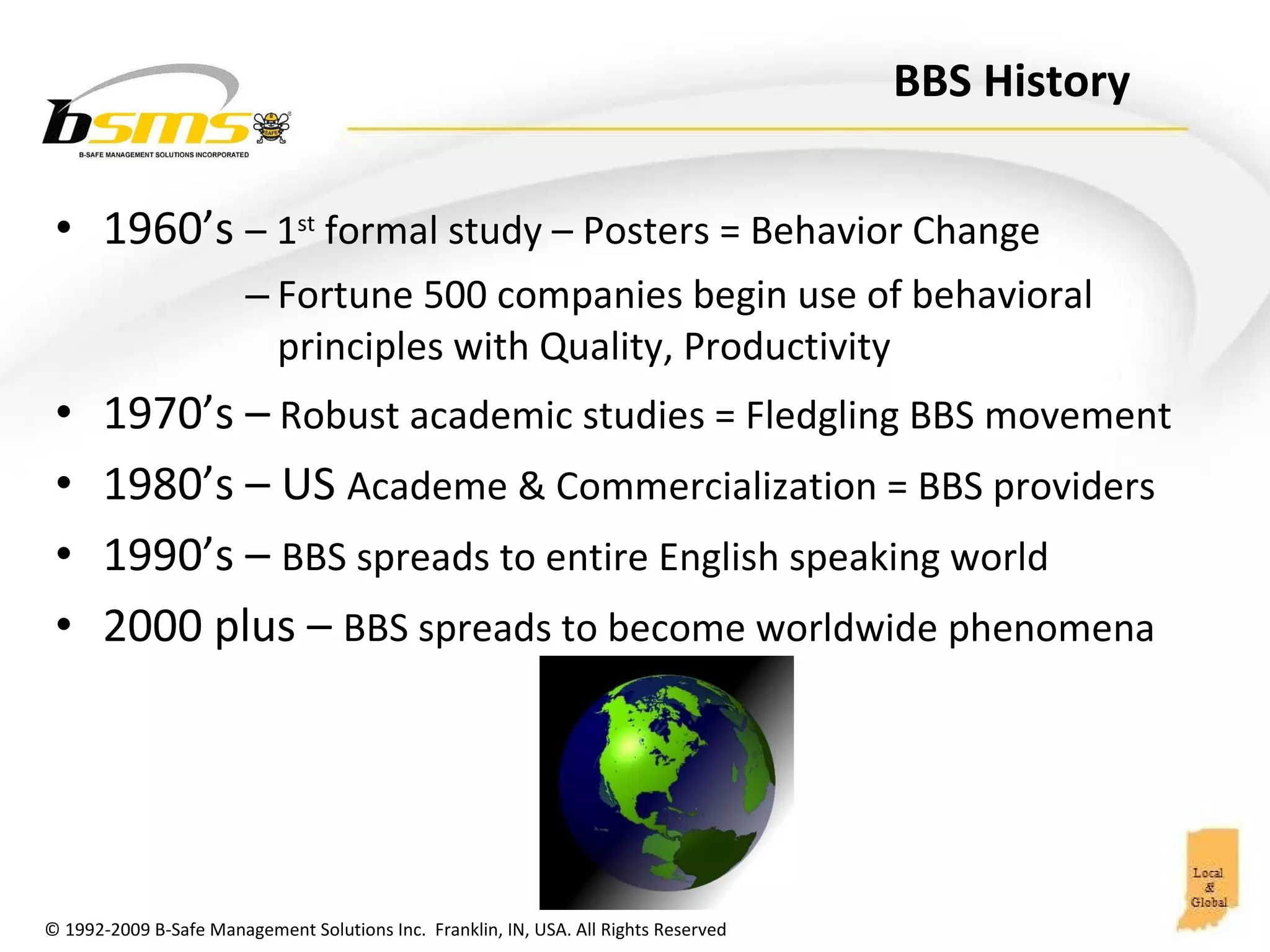
BBS History 1960’s – 1 st formal study – Posters = Behavior Change Fortune 500 companies begin use of behavioral principles with Quality, Productivity 1970’s – Robust academic studies = Fledgling BBS movement 1980’s – US Academe & Commercialization = BBS providers 1990’s – BBS spreads to entire English speaking world 2000 plus – BBS spreads to become worldwide phenomena
3.
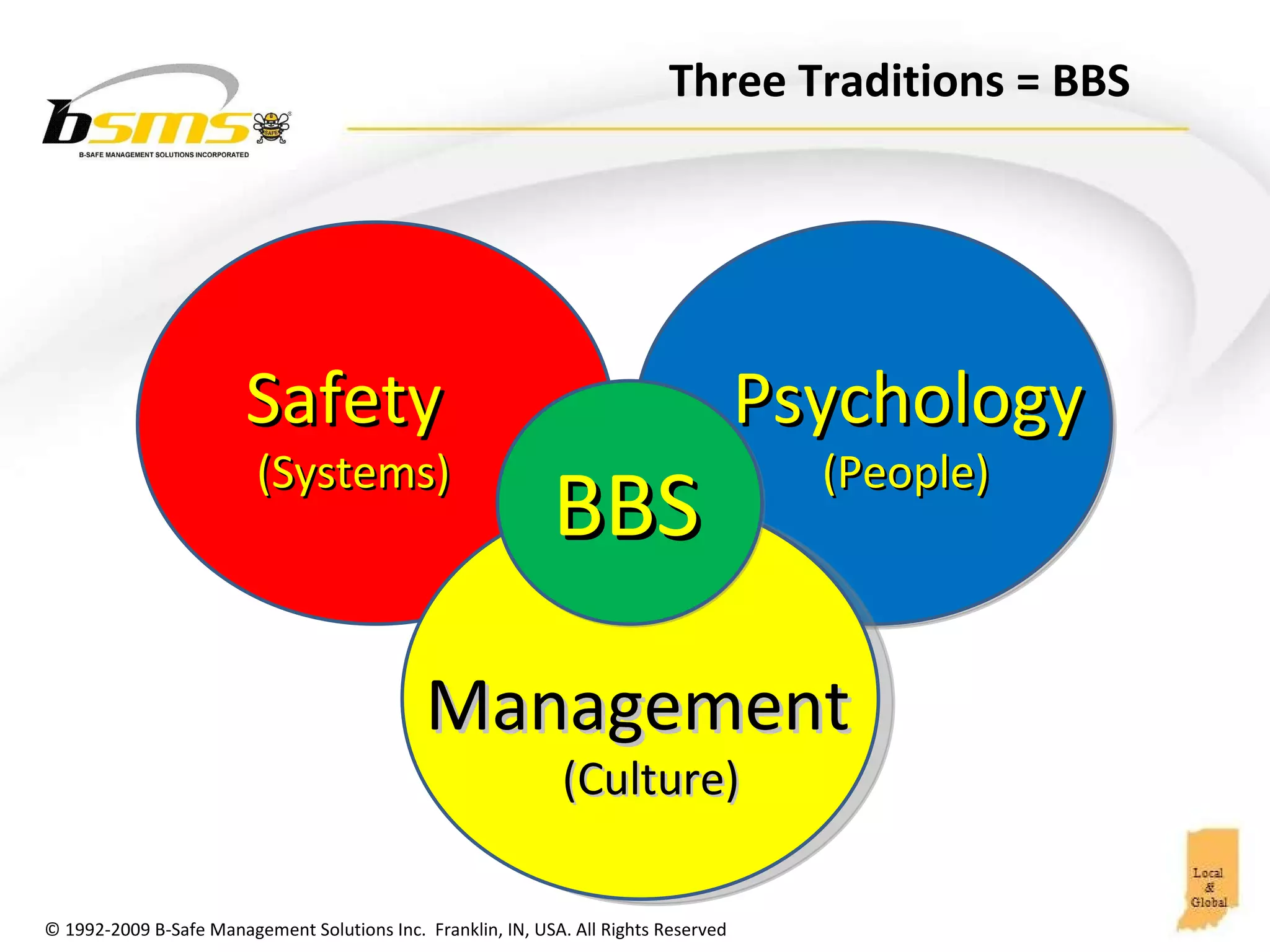
Three Traditions =BBS Safety (Systems) BBS Management (Culture) Psychology (People)
4.
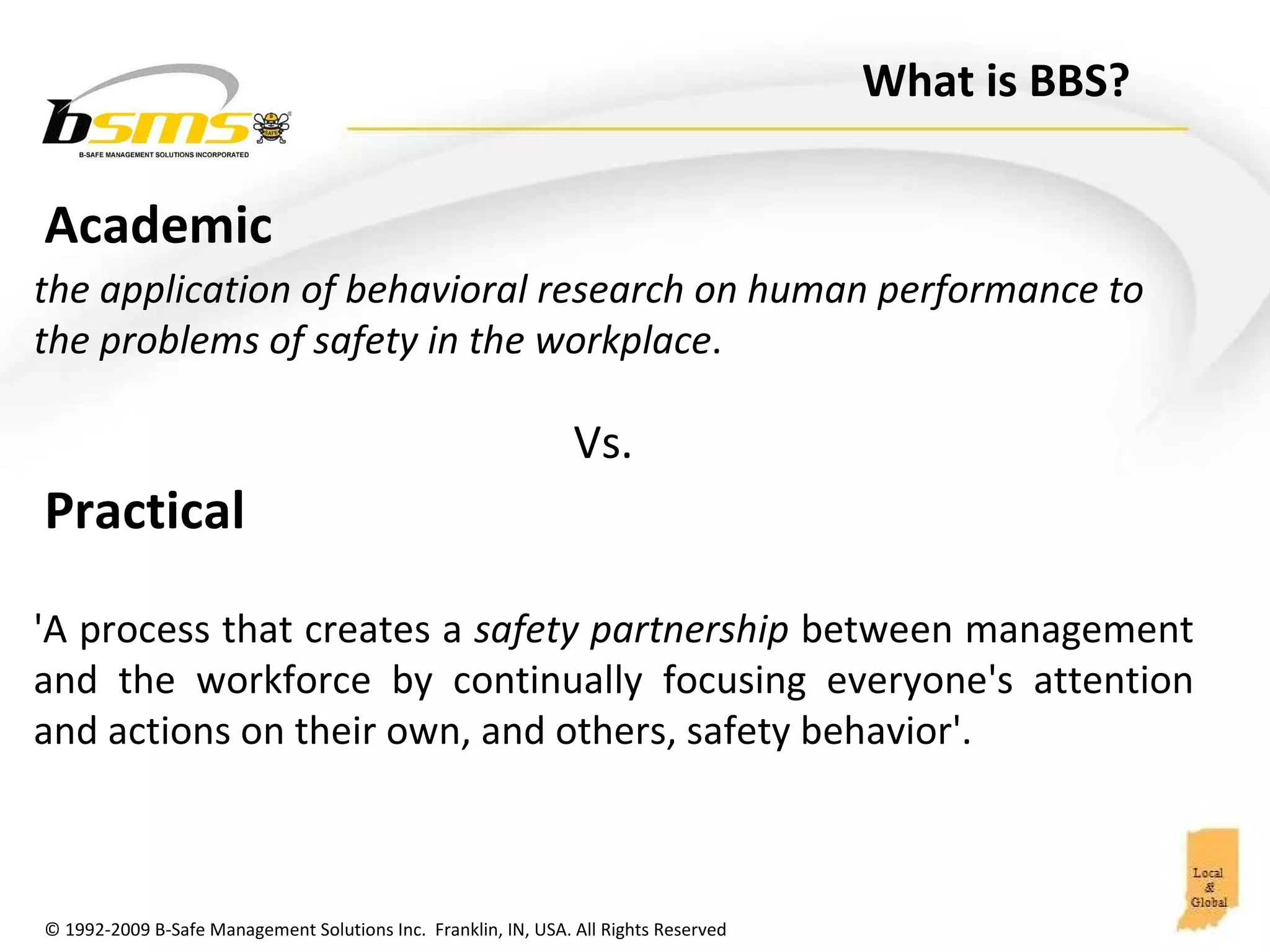
What is BBS?'A process that creates a safety partnership between management and the workforce by continually focusing everyone's attention and actions on their own, and others, safety behavior'. the application of behavioral research on human performance to the problems of safety in the workplace . Vs. Academic Practical
5.
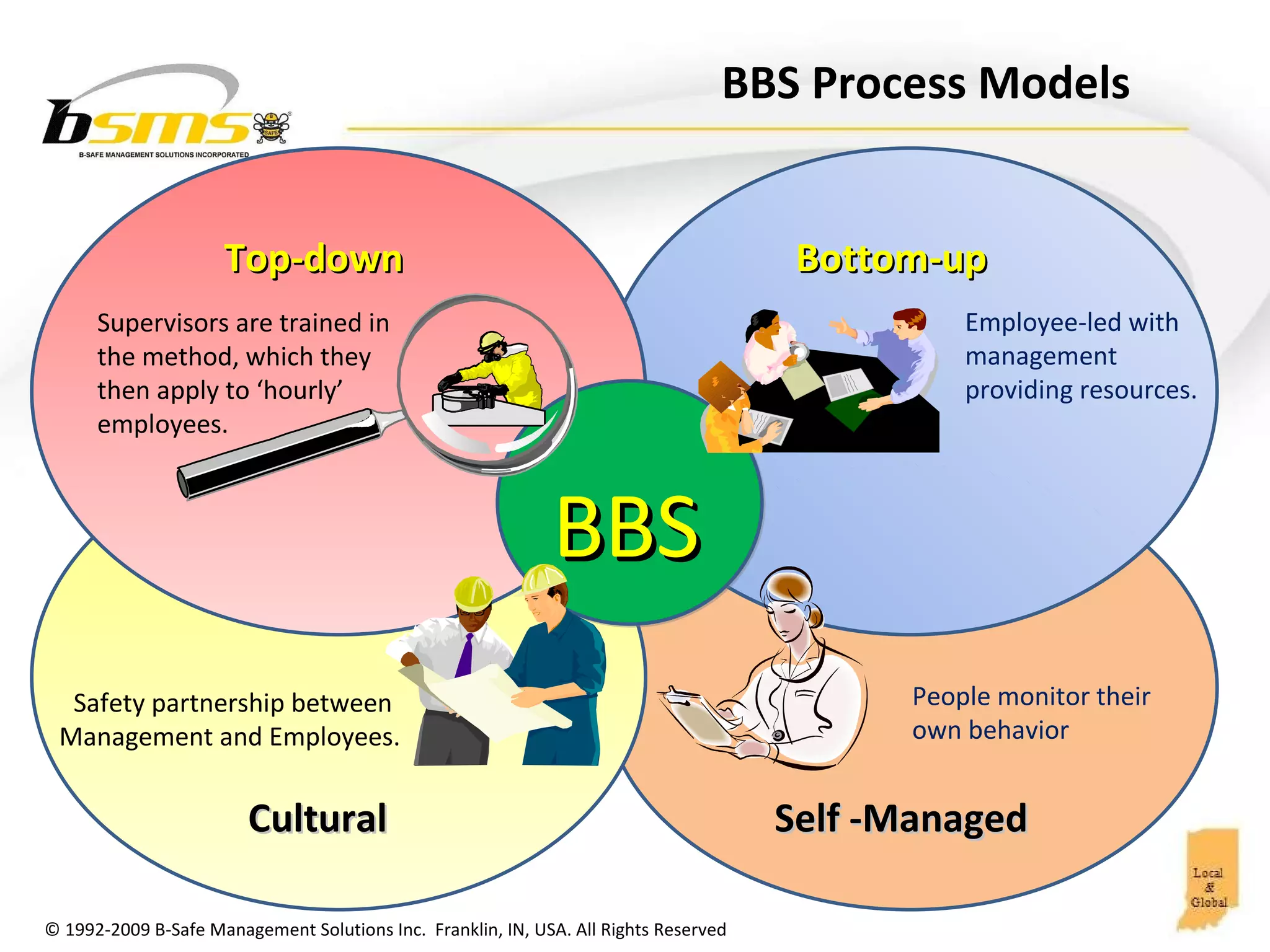
People monitor theirown behavior Self -Managed BBS Process Models Supervisors are trained in the method, which they then apply to ‘hourly’ employees. BBS Employee-led with management providing resources. Safety partnership between Management and Employees. Top-down Bottom-up Cultural
6.
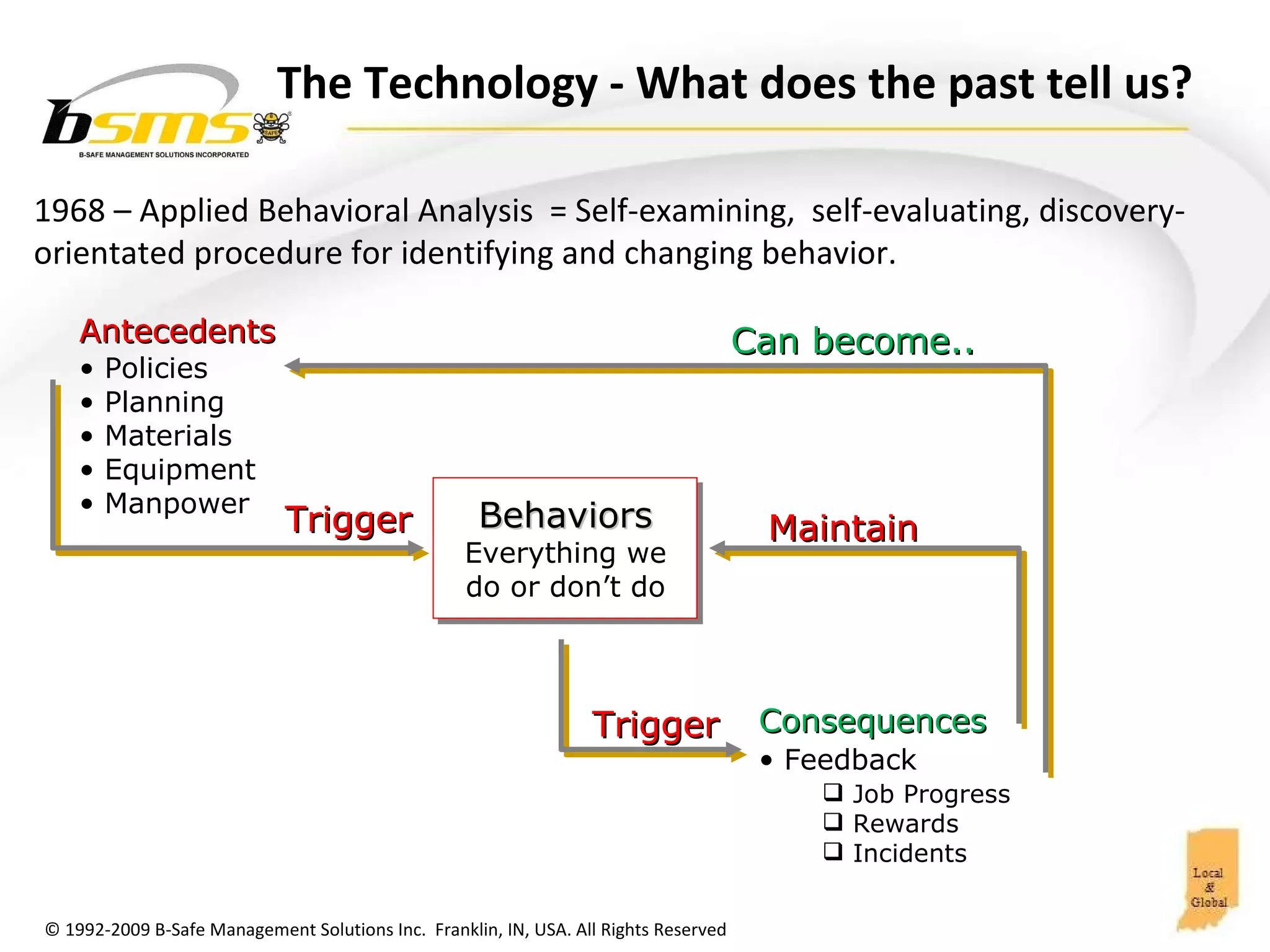
1968 – AppliedBehavioral Analysis = Self-examining, self-evaluating, discovery-orientated procedure for identifying and changing behavior. The Technology - What does the past tell us? Behaviors Everything we do or don’t do Antecedents Policies Planning Materials Equipment Manpower Trigger Trigger Maintain Consequences Feedback Job Progress Rewards Incidents Can become..
7.
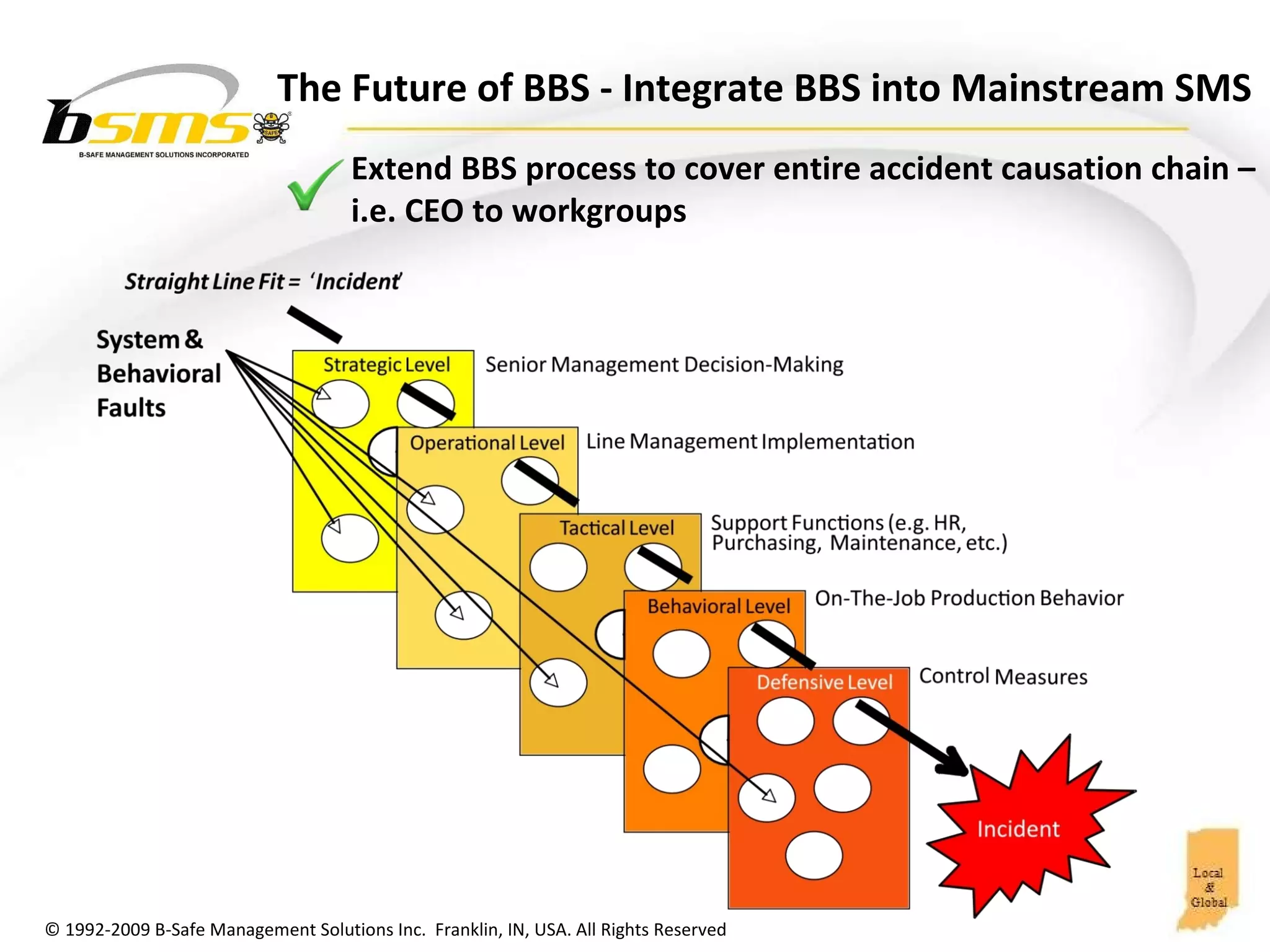
The BBS Process - What does the past tell us? 1970’s to present [1] Select the behavior of concern [2] Define it [3] Develop a valid, reliable measurement system to monitor change [4] Arrange for the reinforcement of the behavior when it is performed 1980’s to present [5] Establish baseline of current performance [6] Set improvement targets or goals on basis of baseline score [7] Analyze the observation data to identify barriers 1990’s to present [8] Track the progress of corrective actions [9] Inclusion of managerial Safety Leadership Future [10] Extend to behaviors that cover entire incident causation chain
8.
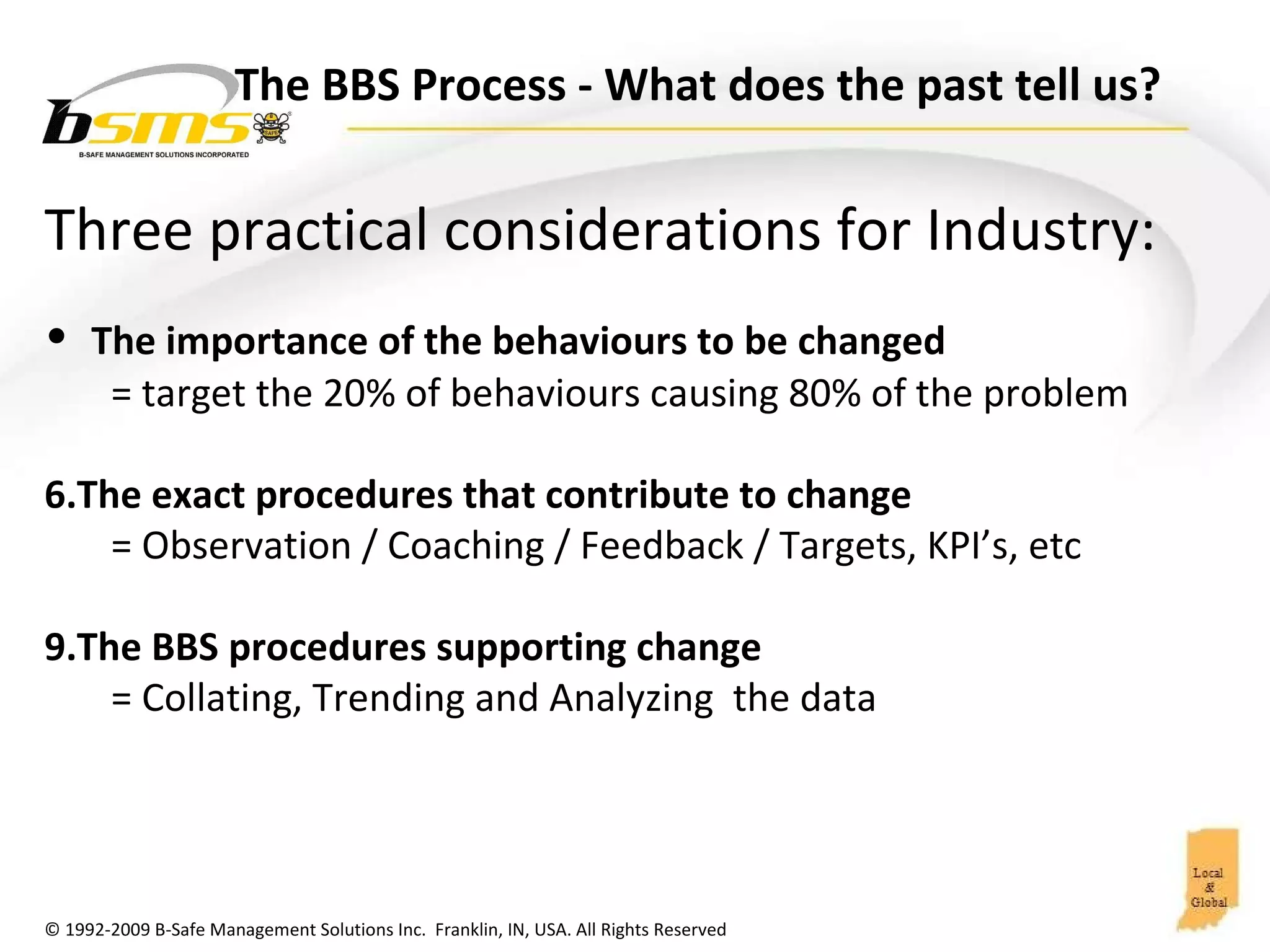
Three practical considerationsfor Industry: The importance of the behaviours to be changed = target the 20% of behaviours causing 80% of the problem The exact procedures that contribute to change = Observation / Coaching / Feedback / Targets, KPI’s, etc The BBS procedures supporting change = Collating, Trending and Analyzing the data The BBS Process - What does the past tell us?
9.
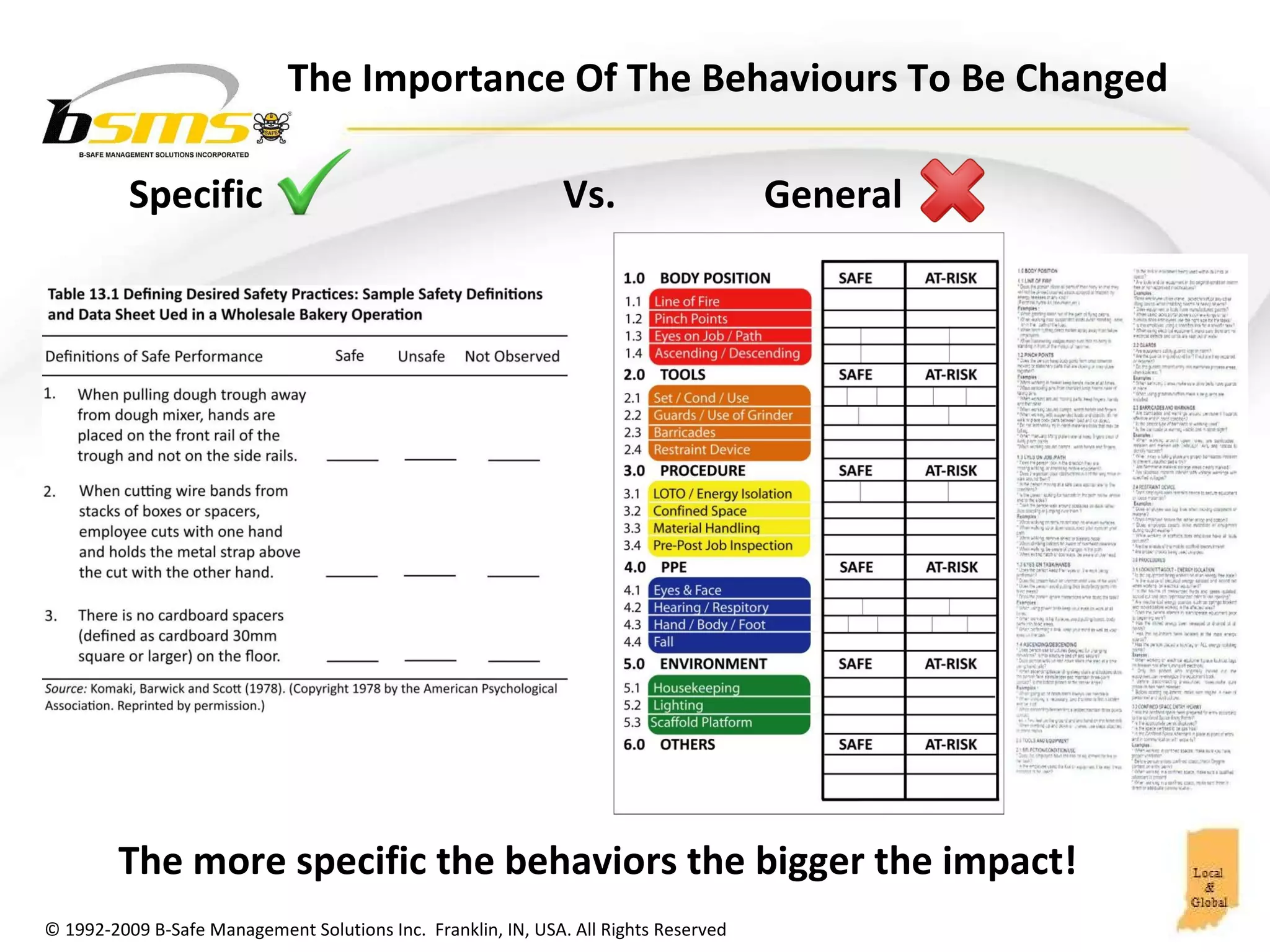
The Importance OfThe Behaviours To Be Changed The more specific the behaviors the bigger the impact! Specific Vs. General
10.
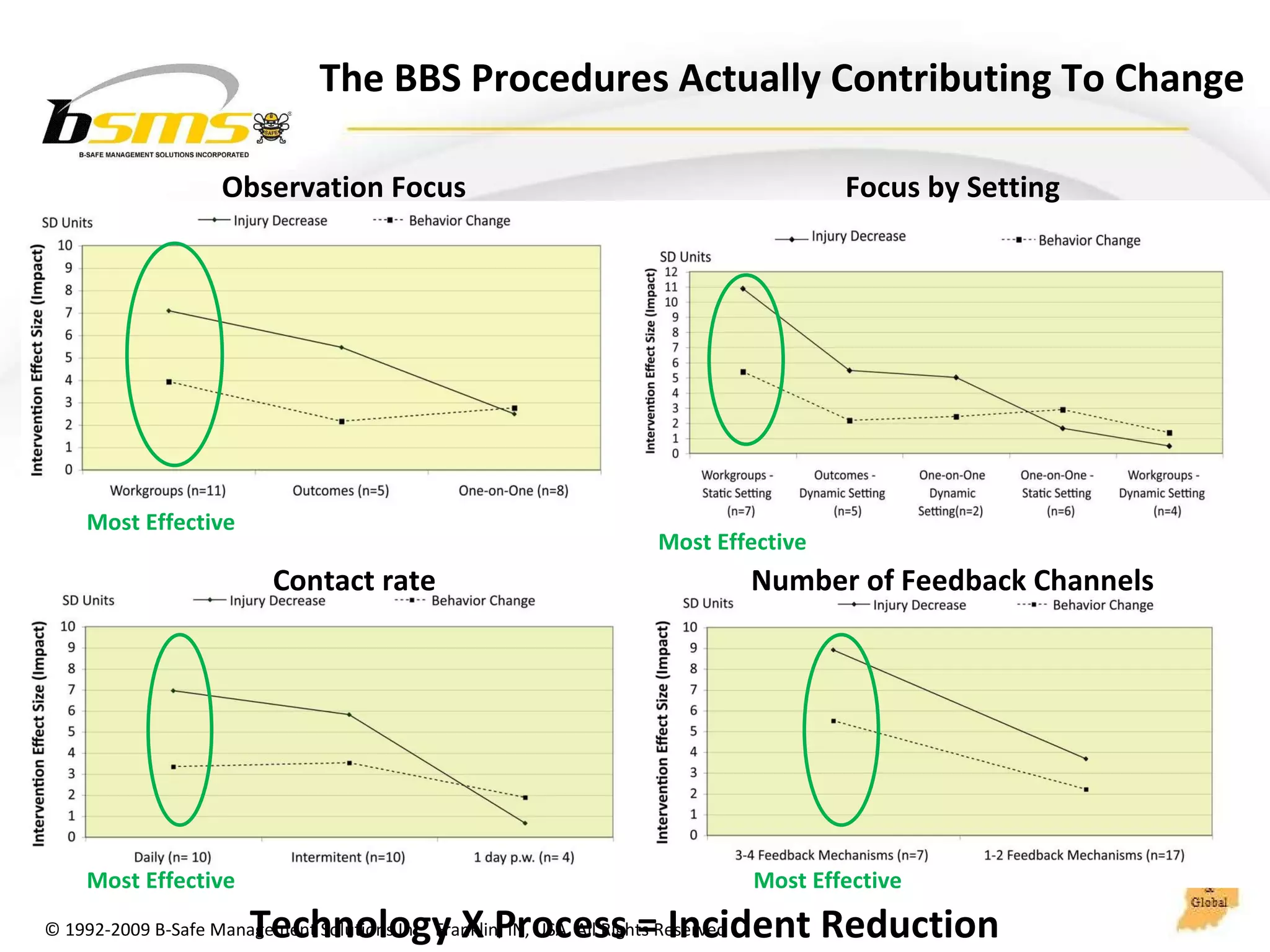
The BBS ProceduresActually Contributing To Change Observation Focus Number of Feedback Channels Technology X Process = Incident Reduction Focus by Setting Most Effective Most Effective Most Effective Most Effective Contact rate
11.
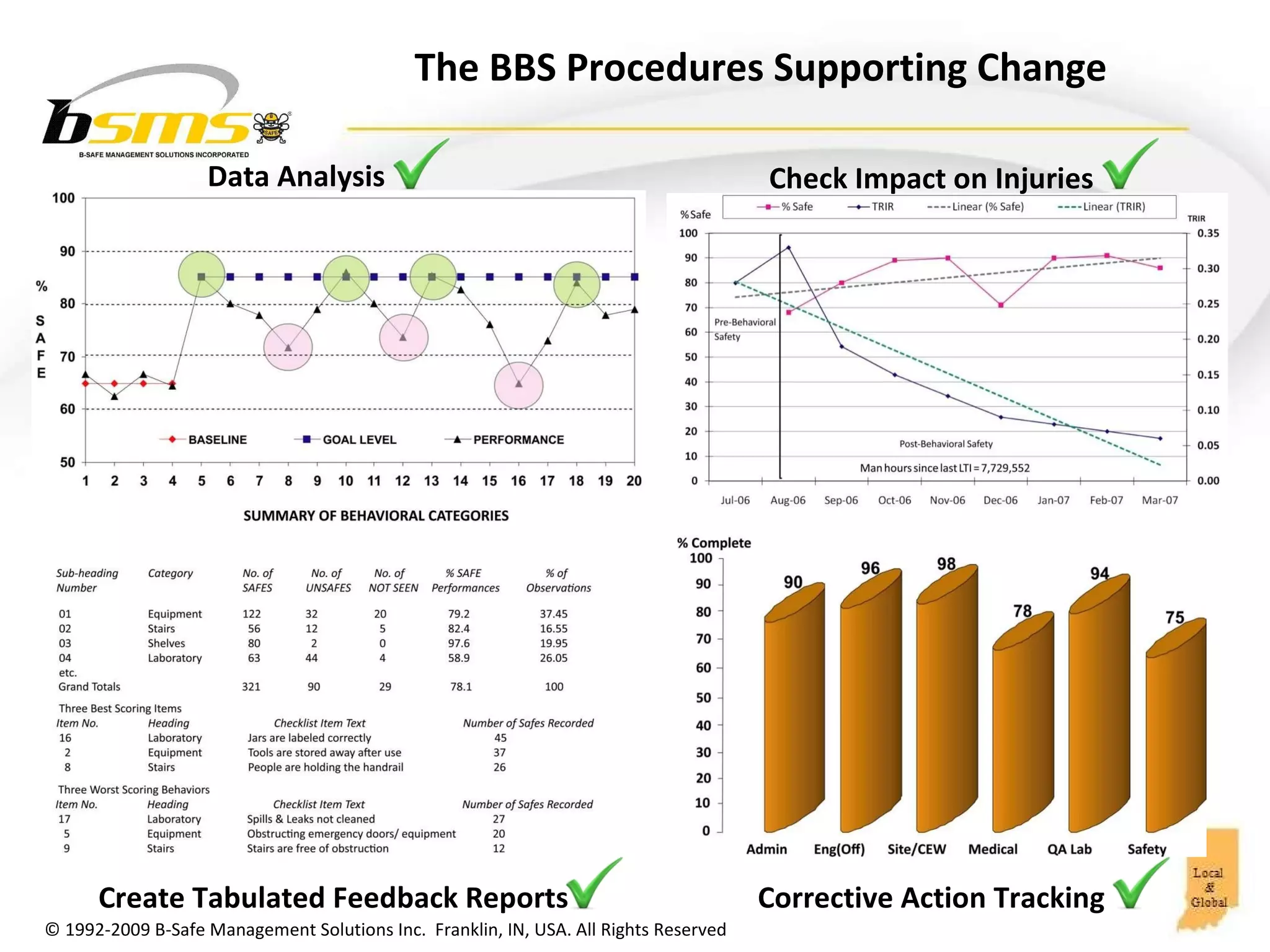
The BBS ProceduresSupporting Change Create Tabulated Feedback Reports Corrective Action Tracking Data Analysis Check Impact on Injuries
12.
The Future ofBBS Back to the Past Widespread Use of Very Specific Behaviors Monitoring of Workgroups or Individuals by Type of Setting Increased Contact Rates Into the Future Better Use of Data Use of More Feedback Channels Extend to other areas (e.g. Environment) to improve RoI Integrate BBS into Mainstream SMS Standardized Benchmarking
13.
The Future ofBBS - Integrate BBS into Mainstream SMS Extend BBS process to cover entire accident causation chain – i.e. CEO to workgroups
14.
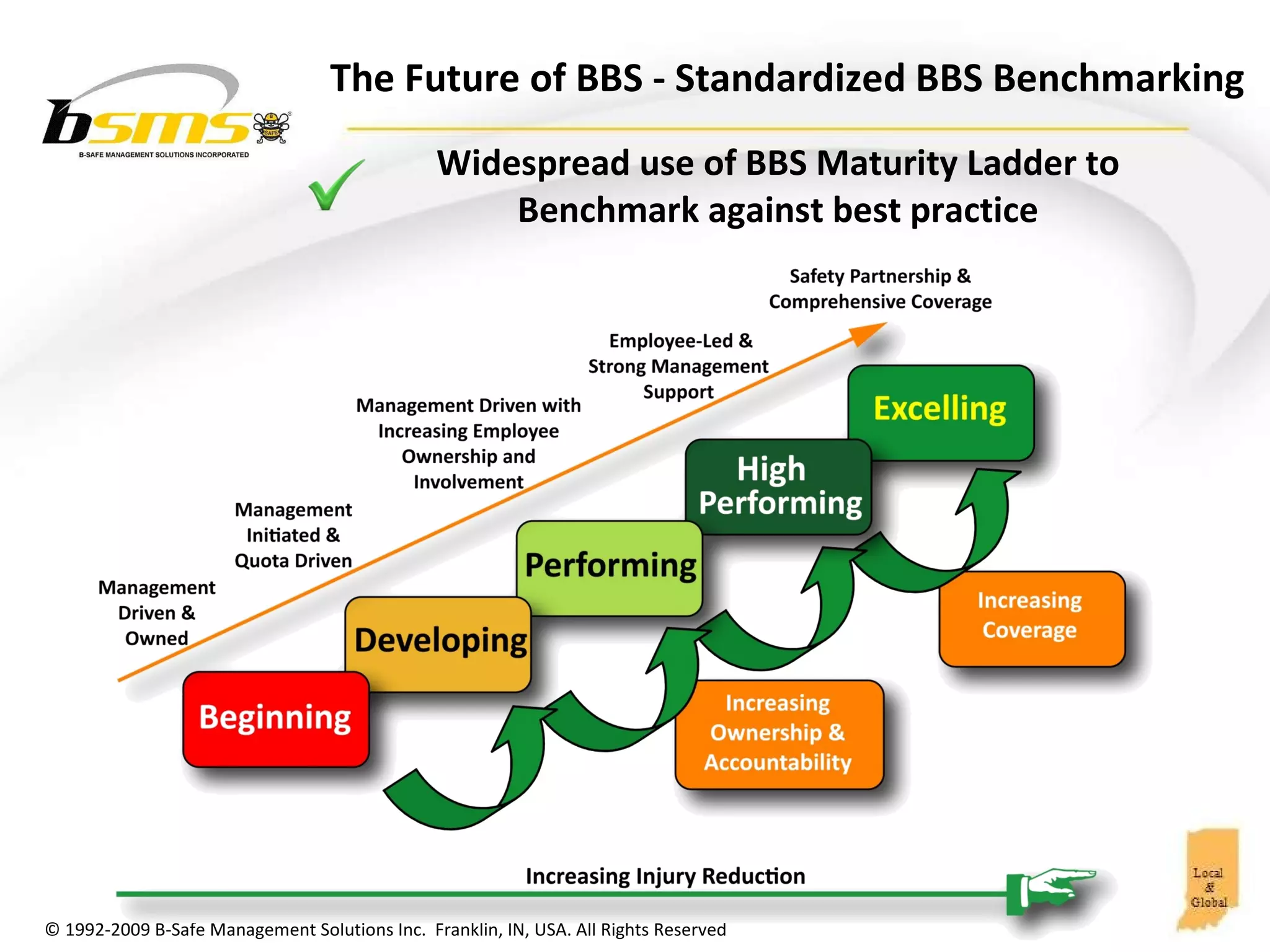
Widespread use ofBBS Maturity Ladder to Benchmark against best practice The Future of BBS - Standardized BBS Benchmarking
![Behavior-Based Safety: PAST, PRESENT & FUTURE B-Safe Management Solutions, Inc 6648 East State Road 44 Franklin, IN ,46131 +1 (317) 736 8980 www.behavioral-safety.com [email_address] Dr Dominic Cooper C.Psychol CFIOSH Keynote Speech BehavioralSafetyNow 09 Conference Jacksonville, Florida, Oct.](https://image.slidesharecdn.com/behavioralsafety-pastpresentfuture-keynoteatbsn-09-100513181837-phpapp01/75/Behavioral-Safety-Past-Present-Future-1-2048.jpg)
![The BBS Process - What does the past tell us? 1970’s to present [1] Select the behavior of concern [2] Define it [3] Develop a valid, reliable measurement system to monitor change [4] Arrange for the reinforcement of the behavior when it is performed 1980’s to present [5] Establish baseline of current performance [6] Set improvement targets or goals on basis of baseline score [7] Analyze the observation data to identify barriers 1990’s to present [8] Track the progress of corrective actions [9] Inclusion of managerial Safety Leadership Future [10] Extend to behaviors that cover entire incident causation chain](https://image.slidesharecdn.com/behavioralsafety-pastpresentfuture-keynoteatbsn-09-100513181837-phpapp01/75/Behavioral-Safety-Past-Present-Future-7-2048.jpg)

![Have Questions? Contact us [email_address]](https://image.slidesharecdn.com/behavioralsafety-pastpresentfuture-keynoteatbsn-09-100513181837-phpapp01/75/Behavioral-Safety-Past-Present-Future-15-2048.jpg)


