USING MODAL VERBS FOR
POSSIBILITY
English Grammar Presentation
for EFL Students B1 level of English
OBJECTIVES
Students will understand how to use modal verbs in sentences
and how to express possibility.
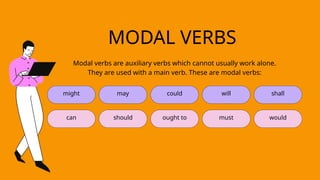
MODAL VERBS
Modal verbs are auxiliary verbs which cannot usually work alone.
They are used with a main verb. These are modal verbs:
might may could will
can should ought to must
shall
would
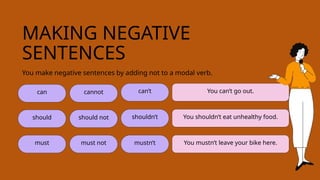
MAKING NEGATIVE
SENTENCES
You make negative sentences by adding not to a modal verb.
can cannot
should should not
can’t
shouldn’t
must must not mustn’t
You can’t go out.
You shouldn’t eat unhealthy food.
You mustn’t leave your bike here.
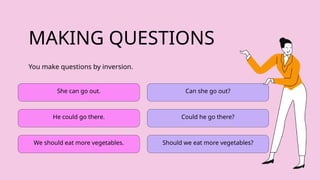
MAKING QUESTIONS
You make questions by inversion.
Can she go out?
Could he go there?
Should we eat more vegetables?
She can go out.
He could go there.
We should eat more vegetables.
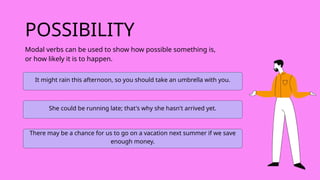
POSSIBILITY
Modal verbs can be used to show how possible something is,
or how likely it is to happen.
It might rain this afternoon, so you should take an umbrella with you.
She could be running late; that's why she hasn't arrived yet.
There may be a chance for us to go on a vacation next summer if we save
enough money.
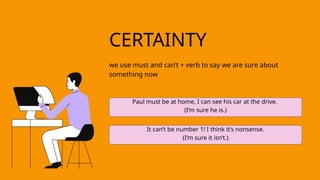
we use must and can’t + verb to say we are sure about
something now
CERTAINTY
Paul must be at home, I can see his car at the drive.
(I’m sure he is.)
It can’t be number 1! I think it’s nonsense.
(I’m sure it isn’t.)
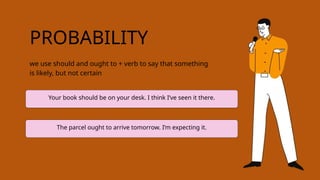
we use should and ought to + verb to say that something
is likely, but not certain
PROBABILITY
Your book should be on your desk. I think I’ve seen it there.
The parcel ought to arrive tomorrow. I’m expecting it.
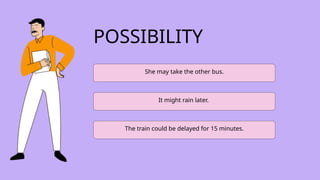
POSSIBILITY
She may take the other bus.
It might rain later.
The train could be delayed for 15 minutes.
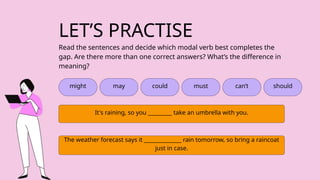
LET’S PRACTISE
might may could must can’t
Read the sentences and decide which modal verb best completes the
gap. Are there more than one correct answers? What’s the difference in
meaning?
It's raining, so you _________ take an umbrella with you.
The weather forecast says it ______________ rain tomorrow, so bring a raincoat
just in case.
should
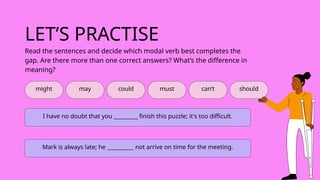
LET’S PRACTISE
might may could must can’t
Read the sentences and decide which modal verb best completes the
gap. Are there more than one correct answers? What’s the difference in
meaning?
I have no doubt that you _________ finish this puzzle; it's too difficult.
Mark is always late; he __________ not arrive on time for the meeting.
should
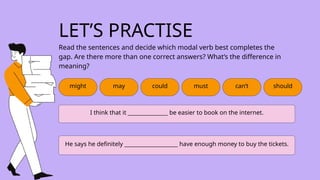
might may could must can’t
I think that it _______________ be easier to book on the internet.
He says he definitely ____________________ have enough money to buy the tickets.
should
LET’S PRACTISE
Read the sentences and decide which modal verb best completes the
gap. Are there more than one correct answers? What’s the difference in
meaning?
THANK YOU FOR YOUR
ATTENTION AND
PARTICIPATION
Do you have any follow-up questions?

Untitled design modal verbs powerpoint(3).pptx

  • 1.
    USING MODAL VERBSFOR POSSIBILITY English Grammar Presentation for EFL Students B1 level of English
  • 2.
    OBJECTIVES Students will understandhow to use modal verbs in sentences and how to express possibility.
  • 3.
    MODAL VERBS Modal verbsare auxiliary verbs which cannot usually work alone. They are used with a main verb. These are modal verbs: might may could will can should ought to must shall would
  • 4.
    MAKING NEGATIVE SENTENCES You makenegative sentences by adding not to a modal verb. can cannot should should not can’t shouldn’t must must not mustn’t You can’t go out. You shouldn’t eat unhealthy food. You mustn’t leave your bike here.
  • 5.
    MAKING QUESTIONS You makequestions by inversion. Can she go out? Could he go there? Should we eat more vegetables? She can go out. He could go there. We should eat more vegetables.
  • 6.
    POSSIBILITY Modal verbs canbe used to show how possible something is, or how likely it is to happen. It might rain this afternoon, so you should take an umbrella with you. She could be running late; that's why she hasn't arrived yet. There may be a chance for us to go on a vacation next summer if we save enough money.
  • 7.
    we use mustand can’t + verb to say we are sure about something now CERTAINTY Paul must be at home, I can see his car at the drive. (I’m sure he is.) It can’t be number 1! I think it’s nonsense. (I’m sure it isn’t.)
  • 8.
    we use shouldand ought to + verb to say that something is likely, but not certain PROBABILITY Your book should be on your desk. I think I’ve seen it there. The parcel ought to arrive tomorrow. I’m expecting it.
  • 9.
    POSSIBILITY She may takethe other bus. It might rain later. The train could be delayed for 15 minutes.
  • 10.
    LET’S PRACTISE might maycould must can’t Read the sentences and decide which modal verb best completes the gap. Are there more than one correct answers? What’s the difference in meaning? It's raining, so you _________ take an umbrella with you. The weather forecast says it ______________ rain tomorrow, so bring a raincoat just in case. should
  • 11.
    LET’S PRACTISE might maycould must can’t Read the sentences and decide which modal verb best completes the gap. Are there more than one correct answers? What’s the difference in meaning? I have no doubt that you _________ finish this puzzle; it's too difficult. Mark is always late; he __________ not arrive on time for the meeting. should
  • 12.
    might may couldmust can’t I think that it _______________ be easier to book on the internet. He says he definitely ____________________ have enough money to buy the tickets. should LET’S PRACTISE Read the sentences and decide which modal verb best completes the gap. Are there more than one correct answers? What’s the difference in meaning?
  • 13.
    THANK YOU FORYOUR ATTENTION AND PARTICIPATION Do you have any follow-up questions?