Modals
Modals
and
and
Semi Modals
Semi Modals
(Modal Verbs)
(Modal Verbs)
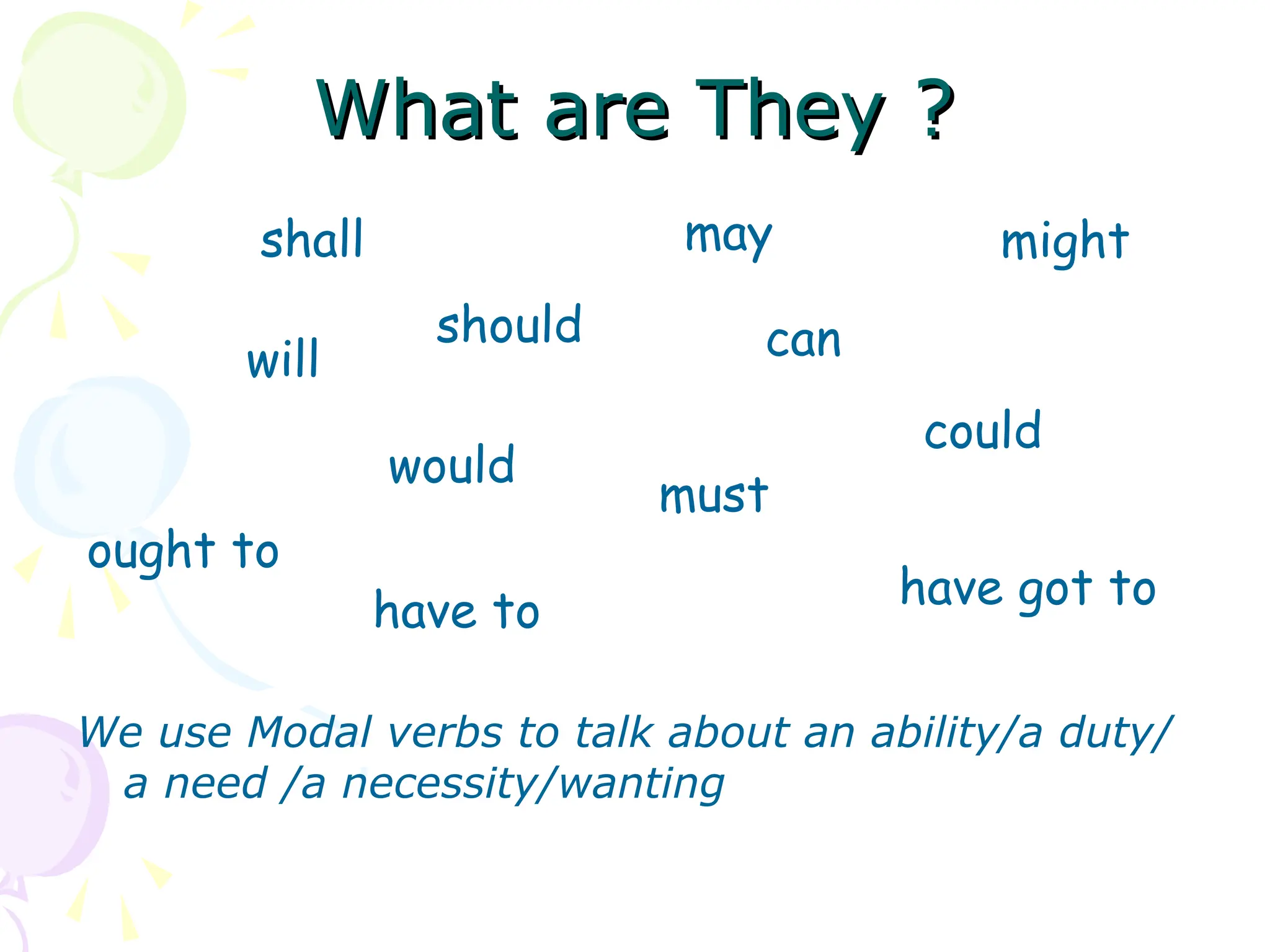
What are They ?
What are They ?
can
could
may might
must
should
will
shall
would
ought to
have to have got to
We use Modal verbs to talk about an ability/a duty/
a need /a necessity/wanting
Modals
Modals
What is special about them?
Modal verbs behave very
differently from normal verbs.
Here are some important differences:
How
How
?
?
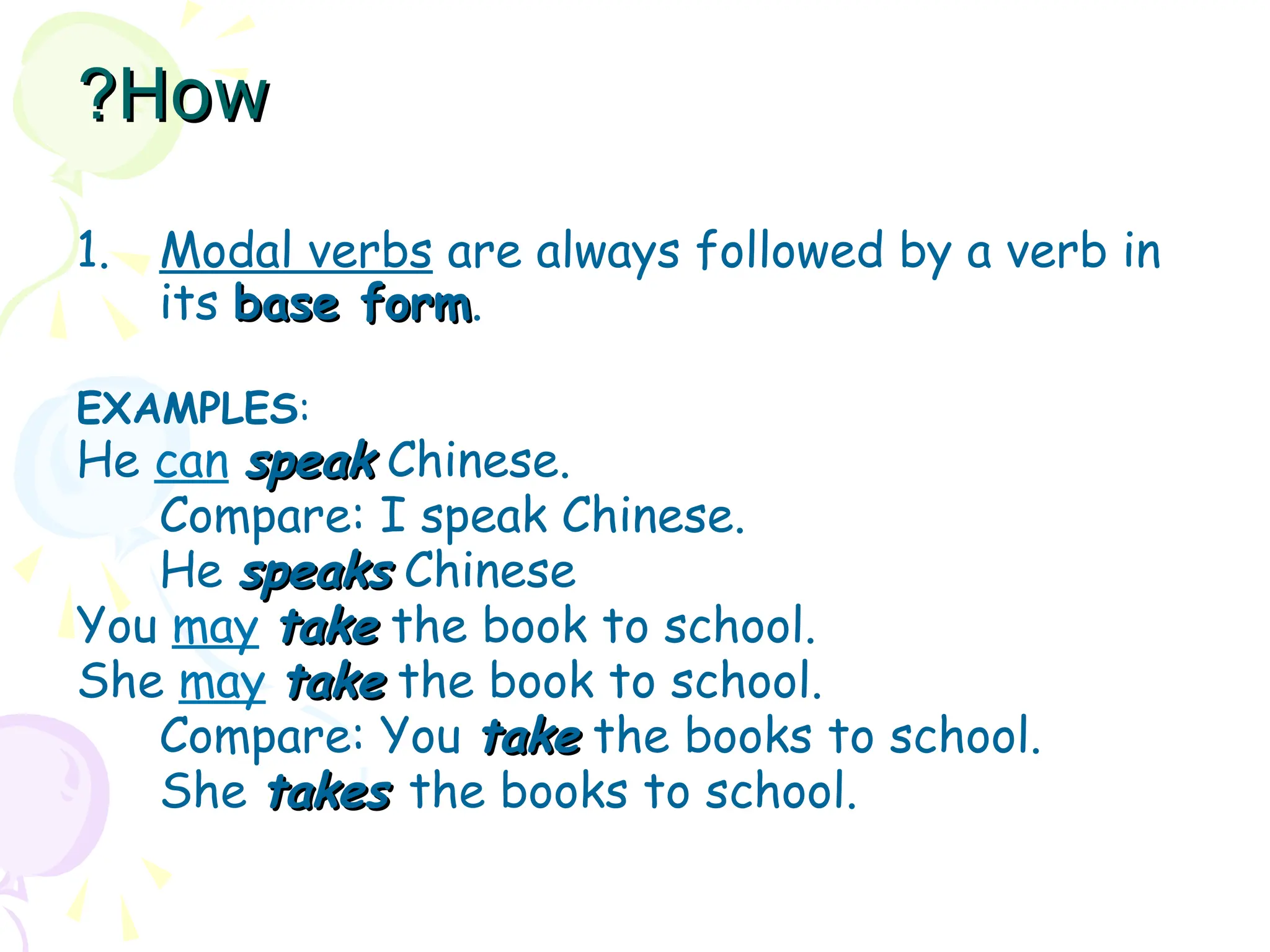
1. Modal verbs are always followed by a verb in
its base form
base form.
EXAMPLES:
He can speak
speak Chinese.
Compare: I speak Chinese.
He speaks
speaks Chinese
You may take
take the book to school.
She may take
take the book to school.
Compare: You take
take the books to school.
She takes
takes the books to school.
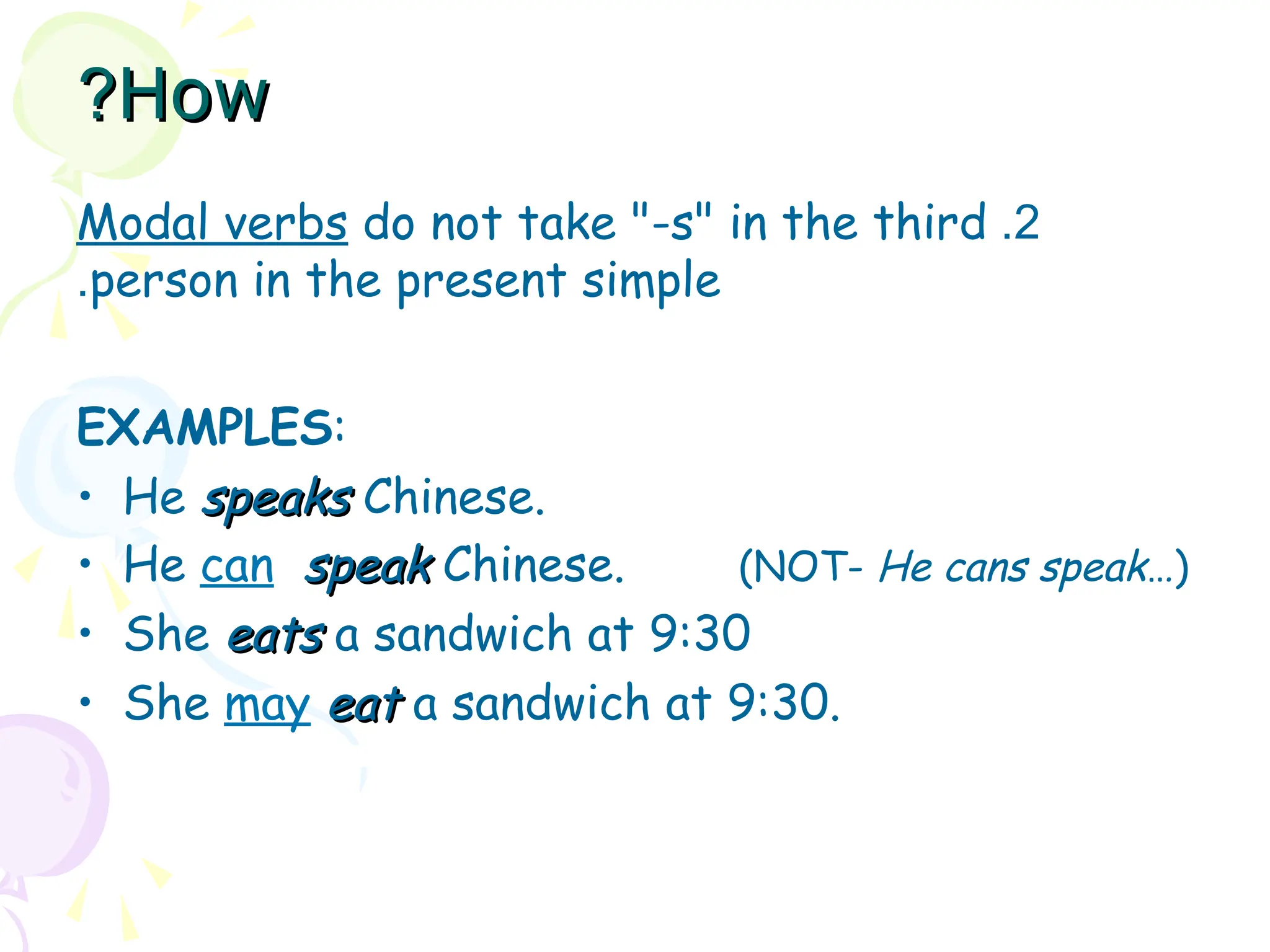
2
.
Modal verbs do not take "-s" in the third
person in the present simple
.
EXAMPLES:
• He speaks
speaks Chinese.
• He can speak
speak Chinese. (NOT- He cans speak…)
• She eats
eats a sandwich at 9:30
• She may eat
eat a sandwich at 9:30.
How
How
?
?
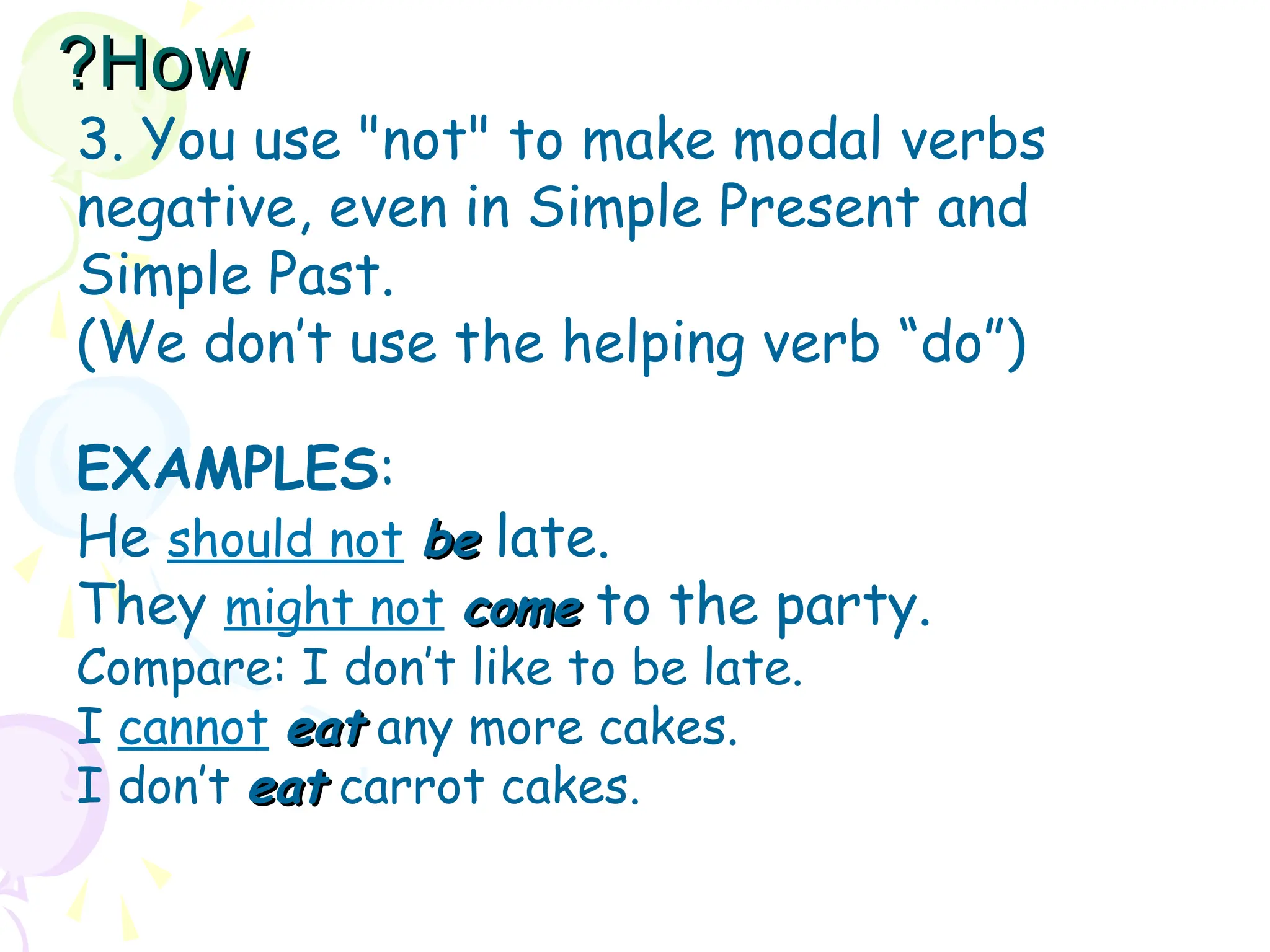
3. You use "not" to make modal verbs
negative, even in Simple Present and
Simple Past.
(We don’t use the helping verb “do”)
EXAMPLES:
He should not be
be late.
They might not come
come to the party.
Compare: I don’t like to be late.
I cannot eat
eat any more cakes.
I don’t eat
eat carrot cakes.
How
How
?
?
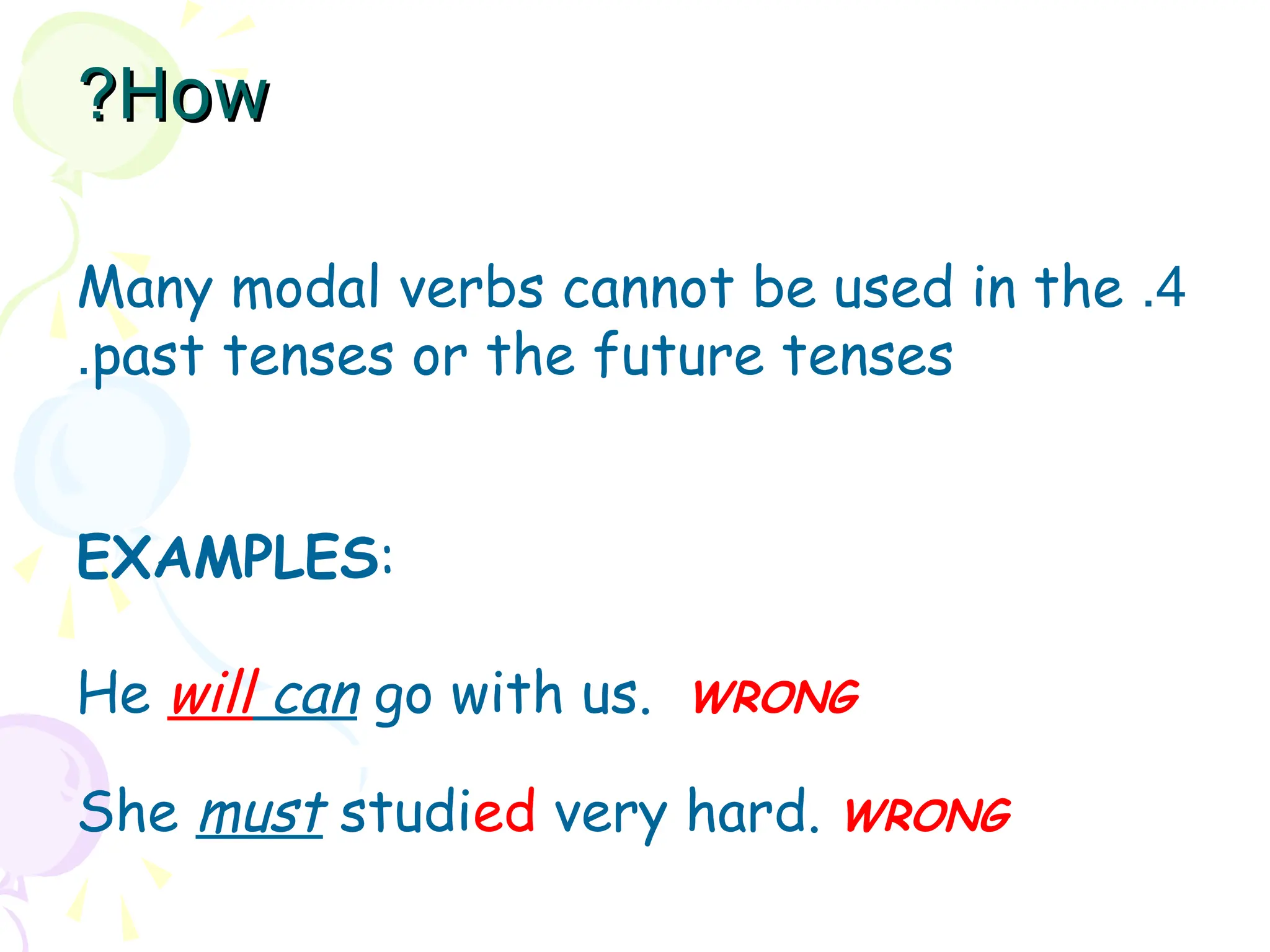
4
.
Many modal verbs cannot be used in the
past tenses or the future tenses
.
EXAMPLES:
He will can go with us. WRONG
She must studied very hard. WRONG
How
How
?
?
• Many modal verbs cannot be used
in all of the English tenses. That's
why we need to know their
meaning and the substitute for
these modal verbs.
Modal Verbs and their
substitutes
substitutes
will- will not - won
will- will not - won’
’t
t
We use this modal to speak about
future actions that we are sure/
convinced about.
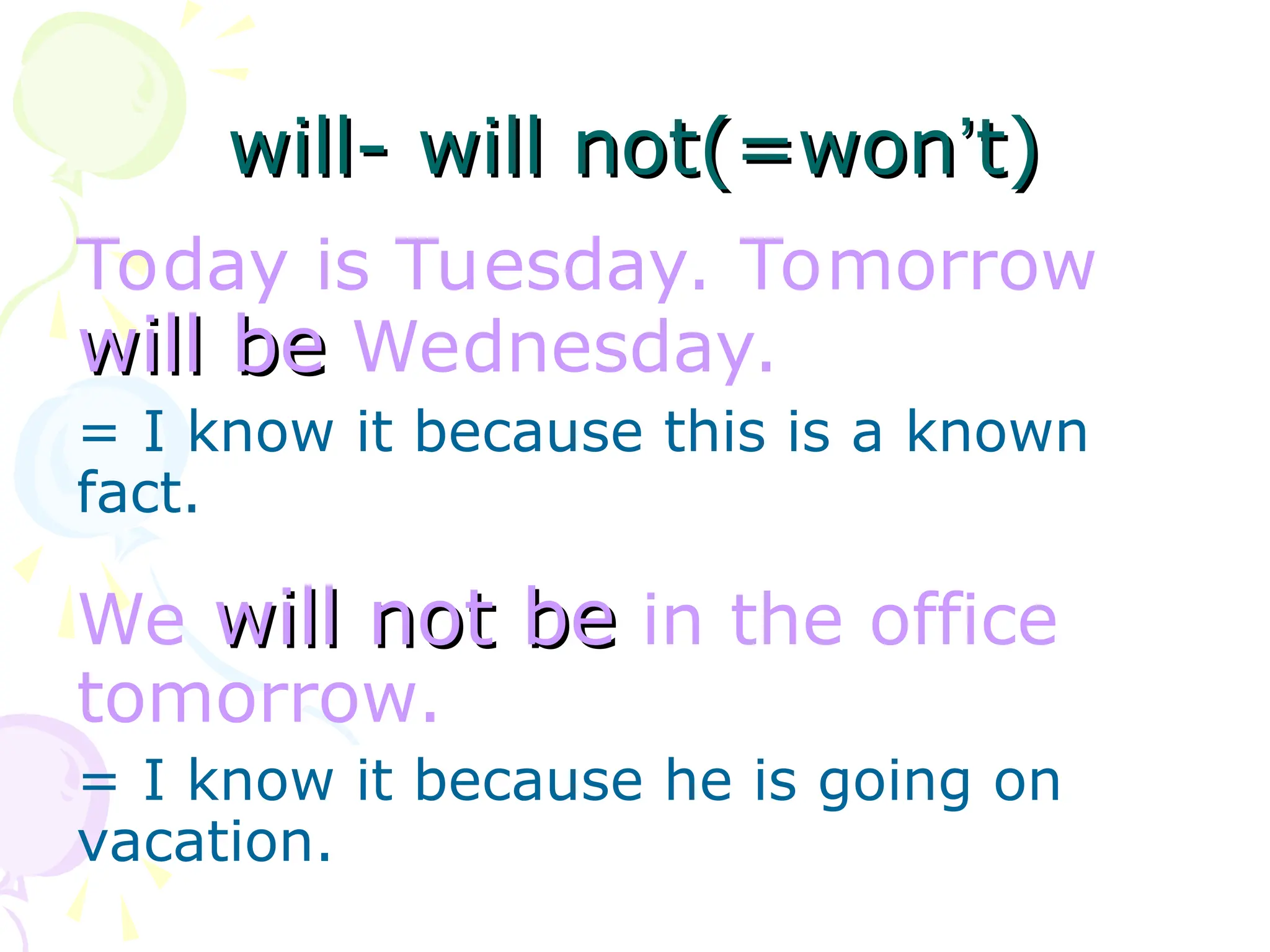
Today is Tuesday. Tomorrow
will be
will be Wednesday.
= I know it because this is a known
fact.
We will not be
will not be in the office
tomorrow.
= I know it because he is going on
vacation.
will- will not(=won
will- will not(=won’
’t)
t)
Can
Can –
– Could
Could –
–Be able to
Be able to
We use these modals to express:
• General ability/ disability
• possibility / impossibility
• opportunity
• Permission
• request
Can
Can
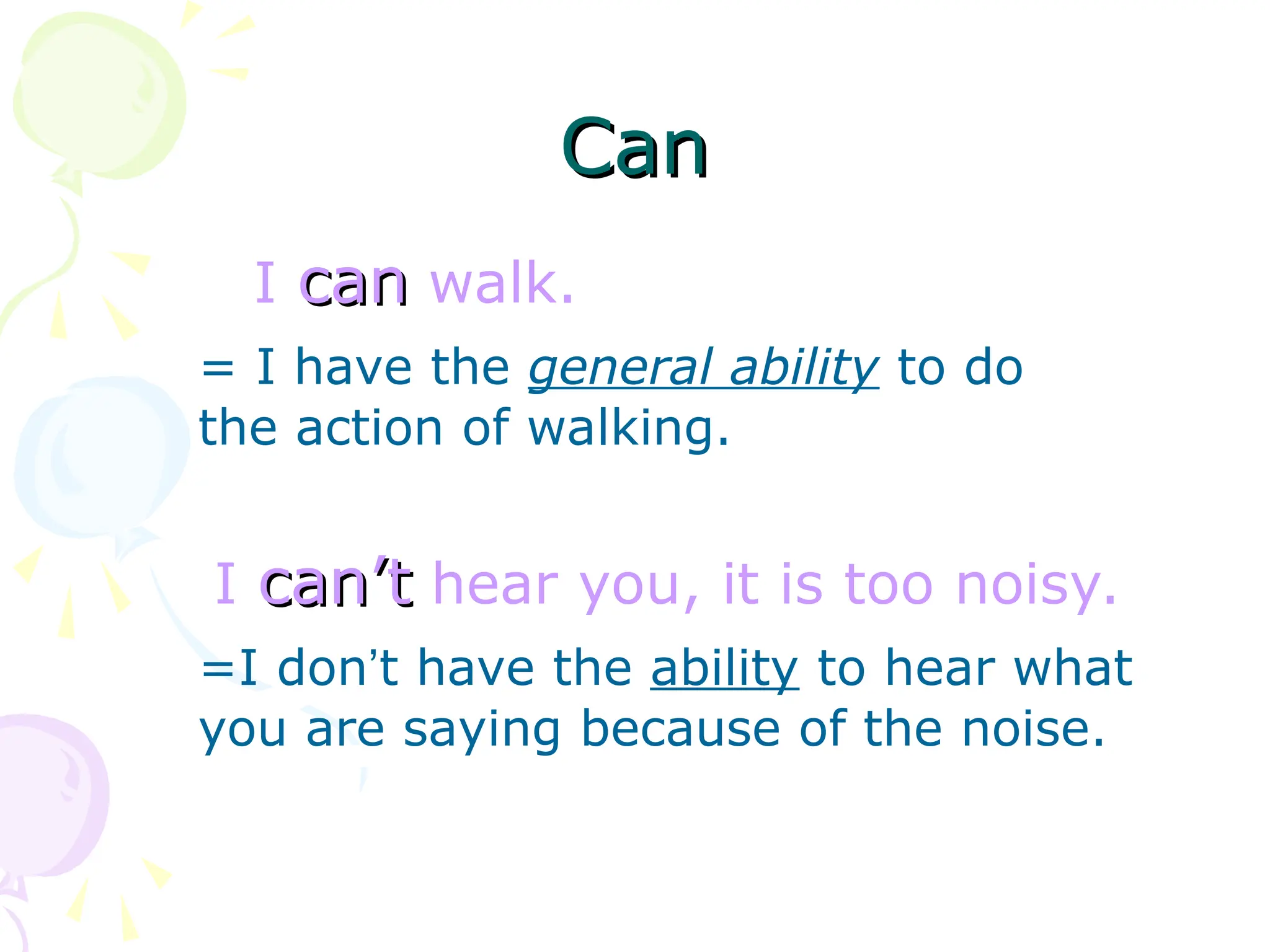
I can
can walk.
= I have the general ability to do
the action of walking.
I can’t
can’t hear you, it is too noisy.
=I don’t have the ability to hear what
you are saying because of the noise.
Can
Can
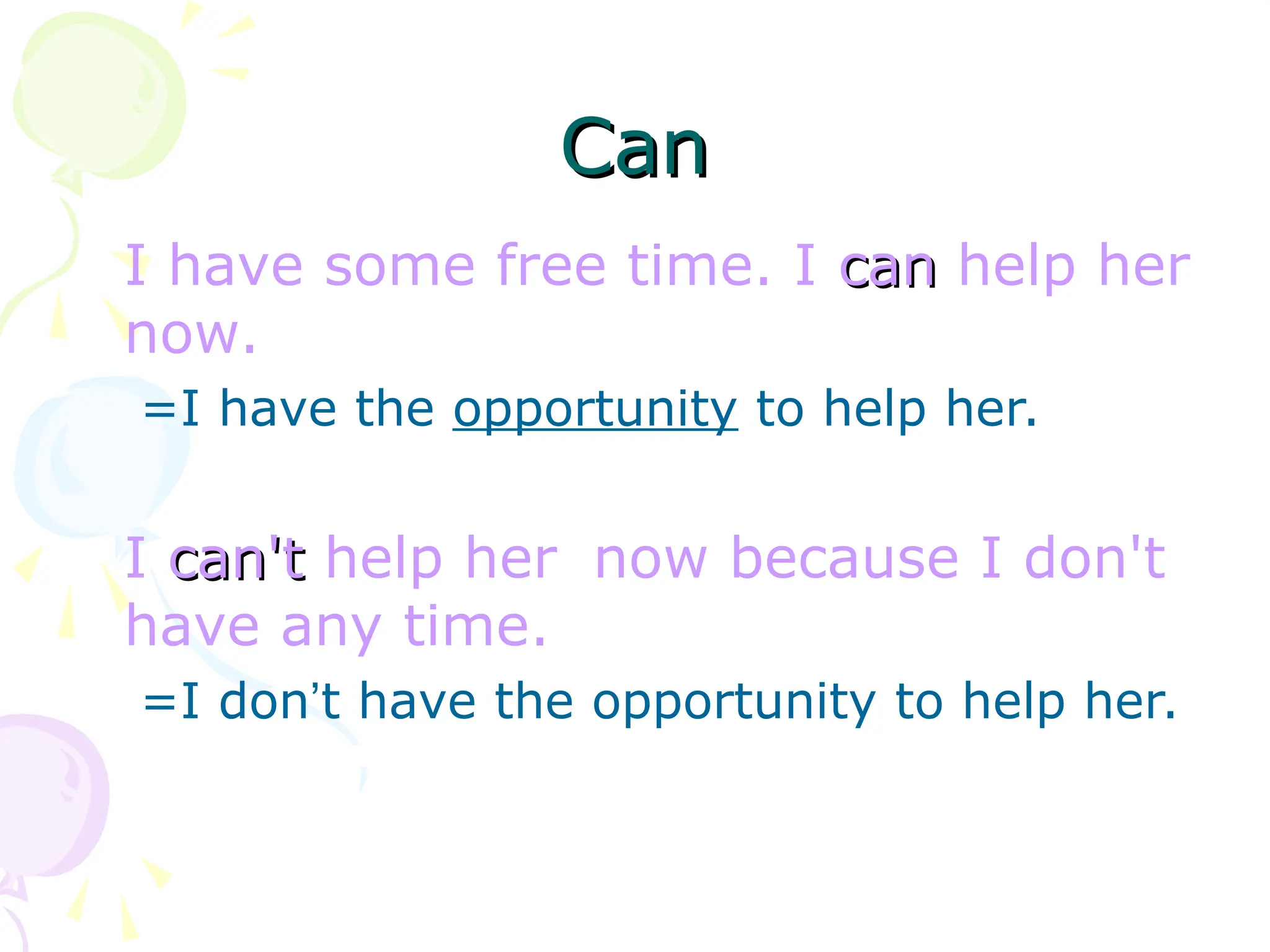
I have some free time. I can
can help her
now.
=I have the opportunity to help her.
I can't
can't help her now because I don't
have any time.
=I don’t have the opportunity to help her.
Can
Can Could
Could
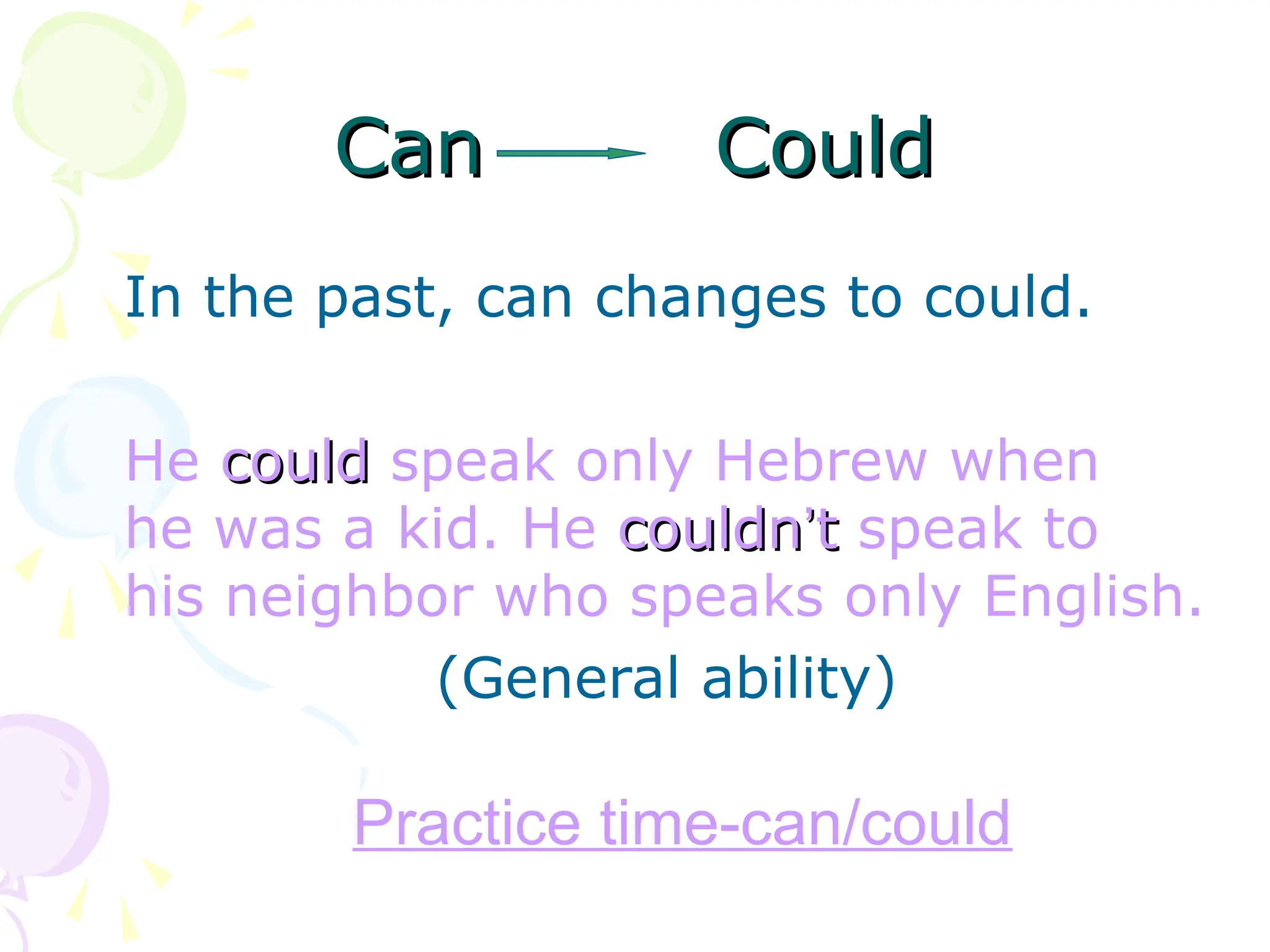
In the past, can changes to could.
He could
could speak only Hebrew when
he was a kid. He couldn
couldn’
’t
t speak to
his neighbor who speaks only English.
(General ability)
Practice time-can/could
may
may
=future possibility/get permission
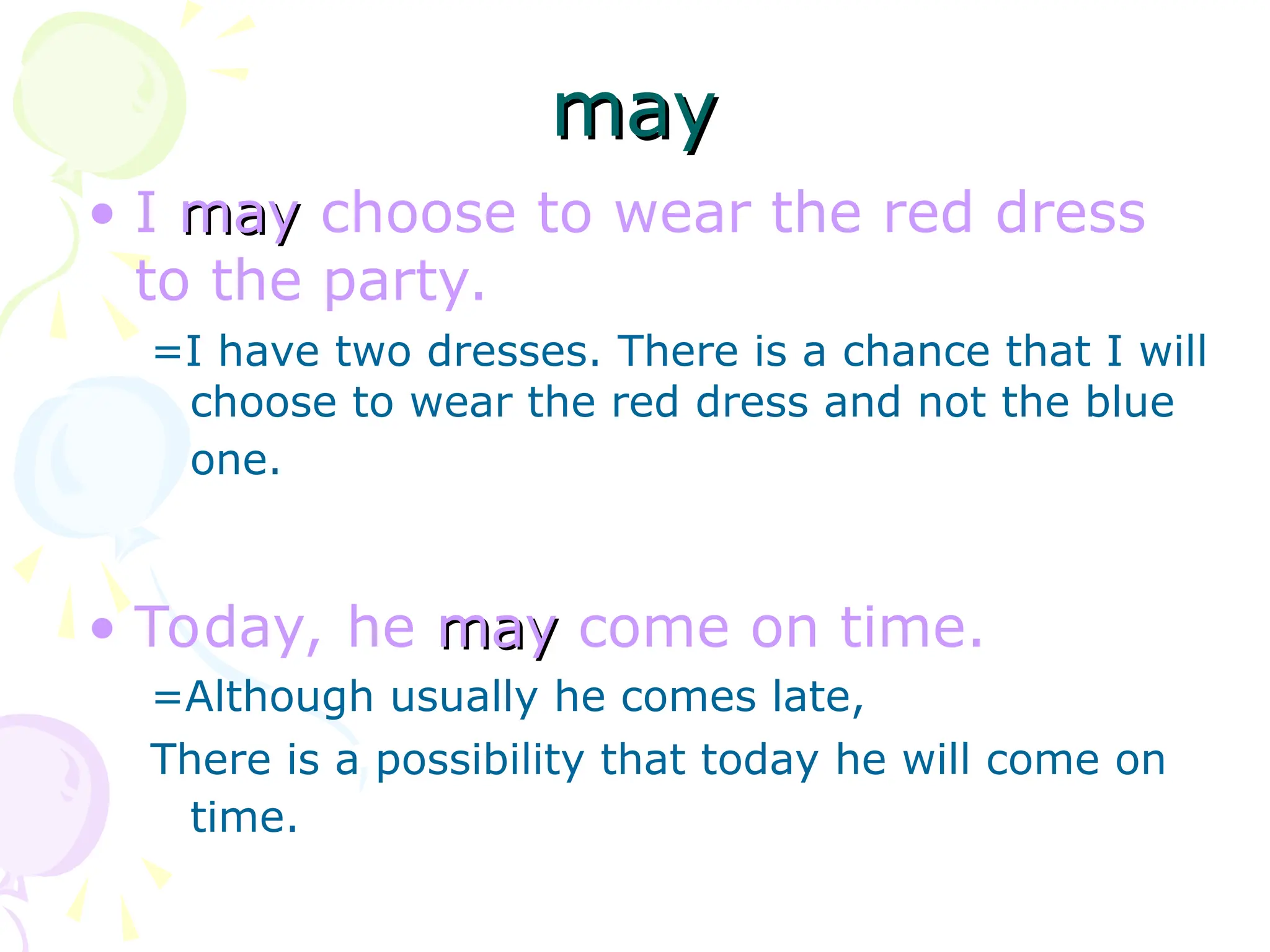
• I may
may choose to wear the red dress
to the party.
=I have two dresses. There is a chance that I will
choose to wear the red dress and not the blue
one.
• Today, he may
may come on time.
=Although usually he comes late,
There is a possibility that today he will come on
time.
may
may
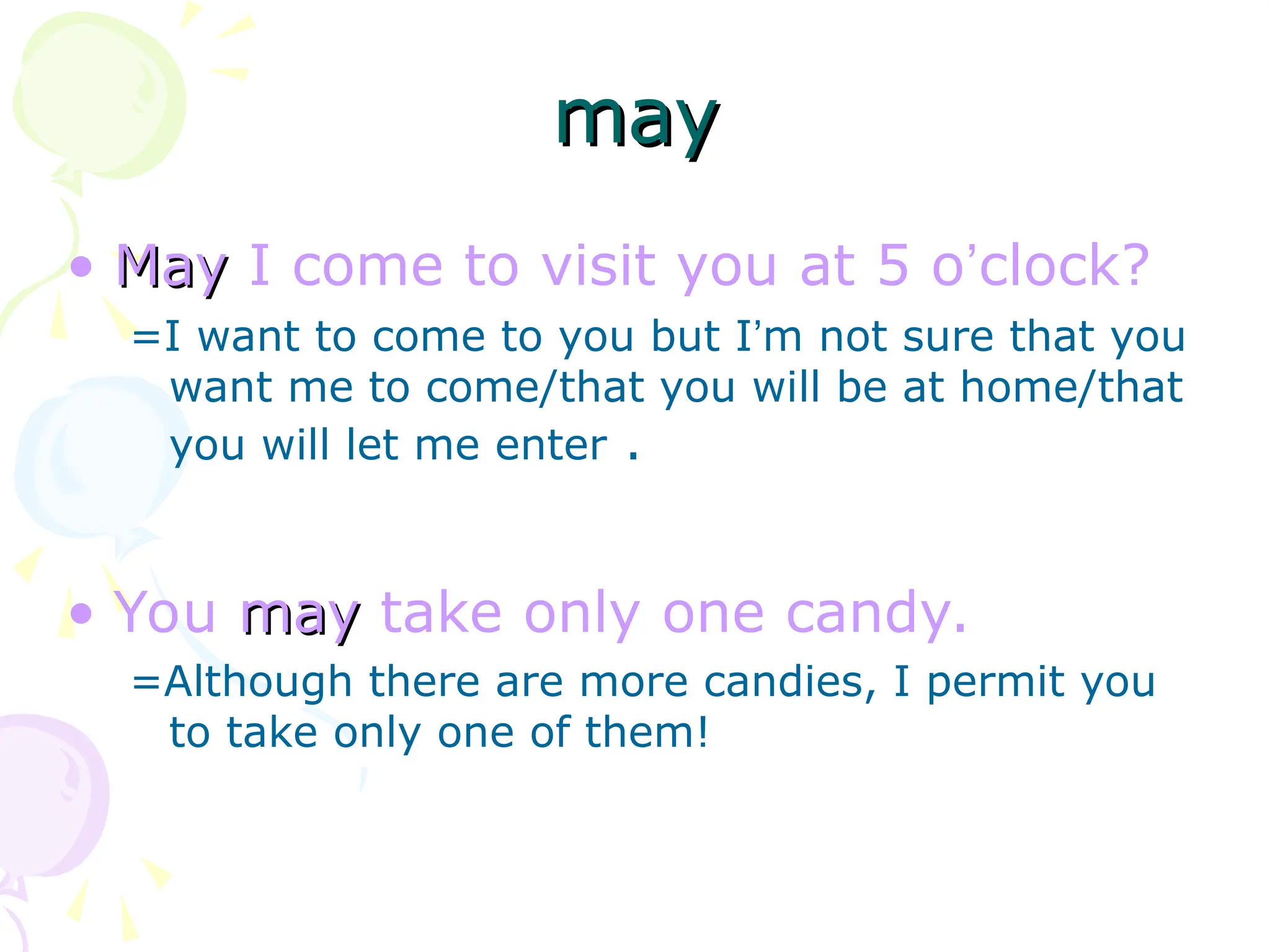
• May
May I come to visit you at 5 o’clock?
=I want to come to you but I’m not sure that you
want me to come/that you will be at home/that
you will let me enter .
• You may
may take only one candy.
=Although there are more candies, I permit you
to take only one of them!
may
may
might
might
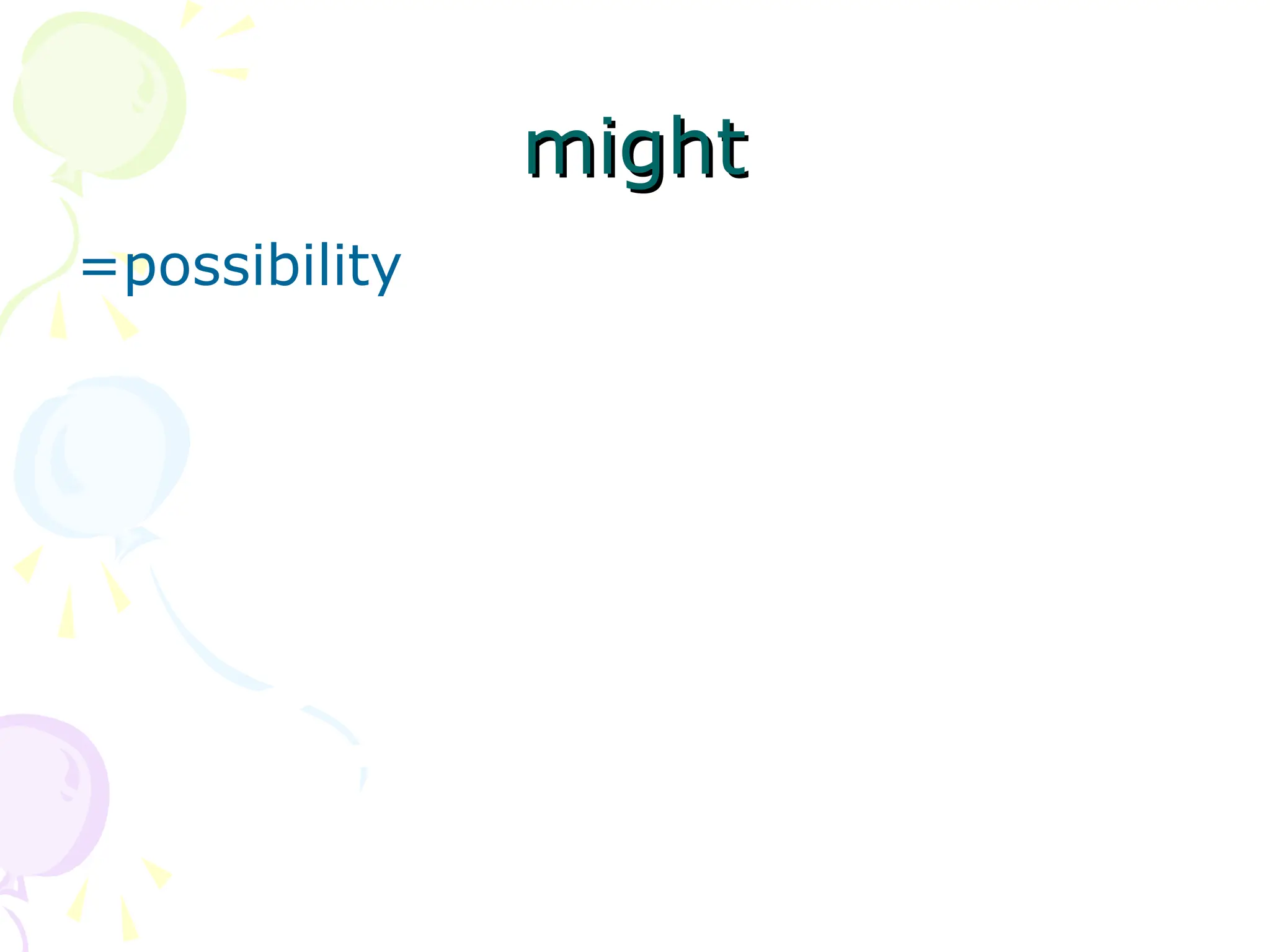
=possibility
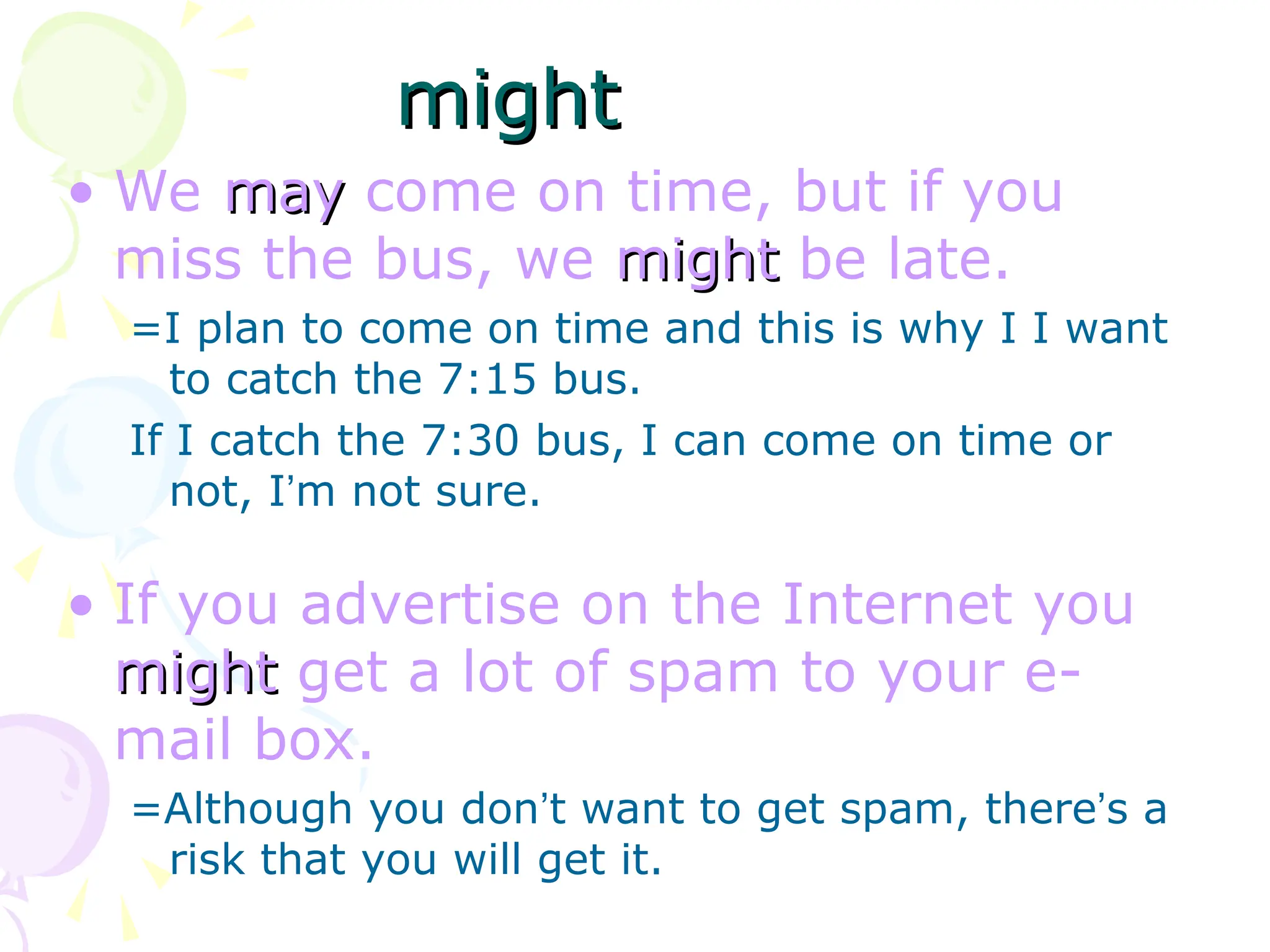
• We may
may come on time, but if you
miss the bus, we might
might be late.
=I plan to come on time and this is why I I want
to catch the 7:15 bus.
If I catch the 7:30 bus, I can come on time or
not, I’m not sure.
• If you advertise on the Internet you
might
might get a lot of spam to your e-
mail box.
=Although you don’t want to get spam, there’s a
risk that you will get it.
might
might
should
should
= advice or a strong suggestion.
• If you want to be a champion you
should
should practice every day.
=You don’t have to practice but then, you will
not get better.
• When you make a cheese cake, you
should
should first check that you have
cheese.
-or else, it will not be a cheese cake
must - mustn
must - mustn’
’t
t
Must – very strong advice/ obligation
Mustn't – things you're not allowed to
do.
• She is sick. She has high fever. She
must
must take a pill.
= very strong advice/ obligation
• You mustn
mustn’
’t
t ride your bike without a
helmet!
= you're not allowed to do.()
Semi modals
Semi modals
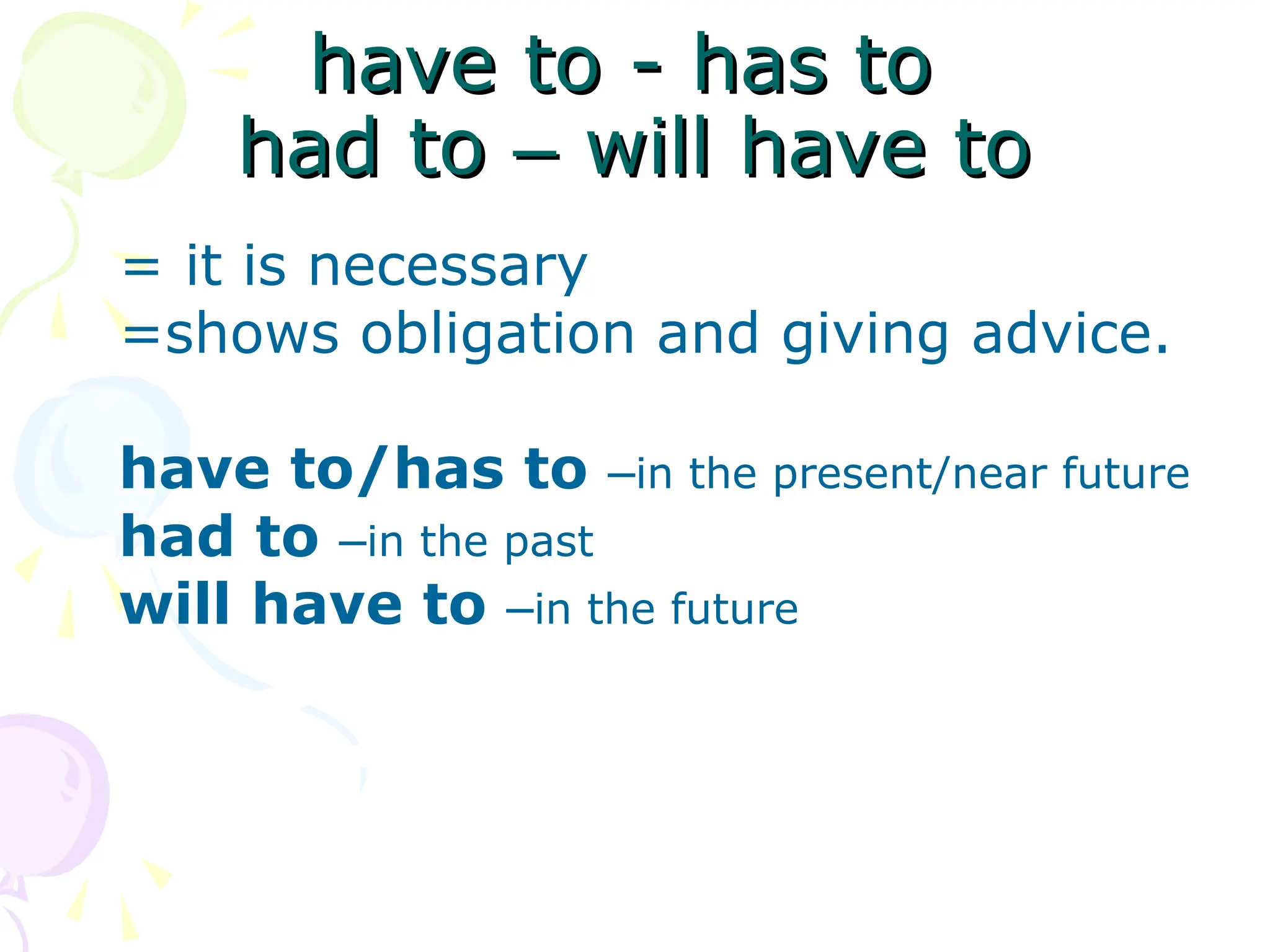
have to - has to
have to - has to
had to
had to –
– will have to
will have to
= it is necessary
=shows obligation and giving advice.
have to/has to –in the present/near future
had to –in the past
will have to –in the future
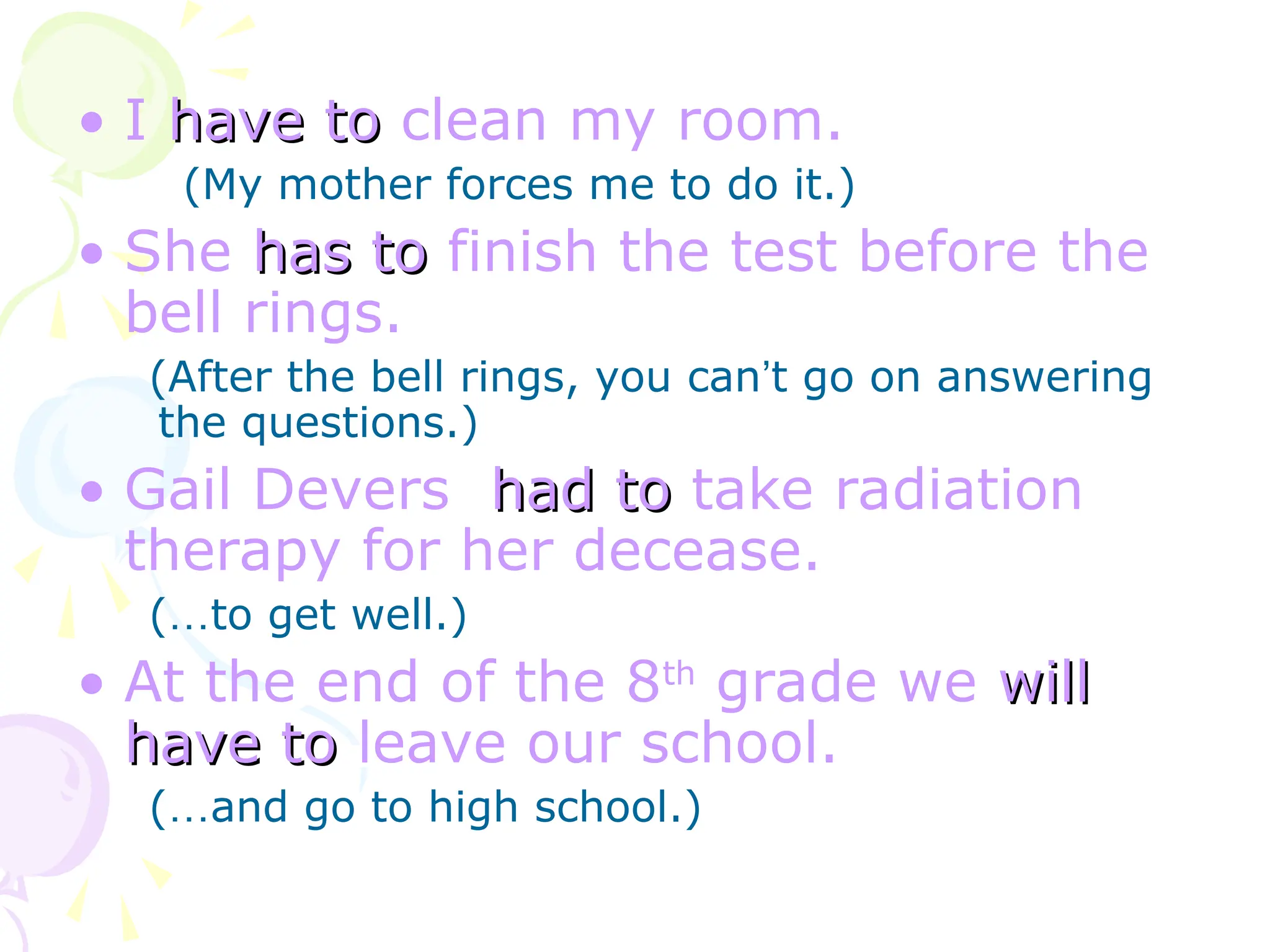
• I have to
have to clean my room.
(My mother forces me to do it.)
• She has to
has to finish the test before the
bell rings.
(After the bell rings, you can’t go on answering
the questions.)
• Gail Devers had to
had to take radiation
therapy for her decease.
(…to get well.)
• At the end of the 8th
grade we will
will
have to
have to leave our school.
(…and go to high school.)
don
don’
’t have to
t have to
doesn
doesn’
’t have to
t have to
Don't have to / Doesn't have to
= it isn't necessary
Practice time-have/has to
Ought to
Ought to –
– be supposed to
be supposed to
–
– be allowed to
be allowed to
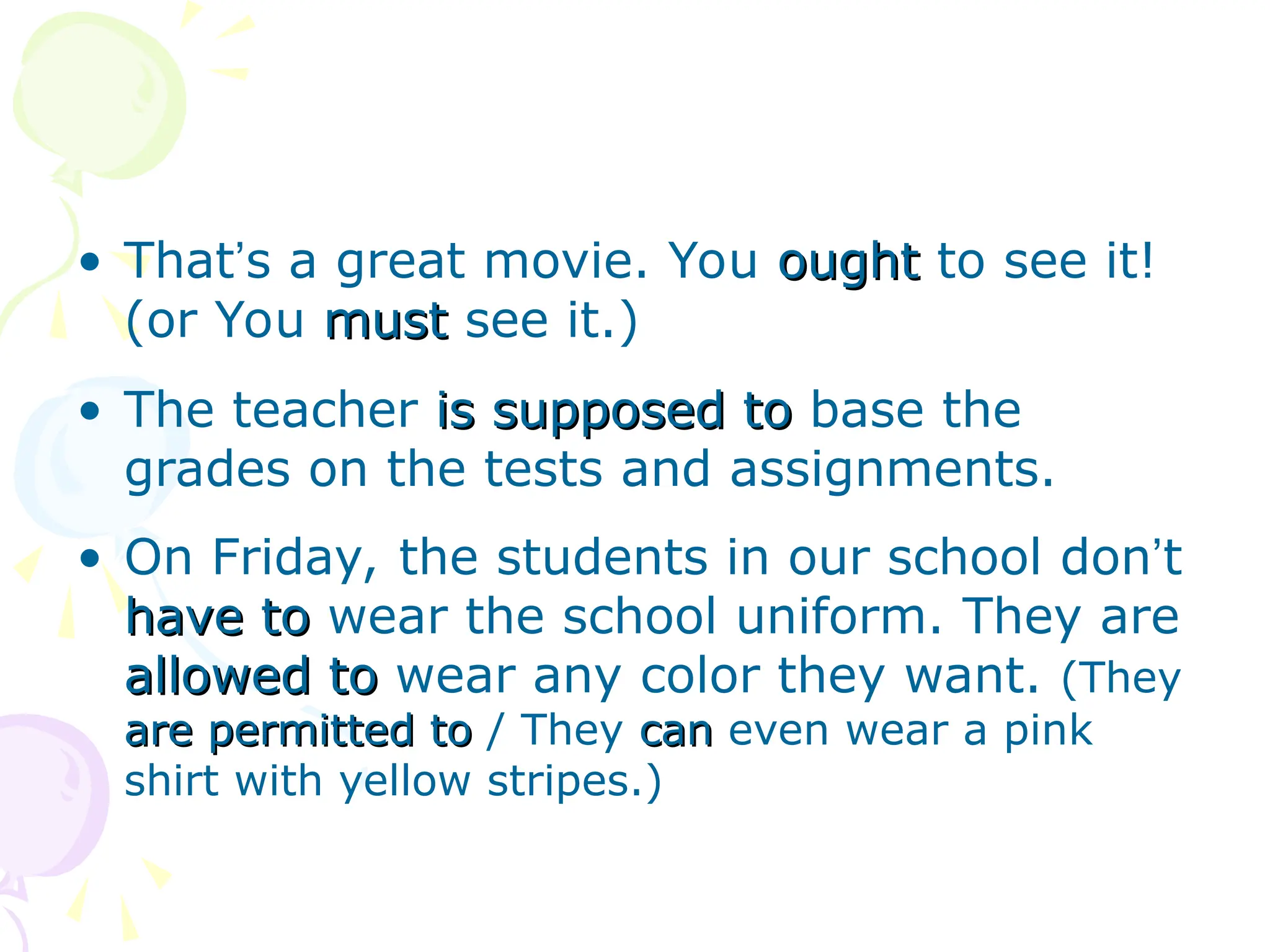
• Ought to =
• be supposed to= we expect him/her
to
• be allowed to = permission someone
will let/permit him do it.
• That’s a great movie. You ought
ought to see it!
(or You must
must see it.)
• The teacher is supposed to
is supposed to base the
grades on the tests and assignments.
• On Friday, the students in our school don’t
have to
have to wear the school uniform. They are
allowed to
allowed to wear any color they want. (They
are permitted to
are permitted to / They can
can even wear a pink
shirt with yellow stripes.)
(
(
be
be
)
)
able to
able to
be able to show an ability.
-I don’t know when I will be ready. I
will be able to
will be able to give you an answer
later.
-Is he able to
able to do it? Yes, he knows
how to do it and has time to do it.
(=Can
Can he do it?)
negative contractions
(short form)
(short form)
• Many modal verbs cannot be used
in all of the English tenses. That's
why we need to know their
meaning and the substitute for
these modal verbs.
Modal Verbs and their
substitutes
substitutes

Modals.ppthhhhhhhhhhhhhhhhhhhhhhhhhhhhhhhhh

  • 1.
  • 2.
    What are They? What are They ? can could may might must should will shall would ought to have to have got to We use Modal verbs to talk about an ability/a duty/ a need /a necessity/wanting
  • 3.
  • 4.
    What is specialabout them? What is special about them? Modal verbs behave very differently from normal verbs. Here are some important differences:
  • 5.
    How How ? ? 1. Modal verbsare always followed by a verb in its base form base form. EXAMPLES: He can speak speak Chinese. Compare: I speak Chinese. He speaks speaks Chinese You may take take the book to school. She may take take the book to school. Compare: You take take the books to school. She takes takes the books to school.
  • 6.
    2 . Modal verbs donot take "-s" in the third person in the present simple . EXAMPLES: • He speaks speaks Chinese. • He can speak speak Chinese. (NOT- He cans speak…) • She eats eats a sandwich at 9:30 • She may eat eat a sandwich at 9:30. How How ? ?
  • 7.
    3. You use"not" to make modal verbs negative, even in Simple Present and Simple Past. (We don’t use the helping verb “do”) EXAMPLES: He should not be be late. They might not come come to the party. Compare: I don’t like to be late. I cannot eat eat any more cakes. I don’t eat eat carrot cakes. How How ? ?
  • 8.
    4 . Many modal verbscannot be used in the past tenses or the future tenses . EXAMPLES: He will can go with us. WRONG She must studied very hard. WRONG How How ? ?
  • 9.
    • Many modalverbs cannot be used in all of the English tenses. That's why we need to know their meaning and the substitute for these modal verbs. Modal Verbs and their Modal Verbs and their substitutes substitutes
  • 10.
    will- will not- won will- will not - won’ ’t t We use this modal to speak about future actions that we are sure/ convinced about.
  • 11.
    Today is Tuesday.Tomorrow will be will be Wednesday. = I know it because this is a known fact. We will not be will not be in the office tomorrow. = I know it because he is going on vacation. will- will not(=won will- will not(=won’ ’t) t)
  • 12.
    Can Can – – Could Could– –Be able to Be able to We use these modals to express: • General ability/ disability • possibility / impossibility • opportunity • Permission • request
  • 13.
    Can Can I can can walk. =I have the general ability to do the action of walking. I can’t can’t hear you, it is too noisy. =I don’t have the ability to hear what you are saying because of the noise.
  • 14.
    Can Can I have somefree time. I can can help her now. =I have the opportunity to help her. I can't can't help her now because I don't have any time. =I don’t have the opportunity to help her.
  • 15.
    Can Can Could Could In thepast, can changes to could. He could could speak only Hebrew when he was a kid. He couldn couldn’ ’t t speak to his neighbor who speaks only English. (General ability) Practice time-can/could
  • 16.
  • 17.
    • I may maychoose to wear the red dress to the party. =I have two dresses. There is a chance that I will choose to wear the red dress and not the blue one. • Today, he may may come on time. =Although usually he comes late, There is a possibility that today he will come on time. may may
  • 18.
    • May May Icome to visit you at 5 o’clock? =I want to come to you but I’m not sure that you want me to come/that you will be at home/that you will let me enter . • You may may take only one candy. =Although there are more candies, I permit you to take only one of them! may may
  • 19.
  • 20.
    • We may maycome on time, but if you miss the bus, we might might be late. =I plan to come on time and this is why I I want to catch the 7:15 bus. If I catch the 7:30 bus, I can come on time or not, I’m not sure. • If you advertise on the Internet you might might get a lot of spam to your e- mail box. =Although you don’t want to get spam, there’s a risk that you will get it. might might
  • 21.
    should should = advice ora strong suggestion.
  • 22.
    • If youwant to be a champion you should should practice every day. =You don’t have to practice but then, you will not get better. • When you make a cheese cake, you should should first check that you have cheese. -or else, it will not be a cheese cake
  • 23.
    must - mustn must- mustn’ ’t t Must – very strong advice/ obligation Mustn't – things you're not allowed to do.
  • 24.
    • She issick. She has high fever. She must must take a pill. = very strong advice/ obligation • You mustn mustn’ ’t t ride your bike without a helmet! = you're not allowed to do.()
  • 25.
  • 26.
    have to -has to have to - has to had to had to – – will have to will have to = it is necessary =shows obligation and giving advice. have to/has to –in the present/near future had to –in the past will have to –in the future
  • 27.
    • I haveto have to clean my room. (My mother forces me to do it.) • She has to has to finish the test before the bell rings. (After the bell rings, you can’t go on answering the questions.) • Gail Devers had to had to take radiation therapy for her decease. (…to get well.) • At the end of the 8th grade we will will have to have to leave our school. (…and go to high school.)
  • 28.
    don don’ ’t have to thave to doesn doesn’ ’t have to t have to Don't have to / Doesn't have to = it isn't necessary Practice time-have/has to
  • 29.
    Ought to Ought to– – be supposed to be supposed to – – be allowed to be allowed to • Ought to = • be supposed to= we expect him/her to • be allowed to = permission someone will let/permit him do it.
  • 30.
    • That’s agreat movie. You ought ought to see it! (or You must must see it.) • The teacher is supposed to is supposed to base the grades on the tests and assignments. • On Friday, the students in our school don’t have to have to wear the school uniform. They are allowed to allowed to wear any color they want. (They are permitted to are permitted to / They can can even wear a pink shirt with yellow stripes.)
  • 31.
    ( ( be be ) ) able to able to beable to show an ability. -I don’t know when I will be ready. I will be able to will be able to give you an answer later. -Is he able to able to do it? Yes, he knows how to do it and has time to do it. (=Can Can he do it?)
  • 32.
  • 33.
    • Many modalverbs cannot be used in all of the English tenses. That's why we need to know their meaning and the substitute for these modal verbs. Modal Verbs and their Modal Verbs and their substitutes substitutes