GERUNDS VS.
 INFINITIVES
GERUNDS
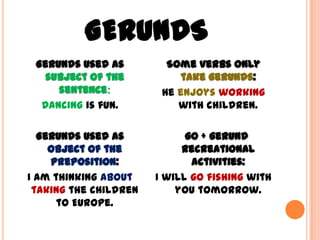
 Gerunds used as         Some verbs only
   subject of the          take gerunds:
     sentence:          He enjoys working
  Dancing is fun.          with children.

  Gerunds used as            go + gerund
    object of the           Recreational
    preposition:              activities:
I am thinking about    I will go fishing with
 taking the children       you tomorrow.
      to Europe.
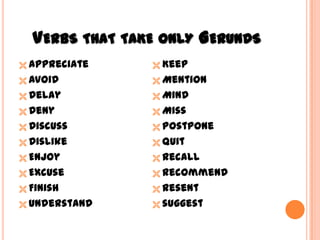
VERBS THAT TAKE ONLY GERUNDS
 Appreciate     Keep

 Avoid          Mention

 Delay          Mind

 Deny           Miss

 Discuss        Postpone

 Dislike        Quit

 Enjoy          Recall

 Excuse         Recommend

 Finish         Resent

 understand     suggest
GERUNDS
     By + gerund

You get good grades by
     studying hard.
doing your homework.
 practicing every day.
GERUNDS
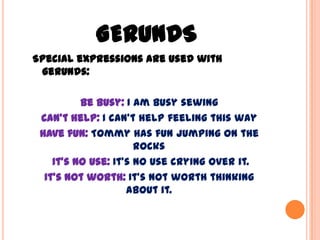
Special expressions are used with
 gerunds:

          Be busy: I am busy sewing
 Can’t help: I can’t help feeling this way
 Have fun: Tommy has fun jumping on the
                      rocks
    It’s no use: It’s no use crying over it.
  It’s not worth: It’s not worth thinking
                    about it.
INFINITIVES

to + base form of the
         verb
    I want to dance
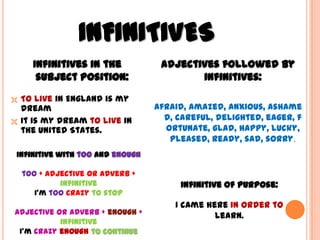
INFINITIVES
      Infinitives in the          Adjectives followed by
       subject position:                 infinitives:
   To live in England is my
    dream                        Afraid, amazed, anxious, ashame
   It is my dream to live in      d, careful, delighted, eager, f
    the United States.             ortunate, glad, happy, lucky,
                                    pleased, ready, sad, sorry.
Infinitive with too and enough

  too + adjective or adverb +
            infinitive                Infinitive of purpose:
     I’m too crazy to stop
    She is too young to vot          I came here in order to
Adjective or adverb + enough +                learn.
            infinitive
 I’m crazy enough to continue
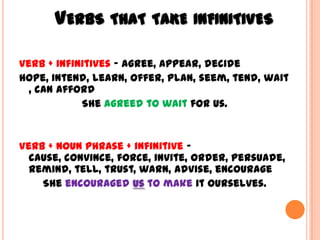
VERBS THAT TAKE INFINITIVES

Verb + infinitives – agree, appear, decide
hope, intend, learn, offer, plan, seem, tend, wait
  , can afford
            She agreed to wait for us.


Verb + Noun phrase + infinitive –
  cause, convince, force, invite, order, persuade,
  remind, tell, trust, warn, advise, encourage
    She encouraged us to make it ourselves.
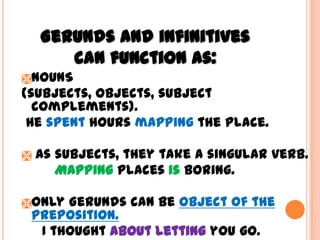
Gerunds and infinitives
       can function as:
NOUNS
(subjects, objects, subject
  complements).
 He spent hours mapping the place.

   As subjects, they take a singular verb.
       Mapping places is boring.

Only Gerunds can be object of the
 preposition.
  I thought about letting you go.
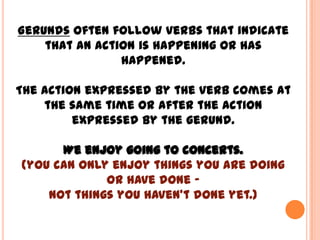
Gerunds often follow verbs that indicate
    that an action is happening or has
                happened.

The action expressed by the verb comes at
    the same time or after the action
         expressed by the gerund.

      We enjoy going to concerts.
(you can only enjoy things you are doing
             or have done –
    not things you haven’t done yet.)
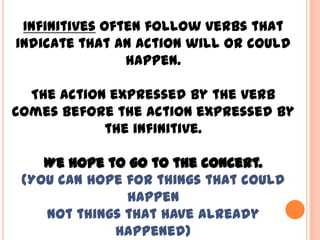
Infinitives often follow verbs that
indicate that an action will or could
                happen.

  The action expressed by the verb
comes before the action expressed by
            the infinitive.

    We hope to go to the concert.
 (You can hope for things that could
               happen
    not things that have already
             happened)
BIBLIOGRAPHY

Gerunds and Infinitives. 24th Oct, 2010
<webhome.broward.edu/~ydaniel/.../Gerunds
%20and%20Infinitives.ppt >

Syntax gerunds and infinitives

  • 1.
  • 2.
    GERUNDS Gerunds usedas Some verbs only subject of the take gerunds: sentence: He enjoys working Dancing is fun. with children. Gerunds used as go + gerund object of the Recreational preposition: activities: I am thinking about I will go fishing with taking the children you tomorrow. to Europe.
  • 3.
    VERBS THAT TAKEONLY GERUNDS  Appreciate  Keep  Avoid  Mention  Delay  Mind  Deny  Miss  Discuss  Postpone  Dislike  Quit  Enjoy  Recall  Excuse  Recommend  Finish  Resent  understand  suggest
  • 4.
    GERUNDS By + gerund You get good grades by studying hard. doing your homework. practicing every day.
  • 5.
    GERUNDS Special expressions areused with gerunds: Be busy: I am busy sewing Can’t help: I can’t help feeling this way Have fun: Tommy has fun jumping on the rocks It’s no use: It’s no use crying over it. It’s not worth: It’s not worth thinking about it.
  • 6.
    INFINITIVES to + baseform of the verb I want to dance
  • 7.
    INFINITIVES Infinitives in the Adjectives followed by subject position: infinitives:  To live in England is my dream Afraid, amazed, anxious, ashame  It is my dream to live in d, careful, delighted, eager, f the United States. ortunate, glad, happy, lucky, pleased, ready, sad, sorry. Infinitive with too and enough too + adjective or adverb + infinitive Infinitive of purpose: I’m too crazy to stop She is too young to vot I came here in order to Adjective or adverb + enough + learn. infinitive I’m crazy enough to continue
  • 8.
    VERBS THAT TAKEINFINITIVES Verb + infinitives – agree, appear, decide hope, intend, learn, offer, plan, seem, tend, wait , can afford She agreed to wait for us. Verb + Noun phrase + infinitive – cause, convince, force, invite, order, persuade, remind, tell, trust, warn, advise, encourage She encouraged us to make it ourselves.
  • 9.
    Gerunds and infinitives can function as: NOUNS (subjects, objects, subject complements). He spent hours mapping the place.  As subjects, they take a singular verb. Mapping places is boring. Only Gerunds can be object of the preposition. I thought about letting you go.
  • 10.
    Gerunds often followverbs that indicate that an action is happening or has happened. The action expressed by the verb comes at the same time or after the action expressed by the gerund. We enjoy going to concerts. (you can only enjoy things you are doing or have done – not things you haven’t done yet.)
  • 11.
    Infinitives often followverbs that indicate that an action will or could happen. The action expressed by the verb comes before the action expressed by the infinitive. We hope to go to the concert. (You can hope for things that could happen not things that have already happened)
  • 12.
    BIBLIOGRAPHY Gerunds and Infinitives.24th Oct, 2010 <webhome.broward.edu/~ydaniel/.../Gerunds %20and%20Infinitives.ppt >