BOTH ….. AND EITHER….. OR NEITHER … NOR
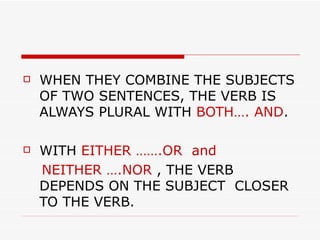
WHEN THEY COMBINE THE SUBJECTS OF TWO SENTENCES, THE VERB IS ALWAYS PLURAL WITH  BOTH…. AND . WITH  EITHER …….OR  and  NEITHER ….NOR  , THE VERB DEPENDS ON THE SUBJECT  CLOSER TO THE VERB.
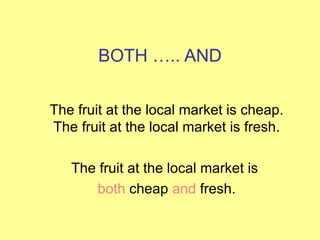
BOTH ….. AND The fruit at the local market is cheap. The fruit at the local market is fresh. The fruit at the local market is  both  cheap  and  fresh.
My father is very interested in football, and so is my brother. Both  my father  and  my brother are very interested in football.
He is handsome. He is successful. He is  both  handsome  and  successful.
Both  Jane  and  Ed are coming with us. Either the teachers or  the principal   is   responsible for this. Either the principal or  the teachers   are  responsible for this.
Neither Jill nor  her parents   are  coming to the party. Neither her parents nor  Jill   is  coming to the party.
EITHER ….. OR He found the money, or he stole it from somewhere. He  either  found the money  or  stole it from somewhere.
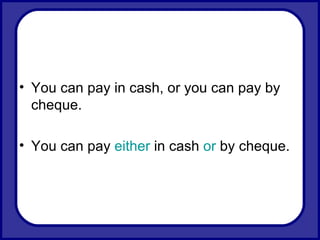
You can pay in cash, or you can pay by cheque. You can pay  either  in cash  or  by cheque.
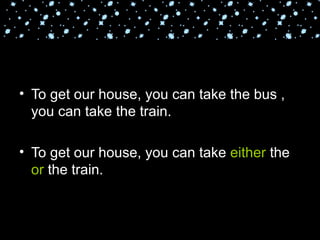
To get our house, you can take the bus , you can take the train. To get our house, you can take  either  the  or  the train.
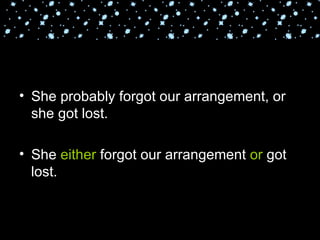
She probably forgot our arrangement, or she got lost. She  either  forgot our arrangement  or  got lost.
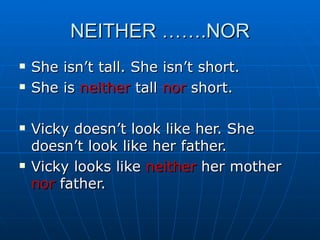
NEITHER …….NOR She isn’t tall. She isn’t short. She is  neither  tall  nor  short. Vicky doesn’t look like her. She doesn’t look like her father. Vicky looks like  neither  her mother  nor  father.
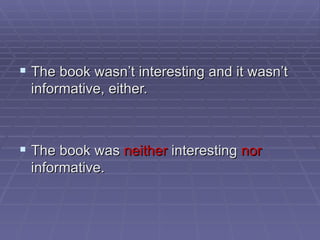
The book wasn’t interesting and it wasn’t informative, either. The book was  neither  interesting  nor  informative.
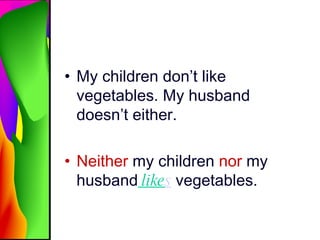
My children don’t like vegetables. My husband doesn’t either. Neither  my children  nor  my husband  like s  vegetables.

Either Or Neither Nor

  • 1.
    BOTH ….. ANDEITHER….. OR NEITHER … NOR
  • 2.
    WHEN THEY COMBINETHE SUBJECTS OF TWO SENTENCES, THE VERB IS ALWAYS PLURAL WITH BOTH…. AND . WITH EITHER …….OR and NEITHER ….NOR , THE VERB DEPENDS ON THE SUBJECT CLOSER TO THE VERB.
  • 3.
    BOTH ….. ANDThe fruit at the local market is cheap. The fruit at the local market is fresh. The fruit at the local market is both cheap and fresh.
  • 4.
    My father isvery interested in football, and so is my brother. Both my father and my brother are very interested in football.
  • 5.
    He is handsome.He is successful. He is both handsome and successful.
  • 6.
    Both Jane and Ed are coming with us. Either the teachers or the principal is responsible for this. Either the principal or the teachers are responsible for this.
  • 7.
    Neither Jill nor her parents are coming to the party. Neither her parents nor Jill is coming to the party.
  • 8.
    EITHER ….. ORHe found the money, or he stole it from somewhere. He either found the money or stole it from somewhere.
  • 9.
    You can payin cash, or you can pay by cheque. You can pay either in cash or by cheque.
  • 10.
    To get ourhouse, you can take the bus , you can take the train. To get our house, you can take either the or the train.
  • 11.
    She probably forgotour arrangement, or she got lost. She either forgot our arrangement or got lost.
  • 12.
    NEITHER …….NOR Sheisn’t tall. She isn’t short. She is neither tall nor short. Vicky doesn’t look like her. She doesn’t look like her father. Vicky looks like neither her mother nor father.
  • 13.
    The book wasn’tinteresting and it wasn’t informative, either. The book was neither interesting nor informative.
  • 14.
    My children don’tlike vegetables. My husband doesn’t either. Neither my children nor my husband like s vegetables.