ADVANCED C LEVEL
WHAT ARE THEY?
 Special verbs with the following characteristics:
- Very irregular (lack of tenses, normally only present or
past forms)
- Behave like verb “to be” and do not need auxiliaries for
questions and negatives
- Followed by infinitive without “to” (simple, perfect,
continuous: ex. fall/have fallen/be falling)
- Associated with meanings related to possibility,
probability, certainty, permission, obligation, ability.
PROBABILITY and SPECULATION (1)
 MUST: Sure something is TRUE: (guessed from context or
evidence)
Ex.: He must be rich. He drives a Ferrari.
He hasn’t come to class. He must have fallen asleep.
 COULD/MAY/MIGHT: not sure something is true
Ex.: He hasn’t come to class. He might/may/could be ill.
Ex.: He hasn’t passed the exam. He may/might not have
studied very much.
PROBABILITY and SPECULATION (2)
 CAN’T: Sure something isn’t true or is impossible
Ex.:He can’t be Spanish. He only speaks English.
He got a 0 in the exam. He can’t/couldn’t have studied very
much....
 Mustn’t is NEVER used with this meaning, only for prohibitions.
The opposite of must is can’t when making deductions.
 MAY NOT vs. CAN’T:
 He may not have done the homework. He was busy, maybe he
didn’t do it but it’s possible he did it.
 He can’t have done the homework. He was partying all
weekend. It’s impossible he did it.
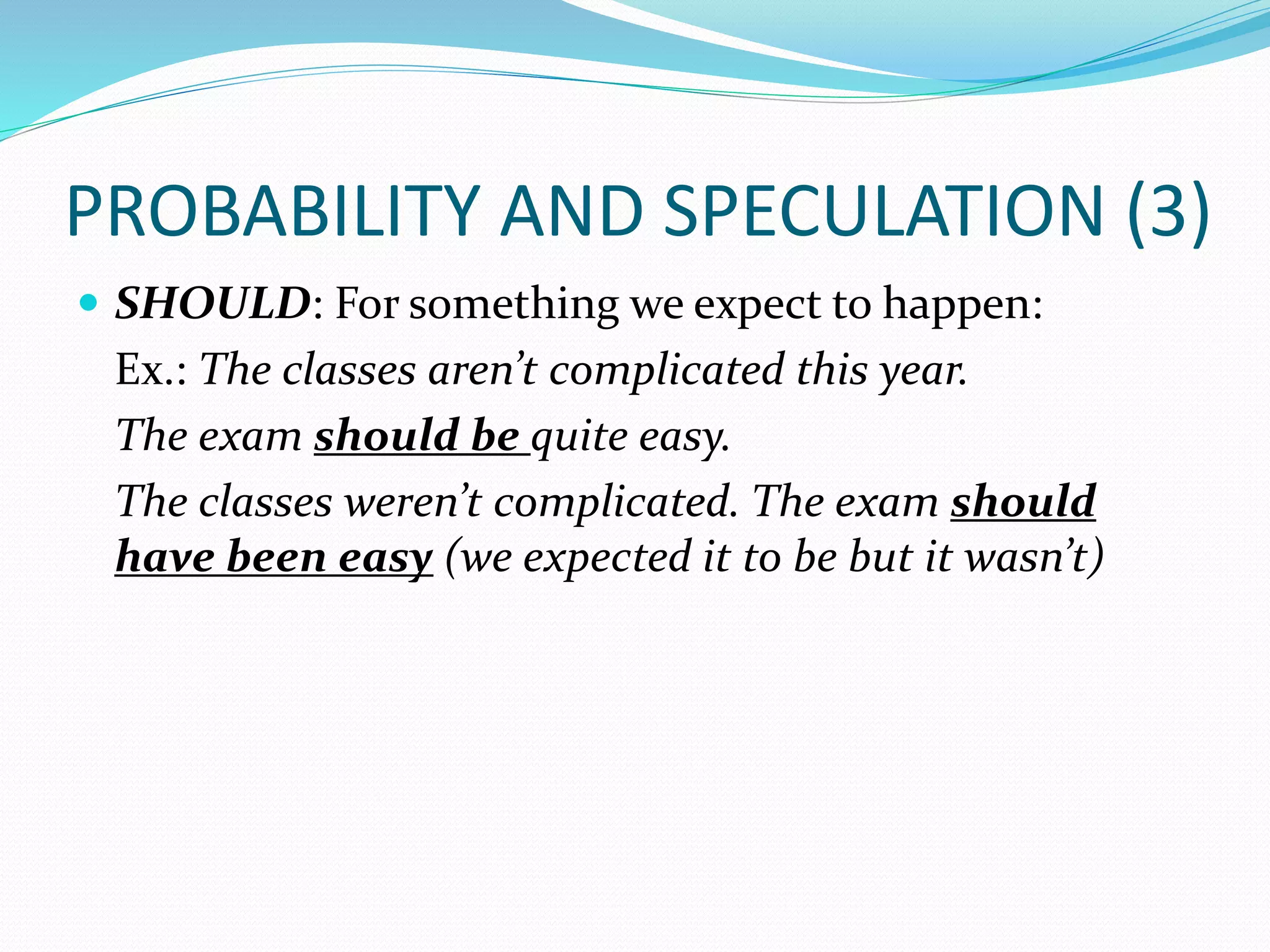
PROBABILITY AND SPECULATION (3)
 SHOULD: For something we expect to happen:
Ex.: The classes aren’t complicated this year.
The exam should be quite easy.
The classes weren’t complicated. The exam should
have been easy (we expected it to be but it wasn’t)
CERTAINTY: WILL
 WILL/SHALL (old fashioned nowadays):
Ex.: I know he’ll have been studying English all night.
Don’t call him. He’ll be studying English.
 In promises, threats, refusals, etc.
Ex: I will learn English/I won’t lend you an euro.
 In habits:
Ex.: He’ll sit and study English for two hours after
work.
OFFERS and SUGGESTIONS
 WILL: I’ll make you a cup of coffee?
 SHALL: in questions
Ex.: Shall I make you a cup of coffee?
Shall we go out for a walk?
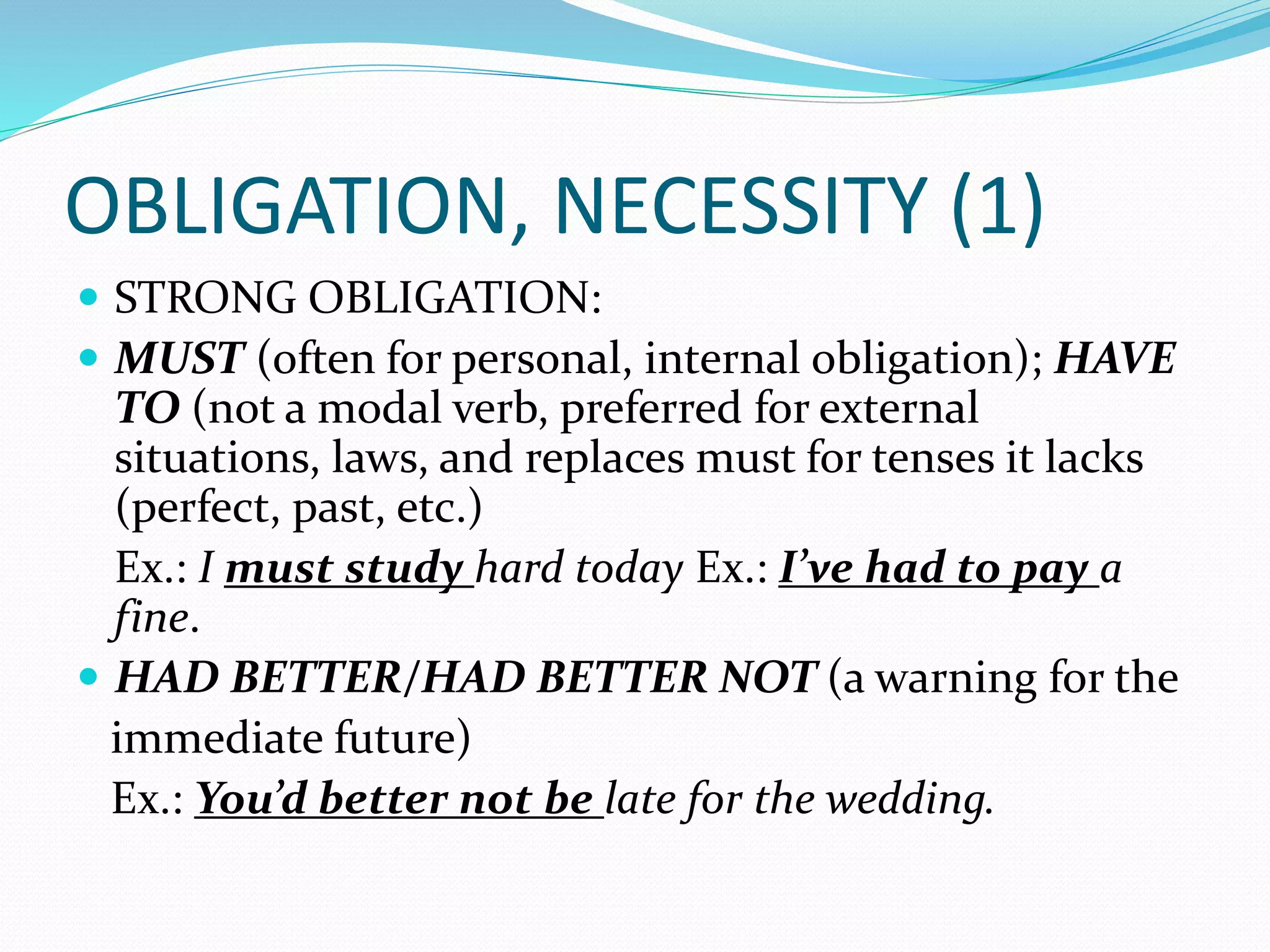
OBLIGATION, NECESSITY (1)
 STRONG OBLIGATION:
 MUST (often for personal, internal obligation); HAVE
TO (not a modal verb, preferred for external
situations, laws, and replaces must for tenses it lacks
(perfect, past, etc.)
Ex.: I must study hard today Ex.: I’ve had to pay a
fine.
 HAD BETTER/HAD BETTER NOT (a warning for the
immediate future)
Ex.: You’d better not be late for the wedding.
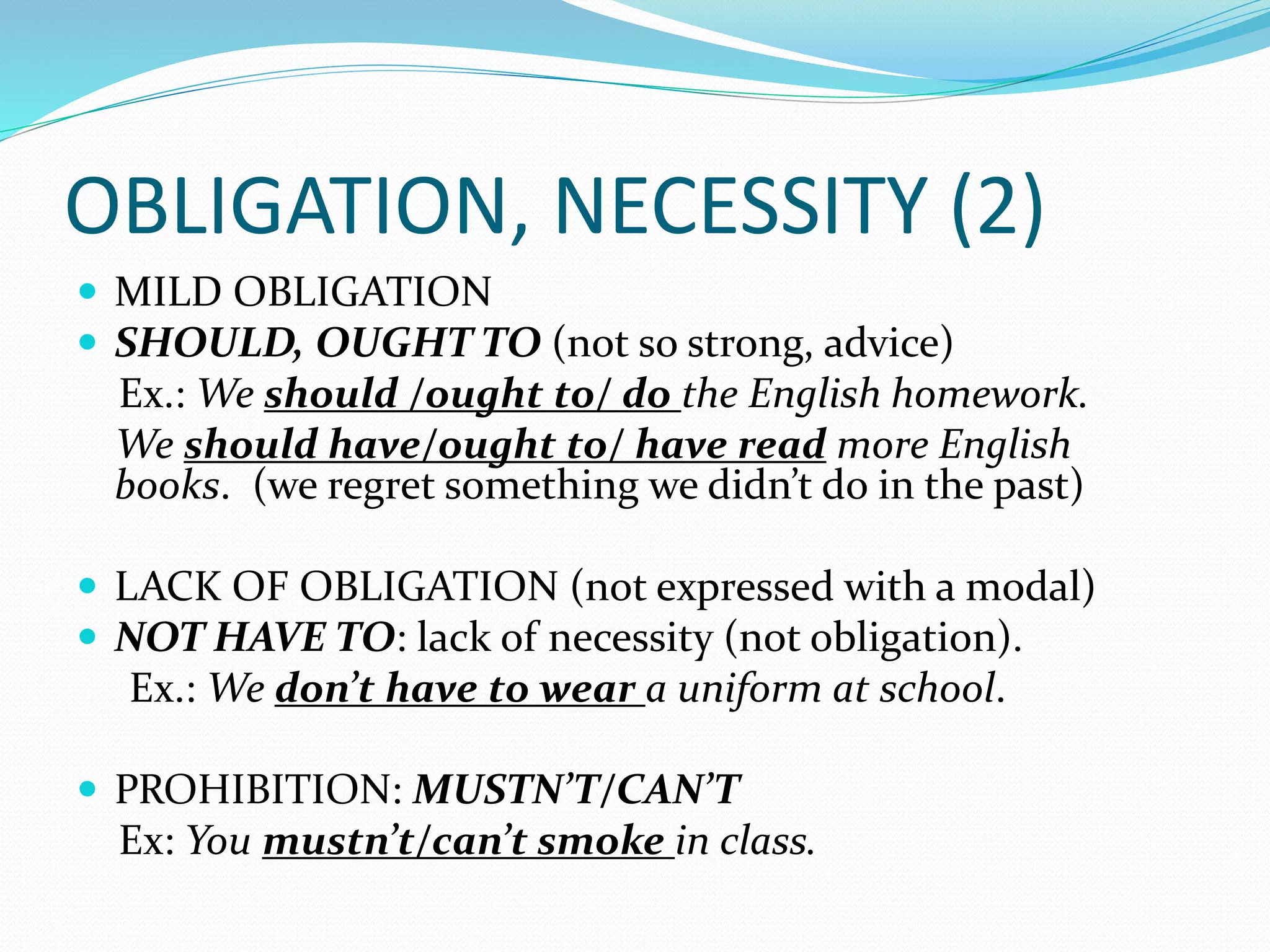
OBLIGATION, NECESSITY (2)
 MILD OBLIGATION
 SHOULD, OUGHT TO (not so strong, advice)
Ex.: We should /ought to/ do the English homework.
We should have/ought to/ have read more English
books. (we regret something we didn’t do in the past)
 LACK OF OBLIGATION (not expressed with a modal)
 NOT HAVE TO: lack of necessity (not obligation).
Ex.: We don’t have to wear a uniform at school.
 PROHIBITION: MUSTN’T/CAN’T
Ex: You mustn’t/can’t smoke in class.
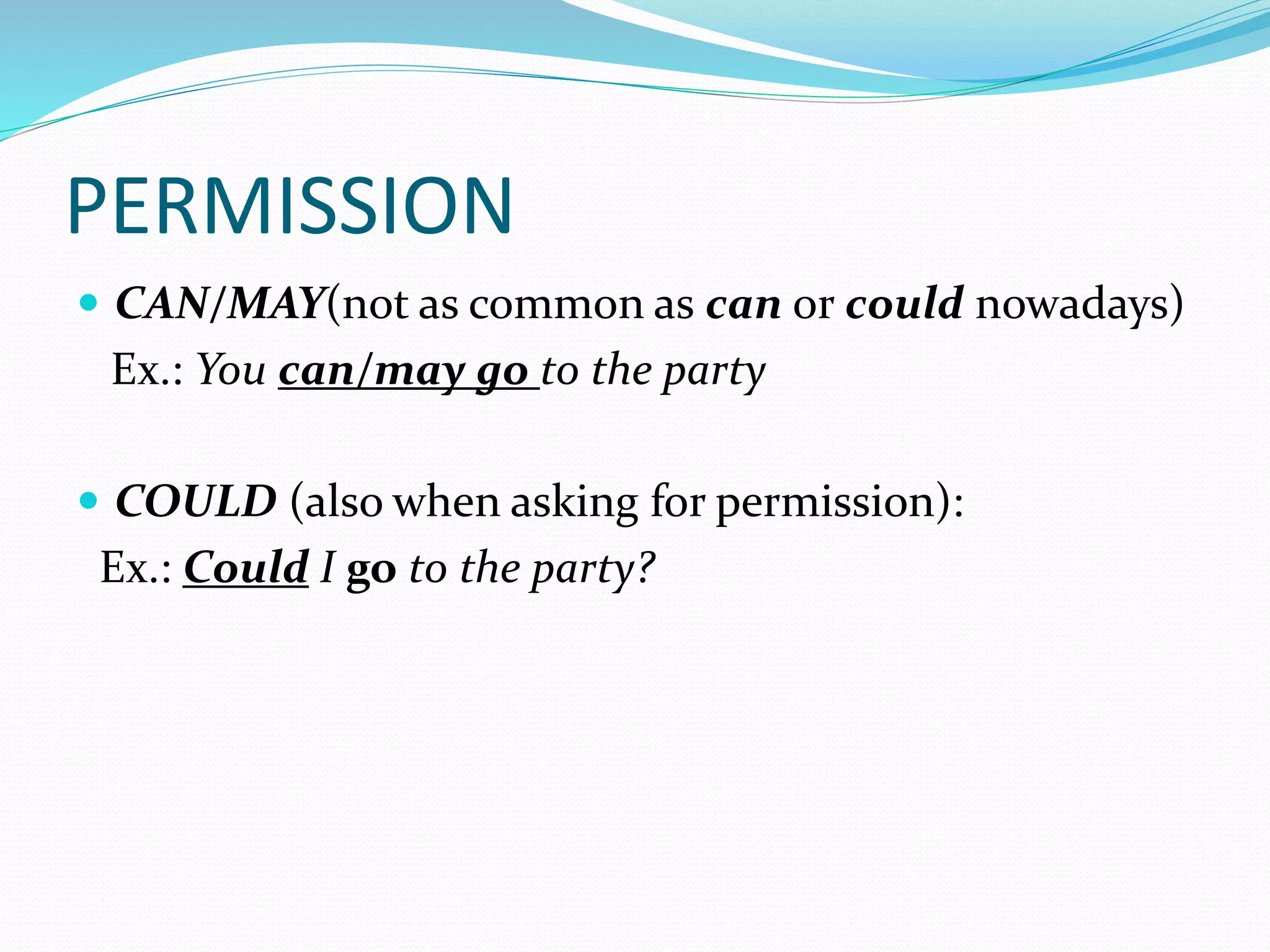
PERMISSION
 CAN/MAY(not as common as can or could nowadays)
Ex.: You can/may go to the party
 COULD (also when asking for permission):
Ex.: Could I go to the party?
ABILITY
 CAN:
Ex.: I can speak English really well.
 BE ABLE TO (not a modal, for a tense CAN doesn’t
have.
Ex.: I won’t be able to come to class tomorrow.
 WAS ABLE TO/MANAGE TO: for a single occasion in
the past (conseguir):
Ex.: I managed/was able to finish the marathon.

Modal verbs c2

  • 1.
  • 2.
    WHAT ARE THEY? Special verbs with the following characteristics: - Very irregular (lack of tenses, normally only present or past forms) - Behave like verb “to be” and do not need auxiliaries for questions and negatives - Followed by infinitive without “to” (simple, perfect, continuous: ex. fall/have fallen/be falling) - Associated with meanings related to possibility, probability, certainty, permission, obligation, ability.
  • 3.
    PROBABILITY and SPECULATION(1)  MUST: Sure something is TRUE: (guessed from context or evidence) Ex.: He must be rich. He drives a Ferrari. He hasn’t come to class. He must have fallen asleep.  COULD/MAY/MIGHT: not sure something is true Ex.: He hasn’t come to class. He might/may/could be ill. Ex.: He hasn’t passed the exam. He may/might not have studied very much.
  • 4.
    PROBABILITY and SPECULATION(2)  CAN’T: Sure something isn’t true or is impossible Ex.:He can’t be Spanish. He only speaks English. He got a 0 in the exam. He can’t/couldn’t have studied very much....  Mustn’t is NEVER used with this meaning, only for prohibitions. The opposite of must is can’t when making deductions.  MAY NOT vs. CAN’T:  He may not have done the homework. He was busy, maybe he didn’t do it but it’s possible he did it.  He can’t have done the homework. He was partying all weekend. It’s impossible he did it.
  • 5.
    PROBABILITY AND SPECULATION(3)  SHOULD: For something we expect to happen: Ex.: The classes aren’t complicated this year. The exam should be quite easy. The classes weren’t complicated. The exam should have been easy (we expected it to be but it wasn’t)
  • 6.
    CERTAINTY: WILL  WILL/SHALL(old fashioned nowadays): Ex.: I know he’ll have been studying English all night. Don’t call him. He’ll be studying English.  In promises, threats, refusals, etc. Ex: I will learn English/I won’t lend you an euro.  In habits: Ex.: He’ll sit and study English for two hours after work.
  • 7.
    OFFERS and SUGGESTIONS WILL: I’ll make you a cup of coffee?  SHALL: in questions Ex.: Shall I make you a cup of coffee? Shall we go out for a walk?
  • 8.
    OBLIGATION, NECESSITY (1) STRONG OBLIGATION:  MUST (often for personal, internal obligation); HAVE TO (not a modal verb, preferred for external situations, laws, and replaces must for tenses it lacks (perfect, past, etc.) Ex.: I must study hard today Ex.: I’ve had to pay a fine.  HAD BETTER/HAD BETTER NOT (a warning for the immediate future) Ex.: You’d better not be late for the wedding.
  • 9.
    OBLIGATION, NECESSITY (2) MILD OBLIGATION  SHOULD, OUGHT TO (not so strong, advice) Ex.: We should /ought to/ do the English homework. We should have/ought to/ have read more English books. (we regret something we didn’t do in the past)  LACK OF OBLIGATION (not expressed with a modal)  NOT HAVE TO: lack of necessity (not obligation). Ex.: We don’t have to wear a uniform at school.  PROHIBITION: MUSTN’T/CAN’T Ex: You mustn’t/can’t smoke in class.
  • 10.
    PERMISSION  CAN/MAY(not ascommon as can or could nowadays) Ex.: You can/may go to the party  COULD (also when asking for permission): Ex.: Could I go to the party?
  • 11.
    ABILITY  CAN: Ex.: Ican speak English really well.  BE ABLE TO (not a modal, for a tense CAN doesn’t have. Ex.: I won’t be able to come to class tomorrow.  WAS ABLE TO/MANAGE TO: for a single occasion in the past (conseguir): Ex.: I managed/was able to finish the marathon.