Modal Verbs
Ability
Can: Ability in the present
- I can swim faster than you.
Could: Abilty in the past
- I couldn’t speak English fluently when I
was your age.
- I was able to…
Will be able to: Ability in the future
- In ten years time, I will be able to speak
English fluently.
Obligation
Must: An obligation in the
present
(myself) or (authority).
-I must get down to work so I can’t
go with you to the birthday party.
Have to: General rules.
-You have to wear uniform in this
school
Prohibition
Mustn’t/ must not: You are not
allowed to do sth.
-You mustn’t smoke in class. It is
forbidden.
- You mustn’t speak in such way to your
mum. She cares about you.
No obligation
• Don’t have to/ doesn’t have to : It is
not necessary.
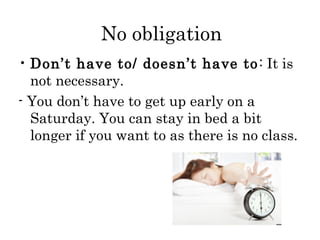
- You don’t have to get up early on a
Saturday. You can stay in bed a bit
longer if you want to as there is no class.
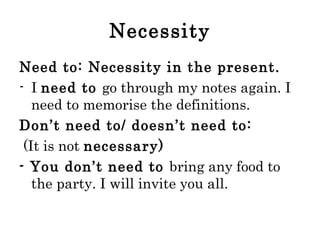
Necessity
Need to: Necessity in the present.
- I need to go through my notes again. I
need to memorise the definitions.
Don’t need to/ doesn’t need to:
(It is not necessary)
- You don’t need to bring any food to
the party. I will invite you all.
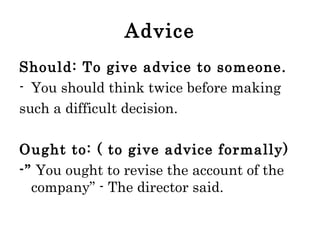
Advice
Should: To give advice to someone.
- You should think twice before making
such a difficult decision.
Ought to: ( to give advice formally)
-” You ought to revise the account of the
company” - The director said.
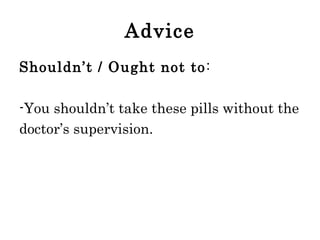
Advice
Shouldn’t / Ought not to :
-You shouldn’t take these pills without the
doctor’s supervision.
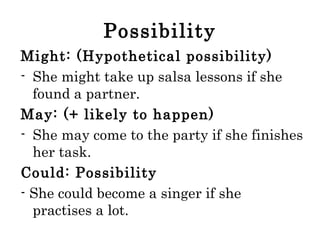
Possibility
Might: (Hypothetical possibility)
- She might take up salsa lessons if she
found a partner.
May: (+ likely to happen)
- She may come to the party if she finishes
her task.
Could: Possibility
- She could become a singer if she
practises a lot.
Certainty
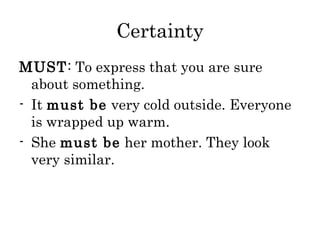
MUST: To express that you are sure
about something.
- It must be very cold outside. Everyone
is wrapped up warm.
- She must be her mother. They look
very similar.
Certainty
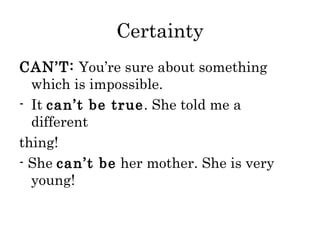
CAN’T: You’re sure about something
which is impossible.
- It can’t be true. She told me a
different
thing!
- She can’t be her mother. She is very
young!
Obligation in the past
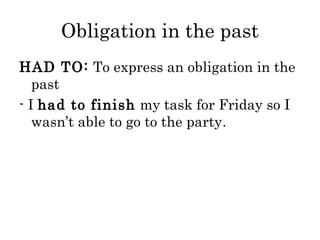
HAD TO: To express an obligation in the
past
- I had to finish my task for Friday so I
wasn’t able to go to the party.
Practice
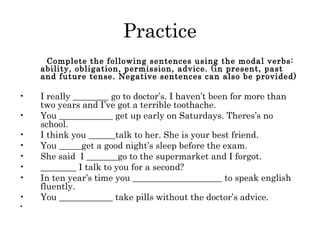
Complete the following sentences using the modal verbs:
ability, obligation, permission, advice. (in present, past
and future tense. Negative sentences can also be provided)

•
•
•
•
•
•
•
•
•

I really ________ go to doctor’s. I haven’t been for more than
two years and I’ve got a terrible toothache.
You ____________ get up early on Saturdays. Theres’s no
school.
I think you ______talk to her. She is your best friend.
You _____get a good night’s sleep before the exam.
She said I _______go to the supermarket and I forgot.
________ I talk to you for a second?
In ten year’s time you ____________________ to speak english
fluently.
You ____________ take pills without the doctor’s advice.

Modal verbs

  • 1.
  • 2.
    Ability Can: Ability inthe present - I can swim faster than you. Could: Abilty in the past - I couldn’t speak English fluently when I was your age. - I was able to… Will be able to: Ability in the future - In ten years time, I will be able to speak English fluently.
  • 3.
    Obligation Must: An obligationin the present (myself) or (authority). -I must get down to work so I can’t go with you to the birthday party. Have to: General rules. -You have to wear uniform in this school
  • 4.
    Prohibition Mustn’t/ must not:You are not allowed to do sth. -You mustn’t smoke in class. It is forbidden. - You mustn’t speak in such way to your mum. She cares about you.
  • 5.
    No obligation • Don’thave to/ doesn’t have to : It is not necessary. - You don’t have to get up early on a Saturday. You can stay in bed a bit longer if you want to as there is no class.
  • 6.
    Necessity Need to: Necessityin the present. - I need to go through my notes again. I need to memorise the definitions. Don’t need to/ doesn’t need to: (It is not necessary) - You don’t need to bring any food to the party. I will invite you all.
  • 7.
    Advice Should: To giveadvice to someone. - You should think twice before making such a difficult decision. Ought to: ( to give advice formally) -” You ought to revise the account of the company” - The director said.
  • 8.
    Advice Shouldn’t / Oughtnot to : -You shouldn’t take these pills without the doctor’s supervision.
  • 9.
    Possibility Might: (Hypothetical possibility) -She might take up salsa lessons if she found a partner. May: (+ likely to happen) - She may come to the party if she finishes her task. Could: Possibility - She could become a singer if she practises a lot.
  • 10.
    Certainty MUST: To expressthat you are sure about something. - It must be very cold outside. Everyone is wrapped up warm. - She must be her mother. They look very similar.
  • 11.
    Certainty CAN’T: You’re sureabout something which is impossible. - It can’t be true. She told me a different thing! - She can’t be her mother. She is very young!
  • 12.
    Obligation in thepast HAD TO: To express an obligation in the past - I had to finish my task for Friday so I wasn’t able to go to the party.
  • 13.
    Practice Complete the followingsentences using the modal verbs: ability, obligation, permission, advice. (in present, past and future tense. Negative sentences can also be provided) • • • • • • • • • I really ________ go to doctor’s. I haven’t been for more than two years and I’ve got a terrible toothache. You ____________ get up early on Saturdays. Theres’s no school. I think you ______talk to her. She is your best friend. You _____get a good night’s sleep before the exam. She said I _______go to the supermarket and I forgot. ________ I talk to you for a second? In ten year’s time you ____________________ to speak english fluently. You ____________ take pills without the doctor’s advice.