MODALS OF OBLIGATION
MODAL VERBS
What are MODAL VERBS?
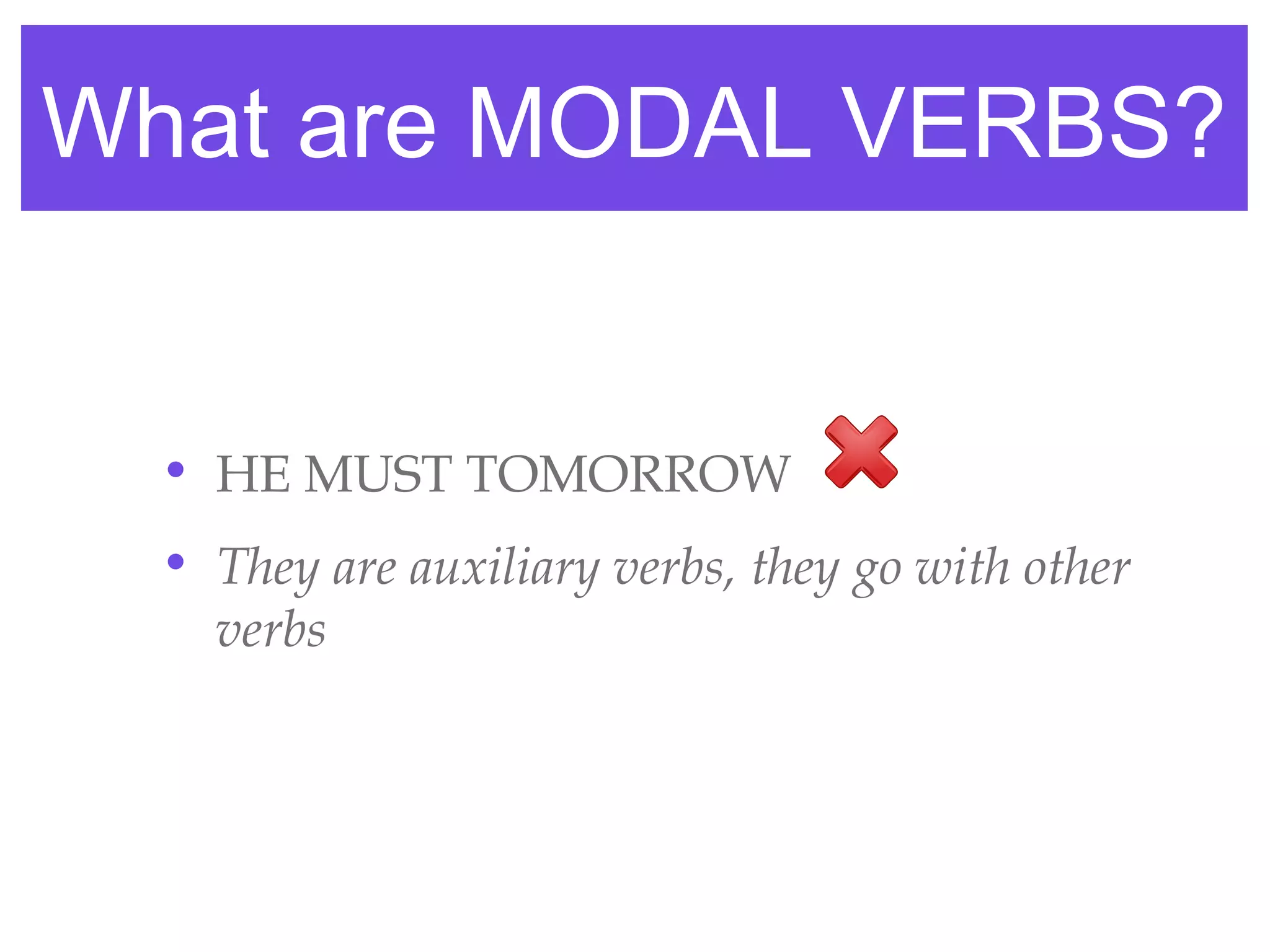
• HE MUST TOMORROW
• They are auxiliary verbs, they go with other
verbs
What are MODAL VERBS?
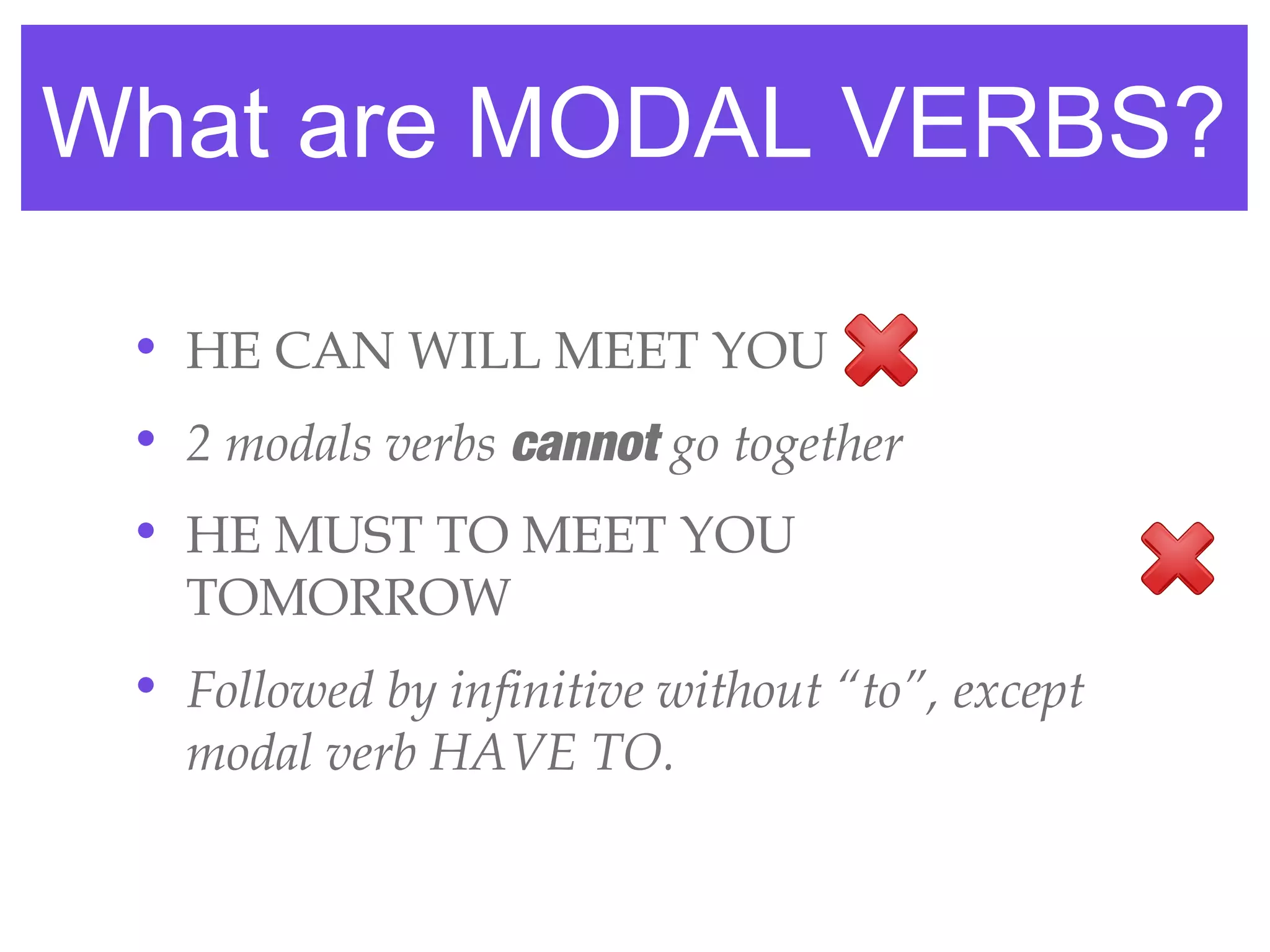
• HE CAN WILL MEET YOU
• 2 modals verbs cannot go together
• HE MUST TO MEET YOU
TOMORROW
• Followed by infinitive without “to”, except
modal verb HAVE TO.
What are MODAL VERBS?
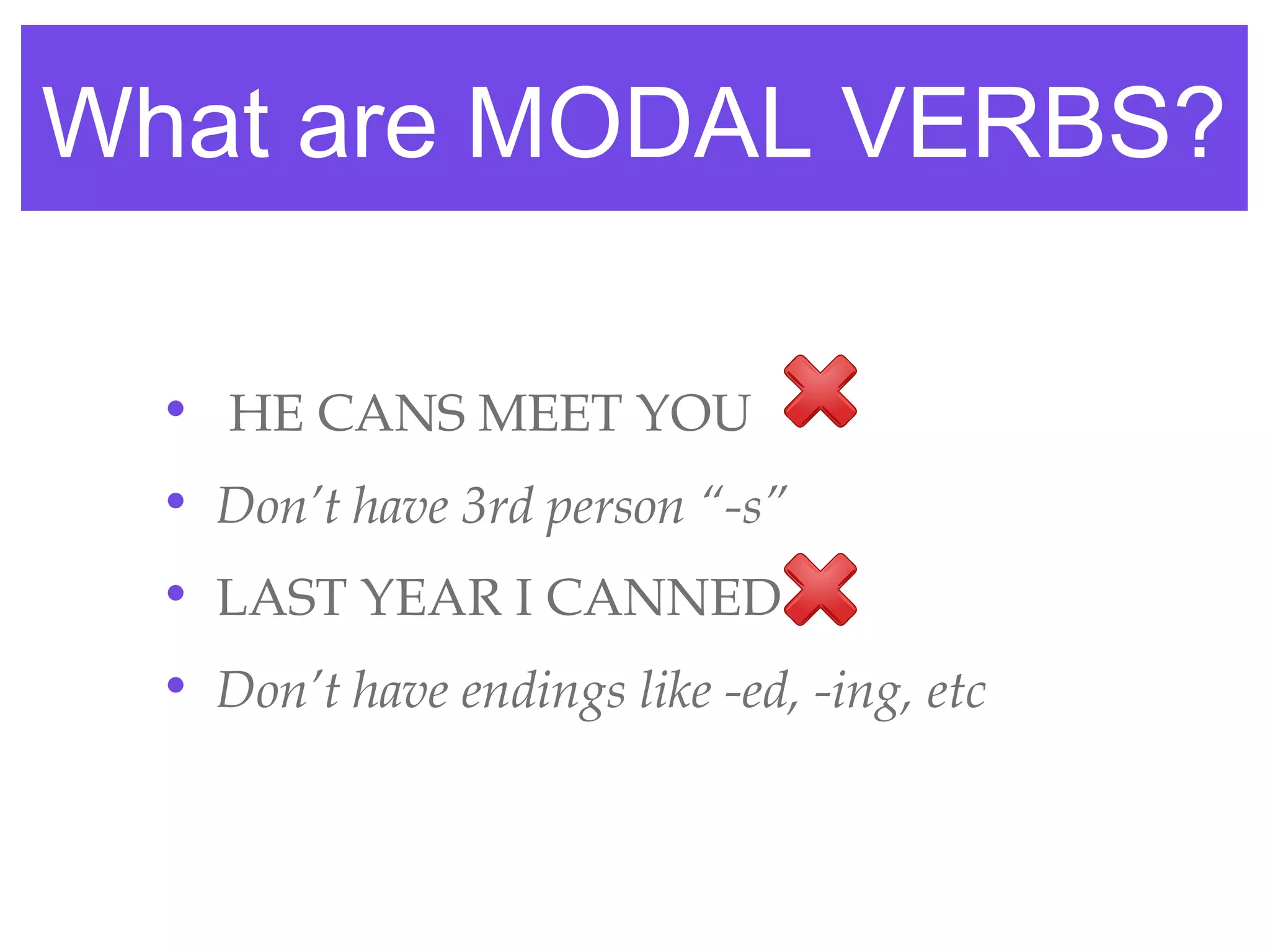
• HE CANS MEET YOU
• Don’t have 3rd person “-s”
• LAST YEAR I CANNED
• Don’t have endings like -ed, -ing, etc
MUST & HAVE TO
• I must finish my homework before 8
• We have to start work at 9 am
They are both used to express that something
is necessary
MUST
• I must find a hotel to stay at tonight
• The speaker decides that something is
necessary (INTERNAL decision)
HAVE TO
• I have to wear a uniform
• Somebody else has made the decision,
it’s not the speaker’s opinion
(EXTERNAL decision)
OTHER TENSES
• MUST: past & future with HAVE TO
• When I was young, we had to wear a
uniform at school
• Next year you will have to study harder
MUSTN’T & DON’T HAVE TO
• Very different meanings in negative:
• You mustn’t open the door
• You don’t have to open the door
MUSTN’T
• You mustn’t open the door. Lately there
have been many robberies in the
neighbourhood.
• (It’s forbidden /prohibited)
• =can’t/be not allowed to
DON’T HAVE TO
• You don’t have to open the door. I have
the keys.
• (It’s not necessary)
SHOULD / SHOULDN’T
• I think you should see the doctor
• I think you shouldn’t watch so much TV
• =ought to/ought not to
• Give an opinion about what’s the best thing
do do.
• Not as strong as MUST /HAVE TO:
• You must see the doctor
• You have to see the doctor (You have no
alternative, strong recommendation)

Modals of obligation

  • 1.
  • 2.
    What are MODALVERBS? • HE MUST TOMORROW • They are auxiliary verbs, they go with other verbs
  • 3.
    What are MODALVERBS? • HE CAN WILL MEET YOU • 2 modals verbs cannot go together • HE MUST TO MEET YOU TOMORROW • Followed by infinitive without “to”, except modal verb HAVE TO.
  • 4.
    What are MODALVERBS? • HE CANS MEET YOU • Don’t have 3rd person “-s” • LAST YEAR I CANNED • Don’t have endings like -ed, -ing, etc
  • 5.
    MUST & HAVETO • I must finish my homework before 8 • We have to start work at 9 am They are both used to express that something is necessary
  • 6.
    MUST • I mustfind a hotel to stay at tonight • The speaker decides that something is necessary (INTERNAL decision)
  • 7.
    HAVE TO • Ihave to wear a uniform • Somebody else has made the decision, it’s not the speaker’s opinion (EXTERNAL decision)
  • 8.
    OTHER TENSES • MUST:past & future with HAVE TO • When I was young, we had to wear a uniform at school • Next year you will have to study harder
  • 9.
    MUSTN’T & DON’THAVE TO • Very different meanings in negative: • You mustn’t open the door • You don’t have to open the door
  • 10.
    MUSTN’T • You mustn’topen the door. Lately there have been many robberies in the neighbourhood. • (It’s forbidden /prohibited) • =can’t/be not allowed to
  • 11.
    DON’T HAVE TO •You don’t have to open the door. I have the keys. • (It’s not necessary)
  • 12.
    SHOULD / SHOULDN’T •I think you should see the doctor • I think you shouldn’t watch so much TV • =ought to/ought not to • Give an opinion about what’s the best thing do do. • Not as strong as MUST /HAVE TO: • You must see the doctor • You have to see the doctor (You have no alternative, strong recommendation)