General Features
▪Most modalare always followed by the base form of the verb.
We ought to go north (modal + base form)
▪They don’t have inflections.
He shouldn’t copy his classmate test (NOT he shouldn’t copies)
▪They can be negated (negative form) by simply adding NOT.
You cannot miss a single class (notice that can + not equals cannot)
▪There are three main exceptions to the rules (unfortunately for everyone!)
-Be able to. (that means that, for example,
the sentence I am able to not speak will sound very weird)
-Have to.
-Be allowed to.
3.
Obligation, necessity, advice
MUSTand HAVE TO:
- Must and have (got) to to talk about rules.
- MUST: instructions
- Have to to talk about orders that come from someone/somewhere else. In
Spain, citizens have to pay their taxes before november,
DON’T HAVE TO/NEEDN’T/DON’T NEED TO
- THINGS THAT ARE NOT NECESSARY
MUSN’T
-Necessary NOT TO DO something
Don’t have vs
Must not
4.
BE SUPPOSED TO/SHOULD/OUGHTTO
- Be supposed to : things or rules we expect to happen
- Should and shouldn’t: to give or ask for advice
- Ought to: give advice
5.
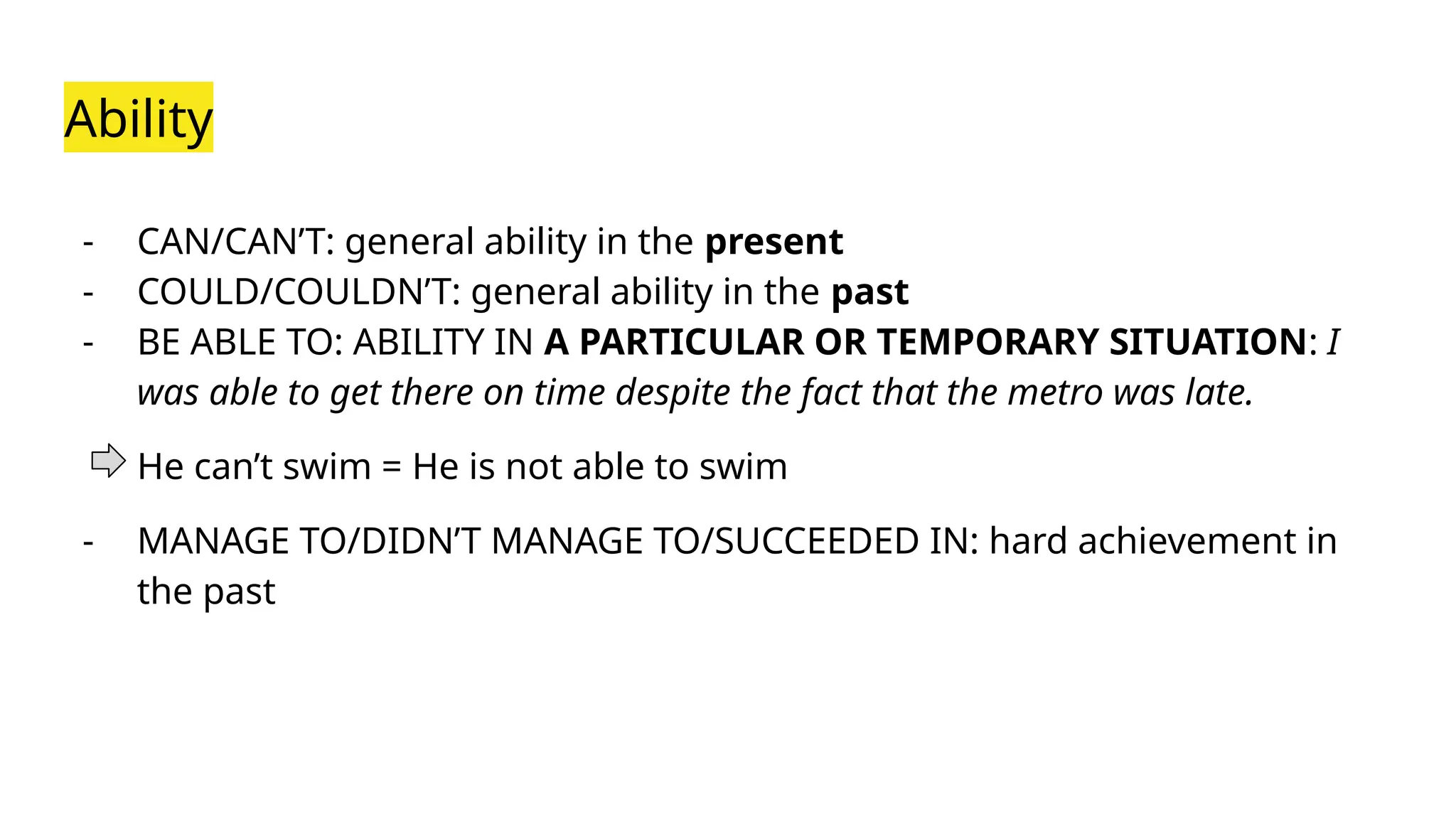
Ability
- CAN/CAN’T: generalability in the present
- COULD/COULDN’T: general ability in the past
- BE ABLE TO: ABILITY IN A PARTICULAR OR TEMPORARY SITUATION: I
was able to get there on time despite the fact that the metro was late.
He can’t swim = He is not able to swim
- MANAGE TO/DIDN’T MANAGE TO/SUCCEEDED IN: hard achievement in
the past
6.
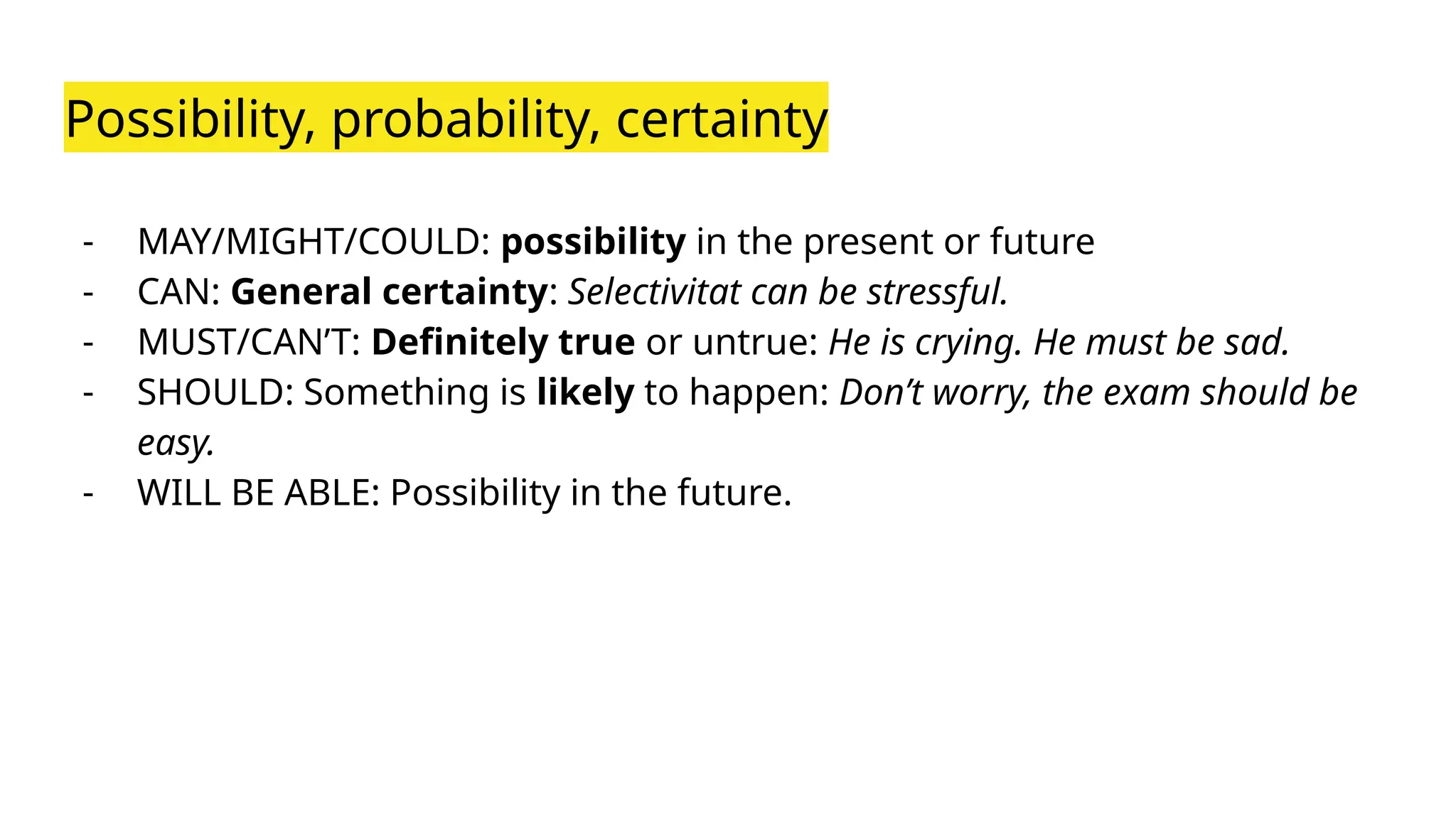
Possibility, probability, certainty
-MAY/MIGHT/COULD: possibility in the present or future
- CAN: General certainty: Selectivitat can be stressful.
- MUST/CAN’T: Definitely true or untrue: He is crying. He must be sad.
- SHOULD: Something is likely to happen: Don’t worry, the exam should be
easy.
- WILL BE ABLE: Possibility in the future.
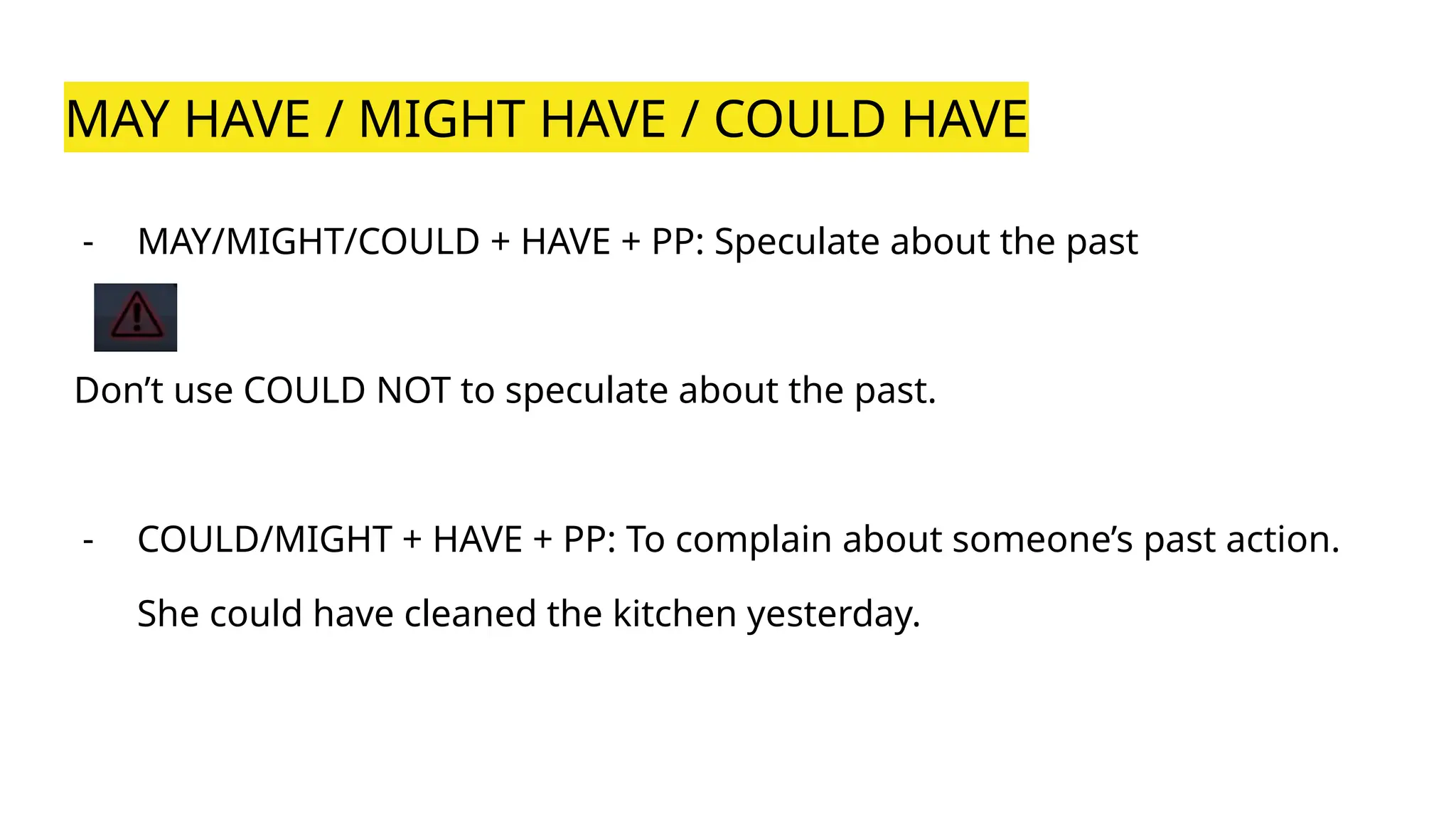
MAY HAVE /MIGHT HAVE / COULD HAVE
- MAY/MIGHT/COULD + HAVE + PP: Speculate about the past
Don’t use COULD NOT to speculate about the past.
- COULD/MIGHT + HAVE + PP: To complain about someone’s past action.
She could have cleaned the kitchen yesterday.
9.
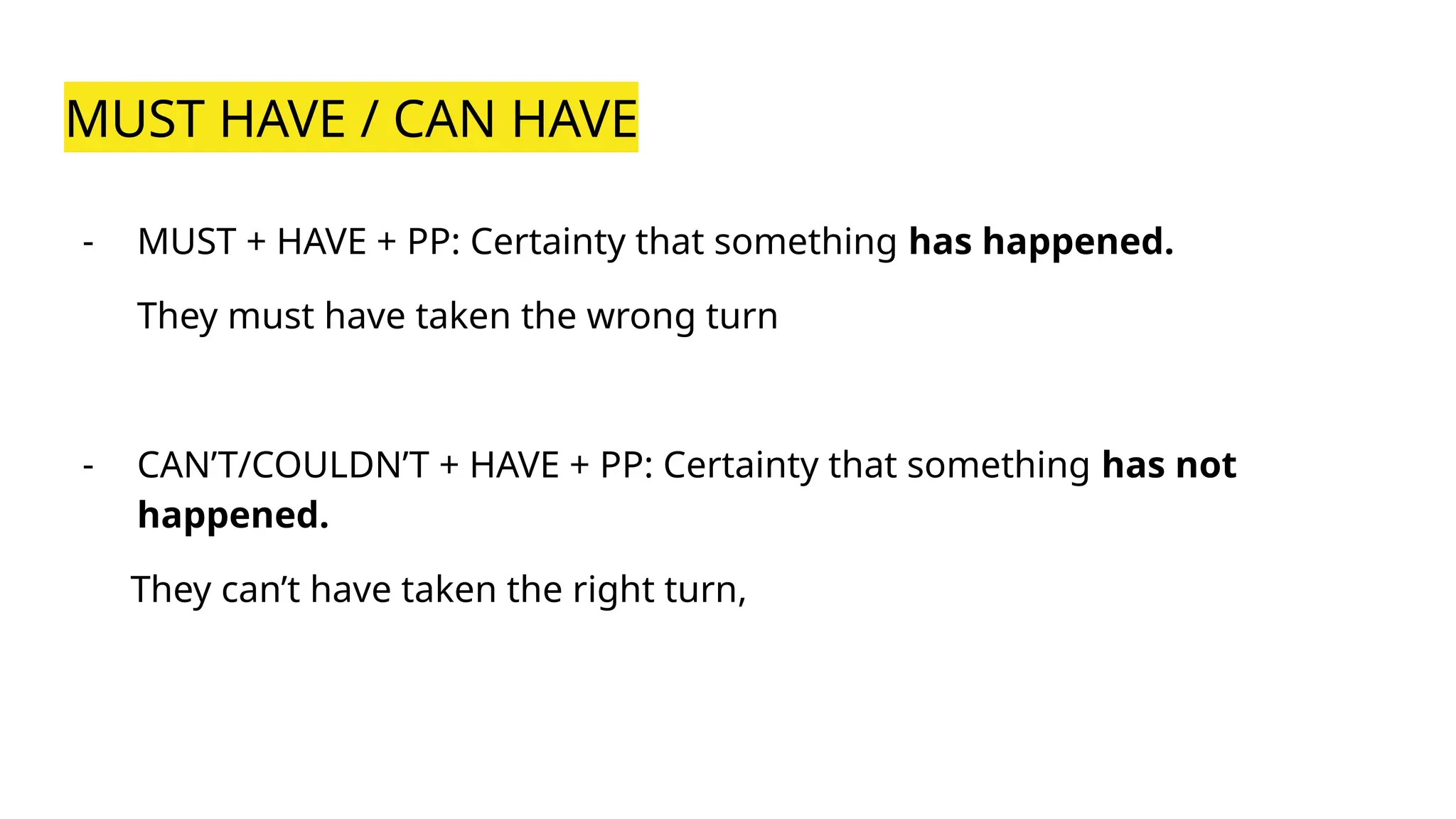
MUST HAVE /CAN HAVE
- MUST + HAVE + PP: Certainty that something has happened.
They must have taken the wrong turn
- CAN’T/COULDN’T + HAVE + PP: Certainty that something has not
happened.
They can’t have taken the right turn,
10.
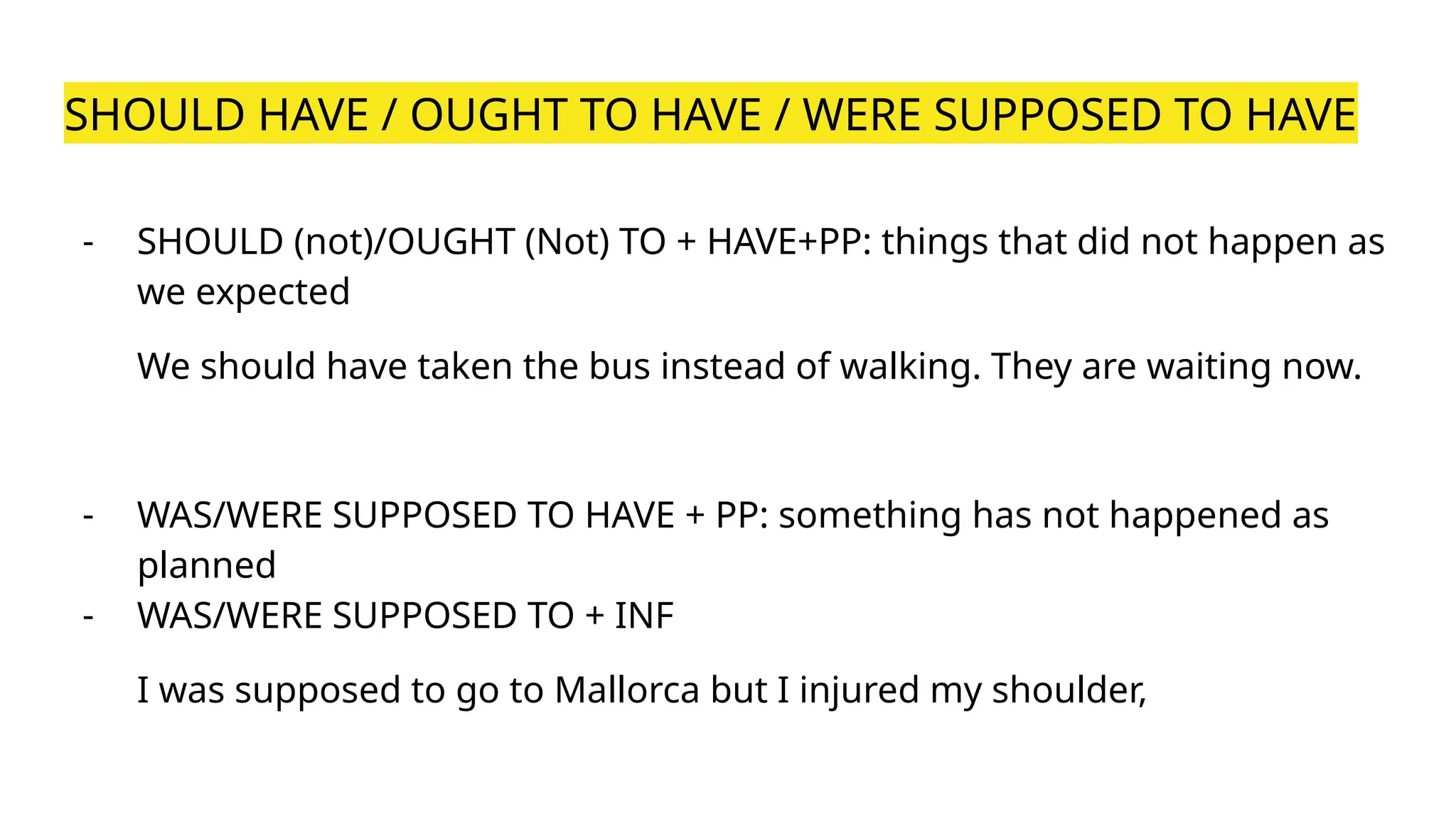
SHOULD HAVE /OUGHT TO HAVE / WERE SUPPOSED TO HAVE
- SHOULD (not)/OUGHT (Not) TO + HAVE+PP: things that did not happen as
we expected
We should have taken the bus instead of walking. They are waiting now.
- WAS/WERE SUPPOSED TO HAVE + PP: something has not happened as
planned
- WAS/WERE SUPPOSED TO + INF
I was supposed to go to Mallorca but I injured my shoulder,
11.
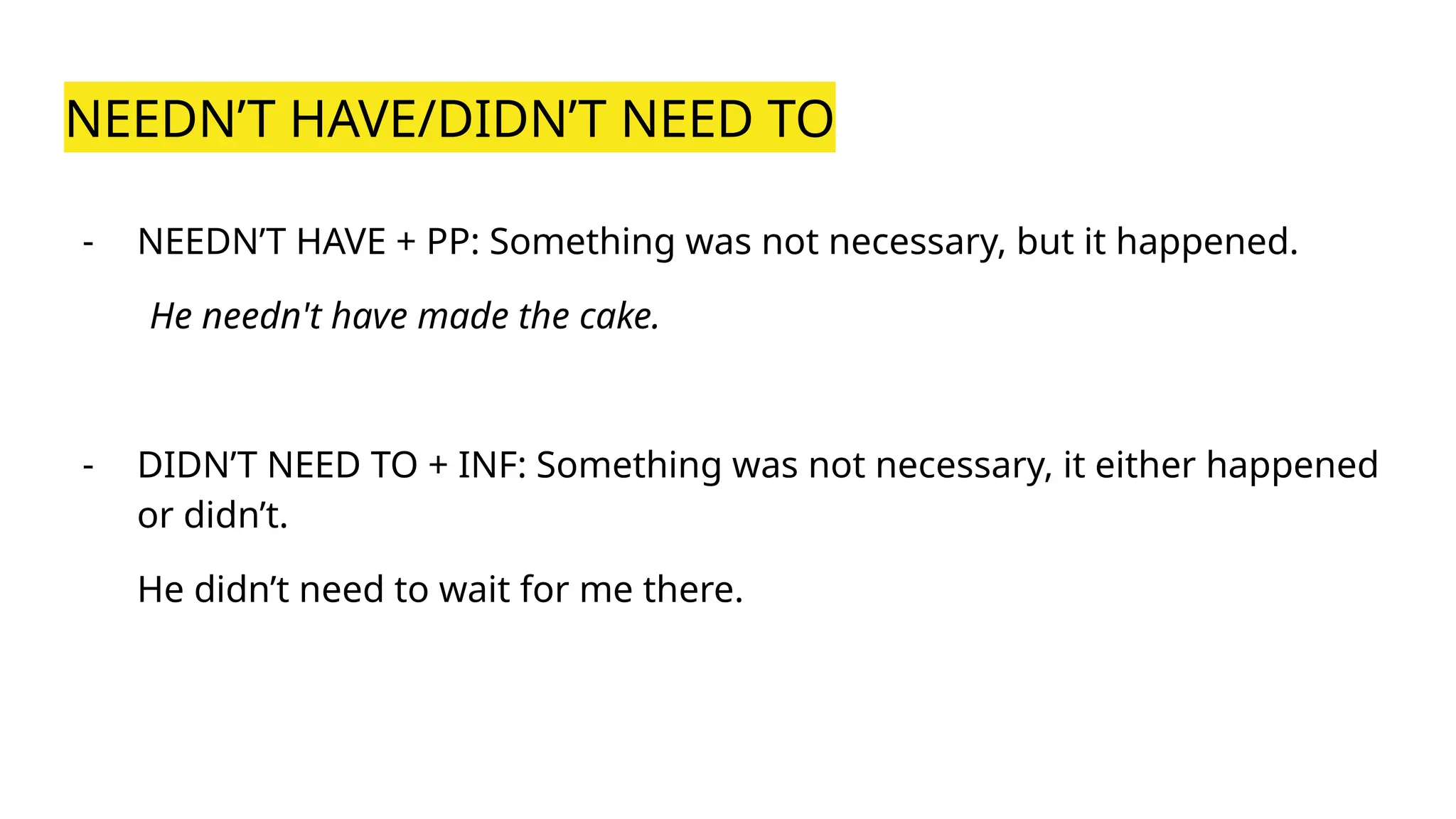
NEEDN’T HAVE/DIDN’T NEEDTO
- NEEDN’T HAVE + PP: Something was not necessary, but it happened.
He needn't have made the cake.
- DIDN’T NEED TO + INF: Something was not necessary, it either happened
or didn’t.
He didn’t need to wait for me there.