MODALS
MODALS
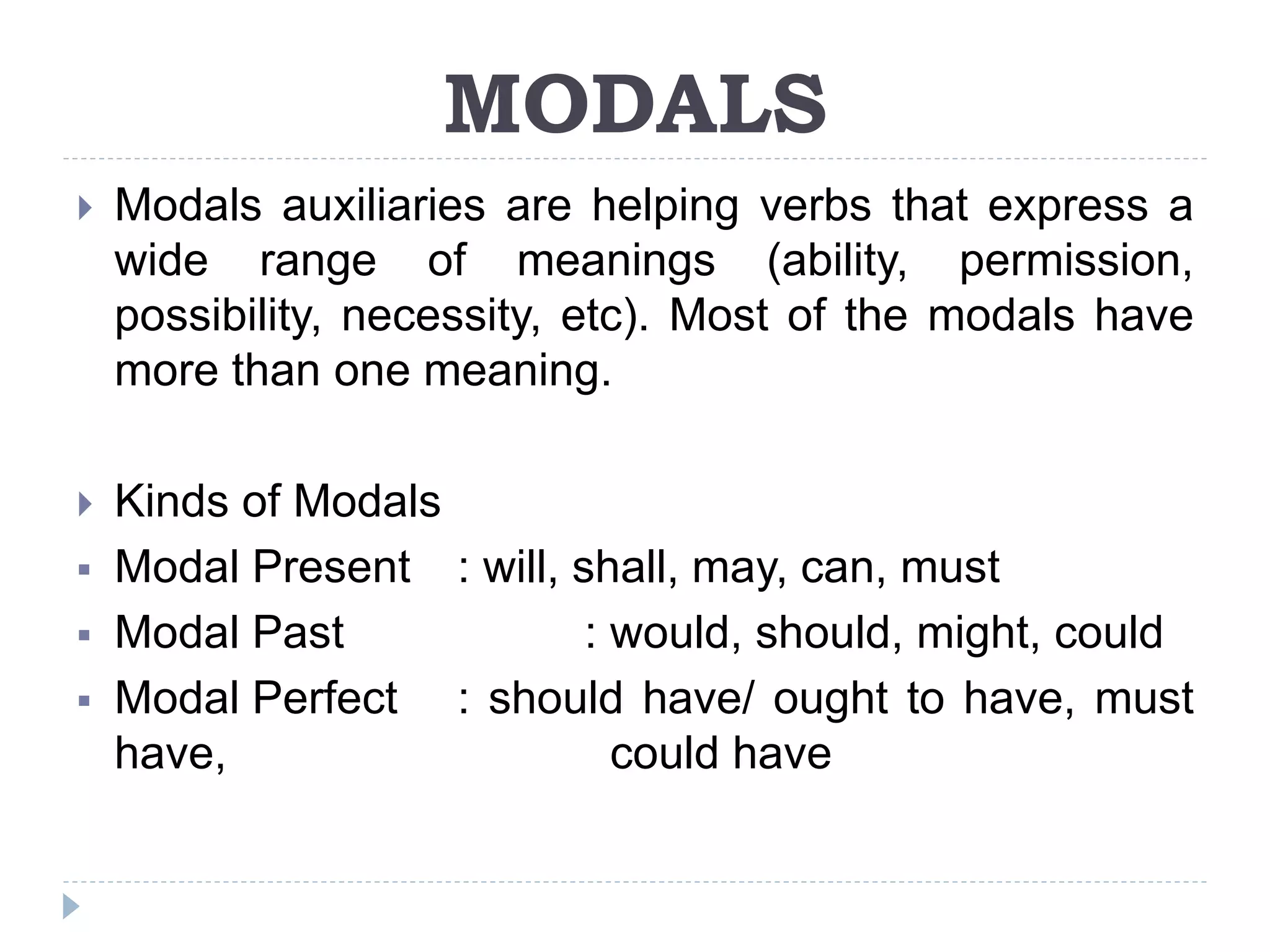
 Modals auxiliaries are helping verbs that express a
wide range of meanings (ability, permission,
possibility, necessity, etc). Most of the modals have
more than one meaning.
 Kinds of Modals
 Modal Present : will, shall, may, can, must
 Modal Past : would, should, might, could
 Modal Perfect : should have/ ought to have, must
have, could have
WILL
Functions :
 It indicates future plan
- Susana will go to Surabaya tomorrow.
 It indicates willingness
- I will help you. I know you have a lot of problems.
 It indicates polite request
- Will you go to the party with me tonight, please?
SHALL
Functions :
 It indicates future plan with the subject I or we
- I shall be at home at 7 tonight.
- We shall attend the meeting.
 It is used to state the polite question for asking
advice
- Shall I revise this paper?
- It’s very hot here. Shall I open the window?
MAY
Functions :
 It indicates polite permission
- May I enter the next room?
 It indicates possibilty
- It’s cloudy. It may rain tonight.
 It is used to make polite request
- May I ask for coffee?
CAN
Funtions :
 It indicates ability/possibility
- Marcelina can speak Japanese well.
- Thomas is a strong boy. He can move the big
stone.
 It indicates permission (informal)
- Don’t worry, you can use my money.
 It is used to make polite request (informal)
- Can I go home now?
- Can you show me to the nearest hotel?
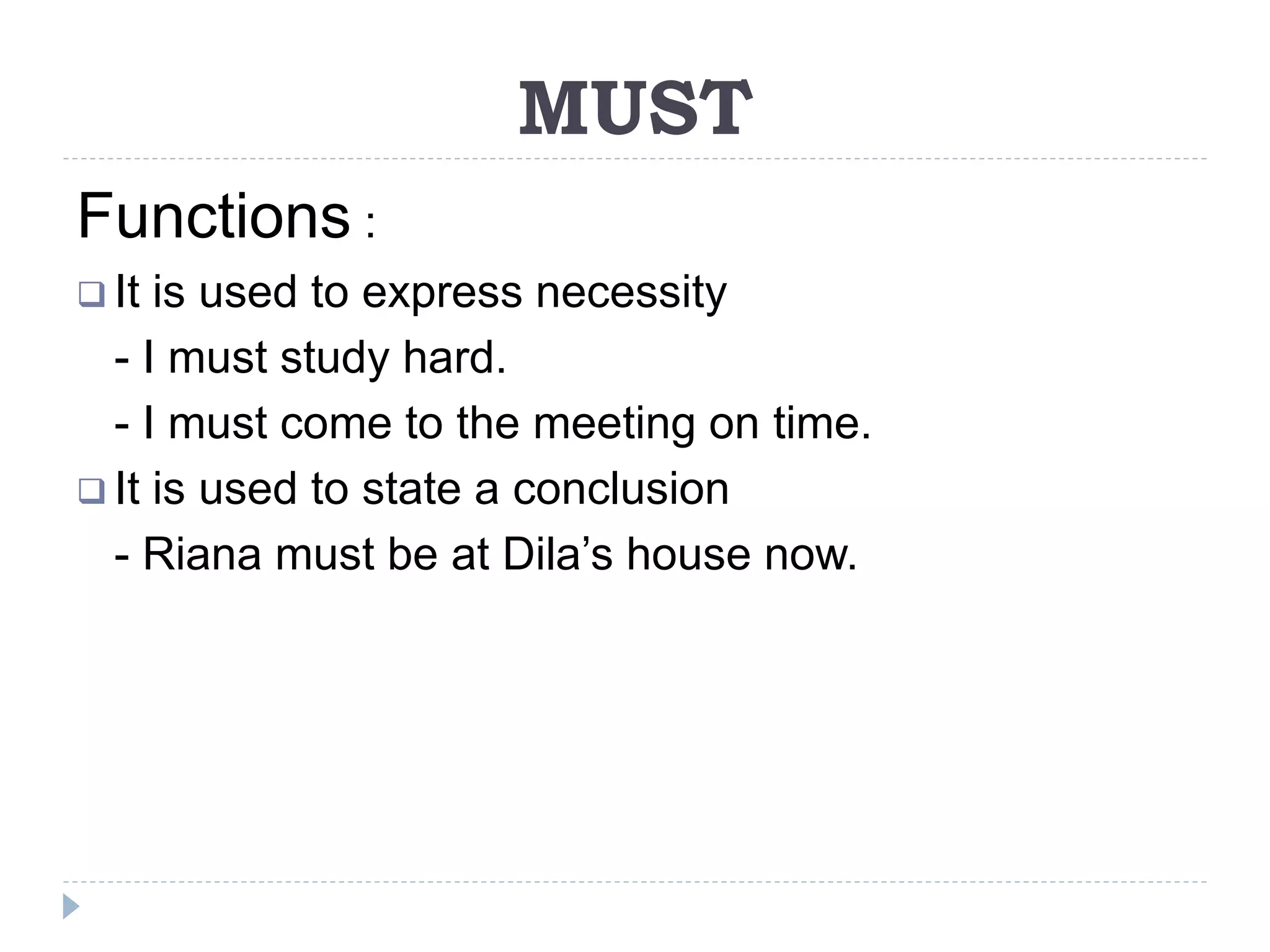
MUST
Functions :
 It is used to express necessity
- I must study hard.
- I must come to the meeting on time.
 It is used to state a conclusion
- Riana must be at Dila’s house now.
WOULD
Functions :
 It is used to express past activity
- I would go to the market when it was suddenly
raining.
 It is used to express past habit
- Tyas would cry before sleeping when she was a
child.
 It is used to express polite request
- Would you please open the door?
SHOULD
Funtions :
 It is used to give suggestion
- You should rearrange your scedule.
 It indicates possibility/certainty
- Andy should be nine years old now.
COULD
Functions :
 It is used to express ability in the past.
- He is absent now, but he could attend the previous
class.
 It is used to express polite request
- Could you tell me your secret?
SHOULD HAVE
Function :
 Should have + past participle is used to express a
hope that cannot be achieved in the past.
Example :
 Tio fails to pass the exam, he should have studied
hard.
 Setiawan should have gone to his office this
morning.
MUST HAVE
Functions :
 Must have + past participle is used to make a
conclusion of the past event.
Examples
 Silvia got good marks in TOEFL test. She must have
studied hard.
 The grass is wet. It must have rained last night.
MIGHT HAVE
Functions :
 Might have + past participle is used to draw a
conclusion of the past event.
Examples :
 His room was still dirty, he might have forgotten to
clean it.
 Richard came late this morning. He might have got
up late.
COULD HAVE
Function :
 Could have + past participle is used to express an
ability in the past that was not done.
Examples :
 In fact, she could not have finished her job on time
because she had much time.
 Fifi could have joined us on vacation, but she stayed
at home.

MODALS

  • 1.
  • 2.
    MODALS  Modals auxiliariesare helping verbs that express a wide range of meanings (ability, permission, possibility, necessity, etc). Most of the modals have more than one meaning.  Kinds of Modals  Modal Present : will, shall, may, can, must  Modal Past : would, should, might, could  Modal Perfect : should have/ ought to have, must have, could have
  • 3.
    WILL Functions :  Itindicates future plan - Susana will go to Surabaya tomorrow.  It indicates willingness - I will help you. I know you have a lot of problems.  It indicates polite request - Will you go to the party with me tonight, please?
  • 4.
    SHALL Functions :  Itindicates future plan with the subject I or we - I shall be at home at 7 tonight. - We shall attend the meeting.  It is used to state the polite question for asking advice - Shall I revise this paper? - It’s very hot here. Shall I open the window?
  • 5.
    MAY Functions :  Itindicates polite permission - May I enter the next room?  It indicates possibilty - It’s cloudy. It may rain tonight.  It is used to make polite request - May I ask for coffee?
  • 6.
    CAN Funtions :  Itindicates ability/possibility - Marcelina can speak Japanese well. - Thomas is a strong boy. He can move the big stone.  It indicates permission (informal) - Don’t worry, you can use my money.  It is used to make polite request (informal) - Can I go home now? - Can you show me to the nearest hotel?
  • 7.
    MUST Functions :  Itis used to express necessity - I must study hard. - I must come to the meeting on time.  It is used to state a conclusion - Riana must be at Dila’s house now.
  • 8.
    WOULD Functions :  Itis used to express past activity - I would go to the market when it was suddenly raining.  It is used to express past habit - Tyas would cry before sleeping when she was a child.  It is used to express polite request - Would you please open the door?
  • 9.
    SHOULD Funtions :  Itis used to give suggestion - You should rearrange your scedule.  It indicates possibility/certainty - Andy should be nine years old now.
  • 10.
    COULD Functions :  Itis used to express ability in the past. - He is absent now, but he could attend the previous class.  It is used to express polite request - Could you tell me your secret?
  • 11.
    SHOULD HAVE Function : Should have + past participle is used to express a hope that cannot be achieved in the past. Example :  Tio fails to pass the exam, he should have studied hard.  Setiawan should have gone to his office this morning.
  • 12.
    MUST HAVE Functions : Must have + past participle is used to make a conclusion of the past event. Examples  Silvia got good marks in TOEFL test. She must have studied hard.  The grass is wet. It must have rained last night.
  • 13.
    MIGHT HAVE Functions : Might have + past participle is used to draw a conclusion of the past event. Examples :  His room was still dirty, he might have forgotten to clean it.  Richard came late this morning. He might have got up late.
  • 14.
    COULD HAVE Function : Could have + past participle is used to express an ability in the past that was not done. Examples :  In fact, she could not have finished her job on time because she had much time.  Fifi could have joined us on vacation, but she stayed at home.