Personal Pronoun (Kata Ganti Orang)
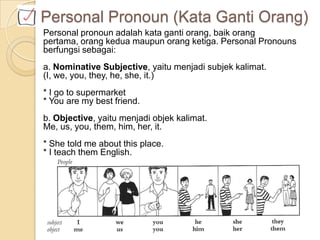
Personal pronoun adalah kata ganti orang, baik orang
pertama, orang kedua maupun orang ketiga. Personal Pronouns
berfungsi sebagai:
a. Nominative Subjective, yaitu menjadi subjek kalimat.
(I, we, you, they, he, she, it.)
* I go to supermarket
* You are my best friend.
b. Objective, yaitu menjadi objek kalimat.
Me, us, you, them, him, her, it.
* She told me about this place.
* I teach them English.
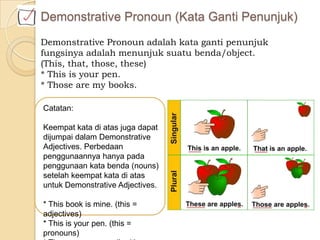
Demonstrative Pronoun adalah kata ganti penunjuk
fungsinya adalah menunjuk suatu benda/object.
(This, that, those, these)
* This is your pen.
* Those are my books.
Demonstrative Pronoun (Kata Ganti Penunjuk)
Catatan:
Keempat kata di atas juga dapat
dijumpai dalam Demonstrative
Adjectives. Perbedaan
penggunaannya hanya pada
penggunaan kata benda (nouns)
setelah keempat kata di atas
untuk Demonstrative Adjectives.
* This book is mine. (this =
adjectives)
* This is your pen. (this =
pronouns)
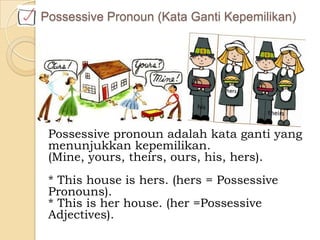
Possessive pronoun adalah kata ganti yang
menunjukkan kepemilikan.
(Mine, yours, theirs, ours, his, hers).
* This house is hers. (hers = Possessive
Pronouns).
* This is her house. (her =Possessive
Adjectives).
Possessive Pronoun (Kata Ganti Kepemilikan)
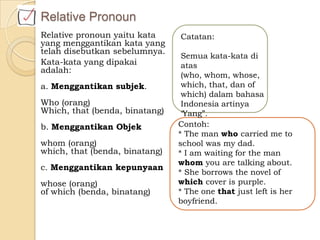
Relative pronoun yaitu kata
yang menggantikan kata yang
telah disebutkan sebelumnya.
Kata-kata yang dipakai
adalah:
a. Menggantikan subjek.
Who (orang)
Which, that (benda, binatang)
b. Menggantikan Objek
whom (orang)
which, that (benda, binatang)
c. Menggantikan kepunyaan
whose (orang)
of which (benda, binatang)
Relative Pronoun
Catatan:
Semua kata-kata di
atas
(who, whom, whose,
which, that, dan of
which) dalam bahasa
Indonesia artinya
‘Yang”.
Contoh:
* The man who carried me to
school was my dad.
* I am waiting for the man
whom you are talking about.
* She borrows the novel of
which cover is purple.
* The one that just left is her
boyfriend.
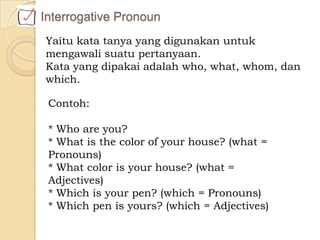
Yaitu kata tanya yang digunakan untuk
mengawali suatu pertanyaan.
Kata yang dipakai adalah who, what, whom, dan
which.
Interrogative Pronoun
Contoh:
* Who are you?
* What is the color of your house? (what =
Pronouns)
* What color is your house? (what =
Adjectives)
* Which is your pen? (which = Pronouns)
* Which pen is yours? (which = Adjectives)
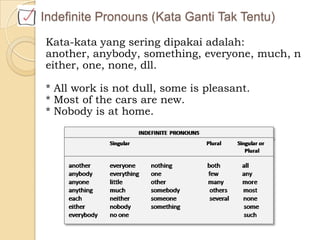
Kata-kata yang sering dipakai adalah:
another, anybody, something, everyone, much, n
either, one, none, dll.
* All work is not dull, some is pleasant.
* Most of the cars are new.
* Nobody is at home.
Indefinite Pronouns (Kata Ganti Tak Tentu)
Reflexive Pronouns (Kata Ganti Pantulan)
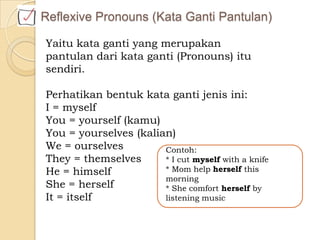
Yaitu kata ganti yang merupakan
pantulan dari kata ganti (Pronouns) itu
sendiri.
Perhatikan bentuk kata ganti jenis ini:
I = myself
You = yourself (kamu)
You = yourselves (kalian)
We = ourselves
They = themselves
He = himself
She = herself
It = itself
Contoh:
* I cut myself with a knife
* Mom help herself this
morning
* She comfort herself by
listening music
Intensive Pronouns
Yaitu kata ganti yang juga merupakan pantulan
dari kata ganti itu sendiri. Namun, letaknya
sesudah nouns/pronouns itu sendiri. Kata ganti
jenis ini berfungsi untuk lebih menekankan /
menegaskan maksud pembicaraan.
Contoh:
* Henry himself who told me
so. (Henry sendirilah yang
mengatakan begitu kepadaku)
* Mary herself repaired the
computer. (Mary sendirilah –
bukan orang lain – yang
memperbaiki computer itu)
* Jack himself gave me the
book.
Catatan:
Berhati-hatilah dengan penggunaan
kata gantu jenis ini. Perhatikan 3 contoh
kalimat di bawah ini dan perhatikan
perbedaannya.
* Alex does the test himself. (= Alex
mengerjakan test itu sendiri – tanpa
bantuan orang lain)
* Ted himself does the test. (=Ted
sendirilah – bukan orang lain – yang
mengerjakan test itu)
* Bob does the test by himself. (= Bob
mengerjakan test itu sendirian – tidak
ada orang lain bersama dia)
Reciprocal Pronouns
Yaitu kata ganti yang menyatakan hubungan
timbal balik antara 2 atau lebih.
Frase yang digunakan adalah:
* Each other = satu sama lain (2
orang)
* One another = satu sama lain (
lebih dari 2 orang)
Contoh:
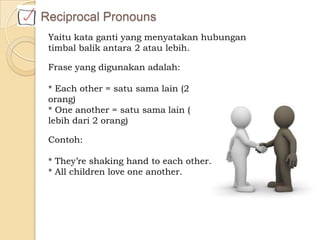
* They’re shaking hand to each other.
* All children love one another.
English Café
@balienglishcafe
englishcafe.co.id
English Café – Kursus Bahasa Inggris di Bali
(0361) 8889 123
Jl. Gunung Soputan I, No. 16A. Denpasar - Bali
LEARNING ENGLISH IS EASY & FUN
JUST ENJOY LEARNING,
YOU’LL GET ADDICTED TO ENGLISH !
For further information, please contact :

Belajar Pronoun Dengan Mudah

  • 2.
    Personal Pronoun (KataGanti Orang) Personal pronoun adalah kata ganti orang, baik orang pertama, orang kedua maupun orang ketiga. Personal Pronouns berfungsi sebagai: a. Nominative Subjective, yaitu menjadi subjek kalimat. (I, we, you, they, he, she, it.) * I go to supermarket * You are my best friend. b. Objective, yaitu menjadi objek kalimat. Me, us, you, them, him, her, it. * She told me about this place. * I teach them English.
  • 3.
    Demonstrative Pronoun adalahkata ganti penunjuk fungsinya adalah menunjuk suatu benda/object. (This, that, those, these) * This is your pen. * Those are my books. Demonstrative Pronoun (Kata Ganti Penunjuk) Catatan: Keempat kata di atas juga dapat dijumpai dalam Demonstrative Adjectives. Perbedaan penggunaannya hanya pada penggunaan kata benda (nouns) setelah keempat kata di atas untuk Demonstrative Adjectives. * This book is mine. (this = adjectives) * This is your pen. (this = pronouns)
  • 4.
    Possessive pronoun adalahkata ganti yang menunjukkan kepemilikan. (Mine, yours, theirs, ours, his, hers). * This house is hers. (hers = Possessive Pronouns). * This is her house. (her =Possessive Adjectives). Possessive Pronoun (Kata Ganti Kepemilikan)
  • 5.
    Relative pronoun yaitukata yang menggantikan kata yang telah disebutkan sebelumnya. Kata-kata yang dipakai adalah: a. Menggantikan subjek. Who (orang) Which, that (benda, binatang) b. Menggantikan Objek whom (orang) which, that (benda, binatang) c. Menggantikan kepunyaan whose (orang) of which (benda, binatang) Relative Pronoun Catatan: Semua kata-kata di atas (who, whom, whose, which, that, dan of which) dalam bahasa Indonesia artinya ‘Yang”. Contoh: * The man who carried me to school was my dad. * I am waiting for the man whom you are talking about. * She borrows the novel of which cover is purple. * The one that just left is her boyfriend.
  • 6.
    Yaitu kata tanyayang digunakan untuk mengawali suatu pertanyaan. Kata yang dipakai adalah who, what, whom, dan which. Interrogative Pronoun Contoh: * Who are you? * What is the color of your house? (what = Pronouns) * What color is your house? (what = Adjectives) * Which is your pen? (which = Pronouns) * Which pen is yours? (which = Adjectives)
  • 7.
    Kata-kata yang seringdipakai adalah: another, anybody, something, everyone, much, n either, one, none, dll. * All work is not dull, some is pleasant. * Most of the cars are new. * Nobody is at home. Indefinite Pronouns (Kata Ganti Tak Tentu)
  • 8.
    Reflexive Pronouns (KataGanti Pantulan) Yaitu kata ganti yang merupakan pantulan dari kata ganti (Pronouns) itu sendiri. Perhatikan bentuk kata ganti jenis ini: I = myself You = yourself (kamu) You = yourselves (kalian) We = ourselves They = themselves He = himself She = herself It = itself Contoh: * I cut myself with a knife * Mom help herself this morning * She comfort herself by listening music
  • 9.
    Intensive Pronouns Yaitu kataganti yang juga merupakan pantulan dari kata ganti itu sendiri. Namun, letaknya sesudah nouns/pronouns itu sendiri. Kata ganti jenis ini berfungsi untuk lebih menekankan / menegaskan maksud pembicaraan. Contoh: * Henry himself who told me so. (Henry sendirilah yang mengatakan begitu kepadaku) * Mary herself repaired the computer. (Mary sendirilah – bukan orang lain – yang memperbaiki computer itu) * Jack himself gave me the book. Catatan: Berhati-hatilah dengan penggunaan kata gantu jenis ini. Perhatikan 3 contoh kalimat di bawah ini dan perhatikan perbedaannya. * Alex does the test himself. (= Alex mengerjakan test itu sendiri – tanpa bantuan orang lain) * Ted himself does the test. (=Ted sendirilah – bukan orang lain – yang mengerjakan test itu) * Bob does the test by himself. (= Bob mengerjakan test itu sendirian – tidak ada orang lain bersama dia)
  • 10.
    Reciprocal Pronouns Yaitu kataganti yang menyatakan hubungan timbal balik antara 2 atau lebih. Frase yang digunakan adalah: * Each other = satu sama lain (2 orang) * One another = satu sama lain ( lebih dari 2 orang) Contoh: * They’re shaking hand to each other. * All children love one another.
  • 11.
    English Café @balienglishcafe englishcafe.co.id English Café– Kursus Bahasa Inggris di Bali (0361) 8889 123 Jl. Gunung Soputan I, No. 16A. Denpasar - Bali LEARNING ENGLISH IS EASY & FUN JUST ENJOY LEARNING, YOU’LL GET ADDICTED TO ENGLISH ! For further information, please contact :