Modals and
Auxiliary Verbs
Welcome to the world of modals and auxiliary verbs. In this presentation,
we'll explore these essential grammatical tools that enhance sentence
meaning and add nuance to your writing and speaking.
by Lungguh Halira
Definition and Purpose of
Modals
Modals are auxiliary verbs that combine with main verbs to express different
meanings like possibility, necessity, permission, or obligation. These verbs add
extra layers of meaning to sentences, conveying subtle nuances.
Expressing Ability
Can, could, and be able to indicate
capacity or skill.
Expressing Permission
May, might, and can denote
authorization or allowance.
Expressing Obligation
Must, have to, should, and ought
to express a sense of duty or
requirement.
Expressing Possibility
May, might, could, and can
indicate a chance or likelihood.
Types of Modals
Modals are categorized based on the specific meaning they convey. Each
type provides a distinct shade of meaning to your sentence, enriching
communication.
1 Ability
Can, could, be able to
2 Possibility
May, might, could
3 Necessity
Must, have to, should, ought
to
4 Permission
May, can, might
Expressing Probability and
Certainty
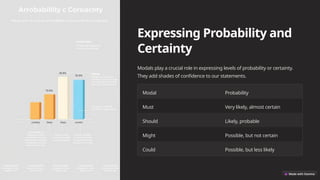
Modals play a crucial role in expressing levels of probability or certainty.
They add shades of confidence to our statements.
Modal Probability
Must Very likely, almost certain
Should Likely, probable
Might Possible, but not certain
Could Possible, but less likely
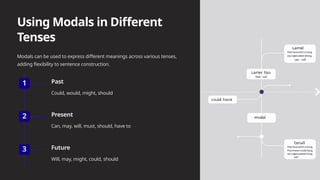
Using Modals in Different
Tenses
Modals can be used to express different meanings across various tenses,
adding flexibility to sentence construction.
1 Past
Could, would, might, should
2 Present
Can, may, will, must, should, have to
3 Future
Will, may, might, could, should
Negation and Questions with Modals
Forming questions and negative sentences with modals follows specific patterns, adding an extra layer of complexity to the usage
of these essential verbs.
Negation
To form the negative, add "not" after the modal. For example:
"I can't go" or "You shouldn't eat that."
Questions
To form questions, simply move the modal to the beginning of
the sentence. For example: "Can you help me?" or "Should we
go?"
Common Modal Expressions
Beyond the basic forms, several common modal expressions add specific meanings
and nuances to your language. These expressions add a touch of formality or
casualness to your writing and speech.
Have to
Expresses a strong obligation or
necessity. Example: "I have to finish this
project by tomorrow."
Should
Indicates a recommendation or
suggestion. Example: "You should visit
the museum, it's fantastic."
Might
Expresses a possibility or uncertainty.
Example: "We might go to the beach, it
depends on the weather."
Could
Implies a potential or ability. Example: "I
could help you with that if you need it."
Practice Exercises and Application
To master your knowledge of modals and related expressions, practice with various
exercises and apply them in real-world scenarios. Engage with diverse examples to solidify
your understanding.
Exercise 1
Complete the sentences using the correct modal verb.
Exercise 2
Write a paragraph about a day in your life using as many modals as
possible.
Exercise 3
Analyze a piece of literature and identify different types of modal verbs
used.

Modals-and-Auxiliary-Verbs for students.pptx

  • 1.
    Modals and Auxiliary Verbs Welcometo the world of modals and auxiliary verbs. In this presentation, we'll explore these essential grammatical tools that enhance sentence meaning and add nuance to your writing and speaking. by Lungguh Halira
  • 2.
    Definition and Purposeof Modals Modals are auxiliary verbs that combine with main verbs to express different meanings like possibility, necessity, permission, or obligation. These verbs add extra layers of meaning to sentences, conveying subtle nuances. Expressing Ability Can, could, and be able to indicate capacity or skill. Expressing Permission May, might, and can denote authorization or allowance. Expressing Obligation Must, have to, should, and ought to express a sense of duty or requirement. Expressing Possibility May, might, could, and can indicate a chance or likelihood.
  • 3.
    Types of Modals Modalsare categorized based on the specific meaning they convey. Each type provides a distinct shade of meaning to your sentence, enriching communication. 1 Ability Can, could, be able to 2 Possibility May, might, could 3 Necessity Must, have to, should, ought to 4 Permission May, can, might
  • 4.
    Expressing Probability and Certainty Modalsplay a crucial role in expressing levels of probability or certainty. They add shades of confidence to our statements. Modal Probability Must Very likely, almost certain Should Likely, probable Might Possible, but not certain Could Possible, but less likely
  • 5.
    Using Modals inDifferent Tenses Modals can be used to express different meanings across various tenses, adding flexibility to sentence construction. 1 Past Could, would, might, should 2 Present Can, may, will, must, should, have to 3 Future Will, may, might, could, should
  • 6.
    Negation and Questionswith Modals Forming questions and negative sentences with modals follows specific patterns, adding an extra layer of complexity to the usage of these essential verbs. Negation To form the negative, add "not" after the modal. For example: "I can't go" or "You shouldn't eat that." Questions To form questions, simply move the modal to the beginning of the sentence. For example: "Can you help me?" or "Should we go?"
  • 7.
    Common Modal Expressions Beyondthe basic forms, several common modal expressions add specific meanings and nuances to your language. These expressions add a touch of formality or casualness to your writing and speech. Have to Expresses a strong obligation or necessity. Example: "I have to finish this project by tomorrow." Should Indicates a recommendation or suggestion. Example: "You should visit the museum, it's fantastic." Might Expresses a possibility or uncertainty. Example: "We might go to the beach, it depends on the weather." Could Implies a potential or ability. Example: "I could help you with that if you need it."
  • 8.
    Practice Exercises andApplication To master your knowledge of modals and related expressions, practice with various exercises and apply them in real-world scenarios. Engage with diverse examples to solidify your understanding. Exercise 1 Complete the sentences using the correct modal verb. Exercise 2 Write a paragraph about a day in your life using as many modals as possible. Exercise 3 Analyze a piece of literature and identify different types of modal verbs used.