Case Study by William Jones
 First Published in February 1983
 Was originally intended for disco and

dance music only but branched out into
clubbing when that came more into
fashion.
 The magazine still stays true though and
has not changed genre at all in its 30
year lifespan.
 Mixmag launched the first legal DJ mix

tapes, originally called the ‘MixMag Live
Series.’
 It sells at £4.20 each issue.
 It’s the worlds best selling music
magazine of that genre.
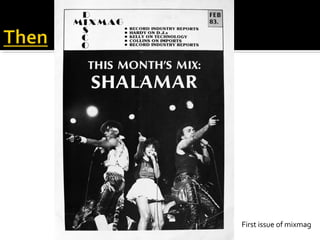
First issue of mixmag
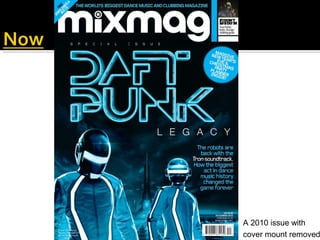
A 2010 issue with
cover mount removed
 Mainly 16-30 year olds.
 Approximately 72% are male and 28% are

female.
 They are likely still in full time education or
starting their first few jobs.
 They would likely fall into the classes of C1,
C2 and D.
 Even though they are not making much

money themselves, they have been known to
be people who will always have the latest
Smartphone or like going out with friends.
 They have also been known to be very loyal
fans as approx. 80% of they do not read
another music magazine.
 MixMag is distributed by Development

Hell.
 They distribute the Magazine, along
with the MixMag app, mixmag.net,
MixMag TV, MixMag Events and a social
network for the clubbing,
dontstayin.com
 To preserve brand identity each issue

will use some constantly reoccurring
features:
 Same Skyline.
 Cover mount.
 Small FAP in top corner.
 Loud colour schemes.
 MixMag covers have a skyline in the

same place, size and font each issue.
 It reads ‘The world’s biggest dance
music and clubbing magazine.’
 This is to attract a wider audience as it
shows they are a quality product.
 Staying with tradition, each issue of mixmag

has a cover mount dominating the front
cover.
 This is to appeal to a wider audience on the
thought they’re getting something for free.
 They can be of up-and-coming artists of
already famous musicians.
 The cover picture is altered to allow for the
large cover mount
 Ever since the magazine started to be

produced in colour, MixMag stayed with
a very bright and bold colour scheme.
 This has become part of their brand
identity.
 It is to reflect the upbeat style of the
tracks, the happy vibe of club culture
and the youth of the dance audience.

MixMag Case Study

  • 1.
    Case Study byWilliam Jones
  • 2.
     First Publishedin February 1983  Was originally intended for disco and dance music only but branched out into clubbing when that came more into fashion.  The magazine still stays true though and has not changed genre at all in its 30 year lifespan.
  • 3.
     Mixmag launchedthe first legal DJ mix tapes, originally called the ‘MixMag Live Series.’  It sells at £4.20 each issue.  It’s the worlds best selling music magazine of that genre.
  • 4.
  • 5.
    A 2010 issuewith cover mount removed
  • 6.
     Mainly 16-30year olds.  Approximately 72% are male and 28% are female.  They are likely still in full time education or starting their first few jobs.  They would likely fall into the classes of C1, C2 and D.
  • 7.
     Even thoughthey are not making much money themselves, they have been known to be people who will always have the latest Smartphone or like going out with friends.  They have also been known to be very loyal fans as approx. 80% of they do not read another music magazine.
  • 8.
     MixMag isdistributed by Development Hell.  They distribute the Magazine, along with the MixMag app, mixmag.net, MixMag TV, MixMag Events and a social network for the clubbing, dontstayin.com
  • 9.
     To preservebrand identity each issue will use some constantly reoccurring features:  Same Skyline.  Cover mount.  Small FAP in top corner.  Loud colour schemes.
  • 10.
     MixMag covershave a skyline in the same place, size and font each issue.  It reads ‘The world’s biggest dance music and clubbing magazine.’  This is to attract a wider audience as it shows they are a quality product.
  • 11.
     Staying withtradition, each issue of mixmag has a cover mount dominating the front cover.  This is to appeal to a wider audience on the thought they’re getting something for free.  They can be of up-and-coming artists of already famous musicians.  The cover picture is altered to allow for the large cover mount
  • 12.
     Ever sincethe magazine started to be produced in colour, MixMag stayed with a very bright and bold colour scheme.  This has become part of their brand identity.  It is to reflect the upbeat style of the tracks, the happy vibe of club culture and the youth of the dance audience.