

Mitral stenosisMitral stenosis
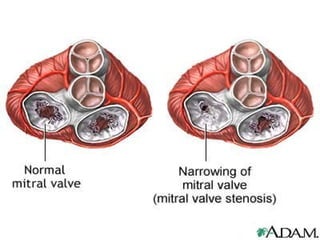
is anatomical defect of mitral valve
in which its cups adhere at their
commissures. Mitral orifice
stenosis low than 4 cm2
.
SponsoredSponsored
Medical Lecture Notes – All Subjects
USMLE Exam (America) – Practice
Etiology:Etiology:
Rheumatic inflammation (fever);
Bacterial (inflectional) endocarditis;
Atherosclerosis in the elderly due to
calcification and fibrosis of the valve,
valve ring and chordae tendineae;
Congenital mitral stenosis.
Pathophysiology:Pathophysiology:
Serious haemodynamic consequences
develops only when the mitral valve orifice is
reduced from its normal size
( approximately 4 cm2
to about 1 cm2
).
In severe mitral stenosis, the orifice is
reduced to less than 1 sm long and 0,5 sm
across.
PATHOPHYSIOLOGYPATHOPHYSIOLOGY
(HEMODYNAMICAL(HEMODYNAMICAL
DESORDERS)DESORDERS) AT THE END OF DIASTOLE,SYSTOLE LEFT
ATRIUM IS BEGINED.BLOOD FLOW IS
INJECTED to LEFT VENTRICULAR FROM
NARROWED(STENOSED) MITRAL ORIFICE
AND FORMED DIASTOLICUS
MURMUR.STENOSIS MITRAL ORIFICE IS
CAUSE OF THE INCREAS PRESSURE IN
LEFT ATRIUM.INCREAS PRESSURE IN LEFT
ATRIUM IS CAUSE OF THE INCREASE
EXERTIONE ON LA ( HIS HYPERTROPHY
,DILATATION) AND Kitaev,s REFLEX.
Pathophysiology(hemodinamicPathophysiology(hemodinamic
desorders)desorders)
Kitaev,s reflex(spasm arterias pulmonary
circulation) is the cause of increase
pressure in pulmonary arteria,increase
exertatione on RV,his hyperthrophy and
dilatation.
DRAW with me please!
Symptoms:Symptoms:
The major symptom of mitral stenosis is
shortness of breath. This occurs at first only
during tough exercise, but as time passes less
and less exertion is required to evoke it.
Eventually, orthopnoea develops and the
patient is liable to attacks of paroxysmal
dyspnoea and acute pulmonary edema.
Haemoptysis occurs in some 10-20% of patients
with mitral stenosis but is seldom severe.
Physical signs:Physical signs:
Mitral face: malar flush
bilateral cyanotic discolouration of
upper cheek due to arteriovenous
anastomoses and vascular stasis.
The arterial pulse is usually
in volume but may be small, and is
often irregular due to atrial
fibrillation.
The apex beat is usually in theThe apex beat is usually in the
normal place. Middiastolic andnormal place. Middiastolic and
presystolic thrills may bepresystolic thrills may be
present at or internal to thepresent at or internal to the
apex beat. The heart bordersapex beat. The heart borders
are deviated to the upper andare deviated to the upper and
to the right.to the right.
auscultatory features of mitralauscultatory features of mitral
stenosis.stenosis.
The first sound isThe first sound is
accentuated and the openingaccentuated and the opening
snap loud when the cusps aresnap loud when the cusps are
mobile.mobile.
The second sound isThe second sound is
often accentuated because ofoften accentuated because of
pulmonary hypertension.pulmonary hypertension.
The presystolic(diastolic)The presystolic(diastolic)
murmur is often and early sign.murmur is often and early sign.
The ECG:The ECG:
If sinus rhythm is present, there is
usually P- mitrale. Atrial fibrillation is
common; other atrial and ventricular
arrhythmias occur occasionally.
Evidence of right ventricular
hypertrophy develops in cases with
severe pulmonary hypertension.
This signs are S1
, R3
.
Radiological appearances:Radiological appearances:
The most characteristic radiological
feature of mitral stenosis is the selective
enlargement of the left atrium and right
ventricle. Pulmonary artery, right
ventricular and, occasionally, right atrial
enlargement may also be present when
there is pulmonary arterial hypertension.
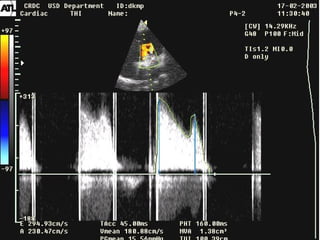
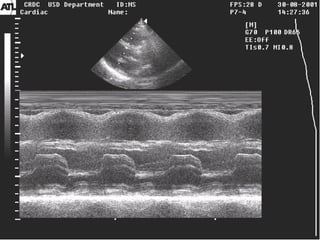
Echocardiography:Echocardiography:
Dilatation LA and RV;
Stenosis of mitral valve orifice
– the rate transmitral
patological flow
Complications:Complications:
 Atrial fibrillation develops sooner or
later in most cases of mitral stenosis;
 Pulmonary embolism and infarctions
frequently occur;
 Systemic embolism is common and often
follows the onset of atrial fibrillation. In
most of cases cerebral embolism
develops. but can involve the mesenteric,
renal or other arteries;
The congested respiratory tract,
develops the attacks of acute
bronchitis and then chronic
bronchitis;
 Infective endocarditis is rare in pure
mitral stenosis but is common as a
complication of mixed mitral
stenosis and regurgitation;
Cardiac asthma;
Pulmonary edema.
Treatment:Treatment:
Diet №10
Regime freedom
Treatment of basis disease
Balloon valvotomy
Surgical treatment – mitral
commissurotomy

Mitral Stenosis

  • 1.
  • 2.
    Mitral stenosisMitral stenosis isanatomical defect of mitral valve in which its cups adhere at their commissures. Mitral orifice stenosis low than 4 cm2 .
  • 5.
    SponsoredSponsored Medical Lecture Notes– All Subjects USMLE Exam (America) – Practice
  • 6.
    Etiology:Etiology: Rheumatic inflammation (fever); Bacterial(inflectional) endocarditis; Atherosclerosis in the elderly due to calcification and fibrosis of the valve, valve ring and chordae tendineae; Congenital mitral stenosis.
  • 7.
    Pathophysiology:Pathophysiology: Serious haemodynamic consequences developsonly when the mitral valve orifice is reduced from its normal size ( approximately 4 cm2 to about 1 cm2 ). In severe mitral stenosis, the orifice is reduced to less than 1 sm long and 0,5 sm across.
  • 8.
    PATHOPHYSIOLOGYPATHOPHYSIOLOGY (HEMODYNAMICAL(HEMODYNAMICAL DESORDERS)DESORDERS) AT THEEND OF DIASTOLE,SYSTOLE LEFT ATRIUM IS BEGINED.BLOOD FLOW IS INJECTED to LEFT VENTRICULAR FROM NARROWED(STENOSED) MITRAL ORIFICE AND FORMED DIASTOLICUS MURMUR.STENOSIS MITRAL ORIFICE IS CAUSE OF THE INCREAS PRESSURE IN LEFT ATRIUM.INCREAS PRESSURE IN LEFT ATRIUM IS CAUSE OF THE INCREASE EXERTIONE ON LA ( HIS HYPERTROPHY ,DILATATION) AND Kitaev,s REFLEX.
  • 9.
    Pathophysiology(hemodinamicPathophysiology(hemodinamic desorders)desorders) Kitaev,s reflex(spasm arteriaspulmonary circulation) is the cause of increase pressure in pulmonary arteria,increase exertatione on RV,his hyperthrophy and dilatation. DRAW with me please!
  • 10.
    Symptoms:Symptoms: The major symptomof mitral stenosis is shortness of breath. This occurs at first only during tough exercise, but as time passes less and less exertion is required to evoke it. Eventually, orthopnoea develops and the patient is liable to attacks of paroxysmal dyspnoea and acute pulmonary edema. Haemoptysis occurs in some 10-20% of patients with mitral stenosis but is seldom severe.
  • 11.
    Physical signs:Physical signs: Mitralface: malar flush bilateral cyanotic discolouration of upper cheek due to arteriovenous anastomoses and vascular stasis. The arterial pulse is usually in volume but may be small, and is often irregular due to atrial fibrillation.
  • 12.
    The apex beatis usually in theThe apex beat is usually in the normal place. Middiastolic andnormal place. Middiastolic and presystolic thrills may bepresystolic thrills may be present at or internal to thepresent at or internal to the apex beat. The heart bordersapex beat. The heart borders are deviated to the upper andare deviated to the upper and to the right.to the right.
  • 13.
    auscultatory features ofmitralauscultatory features of mitral stenosis.stenosis. The first sound isThe first sound is accentuated and the openingaccentuated and the opening snap loud when the cusps aresnap loud when the cusps are mobile.mobile. The second sound isThe second sound is often accentuated because ofoften accentuated because of pulmonary hypertension.pulmonary hypertension. The presystolic(diastolic)The presystolic(diastolic) murmur is often and early sign.murmur is often and early sign.
  • 14.
    The ECG:The ECG: Ifsinus rhythm is present, there is usually P- mitrale. Atrial fibrillation is common; other atrial and ventricular arrhythmias occur occasionally. Evidence of right ventricular hypertrophy develops in cases with severe pulmonary hypertension. This signs are S1 , R3 .
  • 15.
    Radiological appearances:Radiological appearances: Themost characteristic radiological feature of mitral stenosis is the selective enlargement of the left atrium and right ventricle. Pulmonary artery, right ventricular and, occasionally, right atrial enlargement may also be present when there is pulmonary arterial hypertension.
  • 16.
    Echocardiography:Echocardiography: Dilatation LA andRV; Stenosis of mitral valve orifice – the rate transmitral patological flow
  • 19.
    Complications:Complications:  Atrial fibrillationdevelops sooner or later in most cases of mitral stenosis;  Pulmonary embolism and infarctions frequently occur;  Systemic embolism is common and often follows the onset of atrial fibrillation. In most of cases cerebral embolism develops. but can involve the mesenteric, renal or other arteries;
  • 20.
    The congested respiratorytract, develops the attacks of acute bronchitis and then chronic bronchitis;  Infective endocarditis is rare in pure mitral stenosis but is common as a complication of mixed mitral stenosis and regurgitation; Cardiac asthma; Pulmonary edema.
  • 21.
    Treatment:Treatment: Diet №10 Regime freedom Treatmentof basis disease Balloon valvotomy Surgical treatment – mitral commissurotomy