MITIGATION MEASURES
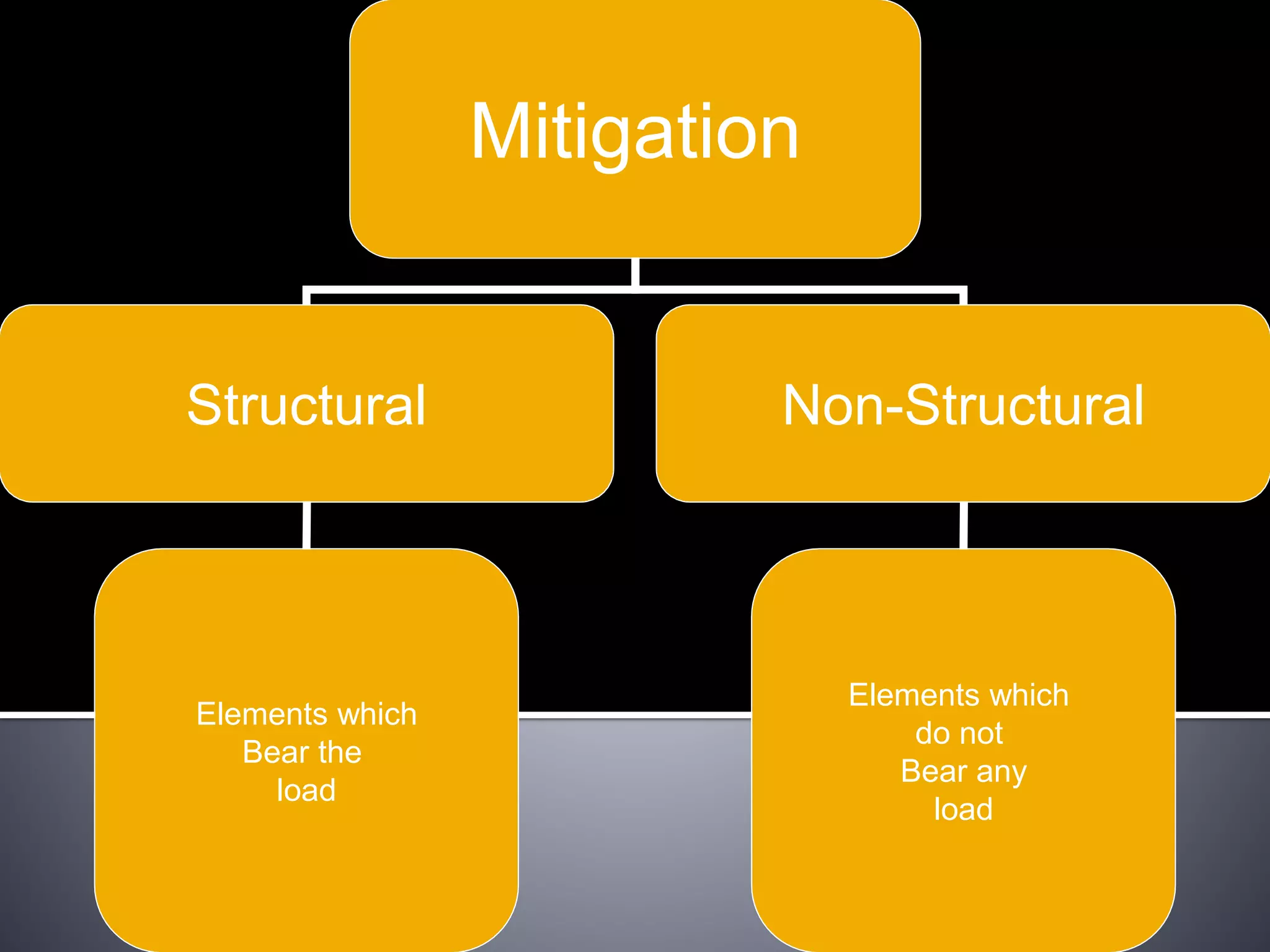
Mitigation
Structural Non-Structural
Elements which
Bear the
load
Elements which
do not
Bear any
load
 Buildings – Strengthening structural
members or Retrofitting entire structure
 Providing Flood Embankments
 Providing RetainingWalls to prevent
landslides
 Securing Roof Structure to the Posts to
prevent being blown away
 Acts, Rules & Regulations
 Disaster Management Plan
 Capacity Building
 Insurance
 Policy of Integrating Development Plan with
Disaster Management Plan
 Consult an engineer for your home inspection
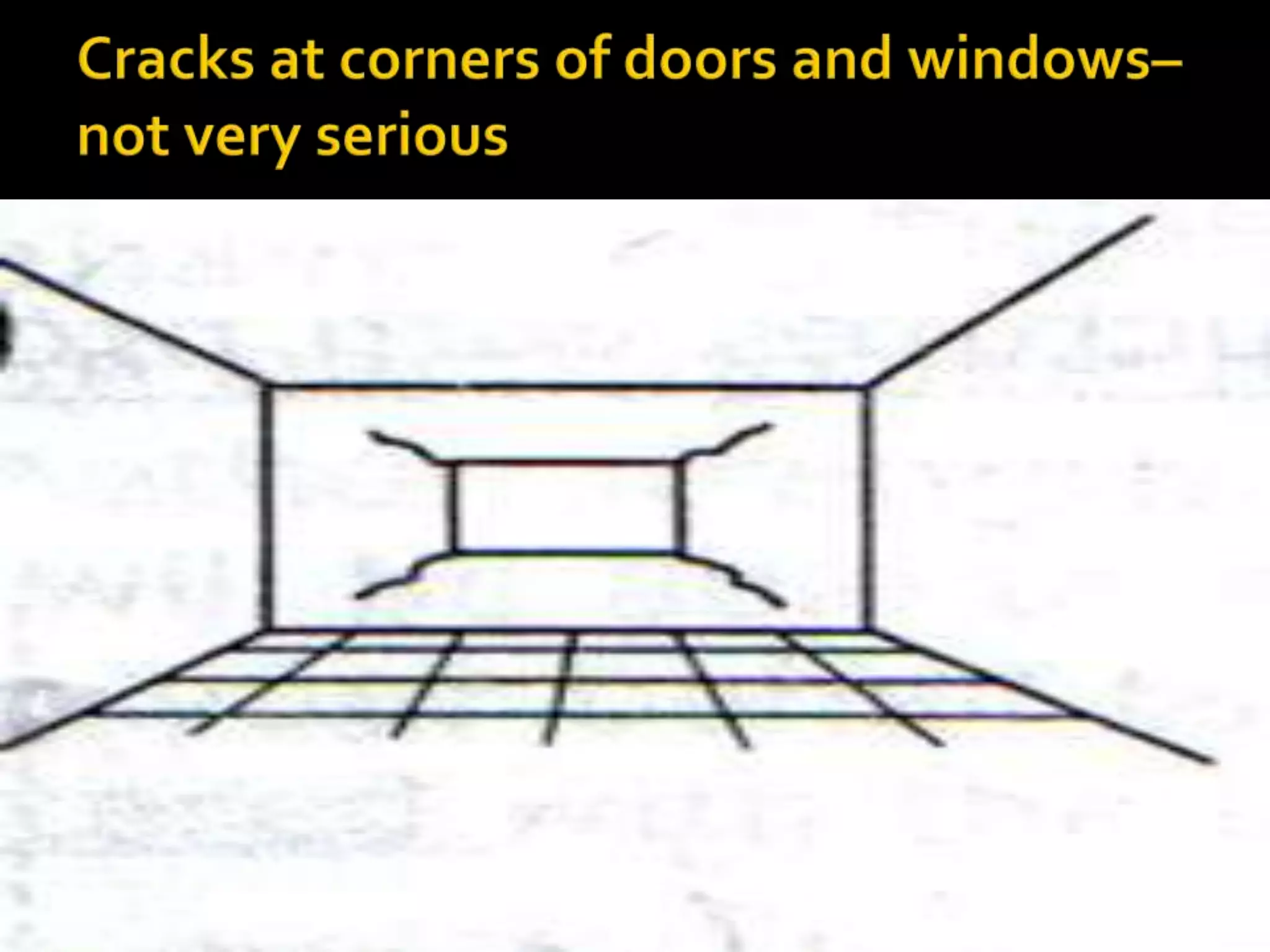
 Check for weak walls, foundations, windows.
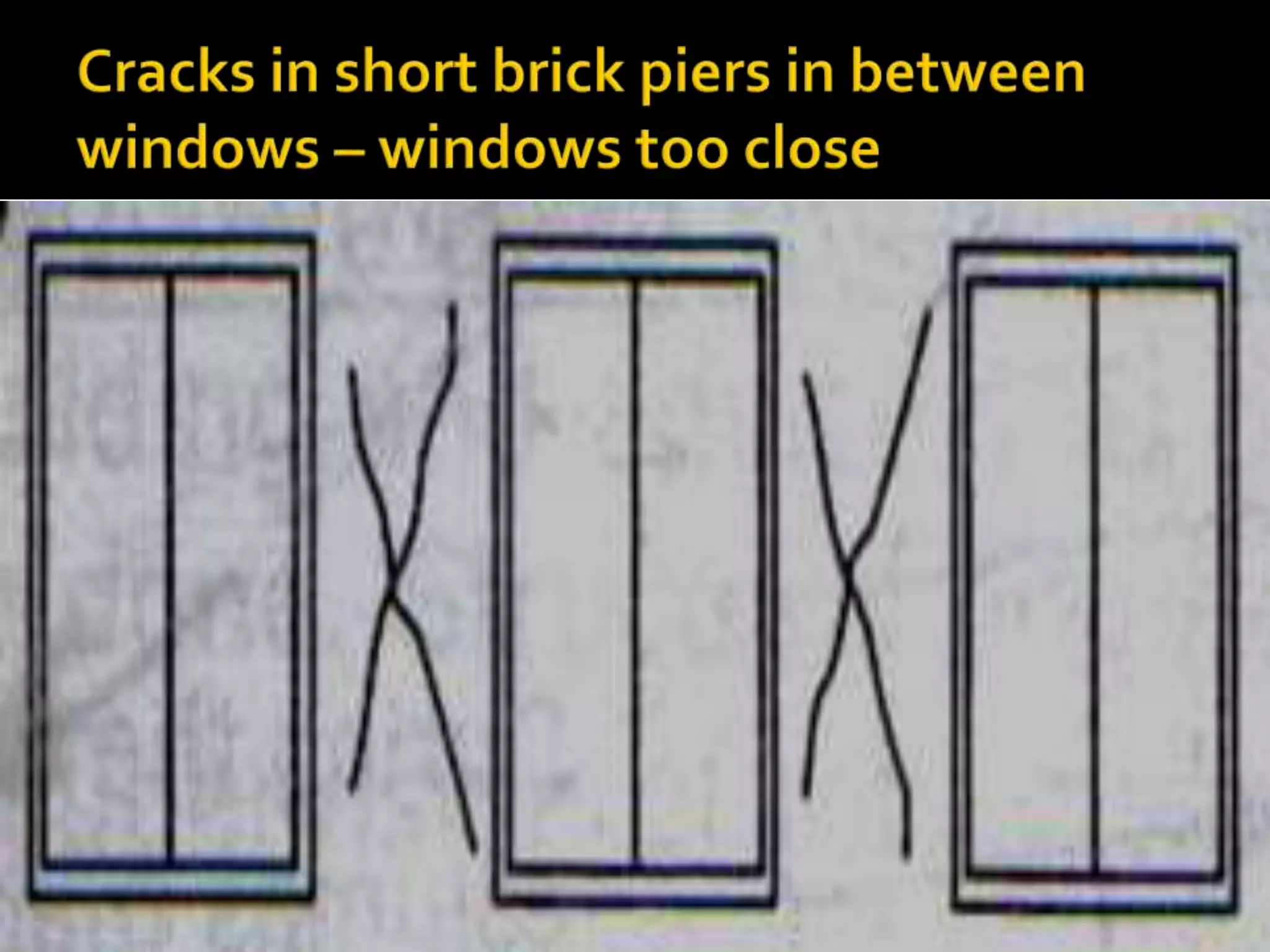
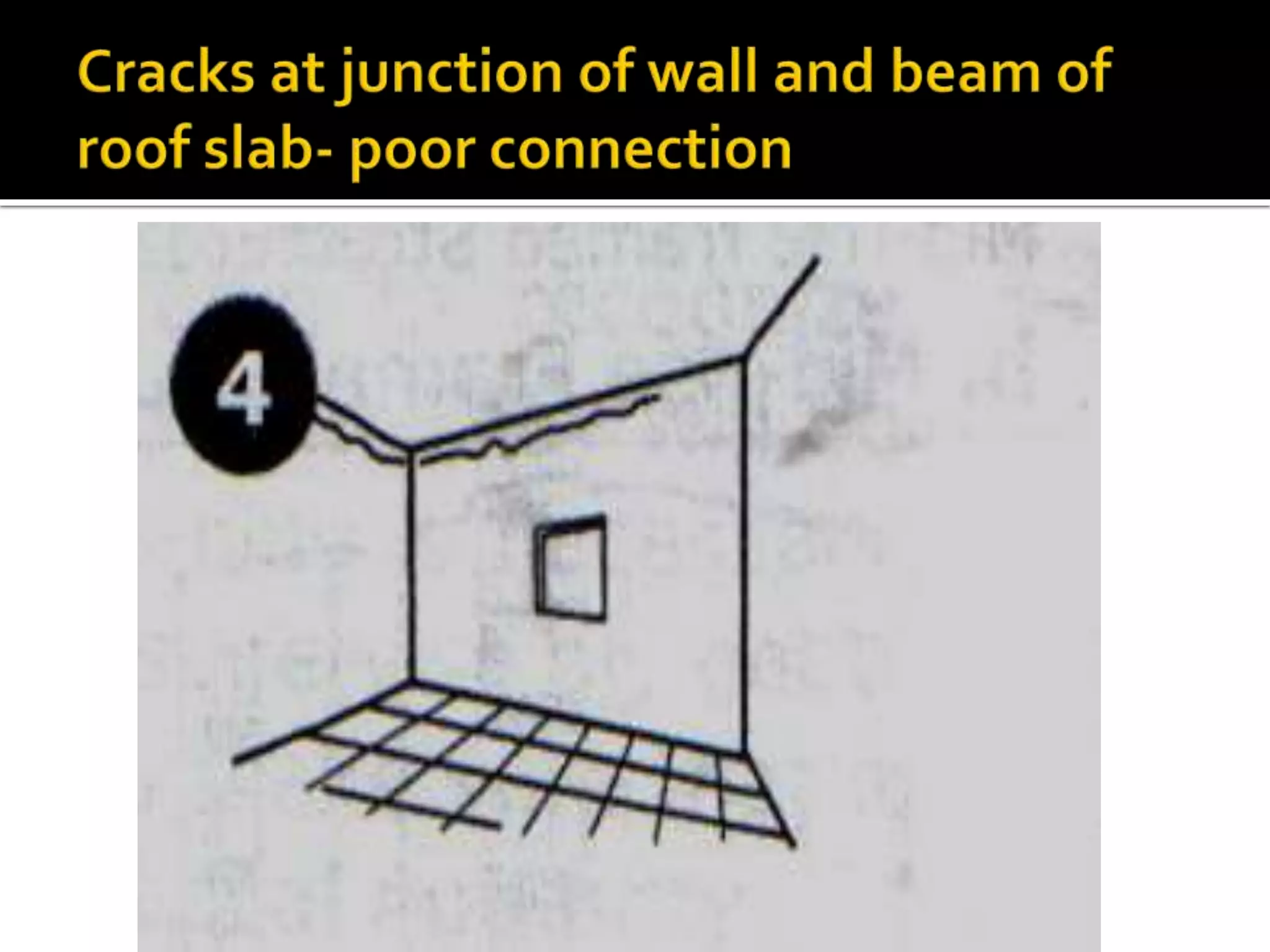
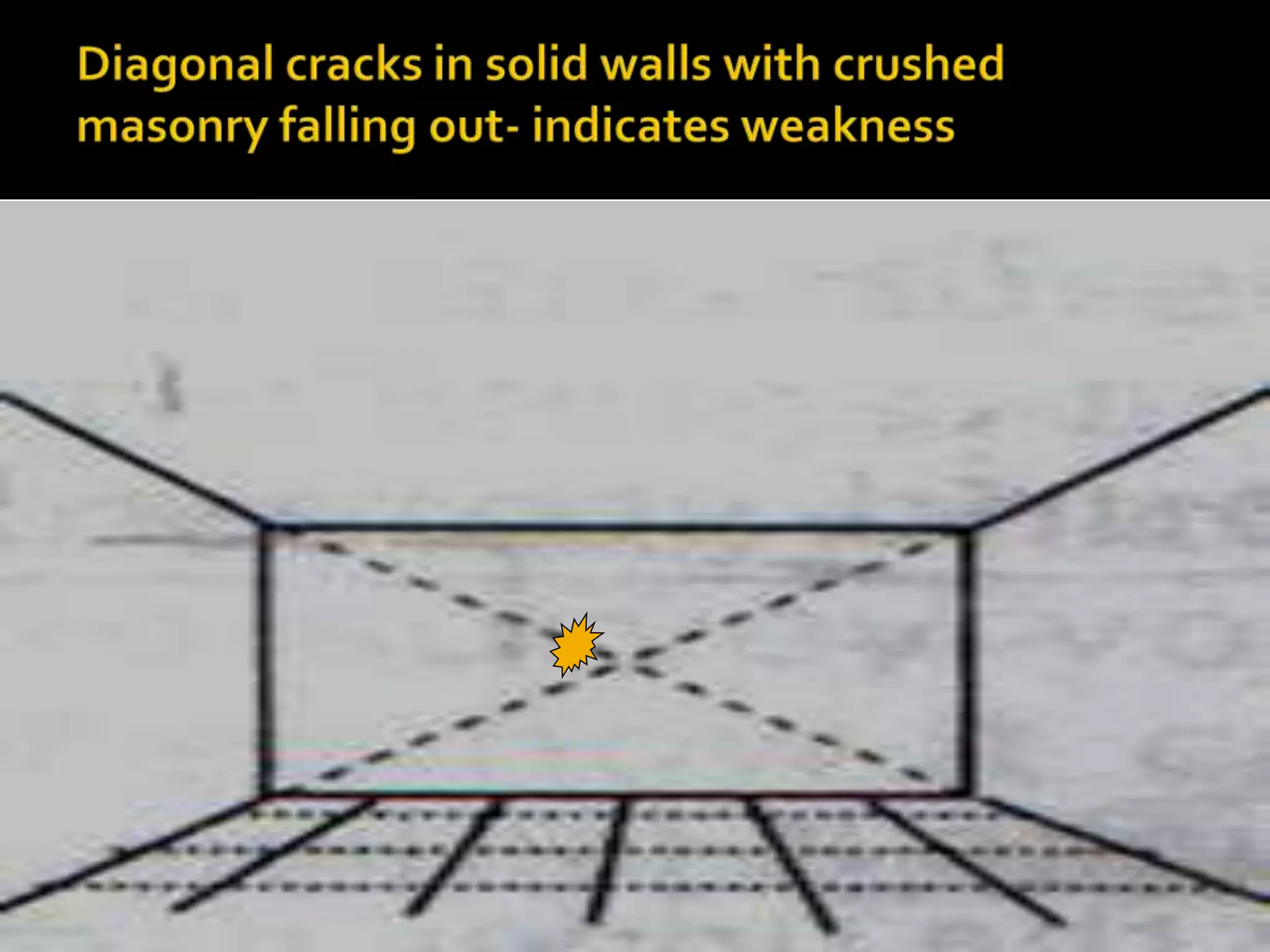
 Do not ignore cracks in your homes
 Take insurance
 Behave well during earthquakes
 Damage may occur due to deterioration of
structural members of the building with
passage of time
 Mitigation measure- replace the rotten
members of the structure
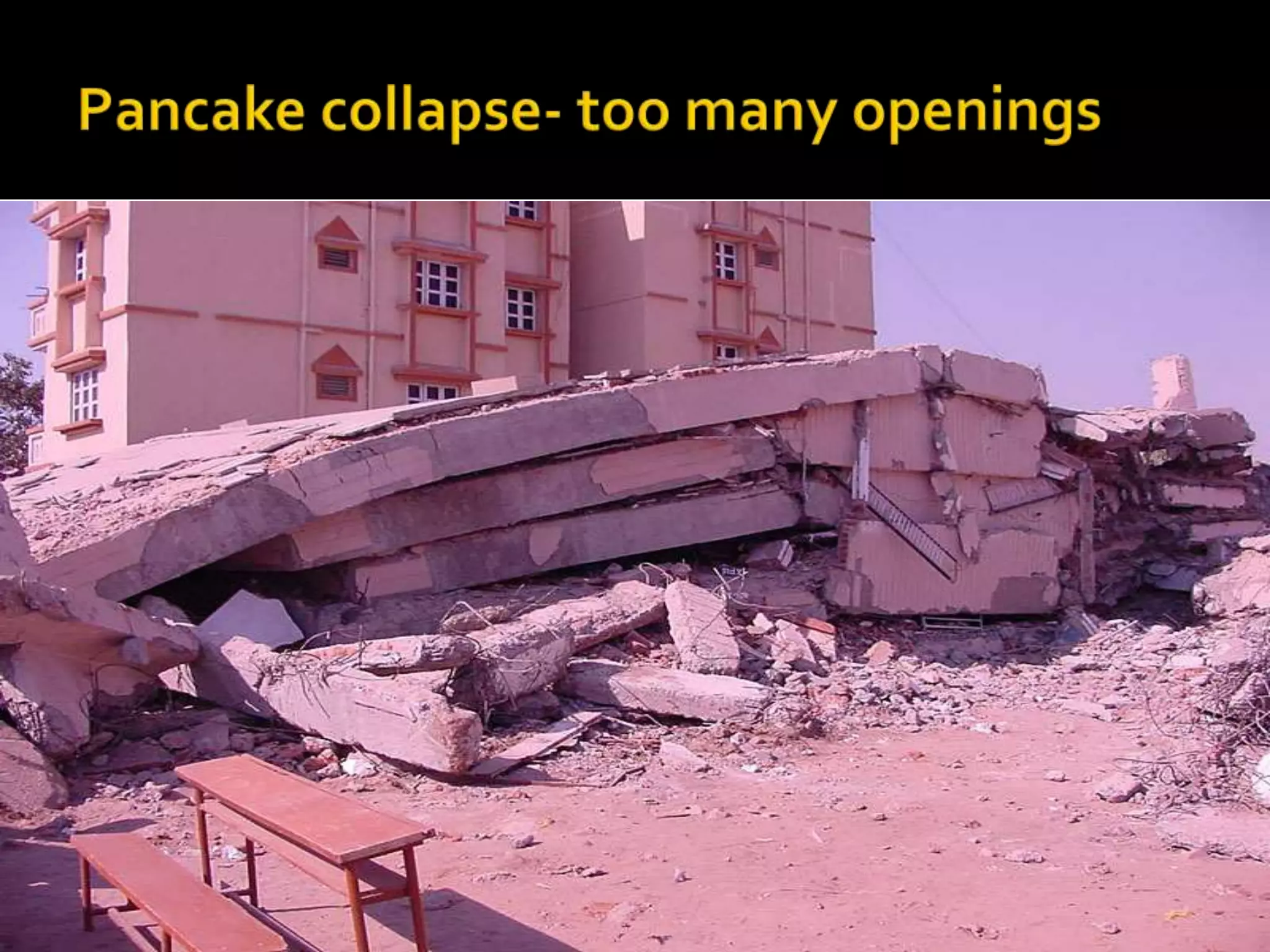
 Do not change the nature of occupation of the
building from what it was originally designed for
 Do not enclose the balcony or open verandah with
brick walls
 Do not increase number of storeys without proper
investigation and design
WHAT CANYOU DOTO
PROTECTYOURSELF AND
THOSE AROUNDYOU
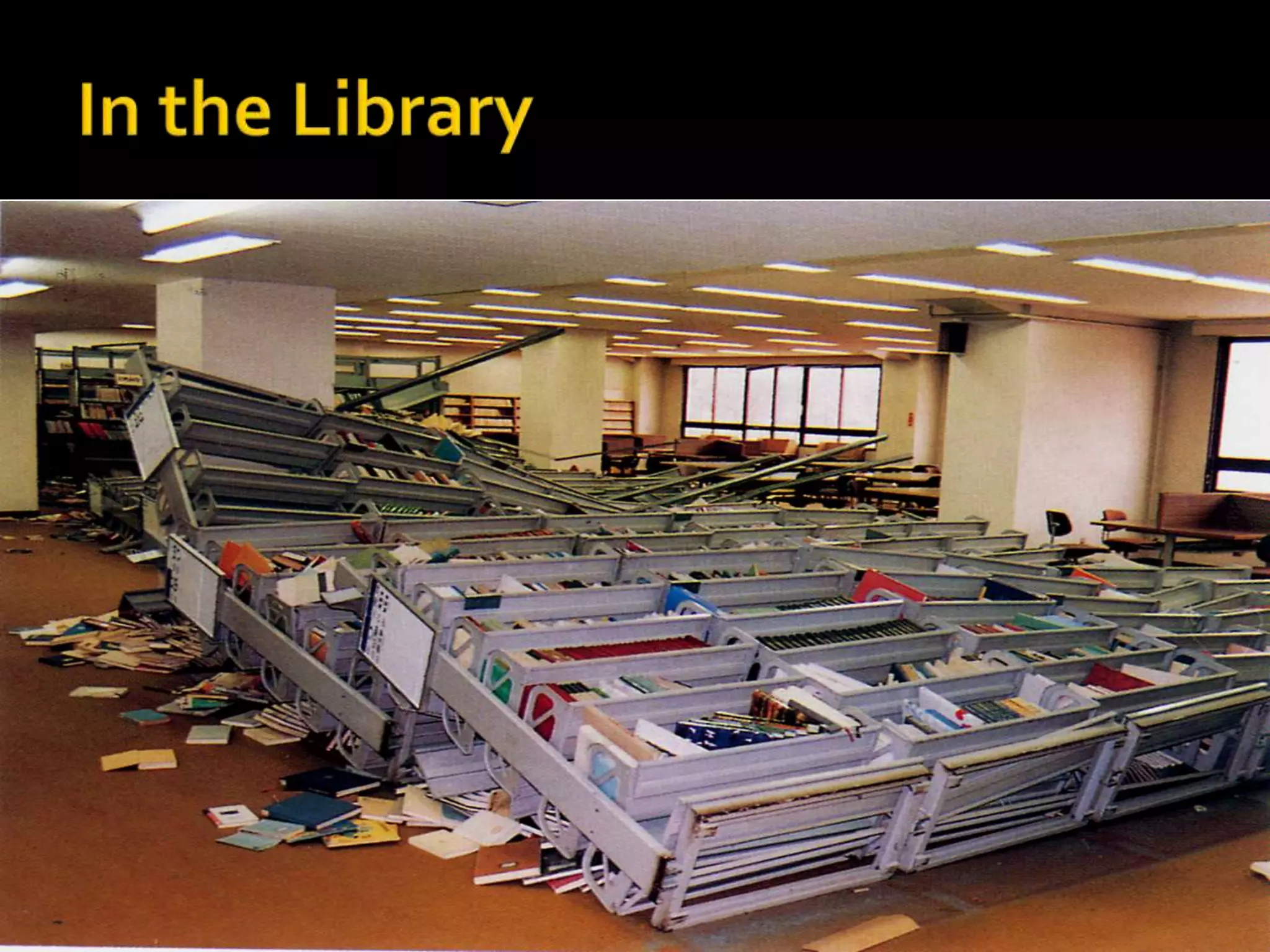
 Bookcases or other items can tip causing
their contents, and sometimes the shelves
themselves, to fall to the floor.Tipping can
occur in an earthquake or other event that
causes homes and buildings to vibrate or
move. In addition, children or pets climbing
on bookcases or other furniture can cause
them to tip.
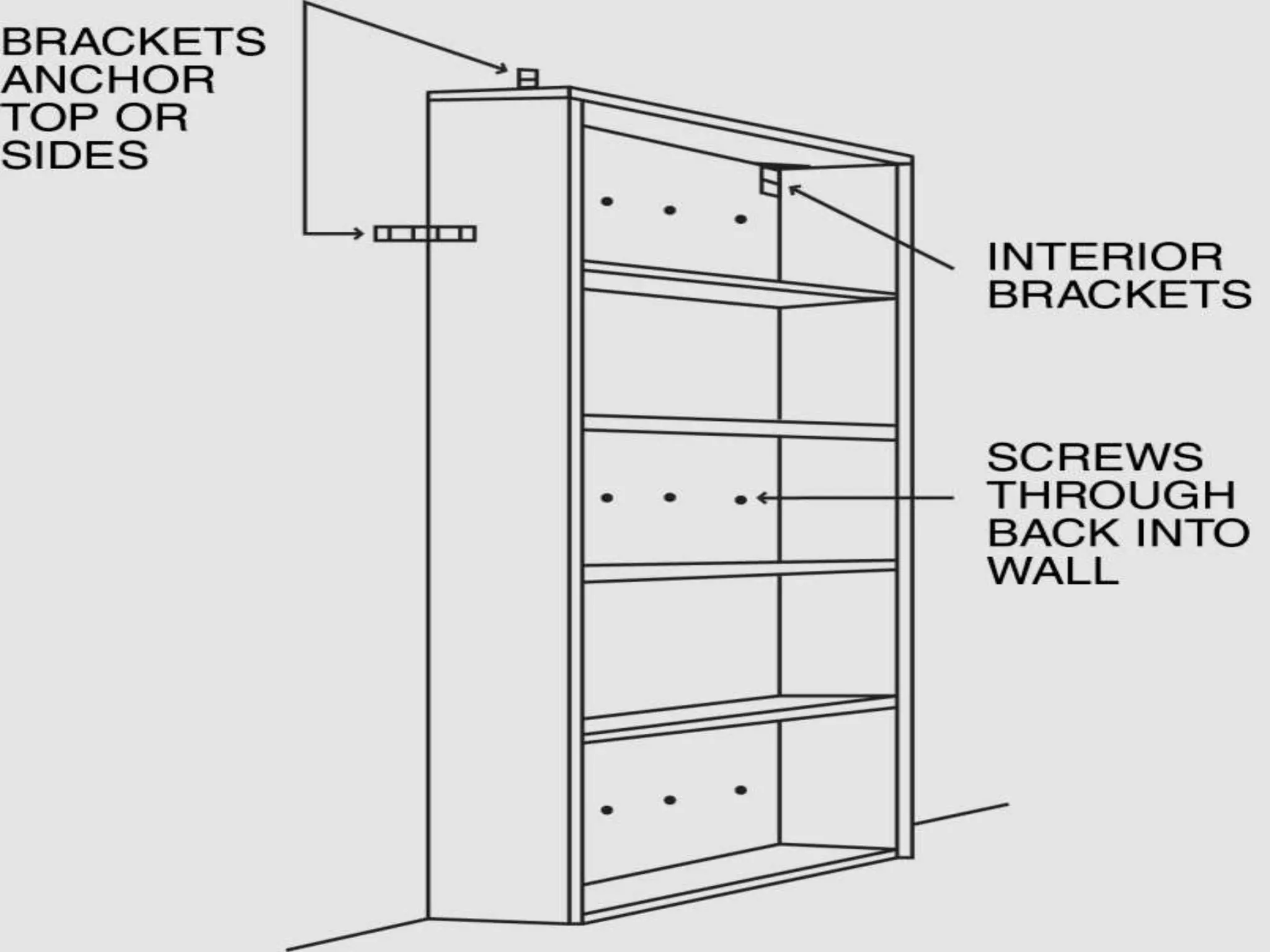
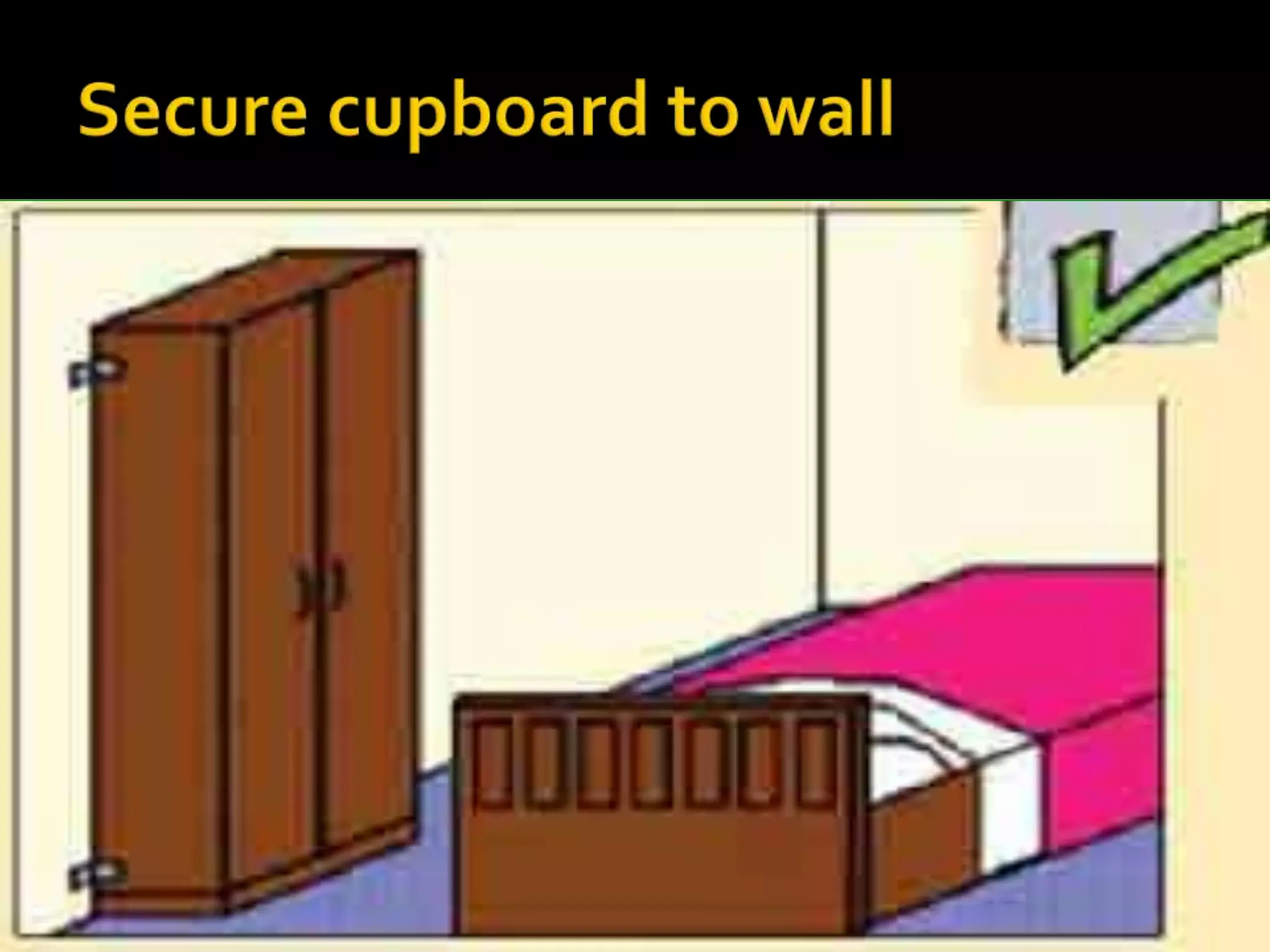
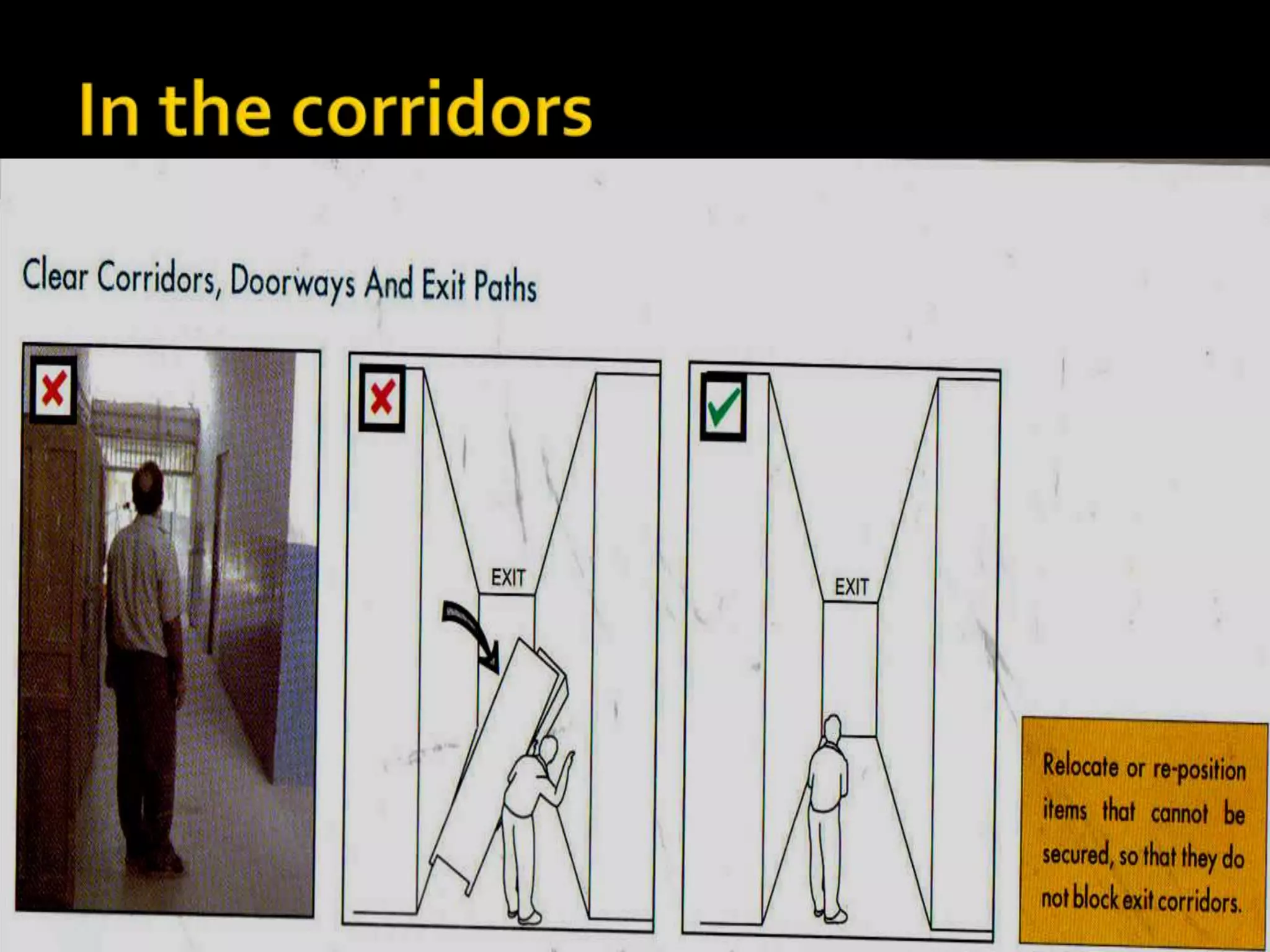
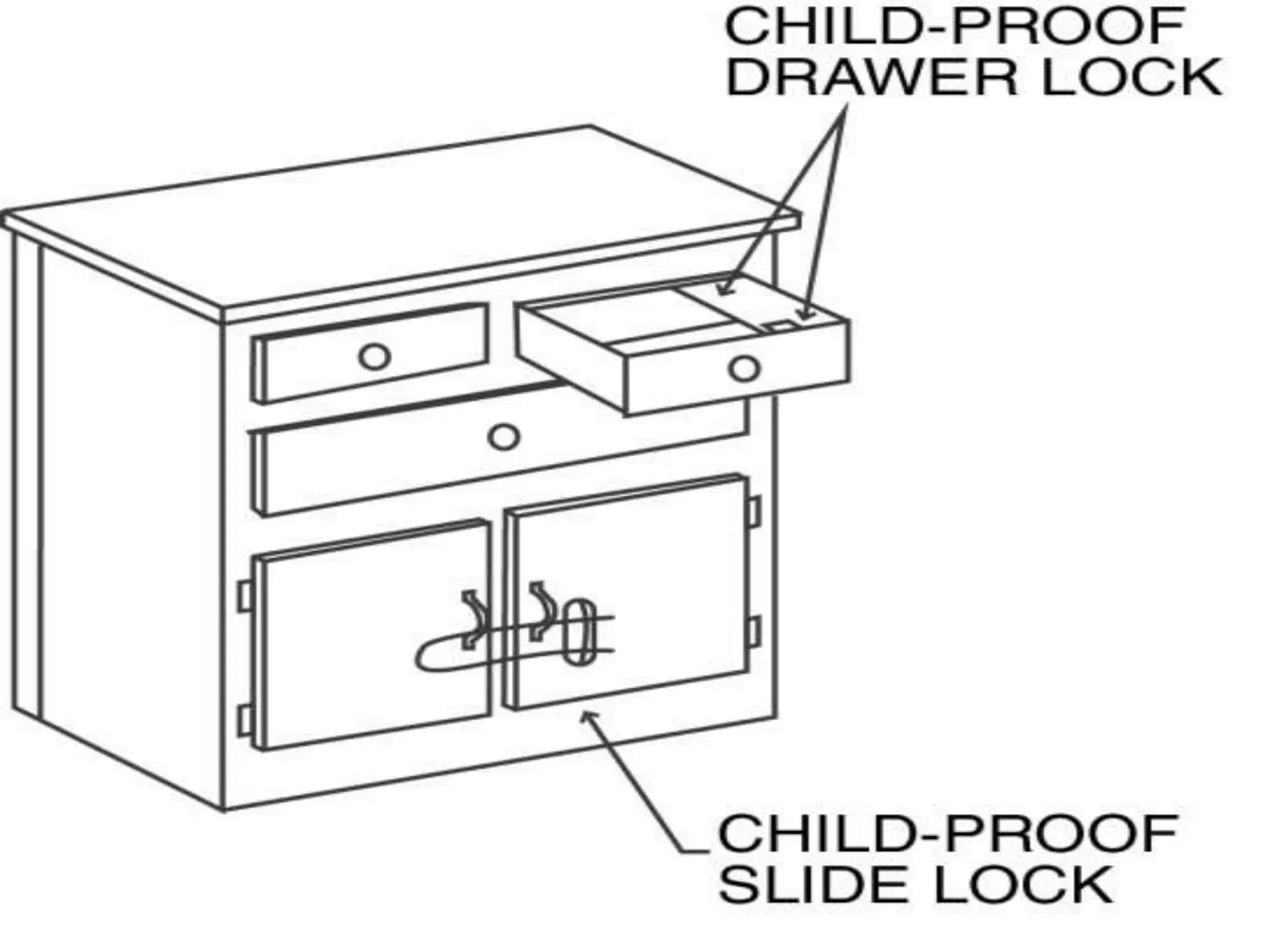
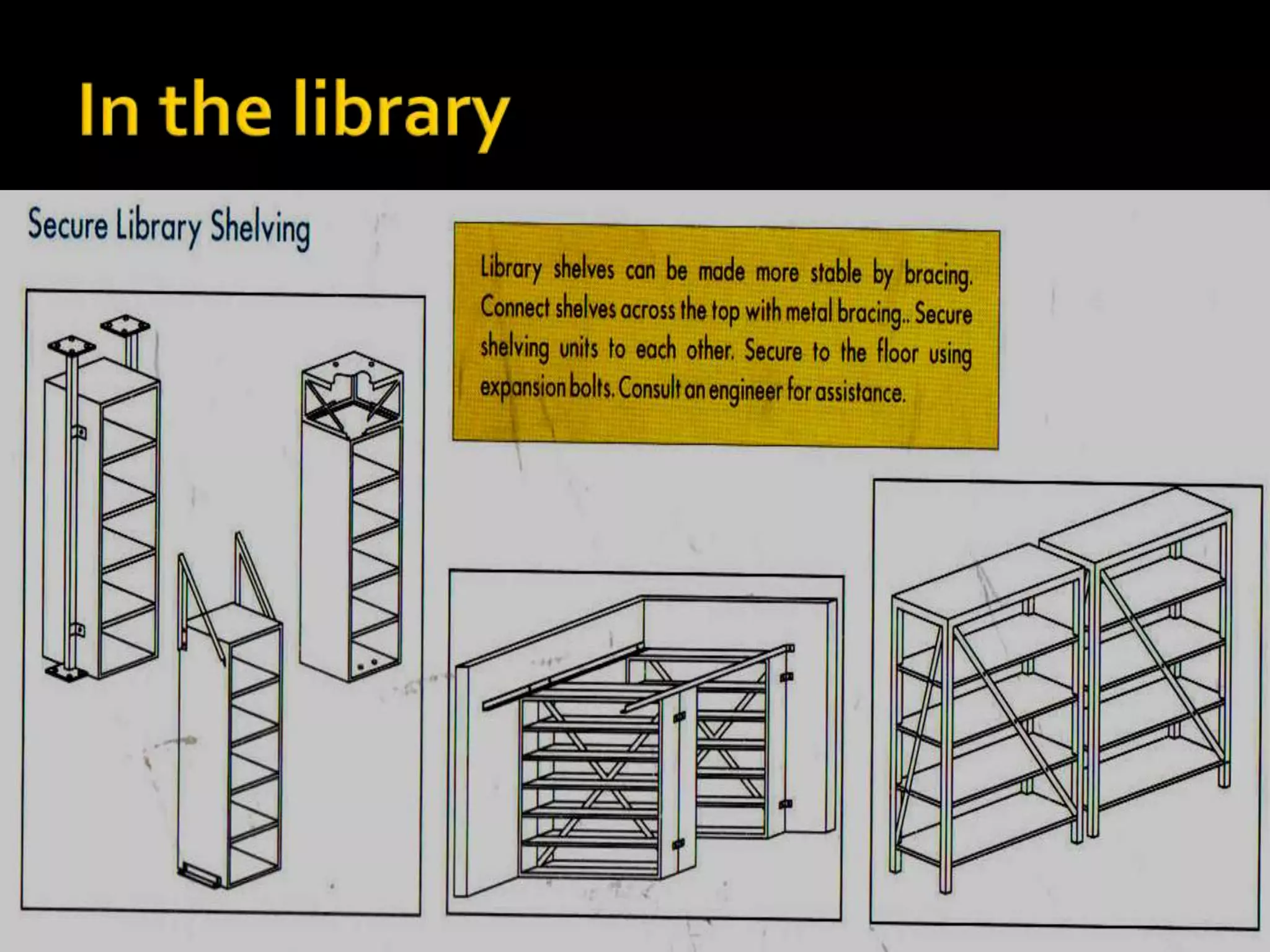
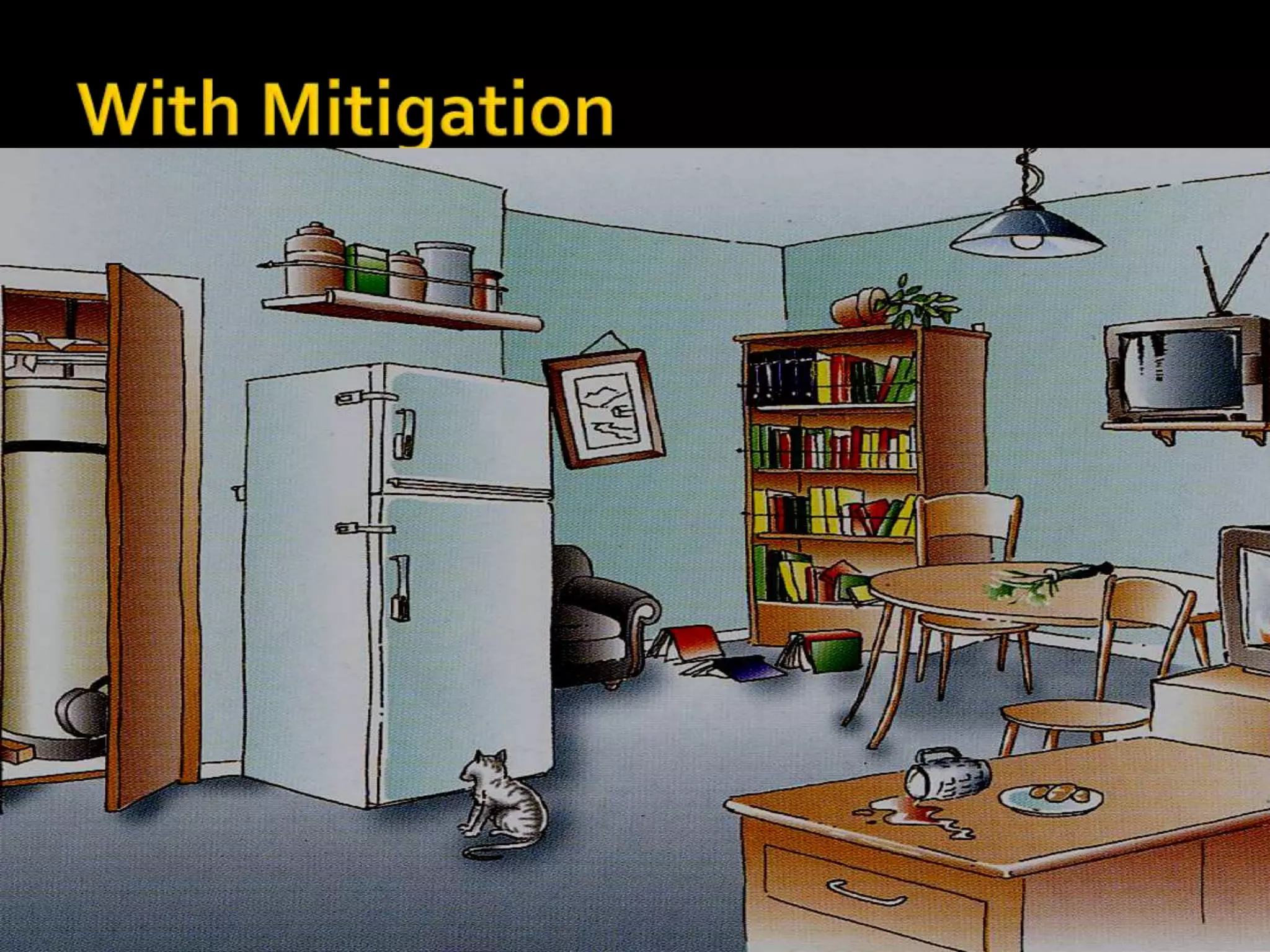
 Move or secure items that could fall over or block
an exit, such as bookcases, china cabinets, and
storage racks.
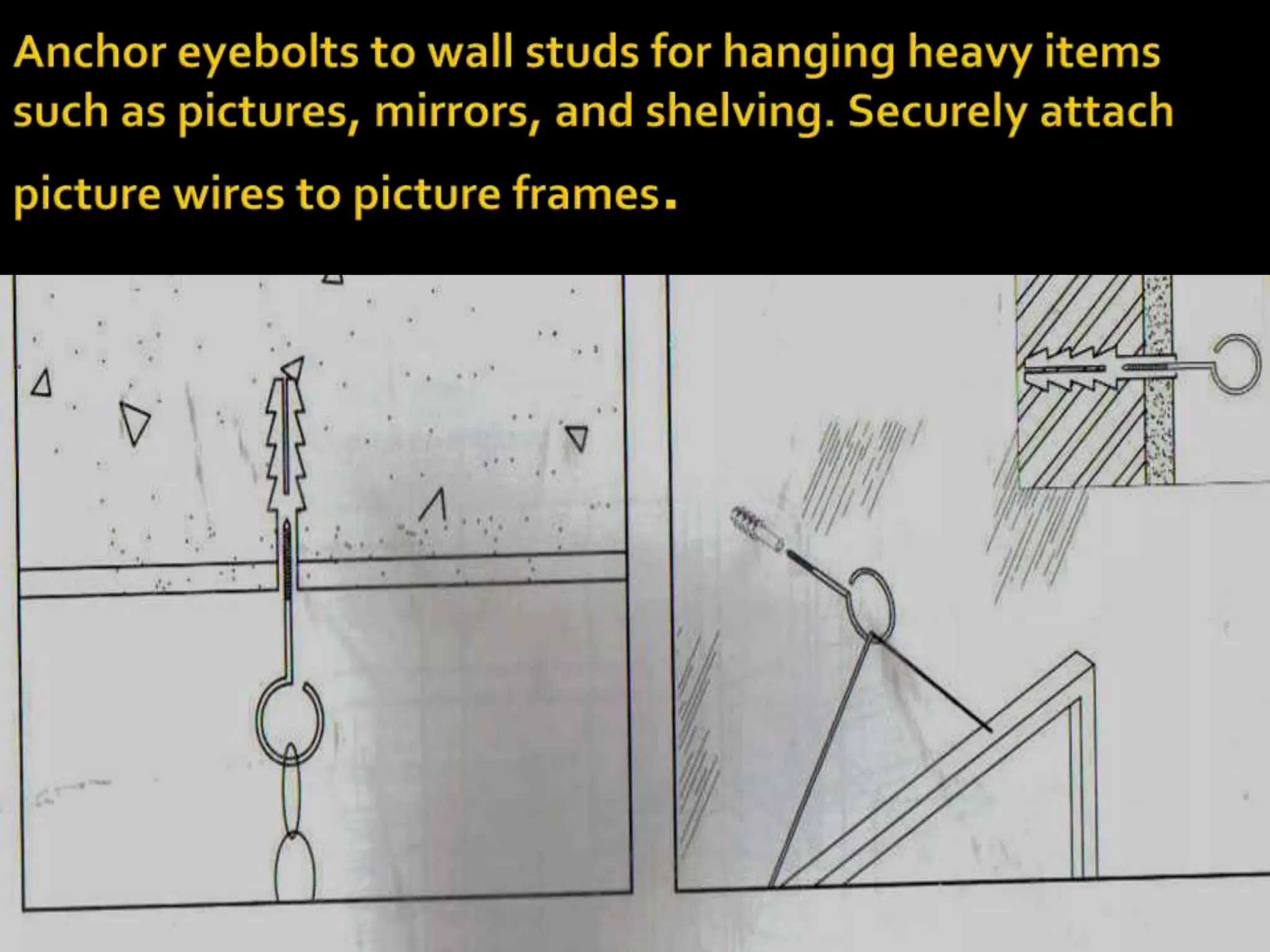
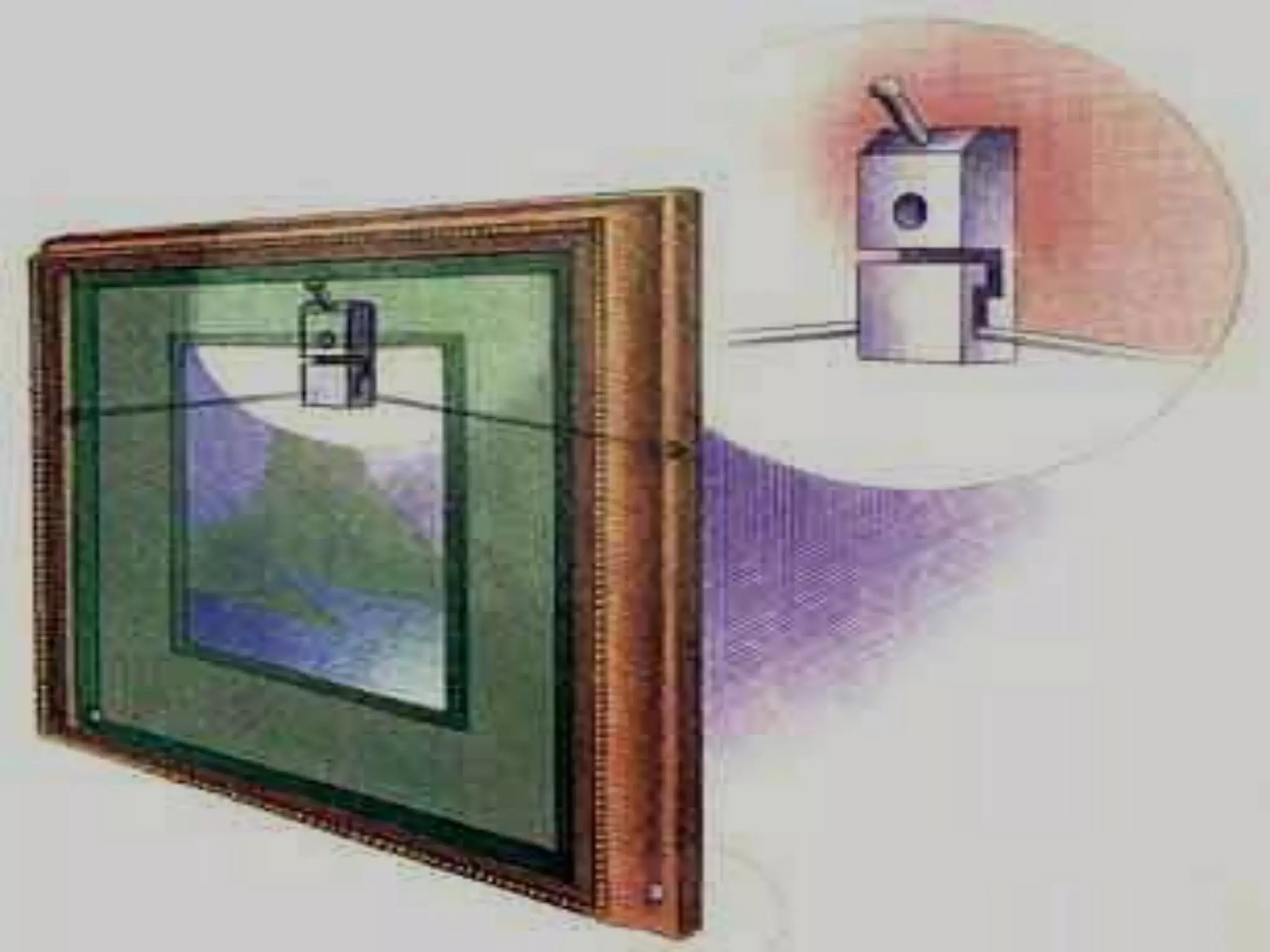
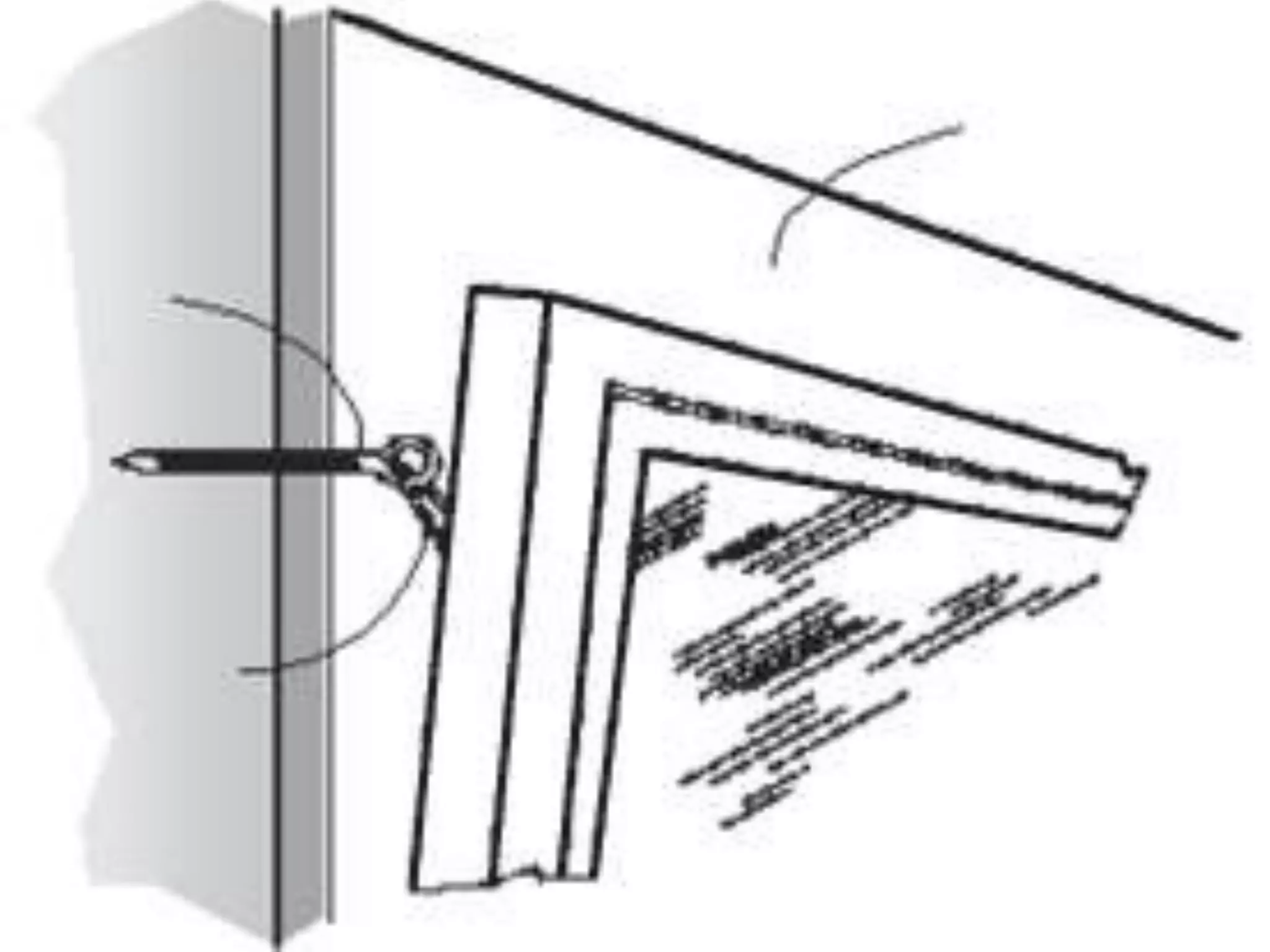
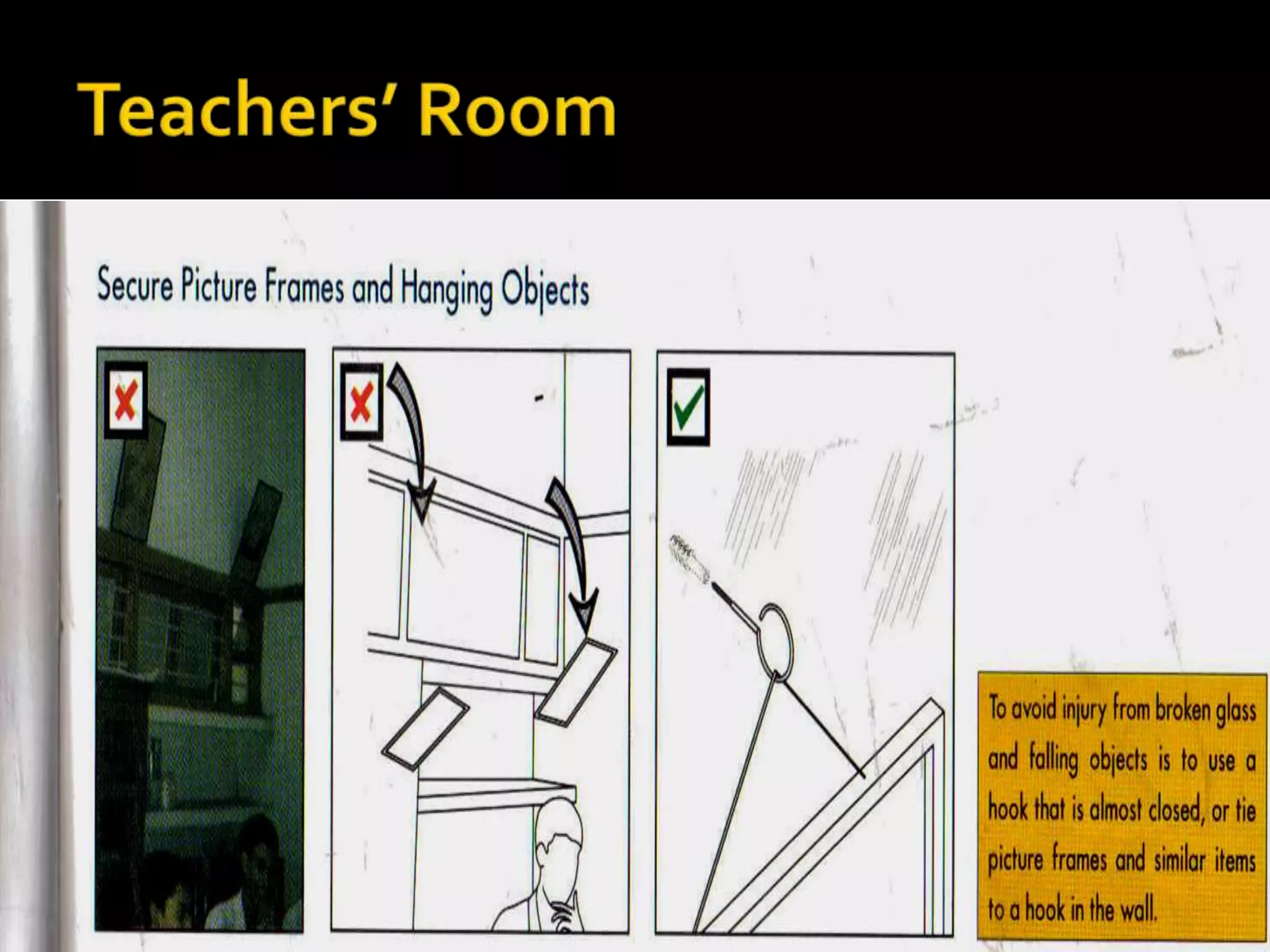
 Move heavy items, such as pictures, mirrors, or tall
dressers, away from beds and sitting areas.
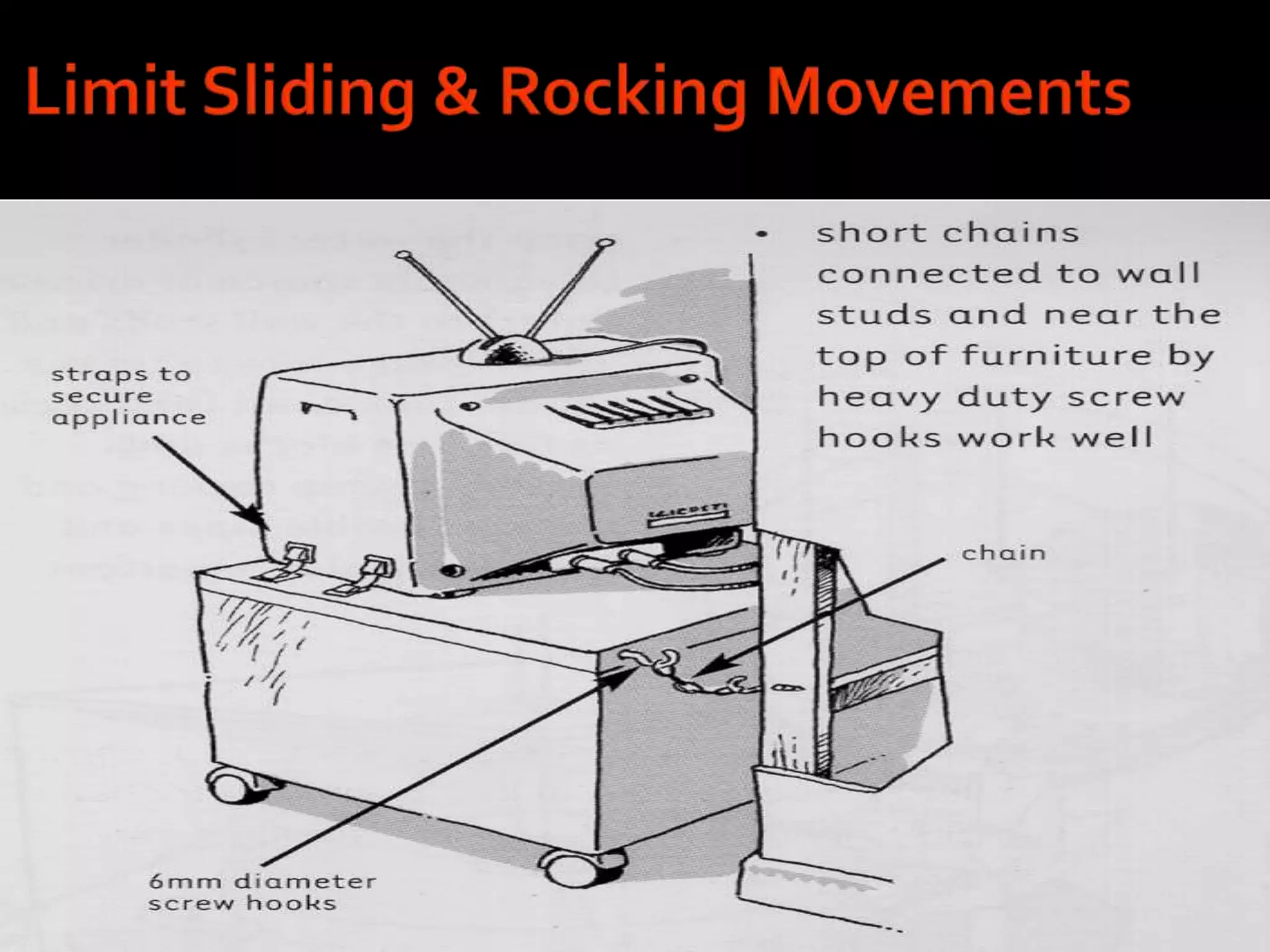
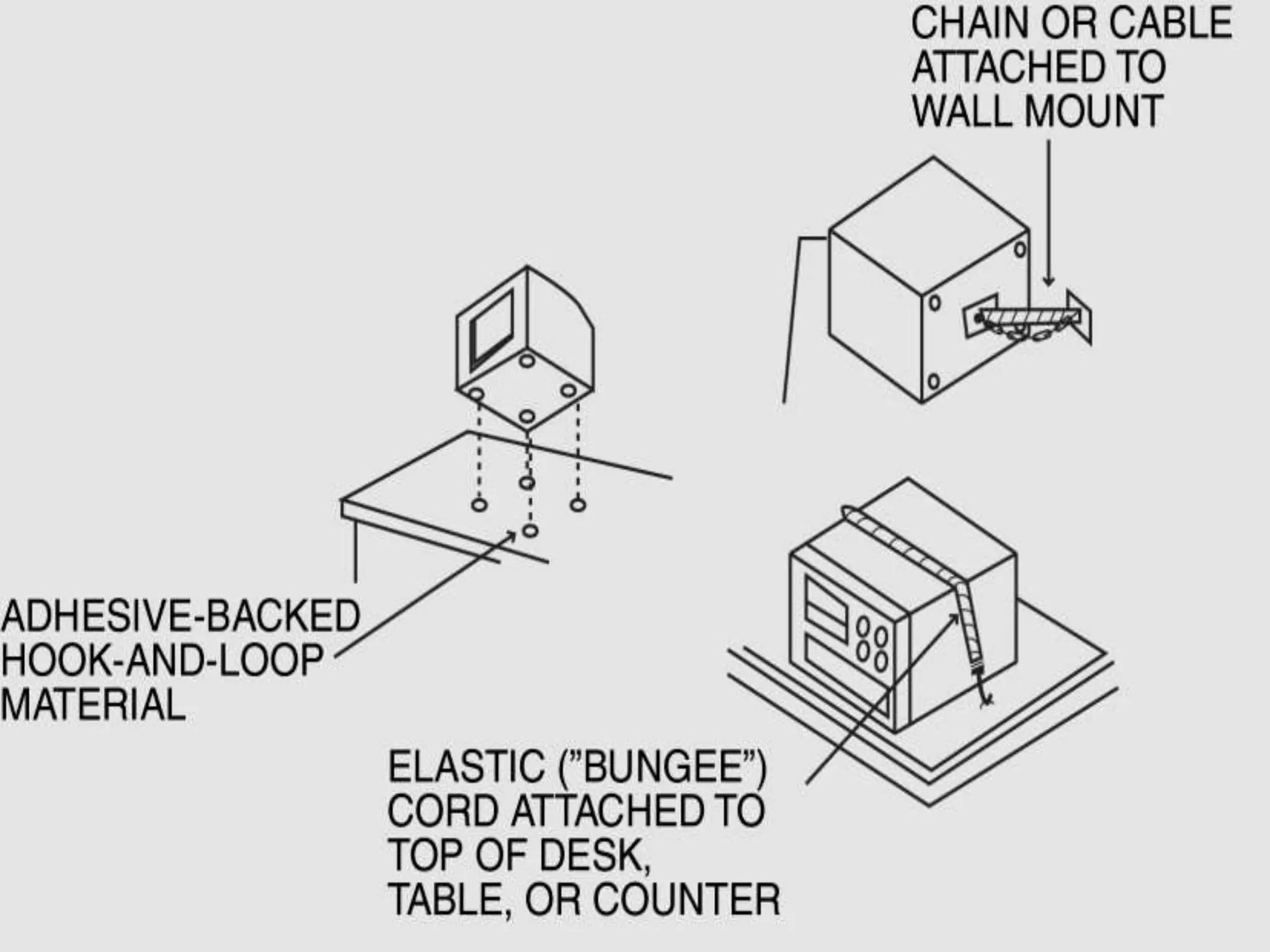
 Anchor all large kitchen and laundry equipment to
the floor, wall, or countertop, including:
 • Stoves and ovens.
 • Built-in and countertop microwave ovens.
 • Refrigerators and freezers.
 • Clothes washers and dryers.
THINGSTHAT COULD FALL
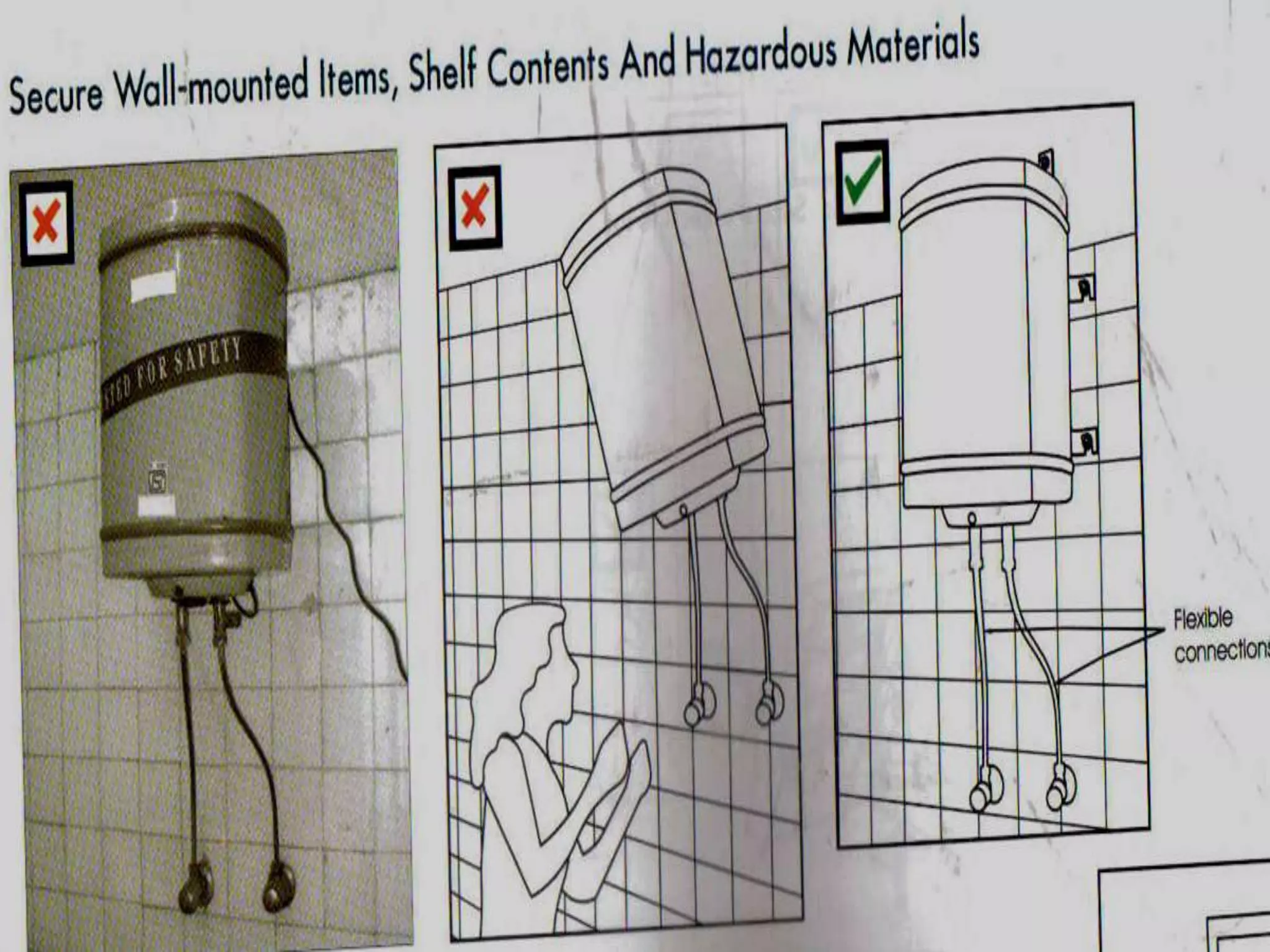
 Strap the water heater to a nearby wall.
This will keep the water heater from falling
on someone or starting a fire from electrical
short circuit.
Use tack putty to secure fragile
objects on shelves.
Keep breakable items in
original packing boxes if
possible.
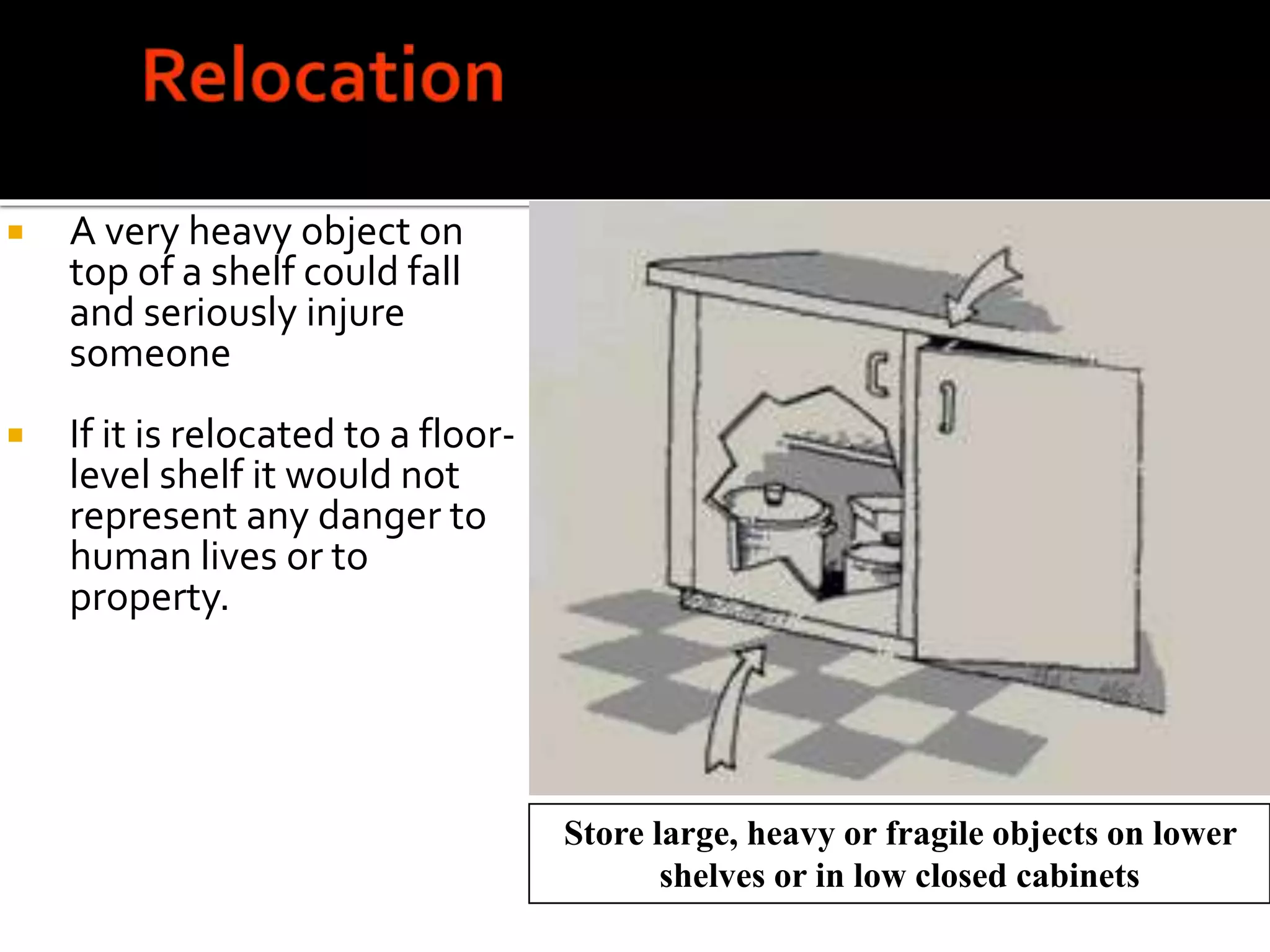
Store large, heavy or fragile objects on lower
shelves or in low closed cabinets
 A very heavy object on
top of a shelf could fall
and seriously injure
someone
 If it is relocated to a floor-
level shelf it would not
represent any danger to
human lives or to
property.
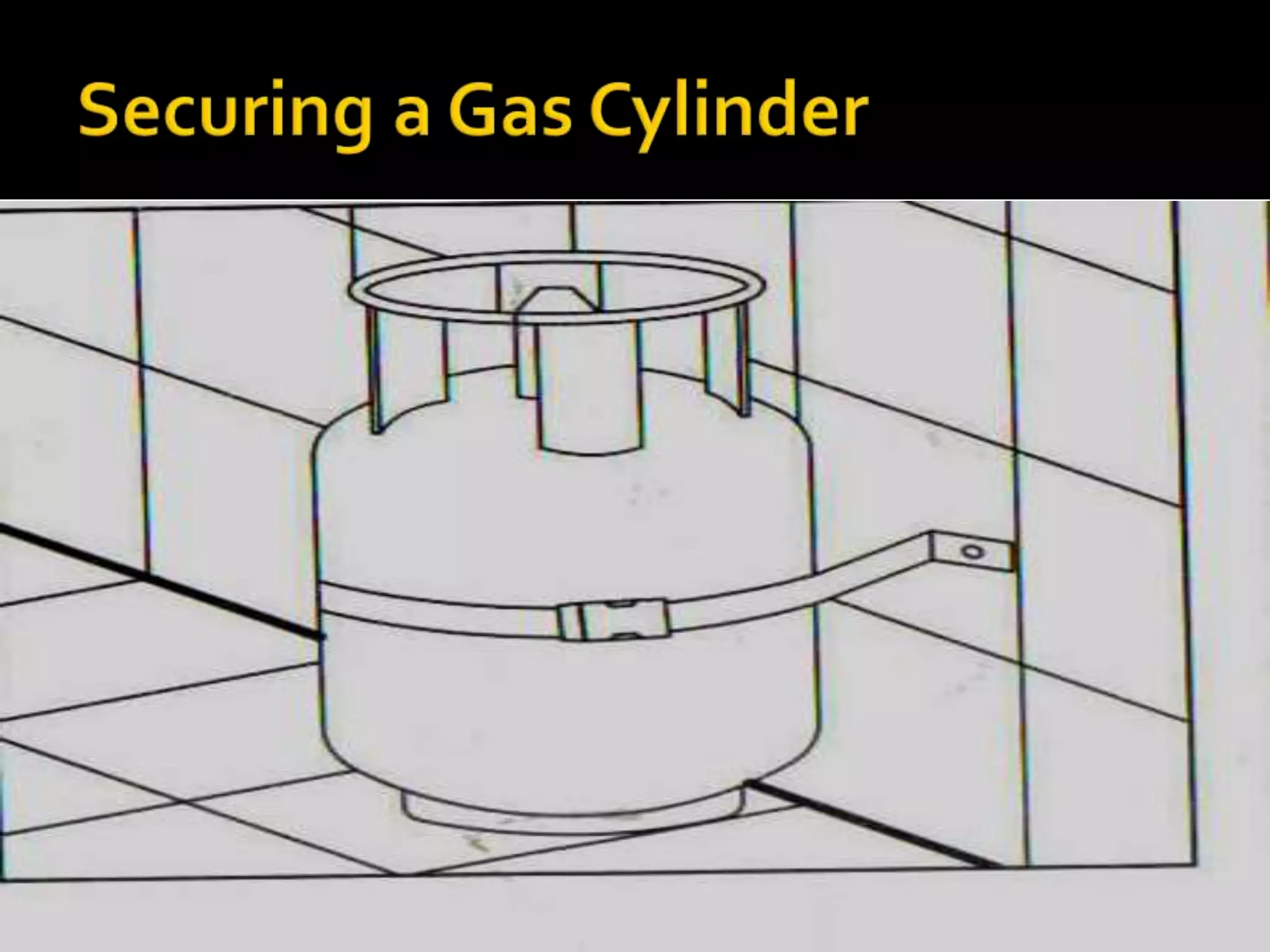
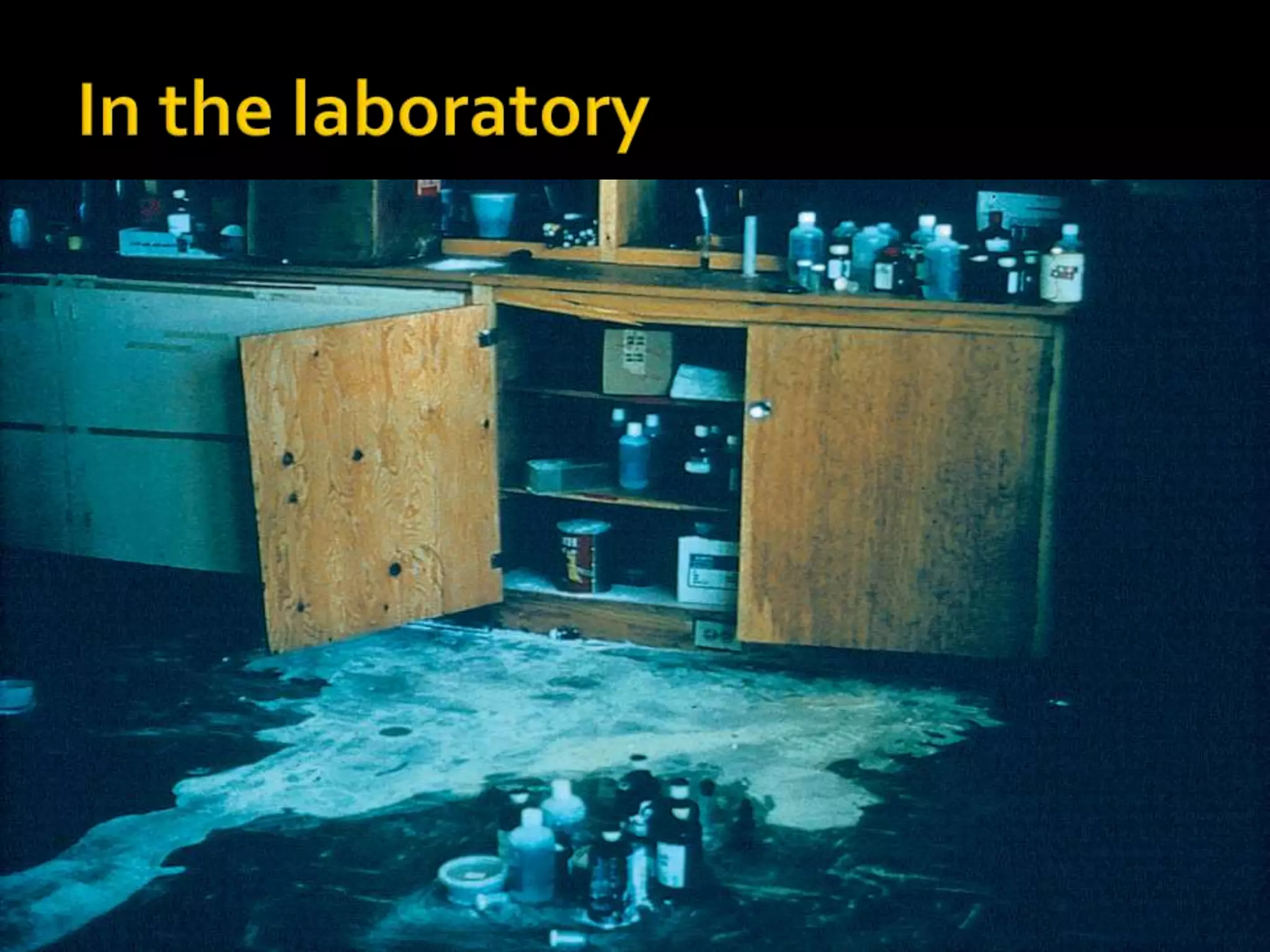
store weed killers, pesticides, and
flammable products on bottom shelves
in sturdy, closed, latched cabinets that
are fastened to the wall or floor. Move
incompatible chemicals to prevent
mixing if the containers break.
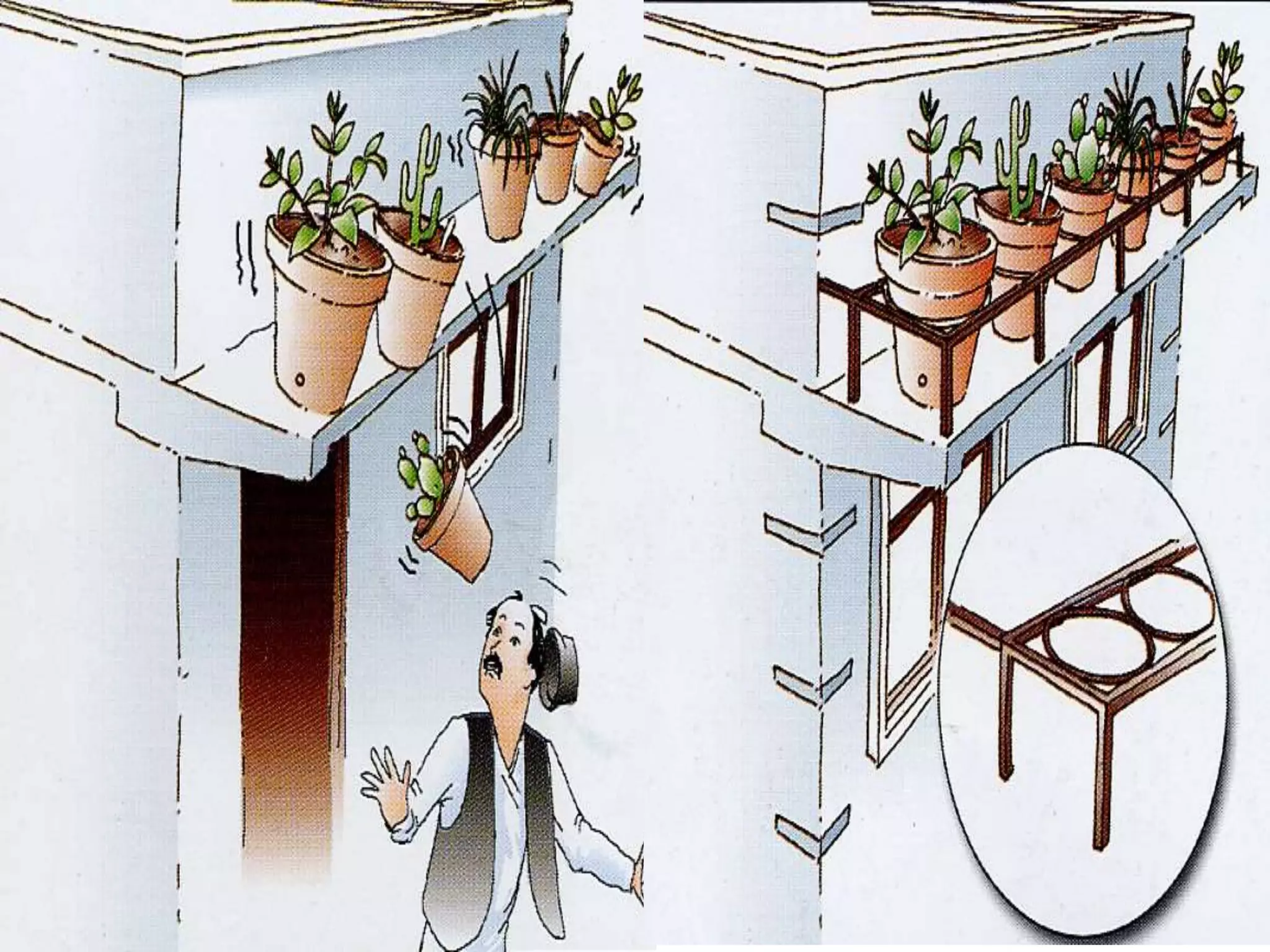
 Make sure overhead light fixtures and hanging
plants are anchored to the structural support
above the ceiling.Ask a carpenter or an electrician
to determine whether light fixtures and modular
ceiling systems are securely fastened.
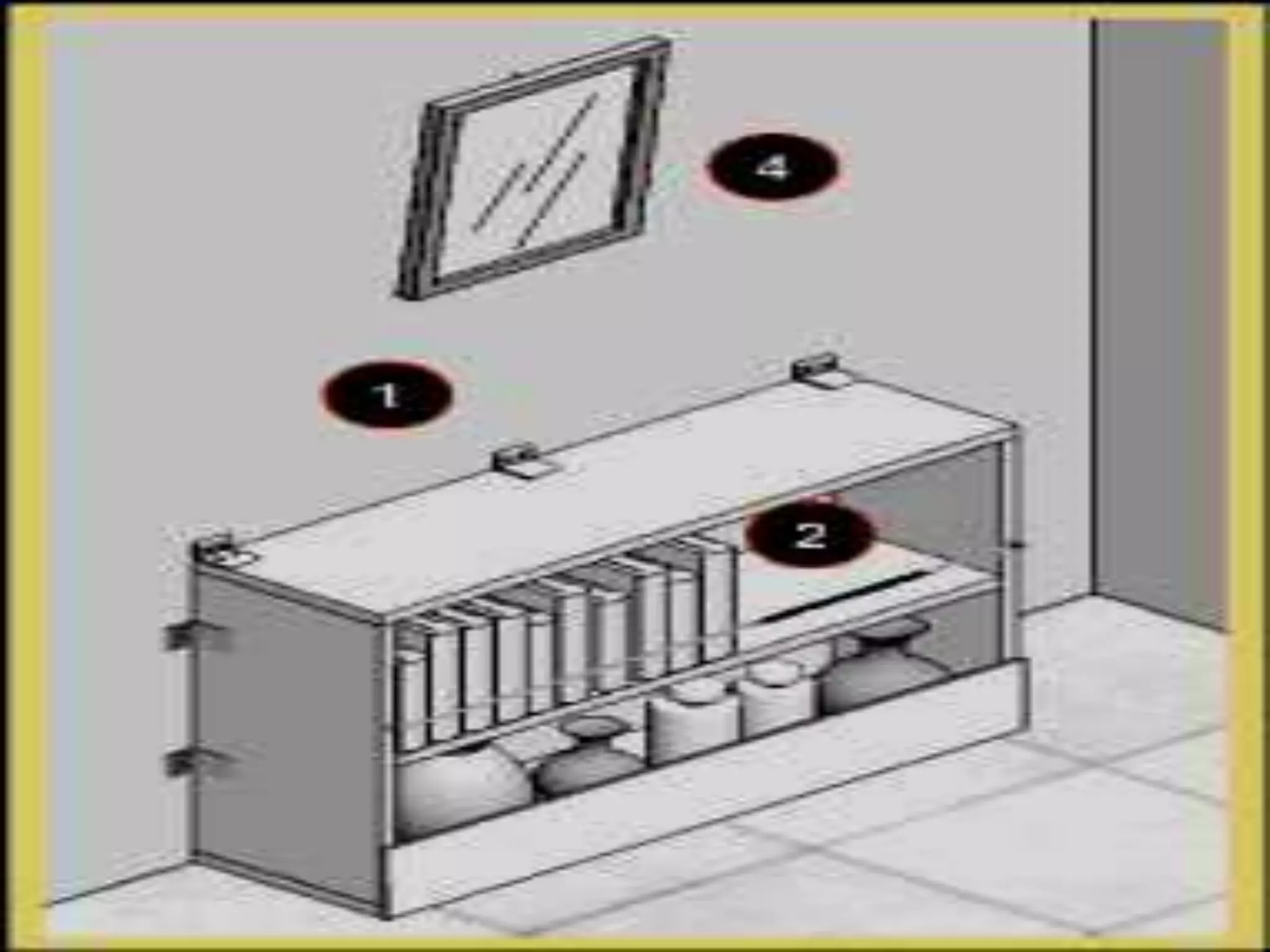
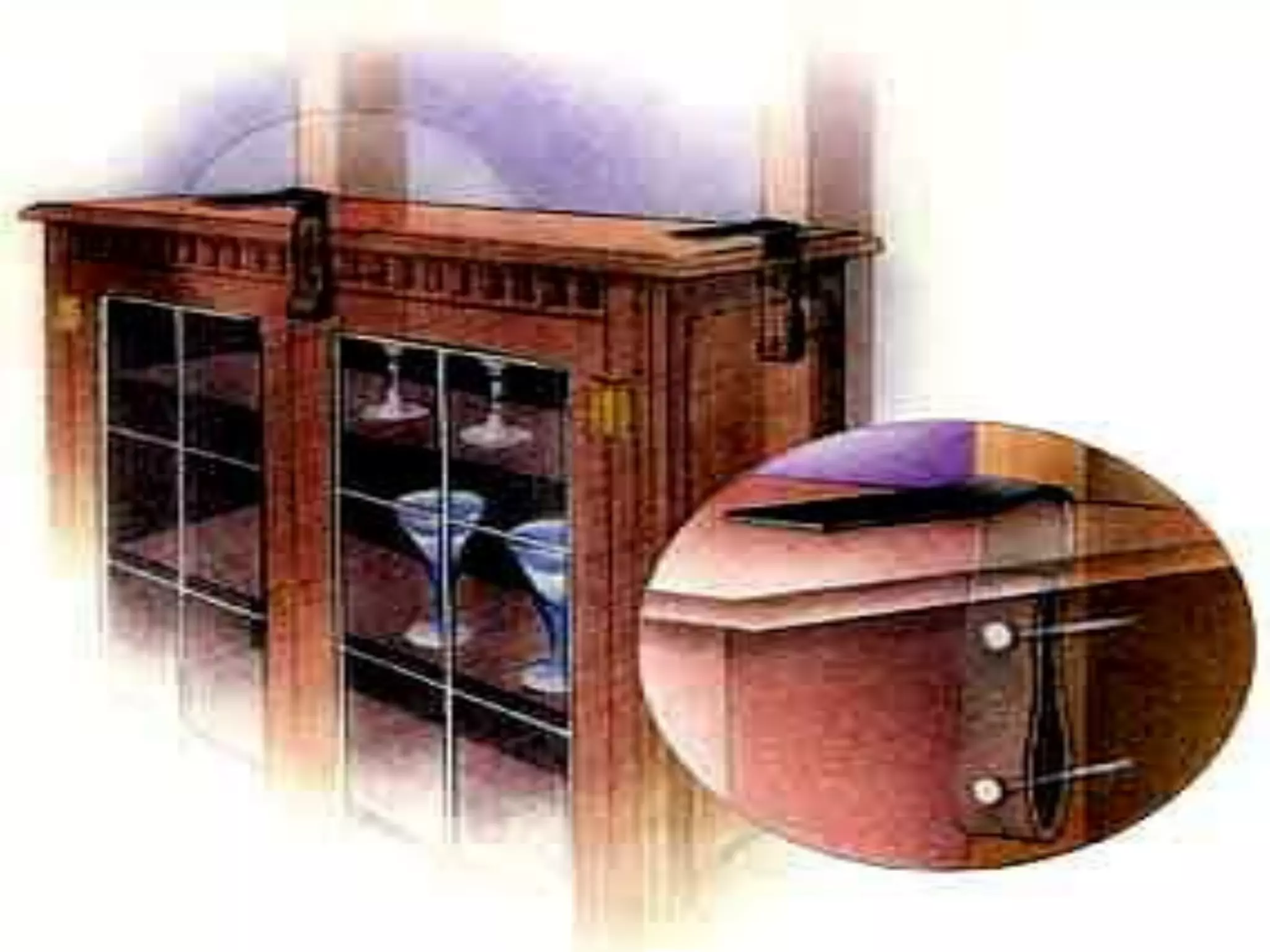
 Shields, Cups, etc to be kept in closed cabinet
 Non-skid material to be provided below the
cups & shields
 Glazing to be strengthened with transparent
colourless polymer sheet, like sunfilm
 Cabinet itself to be secured to the wall
 Reduce fall risks by making sure carpets are
securely fastened to floors via tacks,Velcro, or
anti-skid linings.
 Reduce clutter in living areas and make sure
pathways around furniture are clear, especially if
the individual relies on a cane or walker.
Preventing Falls
 Keep the stairs clear of clutter.
 Make sure you can turn on lights before entering a
dark room.
 Add grab bars in the tub and shower.
 Wipe-up spills when they happen.
 Place nightlights along pathways throughout your
home.
 ElectricalOutage
 Keep enough flashlights
Do not use candles.They are a fire hazard
.
 Keep on hand ready-to-eat meals that don’t
require cooking or cooling.
 Freeze water in plastic water bottles or old milk
containers
 use battery-operated radio to get updates on
information, shelters
 Check for damages
 Check for JobsThat Usually Require Professional Services
 Assess the Situation:
Do not enter if
 You smell gas.
 Floodwaters remain around the building.
 Your home was damaged by fire and the authorities
have not declared it safe.
 Check Utilities
 Check Consumables and Appliances
 ProtectYourself
Mitigation

Mitigation

  • 1.
  • 2.
    Mitigation Structural Non-Structural Elements which Bearthe load Elements which do not Bear any load
  • 3.
     Buildings –Strengthening structural members or Retrofitting entire structure  Providing Flood Embankments  Providing RetainingWalls to prevent landslides  Securing Roof Structure to the Posts to prevent being blown away
  • 4.
     Acts, Rules& Regulations  Disaster Management Plan  Capacity Building  Insurance  Policy of Integrating Development Plan with Disaster Management Plan
  • 5.
     Consult anengineer for your home inspection  Check for weak walls, foundations, windows.  Do not ignore cracks in your homes  Take insurance
  • 17.
     Behave wellduring earthquakes  Damage may occur due to deterioration of structural members of the building with passage of time  Mitigation measure- replace the rotten members of the structure
  • 27.
     Do notchange the nature of occupation of the building from what it was originally designed for  Do not enclose the balcony or open verandah with brick walls  Do not increase number of storeys without proper investigation and design
  • 28.
  • 29.
     Bookcases orother items can tip causing their contents, and sometimes the shelves themselves, to fall to the floor.Tipping can occur in an earthquake or other event that causes homes and buildings to vibrate or move. In addition, children or pets climbing on bookcases or other furniture can cause them to tip.
  • 33.
     Move orsecure items that could fall over or block an exit, such as bookcases, china cabinets, and storage racks.  Move heavy items, such as pictures, mirrors, or tall dressers, away from beds and sitting areas.  Anchor all large kitchen and laundry equipment to the floor, wall, or countertop, including:  • Stoves and ovens.  • Built-in and countertop microwave ovens.  • Refrigerators and freezers.  • Clothes washers and dryers. THINGSTHAT COULD FALL
  • 35.
     Strap thewater heater to a nearby wall. This will keep the water heater from falling on someone or starting a fire from electrical short circuit.
  • 46.
    Use tack puttyto secure fragile objects on shelves. Keep breakable items in original packing boxes if possible.
  • 54.
    Store large, heavyor fragile objects on lower shelves or in low closed cabinets  A very heavy object on top of a shelf could fall and seriously injure someone  If it is relocated to a floor- level shelf it would not represent any danger to human lives or to property.
  • 55.
    store weed killers,pesticides, and flammable products on bottom shelves in sturdy, closed, latched cabinets that are fastened to the wall or floor. Move incompatible chemicals to prevent mixing if the containers break.
  • 57.
     Make sureoverhead light fixtures and hanging plants are anchored to the structural support above the ceiling.Ask a carpenter or an electrician to determine whether light fixtures and modular ceiling systems are securely fastened.
  • 61.
     Shields, Cups,etc to be kept in closed cabinet  Non-skid material to be provided below the cups & shields  Glazing to be strengthened with transparent colourless polymer sheet, like sunfilm  Cabinet itself to be secured to the wall
  • 67.
     Reduce fallrisks by making sure carpets are securely fastened to floors via tacks,Velcro, or anti-skid linings.  Reduce clutter in living areas and make sure pathways around furniture are clear, especially if the individual relies on a cane or walker. Preventing Falls
  • 68.
     Keep thestairs clear of clutter.  Make sure you can turn on lights before entering a dark room.  Add grab bars in the tub and shower.  Wipe-up spills when they happen.  Place nightlights along pathways throughout your home.
  • 69.
     ElectricalOutage  Keepenough flashlights Do not use candles.They are a fire hazard .  Keep on hand ready-to-eat meals that don’t require cooking or cooling.  Freeze water in plastic water bottles or old milk containers  use battery-operated radio to get updates on information, shelters
  • 70.
     Check fordamages  Check for JobsThat Usually Require Professional Services  Assess the Situation: Do not enter if  You smell gas.  Floodwaters remain around the building.  Your home was damaged by fire and the authorities have not declared it safe.  Check Utilities  Check Consumables and Appliances  ProtectYourself