It is a systematic approach to
identifying, assessing and reducing
the risks of disaster. It aims to
reduce the damage caused by
natural hazards like earthquakes,
floods, droughts and cyclones,
through an ethic of prevention.
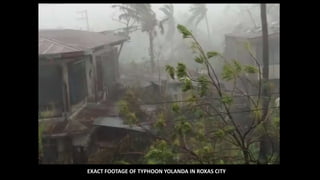
EXACT FOOTAGE OF TYPHOON YOLANDA IN ROXAS CITY
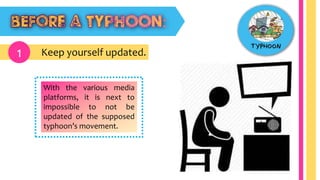
Keep yourself updated.1
With the various media
platforms, it is next to
impossible to not be
updated of the supposed
typhoon’s movement.
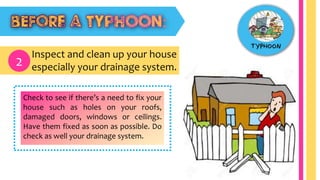
Inspect and clean up your house
especially your drainage system.2
Check to see if there’s a need to fix your
house such as holes on your roofs,
damaged doors, windows or ceilings.
Have them fixed as soon as possible. Do
check as well your drainage system.
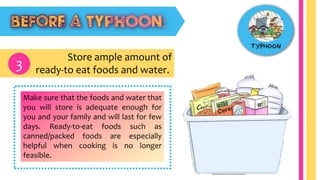
Store ample amount of
ready-to eat foods and water.3
Make sure that the foods and water that
you will store is adequate enough for
you and your family and will last for few
days. Ready-to-eat foods such as
canned/packed foods are especially
helpful when cooking is no longer
feasible.
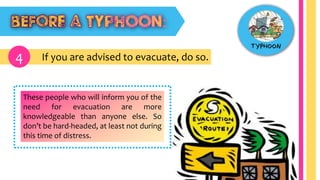
If you are advised to evacuate, do so.4
These people who will inform you of the
need for evacuation are more
knowledgeable than anyone else. So

don’t be hard-headed, at least not during
this time of distress.
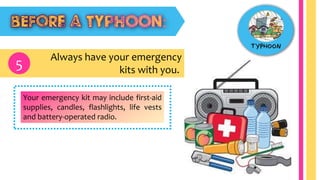
Always have your emergency
kits with you.5
Your emergency kit may include first-aid
supplies, candles, flashlights, life vests
and battery-operated radio.
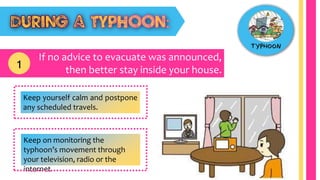
If no advice to evacuate was announced,
then better stay inside your house.1
Keep yourself calm and postpone
any scheduled travels.
Keep on monitoring the
typhoon’s movement through
your television, radio or the
internet.
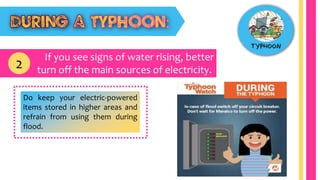
If you see signs of water rising, better
turn off the main sources of electricity.2
Do keep your electric-powered
items stored in higher areas and
refrain from using them during
flood.
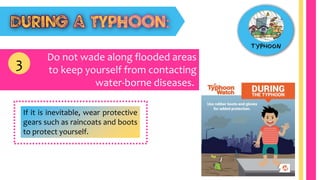
Do not wade along flooded areas
to keep yourself from contacting
water-borne diseases.
3
If it is inevitable, wear protective
gears such as raincoats and boots
to protect yourself.
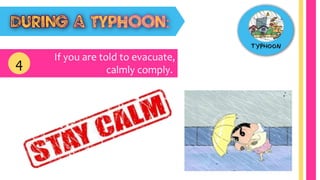
If you are told to evacuate,
calmly comply.4
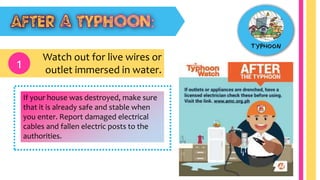
Watch out for live wires or
outlet immersed in water.1
If your house was destroyed, make sure
that it is already safe and stable when
you enter. Report damaged electrical
cables and fallen electric posts to the
authorities.
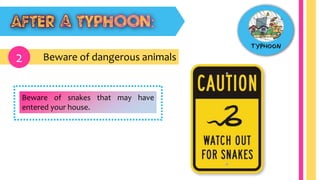
Beware of dangerous animals2
Beware of snakes that may have
entered your house.
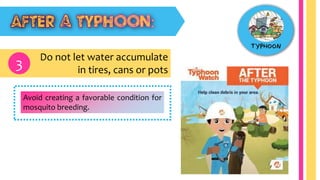
Do not let water accumulate
in tires, cans or pots3
Avoid creating a favorable condition for
mosquito breeding.
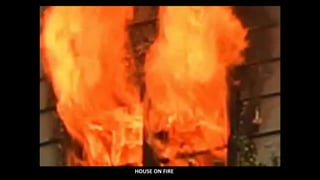
HOUSE ON FIRE
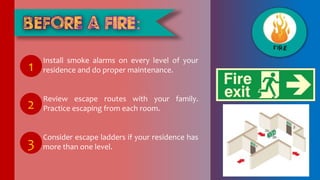
Install smoke alarms on every level of your
residence and do proper maintenance.
Review escape routes with your family.
Practice escaping from each room.
Consider escape ladders if your residence has
more than one level.
1
2
3
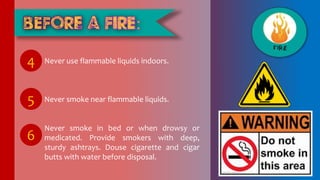
Never use flammable liquids indoors.
Never smoke near flammable liquids.
Never smoke in bed or when drowsy or
medicated. Provide smokers with deep,
sturdy ashtrays. Douse cigarette and cigar
butts with water before disposal.
4
5
6
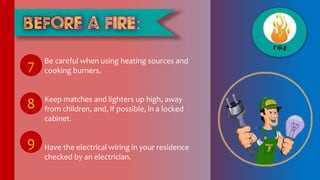
Be careful when using heating sources and
cooking burners.
Keep matches and lighters up high, away
from children, and, if possible, in a locked
cabinet.
Have the electrical wiring in your residence
checked by an electrician.
7
8
9
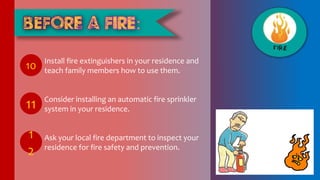
Install fire extinguishers in your residence and
teach family members how to use them.
Consider installing an automatic fire sprinkler
system in your residence.
Ask your local fire department to inspect your
residence for fire safety and prevention.
10
11
1
2
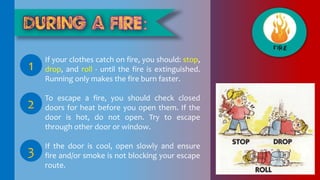
If your clothes catch on fire, you should: stop,
drop, and roll - until the fire is extinguished.
Running only makes the fire burn faster.
To escape a fire, you should check closed
doors for heat before you open them. If the
door is hot, do not open. Try to escape
through other door or window.
If the door is cool, open slowly and ensure
fire and/or smoke is not blocking your escape
route.
1
2
3
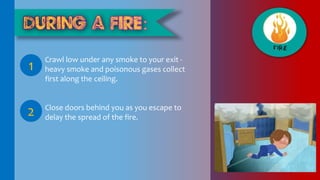
Crawl low under any smoke to your exit -
heavy smoke and poisonous gases collect
first along the ceiling.
Close doors behind you as you escape to
delay the spread of the fire.
1
2
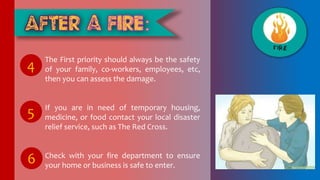
The First priority should always be the safety
of your family, co-workers, employees, etc,
then you can assess the damage.
If you are in need of temporary housing,
medicine, or food contact your local disaster
relief service, such as The Red Cross.
Check with your fire department to ensure
your home or business is safe to enter.
4
5
6
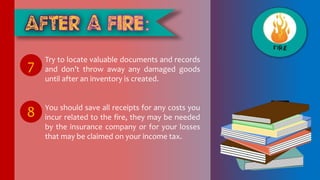
Try to locate valuable documents and records
and don’t throw away any damaged goods
until after an inventory is created.
You should save all receipts for any costs you
incur related to the fire, they may be needed
by the insurance company or for your losses
that may be claimed on your income tax.
7
8
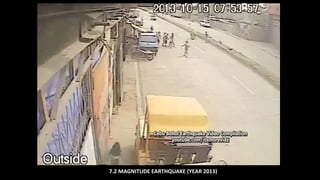
7.2 MAGNITUDE EARTHQUAKE (YEAR 2013)
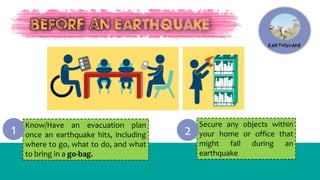
Know/Have an evacuation plan
once an earthquake hits, including
where to go, what to do, and what
to bring in a go-bag.
1 Secure any objects within
your home or office that
might fall during an
earthquake
2
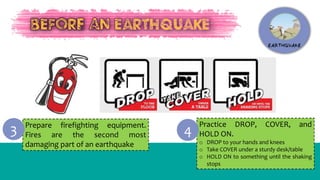
Prepare firefighting equipment.
Fires are the second most
damaging part of an earthquake
3 Practice DROP, COVER, and
HOLD ON.
o DROP to your hands and knees
o Take COVER under a sturdy desk/table
o HOLD ON to something until the shaking
stops
4
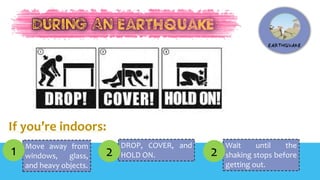
Move away from
windows, glass,
and heavy objects.
1 DROP, COVER, and
HOLD ON.2
Wait until the
shaking stops before
getting out.
2
If you’re indoors:
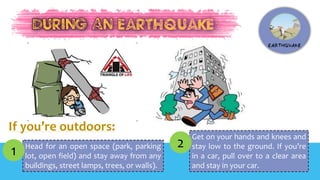
Head for an open space (park, parking
lot, open field) and stay away from any
buildings, street lamps, trees, or walls).
1
Get on your hands and knees and
stay low to the ground. If you’re
in a car, pull over to a clear area
and stay in your car.
2
If you’re outdoors:
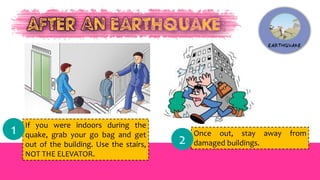
If you were indoors during the
quake, grab your go bag and get
out of the building. Use the stairs,
NOT THE ELEVATOR.
1 Once out, stay away from
damaged buildings.2
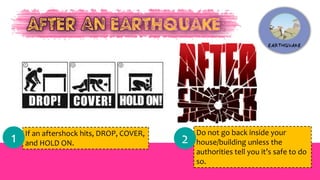
If an aftershock hits, DROP, COVER,
and HOLD ON.1 Do not go back inside your
house/building unless the
authorities tell you it’s safe to do
so.
2
Disaster Risk Reduction

Disaster Risk Reduction

  • 2.
    It is asystematic approach to identifying, assessing and reducing the risks of disaster. It aims to reduce the damage caused by natural hazards like earthquakes, floods, droughts and cyclones, through an ethic of prevention.
  • 4.
    EXACT FOOTAGE OFTYPHOON YOLANDA IN ROXAS CITY
  • 7.
    Keep yourself updated.1 Withthe various media platforms, it is next to impossible to not be updated of the supposed typhoon’s movement.
  • 8.
    Inspect and cleanup your house especially your drainage system.2 Check to see if there’s a need to fix your house such as holes on your roofs, damaged doors, windows or ceilings. Have them fixed as soon as possible. Do check as well your drainage system.
  • 9.
    Store ample amountof ready-to eat foods and water.3 Make sure that the foods and water that you will store is adequate enough for you and your family and will last for few days. Ready-to-eat foods such as canned/packed foods are especially helpful when cooking is no longer feasible.
  • 10.
    If you areadvised to evacuate, do so.4 These people who will inform you of the need for evacuation are more knowledgeable than anyone else. So don’t be hard-headed, at least not during this time of distress.
  • 11.
    Always have youremergency kits with you.5 Your emergency kit may include first-aid supplies, candles, flashlights, life vests and battery-operated radio.
  • 13.
    If no adviceto evacuate was announced, then better stay inside your house.1 Keep yourself calm and postpone any scheduled travels. Keep on monitoring the typhoon’s movement through your television, radio or the internet.
  • 14.
    If you seesigns of water rising, better turn off the main sources of electricity.2 Do keep your electric-powered items stored in higher areas and refrain from using them during flood.
  • 15.
    Do not wadealong flooded areas to keep yourself from contacting water-borne diseases. 3 If it is inevitable, wear protective gears such as raincoats and boots to protect yourself.
  • 16.
    If you aretold to evacuate, calmly comply.4
  • 18.
    Watch out forlive wires or outlet immersed in water.1 If your house was destroyed, make sure that it is already safe and stable when you enter. Report damaged electrical cables and fallen electric posts to the authorities.
  • 19.
    Beware of dangerousanimals2 Beware of snakes that may have entered your house.
  • 20.
    Do not letwater accumulate in tires, cans or pots3 Avoid creating a favorable condition for mosquito breeding.
  • 22.
  • 25.
    Install smoke alarmson every level of your residence and do proper maintenance. Review escape routes with your family. Practice escaping from each room. Consider escape ladders if your residence has more than one level. 1 2 3
  • 26.
    Never use flammableliquids indoors. Never smoke near flammable liquids. Never smoke in bed or when drowsy or medicated. Provide smokers with deep, sturdy ashtrays. Douse cigarette and cigar butts with water before disposal. 4 5 6
  • 27.
    Be careful whenusing heating sources and cooking burners. Keep matches and lighters up high, away from children, and, if possible, in a locked cabinet. Have the electrical wiring in your residence checked by an electrician. 7 8 9
  • 28.
    Install fire extinguishersin your residence and teach family members how to use them. Consider installing an automatic fire sprinkler system in your residence. Ask your local fire department to inspect your residence for fire safety and prevention. 10 11 1 2
  • 30.
    If your clothescatch on fire, you should: stop, drop, and roll - until the fire is extinguished. Running only makes the fire burn faster. To escape a fire, you should check closed doors for heat before you open them. If the door is hot, do not open. Try to escape through other door or window. If the door is cool, open slowly and ensure fire and/or smoke is not blocking your escape route. 1 2 3
  • 31.
    Crawl low underany smoke to your exit - heavy smoke and poisonous gases collect first along the ceiling. Close doors behind you as you escape to delay the spread of the fire. 1 2
  • 33.
    The First priorityshould always be the safety of your family, co-workers, employees, etc, then you can assess the damage. If you are in need of temporary housing, medicine, or food contact your local disaster relief service, such as The Red Cross. Check with your fire department to ensure your home or business is safe to enter. 4 5 6
  • 34.
    Try to locatevaluable documents and records and don’t throw away any damaged goods until after an inventory is created. You should save all receipts for any costs you incur related to the fire, they may be needed by the insurance company or for your losses that may be claimed on your income tax. 7 8
  • 36.
  • 39.
    Know/Have an evacuationplan once an earthquake hits, including where to go, what to do, and what to bring in a go-bag. 1 Secure any objects within your home or office that might fall during an earthquake 2
  • 40.
    Prepare firefighting equipment. Firesare the second most damaging part of an earthquake 3 Practice DROP, COVER, and HOLD ON. o DROP to your hands and knees o Take COVER under a sturdy desk/table o HOLD ON to something until the shaking stops 4
  • 42.
    Move away from windows,glass, and heavy objects. 1 DROP, COVER, and HOLD ON.2 Wait until the shaking stops before getting out. 2 If you’re indoors:
  • 43.
    Head for anopen space (park, parking lot, open field) and stay away from any buildings, street lamps, trees, or walls). 1 Get on your hands and knees and stay low to the ground. If you’re in a car, pull over to a clear area and stay in your car. 2 If you’re outdoors:
  • 45.
    If you wereindoors during the quake, grab your go bag and get out of the building. Use the stairs, NOT THE ELEVATOR. 1 Once out, stay away from damaged buildings.2
  • 46.
    If an aftershockhits, DROP, COVER, and HOLD ON.1 Do not go back inside your house/building unless the authorities tell you it’s safe to do so. 2