Mise-en-scene
What does mise-en-scene mean?
Translated from French “placed in the scene”. The term was first used in theatre, then
was used in film & TV
What are the 6 key areas of mise-en-scene?
Colour
Costume
Props
Set/Location
Blocking& Performance
Lightning
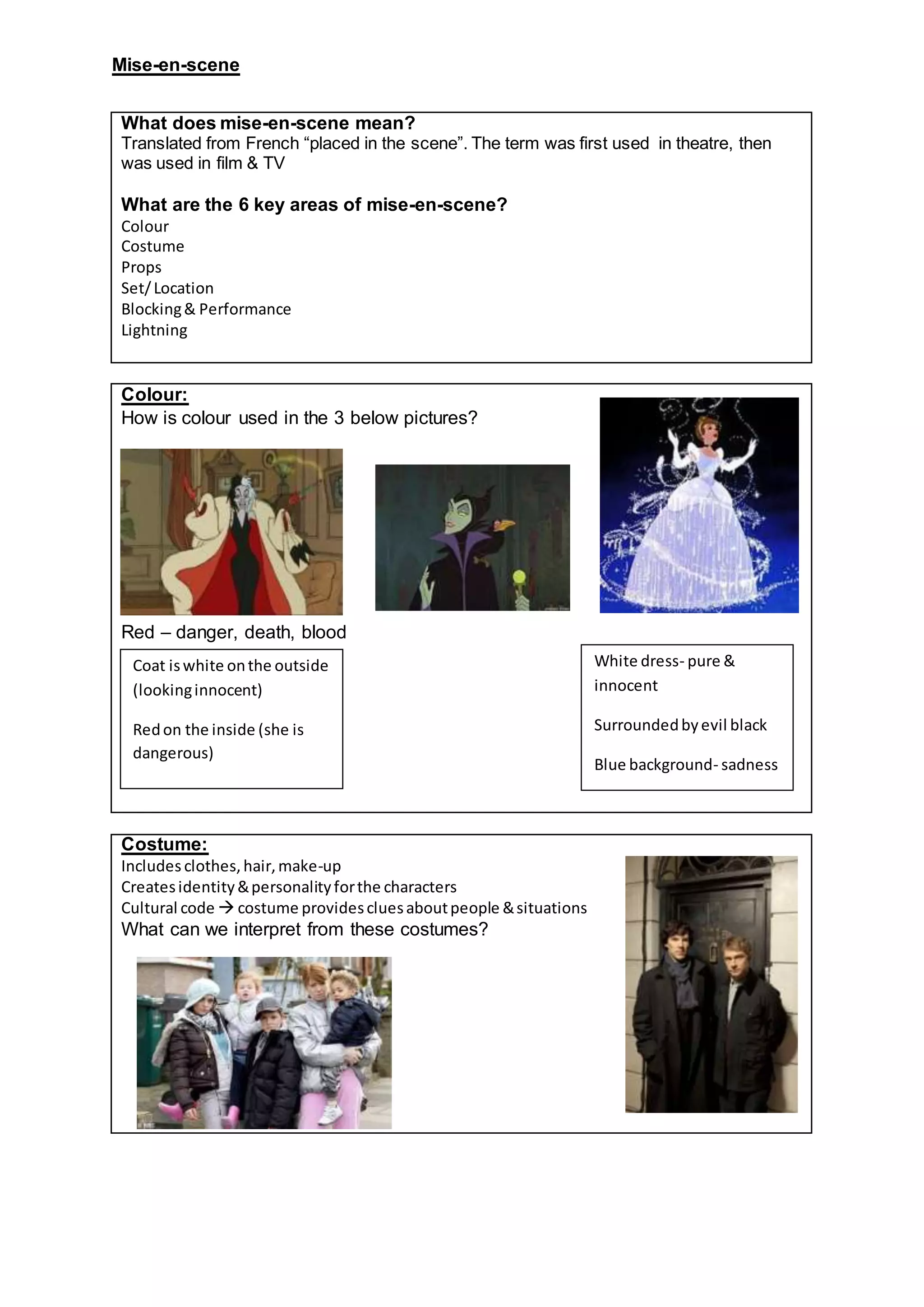
Colour:
How is colour used in the 3 below pictures?
Red – danger, death, blood
Costume:
Includes clothes,hair,make-up
Createsidentity&personalityforthe characters
Cultural code  costume providescluesaboutpeople &situations
What can we interpret from these costumes?
Coat iswhite onthe outside
(lookinginnocent)
Redon the inside (she is
dangerous)
White dress- pure &
innocent
Surroundedbyevil black
Blue background- sadness
Mise-en-scene
Props:
Propsare any objectsusedwithinthe frame,usedtodressthe setor usedbyactors.
Option 1 - You have to provide props for a tense police interview between two
officers and one suspected murderer. Decide what props you would incorporate
and how the actors should be directed to use them.
Option 2 – You have to provide props for a romantic meal between two characters
on their first date. Decide what props you would incorporate and how the actors
should be directed to use them.
Props needed:
How would actors be directed to use them:
Location:
Can be a purpose built set or a real location
Set: will have been built to filming & is part of a studio complex
Location: leaving studio environment & filming in existing locations that have been
“scouted” as suitable.
Both have to be dressed purposefully.
Blocking/Performance:
 Blocking refers to the positioning and movement of actors within the frame,
both in relation to each other and in relation to the camera (which
represents us, the audience)
 Performance covers all aspects of the actual acting – gesture, expression,
accent etc.
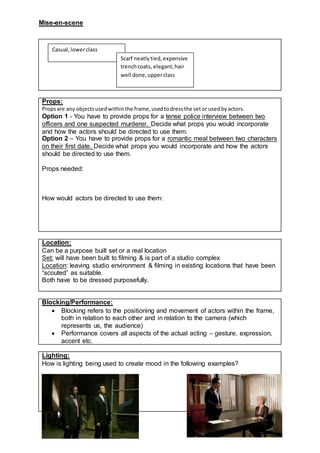
Lighting:
How is lighting being used to create mood in the following examples?
Casual,lowerclass
Scarf neatlytied,expensive
trenchcoats, elegant,hair
well done,upperclass
Mise-en-scene
High-key lighting: even light across the frame, light is bright, sunny, little or no
shadow or dark areas, little dramatic effect
Low-key lighting: high contrast between light & dark within the frame, shadow for
dramatic effect
Ambient lightning: scene has been lit using available light
Pictures:
Low-key high- key

Mise en scene

  • 1.
    Mise-en-scene What does mise-en-scenemean? Translated from French “placed in the scene”. The term was first used in theatre, then was used in film & TV What are the 6 key areas of mise-en-scene? Colour Costume Props Set/Location Blocking& Performance Lightning Colour: How is colour used in the 3 below pictures? Red – danger, death, blood Costume: Includes clothes,hair,make-up Createsidentity&personalityforthe characters Cultural code  costume providescluesaboutpeople &situations What can we interpret from these costumes? Coat iswhite onthe outside (lookinginnocent) Redon the inside (she is dangerous) White dress- pure & innocent Surroundedbyevil black Blue background- sadness
  • 2.
    Mise-en-scene Props: Propsare any objectsusedwithintheframe,usedtodressthe setor usedbyactors. Option 1 - You have to provide props for a tense police interview between two officers and one suspected murderer. Decide what props you would incorporate and how the actors should be directed to use them. Option 2 – You have to provide props for a romantic meal between two characters on their first date. Decide what props you would incorporate and how the actors should be directed to use them. Props needed: How would actors be directed to use them: Location: Can be a purpose built set or a real location Set: will have been built to filming & is part of a studio complex Location: leaving studio environment & filming in existing locations that have been “scouted” as suitable. Both have to be dressed purposefully. Blocking/Performance:  Blocking refers to the positioning and movement of actors within the frame, both in relation to each other and in relation to the camera (which represents us, the audience)  Performance covers all aspects of the actual acting – gesture, expression, accent etc. Lighting: How is lighting being used to create mood in the following examples? Casual,lowerclass Scarf neatlytied,expensive trenchcoats, elegant,hair well done,upperclass
  • 3.
    Mise-en-scene High-key lighting: evenlight across the frame, light is bright, sunny, little or no shadow or dark areas, little dramatic effect Low-key lighting: high contrast between light & dark within the frame, shadow for dramatic effect Ambient lightning: scene has been lit using available light Pictures: Low-key high- key