
Overview
 Everyman is a famous play that is, subconsciously or deliberately,
alluded to in a number of pieces of literature, commercials, songs,
and movies. An allegory, Everyman symbolizes just that; every
man. In this morality play, Everyman is visited by Death and he is
terrified. He journeys to find companionship to abate his terror
over death. Much of the theme of the play revolves around “getting
ready” for death; absolution of sin and forgiveness.
 Remember Dante’s Inferno? Much of the
theology of his day focused on the seven
deadly sins:
 The author of Everyman also is concerned over the
seven deadly sins, as illustrated throughout his journey.
However, there are also 7 sacraments of the Church
that are important in a man’s life:
 Baptism
 Confirmation
 Communion
 Penance
 Ordination
 Matrimony
 unction
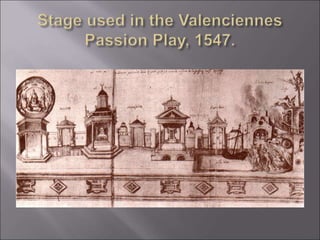
 Mystery plays, sometimes also called miracle
plays (though these tended to focus more on the
lives of saints), are among the earliest formally
developed plays in medieval Europe. Medieval
mystery plays focused on the representation of
Bible stories in churches as tableaux with
accompanying antiphonal song. They developed
from the 10th to the 16th centuries, reaching the
height of their popularity in the 15th century before
being rendered obsolete by the rise of professional
theater.
 A Morality play is a type of dramatic allegory, performed in
a theater, in which the protagonist is met by personifications
of various moral attributes who try to prompt him to choose
a godly life over one of evil. The protagonist him or herself is
also, quite often, a personification of the entire human
species, as is the case with characters such as Everyman
and Mankind. The stories usually follow a path where the
protagonist is tempted to sin by the antagonists and only
through God does the protagonist find peace, salvation, or
hope. The plays were most popular in Europe during the
fifteenth and sixteenth centuries. Having grown out of the
religiously based mystery plays and miracle plays of
the Middle Ages, they represented a shift towards a
more secular base for European theater.
 Morality plays were originally quite serious in tone and
style, due to their roots in religious drama. As time wore
on and the plays became more secularized, they began
to incorporate elements from popular farce. This
process was encouraged by the representation of the
Devil and his servant, the Vice, as mischievous trouble-
makers.
 The Devil and the Vice soon became figures of
amusement rather than moral edification. In addition,
the Church noticed that the actors would often
improvise humorous segments and scenes to increase
the play's hilarity to the crowd. By roughly 1500, the
Church no longer officially sanctioned the mystery,
miracle, or morality plays.
 The play was written near the end of the fifteenth
century. It is probably a translation from a Flemish play,
Elckerlijk (or Elckerlyc) first printed in 1495, although
there is a possibility that Everyman is the original, the
Flemish play the translation. There are four surviving
versions of Everyman, two of them fragmentary.
Everyman was written in the late 1400's. The source for
it has not been established. A Flemish work entitled
Elckerlijc, with the same story and theme, was written
about 1495 by Peter van Diest. The existence of that
work has prompted speculation that (1) Everyman was
based on Elckerlijc, (2) Elckerlijc was based on
Everyman, or (3) Everyman and Elckerlijc were based
on a story predating both works.
 Everyman is a morality play, an allegorical drama
that teaches a lesson about how Christians should
live and what a person must do to save his soul. A
morality play was, in effect, a sermon that was
acted out. The characters of a typical morality play
include personifications of virtues (such as hope
and charity), vices (such as pride and sloth), or
other qualities, as well as personifications of
objects (such as money) or activities (such as
death or fellowship). In addition, God and angels
may appear as characters, as they do in
Everyman.
 Everyman: Typical human being who has neglected his spiritual life but repents his sins
in time to be saved.

God: Just but merciful Supreme Being.

Death: Messenger commanded by God to summon Everyman.

Fellowship, Kindred, Cousin, Material Goods: Earthly acquaintances of Everyman
who abandon him in his time of need.

Good Deeds: The only friend willing to accompany Everyman to the afterlife.

Knowledge: Character that tells Everyman what he must do to obtain salvation.

Confession: Character representing the sacrament of penance. Everyman confesses
his sins to this character.

Discretion, Strength, Everyman's Five Wits, Beauty: Earthly acquaintances of
Everyman who abandon him in his time of need.

Angel: Creature that welcomes Everyman to the celestial realm.
 Seven Deadly Sins pride
 envy
 gluttony
 sloth
 lust
 avarice
 wrath
 Seven Redeeming Virtues prudence
 justice
 temperance
 fortitude
 faith
 hope
 charity
 Seven Sacraments baptism
 confirmation
 communion
 penance
 ordination
 matrimony
 unction

Everyman

  • 1.
  • 2.
     Everyman isa famous play that is, subconsciously or deliberately, alluded to in a number of pieces of literature, commercials, songs, and movies. An allegory, Everyman symbolizes just that; every man. In this morality play, Everyman is visited by Death and he is terrified. He journeys to find companionship to abate his terror over death. Much of the theme of the play revolves around “getting ready” for death; absolution of sin and forgiveness.
  • 3.
     Remember Dante’sInferno? Much of the theology of his day focused on the seven deadly sins:
  • 4.
     The authorof Everyman also is concerned over the seven deadly sins, as illustrated throughout his journey. However, there are also 7 sacraments of the Church that are important in a man’s life:  Baptism  Confirmation  Communion  Penance  Ordination  Matrimony  unction
  • 6.
     Mystery plays,sometimes also called miracle plays (though these tended to focus more on the lives of saints), are among the earliest formally developed plays in medieval Europe. Medieval mystery plays focused on the representation of Bible stories in churches as tableaux with accompanying antiphonal song. They developed from the 10th to the 16th centuries, reaching the height of their popularity in the 15th century before being rendered obsolete by the rise of professional theater.
  • 7.
     A Moralityplay is a type of dramatic allegory, performed in a theater, in which the protagonist is met by personifications of various moral attributes who try to prompt him to choose a godly life over one of evil. The protagonist him or herself is also, quite often, a personification of the entire human species, as is the case with characters such as Everyman and Mankind. The stories usually follow a path where the protagonist is tempted to sin by the antagonists and only through God does the protagonist find peace, salvation, or hope. The plays were most popular in Europe during the fifteenth and sixteenth centuries. Having grown out of the religiously based mystery plays and miracle plays of the Middle Ages, they represented a shift towards a more secular base for European theater.
  • 9.
     Morality playswere originally quite serious in tone and style, due to their roots in religious drama. As time wore on and the plays became more secularized, they began to incorporate elements from popular farce. This process was encouraged by the representation of the Devil and his servant, the Vice, as mischievous trouble- makers.  The Devil and the Vice soon became figures of amusement rather than moral edification. In addition, the Church noticed that the actors would often improvise humorous segments and scenes to increase the play's hilarity to the crowd. By roughly 1500, the Church no longer officially sanctioned the mystery, miracle, or morality plays.
  • 11.
     The playwas written near the end of the fifteenth century. It is probably a translation from a Flemish play, Elckerlijk (or Elckerlyc) first printed in 1495, although there is a possibility that Everyman is the original, the Flemish play the translation. There are four surviving versions of Everyman, two of them fragmentary. Everyman was written in the late 1400's. The source for it has not been established. A Flemish work entitled Elckerlijc, with the same story and theme, was written about 1495 by Peter van Diest. The existence of that work has prompted speculation that (1) Everyman was based on Elckerlijc, (2) Elckerlijc was based on Everyman, or (3) Everyman and Elckerlijc were based on a story predating both works.
  • 12.
     Everyman isa morality play, an allegorical drama that teaches a lesson about how Christians should live and what a person must do to save his soul. A morality play was, in effect, a sermon that was acted out. The characters of a typical morality play include personifications of virtues (such as hope and charity), vices (such as pride and sloth), or other qualities, as well as personifications of objects (such as money) or activities (such as death or fellowship). In addition, God and angels may appear as characters, as they do in Everyman.
  • 13.
     Everyman: Typicalhuman being who has neglected his spiritual life but repents his sins in time to be saved.  God: Just but merciful Supreme Being.  Death: Messenger commanded by God to summon Everyman.  Fellowship, Kindred, Cousin, Material Goods: Earthly acquaintances of Everyman who abandon him in his time of need.  Good Deeds: The only friend willing to accompany Everyman to the afterlife.  Knowledge: Character that tells Everyman what he must do to obtain salvation.  Confession: Character representing the sacrament of penance. Everyman confesses his sins to this character.  Discretion, Strength, Everyman's Five Wits, Beauty: Earthly acquaintances of Everyman who abandon him in his time of need.  Angel: Creature that welcomes Everyman to the celestial realm.
  • 15.
     Seven DeadlySins pride  envy  gluttony  sloth  lust  avarice  wrath  Seven Redeeming Virtues prudence  justice  temperance  fortitude  faith  hope  charity  Seven Sacraments baptism  confirmation  communion  penance  ordination  matrimony  unction