41. Minor stroke (stroke with
restorative neurological deficit).
Etiology, pathogenesis. Clinic,
treatment.
By
Berin Mohamed Ashraf
group : 932e
What is a minor stroke?
- The term “minor stroke” is often used for stroke patients with mild
and non disabling symptoms. However, a consensus definition is
lacking.
- There is no standard definition used for a stroke that qualifies as
minor. A stroke was defined as minor in the National Institutes of
Neurological Diseases and Stroke IV recombinant tissue plasminogen
activator trials when the symptoms were believed at the discretion of
the local investigator to be mild and cause very minimal or no
disability.
- Most definitions used in prior studies of minor stroke did not include
the effect on the patient's ability to perform functional and cognitive
tasks.
Etiology
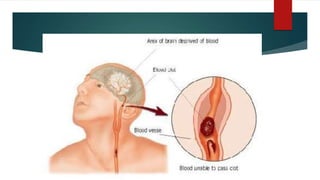
- "mini stroke" is caused by a temporary disruption in the blood supply to part
of the brain.The disruption in blood supply results in a lack of oxygen to the
brain.
- This blockage is usually caused by a blood clot that's formed elsewhere in
your body and travelled to the blood vessels supplying the brain, although it
can also be caused by some others risk factors including:
- smoking , having diabetes.
- high blood pressure (hypertension).
- high cholesterol levels.
- regularly drinking an excessive amount of alcohol.
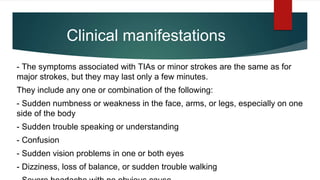
Clinical manifestations
- The symptoms associated with TIAs or minor strokes are the same as for
major strokes, but they may last only a few minutes.
They include any one or combination of the following:
- Sudden numbness or weakness in the face, arms, or legs, especially on one
side of the body
- Sudden trouble speaking or understanding
- Confusion
- Sudden vision problems in one or both eyes
- Dizziness, loss of balance, or sudden trouble walking
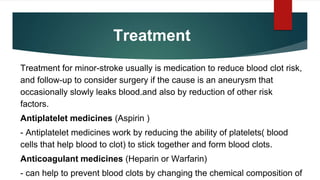
Treatment
Treatment for minor-stroke usually is medication to reduce blood clot risk,
and follow-up to consider surgery if the cause is an aneurysm that
occasionally slowly leaks blood.and also by reduction of other risk
factors.
Antiplatelet medicines (Aspirin )
- Antiplatelet medicines work by reducing the ability of platelets( blood
cells that help blood to clot) to stick together and form blood clots.
Anticoagulant medicines (Heparin or Warfarin)
- can help to prevent blood clots by changing the chemical composition of
Thanks for your attention

Minor stroke.pptx

  • 1.
    41. Minor stroke(stroke with restorative neurological deficit). Etiology, pathogenesis. Clinic, treatment. By Berin Mohamed Ashraf group : 932e
  • 2.
    What is aminor stroke? - The term “minor stroke” is often used for stroke patients with mild and non disabling symptoms. However, a consensus definition is lacking. - There is no standard definition used for a stroke that qualifies as minor. A stroke was defined as minor in the National Institutes of Neurological Diseases and Stroke IV recombinant tissue plasminogen activator trials when the symptoms were believed at the discretion of the local investigator to be mild and cause very minimal or no disability. - Most definitions used in prior studies of minor stroke did not include the effect on the patient's ability to perform functional and cognitive tasks.
  • 4.
    Etiology - "mini stroke"is caused by a temporary disruption in the blood supply to part of the brain.The disruption in blood supply results in a lack of oxygen to the brain. - This blockage is usually caused by a blood clot that's formed elsewhere in your body and travelled to the blood vessels supplying the brain, although it can also be caused by some others risk factors including: - smoking , having diabetes. - high blood pressure (hypertension). - high cholesterol levels. - regularly drinking an excessive amount of alcohol.
  • 5.
    Clinical manifestations - Thesymptoms associated with TIAs or minor strokes are the same as for major strokes, but they may last only a few minutes. They include any one or combination of the following: - Sudden numbness or weakness in the face, arms, or legs, especially on one side of the body - Sudden trouble speaking or understanding - Confusion - Sudden vision problems in one or both eyes - Dizziness, loss of balance, or sudden trouble walking
  • 6.
    Treatment Treatment for minor-strokeusually is medication to reduce blood clot risk, and follow-up to consider surgery if the cause is an aneurysm that occasionally slowly leaks blood.and also by reduction of other risk factors. Antiplatelet medicines (Aspirin ) - Antiplatelet medicines work by reducing the ability of platelets( blood cells that help blood to clot) to stick together and form blood clots. Anticoagulant medicines (Heparin or Warfarin) - can help to prevent blood clots by changing the chemical composition of
  • 7.
    Thanks for yourattention