*
*A mineral is an element or inorganic
chemical compound that is normally
crystalline and that has been formed
as a result of geological processes.
*
*Principal elements (>100mg/day)
(Macrominerals,Major elements):
calcium, phosphorus, magnesium, sodium,
potassium, chloride and sulfur
*Trace elements (<100mg/day)
(Microminerals,Minor elements):
iron, copper, zinc, cobalt, lead, silver, selenium,
molybdenum, fluoride
*
*Most abundant amongst all the minerals.
*Total calcium in body is 1-1.5 kg
*99% in bones,teeth and 1% in extracellular fluid
*Normal serum calcium levels: 9-11 mg/dl
50%- ionised, 40%-protein bound, 10%-complex
with phosphate, bicarbonate etc.
*
* Best sources- Milk and milk products
*Good sources- Beans,leafy vegetables,fish,egg
yolk,cabbage
*Cereals and pulses are poor sources
*Recommended dietary allowance(RDA) :
*Adult: 500 mg/ day
*Child: 1200 mg/ day
*Pregnant and lactating women: 1500 mg/ day
*Absorption: 1st and 2nd part of
duodenum
*Excretion: Kidney and Intestine
*
*Vitamin D
*Parathyroid hormone
*Acidity
*Lactose
*
*Phytates and oxalates
*Phosphates
*Free fatty acids
*Alkaline condition
*High content of dietary fibers
*
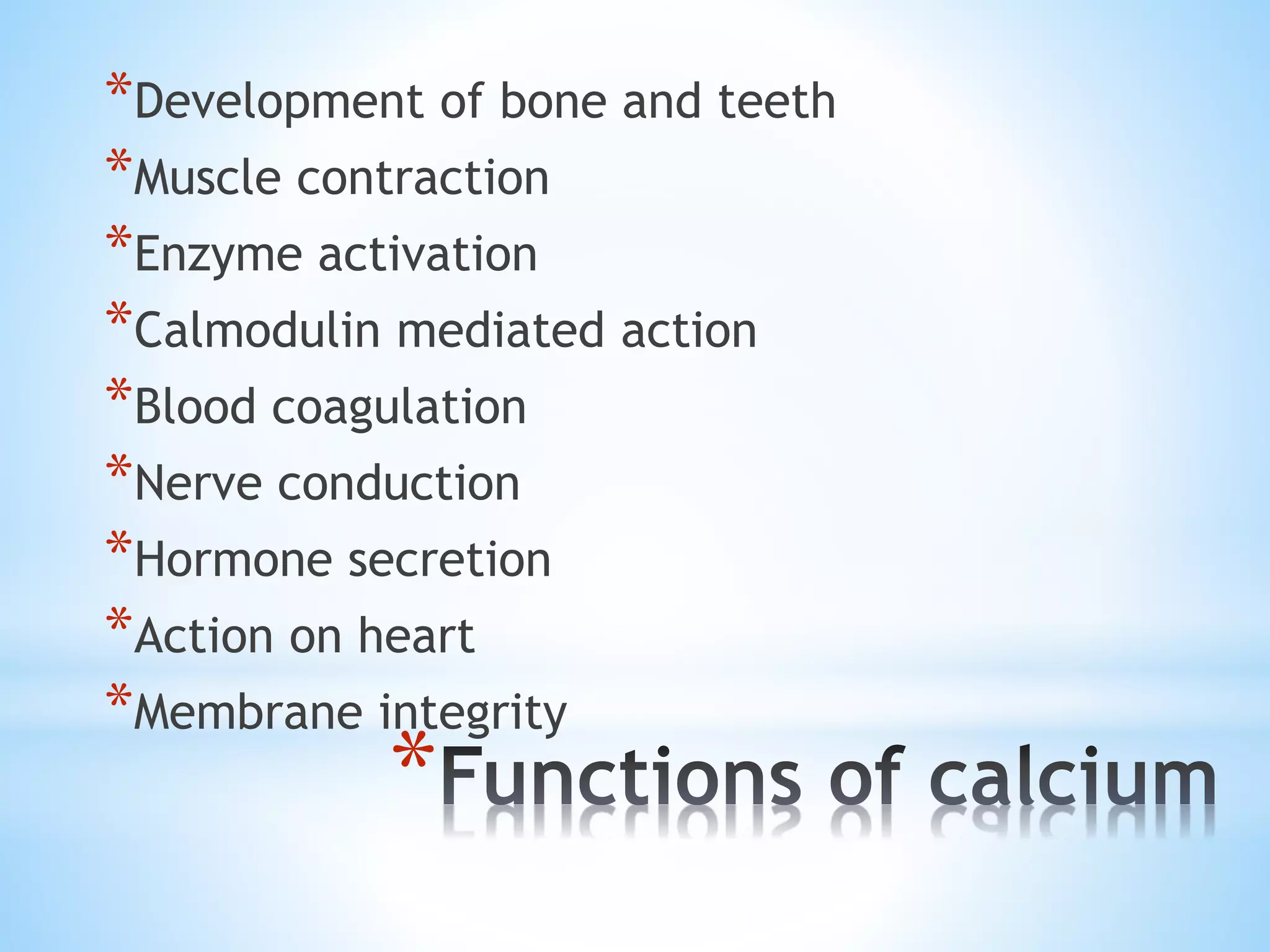
*Development of bone and teeth
*Muscle contraction
*Enzyme activation
*Calmodulin mediated action
*Blood coagulation
*Nerve conduction
*Hormone secretion
*Action on heart
*Membrane integrity
*Hormones calcitriol, parathyroid hormone (PTH)
and calcitonin are the major regulators of
calcium homeostasis
Increased calbindin leads to increased absorption
of calcium
Calcitriol enters the intestinal cells and its action
leads to increased levels
it promotes absorption of calcium and
phosphates.
Effects on intestine
*It also increases the renal absorption
of calcium.
*It also promotes calcium uptake by
osteoblasts of bone and promotes
calcification of bones.
Demineralization
Increased
osteoclasts
Blood
calcium level
increases
Increased calcium
reabsorption by
kidney
Calcium is
conserved
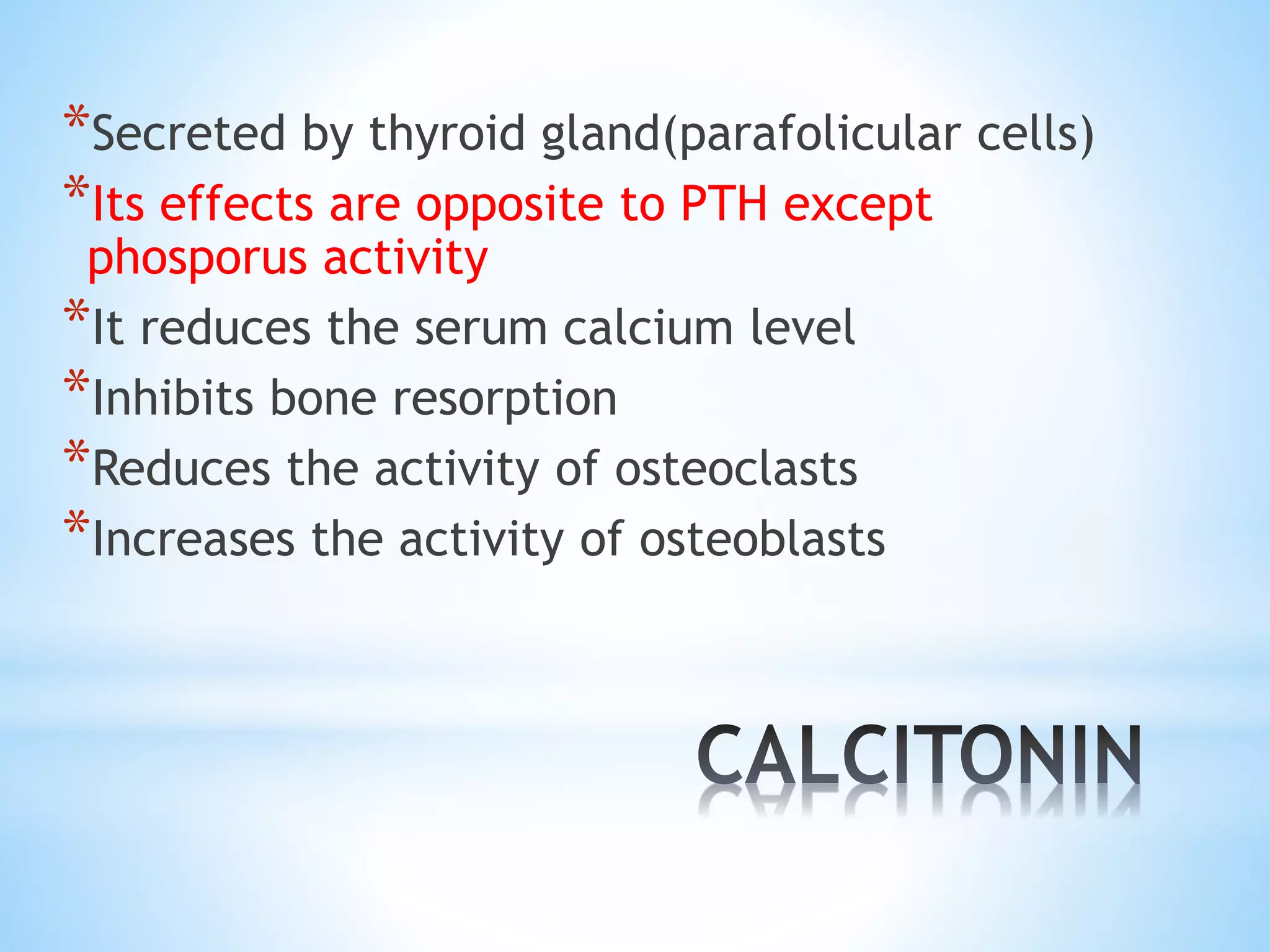
*Secreted by thyroid gland(parafolicular cells)
*Its effects are opposite to PTH except
phosporus activity
*It reduces the serum calcium level
*Inhibits bone resorption
*Reduces the activity of osteoclasts
*Increases the activity of osteoblasts
* Calcium level >11mg/dl
* Causes :
Hyperparathyroidism
Multiple myeloma
Metastatic carcinoma of bone
Thyrotoxicosis
Excess of Vit.D and Calcium
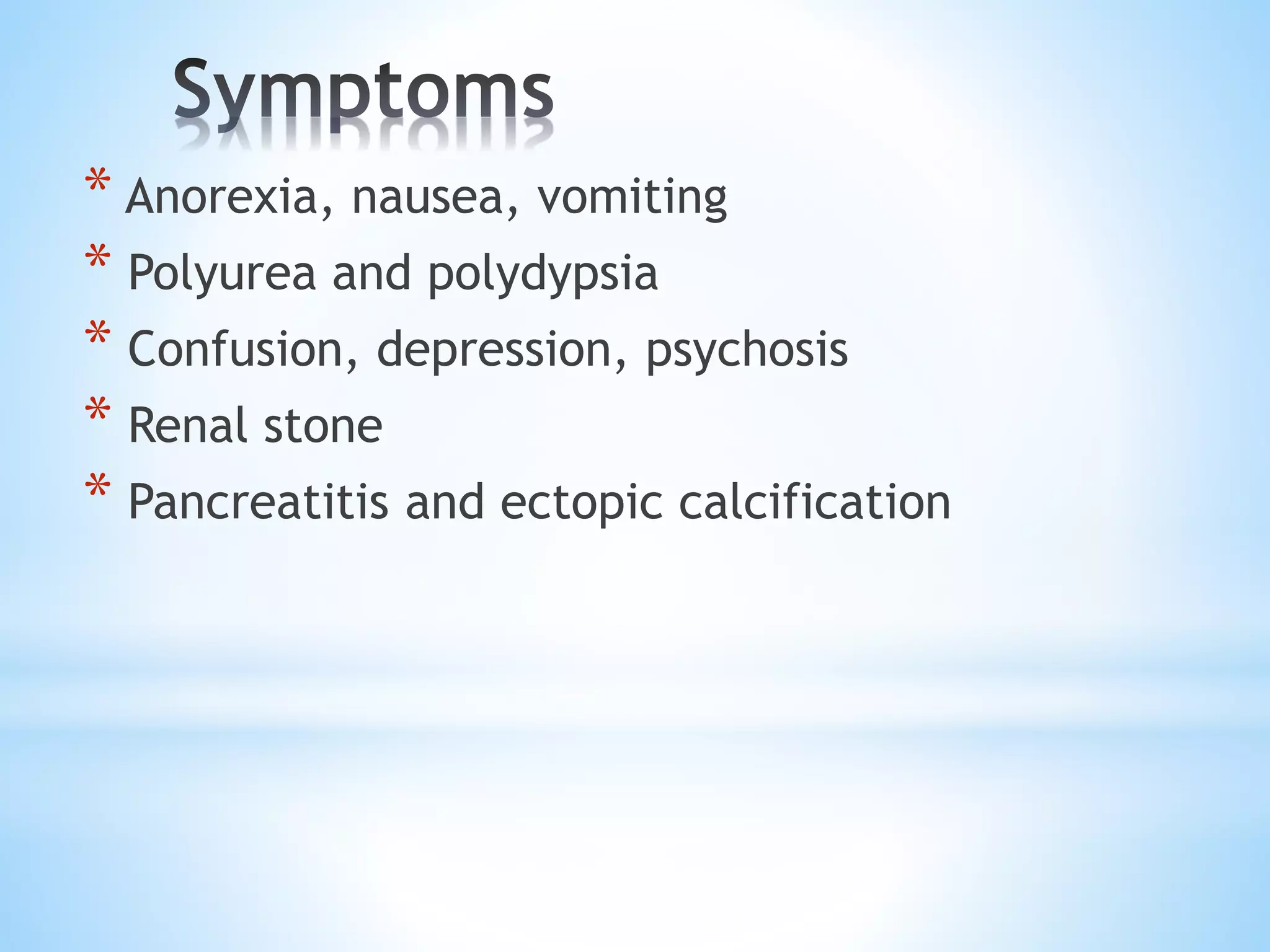
* Anorexia, nausea, vomiting
* Polyurea and polydypsia
* Confusion, depression, psychosis
* Renal stone
* Pancreatitis and ectopic calcification
* Calcium level <8.5mg/dl
* Causes :
Hypoparathyroidism
Malabsorption syndrome
Medullary carcinoma of thyroid
Deficiency of Vit.D
Renal failure
* Muscle cramps
* Paresthesis in fingers
*Laryngospasm
* Tetany (Chovstek’s Sign, Trousseu’s sign)
* Seizures
* Bradycardia
*
*
*Adult body contains 1 kg phospahte
*Most of it occurs in combination with calcium
in bones and teeth about 80%.
*Normal serum phophate levels: 3-5 mg/ dl
* Sources : milk, egg, leafy vegetables, meat,
cereals
* RDA:500 mg per day
*Development of bones and teeth
*Energy production ( ATP, GTP )
*DNA and RNA, phosphoproteins, phospholipids
formation
*Component of NADPH, pyridoxal phosphate,
ADP, AMP
*Maintenance of PH
*Enzyme activation
*
*Vit D ↑
*PTH↓
*Calcitonin ↓
*Iron and Oxalates ↓
Hyperphosphatemia
• Hypoparathyroidism
• CRF
• Diabetic
ketoacidosis
• Excess of Vit.D
Hypophosphatemia
• Rickets
• Osteomalacia
• Hyperparathyroidism
• Fanconi’s syndrome
* Body contains around 20 gm of Mg
* 70% in Bone and rest in soft tissues and body
fluids.
* Consumption of large amount of calcium and
phosphate diminishes Mg absorption
* PTH increases absorption
*Sources- Cereals, nuts, beans and leafy
vegetables
*RDA- 300-350mg/day
* Normal Serum level- 2-3mg/dl
*Involved in bones and teeth formation
*It serves as a co-factor for several
enzymes: hexokinase, glucokinase, PFK
( phosphofructokinase),adenylate cyclase
*Proper neuromascular activity
*Cellular transport-insulin dependent
glucose uptake
* DNA-Histone interaction, Oxidative
Phosphorylation
*Deficiency leads to neuromuscular irritation,
weakness and convulsions
* Body contains 100 mg of copper
* 95% of copper is bound to ceruloplasmin and 5%
to albumin.
*Sources- Liver, kidney,meat,eggs,leafy
vegetables
*RDA: Adults- 2-3mg/day
Children- 0.5-2mg/day
* Absorption- 10% of the dietary copper is
absorbed mainly in duodenum.
* Phytates, Zinc and Molybdenum decreases
copper uptake.
*Excretion- Mainly through bile. Urine does not
contain copper in normal circumstances.
*
*It is essential constituent for several enzymes: cytochrome
oxidase, tyrosinase, superoxide dismutase, monoamine
oxidase,lysyl oxidse
*It is important for heme synthesis ( ALA synthase contains
copper)
*Ceruloplasmin which is important for iron metabolism
contains copper.(ferroxidase activity)
*It is important for bone and nervous system( myelination)
*It is necessory for synthesis of melanin and phospholipids.
*Function of Hemocyanin
*Different form of copper proteins
* Anemia(iron)
*Demineralization of bones(Vit C)
*Demyelination of nervous tissue(Phospholipids)
*Fragility of arteries(lysyl oxidase)(elastin)
*Hypopigmentation of skin(tyrosinase)
*Graying of hair(tyrosinase)
* Absence of Copper binding ATPase(ATP 7A)
* Dietary copper is absorbed from GIT but unable to
transport into blood.
* Accumulation of copper.
* Decreased copper in plasma (less active metabolism),
anemia and hypopigmantation of skin
*Failure to synthesize ceruloplasmin or impairment in
binding capacity of copper to this protein(ATPase
Binding protein) (ATP7B)
*Copper gets deposited in Liver,Brain and Kidney
*Low level of Serum copper and Ceruloplasmin with
increased urinary excretion.
*Kayser-Fleischer’s ring (K.F. ring)
* Total amount in body is 2gm
* Prostate gland is very rich in Zn(100mg/g)
* Sources- Meat, fish, milk, beans and nuts
* RDA: 10-15mg/day
* Enzyme component- Carbonic anhydrase, alcohol
dehydrogenase, alkaline phosphatase
* Antioxidant- as a component of Superoxide dismutase
* Storage and secretion of Insulin
* Promots the synthesis of RBP so helps to maintain Vit A
level
* Required for wound healing, enhance cell growth and
division
* GUSTEN- a zinc protein helps in taste sensation
* Required for reproduction
* Growth retardation
* Poor wound healing
* Anemia
* Loss of appetite
* Loss of taste
* Impaired spermatogenesis
* Depression and dementia
*Acrodermatitis enteropathica ( dermatitis, hairloss and
diarrohea)
* Gastric ulcer
* Pancreatitis
* It prevents devlopment of dental caries.
* Proper devlopment of bones
* Inhibits the activity of certain enzymes
Sodium fluoride (enolase)
Fluoroacetate (aconitase)
Source- sea foods, cheese, jowar
* 1 ppm , Drinking water is main source.
* Dental caries (less than 0.5 ppm)
* Fluorosis
Dental Fluorosis(>5 ppm)
Mottling of enamel, discoloration of teeth, weak
teeth and brown, yellow discoloration
Skeletal Fluorosis(>20 ppm)
Hypercalcification, increasing the density of the
limbs,pelvis and spine, calcification of ligaments and
collagen
Genu Valgum
*
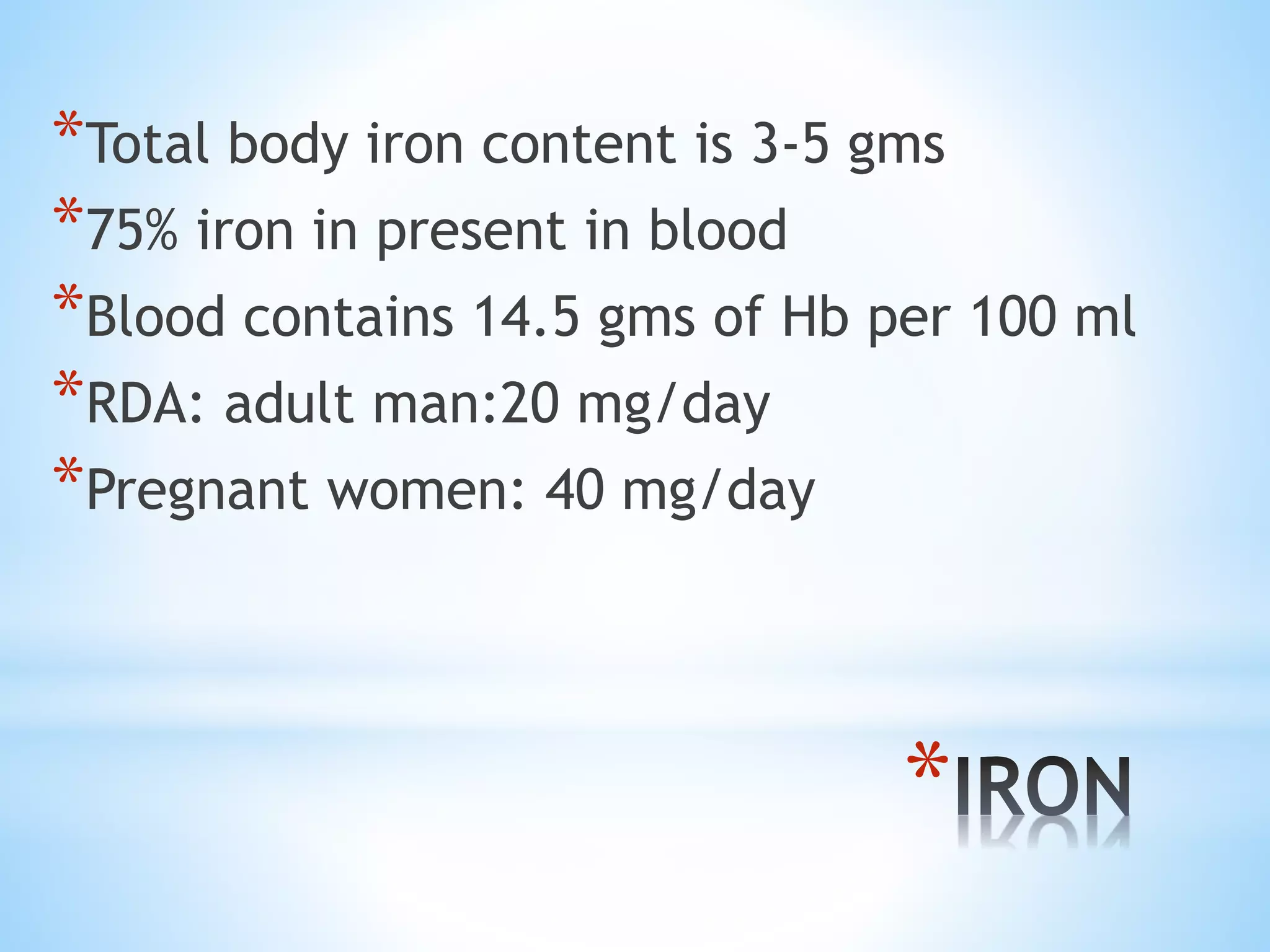
*Total body iron content is 3-5 gms
*75% iron in present in blood
*Blood contains 14.5 gms of Hb per 100 ml
*RDA: adult man:20 mg/day
*Pregnant women: 40 mg/day
*
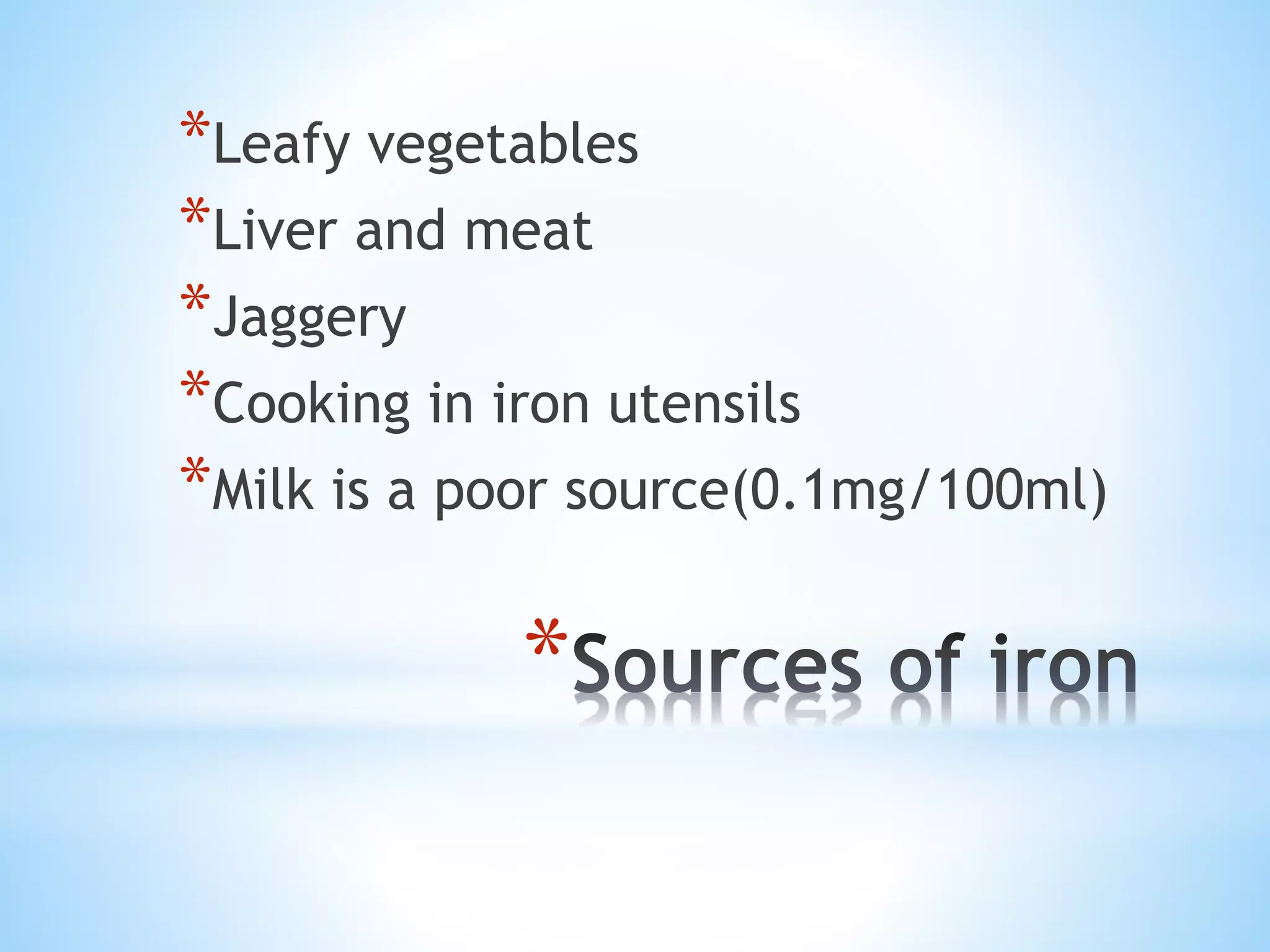
*Leafy vegetables
*Liver and meat
*Jaggery
*Cooking in iron utensils
*Milk is a poor source(0.1mg/100ml)
*
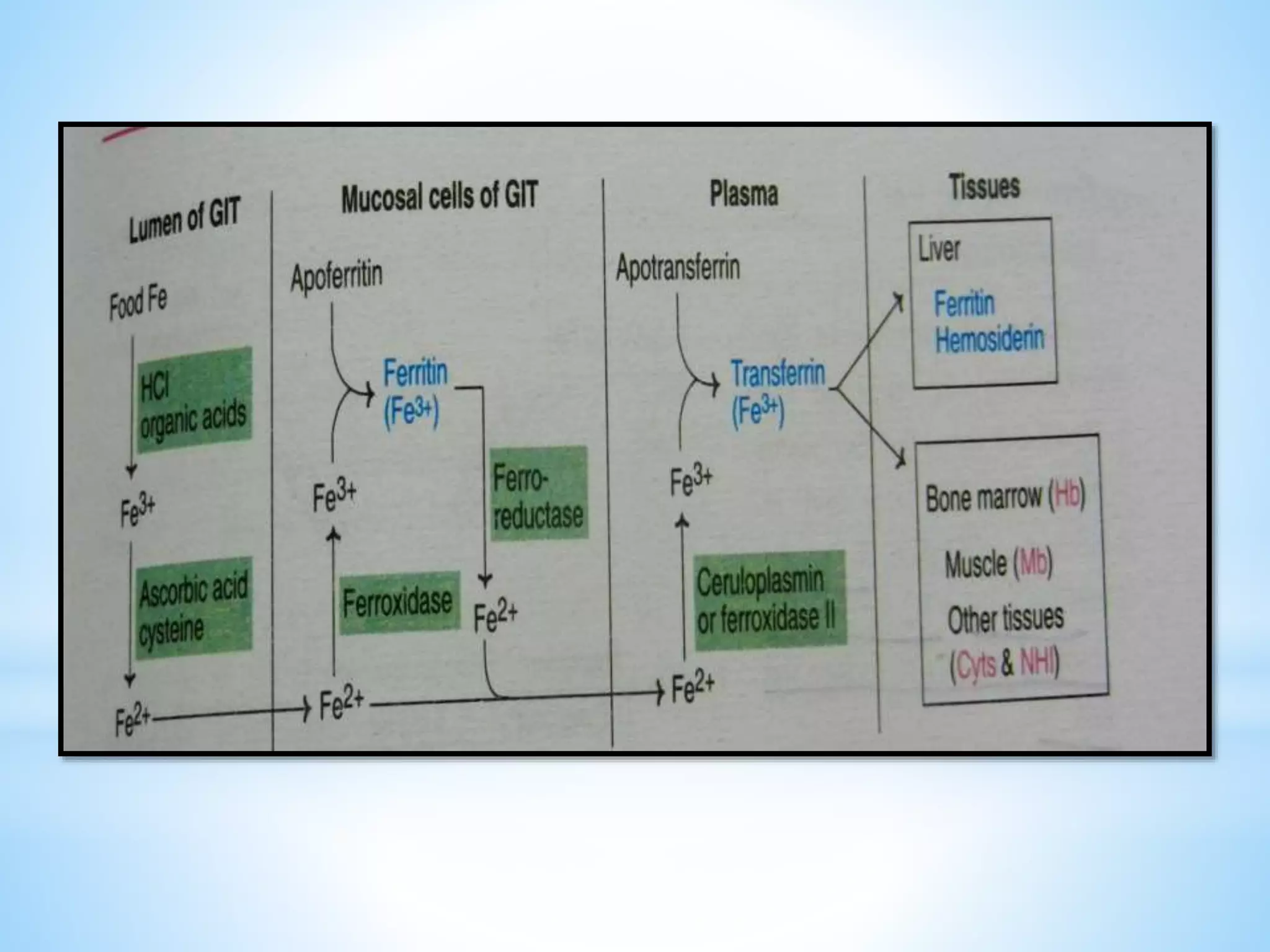
Factors increasing iron
absorption:
Ascorbic acid
Acidity
Small peptides and
amino acids
Iron deficiency anemia
Factors reducing iron
absorption
phytates and oxalates
High phosphate diet
Tea
Malabsorption
syndrome
Surgical removal of
stomach
*
*
*Hemoglobin and myoglobin contain iron. They
are required for transport of oxygen and carbon
dioxide
*Cytochrome also contain iron. They are required
in ETC( electron transport chain)
*Helps in killing bacteria
*Provides immunity
*
*Iron deficiency anemia: due to inadequate
intake or reduced absorption or increased
excretion of iron.
*Hemosiderosis: excessive iron in the body
*Hemochromatosis: iron is deposited directly in
the tissues.
* Sources- Liver, kidney and sea foods
* RDA- 50-200mg
* With Vit E it prevents hepatic necrosis and muscular
dystrophy
* Maintains structural integrity of biological membranes
* Antioxidant- as a component of Glutathione
* Prevents lipid peroxidation and protects the cells
against free radicals.
* Binds with the heavy metals (Hg, Cd) and protects from
its toxic effect
* 5’-deiodinase (Se containing Enzyme) converts T4 to T3.
* DEFICIENCY
KESHAN DISEASE ( Endemic Cardiomyopathy)
*TOXICITY
Weight loss, emotional disturbances, diarrhea, hair loss
and garlic odor in breath.
* It’s a constituent of enzymes Xanthine Oxidase,
Aldehyde Oxidase and Sulfite Oxidase.
* Molybdenosis- Impairment in growth, diarrhea and
anemia
* Intestinal absorption of copper is diminished
* Sources
Seafoods, drinking water, vegetables
High altitudes are deficient in iodine
content in water as well in soil
* RDA
Adults- 100-150 µg/day
Pregnant women- 200 µg/day
*Total body contains about 20mg iodine.
*80% present in the thyroid gland.Muscle,
salivary gland and ovaries also contain
some amount of iodine
*Required for thyroid hormone synthesis
*It is a important glucose tolerance
factor(chromodulin)
*Lowers the serum cholesterol levels
*It participate in transport of amino acids into
the cells
*Important as co-factor for certain enzymes:
Arginase, pyruvate carboxylase, superoxide
dismutase
*Inhibit lipid peroxidation
*Necessory for cholesterol biosynthesis
*Hb synthesis involves Mn
*Important constituent of sulfur
containing amino acids.
*Heparin, chondroitin
sulfate,glutathione constitutes sulfur
*Some vitamins like biotin, thiamine, Co
A contain sulfur.
*Maintains intracellular osmotic pressure.
*Maintains acid base balance
*It is involved in transmission of nerve
impulses
*Potassium influences cardiac muscle
activity
*Maintain acid base balance
*Maintains Osmotic pressure and fluid
balance.
*Muscle activity depends upon sodium
and potassium
*Maintains heart beat
*Involves in absorption of glucose and
aminoacids
*
*Maintains acid base balance
*Important constituent of
gastric juice
*Activation of amylase

Minerals and their metabolism

  • 2.
    * *A mineral isan element or inorganic chemical compound that is normally crystalline and that has been formed as a result of geological processes.
  • 3.
    * *Principal elements (>100mg/day) (Macrominerals,Majorelements): calcium, phosphorus, magnesium, sodium, potassium, chloride and sulfur *Trace elements (<100mg/day) (Microminerals,Minor elements): iron, copper, zinc, cobalt, lead, silver, selenium, molybdenum, fluoride
  • 4.
  • 5.
    *Most abundant amongstall the minerals. *Total calcium in body is 1-1.5 kg *99% in bones,teeth and 1% in extracellular fluid *Normal serum calcium levels: 9-11 mg/dl 50%- ionised, 40%-protein bound, 10%-complex with phosphate, bicarbonate etc.
  • 6.
    * * Best sources-Milk and milk products *Good sources- Beans,leafy vegetables,fish,egg yolk,cabbage *Cereals and pulses are poor sources
  • 7.
    *Recommended dietary allowance(RDA): *Adult: 500 mg/ day *Child: 1200 mg/ day *Pregnant and lactating women: 1500 mg/ day
  • 8.
    *Absorption: 1st and2nd part of duodenum *Excretion: Kidney and Intestine
  • 9.
  • 10.
    * *Phytates and oxalates *Phosphates *Freefatty acids *Alkaline condition *High content of dietary fibers
  • 11.
    * *Development of boneand teeth *Muscle contraction *Enzyme activation *Calmodulin mediated action *Blood coagulation *Nerve conduction *Hormone secretion *Action on heart *Membrane integrity
  • 13.
    *Hormones calcitriol, parathyroidhormone (PTH) and calcitonin are the major regulators of calcium homeostasis
  • 14.
    Increased calbindin leadsto increased absorption of calcium Calcitriol enters the intestinal cells and its action leads to increased levels it promotes absorption of calcium and phosphates. Effects on intestine
  • 15.
    *It also increasesthe renal absorption of calcium. *It also promotes calcium uptake by osteoblasts of bone and promotes calcification of bones.
  • 16.
  • 17.
  • 19.
    *Secreted by thyroidgland(parafolicular cells) *Its effects are opposite to PTH except phosporus activity *It reduces the serum calcium level *Inhibits bone resorption *Reduces the activity of osteoclasts *Increases the activity of osteoblasts
  • 21.
    * Calcium level>11mg/dl * Causes : Hyperparathyroidism Multiple myeloma Metastatic carcinoma of bone Thyrotoxicosis Excess of Vit.D and Calcium
  • 22.
    * Anorexia, nausea,vomiting * Polyurea and polydypsia * Confusion, depression, psychosis * Renal stone * Pancreatitis and ectopic calcification
  • 23.
    * Calcium level<8.5mg/dl * Causes : Hypoparathyroidism Malabsorption syndrome Medullary carcinoma of thyroid Deficiency of Vit.D Renal failure
  • 24.
    * Muscle cramps *Paresthesis in fingers *Laryngospasm * Tetany (Chovstek’s Sign, Trousseu’s sign) * Seizures * Bradycardia
  • 25.
  • 26.
    * *Adult body contains1 kg phospahte *Most of it occurs in combination with calcium in bones and teeth about 80%. *Normal serum phophate levels: 3-5 mg/ dl
  • 27.
    * Sources :milk, egg, leafy vegetables, meat, cereals * RDA:500 mg per day
  • 28.
    *Development of bonesand teeth *Energy production ( ATP, GTP ) *DNA and RNA, phosphoproteins, phospholipids formation *Component of NADPH, pyridoxal phosphate, ADP, AMP *Maintenance of PH *Enzyme activation
  • 29.
    * *Vit D ↑ *PTH↓ *Calcitonin↓ *Iron and Oxalates ↓
  • 30.
    Hyperphosphatemia • Hypoparathyroidism • CRF •Diabetic ketoacidosis • Excess of Vit.D Hypophosphatemia • Rickets • Osteomalacia • Hyperparathyroidism • Fanconi’s syndrome
  • 31.
    * Body containsaround 20 gm of Mg * 70% in Bone and rest in soft tissues and body fluids. * Consumption of large amount of calcium and phosphate diminishes Mg absorption * PTH increases absorption
  • 32.
    *Sources- Cereals, nuts,beans and leafy vegetables *RDA- 300-350mg/day * Normal Serum level- 2-3mg/dl
  • 33.
    *Involved in bonesand teeth formation *It serves as a co-factor for several enzymes: hexokinase, glucokinase, PFK ( phosphofructokinase),adenylate cyclase *Proper neuromascular activity *Cellular transport-insulin dependent glucose uptake * DNA-Histone interaction, Oxidative Phosphorylation
  • 34.
    *Deficiency leads toneuromuscular irritation, weakness and convulsions
  • 35.
    * Body contains100 mg of copper * 95% of copper is bound to ceruloplasmin and 5% to albumin. *Sources- Liver, kidney,meat,eggs,leafy vegetables *RDA: Adults- 2-3mg/day Children- 0.5-2mg/day
  • 36.
    * Absorption- 10%of the dietary copper is absorbed mainly in duodenum. * Phytates, Zinc and Molybdenum decreases copper uptake. *Excretion- Mainly through bile. Urine does not contain copper in normal circumstances.
  • 37.
    * *It is essentialconstituent for several enzymes: cytochrome oxidase, tyrosinase, superoxide dismutase, monoamine oxidase,lysyl oxidse *It is important for heme synthesis ( ALA synthase contains copper) *Ceruloplasmin which is important for iron metabolism contains copper.(ferroxidase activity) *It is important for bone and nervous system( myelination) *It is necessory for synthesis of melanin and phospholipids. *Function of Hemocyanin *Different form of copper proteins
  • 38.
    * Anemia(iron) *Demineralization ofbones(Vit C) *Demyelination of nervous tissue(Phospholipids) *Fragility of arteries(lysyl oxidase)(elastin) *Hypopigmentation of skin(tyrosinase) *Graying of hair(tyrosinase)
  • 39.
    * Absence ofCopper binding ATPase(ATP 7A) * Dietary copper is absorbed from GIT but unable to transport into blood. * Accumulation of copper. * Decreased copper in plasma (less active metabolism), anemia and hypopigmantation of skin
  • 40.
    *Failure to synthesizeceruloplasmin or impairment in binding capacity of copper to this protein(ATPase Binding protein) (ATP7B) *Copper gets deposited in Liver,Brain and Kidney *Low level of Serum copper and Ceruloplasmin with increased urinary excretion. *Kayser-Fleischer’s ring (K.F. ring)
  • 42.
    * Total amountin body is 2gm * Prostate gland is very rich in Zn(100mg/g) * Sources- Meat, fish, milk, beans and nuts * RDA: 10-15mg/day
  • 43.
    * Enzyme component-Carbonic anhydrase, alcohol dehydrogenase, alkaline phosphatase * Antioxidant- as a component of Superoxide dismutase * Storage and secretion of Insulin * Promots the synthesis of RBP so helps to maintain Vit A level * Required for wound healing, enhance cell growth and division * GUSTEN- a zinc protein helps in taste sensation * Required for reproduction
  • 44.
    * Growth retardation *Poor wound healing * Anemia * Loss of appetite * Loss of taste * Impaired spermatogenesis * Depression and dementia *Acrodermatitis enteropathica ( dermatitis, hairloss and diarrohea)
  • 45.
    * Gastric ulcer *Pancreatitis
  • 46.
    * It preventsdevlopment of dental caries. * Proper devlopment of bones * Inhibits the activity of certain enzymes Sodium fluoride (enolase) Fluoroacetate (aconitase) Source- sea foods, cheese, jowar
  • 48.
    * 1 ppm, Drinking water is main source. * Dental caries (less than 0.5 ppm) * Fluorosis Dental Fluorosis(>5 ppm) Mottling of enamel, discoloration of teeth, weak teeth and brown, yellow discoloration Skeletal Fluorosis(>20 ppm) Hypercalcification, increasing the density of the limbs,pelvis and spine, calcification of ligaments and collagen Genu Valgum
  • 49.
    * *Total body ironcontent is 3-5 gms *75% iron in present in blood *Blood contains 14.5 gms of Hb per 100 ml *RDA: adult man:20 mg/day *Pregnant women: 40 mg/day
  • 50.
    * *Leafy vegetables *Liver andmeat *Jaggery *Cooking in iron utensils *Milk is a poor source(0.1mg/100ml)
  • 51.
    * Factors increasing iron absorption: Ascorbicacid Acidity Small peptides and amino acids Iron deficiency anemia Factors reducing iron absorption phytates and oxalates High phosphate diet Tea Malabsorption syndrome Surgical removal of stomach
  • 52.
  • 54.
    * *Hemoglobin and myoglobincontain iron. They are required for transport of oxygen and carbon dioxide *Cytochrome also contain iron. They are required in ETC( electron transport chain) *Helps in killing bacteria *Provides immunity
  • 55.
    * *Iron deficiency anemia:due to inadequate intake or reduced absorption or increased excretion of iron. *Hemosiderosis: excessive iron in the body *Hemochromatosis: iron is deposited directly in the tissues.
  • 56.
    * Sources- Liver,kidney and sea foods * RDA- 50-200mg
  • 57.
    * With VitE it prevents hepatic necrosis and muscular dystrophy * Maintains structural integrity of biological membranes * Antioxidant- as a component of Glutathione * Prevents lipid peroxidation and protects the cells against free radicals. * Binds with the heavy metals (Hg, Cd) and protects from its toxic effect * 5’-deiodinase (Se containing Enzyme) converts T4 to T3.
  • 58.
    * DEFICIENCY KESHAN DISEASE( Endemic Cardiomyopathy) *TOXICITY Weight loss, emotional disturbances, diarrhea, hair loss and garlic odor in breath.
  • 59.
    * It’s aconstituent of enzymes Xanthine Oxidase, Aldehyde Oxidase and Sulfite Oxidase. * Molybdenosis- Impairment in growth, diarrhea and anemia * Intestinal absorption of copper is diminished
  • 60.
    * Sources Seafoods, drinkingwater, vegetables High altitudes are deficient in iodine content in water as well in soil * RDA Adults- 100-150 µg/day Pregnant women- 200 µg/day
  • 61.
    *Total body containsabout 20mg iodine. *80% present in the thyroid gland.Muscle, salivary gland and ovaries also contain some amount of iodine *Required for thyroid hormone synthesis
  • 62.
    *It is aimportant glucose tolerance factor(chromodulin) *Lowers the serum cholesterol levels *It participate in transport of amino acids into the cells
  • 63.
    *Important as co-factorfor certain enzymes: Arginase, pyruvate carboxylase, superoxide dismutase *Inhibit lipid peroxidation *Necessory for cholesterol biosynthesis *Hb synthesis involves Mn
  • 64.
    *Important constituent ofsulfur containing amino acids. *Heparin, chondroitin sulfate,glutathione constitutes sulfur *Some vitamins like biotin, thiamine, Co A contain sulfur.
  • 65.
    *Maintains intracellular osmoticpressure. *Maintains acid base balance *It is involved in transmission of nerve impulses *Potassium influences cardiac muscle activity
  • 66.
    *Maintain acid basebalance *Maintains Osmotic pressure and fluid balance. *Muscle activity depends upon sodium and potassium *Maintains heart beat *Involves in absorption of glucose and aminoacids
  • 67.
    * *Maintains acid basebalance *Important constituent of gastric juice *Activation of amylase