Bringing history to life
using Primary Sources
Senga White
Research Librarian - Te Haeata no Waihopai - C5P
Purpose & Goals
Develop a kete of local history primary
source materials as teaching resources
Igniting active engagement, curiosity and
critical thinking
Support teachers to
confidently and capably
use primary resources
through
teacher-librarian
collaborative
partnerships
Findings
Goal 1
Participating teacher confidence to use
primary source materials increased
Goal 2
Teachers acknowledged the benefits
of teacher-librarian collaboration
Participants
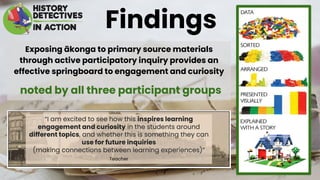
Exposing ākonga to primary source materials
through active participatory inquiry provides an
effective springboard to engagement and curiosity
noted by all three participant groups
Findings
Insights &
What’s next
Leadership
Collaboration
Cultural Practice
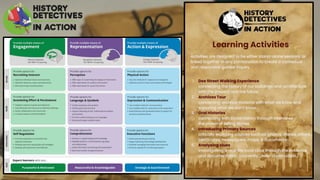
History Detectives in Action
References
Bada, S.O. (2015). Constructivism learning theory: A paradigm for teaching and learning. IOSR Journal of Research & Method in Education. 5 (6), 66-70.
Barteaux, S. (2014). Universal Design for Learning. BU Journal of Graduate Studies in Education, 6(2) 50-54
https://files.eric.ed.gov/fulltext/EJ1230738.pdf
Barton, K.C. (2005). Primary sources in history: Breaking through the myths. Phi Delta Kappan, 86(10) 745-753.
http://ezproxy.christchurchcitylibraries.com/login?url=https://www.proquest.com/scholarly-journals/primary-sources-history-breaking-th
rough-myths/docview/218518694/se-2?accountid=48718
Emerson, L., Kilpin, K., White, S., Greenhow, A., Macaskill, A., Feekery, A., Lamond, H., Doughty, C., & O’Connor, R. (2018). Under-recognised,
underused and undervalued: School libraries and librarians in New Zealand secondary school curriculum planning and delivery. Curriculum
Matters, 14, 48-68. doi:10.18296/cm.0026
Durie, M. (2015). Educational leadership for tomorrow. Educational Council of New Zealand
https://teachingcouncil.nz/assets/Files/Leadership-Strategy/Leadership-for-Communities-of-Learning-Five-Think-Pieces.pdf
Hattie, J. (2012). Visible learning for teachers: Maximising impact on learning. Routledge https://hozir.org/pars_docs/refs/26/25322/25322.pdf
Kemmis, S. (2011). A self-reflective practitioner and a new definition of critical participatory action research. (11-29).
DOI:10.1007/978-94-007-0805-1_2
Kenyon, C., & Hase, S. (2001). Moving from andragogy to heutagogy in vocational education., 1-9.
https://www.proquest.com/scholarly-journals/moving-andragogy-heutagogy-vocational-education/docview/62254315/se-2?accountid=1962
79
McNiff, J., & Whitehead, J. (2005). Action research for teachers: A practical guide. ProQuest Ebook Central https://ebookcentral.proquest.com
Robinson, K. (2016). Creative schools: The grassroots revolution that’s transforming education. Penguin Books.
Wenger, E. (1998). Communities of practice: Learning, meaning, and identity. Cambridge University Press.

Mind Lab Masters Symposium Presentation

  • 1.
    Bringing history tolife using Primary Sources Senga White Research Librarian - Te Haeata no Waihopai - C5P
  • 2.
    Purpose & Goals Developa kete of local history primary source materials as teaching resources Igniting active engagement, curiosity and critical thinking Support teachers to confidently and capably use primary resources through teacher-librarian collaborative partnerships
  • 12.
  • 13.
    Goal 1 Participating teacherconfidence to use primary source materials increased
  • 14.
    Goal 2 Teachers acknowledgedthe benefits of teacher-librarian collaboration
  • 15.
  • 16.
    Exposing ākonga toprimary source materials through active participatory inquiry provides an effective springboard to engagement and curiosity noted by all three participant groups Findings
  • 17.
  • 18.
    References Bada, S.O. (2015).Constructivism learning theory: A paradigm for teaching and learning. IOSR Journal of Research & Method in Education. 5 (6), 66-70. Barteaux, S. (2014). Universal Design for Learning. BU Journal of Graduate Studies in Education, 6(2) 50-54 https://files.eric.ed.gov/fulltext/EJ1230738.pdf Barton, K.C. (2005). Primary sources in history: Breaking through the myths. Phi Delta Kappan, 86(10) 745-753. http://ezproxy.christchurchcitylibraries.com/login?url=https://www.proquest.com/scholarly-journals/primary-sources-history-breaking-th rough-myths/docview/218518694/se-2?accountid=48718 Emerson, L., Kilpin, K., White, S., Greenhow, A., Macaskill, A., Feekery, A., Lamond, H., Doughty, C., & O’Connor, R. (2018). Under-recognised, underused and undervalued: School libraries and librarians in New Zealand secondary school curriculum planning and delivery. Curriculum Matters, 14, 48-68. doi:10.18296/cm.0026 Durie, M. (2015). Educational leadership for tomorrow. Educational Council of New Zealand https://teachingcouncil.nz/assets/Files/Leadership-Strategy/Leadership-for-Communities-of-Learning-Five-Think-Pieces.pdf Hattie, J. (2012). Visible learning for teachers: Maximising impact on learning. Routledge https://hozir.org/pars_docs/refs/26/25322/25322.pdf Kemmis, S. (2011). A self-reflective practitioner and a new definition of critical participatory action research. (11-29). DOI:10.1007/978-94-007-0805-1_2 Kenyon, C., & Hase, S. (2001). Moving from andragogy to heutagogy in vocational education., 1-9. https://www.proquest.com/scholarly-journals/moving-andragogy-heutagogy-vocational-education/docview/62254315/se-2?accountid=1962 79 McNiff, J., & Whitehead, J. (2005). Action research for teachers: A practical guide. ProQuest Ebook Central https://ebookcentral.proquest.com Robinson, K. (2016). Creative schools: The grassroots revolution that’s transforming education. Penguin Books. Wenger, E. (1998). Communities of practice: Learning, meaning, and identity. Cambridge University Press.