MAJOR INCIDENT MEDICAL
MANAGEMENT AND SUPPORT
                      Paleerat Jariyakanjana, MD
         Faculty of Medicine, Naresuan University
                                      1 Apr 2013
Definition

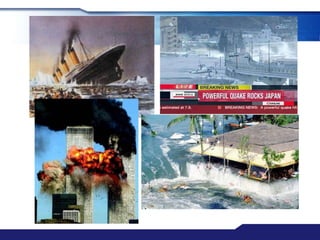
 Major Incidents: any incident where the number,
  severity, type or location of live casualties
  requires extraordinary resources

 Disaster: need > resource
 Mass casualty incident: Healthcare need >
  resource
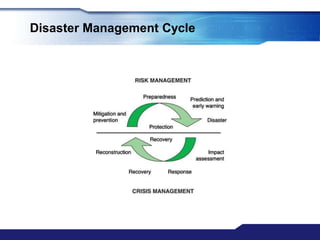
Disaster Management Cycle
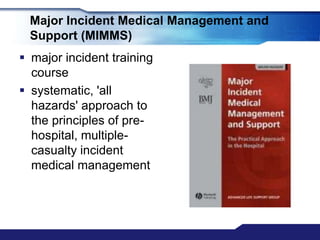
Major Incident Medical Management and
 Support (MIMMS)
 major incident training
  course
 systematic, 'all
  hazards' approach to
  the principles of pre-
  hospital, multiple-
  casualty incident
  medical management
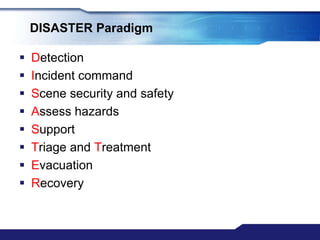
DISASTER Paradigm

   Detection
   Incident command
   Scene security and safety
   Assess hazards
   Support
   Triage and Treatment
   Evacuation
   Recovery
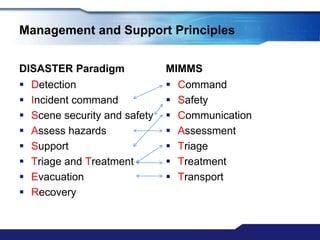
Management and Support Principles


DISASTER Paradigm             MIMMS
 Detection                    Command
 Incident command             Safety
 Scene security and safety    Communication
 Assess hazards               Assessment
 Support                      Triage
 Triage and Treatment         Treatment
 Evacuation                   Transport
 Recovery
CSCATTT
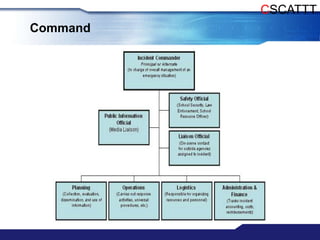
Command
CSCATTT
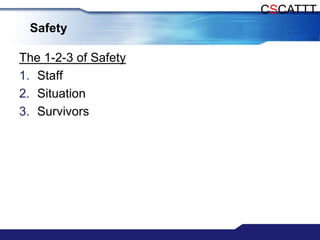
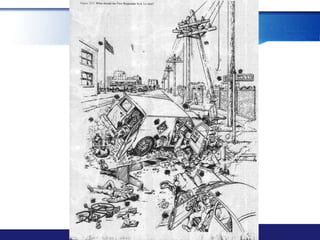
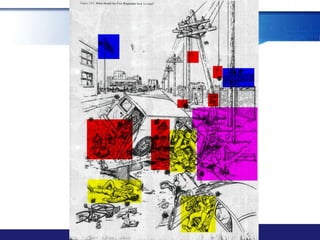
 Safety

The 1-2-3 of Safety
1. Staff
2. Situation
3. Survivors
CSCATTT
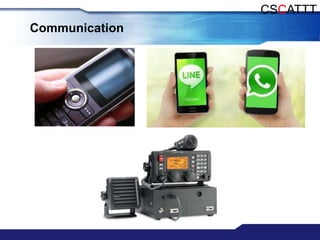
Communication
CSCATTT
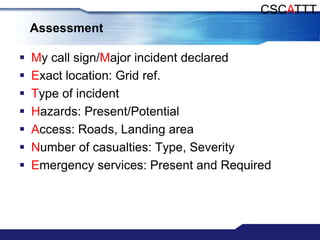
    Assessment

   My call sign/Major incident declared
   Exact location: Grid ref.
   Type of incident
   Hazards: Present/Potential
   Access: Roads, Landing area
   Number of casualties: Type, Severity
   Emergency services: Present and Required
CSCATTT


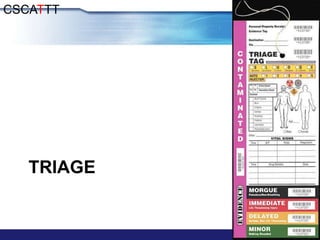
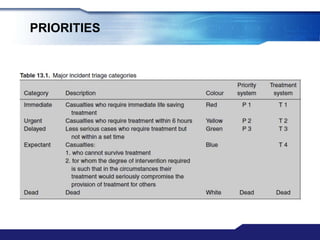
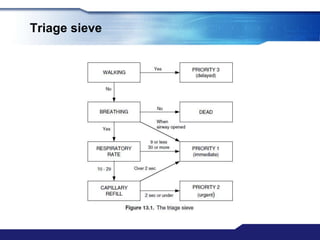
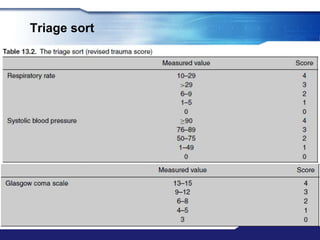
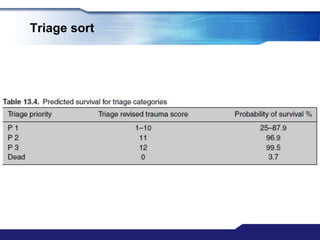
   TRIAGE
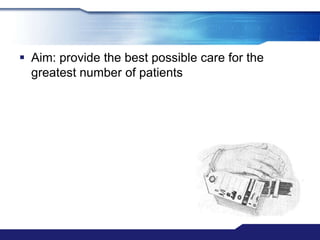
 Aim: provide the best possible care for the
  greatest number of patients
PRIORITIES
Triage sieve
Triage sort
Triage sort
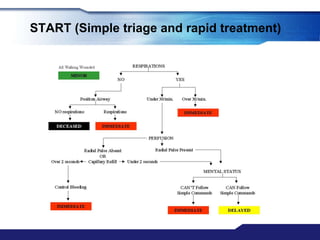
START (Simple triage and rapid treatment)
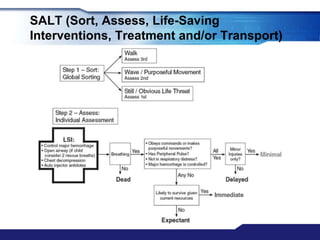
SALT (Sort, Assess, Life-Saving
Interventions, Treatment and/or Transport)
CSCATTT
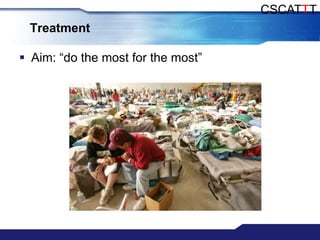
 Treatment

 Aim: “do the most for the most”
CSCATTT
    Transport

 Aim: get the right casualty to the right place in
  the right time
 Casualties should be dispersed to different
  hospitals, most appropriate to their need.

   Mechanism of injury
   Injury found or suspected
   Signs (vital signs)
   Treatment given
Take home message

 Sieve    disability   pt   mental status
  change       P1
                 death                      sort
Reference

 Ppt                               ,
                ,
 https://sites.google.com/site/dimersarred/disaste
  r-management-cycle
 https://sites.google.com/site/sarbook1/excerpt-
  incident-command
ANY QUESTIONS?

MIMMS

  • 1.
    MAJOR INCIDENT MEDICAL MANAGEMENTAND SUPPORT Paleerat Jariyakanjana, MD Faculty of Medicine, Naresuan University 1 Apr 2013
  • 3.
    Definition  Major Incidents:any incident where the number, severity, type or location of live casualties requires extraordinary resources  Disaster: need > resource  Mass casualty incident: Healthcare need > resource
  • 4.
  • 5.
    Major Incident MedicalManagement and Support (MIMMS)  major incident training course  systematic, 'all hazards' approach to the principles of pre- hospital, multiple- casualty incident medical management
  • 6.
    DISASTER Paradigm  Detection  Incident command  Scene security and safety  Assess hazards  Support  Triage and Treatment  Evacuation  Recovery
  • 7.
    Management and SupportPrinciples DISASTER Paradigm MIMMS  Detection  Command  Incident command  Safety  Scene security and safety  Communication  Assess hazards  Assessment  Support  Triage  Triage and Treatment  Treatment  Evacuation  Transport  Recovery
  • 8.
  • 9.
    CSCATTT Safety The 1-2-3of Safety 1. Staff 2. Situation 3. Survivors
  • 12.
  • 13.
    CSCATTT Assessment  My call sign/Major incident declared  Exact location: Grid ref.  Type of incident  Hazards: Present/Potential  Access: Roads, Landing area  Number of casualties: Type, Severity  Emergency services: Present and Required
  • 14.
    CSCATTT TRIAGE
  • 15.
     Aim: providethe best possible care for the greatest number of patients
  • 16.
  • 17.
  • 18.
  • 19.
  • 20.
    START (Simple triageand rapid treatment)
  • 21.
    SALT (Sort, Assess,Life-Saving Interventions, Treatment and/or Transport)
  • 22.
    CSCATTT Treatment  Aim:“do the most for the most”
  • 23.
    CSCATTT Transport  Aim: get the right casualty to the right place in the right time  Casualties should be dispersed to different hospitals, most appropriate to their need.  Mechanism of injury  Injury found or suspected  Signs (vital signs)  Treatment given
  • 24.
    Take home message Sieve disability pt mental status change P1  death sort
  • 25.
    Reference  Ppt , ,  https://sites.google.com/site/dimersarred/disaste r-management-cycle  https://sites.google.com/site/sarbook1/excerpt- incident-command
  • 26.