• “ Hospitals have always been an important link in the
chain of disaster response and are assuming even more
importance as advanced pre-hospital care capabilities lead
to improved survival-to-hospital rate”(Dara et al., 2005).
• Therefore, disaster preparedness in India must focus
heavily on organizations that provide healthcare.
Not a mandatory requirement
Most of the hospitals have less or no
knowledge and understanding of disaster
preparedness
Very few hospitals have proactively
responded
Accreditation is a boon
Difficulty in resource allocation
 Not a priority area for the hospital
management
Difficult to keep the training inputs
remembered
 Not a routine activity
Less trainers available
Theory not put in to practice
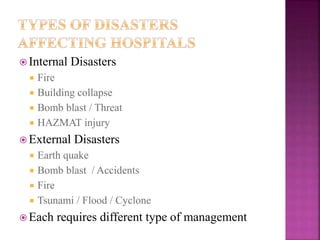
 Internal Disasters
 Fire
 Building collapse
 Bomb blast / Threat
 HAZMAT injury
 External Disasters
 Earth quake
 Bomb blast / Accidents
 Fire
 Tsunami / Flood / Cyclone
 Each requires different type of management
Disaster
Nsg.
Doc’s
Mainte
nance
Securit
y
PR
Mgt.
Lab /
Blood
bank
Pharmacy
Hospital
Govt
Other
HCOs
supplie
rs
Police
Media
Pt.
Relatives
 Formation of disaster management TEAM

 Preparing Emergency / Disaster management
MANUAL
Director / CEO / Medical Superintendent
RMO
Nursing Head
Administrator
PRO
Commanding
Officer
Security Maintenance Security
RMO N.S
Administrator Finance
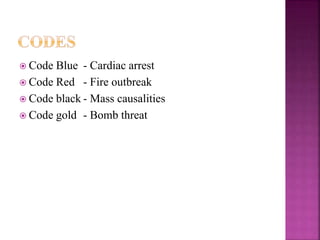
 Code Blue - Cardiac arrest
 Code Red - Fire outbreak
 Code black - Mass causalities
 Code gold - Bomb threat
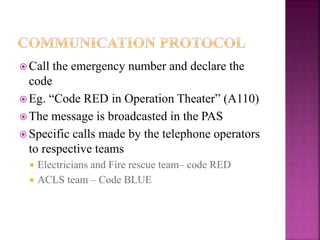
 Call the emergency number and declare the
code
 Eg. “Code RED in Operation Theater” (A110)
 The message is broadcasted in the PAS
 Specific calls made by the telephone operators
to respective teams
 Electricians and Fire rescue team– code RED
 ACLS team – Code BLUE
 Once the code is established, every employee shall
act according to the standard instruction given to
them
 Should not expect orders. Act automatically.
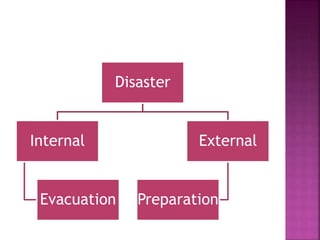
Disaster
Internal
Evacuation
External
Preparation
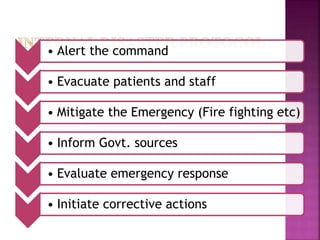
• Alert the command
• Evacuate patients and staff
• Mitigate the Emergency (Fire fighting etc)
• Inform Govt. sources
• Evaluate emergency response
• Initiate corrective actions
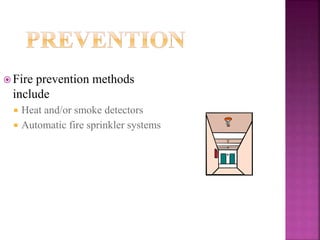
 Fire prevention methods
include
 Heat and/or smoke detectors
 Automatic fire sprinkler systems
 JEH conducts fire drills in
all areas of the hospital
including operation theater

 Conducted once in 4
months
EXIT routes should be
established,
All employees should
be aware to use the
route
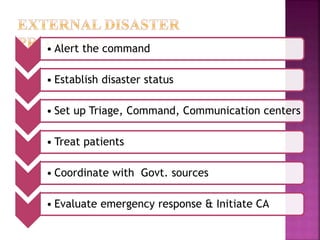
• Alert the command
• Establish disaster status
• Set up Triage, Command, Communication centers
• Treat patients
• Coordinate with Govt. sources
• Evaluate emergency response & Initiate CA
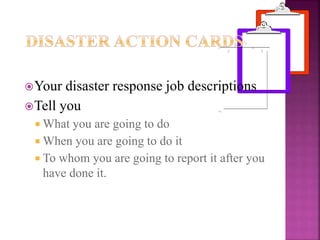
Your disaster response job descriptions
Tell you
 What you are going to do
 When you are going to do it
 To whom you are going to report it after you
have done it.
Administrator - Operations
 Check completion of internal communication
 Ensure preparedness check is complete
 Command center ready
 Triage center ready
 Wards ready
 Ambulance ready
 Physicians in place
 Consumables secured
 Medicines secured
 Mobilize manpower and materials
 Report to command
Nursing Head
 Inform and gather nurses at designated wards
 Assign Triage nurses
 On order of the RMO discharge elective, pre-
operative patients and fit post operative patients
 Mobilize emergency medicines
 Ensure adequate supplies
Security
 To close all entries, and allow only patients,
relatives
 To allow press person after verifying their ID card
 To position securities at front and backside gates
 Report to command center
Pharmacy
 Supply pre-authorized quantities of medicine and
consumables to wards
 Contact suppliers and arrange additional drug
needs. Have list of drug suppliers that can provide
emergency supplies quickly
 Keep minimum supply of emergency drugs on
hand at all times.
 Pharmacy should remain open and have a runner to
deliver needed meds to areas.
Overall inchage of the incident
management
Group of decision makers
Supersedes routine line of
command
Prioritising patient admission
Resource optimisation
Maximize survival
Communicate with government agencies
Media management / Press releases, etc
Releasing information to anxious
relatives of victims
Most crucial aspect during disasters
Patients, relatives require
exceptional counseling during this
time
Pastors, chaplains, religious
personnel can be deployed
Stress level of staff is very high
Mentally and physically exhausted
Many might go to depression, if not
counseled
Observation Corrective action
The emergency medication was inadequate
Prepare a list of medicines
that is sufficient to treat 25
emergency patients
Coordination between teams were lacking
Conduct mock drills
frequently
Key personnel did not carry disaster action
cards, hence they did not know their roles
Conduct mock drills
frequently
In adequate training for doctors in triaging Conduct triage training
Telephonic message did not reached all the
listed personnel
Display the action card
near the telephone area
Training covers all employees once a
year
Mock drills are conducted once a year
Types of drills
 Table top drill
 Mock drill

Disaster preparedness new

  • 2.
    • “ Hospitalshave always been an important link in the chain of disaster response and are assuming even more importance as advanced pre-hospital care capabilities lead to improved survival-to-hospital rate”(Dara et al., 2005). • Therefore, disaster preparedness in India must focus heavily on organizations that provide healthcare.
  • 3.
    Not a mandatoryrequirement Most of the hospitals have less or no knowledge and understanding of disaster preparedness Very few hospitals have proactively responded Accreditation is a boon
  • 4.
    Difficulty in resourceallocation  Not a priority area for the hospital management Difficult to keep the training inputs remembered  Not a routine activity Less trainers available Theory not put in to practice
  • 5.
     Internal Disasters Fire  Building collapse  Bomb blast / Threat  HAZMAT injury  External Disasters  Earth quake  Bomb blast / Accidents  Fire  Tsunami / Flood / Cyclone  Each requires different type of management
  • 8.
  • 9.
  • 10.
     Formation ofdisaster management TEAM   Preparing Emergency / Disaster management MANUAL
  • 11.
    Director / CEO/ Medical Superintendent RMO Nursing Head Administrator PRO
  • 12.
  • 13.
     Code Blue- Cardiac arrest  Code Red - Fire outbreak  Code black - Mass causalities  Code gold - Bomb threat
  • 14.
     Call theemergency number and declare the code  Eg. “Code RED in Operation Theater” (A110)  The message is broadcasted in the PAS  Specific calls made by the telephone operators to respective teams  Electricians and Fire rescue team– code RED  ACLS team – Code BLUE
  • 15.
     Once thecode is established, every employee shall act according to the standard instruction given to them  Should not expect orders. Act automatically.
  • 16.
  • 17.
    • Alert thecommand • Evacuate patients and staff • Mitigate the Emergency (Fire fighting etc) • Inform Govt. sources • Evaluate emergency response • Initiate corrective actions
  • 19.
     Fire preventionmethods include  Heat and/or smoke detectors  Automatic fire sprinkler systems
  • 20.
     JEH conductsfire drills in all areas of the hospital including operation theater   Conducted once in 4 months
  • 22.
    EXIT routes shouldbe established, All employees should be aware to use the route
  • 24.
    • Alert thecommand • Establish disaster status • Set up Triage, Command, Communication centers • Treat patients • Coordinate with Govt. sources • Evaluate emergency response & Initiate CA
  • 25.
    Your disaster responsejob descriptions Tell you  What you are going to do  When you are going to do it  To whom you are going to report it after you have done it.
  • 26.
    Administrator - Operations Check completion of internal communication  Ensure preparedness check is complete  Command center ready  Triage center ready  Wards ready  Ambulance ready  Physicians in place  Consumables secured  Medicines secured  Mobilize manpower and materials  Report to command
  • 27.
    Nursing Head  Informand gather nurses at designated wards  Assign Triage nurses  On order of the RMO discharge elective, pre- operative patients and fit post operative patients  Mobilize emergency medicines  Ensure adequate supplies
  • 28.
    Security  To closeall entries, and allow only patients, relatives  To allow press person after verifying their ID card  To position securities at front and backside gates  Report to command center
  • 29.
    Pharmacy  Supply pre-authorizedquantities of medicine and consumables to wards  Contact suppliers and arrange additional drug needs. Have list of drug suppliers that can provide emergency supplies quickly  Keep minimum supply of emergency drugs on hand at all times.  Pharmacy should remain open and have a runner to deliver needed meds to areas.
  • 30.
    Overall inchage ofthe incident management Group of decision makers Supersedes routine line of command
  • 31.
    Prioritising patient admission Resourceoptimisation Maximize survival
  • 32.
    Communicate with governmentagencies Media management / Press releases, etc Releasing information to anxious relatives of victims
  • 33.
    Most crucial aspectduring disasters Patients, relatives require exceptional counseling during this time Pastors, chaplains, religious personnel can be deployed
  • 34.
    Stress level ofstaff is very high Mentally and physically exhausted Many might go to depression, if not counseled
  • 35.
    Observation Corrective action Theemergency medication was inadequate Prepare a list of medicines that is sufficient to treat 25 emergency patients Coordination between teams were lacking Conduct mock drills frequently Key personnel did not carry disaster action cards, hence they did not know their roles Conduct mock drills frequently In adequate training for doctors in triaging Conduct triage training Telephonic message did not reached all the listed personnel Display the action card near the telephone area
  • 36.
    Training covers allemployees once a year Mock drills are conducted once a year Types of drills  Table top drill  Mock drill