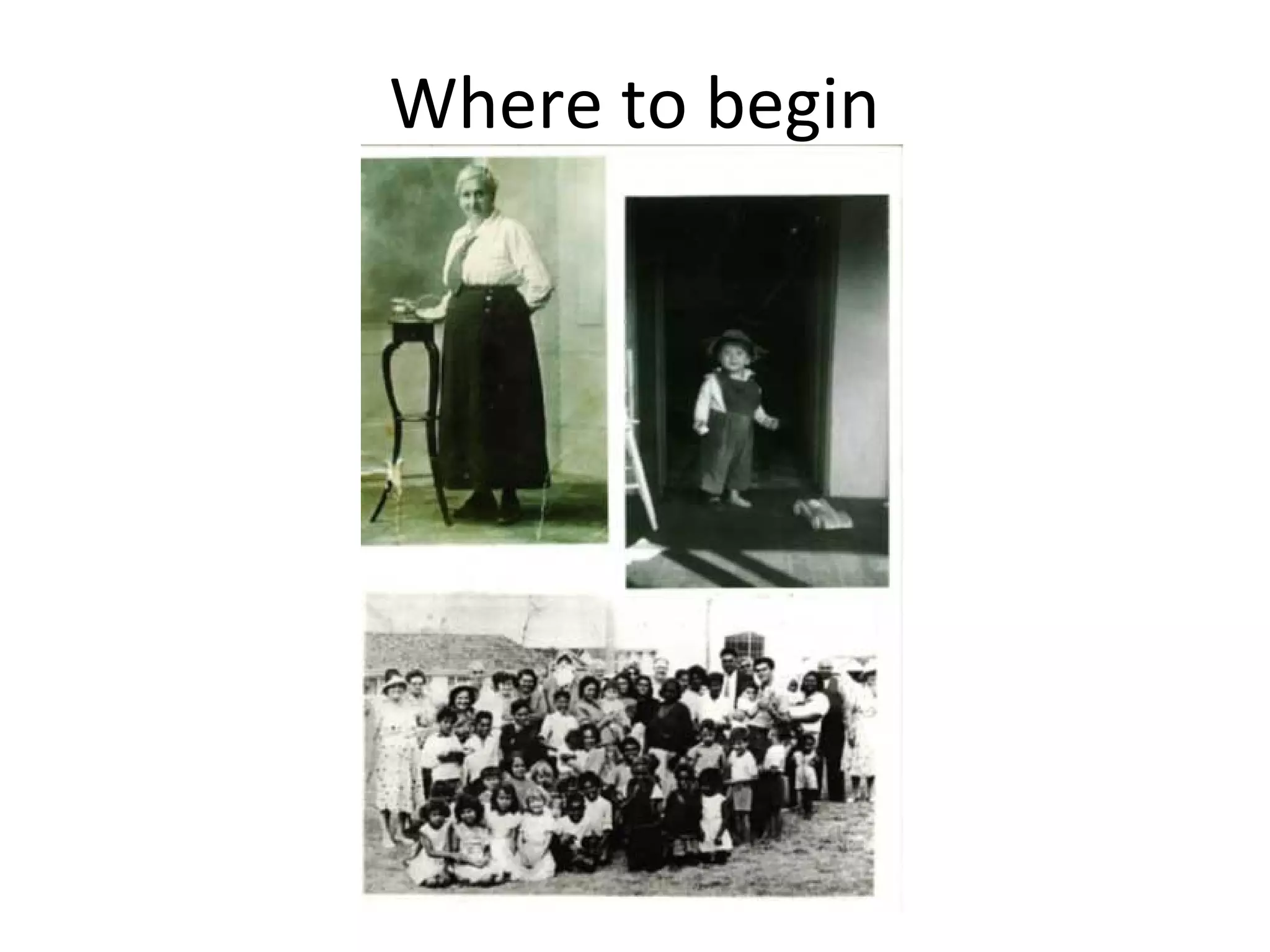



Where to begin
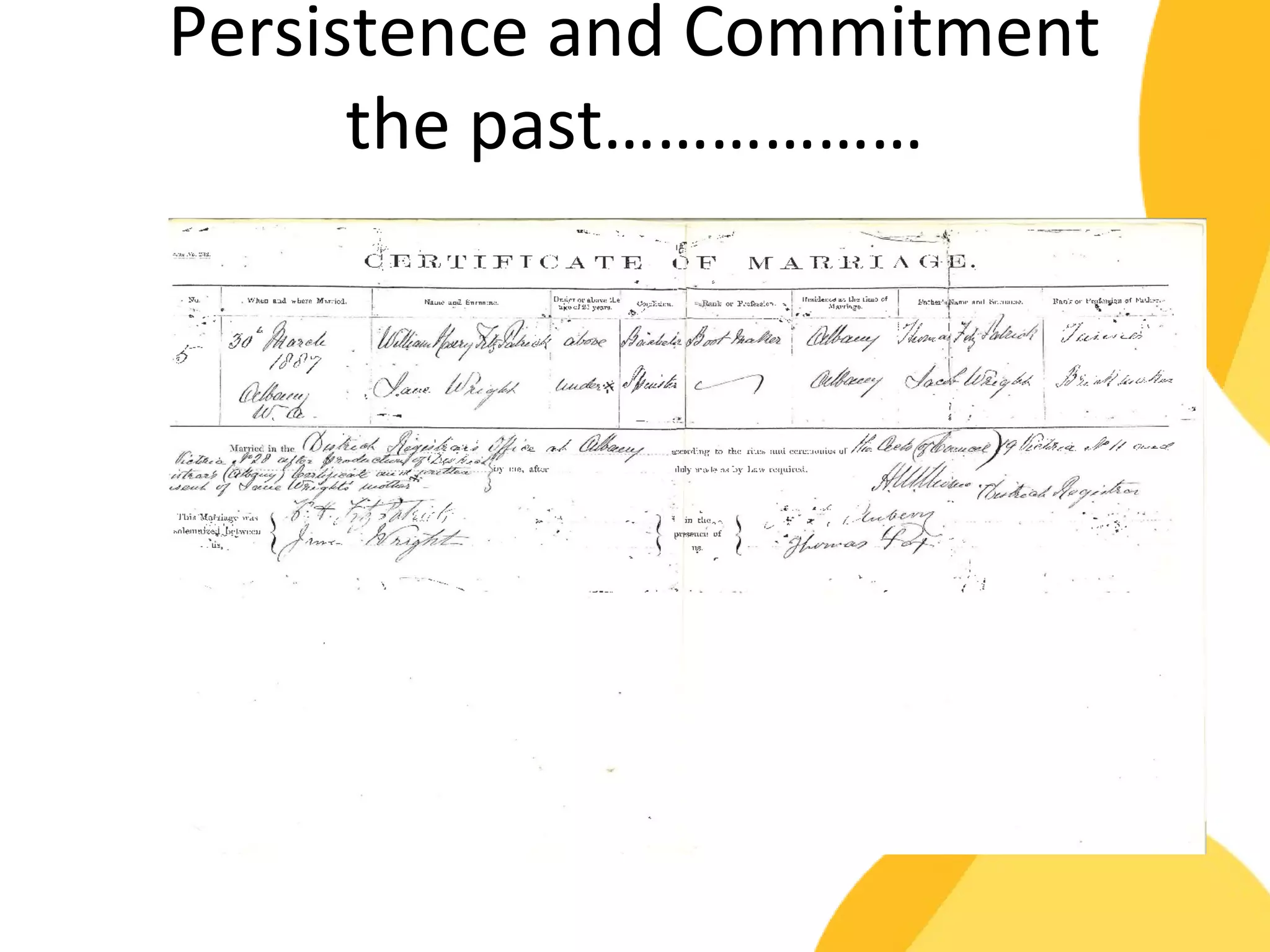
Persistence and Commitment 
the past………………
What to do first? 
• Moving from inexperienced to more 
experienced. 
• Listen to quality advice 
• Recognize good role models 
• Develop and foster productive relationships
What examples do you see? 
• Successful sport stars – in the AFL, netball , 
basketball, NRL, the Rabbitohs? they are every 
where 
• Actors, musicians, artists 
• My greatest inspirations and motivations 
come from my family, their every day 
challenges,
Is the journey going to be 
worthwhile? 
• The journey begins with the first step 
• Move forward in the best possible way 
• Knowing where you are now 
• Understand where you have come from 
• Know where you want to be 
• Reflect, Plan, Act
What’s in it for me? 
• Commit 
• The scale of commitment- 
1…………………………………………..……………….10 
• The more committed , the greater the chance 
of success.
The WA Network 
• Strong leadership within the DET organisation. 
• Aboriginal Education Directorate 
• Managers of Aboriginal Education 
• Credible and committed school leaders. 
• Strong support in schools from AIEO’s
Persistence takes courage 
 An Indian woman armed only with farm tools is stable in hospital 
after killing a leopard that attacked her. 
 Kamla Devi, 56, sustained multiple bites, cuts and fractures during the half-hour battle. She had been 
fetching water in northern Uttarakhand state when the leopard pounced on her from nearby bushes - she 
fought back with a sickle and spade. 
 "I thought I was dead but I did not lose patience and courage," she told reporters after her lucky escape. 
 Ms Devi was carrying water from a canal to her field near the village of Sem Nauti in Rudraprayag district 
when she was attacked on Sunday. She said she managed to smash some of the animal's teeth during the 
struggle. 
 "I fought head on with it for almost half an hour. Then I came to know it was dead," she told reporters from 
hospital in the nearby town of Srinagar Garhwal. 
 Doctors were surprised she had survived. 
 She has two fractures on the right hand and one on the left. She also has deep injuries on her head and legs. 
There are bite marks all over her body," said Dr Abdul Rahul, who has been treating her.
Progress 
Takes time 
There will be set backs 
Involve others 
Seek feedback 
Be realistic 
Success can be achieved
School Progress
LNPP- improving Literacy and 
Numeracy Partnership Program 
• In 2012 we were invited to join the ILNPP to 
see how we could improve our school levels of 
Literacy and Numeracy 
• Millars Well Primary School journey to success
First Attempt 
• Identified and appointed specialist support 
teachers in areas of Literacy and Numeracy 
• Provided release time for staff, collaborative 
planning and the modelling of lessons
Monitor and Reflect 
• Reviewed and assessed the progress we had 
made 
– Could we do better? 
– What did we want it to look like for students and staff? 
• Realising the moral imperative
The Past - The Present 
• PAST - Being led- support provision- targets 
designed and owned by the planners- (at the top ) 
• PRESENT – (Phases of learning and phase leaders) 
– Buy in, staff ownership 
– Collective collaboration 
– Investment in all staff- shared professional learning , 
support, opportunities 
– Strategic targets based on data/evidence which are 
reviewed and monitored across the school
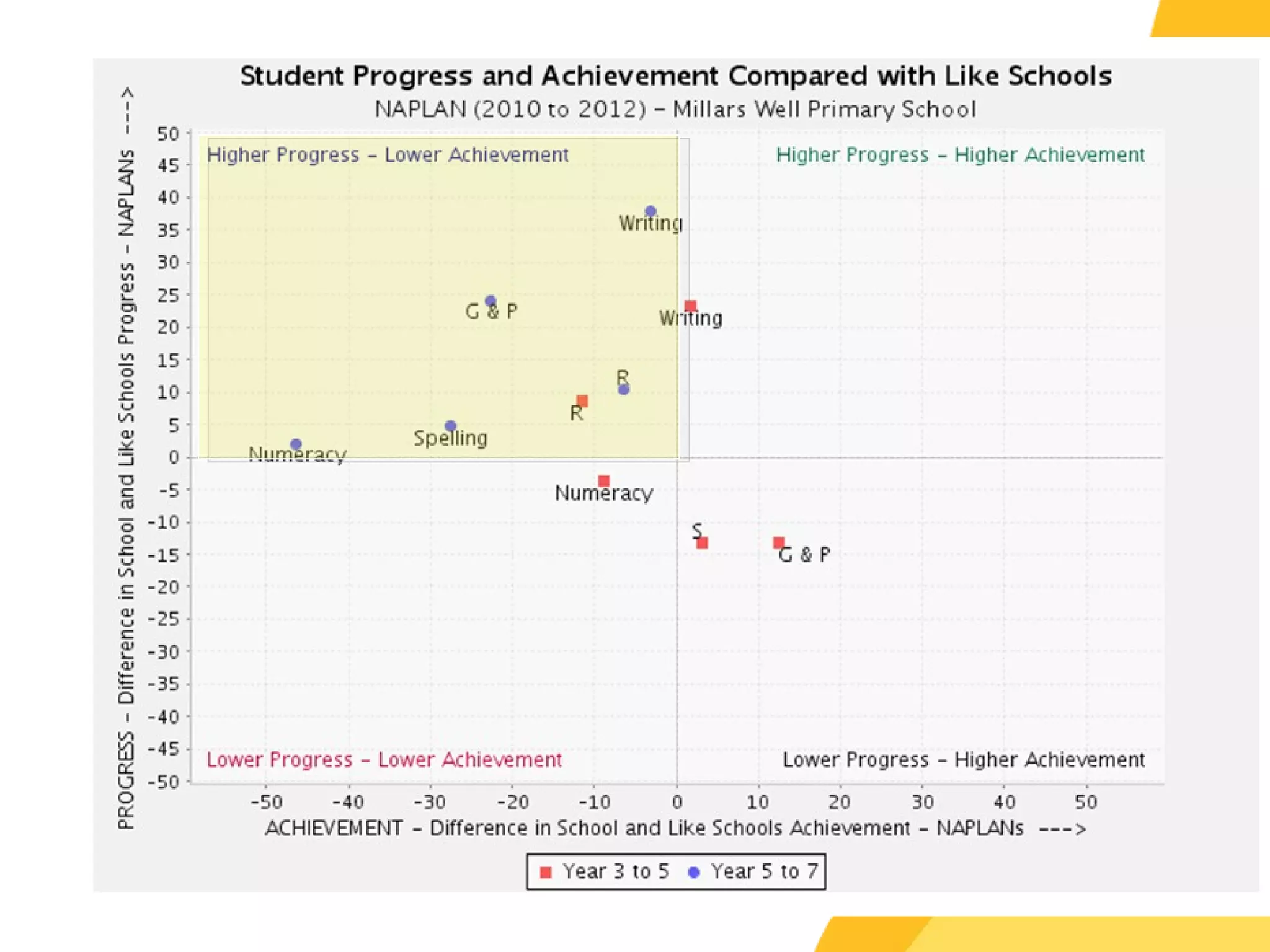
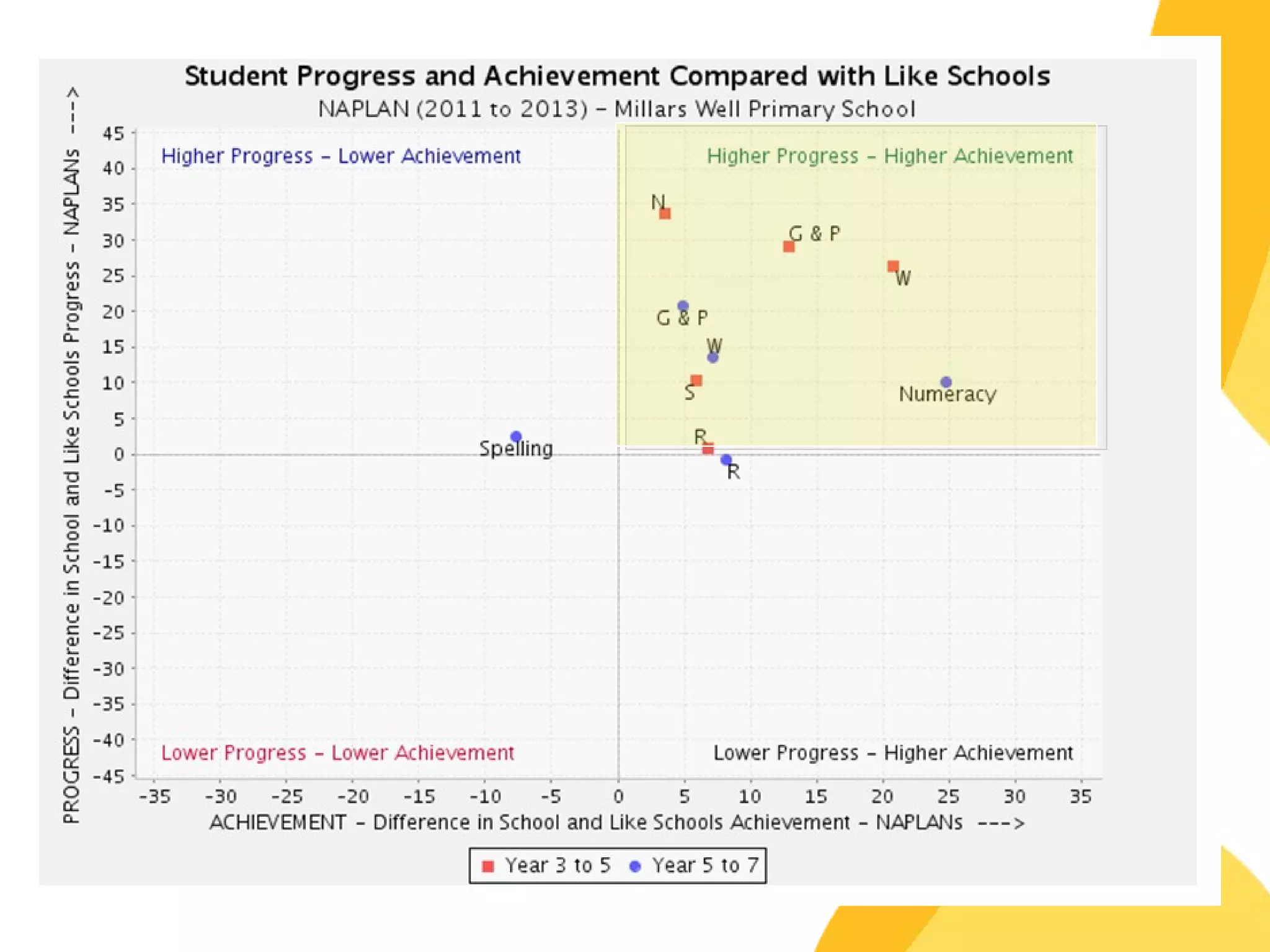
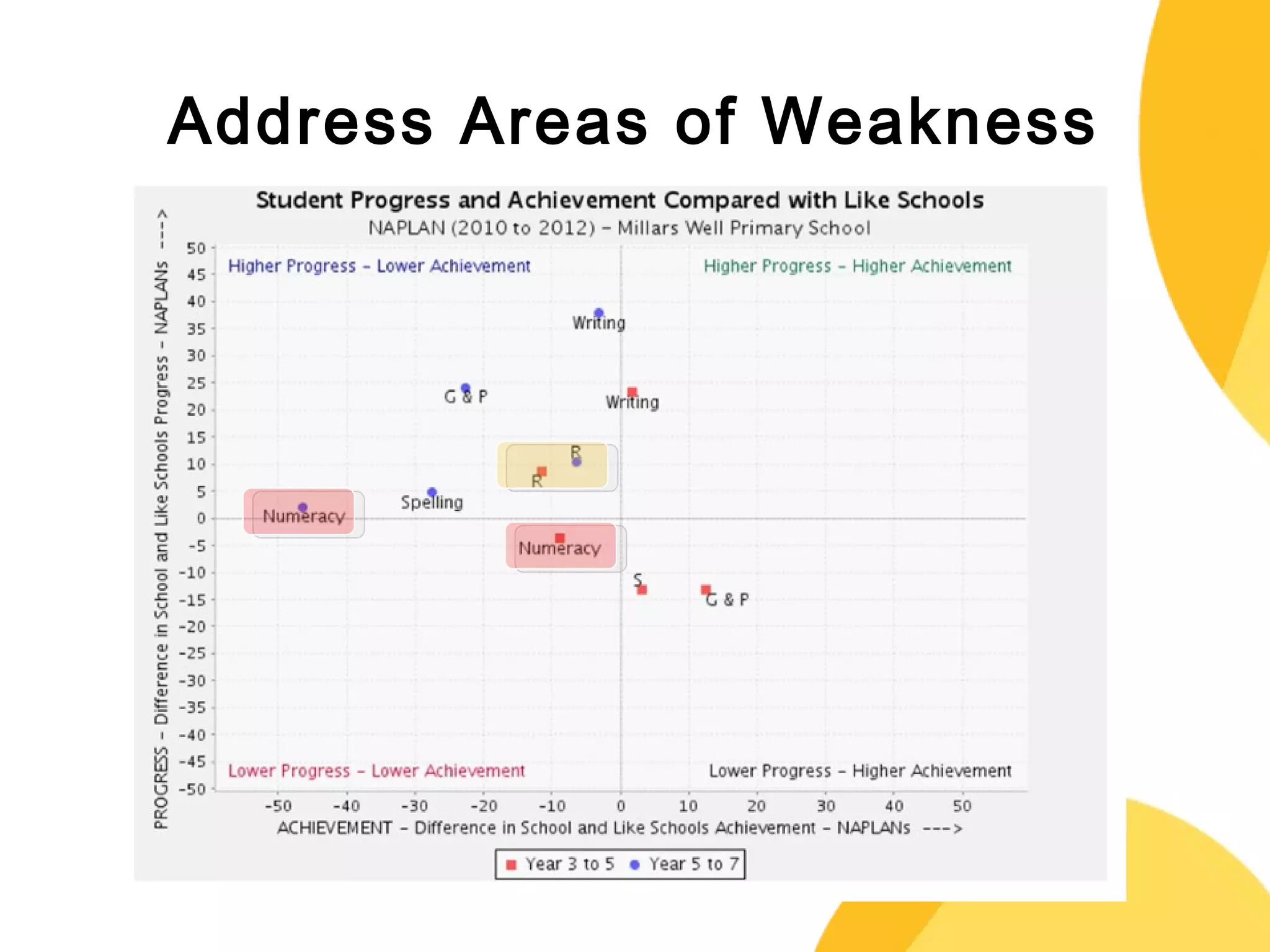
School Data 
• Address Areas of Weakness and Plan for Success 
• How? 
– Initiate Whole School Approaches (Learning & Assessment) 
– Focus on the students with greatest capacity to improve. 
– Focus on the Early Years 
– Identify what high achievement looks like. 
– Work with motivated staff to begin with.
Address Areas of Weakness
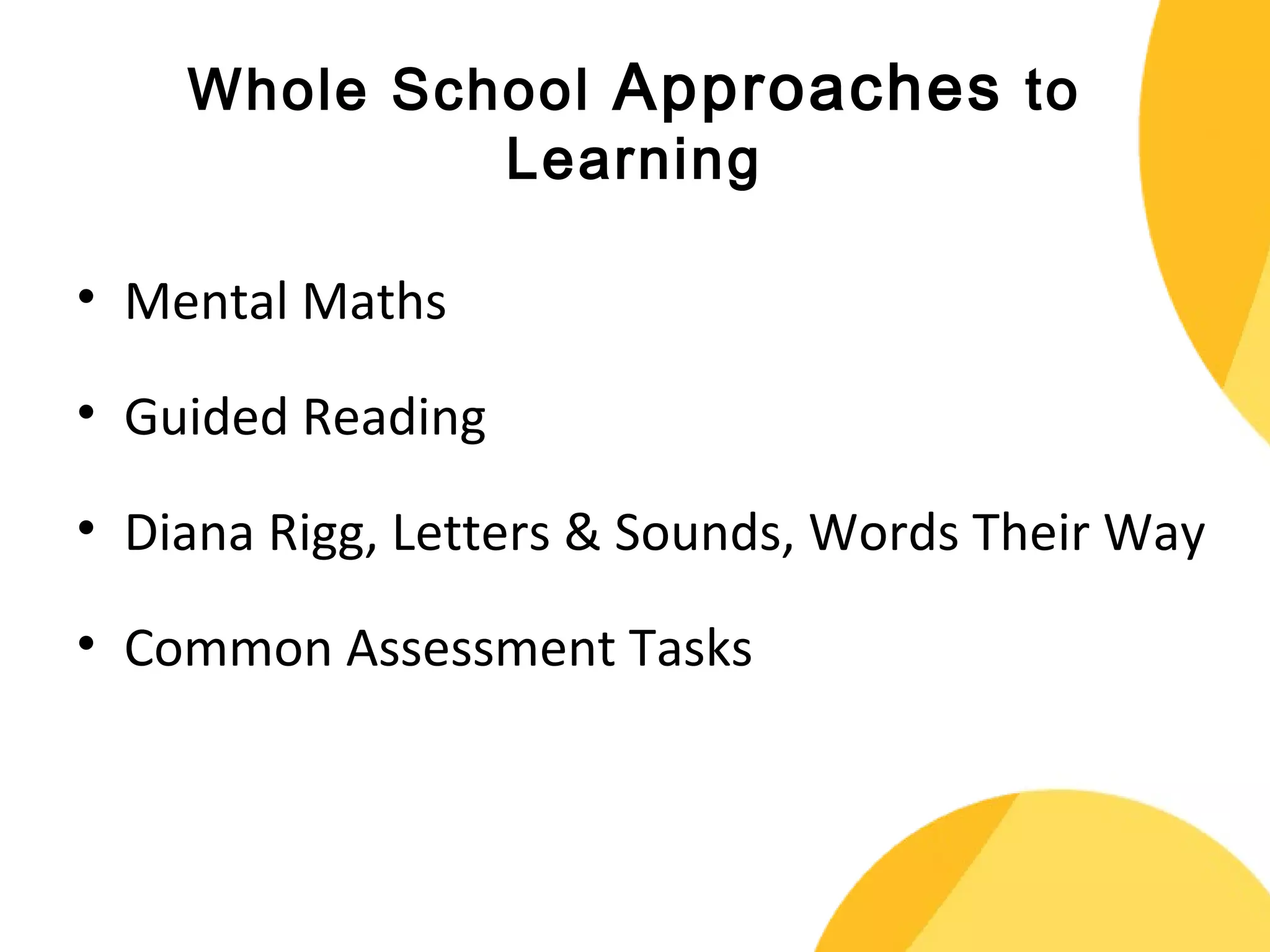
Whole School Approaches to 
Learning 
• Mental Maths 
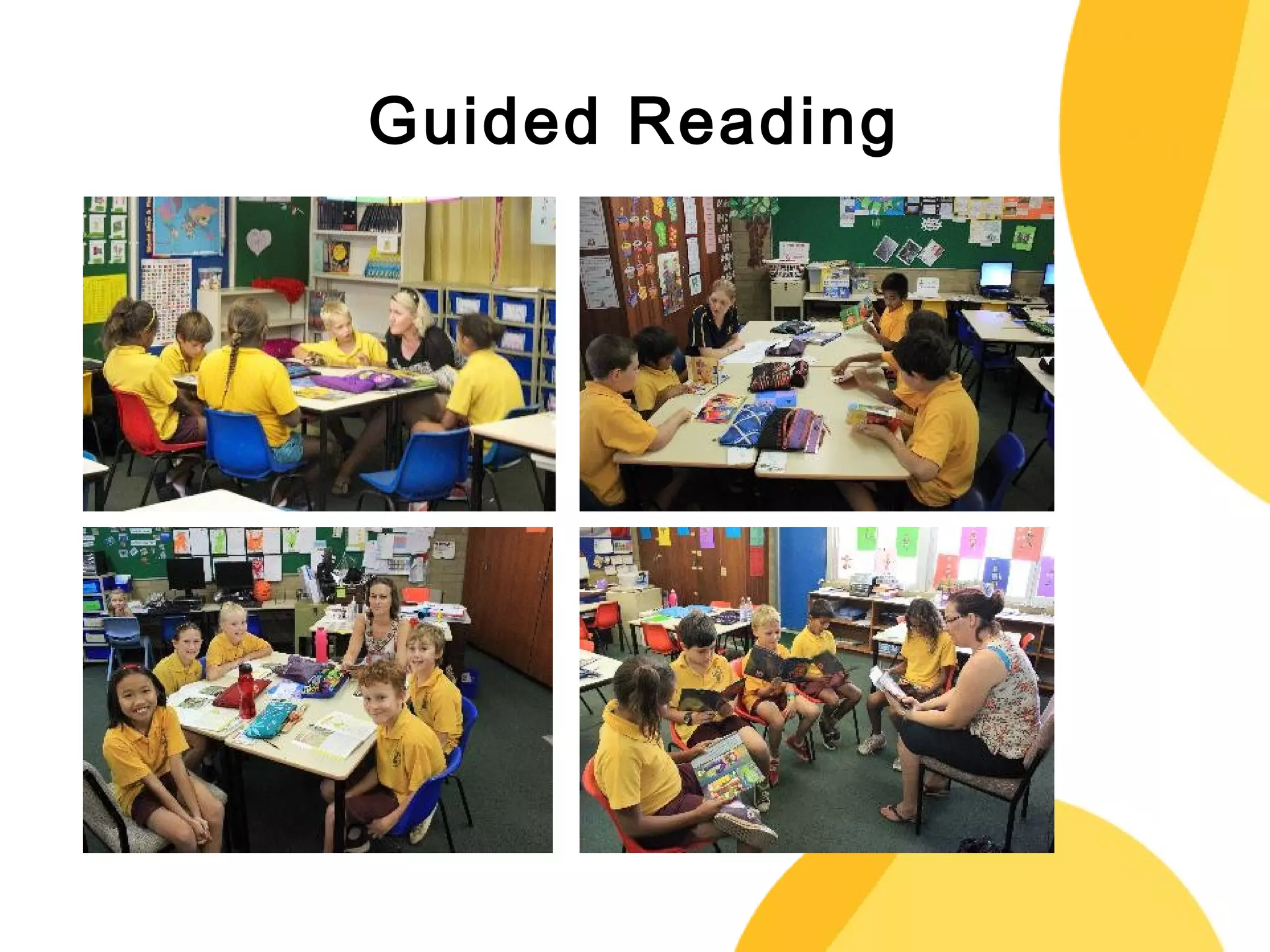
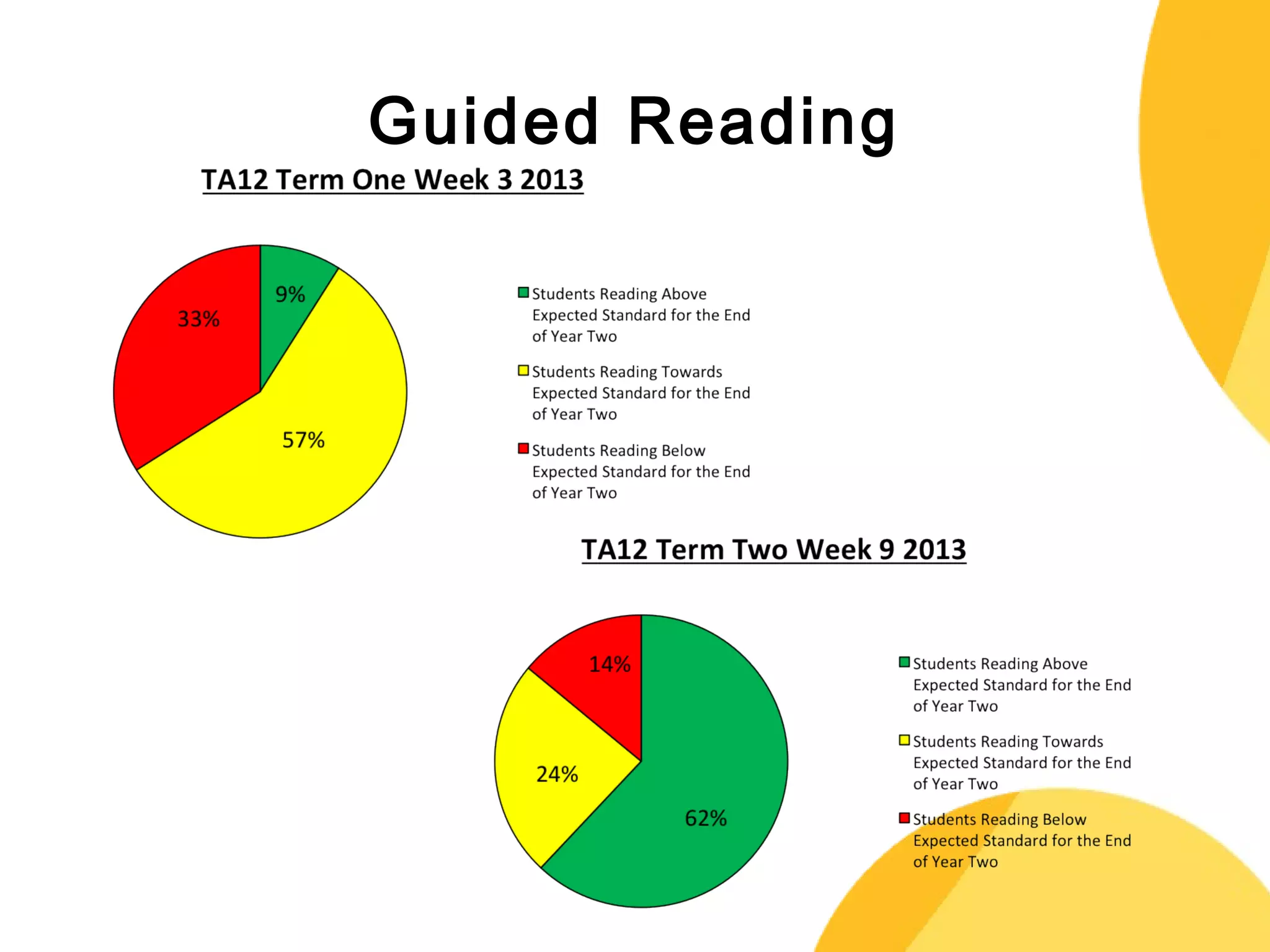
• Guided Reading 
• Diana Rigg, Letters & Sounds, Words Their Way 
• Common Assessment Tasks
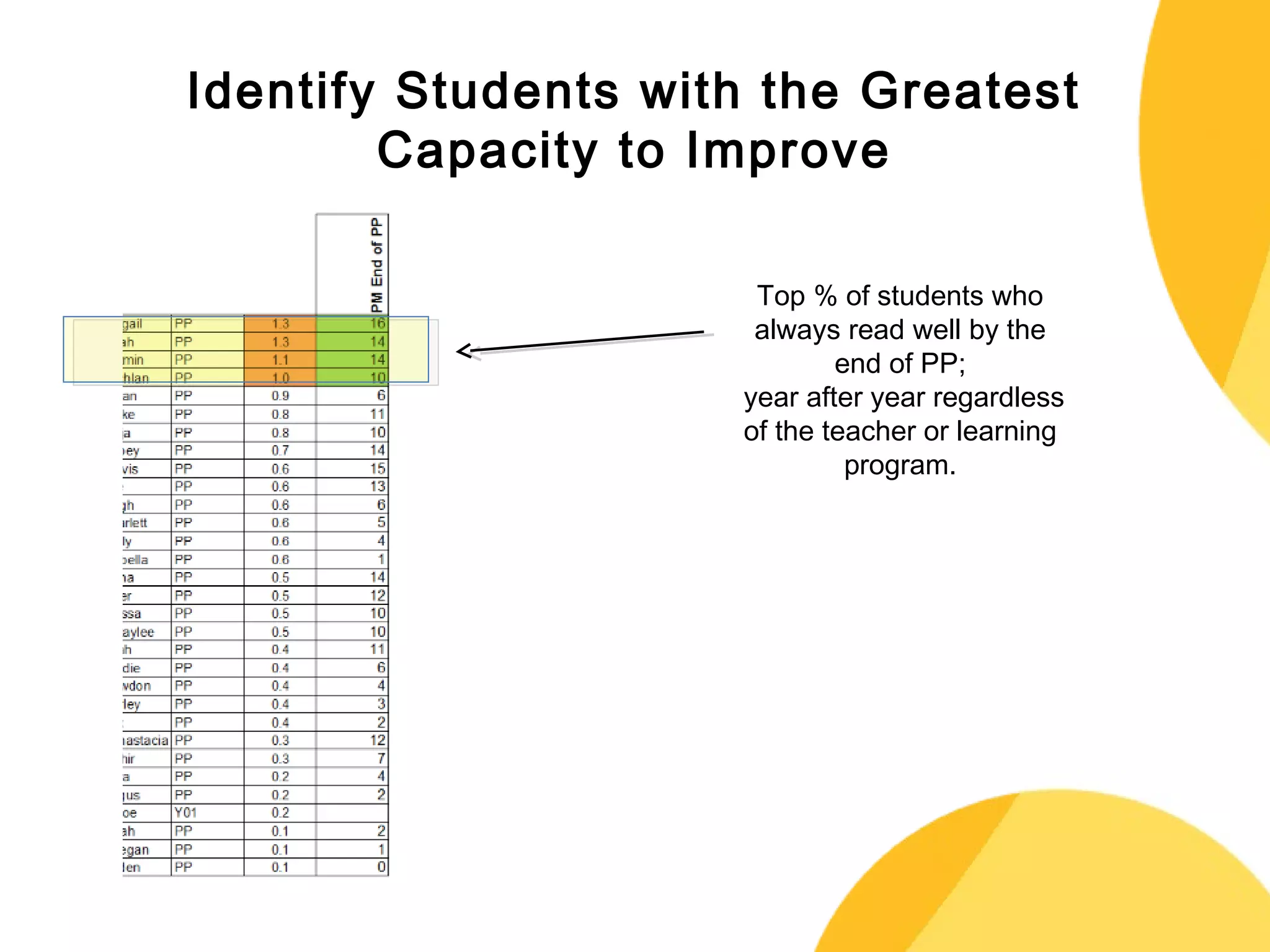
Identify Students with the Greatest 
Capacity to Improve 
Top % of students who 
always read well by the 
end of PP; 
year after year regardless 
of the teacher or learning 
program.
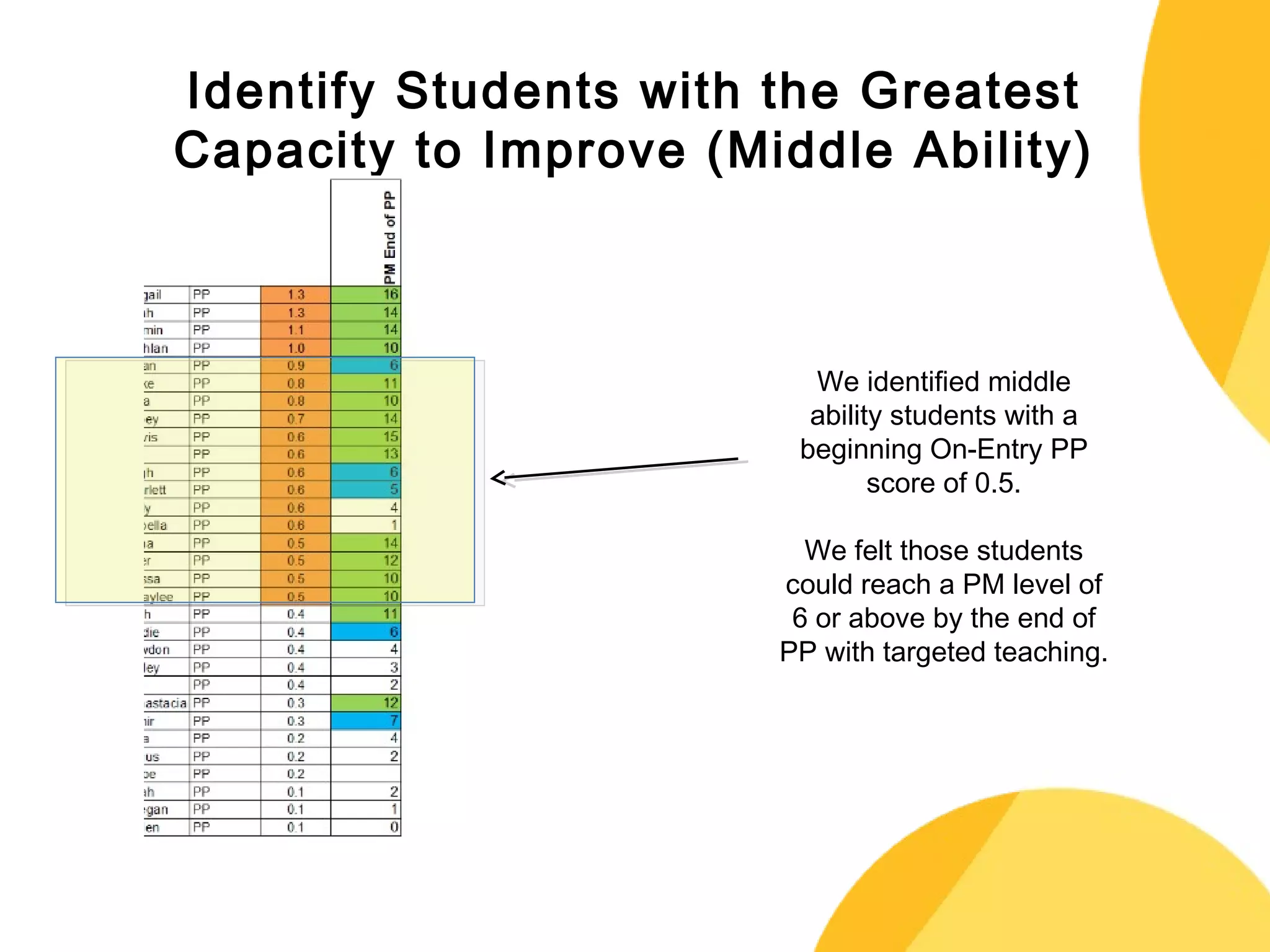
Identify Students with the Greatest 
Capacity to Improve (Middle Ability) 
We identified middle 
ability students with a 
beginning On-Entry PP 
score of 0.5. 
We felt those students 
could reach a PM level of 
6 or above by the end of 
PP with targeted teaching.
Identify Students with the Greatest 
Capacity to Improve (Middle Ability) 
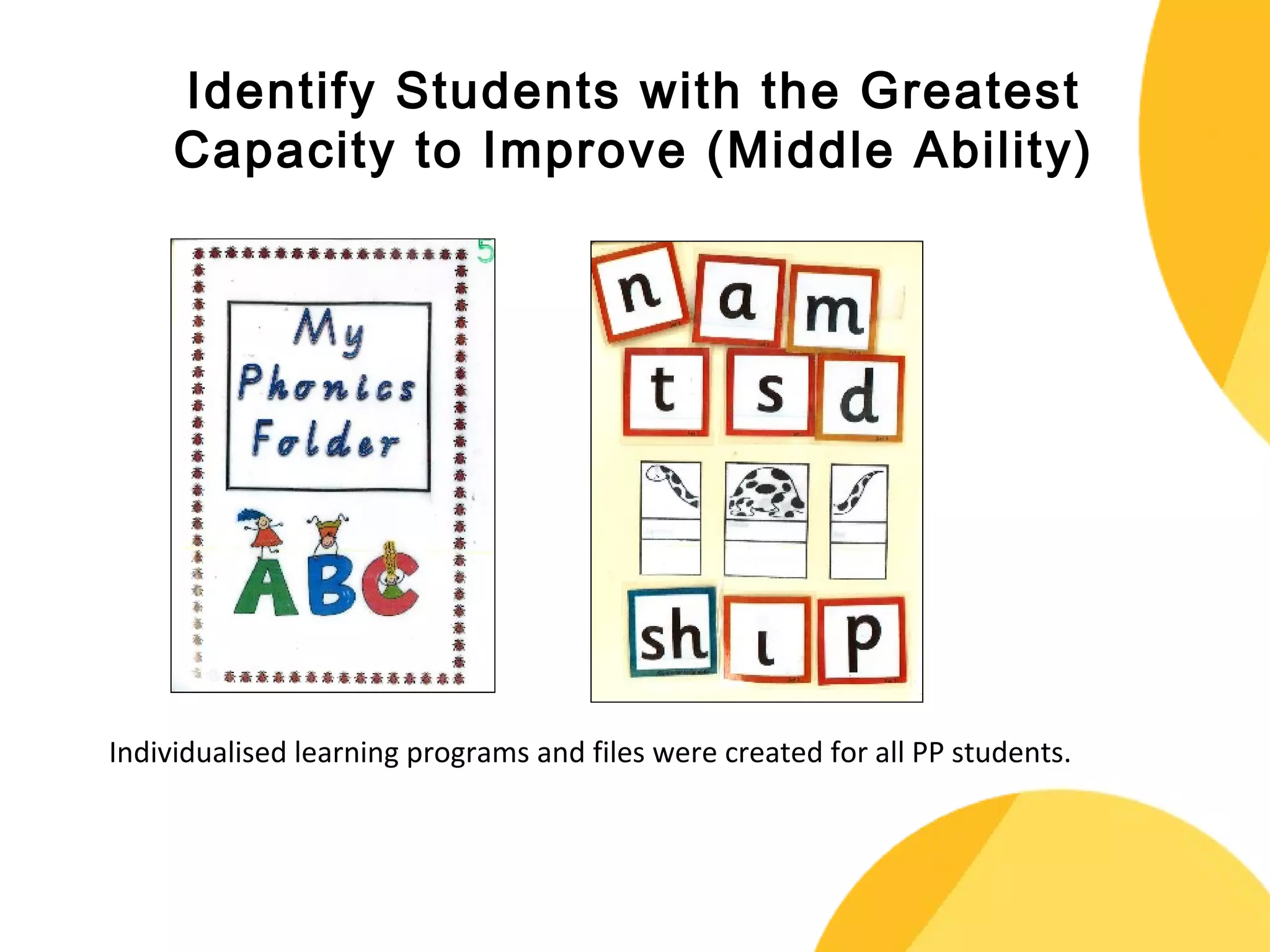
Individualised learning programs and files were created for all PP students.
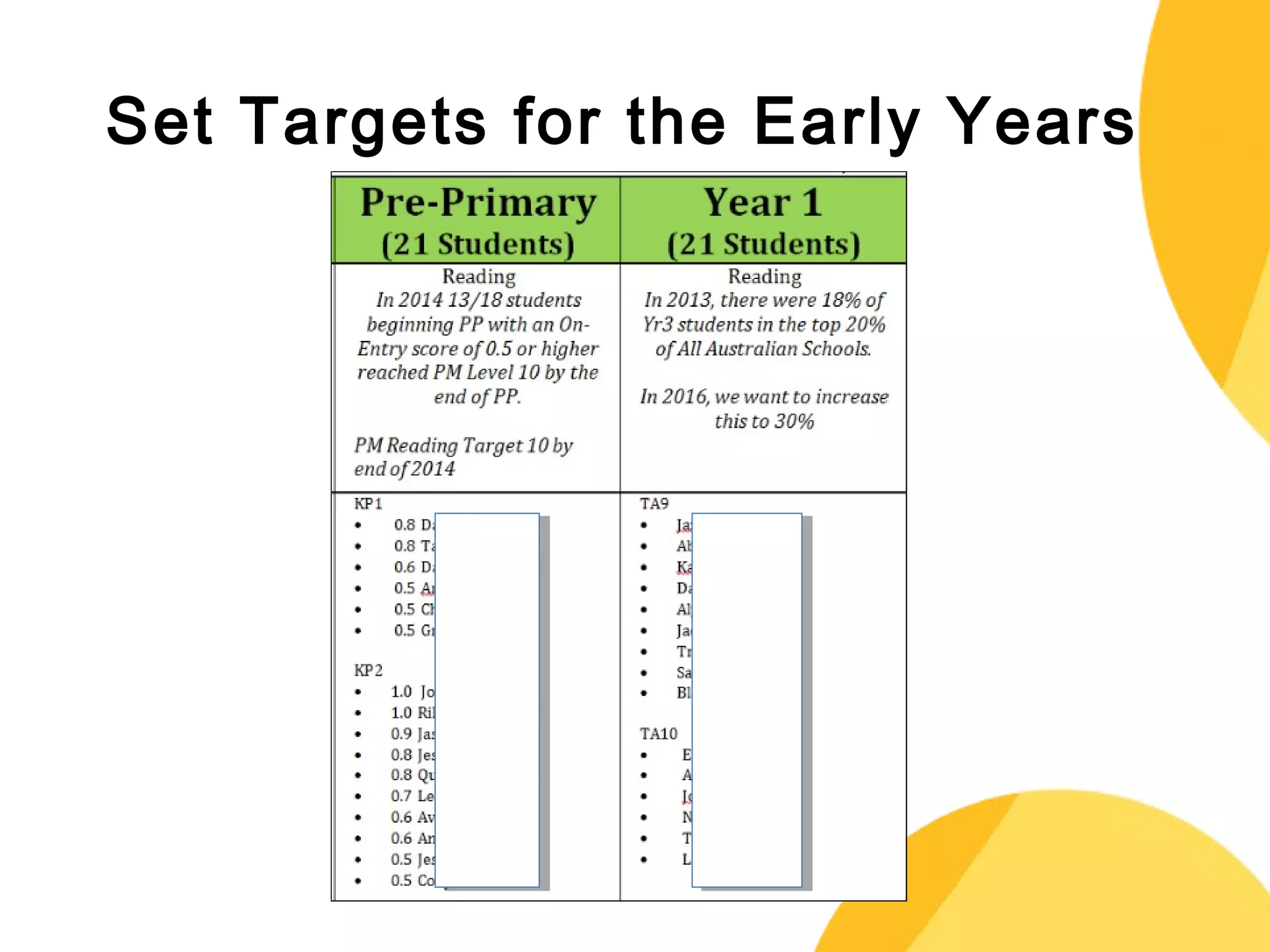
Set Targets for the Early Years
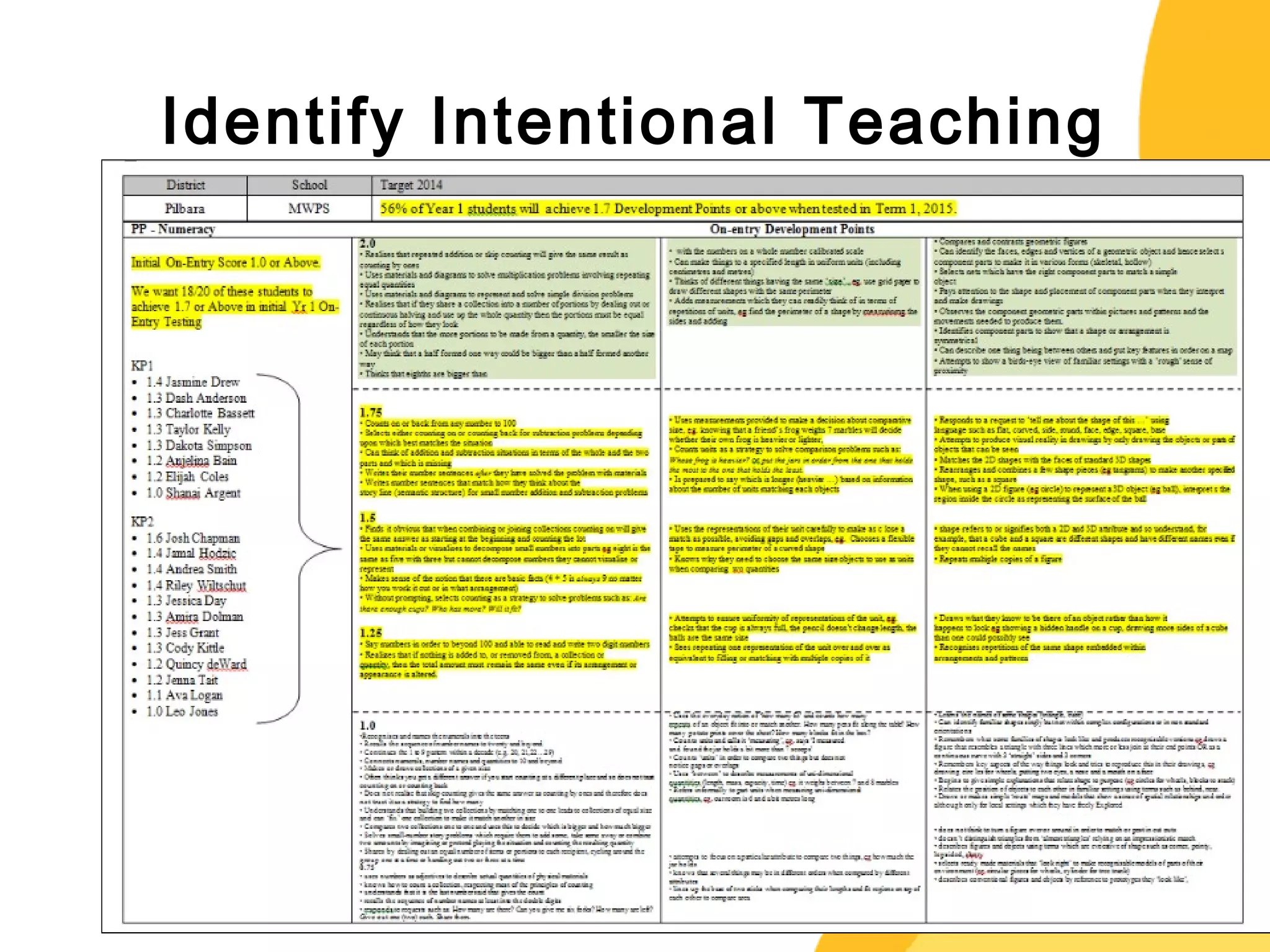
Identify Intentional Teaching
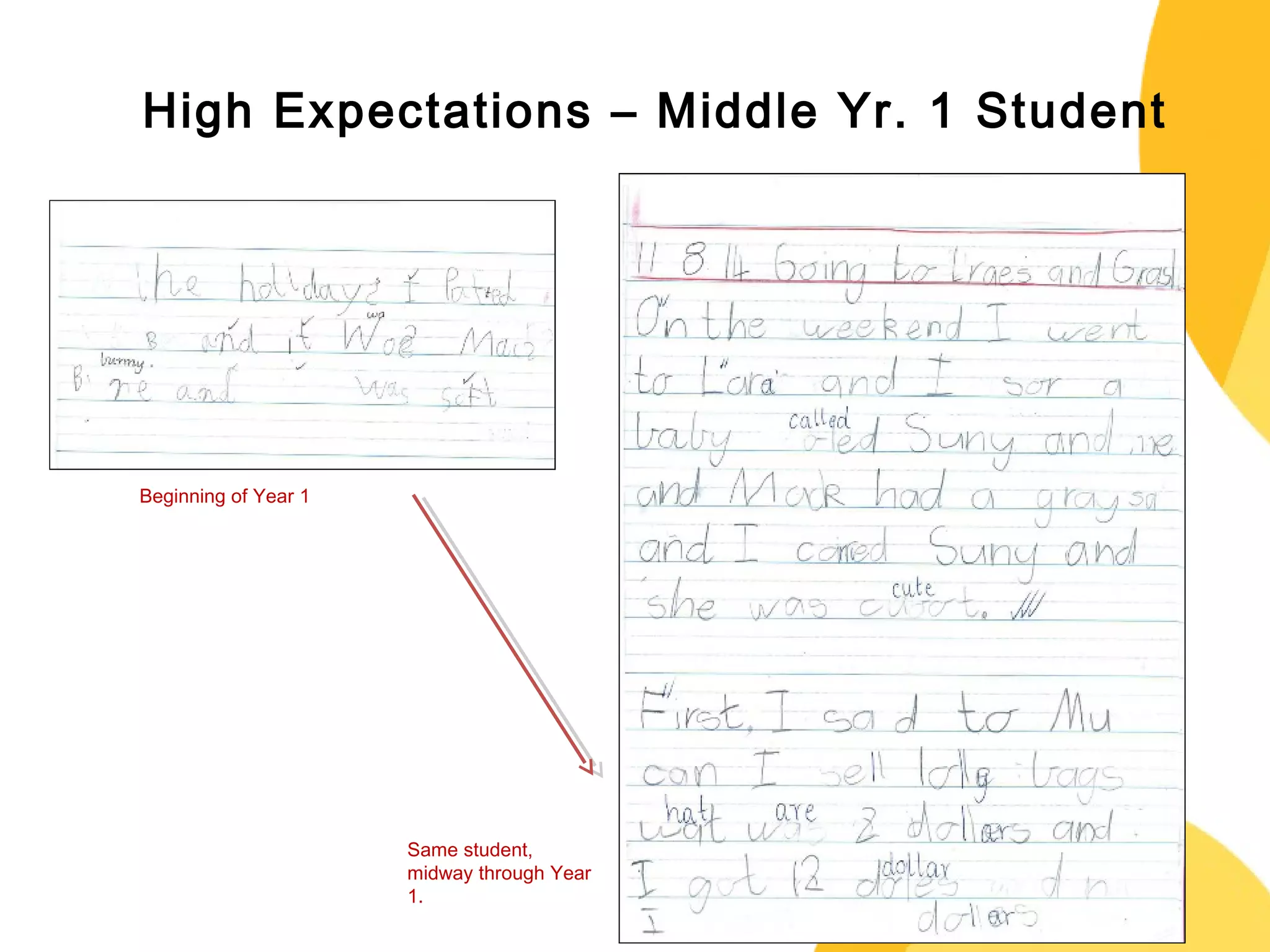
High Expectations – Middle Yr. 1 Student 
Beginning of Year 1 
Same student, 
midway through Year 
1.
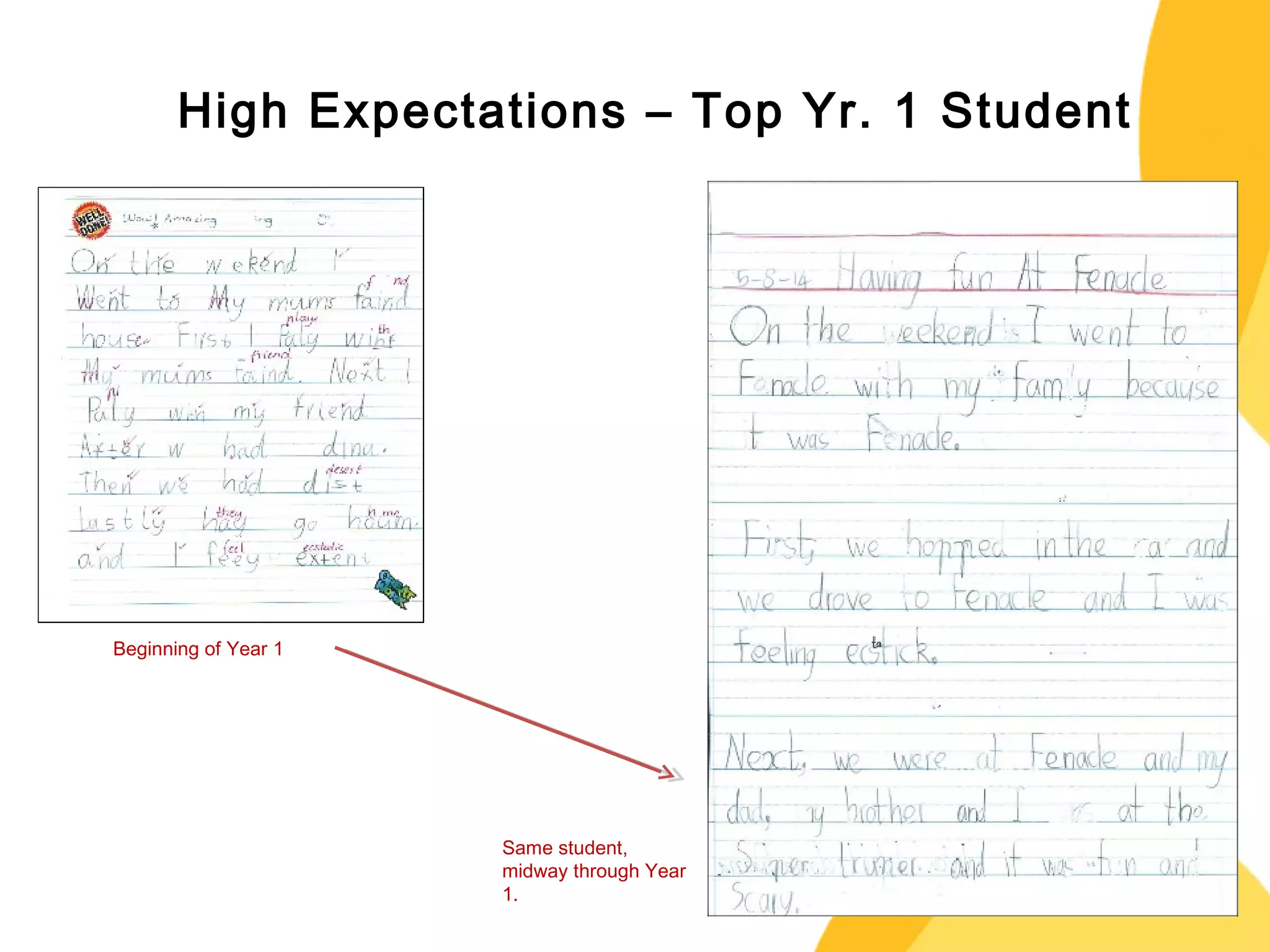
High Expectations – Top Yr. 1 Student 
Beginning of Year 1 
Same student, 
midway through Year 
1.
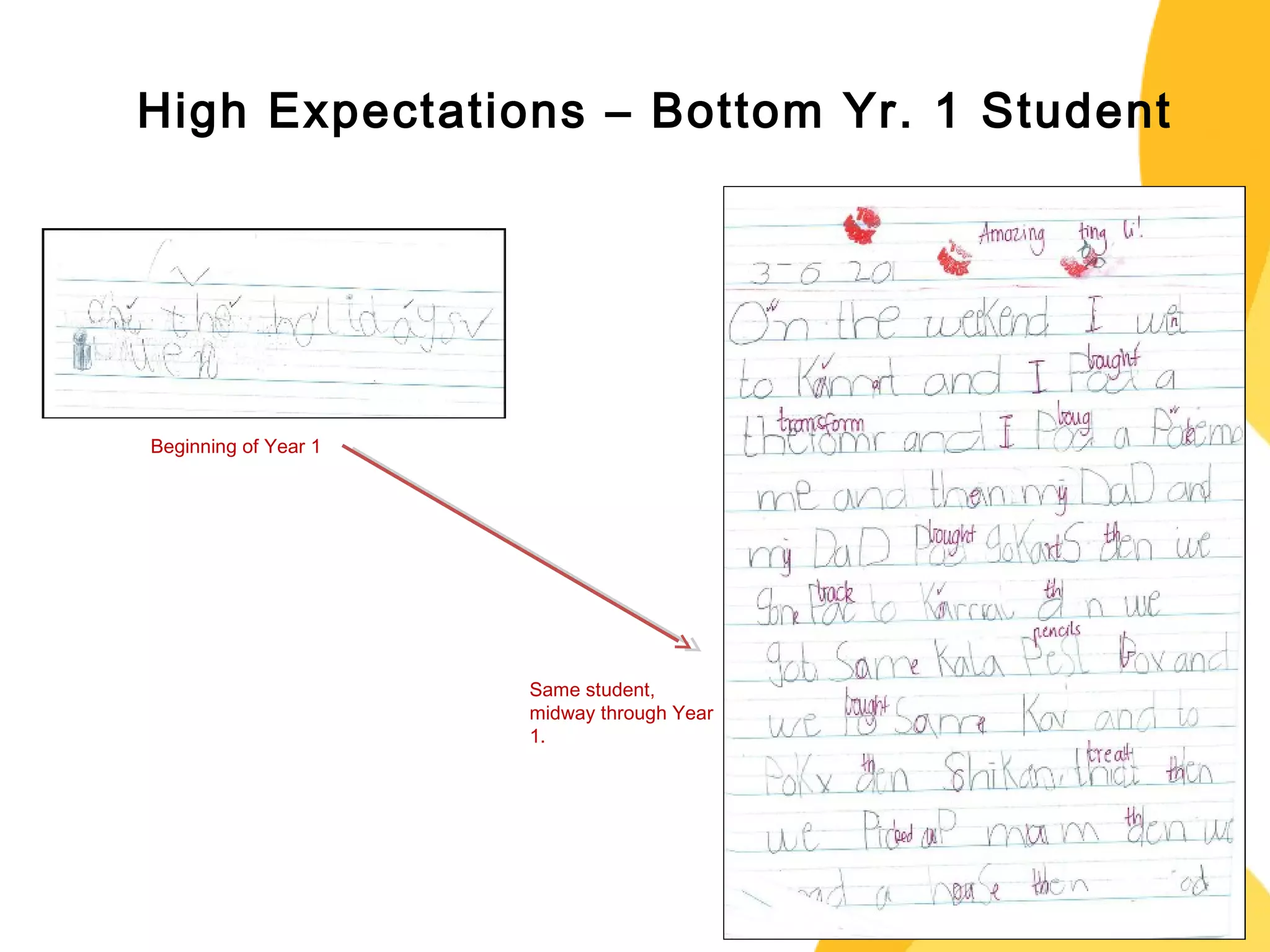
High Expectations – Bottom Yr. 1 Student 
Beginning of Year 1 
Same student, 
midway through Year 
1.
Guided Reading
Guided Reading
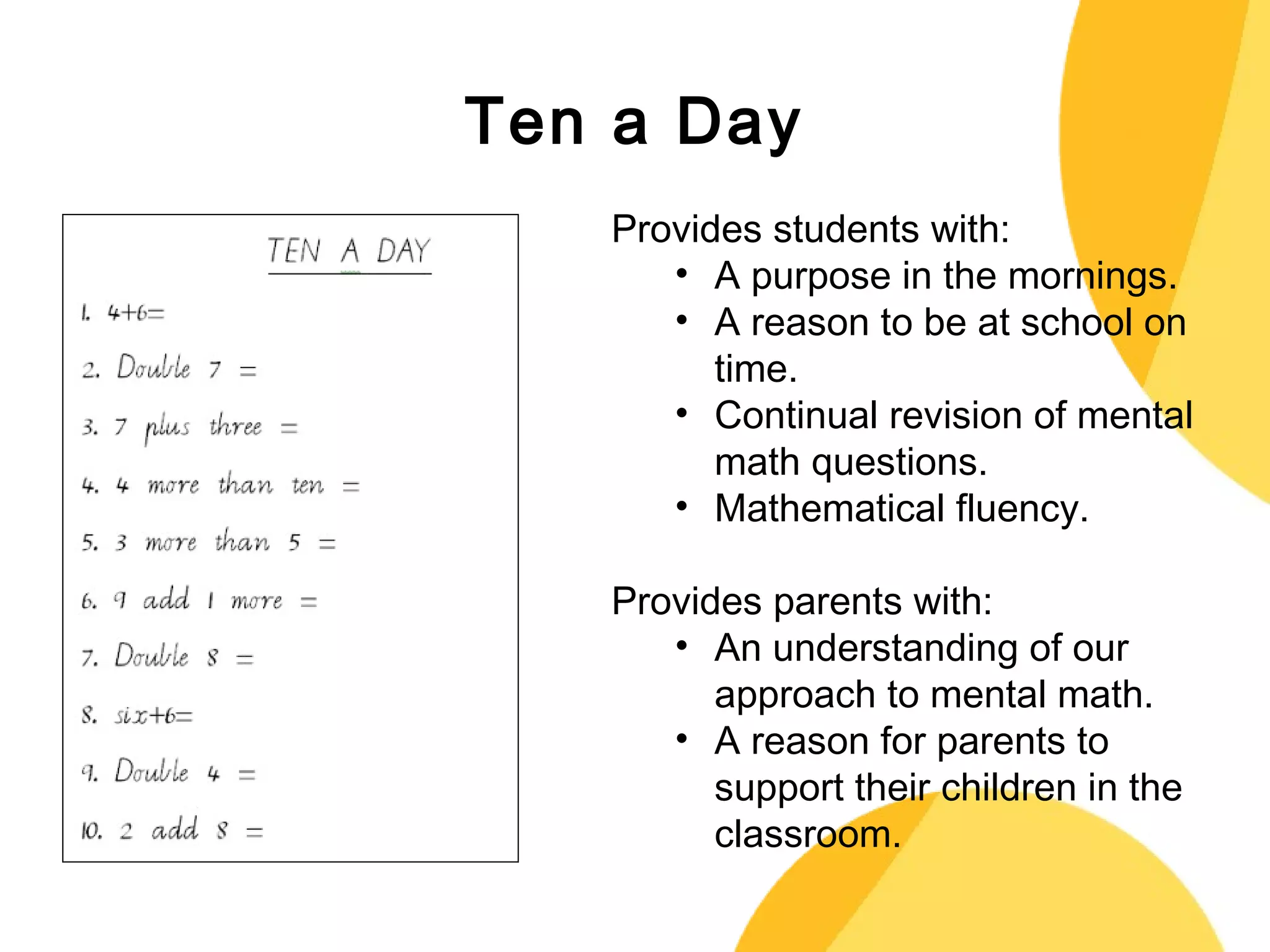
Ten a Day 
Provides students with: 
• A purpose in the mornings. 
• A reason to be at school on 
time. 
• Continual revision of mental 
math questions. 
• Mathematical fluency. 
Provides parents with: 
• An understanding of our 
approach to mental math. 
• A reason for parents to 
support their children in the 
classroom.
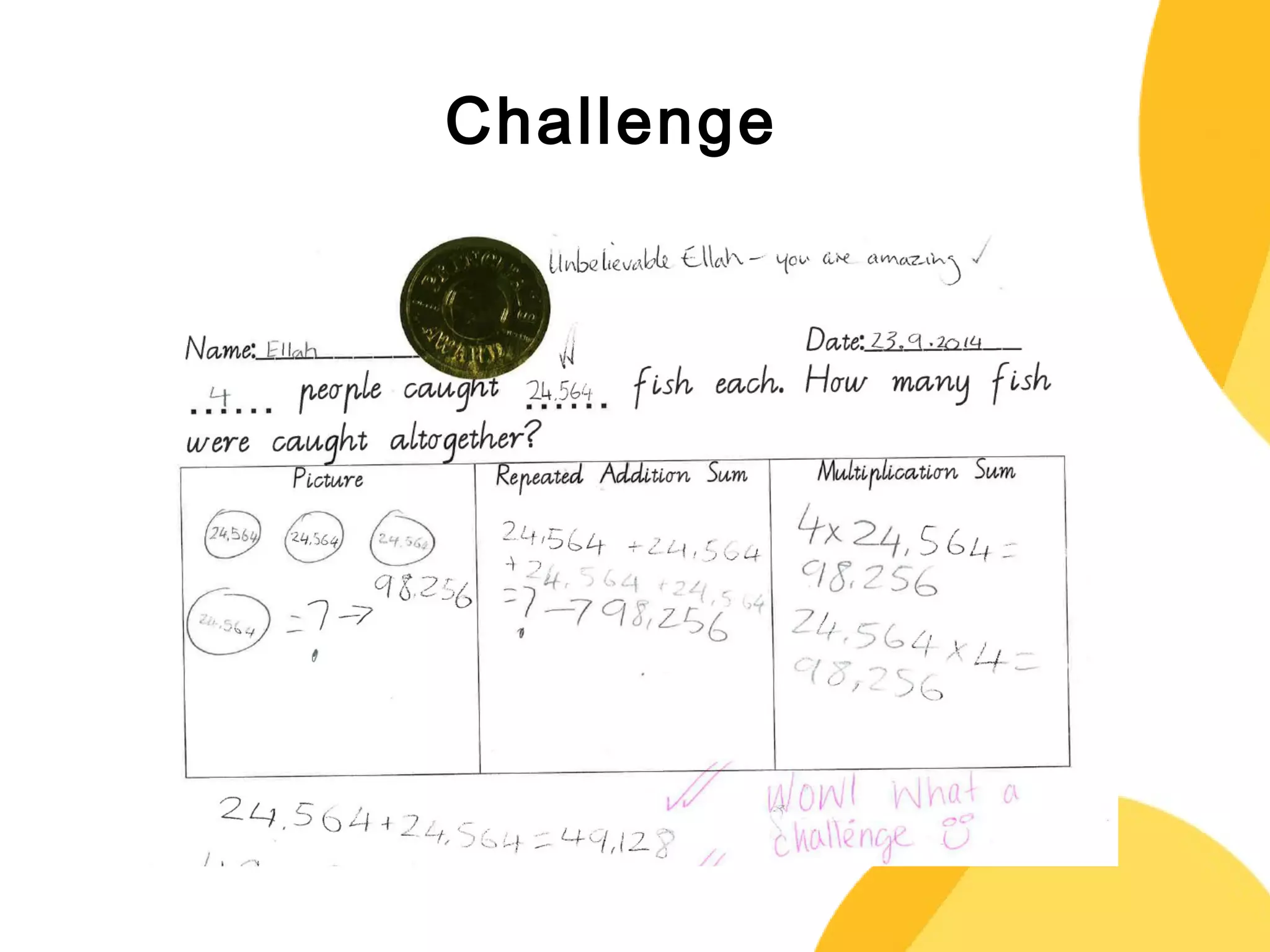
Challenge
Best in Karratha 2014
Thank you for your time today!

Persistence & commitment to students & community

  • 1.
  • 2.
    Persistence and Commitment the past………………
  • 3.
    What to dofirst? • Moving from inexperienced to more experienced. • Listen to quality advice • Recognize good role models • Develop and foster productive relationships
  • 4.
    What examples doyou see? • Successful sport stars – in the AFL, netball , basketball, NRL, the Rabbitohs? they are every where • Actors, musicians, artists • My greatest inspirations and motivations come from my family, their every day challenges,
  • 5.
    Is the journeygoing to be worthwhile? • The journey begins with the first step • Move forward in the best possible way • Knowing where you are now • Understand where you have come from • Know where you want to be • Reflect, Plan, Act
  • 6.
    What’s in itfor me? • Commit • The scale of commitment- 1…………………………………………..……………….10 • The more committed , the greater the chance of success.
  • 7.
    The WA Network • Strong leadership within the DET organisation. • Aboriginal Education Directorate • Managers of Aboriginal Education • Credible and committed school leaders. • Strong support in schools from AIEO’s
  • 8.
    Persistence takes courage  An Indian woman armed only with farm tools is stable in hospital after killing a leopard that attacked her.  Kamla Devi, 56, sustained multiple bites, cuts and fractures during the half-hour battle. She had been fetching water in northern Uttarakhand state when the leopard pounced on her from nearby bushes - she fought back with a sickle and spade.  "I thought I was dead but I did not lose patience and courage," she told reporters after her lucky escape.  Ms Devi was carrying water from a canal to her field near the village of Sem Nauti in Rudraprayag district when she was attacked on Sunday. She said she managed to smash some of the animal's teeth during the struggle.  "I fought head on with it for almost half an hour. Then I came to know it was dead," she told reporters from hospital in the nearby town of Srinagar Garhwal.  Doctors were surprised she had survived.  She has two fractures on the right hand and one on the left. She also has deep injuries on her head and legs. There are bite marks all over her body," said Dr Abdul Rahul, who has been treating her.
  • 9.
    Progress Takes time There will be set backs Involve others Seek feedback Be realistic Success can be achieved
  • 10.
  • 11.
    LNPP- improving Literacyand Numeracy Partnership Program • In 2012 we were invited to join the ILNPP to see how we could improve our school levels of Literacy and Numeracy • Millars Well Primary School journey to success
  • 13.
    First Attempt •Identified and appointed specialist support teachers in areas of Literacy and Numeracy • Provided release time for staff, collaborative planning and the modelling of lessons
  • 14.
    Monitor and Reflect • Reviewed and assessed the progress we had made – Could we do better? – What did we want it to look like for students and staff? • Realising the moral imperative
  • 15.
    The Past -The Present • PAST - Being led- support provision- targets designed and owned by the planners- (at the top ) • PRESENT – (Phases of learning and phase leaders) – Buy in, staff ownership – Collective collaboration – Investment in all staff- shared professional learning , support, opportunities – Strategic targets based on data/evidence which are reviewed and monitored across the school
  • 17.
    School Data •Address Areas of Weakness and Plan for Success • How? – Initiate Whole School Approaches (Learning & Assessment) – Focus on the students with greatest capacity to improve. – Focus on the Early Years – Identify what high achievement looks like. – Work with motivated staff to begin with.
  • 18.
  • 19.
    Whole School Approachesto Learning • Mental Maths • Guided Reading • Diana Rigg, Letters & Sounds, Words Their Way • Common Assessment Tasks
  • 20.
    Identify Students withthe Greatest Capacity to Improve Top % of students who always read well by the end of PP; year after year regardless of the teacher or learning program.
  • 21.
    Identify Students withthe Greatest Capacity to Improve (Middle Ability) We identified middle ability students with a beginning On-Entry PP score of 0.5. We felt those students could reach a PM level of 6 or above by the end of PP with targeted teaching.
  • 22.
    Identify Students withthe Greatest Capacity to Improve (Middle Ability) Individualised learning programs and files were created for all PP students.
  • 23.
    Set Targets forthe Early Years
  • 24.
  • 25.
    High Expectations –Middle Yr. 1 Student Beginning of Year 1 Same student, midway through Year 1.
  • 26.
    High Expectations –Top Yr. 1 Student Beginning of Year 1 Same student, midway through Year 1.
  • 27.
    High Expectations –Bottom Yr. 1 Student Beginning of Year 1 Same student, midway through Year 1.
  • 28.
  • 29.
  • 30.
    Ten a Day Provides students with: • A purpose in the mornings. • A reason to be at school on time. • Continual revision of mental math questions. • Mathematical fluency. Provides parents with: • An understanding of our approach to mental math. • A reason for parents to support their children in the classroom.
  • 31.
  • 32.
  • 33.
    Thank you foryour time today!