Introduction to Sociology
Chapter 1
Sociology: Perspective, Theory,
and Method
What is Sociology?
• Word origin
– Socius
– Logus
– Ology
• Definition
– Scientific study of patterns of human social
interactions, causes of those interactions, and
solutions to negative consequences
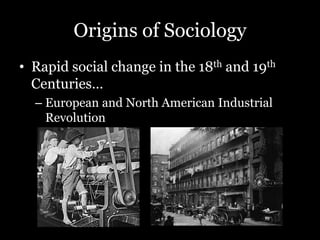
Origins of Sociology
• Rapid social change in the 18th and 19th
Centuries…
– European and North American Industrial
Revolution
Sociology as a Science
• Social Science
• Based on the use of the Scientific Method
– Patterned Regularity
– Empiricism
– Objectivity
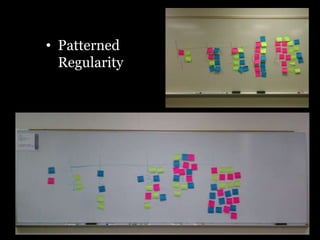
• Patterned
Regularity
The Sociological Perspective
Seeing the ā€œGeneral in the Particularā€
People often think they are
individuals who make unique
decisions, but people are
actually products of a
whirlwind of social forces!
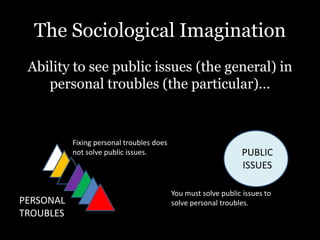
The Sociological Imagination
• C. Wright Mills
The Sociological Imagination
Ability to see public issues (the general) in
personal troubles (the particular)…
PERSONAL
TROUBLES
Fixing personal troubles does
not solve public issues. PUBLIC
ISSUES
You must solve public issues to
solve personal troubles.
Likelihood of Embracing the
Sociological Perspective
• Social Marginality
– Racial/ethnic minorities
– Women
– Immigrants
– People with disabilities
– The elderly
– LGBTQ Community
– Etc…
 These
categories of
people are more
likely to accept
the Sociological
Perspective
because they
experience the
consequences
Major Areas of Sociology
MACRO: large groups, main focus
MICRO: individual levels and small groups
(also called Social Psychology)
Purposes of Sociology
Applied/Practicing
Pure/Basic/Academic
Theoretical Founders
and Grand Theory
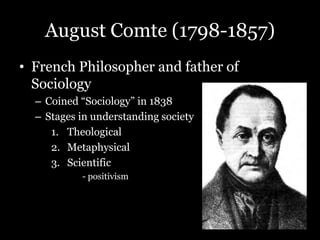
August Comte (1798-1857)
• French Philosopher and father of
Sociology
– Coined ā€œSociologyā€ in 1838
– Stages in understanding society
1. Theological
2. Metaphysical
3. Scientific
- positivism
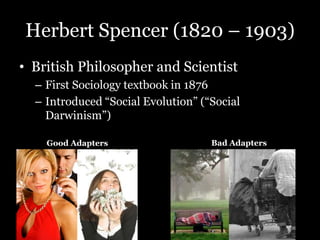
Herbert Spencer (1820 – 1903)
• British Philosopher and Scientist
– First Sociology textbook in 1876
– Introduced ā€œSocial Evolutionā€ (ā€œSocial
Darwinismā€)
Good Adapters Bad Adapters
Karl Marx (1818 – 1883)
• German Philosopher, Economist & Activist
• What determines poverty and other social
patterns?
– ECONOMIC DETERMINISM
– Based on two dimensions of society
• Infrastructure/Substructure
• Superstructure
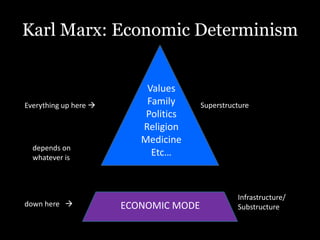
Karl Marx: Economic Determinism
Superstructure
Infrastructure/
Substructure
Values
Family
Politics
Religion
Medicine
Etc…
ECONOMIC MODE
Everything up here 
depends on
whatever is
down here 
Karl Marx: Communism
• COMMUNISM
– Complete equality, no poverty
– Collective ownership of the means of
production
– Most advanced/sophisticated economic
system
– End of all further economic transition
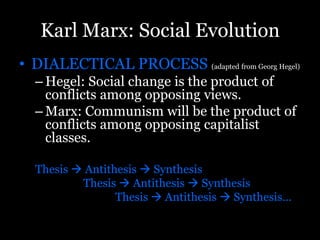
Karl Marx: Social Evolution
• DIALECTICAL PROCESS (adapted from Georg Hegel)
– Hegel: Social change is the product of
conflicts among opposing views.
– Marx: Communism will be the product of
conflicts among opposing capitalist
classes.
Thesis  Antithesis  Synthesis
Thesis  Antithesis  Synthesis…
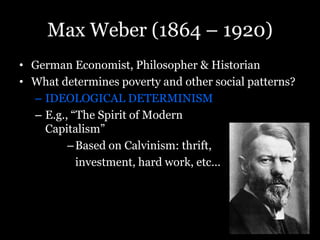
Max Weber (1864 – 1920)
• German Economist, Philosopher & Historian
• What determines poverty and other social patterns?
– IDEOLOGICAL DETERMINISM
– E.g., ā€œThe Spirit of Modern
Capitalismā€
–Based on Calvinism: thrift,
investment, hard work, etc…
Max Weber: Ideological Determinism
Superstructure
Infrastructure/
Substructure
Values
Family
Politics
Medicine
Economy
Etc…
IDEOLOGIES
Everything up here 
depends on
whatever is
DOWN HERE 
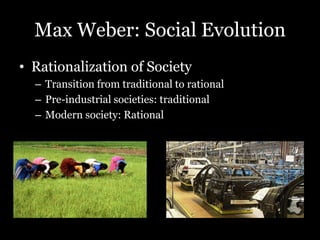
Max Weber: Social Evolution
• Rationalization of Society
– Transition from traditional to rational
– Pre-industrial societies: traditional
– Modern society: Rational
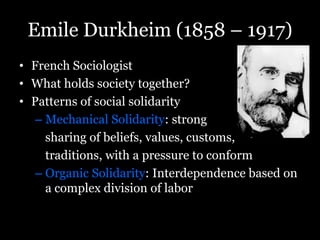
Emile Durkheim (1858 – 1917)
• French Sociologist
• What holds society together?
• Patterns of social solidarity
– Mechanical Solidarity: strong
sharing of beliefs, values, customs,
traditions, with a pressure to conform
– Organic Solidarity: Interdependence based on
a complex division of labor
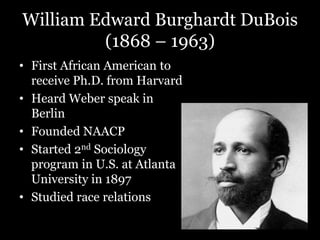
William Edward Burghardt DuBois
(1868 – 1963)
• First African American to
receive Ph.D. from Harvard
• Heard Weber speak in
Berlin
• Founded NAACP
• Started 2nd Sociology
program in U.S. at Atlanta
University in 1897
• Studied race relations
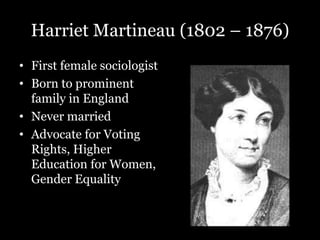
Harriet Martineau (1802 – 1876)
• First female sociologist
• Born to prominent
family in England
• Never married
• Advocate for Voting
Rights, Higher
Education for Women,
Gender Equality
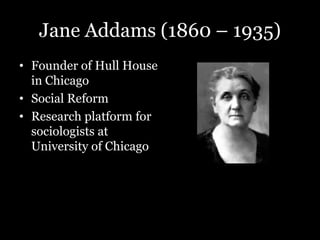
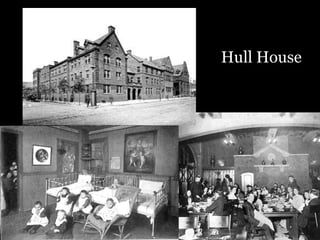
Jane Addams (1860 – 1935)
• Founder of Hull House
in Chicago
• Social Reform
• Research platform for
sociologists at
University of Chicago
Hull House
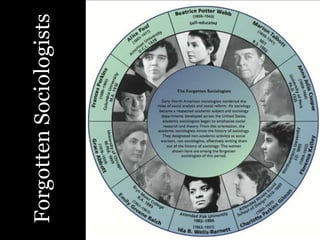
ForgottenSociologists
Grand Theory
Theory: a statement of logical ideas, facts, or
assumptions that explains a situation
GRAND Sociological Theories
1. Structural Functional
2. Social Conflict Symbolic
3. Interactionism
Structural Functionalism
• Talcott Parsons
• Assumption: Society is a system of
interdependent parts working together to
maintain stability
• Underpinning assumptions:
– Stability
– Harmony
– Slow Change
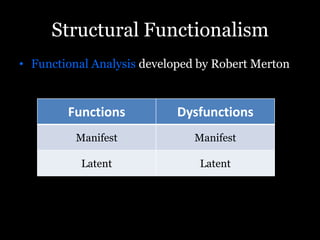
Structural Functionalism
• Functional Analysis developed by Robert Merton
Functions Dysfunctions
Manifest Manifest
Latent Latent
Conflict Theory
• Ralph Dahrendorf and Lewis Coser
• Assumption: Change and order are due to
dialectical forces
• Underpinning Assumptions:
– Social structures create
inequality
– Inequality causes activism
– Conflicts arise
– Change and
reorganization occur
Feminism and Gender-Conflict
• Feminist Theory: the study of society that
focuses on inequality and conflict between
women and men
• Linked to feminism: support for social
equality for men and women
Race-Conflict
• The study of society that focuses on
inequality and conflict between people of
different racial and ethnic categories
– Whites have social advantage over non-whites
• Higher incomes, more schooling, greater job
opportunities, better health, longer life
expectancies
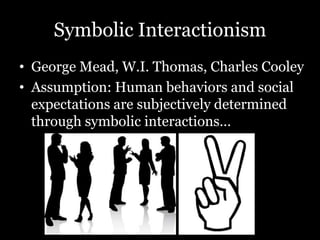
Symbolic Interactionism
• George Mead, W.I. Thomas, Charles Cooley
• Assumption: Human behaviors and social
expectations are subjectively determined
through symbolic interactions…
Symbolic Interactionism
• Underpinning Assumptions:
– Human interactions are based on symbols
– We share meaning for symbols
– Shared meaning determines social reality
• W.I. Thomas: ā€œThe Definition of the
Situationā€
– Social reality determines social expectation
and behavior
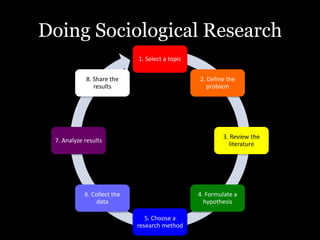
Doing Sociological Research
1. Select a topic
2. Define the
problem
3. Review the
literature
4. Formulate a
hypothesis
5. Choose a
research method
6. Collect the
data
7. Analyze results
8. Share the
results
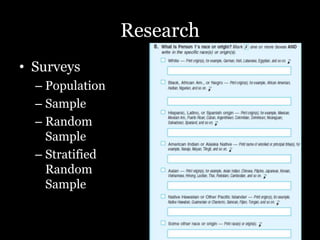
Research
• Surveys
– Population
– Sample
– Random
Sample
– Stratified
Random
Sample
Research
• Participant Observation
– Fieldwork
• Case Studies
• Secondary Analysis
• Experiments
– Cause and effect
– Independent Variable
– Dependent Variable
Research Ethics
• Stanford Prison Experiment
• Milgram Experiment
• Humphreys’ Tea Room Trade

1 sociology update 6.11

  • 1.
    Introduction to Sociology Chapter1 Sociology: Perspective, Theory, and Method
  • 2.
    What is Sociology? •Word origin – Socius – Logus – Ology • Definition – Scientific study of patterns of human social interactions, causes of those interactions, and solutions to negative consequences
  • 3.
    Origins of Sociology •Rapid social change in the 18th and 19th Centuries… – European and North American Industrial Revolution
  • 4.
    Sociology as aScience • Social Science • Based on the use of the Scientific Method – Patterned Regularity – Empiricism – Objectivity
  • 5.
  • 6.
    The Sociological Perspective Seeingthe ā€œGeneral in the Particularā€ People often think they are individuals who make unique decisions, but people are actually products of a whirlwind of social forces!
  • 7.
  • 8.
    The Sociological Imagination Abilityto see public issues (the general) in personal troubles (the particular)… PERSONAL TROUBLES Fixing personal troubles does not solve public issues. PUBLIC ISSUES You must solve public issues to solve personal troubles.
  • 9.
    Likelihood of Embracingthe Sociological Perspective • Social Marginality – Racial/ethnic minorities – Women – Immigrants – People with disabilities – The elderly – LGBTQ Community – Etc…  These categories of people are more likely to accept the Sociological Perspective because they experience the consequences
  • 10.
    Major Areas ofSociology MACRO: large groups, main focus MICRO: individual levels and small groups (also called Social Psychology) Purposes of Sociology Applied/Practicing Pure/Basic/Academic
  • 11.
  • 12.
    August Comte (1798-1857) •French Philosopher and father of Sociology – Coined ā€œSociologyā€ in 1838 – Stages in understanding society 1. Theological 2. Metaphysical 3. Scientific - positivism
  • 13.
    Herbert Spencer (1820– 1903) • British Philosopher and Scientist – First Sociology textbook in 1876 – Introduced ā€œSocial Evolutionā€ (ā€œSocial Darwinismā€) Good Adapters Bad Adapters
  • 14.
    Karl Marx (1818– 1883) • German Philosopher, Economist & Activist • What determines poverty and other social patterns? – ECONOMIC DETERMINISM – Based on two dimensions of society • Infrastructure/Substructure • Superstructure
  • 15.
    Karl Marx: EconomicDeterminism Superstructure Infrastructure/ Substructure Values Family Politics Religion Medicine Etc… ECONOMIC MODE Everything up here  depends on whatever is down here 
  • 16.
    Karl Marx: Communism •COMMUNISM – Complete equality, no poverty – Collective ownership of the means of production – Most advanced/sophisticated economic system – End of all further economic transition
  • 17.
    Karl Marx: SocialEvolution • DIALECTICAL PROCESS (adapted from Georg Hegel) – Hegel: Social change is the product of conflicts among opposing views. – Marx: Communism will be the product of conflicts among opposing capitalist classes. Thesis  Antithesis  Synthesis Thesis  Antithesis  Synthesis Thesis  Antithesis  Synthesis…
  • 18.
    Max Weber (1864– 1920) • German Economist, Philosopher & Historian • What determines poverty and other social patterns? – IDEOLOGICAL DETERMINISM – E.g., ā€œThe Spirit of Modern Capitalismā€ –Based on Calvinism: thrift, investment, hard work, etc…
  • 19.
    Max Weber: IdeologicalDeterminism Superstructure Infrastructure/ Substructure Values Family Politics Medicine Economy Etc… IDEOLOGIES Everything up here  depends on whatever is DOWN HERE 
  • 20.
    Max Weber: SocialEvolution • Rationalization of Society – Transition from traditional to rational – Pre-industrial societies: traditional – Modern society: Rational
  • 21.
    Emile Durkheim (1858– 1917) • French Sociologist • What holds society together? • Patterns of social solidarity – Mechanical Solidarity: strong sharing of beliefs, values, customs, traditions, with a pressure to conform – Organic Solidarity: Interdependence based on a complex division of labor
  • 22.
    William Edward BurghardtDuBois (1868 – 1963) • First African American to receive Ph.D. from Harvard • Heard Weber speak in Berlin • Founded NAACP • Started 2nd Sociology program in U.S. at Atlanta University in 1897 • Studied race relations
  • 23.
    Harriet Martineau (1802– 1876) • First female sociologist • Born to prominent family in England • Never married • Advocate for Voting Rights, Higher Education for Women, Gender Equality
  • 24.
    Jane Addams (1860– 1935) • Founder of Hull House in Chicago • Social Reform • Research platform for sociologists at University of Chicago
  • 25.
  • 26.
  • 27.
    Grand Theory Theory: astatement of logical ideas, facts, or assumptions that explains a situation GRAND Sociological Theories 1. Structural Functional 2. Social Conflict Symbolic 3. Interactionism
  • 28.
    Structural Functionalism • TalcottParsons • Assumption: Society is a system of interdependent parts working together to maintain stability • Underpinning assumptions: – Stability – Harmony – Slow Change
  • 29.
    Structural Functionalism • FunctionalAnalysis developed by Robert Merton Functions Dysfunctions Manifest Manifest Latent Latent
  • 30.
    Conflict Theory • RalphDahrendorf and Lewis Coser • Assumption: Change and order are due to dialectical forces • Underpinning Assumptions: – Social structures create inequality – Inequality causes activism – Conflicts arise – Change and reorganization occur
  • 31.
    Feminism and Gender-Conflict •Feminist Theory: the study of society that focuses on inequality and conflict between women and men • Linked to feminism: support for social equality for men and women
  • 32.
    Race-Conflict • The studyof society that focuses on inequality and conflict between people of different racial and ethnic categories – Whites have social advantage over non-whites • Higher incomes, more schooling, greater job opportunities, better health, longer life expectancies
  • 33.
    Symbolic Interactionism • GeorgeMead, W.I. Thomas, Charles Cooley • Assumption: Human behaviors and social expectations are subjectively determined through symbolic interactions…
  • 34.
    Symbolic Interactionism • UnderpinningAssumptions: – Human interactions are based on symbols – We share meaning for symbols – Shared meaning determines social reality • W.I. Thomas: ā€œThe Definition of the Situationā€ – Social reality determines social expectation and behavior
  • 35.
    Doing Sociological Research 1.Select a topic 2. Define the problem 3. Review the literature 4. Formulate a hypothesis 5. Choose a research method 6. Collect the data 7. Analyze results 8. Share the results
  • 36.
    Research • Surveys – Population –Sample – Random Sample – Stratified Random Sample
  • 37.
    Research • Participant Observation –Fieldwork • Case Studies • Secondary Analysis • Experiments – Cause and effect – Independent Variable – Dependent Variable
  • 38.
    Research Ethics • StanfordPrison Experiment • Milgram Experiment • Humphreys’ Tea Room Trade

Editor's Notes

  • #5Ā Think about 5 people you know…
  • #27Ā 598509 8003834278 M-F 8-5