THE MIDDLE AGESTHE MIDDLE AGES
THE RISE OF THE
FRANKS
• After the Western Roman Empire collapsed, many
Germanic tribes (Visigoths, Vandals, Burgundians,
and Ostrogoths) plundered Europe and established
small kingdoms.
• Of these tribes, the Franks will become the most
influential and significant.
• The Franks entered the Roman Empire near the
mouth of the Rhine in 250 BCE.
• They settled in the area of Northern Gaul that
corresponds to present day Belgium and the
Netherlands.
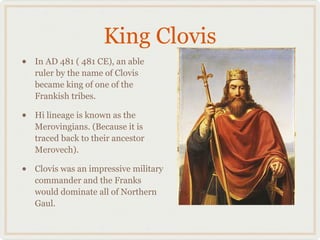
King Clovis
• In AD 481 ( 481 CE), an able
ruler by the name of Clovis
became king of one of the
Frankish tribes.
• Hi lineage is known as the
Merovingians. (Because it is
traced back to their ancestor
Merovech).
• Clovis was an impressive military
commander and the Franks
would dominate all of Northern
Gaul.
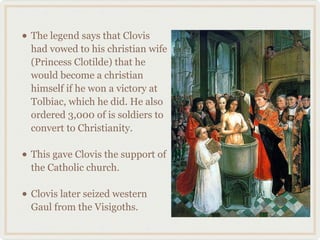
• The legend says that Clovis
had vowed to his christian wife
(Princess Clotilde) that he
would become a christian
himself if he won a victory at
Tolbiac, which he did. He also
ordered 3,000 of is soldiers to
convert to Christianity.
• This gave Clovis the support of
the Catholic church.
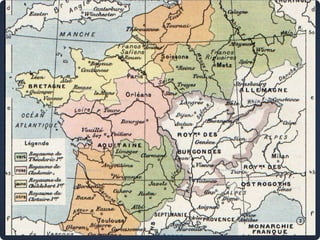
• Clovis later seized western
Gaul from the Visigoths.
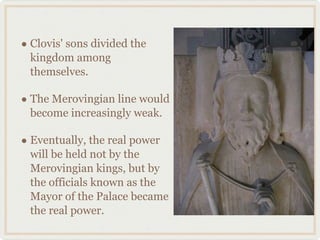
• Clovis' sons divided the
kingdom among
themselves.
• The Merovingian line would
become increasingly weak.
• Eventually, the real power
will be held not by the
Merovingian kings, but by
the officials known as the
Mayor of the Palace became
the real power.
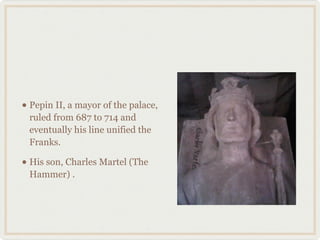
• Pepin II, a mayor of the palace,
ruled from 687 to 714 and
eventually his line unified the
Franks.
• His son, Charles Martel (The
Hammer) .
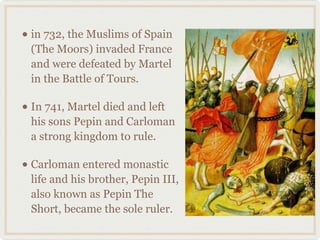
• in 732, the Muslims of Spain
(The Moors) invaded France
and were defeated by Martel
in the Battle of Tours.
• In 741, Martel died and left
his sons Pepin and Carloman
a strong kingdom to rule.
• Carloman entered monastic
life and his brother, Pepin III,
also known as Pepin The
Short, became the sole ruler.
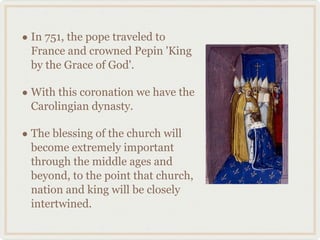
• In 751, the pope traveled to
France and crowned Pepin 'King
by the Grace of God'.
• With this coronation we have the
Carolingian dynasty.
• The blessing of the church will
become extremely important
through the middle ages and
beyond, to the point that church,
nation and king will be closely
intertwined.
• The Pope in turn, asked Pepin for help against the
Lombards, a Germanic tribe in the outskirts of Rome
that was threatening them.
• Pepin defeated the Lombards and gave the lands to
the Catholic Church, increasing its power and
creating what would be known for centuries as 'The
Papal States'.
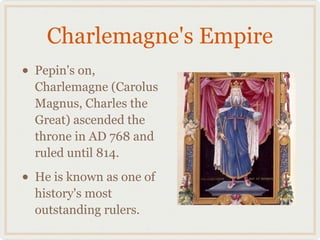
Charlemagne's Empire
• Pepin's on,
Charlemagne (Carolus
Magnus, Charles the
Great) ascended the
throne in AD 768 and
ruled until 814.
• He is known as one of
history's most
outstanding rulers.
• Charlemagne defeated the Lombards in Italy, the
Saxons in Germany and the Avars in central Europe.
• He could not conquer the Moors of Spain, but he
pushed them back across the Pyrenees.
• By the end of his rule, he controlled much of western
Europe.
• His motto was 'Renovatio imperi romani' (Renewal of
the Roman Empire).
• Charlemagne had united much of Europe for
the first time since the fall of Western Rome,
and when Pope Leo III placed a crown on his
head and declared him 'Emperor of the
Romans' in Saint Peter's church in Rome, it
had nothing to do with the actual old Roman
Empire, but with his standing in the eyes of
the people as successor of the emperors of
Rome.
• Charlemagne's rule levied no taxes on land or people,
because his estates produced more than enough revenue to
sustain the Empire. (WOW!)
• His Empire was made of several hundred regions, each run
by a Count. Each region had its own army and
administered its own laws.
• He had officials called missi dominici (The Lord's
Messengers), who traveled all around the empire listening
to complaints and evaluating the laws and rulers, keeping
an eye on the counts and reporting to Charlemagne.
• Charlemagne was greatly interested in education and
he created a school at his palace for his children and
nobles.
• He invited scholars (mostly monks) from all over
Europe to teach at his school.
• He had commissioned a readable bible, the
Carolingian Bible. It became the standardized bible
for Charlemagne's empire.
• He ordered Bishops to salvage and copy ancient
Latin Manuscripts and to organize schools for the
children of nobles and promising children from
lower classes.
• Charlemagne never learned to write, but he knew how
to read, his favorite book was Saint Augustine's City
of God.
Downfall
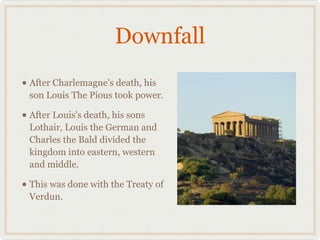
• After Charlemagne's death, his
son Louis The Pious took power.
• After Louis's death, his sons
Lothair, Louis the German and
Charles the Bald divided the
kingdom into eastern, western
and middle.
• This was done with the Treaty of
Verdun.
The Vikings
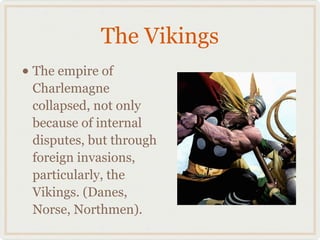
• The empire of
Charlemagne
collapsed, not only
because of internal
disputes, but through
foreign invasions,
particularly, the
Vikings. (Danes,
Norse, Northmen).

Middle ages part 1

  • 1.
    THE MIDDLE AGESTHEMIDDLE AGES
  • 2.
    THE RISE OFTHE FRANKS • After the Western Roman Empire collapsed, many Germanic tribes (Visigoths, Vandals, Burgundians, and Ostrogoths) plundered Europe and established small kingdoms.
  • 3.
    • Of thesetribes, the Franks will become the most influential and significant. • The Franks entered the Roman Empire near the mouth of the Rhine in 250 BCE. • They settled in the area of Northern Gaul that corresponds to present day Belgium and the Netherlands.
  • 4.
    King Clovis • InAD 481 ( 481 CE), an able ruler by the name of Clovis became king of one of the Frankish tribes. • Hi lineage is known as the Merovingians. (Because it is traced back to their ancestor Merovech). • Clovis was an impressive military commander and the Franks would dominate all of Northern Gaul.
  • 5.
    • The legendsays that Clovis had vowed to his christian wife (Princess Clotilde) that he would become a christian himself if he won a victory at Tolbiac, which he did. He also ordered 3,000 of is soldiers to convert to Christianity. • This gave Clovis the support of the Catholic church. • Clovis later seized western Gaul from the Visigoths.
  • 6.
    • Clovis' sonsdivided the kingdom among themselves. • The Merovingian line would become increasingly weak. • Eventually, the real power will be held not by the Merovingian kings, but by the officials known as the Mayor of the Palace became the real power.
  • 8.
    • Pepin II,a mayor of the palace, ruled from 687 to 714 and eventually his line unified the Franks. • His son, Charles Martel (The Hammer) .
  • 9.
    • in 732,the Muslims of Spain (The Moors) invaded France and were defeated by Martel in the Battle of Tours. • In 741, Martel died and left his sons Pepin and Carloman a strong kingdom to rule. • Carloman entered monastic life and his brother, Pepin III, also known as Pepin The Short, became the sole ruler.
  • 10.
    • In 751,the pope traveled to France and crowned Pepin 'King by the Grace of God'. • With this coronation we have the Carolingian dynasty. • The blessing of the church will become extremely important through the middle ages and beyond, to the point that church, nation and king will be closely intertwined.
  • 11.
    • The Popein turn, asked Pepin for help against the Lombards, a Germanic tribe in the outskirts of Rome that was threatening them. • Pepin defeated the Lombards and gave the lands to the Catholic Church, increasing its power and creating what would be known for centuries as 'The Papal States'.
  • 12.
    Charlemagne's Empire • Pepin'son, Charlemagne (Carolus Magnus, Charles the Great) ascended the throne in AD 768 and ruled until 814. • He is known as one of history's most outstanding rulers.
  • 13.
    • Charlemagne defeatedthe Lombards in Italy, the Saxons in Germany and the Avars in central Europe. • He could not conquer the Moors of Spain, but he pushed them back across the Pyrenees. • By the end of his rule, he controlled much of western Europe. • His motto was 'Renovatio imperi romani' (Renewal of the Roman Empire).
  • 14.
    • Charlemagne hadunited much of Europe for the first time since the fall of Western Rome, and when Pope Leo III placed a crown on his head and declared him 'Emperor of the Romans' in Saint Peter's church in Rome, it had nothing to do with the actual old Roman Empire, but with his standing in the eyes of the people as successor of the emperors of Rome.
  • 15.
    • Charlemagne's rulelevied no taxes on land or people, because his estates produced more than enough revenue to sustain the Empire. (WOW!) • His Empire was made of several hundred regions, each run by a Count. Each region had its own army and administered its own laws. • He had officials called missi dominici (The Lord's Messengers), who traveled all around the empire listening to complaints and evaluating the laws and rulers, keeping an eye on the counts and reporting to Charlemagne.
  • 16.
    • Charlemagne wasgreatly interested in education and he created a school at his palace for his children and nobles. • He invited scholars (mostly monks) from all over Europe to teach at his school. • He had commissioned a readable bible, the Carolingian Bible. It became the standardized bible for Charlemagne's empire. • He ordered Bishops to salvage and copy ancient Latin Manuscripts and to organize schools for the children of nobles and promising children from lower classes.
  • 17.
    • Charlemagne neverlearned to write, but he knew how to read, his favorite book was Saint Augustine's City of God.
  • 18.
    Downfall • After Charlemagne'sdeath, his son Louis The Pious took power. • After Louis's death, his sons Lothair, Louis the German and Charles the Bald divided the kingdom into eastern, western and middle. • This was done with the Treaty of Verdun.
  • 19.
    The Vikings • Theempire of Charlemagne collapsed, not only because of internal disputes, but through foreign invasions, particularly, the Vikings. (Danes, Norse, Northmen).