
WHAT ARE MICROORGANISMS?
i) Microorganisms are very small organisms
which cannot be seen with the unaided eye. They
can be seen only with a magnifying glass or
microscope.
ii) Microorganisms may be unicellular or
multicellular.
iii) Microorganisms may exist alone or in colonies.
iv) Microorganisms are found in all kinds of
environment like ice cold climate, hot springs,
deserts, marshy lands etc. They are also found
inside the bodies of other organisms.
TYPES OF MICROORGANISMS
There are four main types of microorganisms.
They are :- bacteria, fungi, algae and
protozoans.
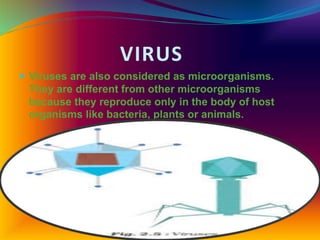
Viruses are also considered as
microorganisms. They are different from
other microorganisms because they
reproduce only in the body of host organisms
like bacteria, plants or animals.
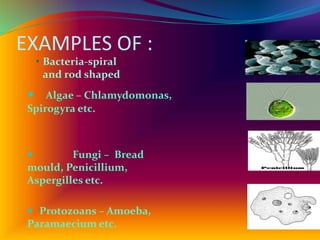
EXAMPLES OF :
• Bacteria-spiral
and rod shaped
 Algae – Chlamydomonas,
Spirogyra etc.
 Fungi – Bread
mould, Penicillium,
Aspergilles etc.
 Protozoans – Amoeba,
Paramaecium etc.
VIRUS
 Viruses are also considered as microorganisms.
They are different from other microorganisms
because they reproduce only in the body of host
organisms like bacteria, plants or animals.
FRIENDLY MICROORGANISMS i) Microrganisms like bacteria decomposes organic waste into manure and increases
the fertility of the soil.
 ii) Microorganisms help in fixing atmospheric nitrogen into nitrogen compounds in
the soil and increases the fertility of the soil.
 iii) Microorganisms are used for making curd from milk, for making cheese, pickles,
bread, cakes, pastries, alcohol, wine, vinegar (acetic acid) etc.
 iv) Microorganisms are used for making medicines.
 a) Making curd from milk :- The bacterium called Lactobacillus reproduces in milk
and helps to convert milk into curd.
 b) Making bread :- The fungus called yeast reproduces in flour dough and produces
carbon dioxide during respiration which makes the dough soft and helps in making
bread, cakes, biscuits, pastries etc.
 c) Making alcohol :- The fungus called yeast reproduces in sugar solution and
converts it into alcohol. This process is called fermentation.
 d) Making medicines :- Some bacteria and fungi are used to make medicines which
kill or stops the growth of disease causing microrganisms. Such medicines are called
antibiotics. Eg :- streptomycin, tetracycline, erythromycin etc.
 Vaccines are dead or weakened microbes introduced into the body to produce
antibodies. These antibodies protect the body from disease causing microbes.
Diseases like polio, cholera, typhoid, small pox, hepatitis etc. can be prevented by
taking vaccines.

Harmful microorganisms :-
i) Some microorganisms cause diseases in
plants and animals. Such disease causing
microorganisms are called pathogens.
ii) Some microorganisms grow in food
substances and produce toxic substances
and makes the food poisonous. Food
poisoning causes illness and even death.
iii) Some microorganisms spoil materials like
clothing, leather, wood etc.
DISEASE CAUSING
MICROORGANISMS
Disease causing microorganisms enter our body through air,
water, food, contact or insects. These microorganisms are
called pathogens.
Diseases which can spread from an infected person to a healthy
person are called communicable diseases.
Eg :- cholera, common cold, chicken pox, tuberculosis etc.
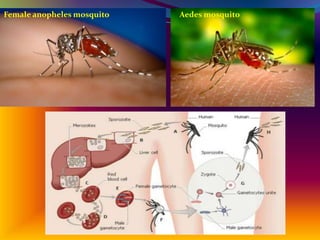
Some insects and animals act as carriers of disease causing
microbes.
Eg :- House fly, Female anopheles mosquito (malaria), Female
aedes mosquito (dengue fever) etc.
Female anopheles mosquito Aedes mosquito
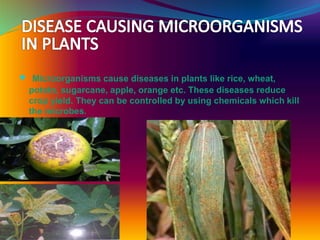
 Microorganisms cause diseases in plants like rice, wheat,
potato, sugarcane, apple, orange etc. These diseases reduce
crop yield. They can be controlled by using chemicals which kill
the microbes.
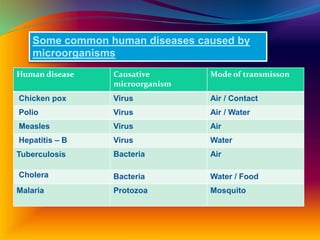
Human disease Causative
microorganism
Mode of transmisson
Chicken pox Virus Air / Contact
Polio Virus Air / Water
Measles Virus Air
Hepatitis – B Virus Water
Tuberculosis Bacteria Air
Cholera Bacteria Water / Food
Malaria Protozoa Mosquito
Some common human diseases caused by
microorganisms
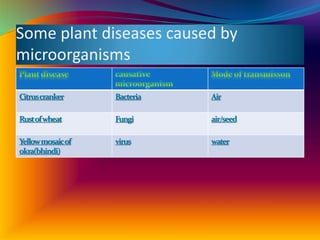
Some plant diseases caused by
microorganisms
Citruscranker Bacteria Air
Rustofwheat Fungi air/seed
Yellowmosaicof
okra(bhindi)
virus water
.
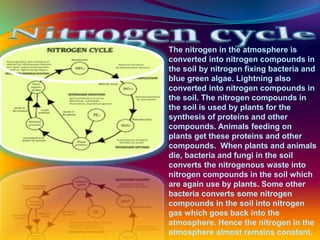
The nitrogen in the atmosphere is
converted into nitrogen compounds in
the soil by nitrogen fixing bacteria and
blue green algae. Lightning also
converted into nitrogen compounds in
the soil. The nitrogen compounds in
the soil is used by plants for the
synthesis of proteins and other
compounds. Animals feeding on
plants get these proteins and other
compounds. When plants and animals
die, bacteria and fungi in the soil
converts the nitrogenous waste into
nitrogen compounds in the soil which
are again use by plants. Some other
bacteria converts some nitrogen
compounds in the soil into nitrogen
gas which goes back into the
atmosphere. Hence the nitrogen in the
atmosphere almost remains constant.
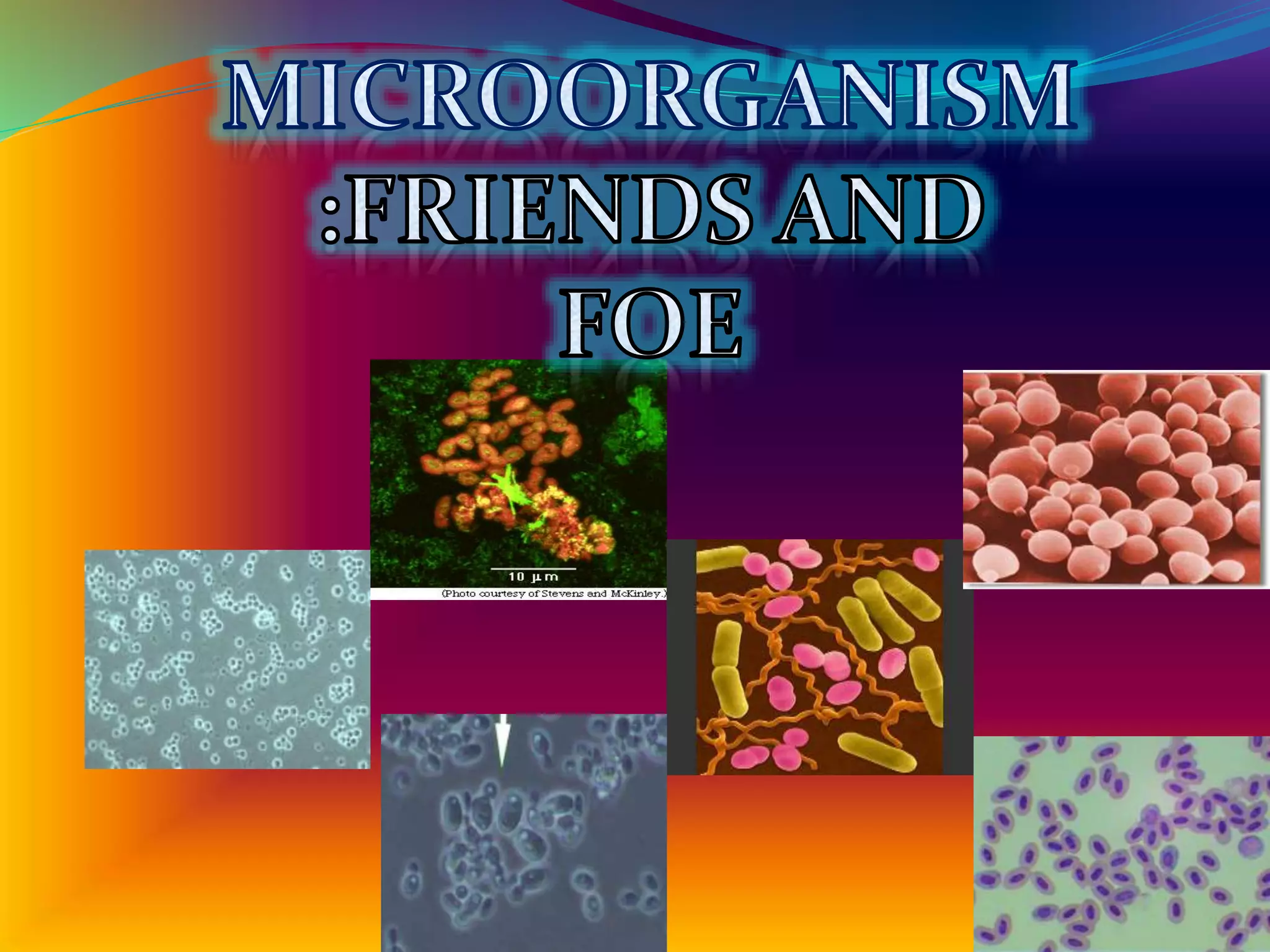
Microorganisms:freinds and foe

Microorganisms:freinds and foe

  • 2.
    WHAT ARE MICROORGANISMS? i)Microorganisms are very small organisms which cannot be seen with the unaided eye. They can be seen only with a magnifying glass or microscope. ii) Microorganisms may be unicellular or multicellular. iii) Microorganisms may exist alone or in colonies. iv) Microorganisms are found in all kinds of environment like ice cold climate, hot springs, deserts, marshy lands etc. They are also found inside the bodies of other organisms.
  • 3.
    TYPES OF MICROORGANISMS Thereare four main types of microorganisms. They are :- bacteria, fungi, algae and protozoans. Viruses are also considered as microorganisms. They are different from other microorganisms because they reproduce only in the body of host organisms like bacteria, plants or animals.
  • 4.
    EXAMPLES OF : •Bacteria-spiral and rod shaped  Algae – Chlamydomonas, Spirogyra etc.  Fungi – Bread mould, Penicillium, Aspergilles etc.  Protozoans – Amoeba, Paramaecium etc.
  • 5.
    VIRUS  Viruses arealso considered as microorganisms. They are different from other microorganisms because they reproduce only in the body of host organisms like bacteria, plants or animals.
  • 6.
    FRIENDLY MICROORGANISMS i)Microrganisms like bacteria decomposes organic waste into manure and increases the fertility of the soil.  ii) Microorganisms help in fixing atmospheric nitrogen into nitrogen compounds in the soil and increases the fertility of the soil.  iii) Microorganisms are used for making curd from milk, for making cheese, pickles, bread, cakes, pastries, alcohol, wine, vinegar (acetic acid) etc.  iv) Microorganisms are used for making medicines.  a) Making curd from milk :- The bacterium called Lactobacillus reproduces in milk and helps to convert milk into curd.  b) Making bread :- The fungus called yeast reproduces in flour dough and produces carbon dioxide during respiration which makes the dough soft and helps in making bread, cakes, biscuits, pastries etc.  c) Making alcohol :- The fungus called yeast reproduces in sugar solution and converts it into alcohol. This process is called fermentation.  d) Making medicines :- Some bacteria and fungi are used to make medicines which kill or stops the growth of disease causing microrganisms. Such medicines are called antibiotics. Eg :- streptomycin, tetracycline, erythromycin etc.  Vaccines are dead or weakened microbes introduced into the body to produce antibodies. These antibodies protect the body from disease causing microbes. Diseases like polio, cholera, typhoid, small pox, hepatitis etc. can be prevented by taking vaccines. 
  • 7.
    Harmful microorganisms :- i)Some microorganisms cause diseases in plants and animals. Such disease causing microorganisms are called pathogens. ii) Some microorganisms grow in food substances and produce toxic substances and makes the food poisonous. Food poisoning causes illness and even death. iii) Some microorganisms spoil materials like clothing, leather, wood etc.
  • 8.
    DISEASE CAUSING MICROORGANISMS Disease causingmicroorganisms enter our body through air, water, food, contact or insects. These microorganisms are called pathogens. Diseases which can spread from an infected person to a healthy person are called communicable diseases. Eg :- cholera, common cold, chicken pox, tuberculosis etc. Some insects and animals act as carriers of disease causing microbes. Eg :- House fly, Female anopheles mosquito (malaria), Female aedes mosquito (dengue fever) etc.
  • 9.
  • 10.
     Microorganisms causediseases in plants like rice, wheat, potato, sugarcane, apple, orange etc. These diseases reduce crop yield. They can be controlled by using chemicals which kill the microbes.
  • 11.
    Human disease Causative microorganism Modeof transmisson Chicken pox Virus Air / Contact Polio Virus Air / Water Measles Virus Air Hepatitis – B Virus Water Tuberculosis Bacteria Air Cholera Bacteria Water / Food Malaria Protozoa Mosquito Some common human diseases caused by microorganisms
  • 12.
    Some plant diseasescaused by microorganisms Citruscranker Bacteria Air Rustofwheat Fungi air/seed Yellowmosaicof okra(bhindi) virus water
  • 13.
  • 14.
    The nitrogen inthe atmosphere is converted into nitrogen compounds in the soil by nitrogen fixing bacteria and blue green algae. Lightning also converted into nitrogen compounds in the soil. The nitrogen compounds in the soil is used by plants for the synthesis of proteins and other compounds. Animals feeding on plants get these proteins and other compounds. When plants and animals die, bacteria and fungi in the soil converts the nitrogenous waste into nitrogen compounds in the soil which are again use by plants. Some other bacteria converts some nitrogen compounds in the soil into nitrogen gas which goes back into the atmosphere. Hence the nitrogen in the atmosphere almost remains constant.