MICRO-
ORGANISMS
The harmful and useful micro-organisms
WHAT ARE MICRO-ORGANISMS?
 MICRO-ORGANISMS ARE THE
Types of micro-organisms
 Bacteria
 Virus
 Protozoa
 Fungus
MICRO-ORGANISMS
 Some micro-organisms can be harmful to human and other living things.
 They can cause disease and therefore are called Pathogens.
 Some micro-organisms can be useful to human and other living things.
 Most of these microbes are:
 Necessary for our survival
 Good for us
 be used for our benefit in industry
WHERE ARE MICRO-ORGANISM?
 They are found on host cells.
 Pathogens produces toxins which attack and destroy host cell and body
tissues.
protozoa
 Are unicellular
 They are parasitic
 They are found in fresh water and salt water.
 Example Amoeba
Algae
 Are unicellular or multicellular
 Are present on moist soil and rocks
 They have a cell wall and chloroplast
 they have no roots, no shoot, no leaves
Fungi
 Are unicellular or multicellular
Harmful micro-organisms
 Harmful microorganisms can cause disease.
 Some disease can easily spread from one person to another.
 They are called contagious diseases.
Bacteria and viruses are harmful micro-organisms.
Bacteria
 Are prokaryotic.
 Are unicellular
 Several Shapes: Coccus (spherical), Bacillus (Rod like), Spiral (Corkscrew)
 Others are modified versions: Coccobacillus, pleomorphic
 Most beneficial, some pathogenic
 Photosynthetic or derive nutrition from environment
Bacteria
Diseases caused by bacteria:
 Tuberculosis
 Cholera
 Syphilis
Tuberculosis
 Also known as TB
 caused by Bacilli (rod shaped bacteria).
 Mainly affect lungs
 Also affect lymph node, bones and joints. ‘
tuberculosis
Tuberculosis
Symptoms of tuberculosis:
 Severe coughing
 Chest pains
 Fever
 Sweating at night
 Fatique
 Weight loss
 Loss of appetite

Cholera
 Caused by a Vibrios (Vibrio cholera).
 Can be transmitted through water and food that has been contaminated with
the faeces of people who have cholera.
 People can be infected when the bacteria enters the intestines and release
the toxin
Cholera
Symptoms of cholera:
 Vomiting
 Fatigue
 Diarrhea
viruses
 Acellular
 Nucleic acid core of EITHER DNA or RNA (not both)
 Protein coat surrounds nucleic acid core
 + /- lipid membrane envelope
 Primary function is to reproduce/replicate, only in living tissues
 Not considered living organisms, outside host are inert
 Multiply in host cells, destroying cells in process -> tissue degradation
viruses
Diseases caused by virus are:
 Common cold
 Hepatitis
 Hiv
Common cold
 The most common virus tha causes common cold is called rhinovirus.
 Rhinovirus is said to be responsible for at least 50% of cold.
 Other viruses that can cause colds include coronavirus, respiratory
syncytial virus, influenza and parainfluenza.
 Infected organs are mucous membrabe of nose, throat, air passage and
lungs.
Common cold
 Symptoms of common cold:
 Stuffy nose
 Throat – soreness
 Loss of appetite
 Severe cold
 Fever Aches
 Pain through out the body
Useful organisms
Some microorganisms can used to do the following:
 Making curd and Bread
 Medicinal use of Microorganism
 Increasing Soil Fertility
 Cleaning the Environment
 Vaccine
 commercial production of alcohol and wine
Useful micro-organisms
 Yeast is an example of microorganism.
 It is a fungus.
 It is used to make bread.
 There are air spaces in the bread.
 The air spaces are caused by carbon dioxide gas given out when the yeast acts
on the dough. This shows that microorganisms breath.
Useful micro-organisms
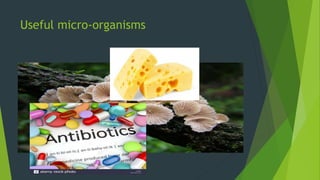
 Bacteria and fungi cause dead organisms to decay to form natural fertilizers.
 Fungi play an important role in energy cycling within, and between,
ecosystems.
 Some bacteria can be used to make cheese.
 Fungi are used to produce antibiotics.
Useful micro-organisms
References
Ishangoyal121. (2015). Microorganism. Available from:
https://www.slideshare.net/ishangoyal121/microorganism-ppt?qid=884c4c1c-5a10-43ea-
8b3d-242654f3eccc&v=&b=&from_search=23.
Mohammed. S. classification microorganism. Available from:
https://www.slideshare.net/sabaahAlyasery/classification-microorganism.
Rana. M.B. (2018). Harmful and useful organisms. Available from:
https://www.slideshare.net/RaNaMB1/harmfulandusefulofmicroorganism-
111203044208phpapp02?qid=884c4c1c-5a10-43ea-8b3d-
242654f3eccc&v=&b=&from_search=16.
Samik, S. (2011). The harmful effects of microorganisms. Available from:
https://www.slideshare.net/SuhailieSamik/14-the-harmful-effects-of-
microorganism?qid=884c4c1c-5a10-43ea-8b3d-242654f3eccc&v=&b=&from_search=19.

Micro organisms

  • 1.
    MICRO- ORGANISMS The harmful anduseful micro-organisms
  • 2.
    WHAT ARE MICRO-ORGANISMS? MICRO-ORGANISMS ARE THE Types of micro-organisms  Bacteria  Virus  Protozoa  Fungus
  • 3.
    MICRO-ORGANISMS  Some micro-organismscan be harmful to human and other living things.  They can cause disease and therefore are called Pathogens.  Some micro-organisms can be useful to human and other living things.  Most of these microbes are:  Necessary for our survival  Good for us  be used for our benefit in industry
  • 4.
    WHERE ARE MICRO-ORGANISM? They are found on host cells.  Pathogens produces toxins which attack and destroy host cell and body tissues.
  • 5.
    protozoa  Are unicellular They are parasitic  They are found in fresh water and salt water.  Example Amoeba
  • 6.
    Algae  Are unicellularor multicellular  Are present on moist soil and rocks  They have a cell wall and chloroplast  they have no roots, no shoot, no leaves
  • 7.
    Fungi  Are unicellularor multicellular
  • 8.
    Harmful micro-organisms  Harmfulmicroorganisms can cause disease.  Some disease can easily spread from one person to another.  They are called contagious diseases. Bacteria and viruses are harmful micro-organisms.
  • 9.
    Bacteria  Are prokaryotic. Are unicellular  Several Shapes: Coccus (spherical), Bacillus (Rod like), Spiral (Corkscrew)  Others are modified versions: Coccobacillus, pleomorphic  Most beneficial, some pathogenic  Photosynthetic or derive nutrition from environment
  • 10.
    Bacteria Diseases caused bybacteria:  Tuberculosis  Cholera  Syphilis
  • 11.
    Tuberculosis  Also knownas TB  caused by Bacilli (rod shaped bacteria).  Mainly affect lungs  Also affect lymph node, bones and joints. ‘
  • 12.
  • 13.
    Tuberculosis Symptoms of tuberculosis: Severe coughing  Chest pains  Fever  Sweating at night  Fatique  Weight loss  Loss of appetite 
  • 14.
    Cholera  Caused bya Vibrios (Vibrio cholera).  Can be transmitted through water and food that has been contaminated with the faeces of people who have cholera.  People can be infected when the bacteria enters the intestines and release the toxin
  • 15.
    Cholera Symptoms of cholera: Vomiting  Fatigue  Diarrhea
  • 16.
    viruses  Acellular  Nucleicacid core of EITHER DNA or RNA (not both)  Protein coat surrounds nucleic acid core  + /- lipid membrane envelope  Primary function is to reproduce/replicate, only in living tissues  Not considered living organisms, outside host are inert  Multiply in host cells, destroying cells in process -> tissue degradation
  • 17.
    viruses Diseases caused byvirus are:  Common cold  Hepatitis  Hiv
  • 18.
    Common cold  Themost common virus tha causes common cold is called rhinovirus.  Rhinovirus is said to be responsible for at least 50% of cold.  Other viruses that can cause colds include coronavirus, respiratory syncytial virus, influenza and parainfluenza.  Infected organs are mucous membrabe of nose, throat, air passage and lungs.
  • 19.
    Common cold  Symptomsof common cold:  Stuffy nose  Throat – soreness  Loss of appetite  Severe cold  Fever Aches  Pain through out the body
  • 20.
    Useful organisms Some microorganismscan used to do the following:  Making curd and Bread  Medicinal use of Microorganism  Increasing Soil Fertility  Cleaning the Environment  Vaccine  commercial production of alcohol and wine
  • 21.
    Useful micro-organisms  Yeastis an example of microorganism.  It is a fungus.  It is used to make bread.  There are air spaces in the bread.  The air spaces are caused by carbon dioxide gas given out when the yeast acts on the dough. This shows that microorganisms breath.
  • 22.
    Useful micro-organisms  Bacteriaand fungi cause dead organisms to decay to form natural fertilizers.  Fungi play an important role in energy cycling within, and between, ecosystems.  Some bacteria can be used to make cheese.  Fungi are used to produce antibiotics.
  • 23.
  • 24.
    References Ishangoyal121. (2015). Microorganism.Available from: https://www.slideshare.net/ishangoyal121/microorganism-ppt?qid=884c4c1c-5a10-43ea- 8b3d-242654f3eccc&v=&b=&from_search=23. Mohammed. S. classification microorganism. Available from: https://www.slideshare.net/sabaahAlyasery/classification-microorganism. Rana. M.B. (2018). Harmful and useful organisms. Available from: https://www.slideshare.net/RaNaMB1/harmfulandusefulofmicroorganism- 111203044208phpapp02?qid=884c4c1c-5a10-43ea-8b3d- 242654f3eccc&v=&b=&from_search=16. Samik, S. (2011). The harmful effects of microorganisms. Available from: https://www.slideshare.net/SuhailieSamik/14-the-harmful-effects-of- microorganism?qid=884c4c1c-5a10-43ea-8b3d-242654f3eccc&v=&b=&from_search=19.