03.05.2012
             1
 Fabric conditioners in the wash and during tumble-
  drying; all are designed to impart a fresh aroma to the
  textile.

 However, no matter the quality of the technology used to
  impart the fragrance, the effect is relatively short-lived.

 Numerous attempts have been made at adding fragrances
  directly to fibre and fabrics but all fail to survive one or
  two wash cycles.

 Only through ‘‘microencapsulation’’ fragrances are
 able to remain on a garment during a significant part of
 its lifetime.
                                                            2
 Microcapsules have the ability to be shaped in their desired form,
  release of the active substance by an appropriate mechanism, stability
  and adequate mechanical strength and non-toxicity of the material
  itself and of its degradation production.
 They are;

       Phase-change materials
       Fragrance Applications
       Polychromic and thermochromic microcapsules
       Fire Reterdants
       Counterfeiting
       Liposomes
       Miscellaneous applications

 Especially, the protection of fragrant oil as susceptible material from
  outer phase by microencapsulation is paid attention, to increase its
  stability.
                                                                      3
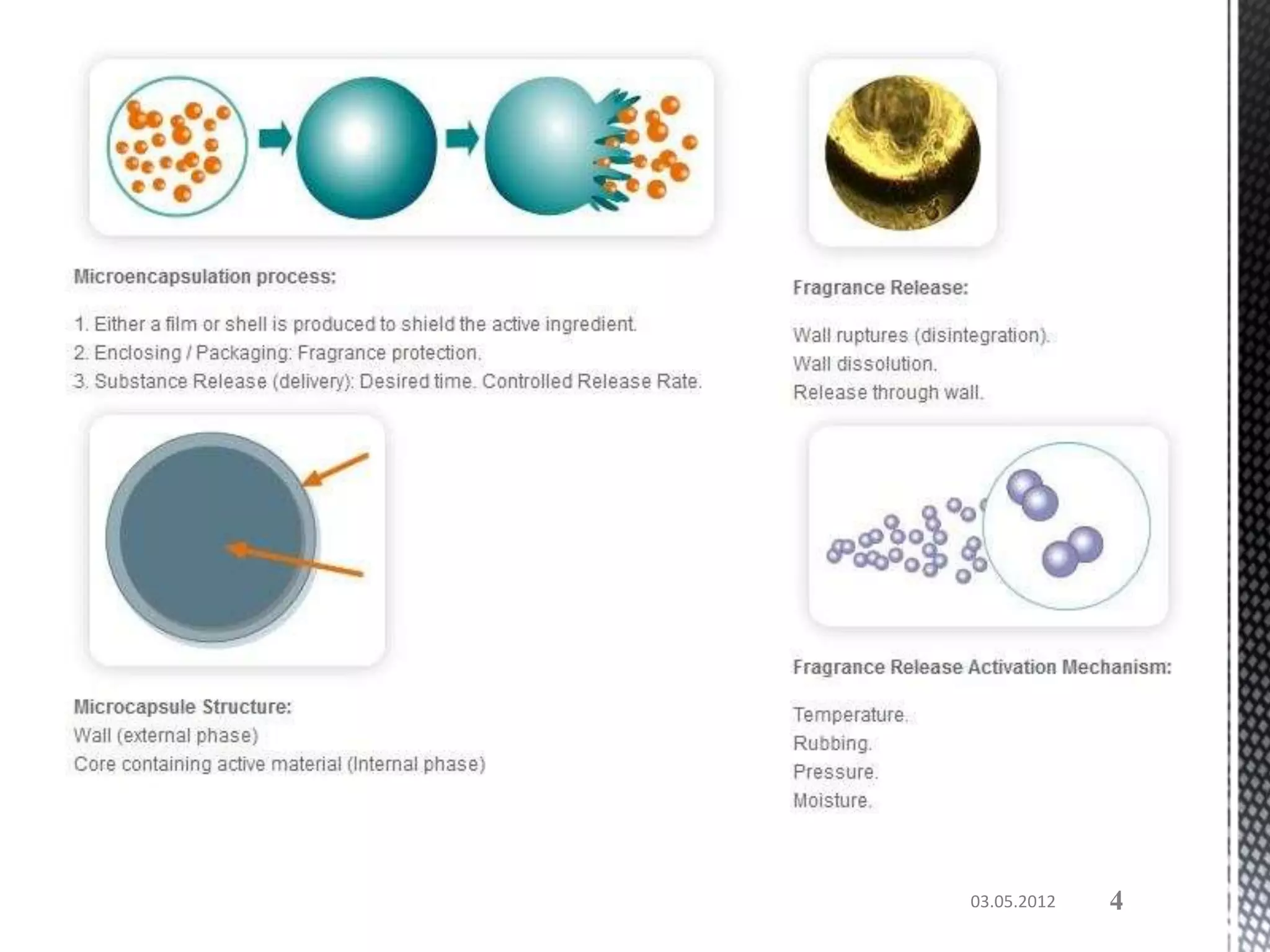
03.05.2012   4
Long self-life containing fragrant Migrin oil were prepared
by in situ polymerization from;

    Migrin oil as core material,
   melamine and formaline as wall materials,
   sodium lauryl sulphate as emulsifier
   and PVA as protective colloid.

Melamine resin microcapsules were characterized on
structure, a mean particle size and size distribution,
morphologies, thermal properties and release behavior.

                                                         5
1999


 0.1 M melamine and 0.25 M 37% formaldehyde in 100 ml
  of distilled water
 pH 9 with 10% Na2CO3 aqueous solution.

The step of preparing the melamine-formaline precondensate
is effected under alkaline conditions.

The preferred pH range for this step is from about 7.0 to 9.0.
Even more preferably, the pH range is from about 8.5 to 9.0.
Melamine-formaline precondensate was prepared by stirring
at 70C for 10 min.


                                                           6
SEM photographs of fragrant
cotton fabric treated with the
microcapsules after laundry
test:

(a) Original.
(b) 15 times.


                           7
Poly(l-lactides) have rarely been studied as microcapsules in
industrial parts as well as medical ones, due to
         Their high transition temperature,
         Unlike poly(d- or dl-lactides) with higher degradable
          properties.

    Poly(l-lactide) used as a wall-forming material.
    Span 80 as an emulsifying agent,
    PVA as a protective colloid,
    Forest-shower fragrant liquid as a core material,
    Sodium tartrate dihydrate as a penetrator,
    and Dichloromethane.

                                                            8
03.05.2012   9
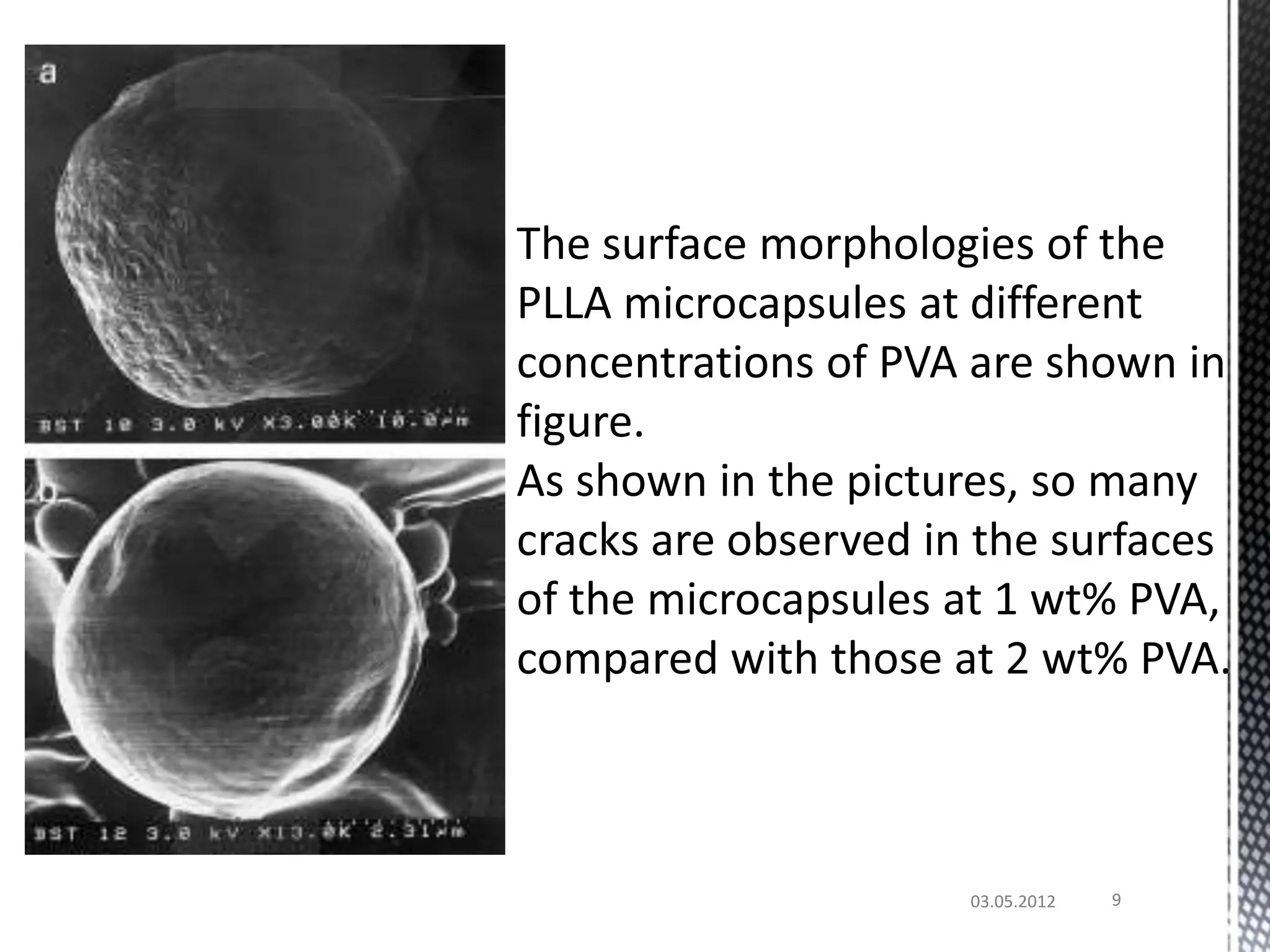
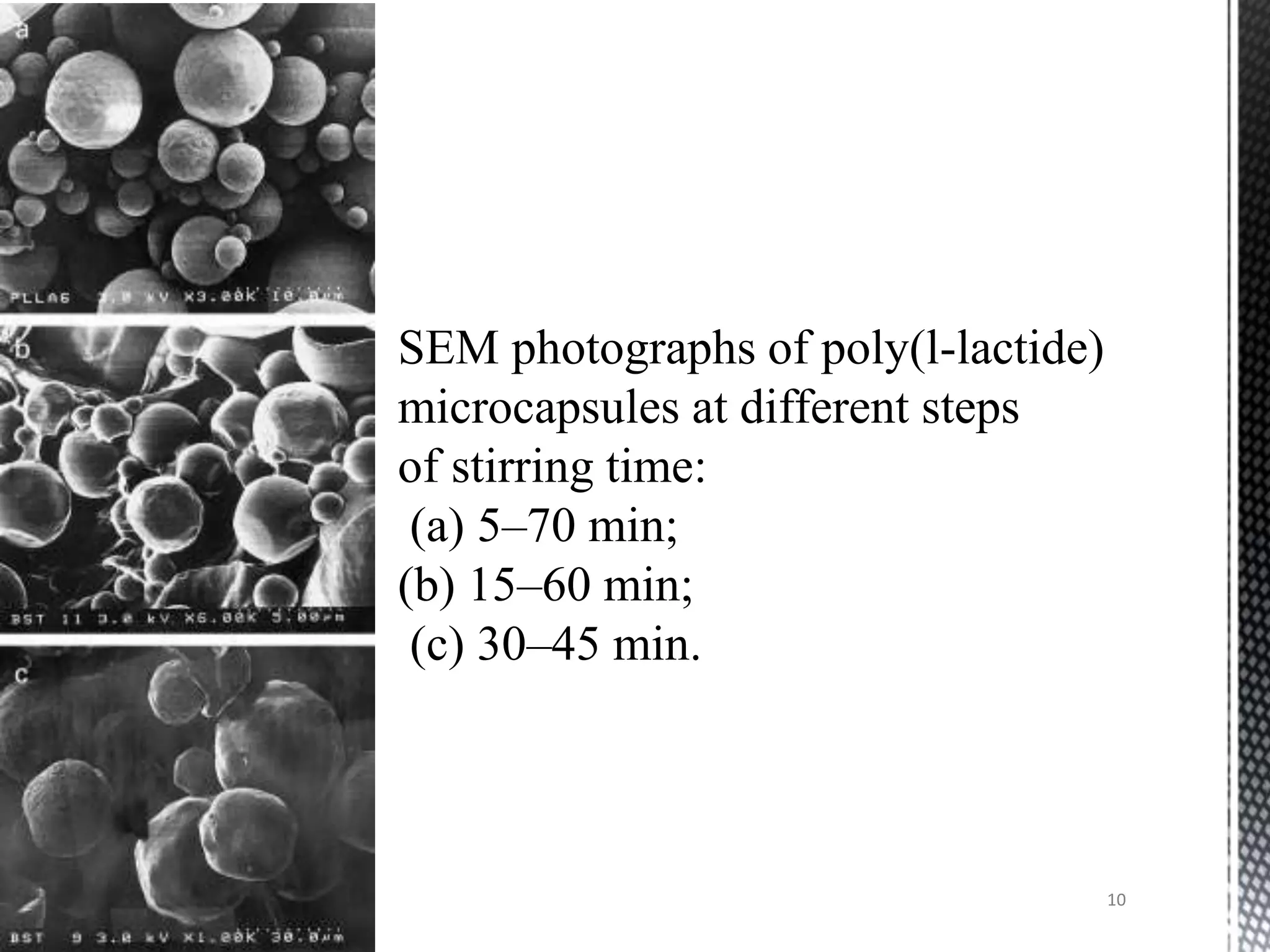
SEM photographs of poly(l-lactide)
microcapsules at different steps
of stirring time:
 (a) 5–70 min;
(b) 15–60 min;
 (c) 30–45 min.


                                     10
 A 50 ml aqueous solution containing 10 wt% of Forest-shower
fragrance and 10 wt% of sodium tartrate dihydrate was
prepared.

 200 ml of dichloromethane with 2 wt% of PLLA, and 1.0 wt%
  of Span 80 under a vigorous.
       Stirring rate of 3500 rpm.

 Each 200 ml portion of an aqueous solution with 2 wt% PVA
  was added into the resultant w/o emulsion in two steps.

   1. The stirring time after adding the first 200 ml of PVA
      solution was set to 30 min,


                                                          11
 And then the second 200 ml of PVA solution was added. At
  the same time, the (w/o)/w solution was heated to about 40C
  corresponding to the boiling point of solvent at the rate of
  2C/min

    Dichloromethane was evaporated thoroughly from the surfaces of
     w/o emulsion globules for more 2 h to make the interfacial
     precipitation of PLLA onto the surfaces of the core materials.


    The obtained PLLA microcapsules containing a core material and a
     penetrator were washed with distilled water, filtered, and dried in a
     vacuum oven at 40C for at least 12 h.

                                                            03.05.2012   12
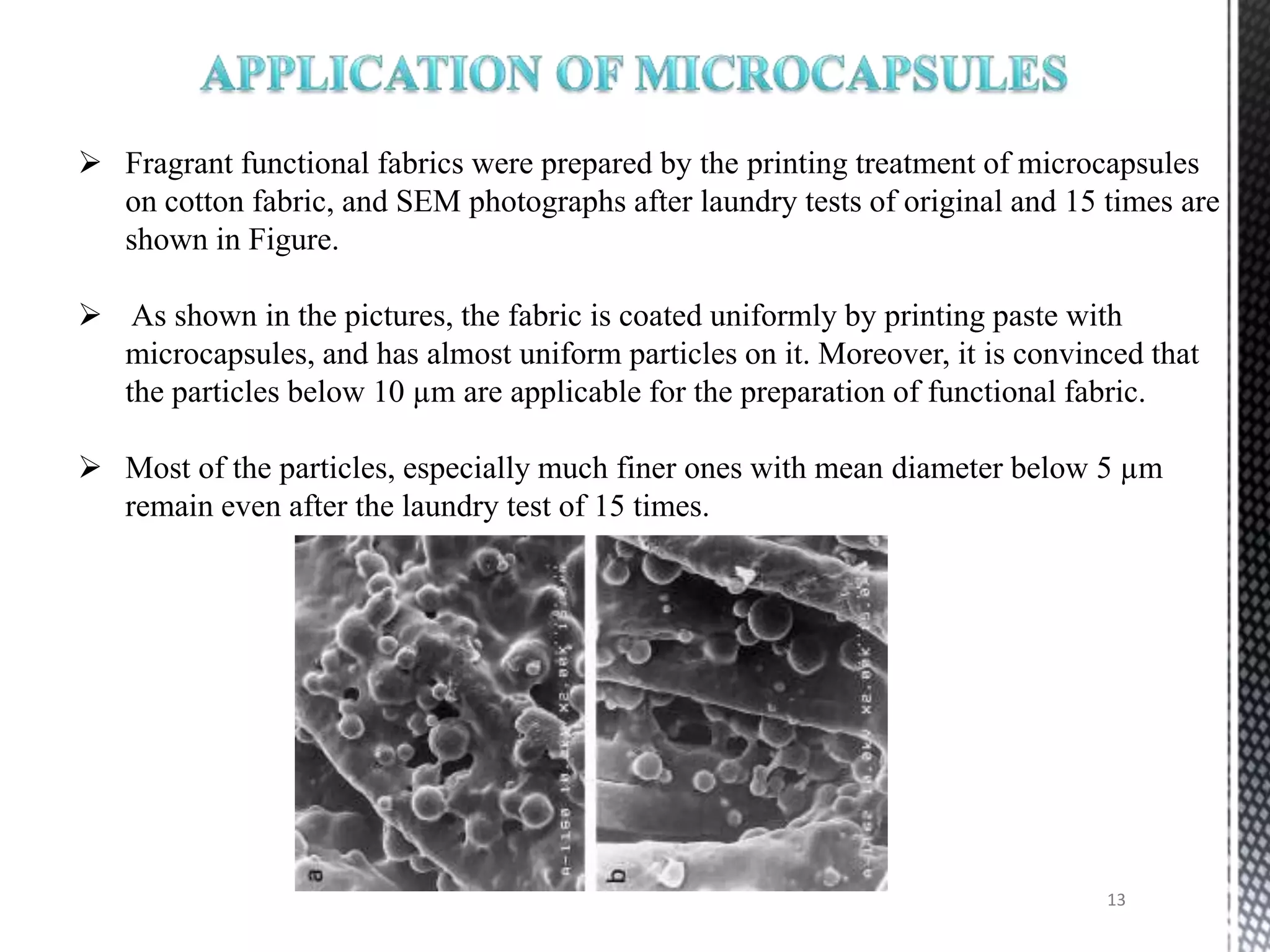
 Fragrant functional fabrics were prepared by the printing treatment of microcapsules
  on cotton fabric, and SEM photographs after laundry tests of original and 15 times are
  shown in Figure.

 As shown in the pictures, the fabric is coated uniformly by printing paste with
  microcapsules, and has almost uniform particles on it. Moreover, it is convinced that
  the particles below 10 µm are applicable for the preparation of functional fabric.

 Most of the particles, especially much finer ones with mean diameter below 5 µm
  remain even after the laundry test of 15 times.


                                                                               13
The materials used for the formulation of perfume were:
 Limonene (lemon scent – LMN) (Sigma–Aldrich),
 Methyl cedryl ketone (vetiver scent – MCK) (Sigma–Aldrich),
 Methyl dihydrojasmonate (jasmine scent – MJD) (Sigma–Aldrich)
 And 1,3,4,6,7,8-hexahydro-4,6,6,7,8,8-hexamethylcyclopenta[g]-2-
enzopyran solution (galaxolide); 50% in diethyl phthalate (dep)
(musk scent) (Sigma–Aldrich).
                            REACTANTS
 Hexamethylene-1,6-diisocyanate (HMDI) (Bayer, Desmodur W) as the
  isocyanate;
 Dibutyltin dilaurate (DBDTL) (Sigma–Aldrich) as the catalyst;
 Polyethylene glycol 400 (PEG 400) (Sigma–Aldrich) as the polyol;
 Ethylenediamine (EDA) (Panreac) as amine I;
 Hydrazine monohydrate (HYD) (Sigma–Aldrich) as amine II;
 Polyvinyl alcohol (PVA) (Celanese Chemicals, Celvol 840) as protective
  colloid
 Triton CA (Dow Company) as emulsifier.                   03.05.2012 14
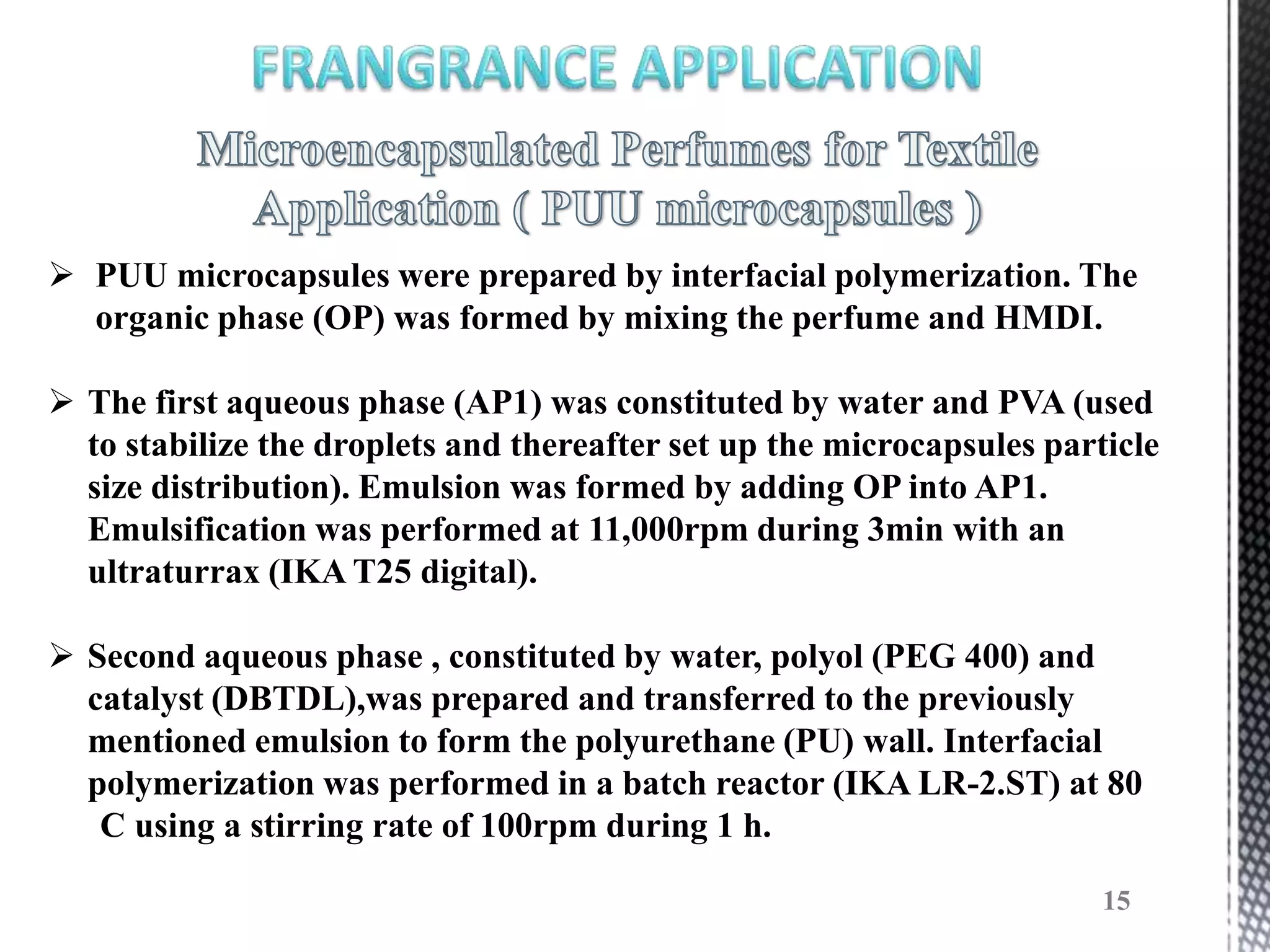
 PUU microcapsules were prepared by interfacial polymerization. The
  organic phase (OP) was formed by mixing the perfume and HMDI.

 The first aqueous phase (AP1) was constituted by water and PVA (used
  to stabilize the droplets and thereafter set up the microcapsules particle
  size distribution). Emulsion was formed by adding OP into AP1.
  Emulsification was performed at 11,000rpm during 3min with an
  ultraturrax (IKA T25 digital).

 Second aqueous phase , constituted by water, polyol (PEG 400) and
  catalyst (DBTDL),was prepared and transferred to the previously
  mentioned emulsion to form the polyurethane (PU) wall. Interfacial
  polymerization was performed in a batch reactor (IKA LR-2.ST) at 80
   C using a stirring rate of 100rpm during 1 h.

                                                                        15
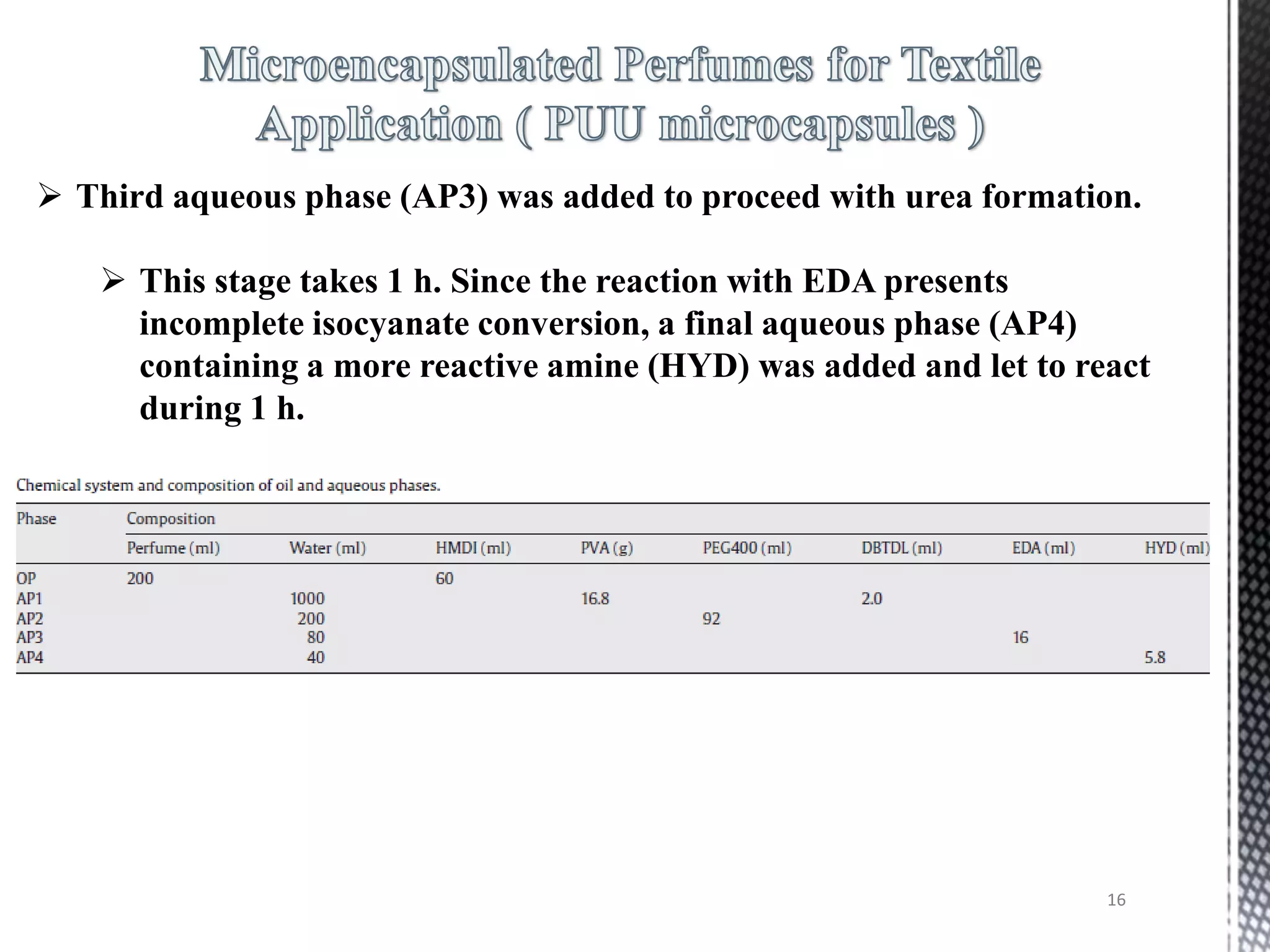
 Third aqueous phase (AP3) was added to proceed with urea formation.

    This stage takes 1 h. Since the reaction with EDA presents
     incomplete isocyanate conversion, a final aqueous phase (AP4)
     containing a more reactive amine (HYD) was added and let to react
     during 1 h.


                                                                   16
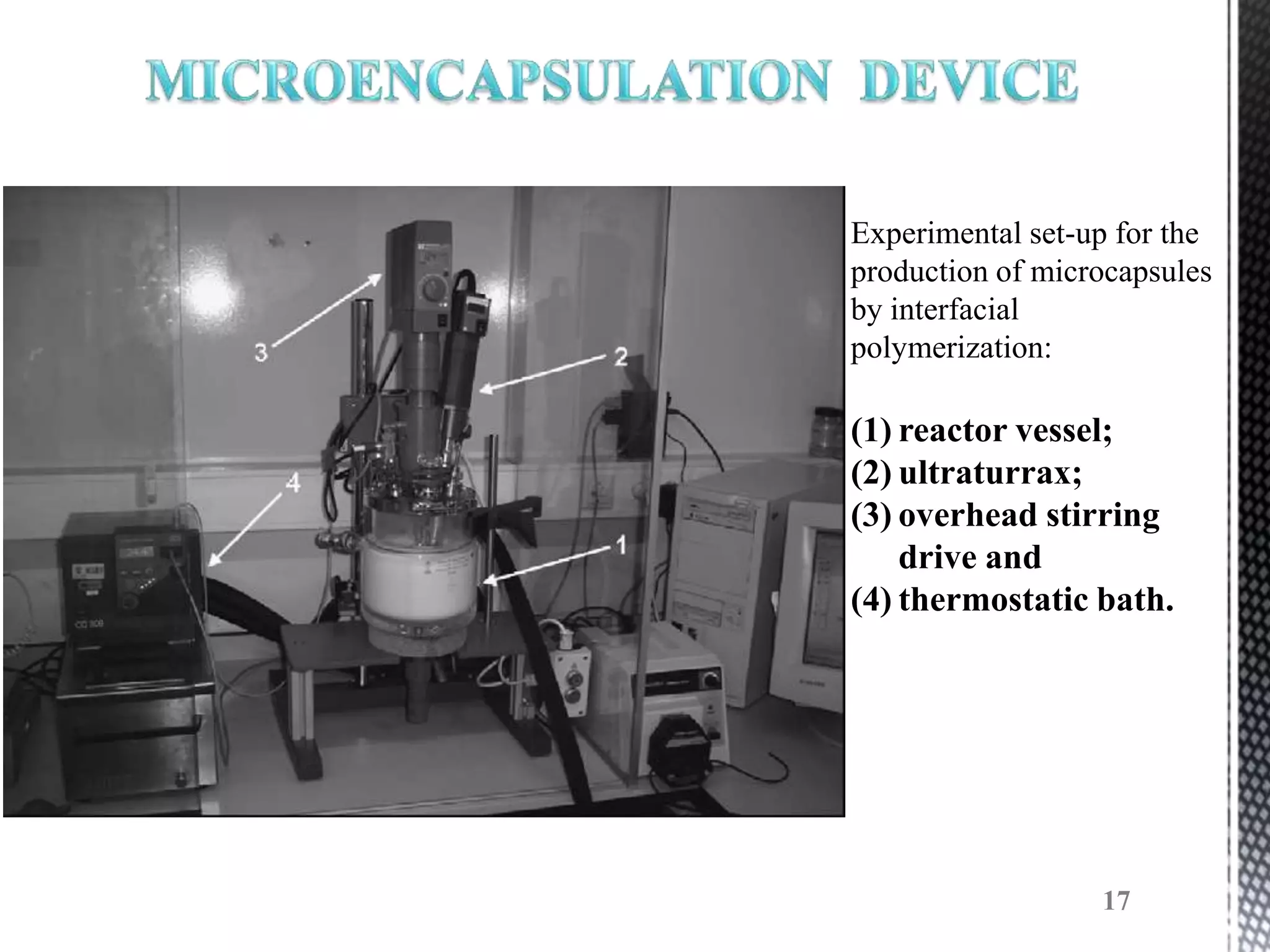
Experimental set-up for the
production of microcapsules
by interfacial
polymerization:

(1) reactor vessel;
(2) ultraturrax;
(3) overhead stirring
    drive and
(4) thermostatic bath.


                  17
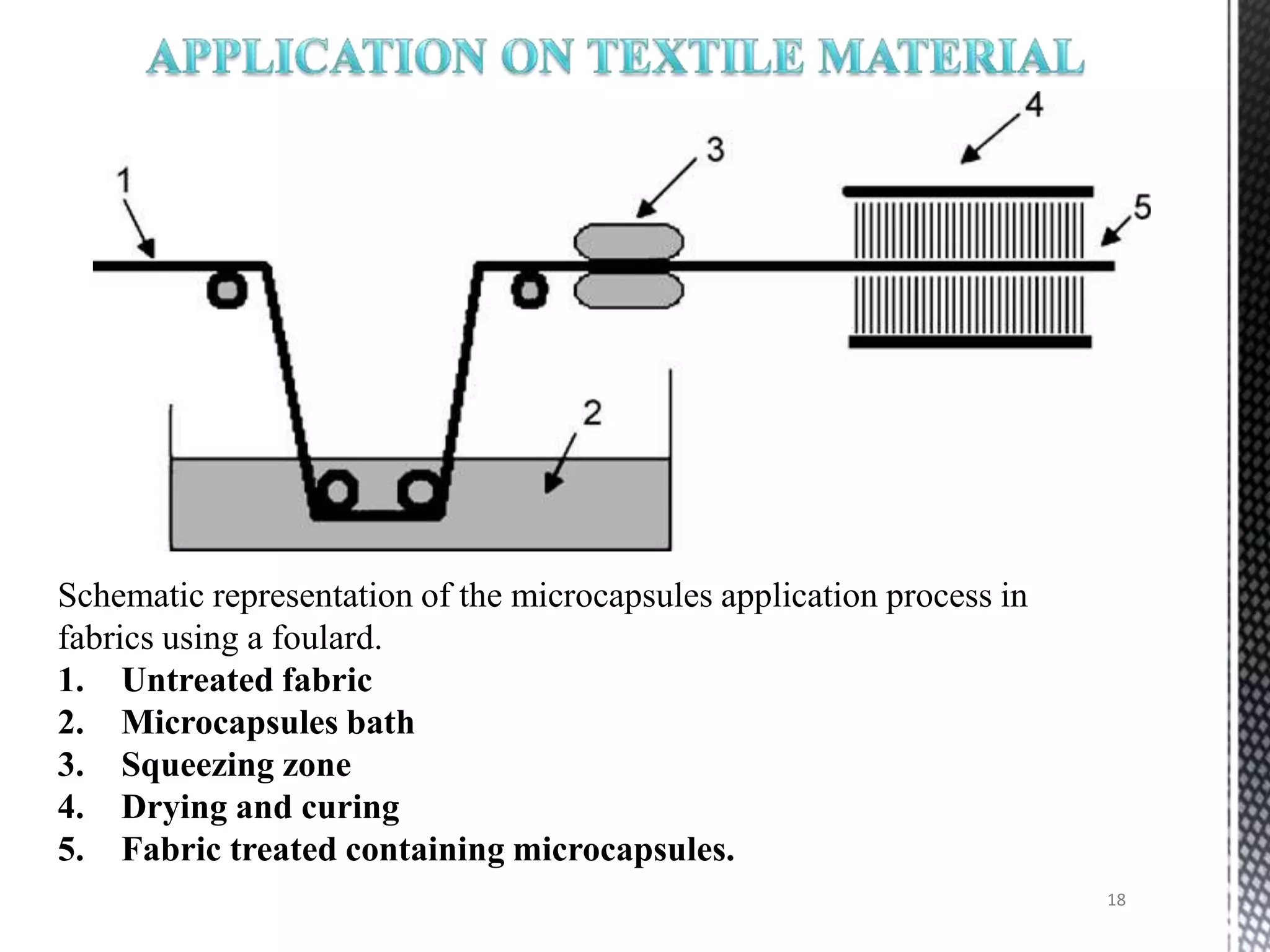
Schematic representation of the microcapsules application process in
fabrics using a foulard.
1. Untreated fabric
2. Microcapsules bath
3. Squeezing zone
4. Drying and curing
5. Fabric treated containing microcapsules.
                                                                       18
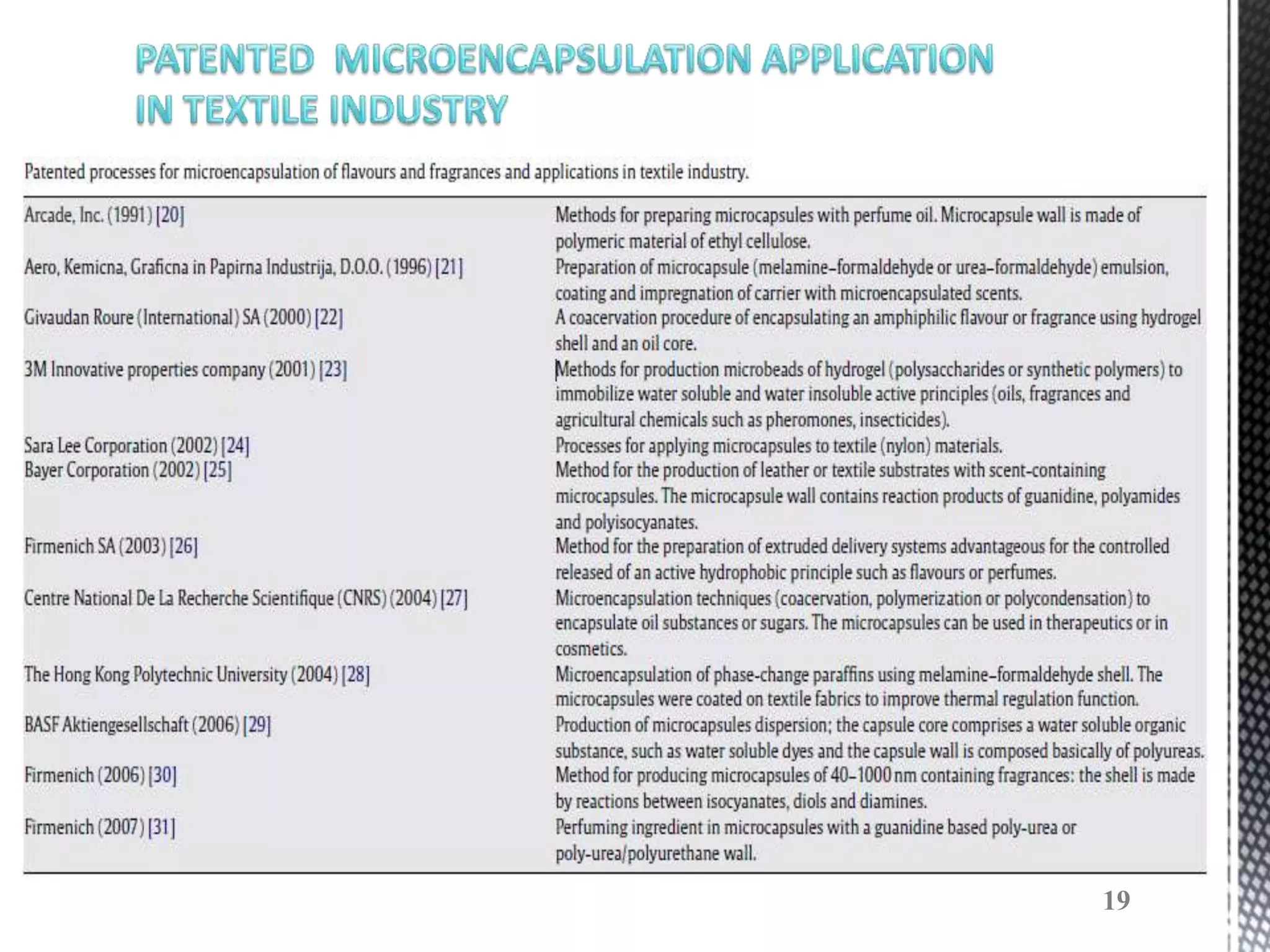
19
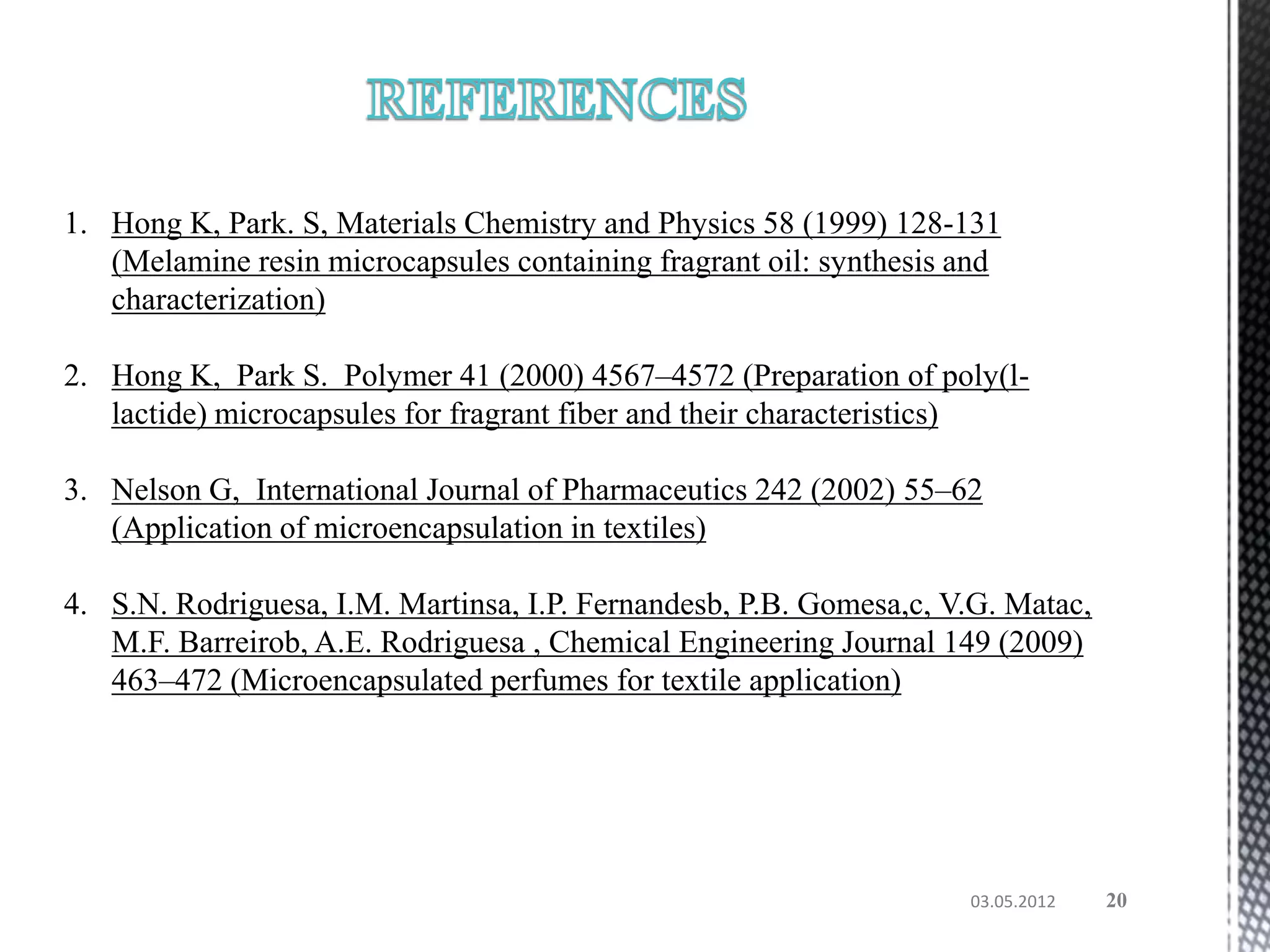
1. Hong K, Park. S, Materials Chemistry and Physics 58 (1999) 128-131
   (Melamine resin microcapsules containing fragrant oil: synthesis and
   characterization)

2. Hong K, Park S. Polymer 41 (2000) 4567–4572 (Preparation of poly(l-
   lactide) microcapsules for fragrant fiber and their characteristics)

3. Nelson G, International Journal of Pharmaceutics 242 (2002) 55–62
   (Application of microencapsulation in textiles)

4. S.N. Rodriguesa, I.M. Martinsa, I.P. Fernandesb, P.B. Gomesa,c, V.G. Matac,
   M.F. Barreirob, A.E. Rodriguesa , Chemical Engineering Journal 149 (2009)
   463–472 (Microencapsulated perfumes for textile application)


                                                                    03.05.2012   20


MICROENCAPSULATION FRAGRANCE APP.

  • 1.
  • 2.
     Fabric conditionersin the wash and during tumble- drying; all are designed to impart a fresh aroma to the textile.  However, no matter the quality of the technology used to impart the fragrance, the effect is relatively short-lived.  Numerous attempts have been made at adding fragrances directly to fibre and fabrics but all fail to survive one or two wash cycles.  Only through ‘‘microencapsulation’’ fragrances are able to remain on a garment during a significant part of its lifetime. 2
  • 3.
     Microcapsules havethe ability to be shaped in their desired form, release of the active substance by an appropriate mechanism, stability and adequate mechanical strength and non-toxicity of the material itself and of its degradation production.  They are;  Phase-change materials  Fragrance Applications  Polychromic and thermochromic microcapsules  Fire Reterdants  Counterfeiting  Liposomes  Miscellaneous applications  Especially, the protection of fragrant oil as susceptible material from outer phase by microencapsulation is paid attention, to increase its stability. 3
  • 4.
  • 5.
    Long self-life containingfragrant Migrin oil were prepared by in situ polymerization from;  Migrin oil as core material,  melamine and formaline as wall materials,  sodium lauryl sulphate as emulsifier  and PVA as protective colloid. Melamine resin microcapsules were characterized on structure, a mean particle size and size distribution, morphologies, thermal properties and release behavior. 5
  • 6.
    1999  0.1 Mmelamine and 0.25 M 37% formaldehyde in 100 ml of distilled water  pH 9 with 10% Na2CO3 aqueous solution. The step of preparing the melamine-formaline precondensate is effected under alkaline conditions. The preferred pH range for this step is from about 7.0 to 9.0. Even more preferably, the pH range is from about 8.5 to 9.0. Melamine-formaline precondensate was prepared by stirring at 70C for 10 min. 6
  • 7.
    SEM photographs offragrant cotton fabric treated with the microcapsules after laundry test: (a) Original. (b) 15 times. 7
  • 8.
    Poly(l-lactides) have rarelybeen studied as microcapsules in industrial parts as well as medical ones, due to  Their high transition temperature,  Unlike poly(d- or dl-lactides) with higher degradable properties.  Poly(l-lactide) used as a wall-forming material.  Span 80 as an emulsifying agent,  PVA as a protective colloid,  Forest-shower fragrant liquid as a core material,  Sodium tartrate dihydrate as a penetrator,  and Dichloromethane. 8
  • 9.
  • 10.
    SEM photographs ofpoly(l-lactide) microcapsules at different steps of stirring time: (a) 5–70 min; (b) 15–60 min; (c) 30–45 min. 10
  • 11.
     A 50ml aqueous solution containing 10 wt% of Forest-shower fragrance and 10 wt% of sodium tartrate dihydrate was prepared.  200 ml of dichloromethane with 2 wt% of PLLA, and 1.0 wt% of Span 80 under a vigorous.  Stirring rate of 3500 rpm.  Each 200 ml portion of an aqueous solution with 2 wt% PVA was added into the resultant w/o emulsion in two steps. 1. The stirring time after adding the first 200 ml of PVA solution was set to 30 min, 11
  • 12.
     And thenthe second 200 ml of PVA solution was added. At the same time, the (w/o)/w solution was heated to about 40C corresponding to the boiling point of solvent at the rate of 2C/min  Dichloromethane was evaporated thoroughly from the surfaces of w/o emulsion globules for more 2 h to make the interfacial precipitation of PLLA onto the surfaces of the core materials.  The obtained PLLA microcapsules containing a core material and a penetrator were washed with distilled water, filtered, and dried in a vacuum oven at 40C for at least 12 h. 03.05.2012 12
  • 13.
     Fragrant functionalfabrics were prepared by the printing treatment of microcapsules on cotton fabric, and SEM photographs after laundry tests of original and 15 times are shown in Figure.  As shown in the pictures, the fabric is coated uniformly by printing paste with microcapsules, and has almost uniform particles on it. Moreover, it is convinced that the particles below 10 µm are applicable for the preparation of functional fabric.  Most of the particles, especially much finer ones with mean diameter below 5 µm remain even after the laundry test of 15 times. 13
  • 14.
    The materials usedfor the formulation of perfume were:  Limonene (lemon scent – LMN) (Sigma–Aldrich),  Methyl cedryl ketone (vetiver scent – MCK) (Sigma–Aldrich),  Methyl dihydrojasmonate (jasmine scent – MJD) (Sigma–Aldrich)  And 1,3,4,6,7,8-hexahydro-4,6,6,7,8,8-hexamethylcyclopenta[g]-2- enzopyran solution (galaxolide); 50% in diethyl phthalate (dep) (musk scent) (Sigma–Aldrich). REACTANTS  Hexamethylene-1,6-diisocyanate (HMDI) (Bayer, Desmodur W) as the isocyanate;  Dibutyltin dilaurate (DBDTL) (Sigma–Aldrich) as the catalyst;  Polyethylene glycol 400 (PEG 400) (Sigma–Aldrich) as the polyol;  Ethylenediamine (EDA) (Panreac) as amine I;  Hydrazine monohydrate (HYD) (Sigma–Aldrich) as amine II;  Polyvinyl alcohol (PVA) (Celanese Chemicals, Celvol 840) as protective colloid  Triton CA (Dow Company) as emulsifier. 03.05.2012 14
  • 15.
     PUU microcapsuleswere prepared by interfacial polymerization. The organic phase (OP) was formed by mixing the perfume and HMDI.  The first aqueous phase (AP1) was constituted by water and PVA (used to stabilize the droplets and thereafter set up the microcapsules particle size distribution). Emulsion was formed by adding OP into AP1. Emulsification was performed at 11,000rpm during 3min with an ultraturrax (IKA T25 digital).  Second aqueous phase , constituted by water, polyol (PEG 400) and catalyst (DBTDL),was prepared and transferred to the previously mentioned emulsion to form the polyurethane (PU) wall. Interfacial polymerization was performed in a batch reactor (IKA LR-2.ST) at 80 C using a stirring rate of 100rpm during 1 h. 15
  • 16.
     Third aqueousphase (AP3) was added to proceed with urea formation.  This stage takes 1 h. Since the reaction with EDA presents incomplete isocyanate conversion, a final aqueous phase (AP4) containing a more reactive amine (HYD) was added and let to react during 1 h. 16
  • 17.
    Experimental set-up forthe production of microcapsules by interfacial polymerization: (1) reactor vessel; (2) ultraturrax; (3) overhead stirring drive and (4) thermostatic bath. 17
  • 18.
    Schematic representation ofthe microcapsules application process in fabrics using a foulard. 1. Untreated fabric 2. Microcapsules bath 3. Squeezing zone 4. Drying and curing 5. Fabric treated containing microcapsules. 18
  • 19.
  • 20.
    1. Hong K,Park. S, Materials Chemistry and Physics 58 (1999) 128-131 (Melamine resin microcapsules containing fragrant oil: synthesis and characterization) 2. Hong K, Park S. Polymer 41 (2000) 4567–4572 (Preparation of poly(l- lactide) microcapsules for fragrant fiber and their characteristics) 3. Nelson G, International Journal of Pharmaceutics 242 (2002) 55–62 (Application of microencapsulation in textiles) 4. S.N. Rodriguesa, I.M. Martinsa, I.P. Fernandesb, P.B. Gomesa,c, V.G. Matac, M.F. Barreirob, A.E. Rodriguesa , Chemical Engineering Journal 149 (2009) 463–472 (Microencapsulated perfumes for textile application) 03.05.2012 20
  • 21.

Editor's Notes

  • #15 R(functional grup)–N=C=O isocyanateVetiver – güve otu