BY
M. PRAKASH & I. MANICKKA RAJA
PRE FINAL DTMM
SSMPC
KOMARAPALAYAM
NEW TEXTILE GARMENT FINISHES – “MICRO
ENCAPSULATION, A MODERN TREND IN
TEXTILE FINISHING TO MAKE FINE GARMENTS”
‘SHAASTRA’ 2K17 ARUL MURUGAN
POLYTECHNIC COLLEGE, KARUR.
Introduction
 A rise in environment concerns and demands for
environment friendly processing of textiles have
led to the development of many new cleaner
and greener technologies .
 Science has come up with many technologies
for the eco processing of textiles, which
includes, Enzymatic Finishing of textiles, Plasma
Technology, Finishing by Natural products and
Microencapsulation.
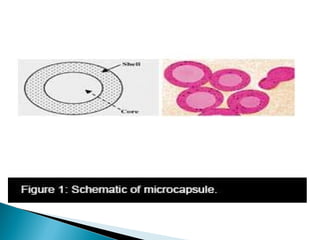
 Micro-encapsulation is a process in which small
capsules of many useful properties are made by
using tiny particles or droplets surrounded by a
coating. The material inside the microcapsule is
called as the core material whereas the wall is
called a shell, coating, or membrane.
 Usually, microcapsules have diameters
between a few micrometres and a few
millimetres. This technique is now widely used in
Textile finishing also.
 Encapsulation has allowed moisturisers,
therapeutic oils, and insecticides to be
incorporated into fabrics. Microencapsulation of
anti-microbial agents is also gaining popularity in
sportswear and medical textiles.

The principal reasons for encapsulation are as
follows:
• 1. Separation of incompatible components
• 2. Conversion of liquids to free flowing solids
• 3. Increased stability
• 4. Masking of odour, taste and activity of
encapsulated materials
• 5. Protection of the immediate environment
• 6. Controlled release of active compounds
(sustained or delayed release)
• In herbal finishing of textiles, herbal extracts are
used as the “core material” along with the wall
material to give a micro-encapsulated finish which
is more durable as compared to the other process
of finishing.
• This wall material can be a chemical compound
like Sodium alginate or certain substances that
has its origin from plants such as, Gum acacia.
The microencapsulated herbal extracts become
more effective when tested for anti-microbial
activity and wash durability upto 20 washes
 The application of pressure on
the fabric results in the release
of fragrance from the capsules
which acts as healing element
in aromatherapy
Microencapsulation in Cosmetic
Textiles
• The major use of this technique in
cosmetic textiles is in the application of
vitamins, essential oils, skin moisturizing
agents, skin cooling and anti-aging agents
etc. The techniques of imparting these
finishes through microencapsulation have
been studied in past.
Use Of Micro encapsules in
Textiles Phase-change
materials:
• Phase-change materials perform the function of
changing the aggregation from solid to liquid
within certain range of temperature.
Microcapsules of phase-change materials reduce
the effect of extreme variations in temperatures.
This facilitates the thermo regulation of clothing
and the constant temperature is provided. These
kinds of microcapsules are applied to different
materials, vests, parkas, snowsuits, blankets,
mattresses, duvets etc.
• Fragrance finishes Fragrance finishes have
been directly applied on to fibers and fabrics numerous
times, but the aroma does not last for more than two
wash cycles. Microencapsulation of fragrances is a
technique which when used on the fabric gives a longer
effect. This technique is commonly used in
aromatherapy in which microcapsules may contain
essential oil flavours like lavender, rosemary, pine etc.
This is basically done to treat insomnia, headache, and
to prevent bad odour.
 Fire retardants Microcapsules with fire
retardant core were developed to overcome the problem
of reduced softness which is caused by the direct
application of fire retardant materials.
 Antimicrobials Bacteria often cause
microbiological decay of fabrics which in turn
causes loss of various useful properties of fabrics.
This problem can be prevented by the use of anti-
microbial finishes that can be applied with the help
of microencapsulation. This finish is especially for
textiles for medical and technical use.
Techniques of Microencapsulation
 Spray-Drying A low-cost commercial
process in which microencapsulation is done by
spray-drying is mostly used for the encapsulation
of fragrances, oils and flavours. In this procedure,
core particles are dispersed in a polymer solution
and sprayed into a hot chamber.
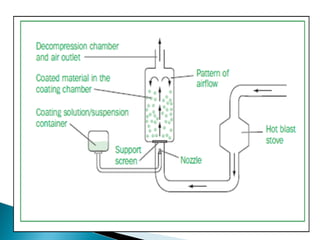
Air-suspension coating:
The particles are coated while
suspended in an upward-moving air stream. They
are supported by a perforated plate having
different patterns of holes inside and outside a
cylindrical insert. Just sufficient air is permitted to
rise through the outer annular space to fluidize the
settling particles.
Solvent Evaporation:
In this technique, the processes are
carried out in a liquid manufacturing vehicle. The
microcapsule coating is dissolved in a volatile
solvent, which is immiscible with the liquid
manufacturing vehicle phase. A core material to
be microencapsulated is dissolved or dispersed in
the coating polymer solution. With agitation, the
core coating material mixture is dispersed in the
liquid manufacturing vehicle phase to obtain the
appropriate size microcapsule.
In-situ
polymerization:
In a few microencapsulation processes,
the direct polymerization of a single monomer is
carried out on the particle surface. In one process,
e.g. Cellulose fibers are encapsulated in
polyethylene while immersed in dry toluene. Usual
deposition rates are about 0.5μm/min. Coating
thickness ranges 0.2–75 μm (0.0079–2.95 mils).
The coating is uniform, even over sharp
projections
Conclusion
In today’s world of
developing technologies, the
technique of microencapsulation is
applied in almost all the fields. It
has become a prominently effective
technique which enhances the
property imparted to the fabric and
assures its durability.

Textile Garment Finishes

  • 1.
    BY M. PRAKASH &I. MANICKKA RAJA PRE FINAL DTMM SSMPC KOMARAPALAYAM NEW TEXTILE GARMENT FINISHES – “MICRO ENCAPSULATION, A MODERN TREND IN TEXTILE FINISHING TO MAKE FINE GARMENTS” ‘SHAASTRA’ 2K17 ARUL MURUGAN POLYTECHNIC COLLEGE, KARUR.
  • 2.
    Introduction  A risein environment concerns and demands for environment friendly processing of textiles have led to the development of many new cleaner and greener technologies .  Science has come up with many technologies for the eco processing of textiles, which includes, Enzymatic Finishing of textiles, Plasma Technology, Finishing by Natural products and Microencapsulation.
  • 3.
     Micro-encapsulation isa process in which small capsules of many useful properties are made by using tiny particles or droplets surrounded by a coating. The material inside the microcapsule is called as the core material whereas the wall is called a shell, coating, or membrane.
  • 5.
     Usually, microcapsuleshave diameters between a few micrometres and a few millimetres. This technique is now widely used in Textile finishing also.  Encapsulation has allowed moisturisers, therapeutic oils, and insecticides to be incorporated into fabrics. Microencapsulation of anti-microbial agents is also gaining popularity in sportswear and medical textiles. 
  • 6.
    The principal reasonsfor encapsulation are as follows: • 1. Separation of incompatible components • 2. Conversion of liquids to free flowing solids • 3. Increased stability • 4. Masking of odour, taste and activity of encapsulated materials • 5. Protection of the immediate environment • 6. Controlled release of active compounds (sustained or delayed release)
  • 7.
    • In herbalfinishing of textiles, herbal extracts are used as the “core material” along with the wall material to give a micro-encapsulated finish which is more durable as compared to the other process of finishing. • This wall material can be a chemical compound like Sodium alginate or certain substances that has its origin from plants such as, Gum acacia. The microencapsulated herbal extracts become more effective when tested for anti-microbial activity and wash durability upto 20 washes
  • 8.
     The applicationof pressure on the fabric results in the release of fragrance from the capsules which acts as healing element in aromatherapy
  • 9.
    Microencapsulation in Cosmetic Textiles •The major use of this technique in cosmetic textiles is in the application of vitamins, essential oils, skin moisturizing agents, skin cooling and anti-aging agents etc. The techniques of imparting these finishes through microencapsulation have been studied in past.
  • 10.
    Use Of Microencapsules in Textiles Phase-change materials: • Phase-change materials perform the function of changing the aggregation from solid to liquid within certain range of temperature. Microcapsules of phase-change materials reduce the effect of extreme variations in temperatures. This facilitates the thermo regulation of clothing and the constant temperature is provided. These kinds of microcapsules are applied to different materials, vests, parkas, snowsuits, blankets, mattresses, duvets etc.
  • 11.
    • Fragrance finishesFragrance finishes have been directly applied on to fibers and fabrics numerous times, but the aroma does not last for more than two wash cycles. Microencapsulation of fragrances is a technique which when used on the fabric gives a longer effect. This technique is commonly used in aromatherapy in which microcapsules may contain essential oil flavours like lavender, rosemary, pine etc. This is basically done to treat insomnia, headache, and to prevent bad odour.  Fire retardants Microcapsules with fire retardant core were developed to overcome the problem of reduced softness which is caused by the direct application of fire retardant materials.
  • 12.
     Antimicrobials Bacteriaoften cause microbiological decay of fabrics which in turn causes loss of various useful properties of fabrics. This problem can be prevented by the use of anti- microbial finishes that can be applied with the help of microencapsulation. This finish is especially for textiles for medical and technical use.
  • 13.
    Techniques of Microencapsulation Spray-Drying A low-cost commercial process in which microencapsulation is done by spray-drying is mostly used for the encapsulation of fragrances, oils and flavours. In this procedure, core particles are dispersed in a polymer solution and sprayed into a hot chamber.
  • 14.
    Air-suspension coating: The particlesare coated while suspended in an upward-moving air stream. They are supported by a perforated plate having different patterns of holes inside and outside a cylindrical insert. Just sufficient air is permitted to rise through the outer annular space to fluidize the settling particles.
  • 16.
    Solvent Evaporation: In thistechnique, the processes are carried out in a liquid manufacturing vehicle. The microcapsule coating is dissolved in a volatile solvent, which is immiscible with the liquid manufacturing vehicle phase. A core material to be microencapsulated is dissolved or dispersed in the coating polymer solution. With agitation, the core coating material mixture is dispersed in the liquid manufacturing vehicle phase to obtain the appropriate size microcapsule.
  • 17.
    In-situ polymerization: In a fewmicroencapsulation processes, the direct polymerization of a single monomer is carried out on the particle surface. In one process, e.g. Cellulose fibers are encapsulated in polyethylene while immersed in dry toluene. Usual deposition rates are about 0.5μm/min. Coating thickness ranges 0.2–75 μm (0.0079–2.95 mils). The coating is uniform, even over sharp projections
  • 18.
    Conclusion In today’s worldof developing technologies, the technique of microencapsulation is applied in almost all the fields. It has become a prominently effective technique which enhances the property imparted to the fabric and assures its durability.