STERILITY TESTING OF PRODUCTS
( SOLID, LIQUID,OPHTHALMIC AND OTHER
STERILE PRODUCTS AS PER IP )
ARUN G KRISHNAN
ASST. PROFESSOR
DEPT. OF PHARMACEUTICS
EZHUTHACHAN COLLEGE OF PHARMACEUTICAL SCIENCES
THIRD SEMESTER B.PHARM
STERILITY TESTING
• Sterility testing is defined as a testing which confirms that
products are free from the presence of viable
microorganisms.
• Such test is very important for medical devices,
Pharmaceutical preparations like ophthalmic preparations,
injections, infusions, implants, syringes, bandages,
dressings, needles, surgical instruments etc.
PRINCIPLE BEHIND STERILITY TESTING
• The test sterility is based upon the principle that if
microorganisms are placed in a medium which provides
nutritive material and water and kept at a favourable
temperature, the microorganism will grow and their
presence can be indicated by turbidity in the originally
clear medium.
STERILITY TESTING
PROTOCOL
Asking sterility testing????????
• Defenition of sterility
• Importance of sterility testing.
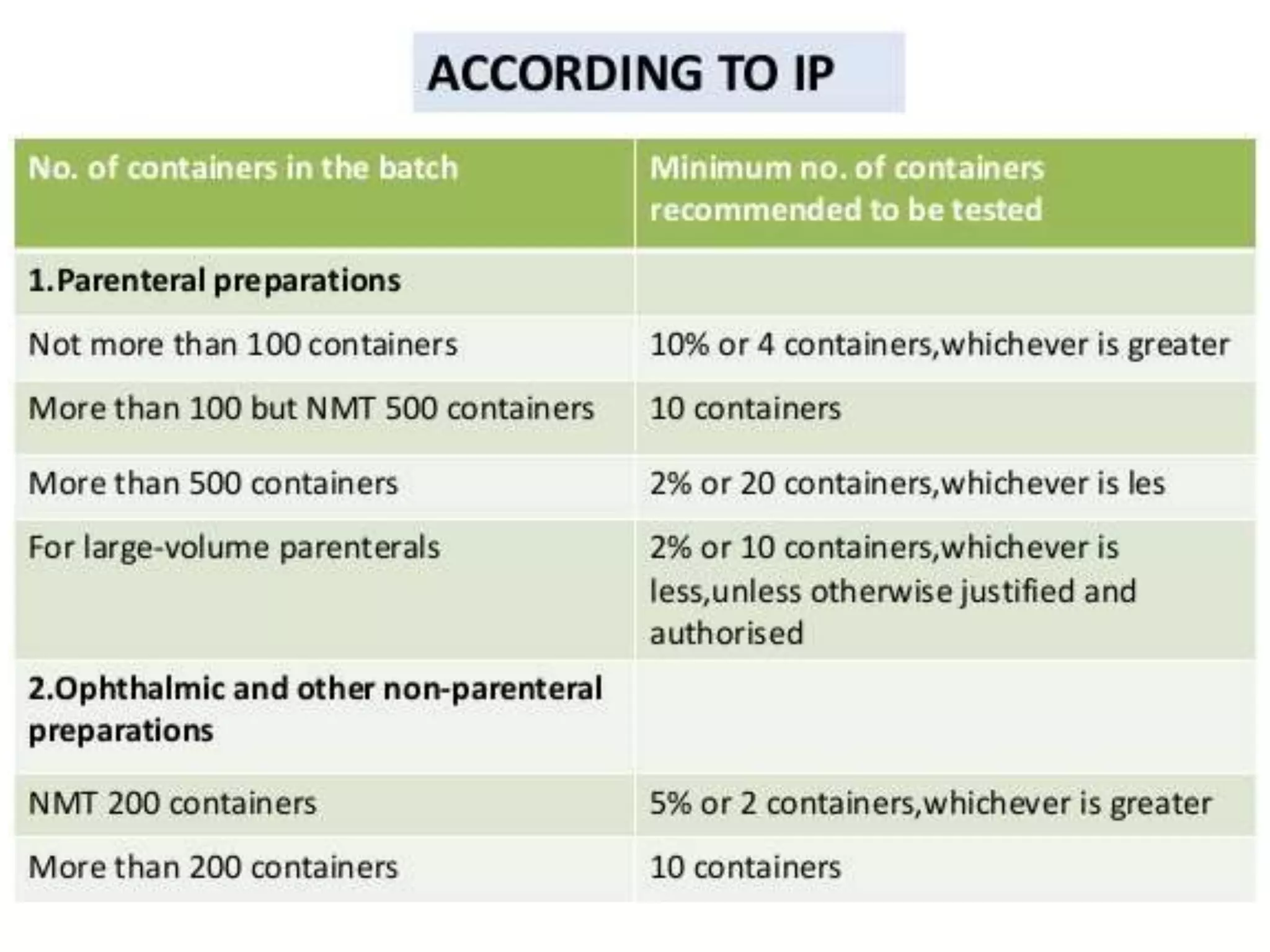
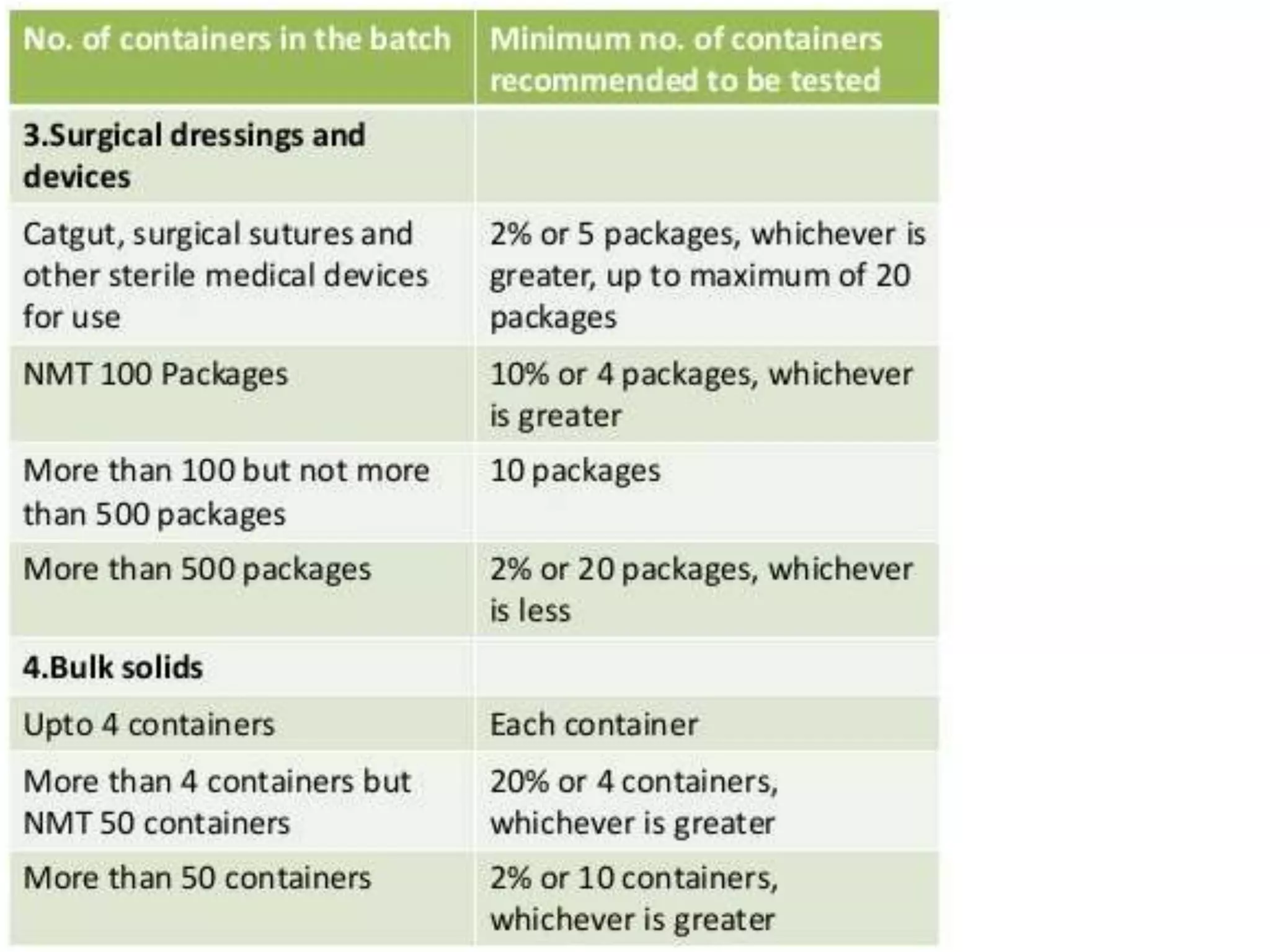
• Number of containers and batch selected for sterility
testing.
• CULTURE MEDIA.
• METHODS OF STERILITY TESTING.
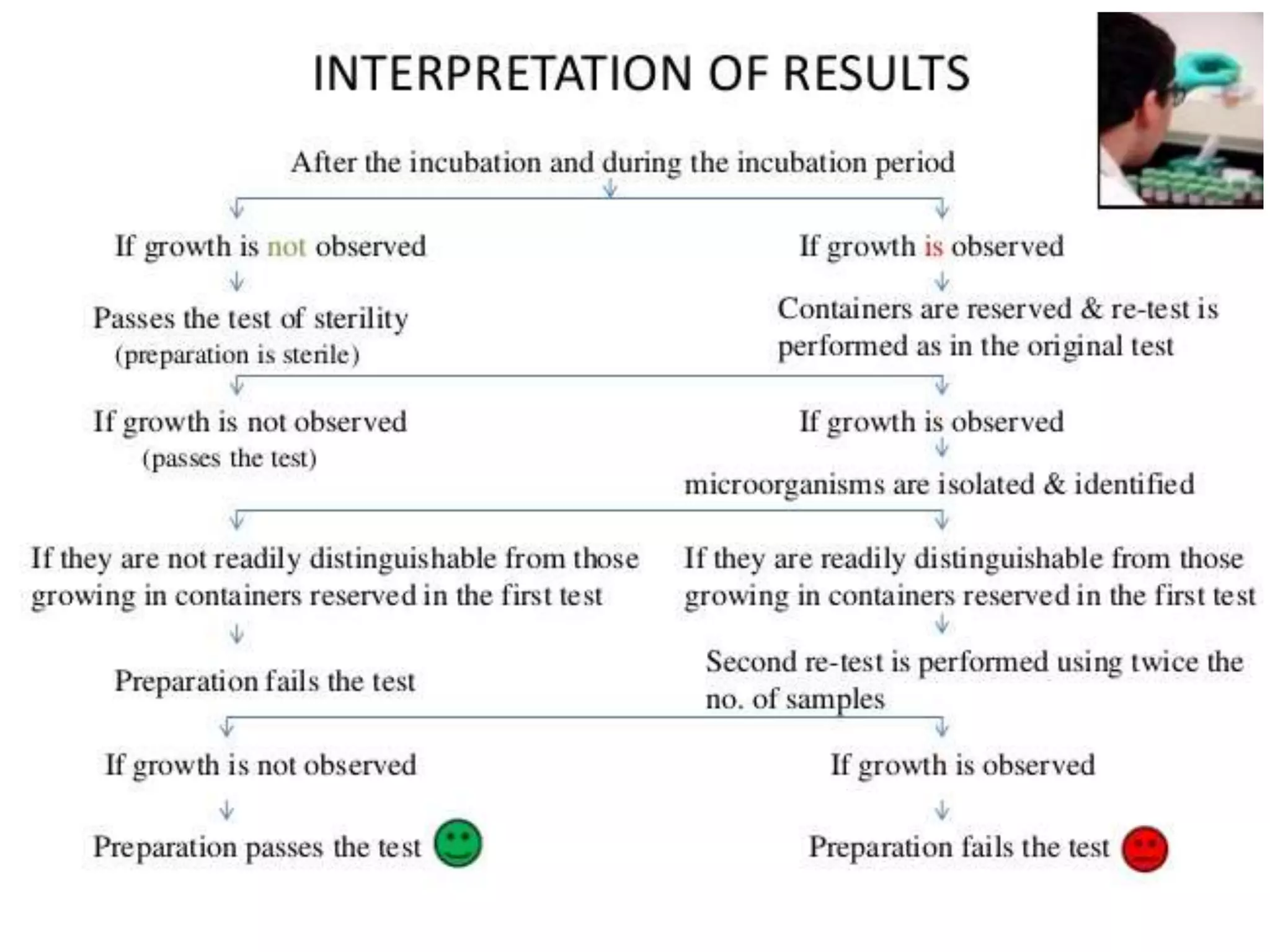
• INTERPRETATION.
CULTURE MEDIA
1. Fluid thioglycolate medium (FTM).
2. Alternative thioglycolate medium (ATM).
3. Soyabean casein digest medium.(SCDM).
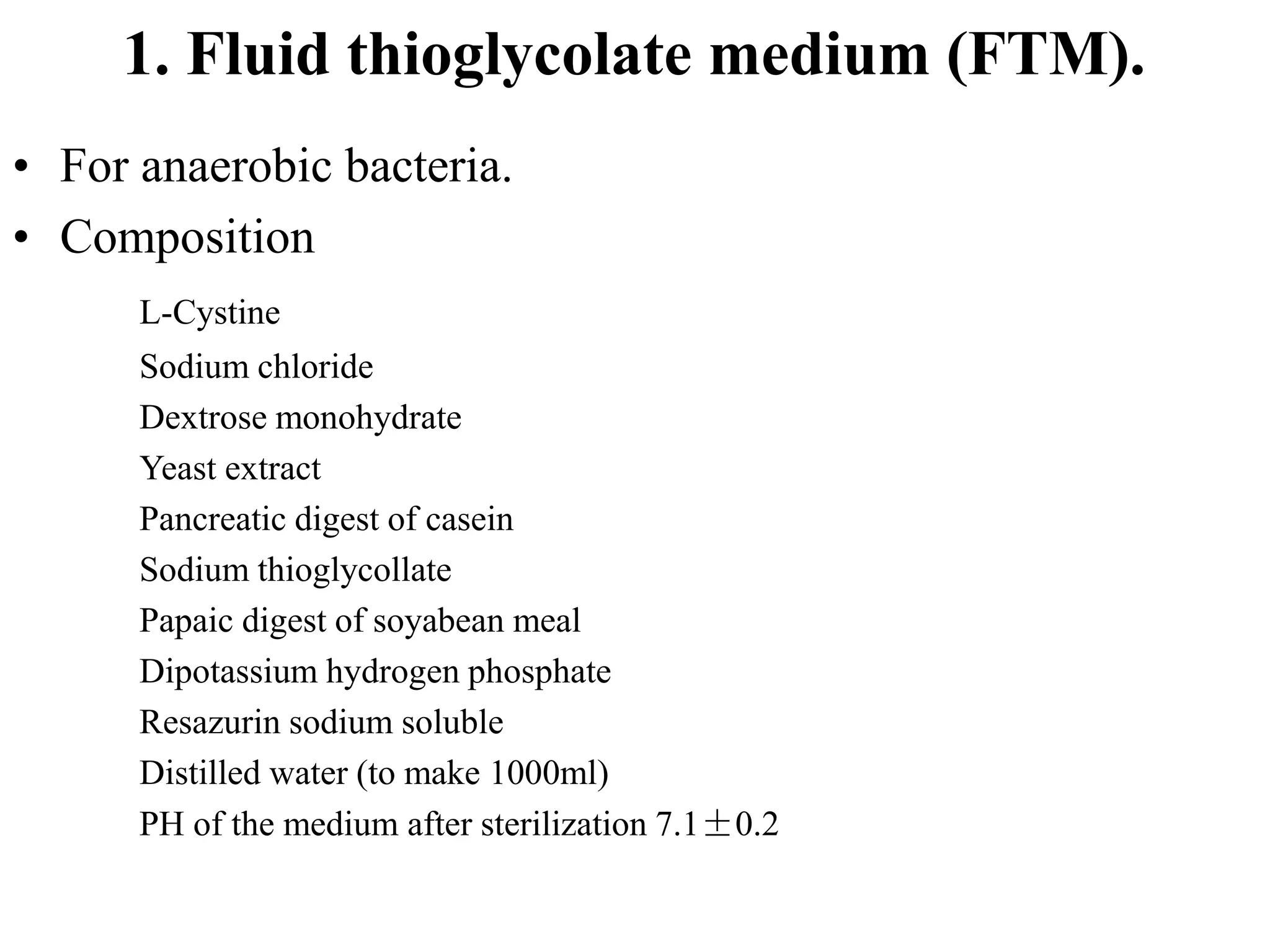
1. Fluid thioglycolate medium (FTM).
• For anaerobic bacteria.
• Composition
L-Cystine
Sodium chloride
Dextrose monohydrate
Yeast extract
Pancreatic digest of casein
Sodium thioglycollate
Papaic digest of soyabean meal
Dipotassium hydrogen phosphate
Resazurin sodium soluble
Distilled water (to make 1000ml)
PH of the medium after sterilization 7.1±0.2
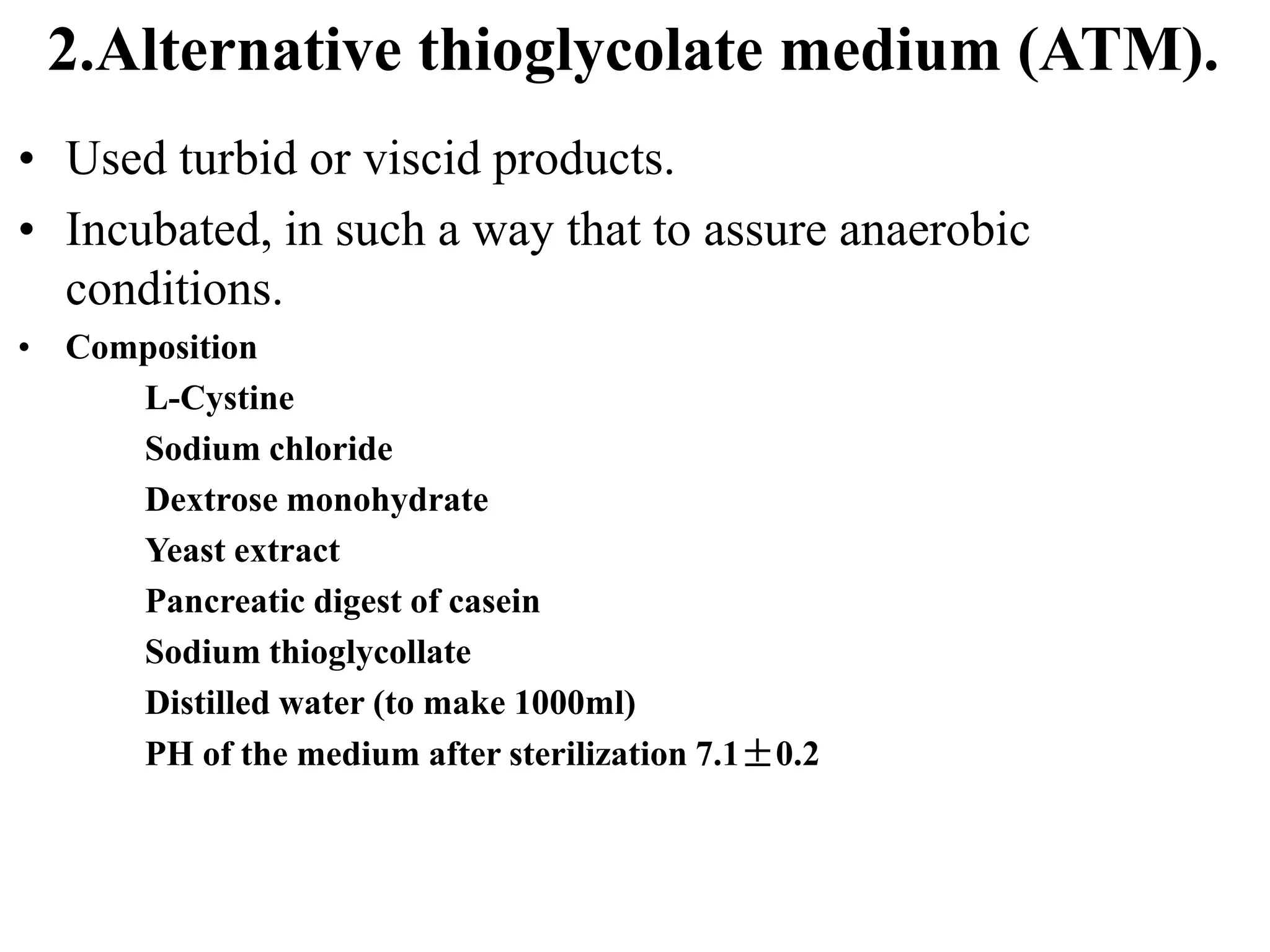
2.Alternative thioglycolate medium (ATM).
• Used turbid or viscid products.
• Incubated, in such a way that to assure anaerobic
conditions.
• Composition
L-Cystine
Sodium chloride
Dextrose monohydrate
Yeast extract
Pancreatic digest of casein
Sodium thioglycollate
Distilled water (to make 1000ml)
PH of the medium after sterilization 7.1±0.2
3. Soyabean casein digest medium.(SCDM).
• Suitable for the culturing of both fungi and anaerobic bacteria.
• Composition
L-Cystine
Sodium chloride
Dextrose monohydrate
Pancreatic digest of casein
Papaic digest of soyabean meal
Dipotassium hydrogen phosphate
Distilled water (to make 1000ml)
PH of the medium after sterilization 7.1±0.2
 Medium 1 and 2 are adjusted to PH 7.1±0.2, medium 3
is adjusted to PH 7.3±0.2 and sterilised by autoclaving at
1210C for 20 mints.
Anaerobic condition are required for growth of some
microbial species
METHODS FOR STERILITY TEST
• METHOD A : MEMBRANE FILTERATION
• METHOD B : DIRECT INOCULATION
• Suitable for the substance like oil, an ointment that can
be put into a solution, a non-bacteriostatic solid not
readily soluble in culture medium, a soluble powder or a
liquid that possesses inherent bacteriostatic and
fungistatic prperties.
• Method A is suitable for liquid products where the
volume in the container is 100ml or more.
METHOD A : MEMBRANE FILTERATION
APPARATUS
MEMBRANE FILTERATION APPARATUS FOR STERILITY TESTING
• Closed reservoir and container to collect
the filterate, between which a properly
supported membrane of appropriate
porosity is placed.
• Porosity; 0.45µm
• Diameter ; 50mm
• Flow rate ; 55-75ml/min
• Pressure ; 70mm mercury
• Cellulose nitrate membrane - For
aqueous, oily, and weakly alcoholic
solutions.
• Cellulose acetate membarne filter for
strongly alcoholic solutions.
MEMBRANE FILTERATION APPARATUS FOR STERILITY TESTING
• Complete unit should be free from microorganisms
inclueding the membrane, and operation should be carried
out aseptically.
Dilution fluids : Two types of dilution fluids are
used.
• Fluid A (Peptic digest of animal tissue+Water)
• Fluid B (Lecithin/oil+Poly sorbate)
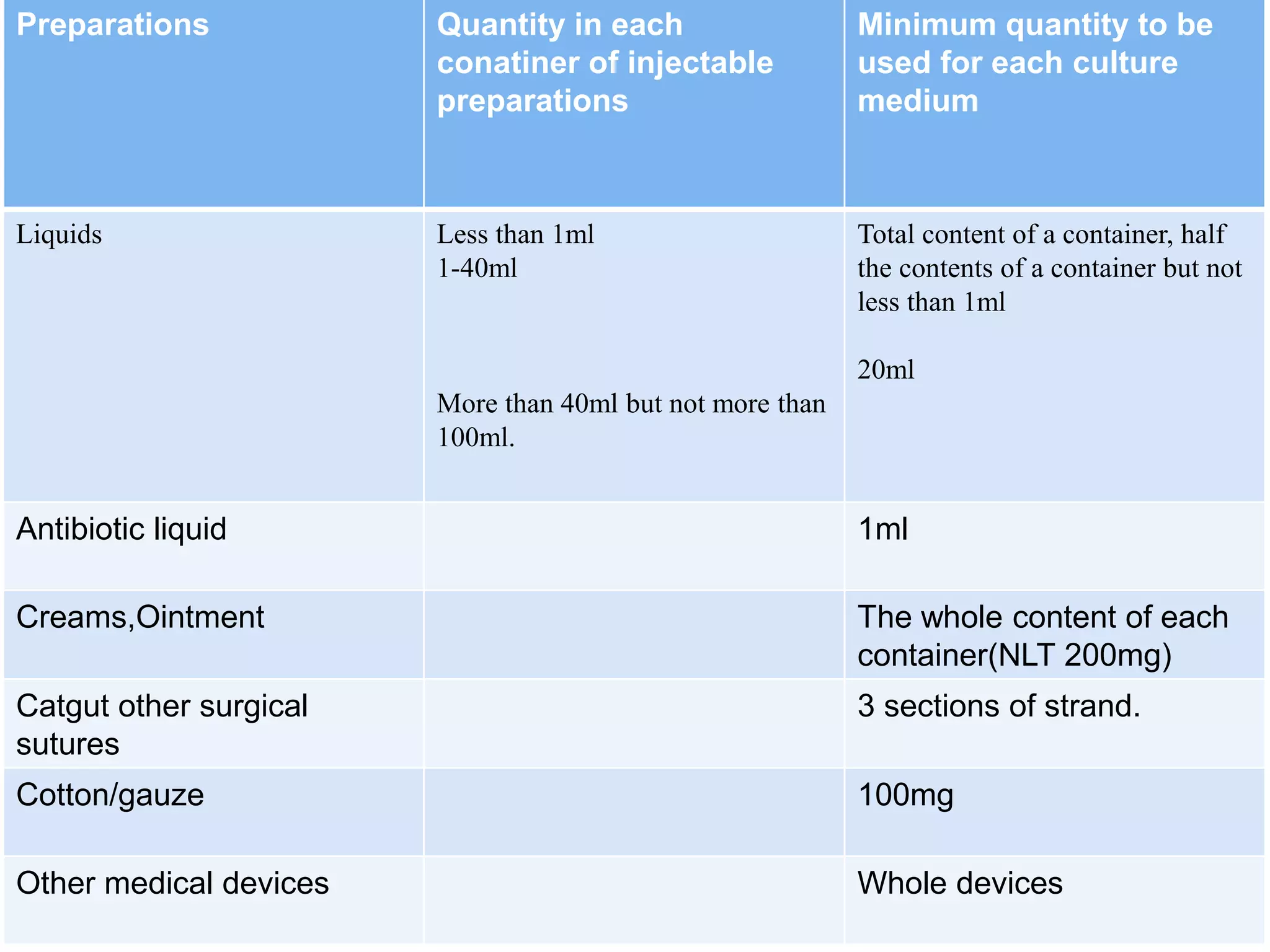
Preparations Quantity in each
conatiner of injectable
preparations
Minimum quantity to be
used for each culture
medium
Liquids Less than 1ml
1-40ml
More than 40ml but not more than
100ml.
Total content of a container, half
the contents of a container but not
less than 1ml
20ml
Antibiotic liquid 1ml
Creams,Ointment The whole content of each
container(NLT 200mg)
Catgut other surgical
sutures
3 sections of strand.
Cotton/gauze 100mg
Other medical devices Whole devices
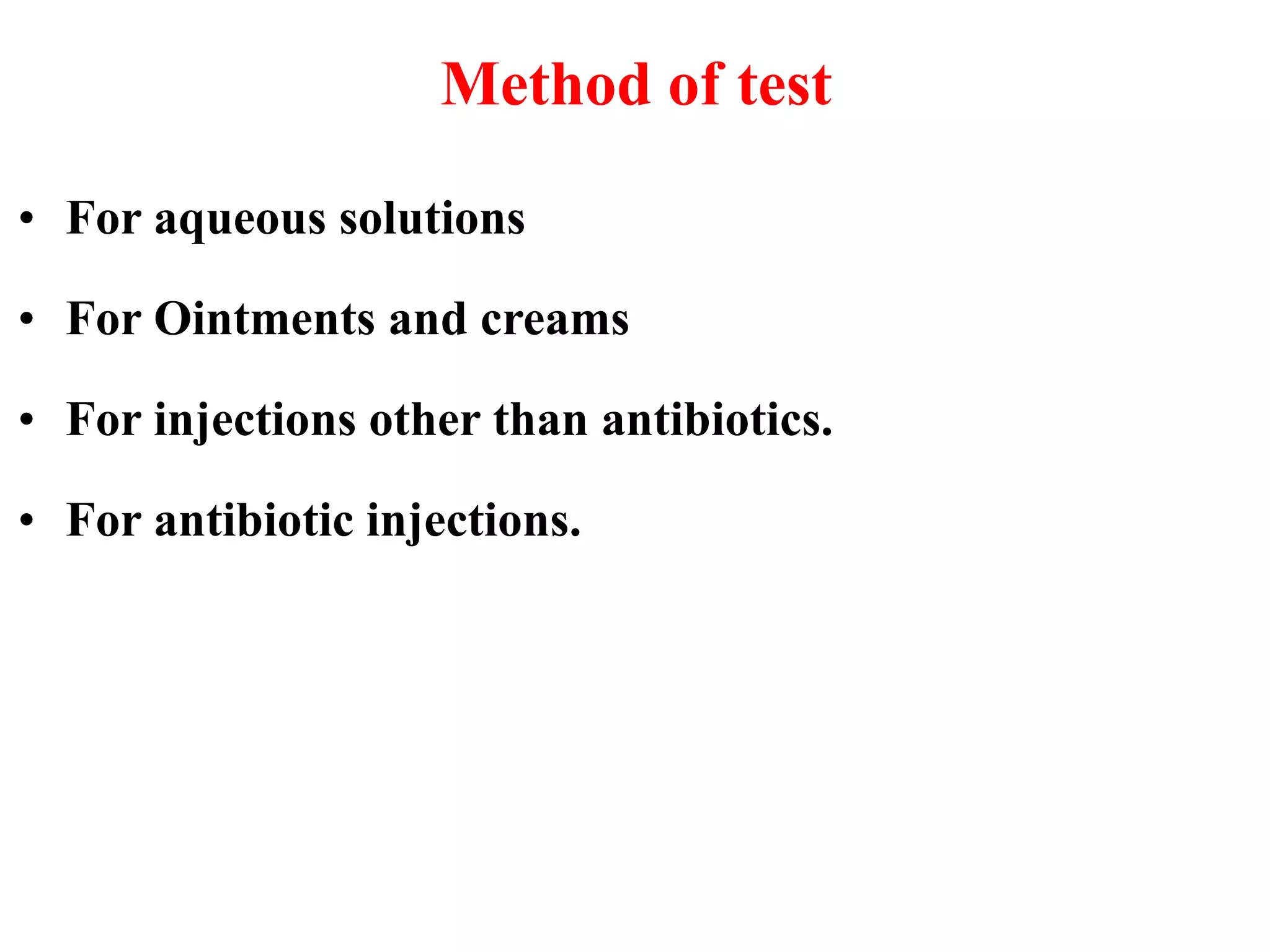
Method of test
• For aqueous solutions
• For Ointments and creams
• For injections other than antibiotics.
• For antibiotic injections.
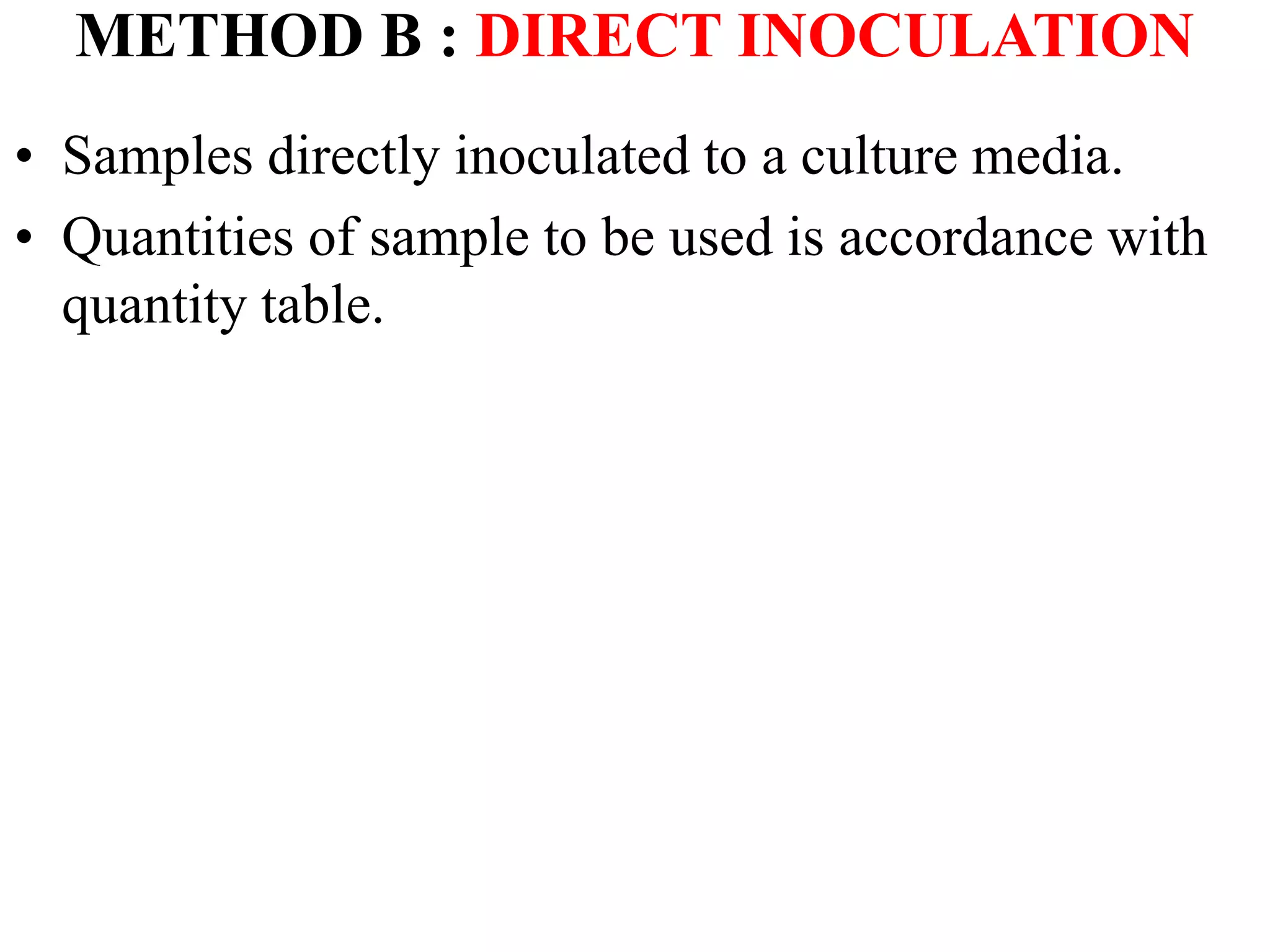
METHOD B : DIRECT INOCULATION
• Samples directly inoculated to a culture media.
• Quantities of sample to be used is accordance with
quantity table.
Method of test
• For aqueous solution and suspensions.
• For oily solution.
• For oinment and creams.
Sterility testing of Pharmaceutical Products

Sterility testing of Pharmaceutical Products

  • 1.
    STERILITY TESTING OFPRODUCTS ( SOLID, LIQUID,OPHTHALMIC AND OTHER STERILE PRODUCTS AS PER IP ) ARUN G KRISHNAN ASST. PROFESSOR DEPT. OF PHARMACEUTICS EZHUTHACHAN COLLEGE OF PHARMACEUTICAL SCIENCES THIRD SEMESTER B.PHARM
  • 2.
    STERILITY TESTING • Sterilitytesting is defined as a testing which confirms that products are free from the presence of viable microorganisms. • Such test is very important for medical devices, Pharmaceutical preparations like ophthalmic preparations, injections, infusions, implants, syringes, bandages, dressings, needles, surgical instruments etc.
  • 3.
    PRINCIPLE BEHIND STERILITYTESTING • The test sterility is based upon the principle that if microorganisms are placed in a medium which provides nutritive material and water and kept at a favourable temperature, the microorganism will grow and their presence can be indicated by turbidity in the originally clear medium.
  • 4.
  • 7.
    Asking sterility testing???????? •Defenition of sterility • Importance of sterility testing. • Number of containers and batch selected for sterility testing. • CULTURE MEDIA. • METHODS OF STERILITY TESTING. • INTERPRETATION.
  • 8.
    CULTURE MEDIA 1. Fluidthioglycolate medium (FTM). 2. Alternative thioglycolate medium (ATM). 3. Soyabean casein digest medium.(SCDM).
  • 9.
    1. Fluid thioglycolatemedium (FTM). • For anaerobic bacteria. • Composition L-Cystine Sodium chloride Dextrose monohydrate Yeast extract Pancreatic digest of casein Sodium thioglycollate Papaic digest of soyabean meal Dipotassium hydrogen phosphate Resazurin sodium soluble Distilled water (to make 1000ml) PH of the medium after sterilization 7.1±0.2
  • 10.
    2.Alternative thioglycolate medium(ATM). • Used turbid or viscid products. • Incubated, in such a way that to assure anaerobic conditions. • Composition L-Cystine Sodium chloride Dextrose monohydrate Yeast extract Pancreatic digest of casein Sodium thioglycollate Distilled water (to make 1000ml) PH of the medium after sterilization 7.1±0.2
  • 11.
    3. Soyabean caseindigest medium.(SCDM). • Suitable for the culturing of both fungi and anaerobic bacteria. • Composition L-Cystine Sodium chloride Dextrose monohydrate Pancreatic digest of casein Papaic digest of soyabean meal Dipotassium hydrogen phosphate Distilled water (to make 1000ml) PH of the medium after sterilization 7.1±0.2
  • 12.
     Medium 1and 2 are adjusted to PH 7.1±0.2, medium 3 is adjusted to PH 7.3±0.2 and sterilised by autoclaving at 1210C for 20 mints. Anaerobic condition are required for growth of some microbial species
  • 17.
    METHODS FOR STERILITYTEST • METHOD A : MEMBRANE FILTERATION • METHOD B : DIRECT INOCULATION
  • 18.
    • Suitable forthe substance like oil, an ointment that can be put into a solution, a non-bacteriostatic solid not readily soluble in culture medium, a soluble powder or a liquid that possesses inherent bacteriostatic and fungistatic prperties. • Method A is suitable for liquid products where the volume in the container is 100ml or more. METHOD A : MEMBRANE FILTERATION
  • 19.
  • 20.
    MEMBRANE FILTERATION APPARATUSFOR STERILITY TESTING • Closed reservoir and container to collect the filterate, between which a properly supported membrane of appropriate porosity is placed. • Porosity; 0.45µm • Diameter ; 50mm • Flow rate ; 55-75ml/min • Pressure ; 70mm mercury • Cellulose nitrate membrane - For aqueous, oily, and weakly alcoholic solutions. • Cellulose acetate membarne filter for strongly alcoholic solutions.
  • 21.
    MEMBRANE FILTERATION APPARATUSFOR STERILITY TESTING • Complete unit should be free from microorganisms inclueding the membrane, and operation should be carried out aseptically.
  • 22.
    Dilution fluids :Two types of dilution fluids are used. • Fluid A (Peptic digest of animal tissue+Water) • Fluid B (Lecithin/oil+Poly sorbate)
  • 23.
    Preparations Quantity ineach conatiner of injectable preparations Minimum quantity to be used for each culture medium Liquids Less than 1ml 1-40ml More than 40ml but not more than 100ml. Total content of a container, half the contents of a container but not less than 1ml 20ml Antibiotic liquid 1ml Creams,Ointment The whole content of each container(NLT 200mg) Catgut other surgical sutures 3 sections of strand. Cotton/gauze 100mg Other medical devices Whole devices
  • 24.
    Method of test •For aqueous solutions • For Ointments and creams • For injections other than antibiotics. • For antibiotic injections.
  • 25.
    METHOD B :DIRECT INOCULATION • Samples directly inoculated to a culture media. • Quantities of sample to be used is accordance with quantity table.
  • 26.
    Method of test •For aqueous solution and suspensions. • For oily solution. • For oinment and creams.